Baptistry of San Giovanni
The Baptistry of San Giovanni, an octagonal structure in Florence's Piazza del Duomo, is the city's ancient baptistry where Dante Alighieri was baptized. In the novel, it becomes the hiding place for Dante's death mask, which Ignazio Busoni concealed inside the baptismal font before his death. Langdon and Sienna Brooks enter through the Gates of Paradise, find the mask, and decipher the hidden message on its reverse side, revealing the location of Zobrist's plague.
Architecture and Symbolism
The Baptistry of San Giovanni is a perfect octagon, a shape that in Christianity represents rebirth and re-creation, symbolizing the six days of creation, the one day of Sabbath, and the eighth day of Christian rebirth through baptism. The building is adorned in the same polychromatic facing stones and striped pilasters as the nearby cathedral, but its striking shape distinguishes it as a layer-cake-like structure of three distinct tiers ascending to a shallow white roof. The interior is dominated by a spectacular ceiling mosaic depicting a multitiered representation of heaven and hell, featuring a twenty-seven-foot-tall Jesus Christ in judgment and a colossal mosaic of Satan as an infernal, man-eating beast with three heads, exactly as Dante described him in the final canto of his Inferno. This mosaic, which terrified the young Dante Alighieri, inspired his vivid portrayal of the underworld. The baptistry's original baptismal font was a large octagonal pool at the center of the floor, later covered over in the sixteenth century; the current font, a tall hexagonal plinth of carved marble with a polished wooden top, stands on a raised platform near the Gates of Paradise.
The Gates of Paradise and Entry
The baptistry's main doors, the Gates of Paradise, are crafted of gilded bronze and over fifteen feet tall, created by Lorenzo Ghiberti over twenty years. They are adorned with ten intricate panels depicting scenes from the Old Testament, and Michelangelo proclaimed them so beautiful as to be fit for use as the Gates of Paradise. Langdon and Sienna arrive at the baptistry after deciphering the code "cerca trova" from the modified Botticelli map, which points to the Palazzo Vecchio's Vasari mural. Ignazio Busoni's dying message, "The gates are open to you, but you must hurry," leads them to the baptistry. Sienna creates a diversion by shouting that someone is about to jump from Giotto's bell tower, allowing them to slip through the protective iron fence and push open the massive bronze doors, which Ignazio had left unbolted. They then lift a long wooden beam into its brackets to barricade the doors from inside.
Discovery of the Death Mask
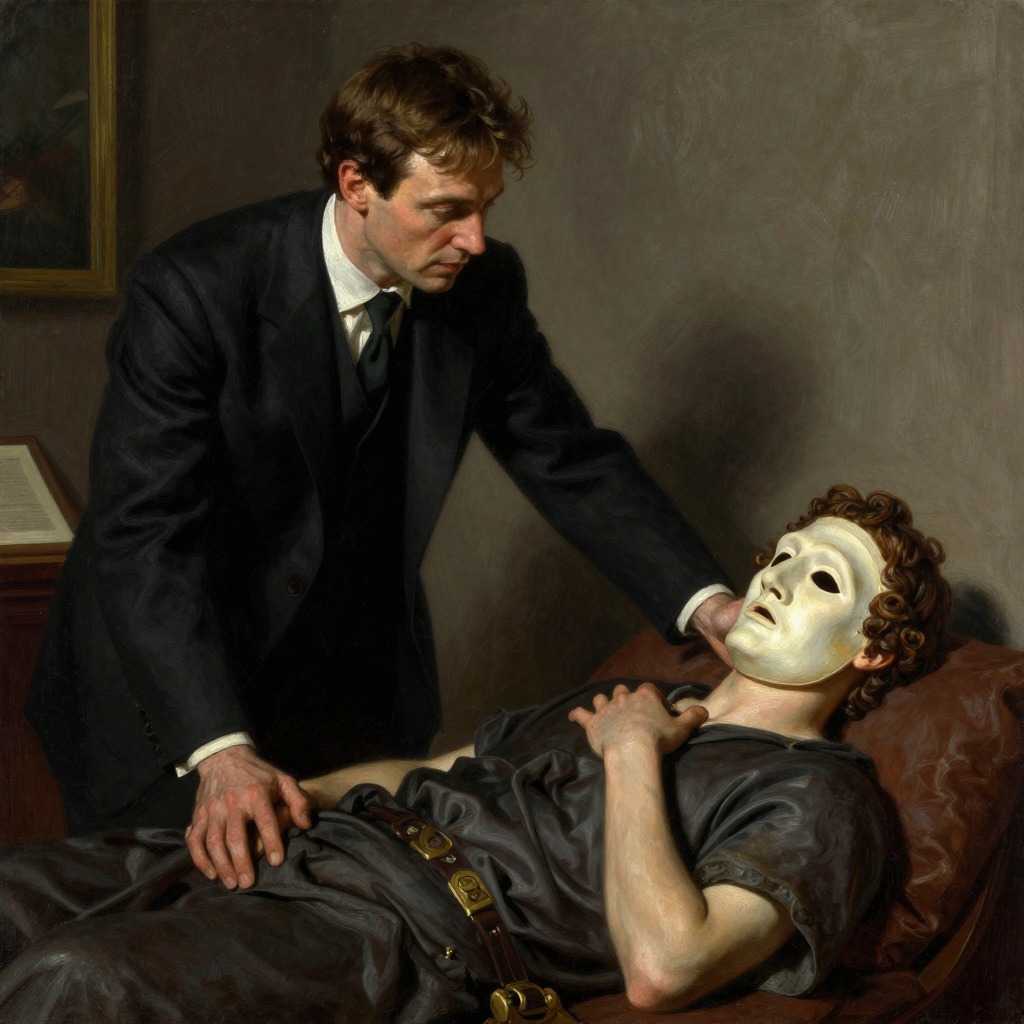
Inside the baptistry, Langdon and Sienna find the baptismal font. Langdon removes the wooden cover and peers into the dark, hollow space within, where he sees the dead face of Dante Alighieri looking back at him. The mask is resting on a central spindle, elevated above the water. Langdon lifts the mask out of the font and examines it. The back of the mask is smooth and blank, but Langdon notices a faint discoloration and a rough texture, which he identifies as gesso. He wets a cloth with baptismal water and begins to dissolve the gesso, revealing a hidden message. The first layer shows seven Ps, which Langdon recognizes as representing the seven deadly sins from Dante's Purgatorio. As he continues to wipe, the Ps disappear, and a second layer of text emerges: a spiraling poem written by Bertrand Zobrist, beginning with the line "O you possessed of sturdy intellect" and pointing to a location in Venice, specifically the "sunken palace" and the "lagoon that reflects no stars."
Narrative Role and Significance
The Baptistry of San Giovanni serves as the crucial turning point in the novel, where the central mystery of the Dante death mask is finally resolved. It is the site where Langdon and Sienna, after a day of being hunted, find the mask and decode Zobrist's final message, which directs them to Venice and ultimately to the cistern in Istanbul. The baptistry's sacred history as Dante's baptismal site and its symbolic connection to rebirth and purification contrast sharply with the deadly plague Zobrist has created, highlighting the novel's central tension between salvation and destruction. The act of using the baptismal water to dissolve the gesso and reveal the hidden text is a literal and metaphorical cleansing, a ritual that uncovers the truth beneath the surface.