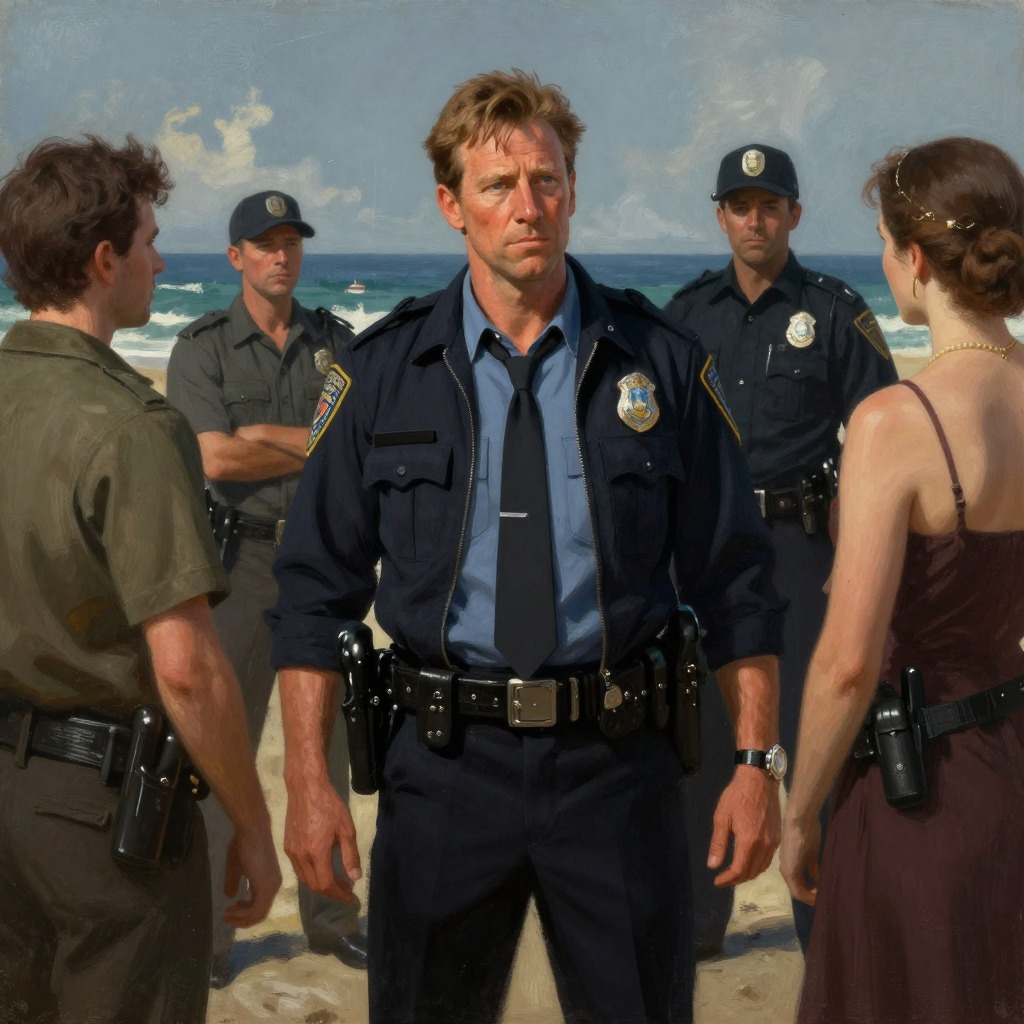
Albert Morris
Albert Morris owns Amity Hardware, a mainstay of the town's year-round commercial life. As a local merchant whose business depends on the summer influx, he is acutely aware of the economic stakes involved in the shark crisis. Yet when the pressure mounts to reopen the beaches, Morris breaks with the prevailing sentiment among the selectmen and real-estate interests, siding instead with Chief Brody's cautious approach.
Identity and Background
Morris is a long-established figure in Amity, a hardware store owner whose shop on Main Street serves both winter residents and summer visitors. He is in his early sixties and has suffered a heart attack two years prior to the events of the novel, a fact that lends a measured, deliberate quality to his movements and perhaps to his judgments. When Ellen Brody visits his store to buy a rubber nozzle for her kitchen sink, he climbs the stairs from the basement slowly, one step at a time, holding the banister. He is familiar with the town's rhythms and its people, and he knows the value of a dollar, noting that he has written up sales slips for amounts smaller than eighty cents.
Role in the Shark Crisis
Morris is one of the few prominent local businessmen who publicly supports Brody's decision to keep the beaches closed. When Ellen Brody stops by his store, he tells her directly that he thinks the people who want the beaches reopened are "full of bull" and that "Martin's doing right." This stance places him in direct opposition to the mayor, Larry Vaughan, and the majority of the Board of Selectmen, who are pushing for an immediate reopening to salvage the summer economy. Morris's support is not merely private; it is voiced in a public space, making him a visible counterweight to the pressure Brody faces. His absence from the crucial selectmen's meeting called by Vaughan to force the beach reopening is notable. Vaughan claims Morris "couldn't make it" because he "didn't feel well," a convenient excuse that Brody later suspects was manufactured to stack the meeting in Vaughan's favor. This suspicion is confirmed when Brody learns from Vaughan's secretary that the only selectmen summoned were the four who were already aligned with Vaughan's position.
Thematic Significance
Morris represents the conscience of the year-round community, a figure whose economic self-interest is tempered by a sense of civic responsibility and common sense. He embodies the tension between the town's need for summer revenue and its obligation to protect its citizens and visitors. Unlike Vaughan, who is entangled with mob-connected partners and desperate to protect his own financial empire, or the selectmen who follow Vaughan's lead, Morris makes a clear moral choice. His support for Brody, however quiet, underscores that the decision to suppress the first shark attack and keep the beaches open was not unanimous, and that there were voices of prudence within the community itself. His character serves as a foil to the more compromised figures in Amity's power structure, highlighting the novel's critique of how economic desperation can corrupt public judgment.