Siferra 89
Siferra 89 is a professor of archaeology at Saro University, a tall, athletic woman in her late thirties who has dedicated her career to excavating the ancient site of Beklimot on the remote Sagikan Peninsula. She is introduced as a figure of immense competence and fierce independence, leading a major dig with a team of assistants and local workers. Her initial crisis is a killer sandstorm that threatens to destroy the site, the carefully sorted artifacts, and even the lives of her expedition. In the storm's aftermath, however, a serendipitous catastrophe occurs: the wind rips open the Hill of Thombo, a nearby midden-heap, exposing a series of superimposed ancient settlements separated by layers of charcoal. Siferra immediately recognizes the significance of this find, which promises to revolutionize the understanding of Kalgash's prehistory.
Discovery of the Thombo Ruins and the Pattern of Fire
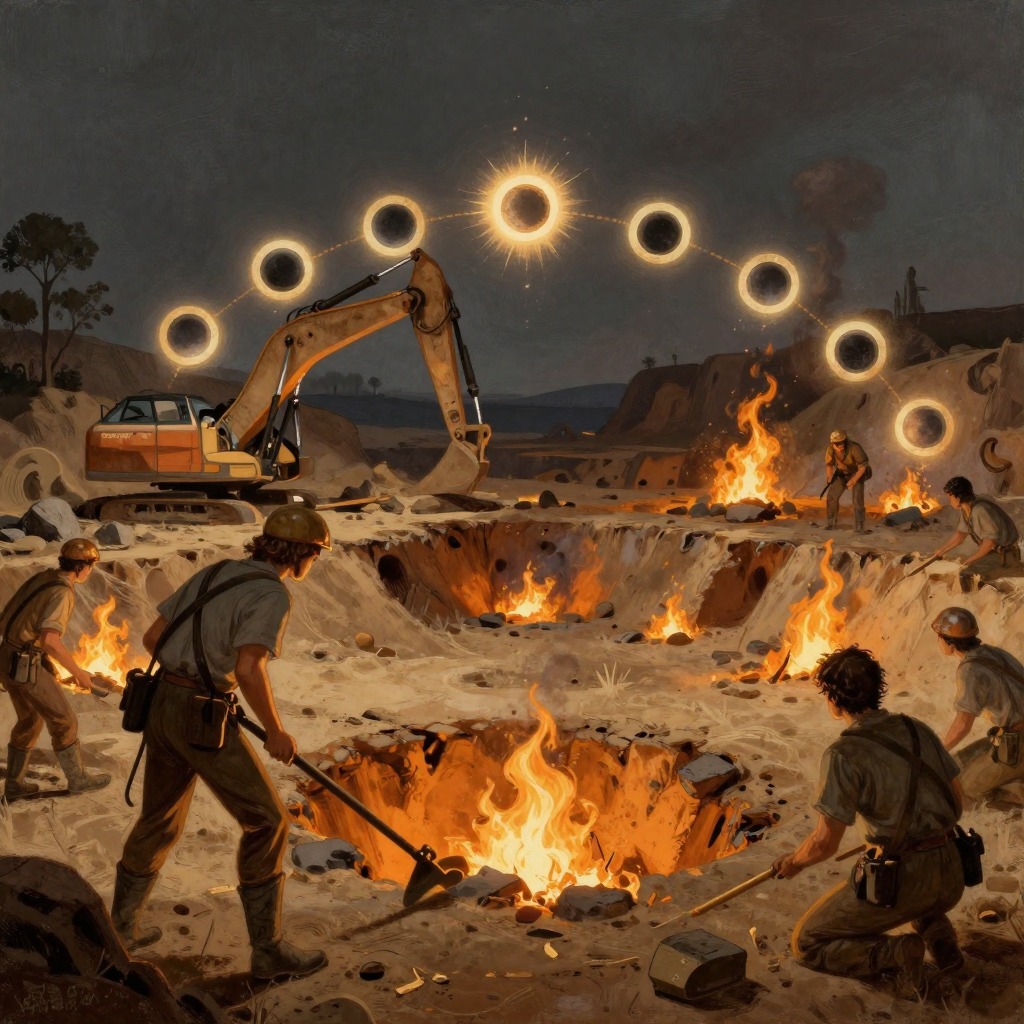
Siferra's initial reaction to the exposed hill is one of professional exhilaration. She scrambles up the slope with her chief stratigrapher, Balik 338, and begins a trial cut, revealing a charred layer at the foundation of a cyclopean city, and beneath it, a crosshatch-style town also destroyed by fire. As they dig deeper, they uncover a sequence of at least seven, possibly nine, distinct settlements, each built atop the ruins of its predecessor and each separated by a clear burn line. Siferra's trained eye and aggressive excavation technique, though hasty, allow her to grasp the staggering implication: the Hill of Thombo has been periodically swept by massive fires at remarkably regular intervals, approximately every two thousand years, for a span of at least fourteen thousand years. This discovery directly challenges the orthodox archaeological belief that Beklimot, only about two thousand years old, was the first true human city. Siferra is acutely aware that her findings will be controversial, and she guards them jealously, fearing that they will be seized upon by the Apostles of Flame to support their apocalyptic prophecies.
The Thombo Tablets and the Alliance with the Apostles
Siferra's most prized finds from the dig are the Thombo Tablets, six baked clay slabs inscribed with ancient scripts. She entrusts them to the paleographer Mudrin 505 for translation. Mudrin's preliminary work suggests the tablets are an account of a city destroyed by fire, a punishment from angry gods, and that they may be a prehistoric version of the Apostles' Book of Revelations. This connection horrifies Siferra, who is deeply repulsed by the cult's irrationality. Her professional dilemma intensifies when the Apostles, through their spokesman Folimun 66, offer to share their ancient linguistic keys in exchange for the original tablets. Siferra refuses, insisting on copies, but the tablets are subsequently stolen from her office safe, an act she immediately attributes to the Apostles. This theft, which she describes as a violation akin to rape, deepens her animosity toward the cult even as her own data becomes inextricably linked to their prophecies.
Relationships and Conflict
Siferra's personal relationships are marked by a fierce, self-contained independence. She maintains a purely professional relationship with Balik 338, rebuffing his clumsy romantic advances after their return from the dig. Her friendship with the astronomer Beenay 25 is based on intellectual respect, and she confides in him about her fears that her work will be used by the Apostles. Her most complex relationship is with the journalist Theremon 762. Initially, she finds him tawdry and commonplace, but she is grudgingly attracted to his intelligence, toughness, and physical vigor. Their connection sours when Theremon begins a series of columns mocking the Observatory scientists' predictions of the eclipse, which Siferra sees as a destructive and irresponsible betrayal. Despite her anger, she invites him to the Observatory on the night of the eclipse, wanting him to witness the truth firsthand. This act of defiance against Athor's orders reveals a deeper, conflicted interest in him.
The Night of the Eclipse and Its Aftermath
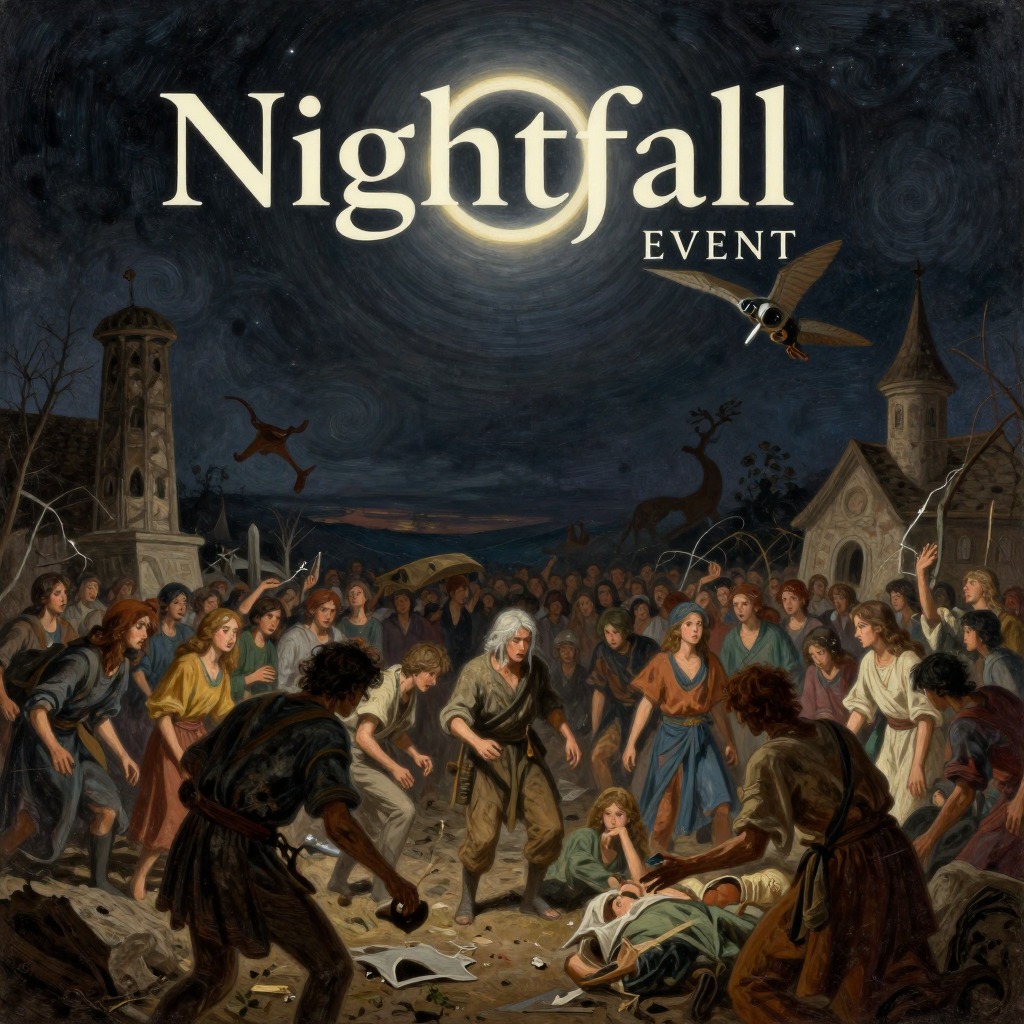
During the eclipse, Siferra is present in the Observatory dome. When the Stars appear, she is struck by their terrifying brilliance, but her mind, though numbed, does not shatter completely. She survives the ensuing chaos, the mob attack, and the destruction of the Observatory, wandering in a daze through the burning campus. In a moment of stark brutality, she kills Balik 338 when he attempts to rape her in her office, an act that shocks her but which she justifies as self-defense against a madman. After wandering the forest, she stumbles upon the university's Sanctuary, which has been taken over by a vigilante group called the Fire Patrol, led by the ruthless Altinol 111. Forced to strip at gunpoint to prove she carries no fire-making equipment, she is then offered a position as an officer in the Patrol. She accepts, seeing it as a pragmatic choice for survival and a chance to impose some order on the chaos.
Reunion and the Decision to Join the Apostles
Siferra's reunion with Theremon occurs when she rescues him from a beating by anti-fire fanatics in the forest. She brings him to the Fire Patrol's headquarters, where they rekindle their relationship. However, their plans to flee to the provisional government at Amgando are thwarted when they encounter the Apostles' army. Theremon is captured and, after a long conversation with Folimun, becomes convinced that the only hope for civilization is to ally with the cult. Siferra is initially furious, accusing Theremon of betrayal and brainwashing. But after a night of reflection, she comes to accept his reasoning: that Folimun's ruthless, disciplined organization is the only force capable of uniting the shattered world, and that working from within offers the best chance to guide the future. She agrees to join the Apostles, but on one condition: she will not wear their robe. This final act of defiance preserves a sliver of her independent identity as she prepares to enter a new, uncertain era under a theocratic regime.