James Tabb
James Tabb, a boat-builder from Kerrith, was the craftsman who converted the French fishing boat that Rebecca de Winter had bought in Brittany into a small yacht. He had fitted her out each season for four years, and his professional pride in his work made him a stubborn and consequential witness at the inquest into Rebecca's death.
Identity and Professional Role
Tabb was a local tradesman whose reputation had been damaged by the original verdict on Rebecca's death. After the accident, he told the coroner, "a lot of people in Kerrith made unpleasantness about my work. Some said I had let Mrs de Winter start the season in a leaky, rotten boat. I lost two or three orders because of it." The sinking of the boat, with no wreckage to examine, had left him unable to clear his name. When the stranded steamer's diver discovered Rebecca's boat on the sea-bed, Tabb obtained permission from Captain Searle to inspect her himself. He wanted to satisfy himself that his workmanship was sound despite the boat having been waterlogged for more than twelve months.
Evidence at the Inquest
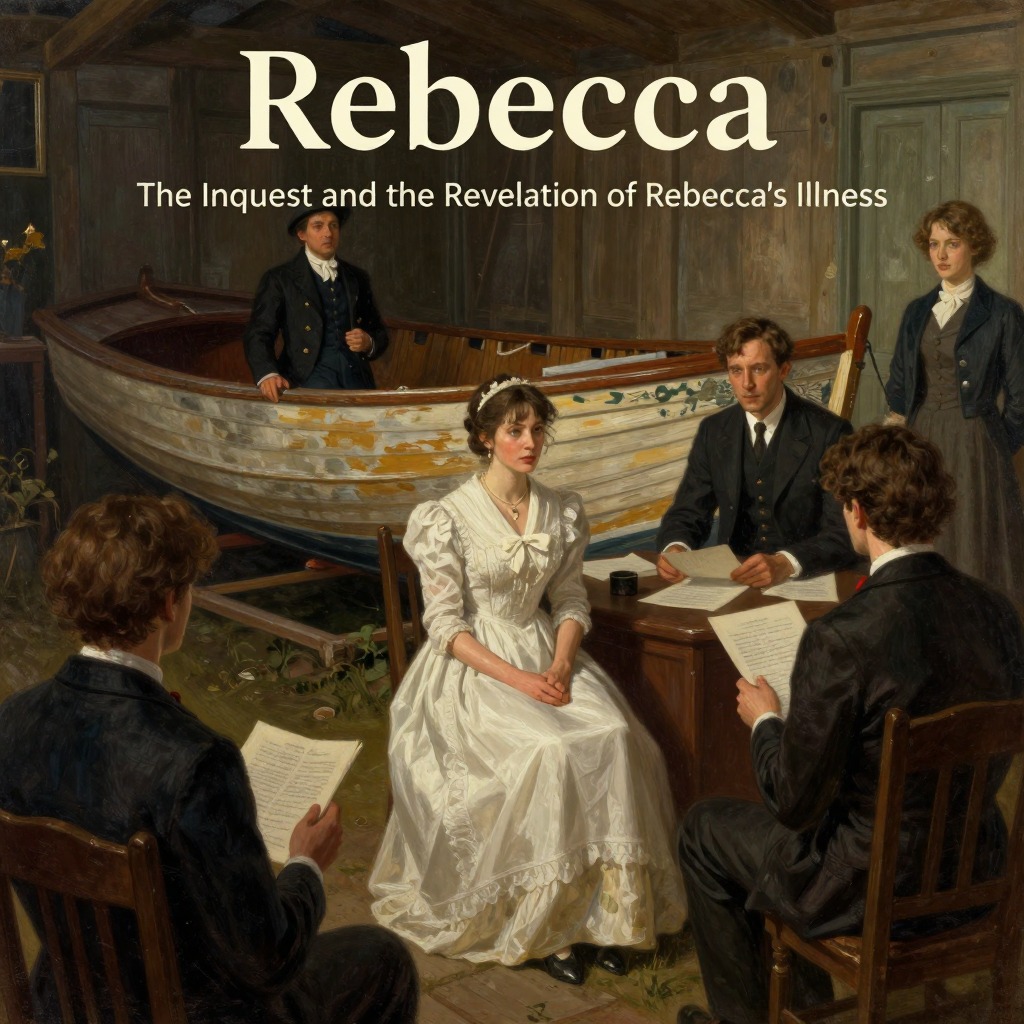
At the inquest, Tabb gave evidence that contradicted the accident theory. He stated that the boat had sunk on sandy bottom, not on the ridge of rocks, and that there was "not the mark of a rock on her." The crucial discovery was that three holes had been driven through her planking below the water-line—one forward by the chain locker and two close together amidships underneath the floorboards—and that the ballast had been shifted and lay loose. Furthermore, the seacocks, fittings that plug the pipes leading from a washbasin or lavatory and which are always kept tight closed when under way, had been turned full on. Tabb declared emphatically, "Those holes weren't there when the boat left my yard. I was proud of my work and so was Mrs de Winter. It's my opinion, sir, that the boat never capsized at all. She was deliberately scuttled."
Consequences of His Testimony
Tabb's evidence transformed the inquest. The coroner, Mr Horridge, was forced to abandon the assumption of accidental drowning and to question Maxim de Winter directly about the state of his marriage. The jury, unable to find a motive for suicide, returned a verdict of suicide without sufficient evidence of the deceased's state of mind—a compromise that left the case open. Tabb's testimony also provided the foundation for Jack Favell's subsequent accusation of murder, and it was the reason Colonel Julyan, Maxim, and Favell drove to consult Doctor Baker, whose revelation that Rebecca had been suffering from terminal cancer supplied the motive that the inquest had lacked.
Narrative Significance
Tabb functions as the agent of revelation in the novel's plot structure. His stubborn insistence on examining the boat and his refusal to accept the accident theory break open the official story that had protected Maxim for over a year. He is a flat character in E. M. Forster's sense—built around a single idea of professional integrity—but his single-mindedness has the force of a moral principle. He speaks not from malice but from a craftsman's need to vindicate his work, and this very lack of personal motive makes his evidence devastating. The holes he discovered are the material trace of Maxim's crime, the physical evidence that the sea had concealed and that Tabb, by his trade, was uniquely positioned to read.