the second Mrs de Winter
The second Mrs de Winter, the novel's unnamed narrator, is a young, shy, and inexperienced woman who marries Maxim de Winter after a whirlwind courtship in Monte Carlo and becomes the new mistress of Manderley, a role for which she feels profoundly inadequate. Her entire arc is defined by her struggle against the overwhelming, ghostly presence of Maxim's first wife, Rebecca, whose memory is kept alive by the housekeeper Mrs Danvers and by the narrator's own crippling sense of inferiority. The decisive turning point comes when Maxim confesses that he murdered Rebecca, a revelation that paradoxically frees the narrator from her rival's shadow and forges a true, adult partnership with her husband, even as the past's final reckoning destroys Manderley itself.
Identity and Background
The narrator begins the story as a rootless, orphaned young woman of twenty-one, working as a paid companion to the vulgar, snobbish Mrs Van Hopper at the Hotel Cote d'Azur in Monte Carlo. She is acutely conscious of her own social awkwardness, describing herself as a "shy, uneasy colt" trailing in her employer's wake, dressed in an ill-fitting flannel suit and a homemade jumper. Her father, a "lovely and unusual person," died of pneumonia, and her mother followed him five weeks later, leaving her alone in the world. She has no money, no connections, and no training for any other life. When she first sees Maxim de Winter, she is struck by his mediaeval, melancholy face, which reminds her of a portrait of a "Gentleman Unknown" in a gallery. She is utterly unprepared for the world of Manderley, having only a childhood memory of a twopenny picture postcard of the house.
Life and Plot Trajectory
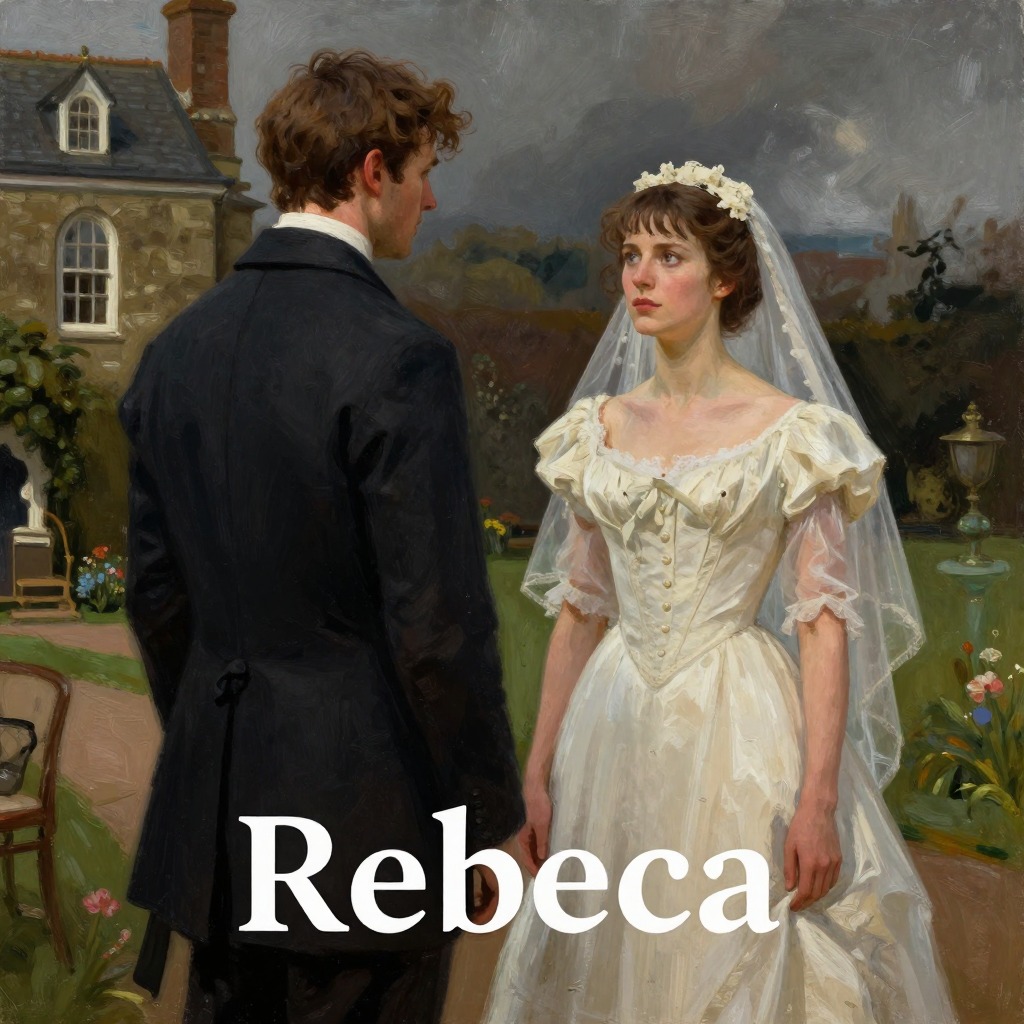
The narrator's life is transformed when Maxim, after a series of secret morning drives, proposes to her at the breakfast table. She accepts, and they marry quietly in a civil ceremony. The honeymoon in Italy and France is idyllic, but the moment they arrive at Manderley, her happiness curdles into anxiety. She is greeted by a full staff assembled by Mrs Danvers, whose cold, skull-like face and deathly handshake fill her with immediate dread. She stumbles through her first days, making a series of humiliating faux pas: she cannot find the morning-room, she tries to light the library fire herself, and she breaks a valuable china cupid and hides the pieces in a drawer. Everywhere she turns, she is reminded of Rebecca—the desk in the morning-room with its docketed pigeon-holes, the alabaster vase that was "always used for the lilac," the handkerchief in a mackintosh pocket that smells of azaleas. The constant refrain from others, "She's so different from Rebecca," becomes a torment. Her nadir comes at the Manderley fancy dress ball, when she appears at the top of the stairs in a costume copied from a family portrait, only to discover it is the exact same dress Rebecca wore at the last ball. Maxim's ashen face and furious command to "go and change" shatter her.
Key Actions and Objectives
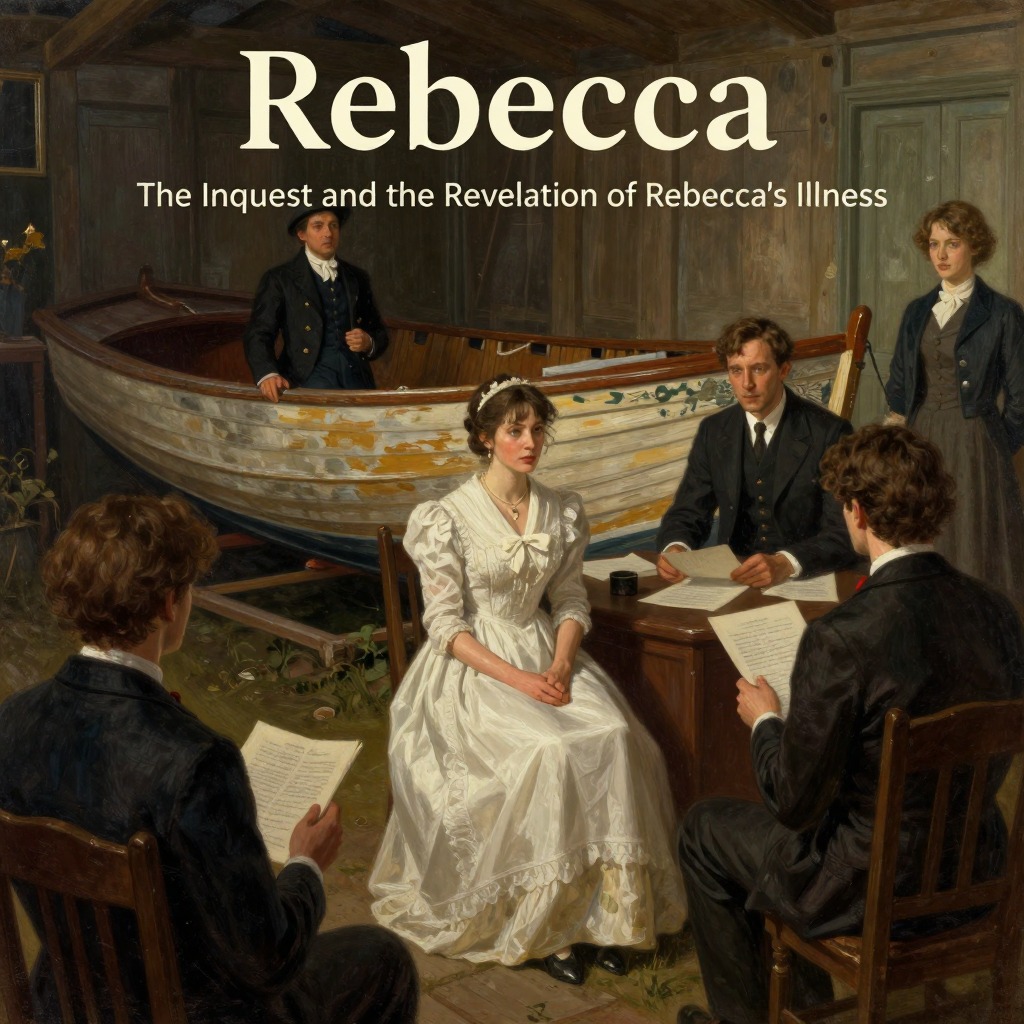
The narrator's primary objective throughout the first half of the novel is simply to survive, to learn the complex rituals of Manderley, and to win Maxim's love. She is passive, reactive, and terrified of making mistakes. She avoids Mrs Danvers, defers to her on every household matter, and never questions the routines Rebecca established. Her key actions are often small, furtive, and symbolic: she burns the flyleaf inscribed "Max from Rebecca" from a book of poems; she finds Rebecca's handkerchief in a coat pocket and wipes her fingers on it; she allows Mrs Danvers to lead her through Rebecca's preserved bedroom, touching the nightdress and the slippers. These acts are not assertive but compulsive, driven by a morbid curiosity she cannot control. The turning point comes when she overhears Maxim's angry confrontation with Mrs Danvers over Jack Favell's visit, and later, when she faints at the inquest. Her most decisive action is her refusal to abandon Maxim after his confession. She chooses to stand with him, to lie and perjure herself, and to face the future together.
Relationships and Conflict
The central relationship of the narrator's life is with Maxim, but for most of the novel it is a relationship of painful distance. She loves him with a desperate, childish devotion, but she believes he is still in love with Rebecca and that their marriage is a failure. She feels like a dog or a child, patted on the head and told to run away. The conflict is internal: she cannot bring herself to ask him about the past, and he, believing her to be unhappy and bored, does not confide in her. The most destructive relationship is with Mrs Danvers, who openly despises the narrator for taking Rebecca's place. Mrs Danvers manipulates her, showing her Rebecca's room and suggesting she wear the fatal costume. The climax of this conflict comes when Mrs Danvers, standing at the open window of Rebecca's room, urges the narrator to jump, whispering, "Why don't you go?" The narrator is saved from this psychological assault only by the sound of distress rockets from a stranded ship. Her friendship with Frank Crawley provides a crucial, if limited, source of support; he is the only person to whom she confesses her feelings of inadequacy.
Change and Ending
The narrator's transformation is sudden and total. When Maxim confesses that he killed Rebecca, her world is inverted. She learns that he never loved Rebecca, that their marriage was a "farce," and that Rebecca was vicious and cruel. The knowledge does not repel her; it liberates her. She says, "I'm grown up, Maxim, in twenty-four hours. I'll never be a child again." She becomes his protector, his ally, and his equal. She accompanies him to London to see Doctor Baker, and she sits beside him in the car as they drive back through the night. The final image of the narrator is not of a timid girl but of a woman who has found her strength. As they see the red glow of Manderley burning on the horizon, she is beside him, facing the destruction of the house that has been both her prison and her dream. The novel ends with her voice, but it is a voice that has learned to speak of the past without bitterness, to remember the rose-garden and the birds that sang at dawn, and to accept that Manderley is no more.
Narrative Role and Evaluation
The narrator is the first-person consciousness through which the entire story is filtered, and her unreliability is a central structural device. The reader experiences Manderley, Rebecca, and even Maxim entirely through her anxious, self-deprecating, and often mistaken perceptions. Her intense subjectivity—her tendency to imagine the worst, to read meaning into every silence, to construct a perfect, idealized Rebecca from fragments of gossip and objects—creates the novel's gothic atmosphere of suspense and dread. Her growth from a passive, self-doubting girl into a decisive, loving woman is the novel's emotional core. The final irony is that her liberation comes not from becoming more like Rebecca, but from learning that Rebecca was a monster, and that Maxim chose her precisely because she was different. The narrator's namelessness is itself a powerful literary choice, making her a universal figure of the outsider, the young bride, the woman who must find her own identity in a house full of ghosts.