Mr Horridge
Mr Horridge, the coroner of Lanyon, is a thin, elderly man who wears gold-rimmed pince-nez and conducts the inquest into Rebecca de Winter's death with a painstaking, self-important formality that makes him a dangerous figure for Maxim de Winter. He is introduced during the inquest proceedings as a man who 'goes into details that are quite irrelevant, just to show the jury how thorough he is at his job,' according to Frank Crawley, who warns Maxim that Horridge's style can rattle a witness. His courtroom manner is slow, careful, and easily offended; when Maxim's temper flares, Horridge responds with icy formality, saying, 'I don't conduct this enquiry for my own amusement.' He is the kind of official who treats the courtroom as his personal domain, and his suspicion, once aroused, is not easily dispelled.
Role in the Inquest
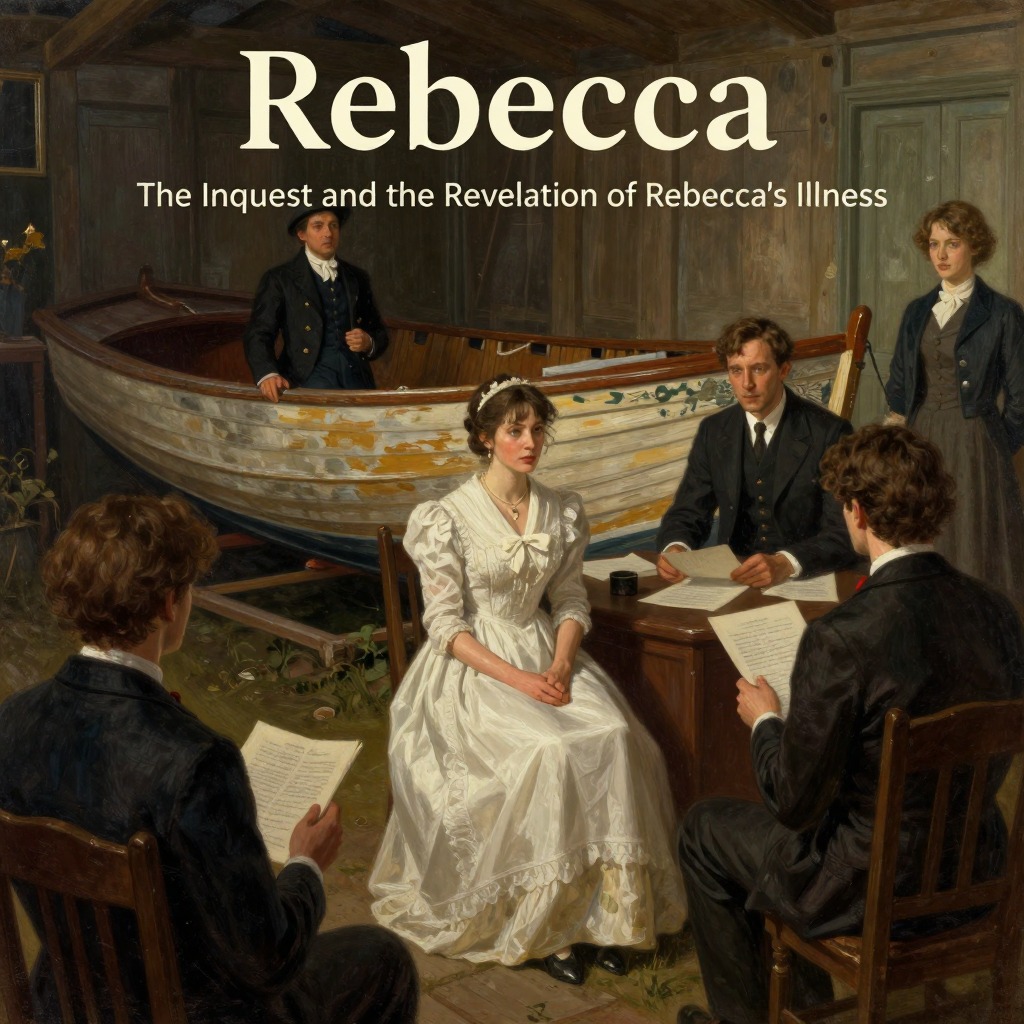
Horridge presides over the inquest in a small, stuffy room in Lanyon, where the air grows so hot that the narrator faints. He methodically questions each witness: Captain Searle, the diver, Doctor Phillips, and James Tabb, the boat-builder. When Tabb reveals that the boat had three holes driven through her planking and the seacocks turned full on, Horridge's line of questioning shifts from accident to deliberate scuttling. He presses Maxim on the implications of this evidence, asking whether the boat was tampered with maliciously before the voyage or deliberately scuttled by whoever took her out that night. His questions become increasingly pointed, and he asks Maxim the personal question that Maxim has dreaded: 'Were relations between you and the late Mrs de Winter perfectly happy?' This question, delivered in Horridge's dry, official tone, brings the inquest to its most dangerous moment for Maxim.
Confrontation with Maxim
Maxim, following Frank Crawley's advice to stay calm, initially answers Horridge's questions with restraint. But when Horridge suggests that the evidence of deliberate scuttling should have been a shock, Maxim's voice turns sharp: 'Does it surprise you that I should be shocked?' Horridge responds with wounded dignity, and the exchange becomes a battle of wills. Maxim later tells the narrator that he kept his temper only because he saw her faint by the door, which 'brought me up with a jerk.' Horridge's persistence nearly breaks Maxim's composure, but the coroner ultimately accepts the jury's verdict of suicide, a decision that Favell later calls the work of a 'doddering old fool.' Horridge's role ends with the verdict, but his narrow, legalistic mind has come within a hair's breadth of uncovering the truth.
Thematic Significance
Mr Horridge represents the impersonal, procedural machinery of the law that threatens to expose Maxim's crime. He is a figure of official authority who, unlike Colonel Julyan, shows no personal sympathy for Maxim or the de Winter family. His gold-rimmed pince-nez and his habit of going over the same ground repeatedly make him a symbol of the relentless, detail-obsessed justice system that could, at any moment, turn against the powerful. The narrator remembers his face as something she will recall 'to my dying day,' and Maxim's victory at the inquest is as much a matter of luck and Horridge's limited imagination as it is of Maxim's self-control. Horridge's failure to probe deeper—his acceptance of the suicide verdict despite Tabb's damning evidence—is the final piece of good fortune that allows Maxim to escape immediate exposure, but it also leaves the truth precariously buried, waiting for the discovery of Doctor Baker to finally resolve the case.