Meeting Vasudeva and Becoming a Ferryman
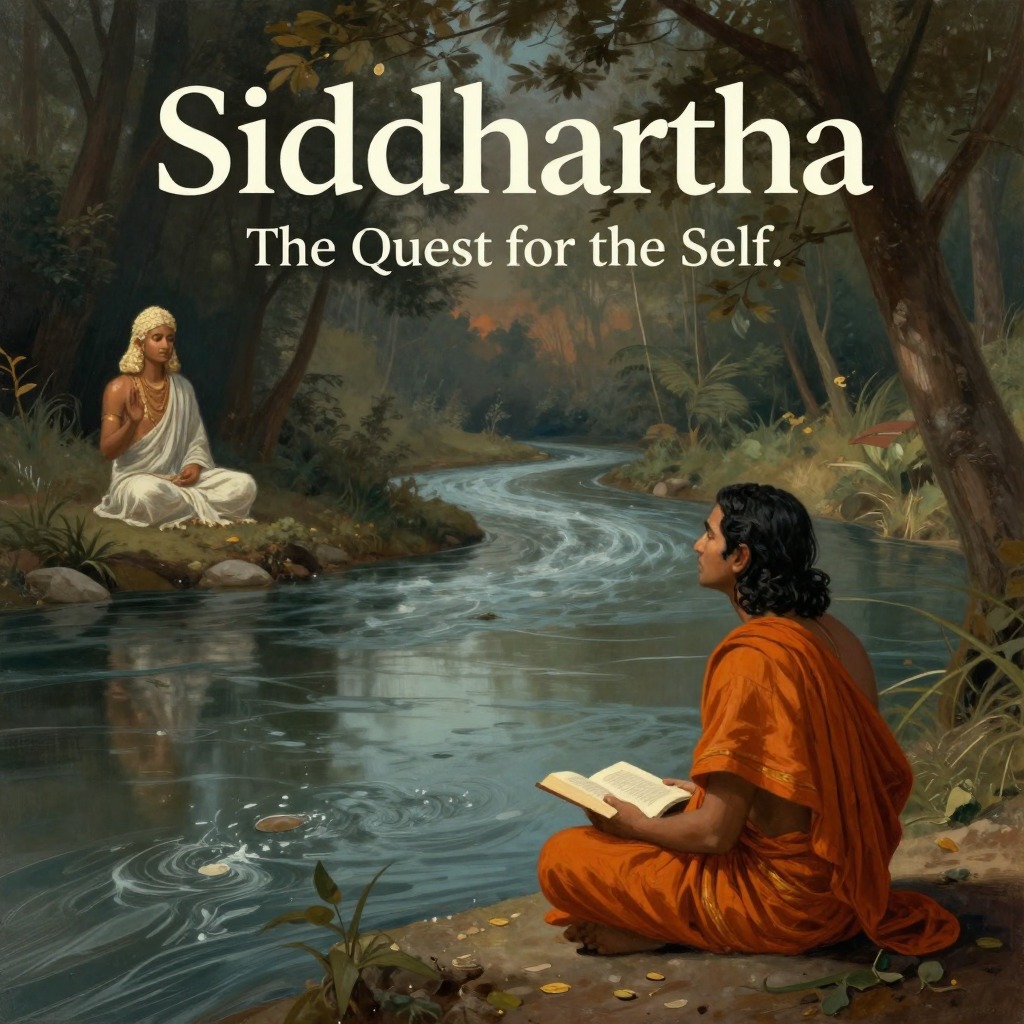
Siddhartha's meeting with Vasudeva and his decision to become a ferryman mark the pivotal transition from the despair of his worldly life to the beginning of his final, profound spiritual awakening. After his failed suicide attempt by the river, where the sound of Om had saved him, Siddhartha awoke to find himself transformed, a new man. He recognized the same ferryman who had carried him across the river decades earlier, when he was a young Samana leaving the grove of Gotama. The ferryman, Vasudeva, had aged greatly, but his calm, knowing presence remained unchanged. Siddhartha, still wearing the fine clothes of a rich man, asked to be ferried across, and when Vasudeva remarked that such a life was not for people wearing fine clothes, Siddhartha laughed and offered his garments as payment, confessing he had no money. He then asked to stay with Vasudeva as his assistant or trainee, to learn how to handle the boat. Vasudeva, after a long, searching look, recognized him as the Samana he had once ferried, and welcomed him by name, offering him shelter, bread, water, and mango fruits. That evening, as the sun set, they sat on a log by the bank, and Siddhartha told Vasudeva the entire story of his life, from his birthplace and childhood through all his searching, joy, and distress, up to the hour of despair by the river. Vasudeva listened with extraordinary attention, letting every word enter his mind without impatience, praise, or rebuke—a listening so complete that Siddhartha felt he was burying his own life in the ferryman's heart. When Siddhartha spoke of the holy Om and his love for the river after his deep sleep, Vasudeva listened with doubled attention, his eyes closed. After a long silence, Vasudeva said, "It is as I thought. The river has spoken to you. It is your friend as well, it speaks to you as well. That is good, that is very good. Stay with me, Siddhartha, my friend." He explained that his wife had died long ago, and that there was space and food for both. Siddhartha gratefully accepted, and from that day, he lived with Vasudeva, learning to operate the boat, working in the rice-field, gathering wood, plucking fruit from the banana-trees, building oars, mending the boat, and weaving baskets. He was joyful in everything he learned, and the days and months passed quickly.
Learning from the River
More than anything Vasudeva could teach him, Siddhartha was taught by the river itself. Incessantly, he learned from it to listen, to pay close attention with a quiet heart, with a waiting, opened soul, without passion, without a wish, without judgement, without an opinion. Vasudeva had told him, "The river has taught me to listen, from it you will learn it as well. It knows everything, the river, everything can be learned from it." Siddhartha saw that the river ran and ran, incessantly, yet was always there, always the same and yet new in every moment. He learned from it the secret that there is no time—that the river is everywhere at once, at the source and at the mouth, at the waterfall, at the ferry, at the rapids, in the sea, in the mountains, everywhere at once, and that there is only the present time for it, not the shadow of the past, not the shadow of the future. This realization filled him with ecstasy: all suffering, all forms of tormenting oneself and being afraid, were time, and everything hostile in the world was gone as soon as one had overcome time. He also learned that the river has many voices—the voice of a king, of a warrior, of a bull, of a bird of the night, of a woman giving birth, of a sighing man, and a thousand other voices—and that when one succeeds in hearing all of them at once, they speak the single word Om. Vasudeva confirmed this, and their smiles grew more and more alike, bright and glowing with bliss, shining out of a thousand small wrinkles, alike to a child's and to an old man's. Many travellers, seeing the two ferrymen, thought they were brothers. Often they sat together in the evening by the bank on the log, saying nothing, both listening to the water, which was no water to them but the voice of life, of what exists, of what is eternally taking shape. Sometimes, when the river had said something good to them, they looked at each other, both thinking precisely the same thing, both delighted about the same answer to the same question.
The Ferryman's Wisdom and the Healing of the Wound
Vasudeva's wisdom was not in words but in his way of being. He was no learned man, had no special skill in speaking or thinking, but he knew how to listen and to be godly. He had ferried thousands across the river, and for most, the river was merely an obstacle; but for a few, four or five, the river had become sacred, as it had for him. Siddhartha, too, became one of those few. The wound of his son's departure continued to burn, and Siddhartha suffered the blind love of a father, envying every traveller who had a son or daughter. He confessed everything to Vasudeva—his walk to the city, his envy, his futile fight against his wishes, his childish attempt to run after his son, and how the river had laughed at him. Vasudeva listened with a quiet face, and his listening gave Siddhartha a stronger sensation than ever before: his pain, his fears, his secret hope flowed over to Vasudeva and came back from him, as if he were bathing his wound in the river until it cooled and became one with it. While Siddhartha was still speaking, he felt that Vasudeva was no longer a human being but the river itself, God himself, the eternal itself. Vasudeva then led him to the seat by the bank, and they listened together. Siddhartha heard the river's thousand voices—the lamentation of yearning, the laughter of the knowledgeable one, the scream of rage, the moaning of the dying—all intertwined, all one. When he listened without tying his soul to any particular voice, the great song consisted of a single word: Om, the perfection. In that hour, Siddhartha stopped fighting his fate, stopped suffering. His wound blossomed, his suffering shone, his self flew into the oneness. Vasudeva, seeing the cheerfulness of knowledge shining in Siddhartha's eyes, touched his shoulder and said, "I've been waiting for this hour, my dear. Now that it has come, let me leave." He bid farewell to the hut, the river, and Siddhartha, and went into the forests, into the oneness, with a bright smile. Siddhartha watched him leave, seeing his steps full of peace, his head full of lustre, his body full of light. From that moment, Siddhartha himself became the ferryman, the one who listens, the one who has found peace.