The First Reading of the Notebook is the central ritual of the novel's frame narrative, in which the elderly Noah Calhoun reads aloud the story of his and Allie's past love to Allie, who now suffers from Alzheimer's disease and cannot recognize him, in the hope that the miracle of memory and recognition will return to her.
Barnabas is the castle messenger who delivers Klamm's letters to K., becoming a figure of hope and frustration in K.'s quest for recognition. His family's tragic history, revealed through his sister Olga, casts a shadow over his role and deepens the novel's exploration of the castle's inscrutable power.
Friedrich is a high-ranking official in the castle's bureaucracy, known for his exceptional memory and knowledge of human nature. He is a principal secretary to Klamm, and his recognition of Barnabas leads to a crucial summons for K. to meet with Erlanger, marking a significant, albeit fleeting, moment of connection between K. and the castle's authority.
Galater is a castle official who appears only in passing in The Castle, yet his actions decisively shape K.'s fate: he deputizes for Klamm in sending the two assistants to K., and his name surfaces in the villagers' accounts of the castle's workings, linking the bureaucracy's arbitrary power to K.'s struggles.
Miss Gisa is the assistant teacher at the village school, a tall, blonde, handsome young woman whose stiff manner and possessive attachment to her cat define her role as a minor but sharp-edged authority figure in K.'s life. She embodies the village's petty officialdom and its hostility toward K., and her interactions with him—from the morning confrontation over the sleeping arrangements to the deliberate scratching of his hand—mark the low point of his humiliating tenure as school janitor.
K. and the assistants form a relationship defined by forced proximity, mutual suspicion, and escalating conflict, from their first meeting at the Bridge Inn to their final separation. The assistants, Artur and Jeremias, are assigned to K. by the castle, but they prove to be incompetent, intrusive, and ultimately treacherous, undermining K.'s authority and contributing to his isolation. Their presence is a constant irritant, and their actions—from their refusal to obey orders to their role in Frieda's departure—highlight K.'s powerlessness against the castle's machinations.
Olga, the elder sister of the messenger Barnabas, forms a complex and deeply ambivalent relationship with the castle servants, one that is both a means of survival for her ostracized family and a source of personal degradation. Her nightly visits to the Castle Inn stables, where she consorts with the servants for over two years, represent a desperate, semi-official attempt to regain the castle's favor and lift the social exclusion that has fallen on her family since her sister Amalia's defiance of the official Sortini. This relationship is characterized by exploitation, false promises, and a profound asymmetry of power, yet it also provides Olga with a unique, if precarious, connection to the castle and a reservoir of knowledge about its workings.
The relationship between the village and the castle is the foundational power structure of Kafka's novel, defining every social interaction, bureaucratic process, and personal ambition. The castle, an invisible and inaccessible authority, governs the village through a complex, often contradictory administrative system, while the villagers, though ostensibly subordinate, maintain a wary, ritualized distance from its officials. This relationship is characterized by a profound asymmetry of power, a pervasive atmosphere of uncertainty, and a constant negotiation between official decree and local reality, ultimately shaping K.'s entire struggle for recognition and belonging.
Amir is the first-person narrator and protagonist of The Kite Runner, whose journey from a privileged but guilt-ridden boy in 1970s Kabul to a man seeking redemption in America and Taliban-era Afghanistan forms the novel's central arc. His defining act—witnessing the rape of his half-brother and servant Hassan and doing nothing—shapes his identity for twenty-six years, driving him to betray Hassan further, flee the Soviet invasion, build a new life in California, and ultimately return to a war-ravaged Kabul to rescue Hassan's orphaned son, Sohrab, in a final attempt to atone for his past.
Mullah Fatiullah Khan is the short, stubby-faced religious instructor at Amir's school in 1970s Kabul, whose dogmatic teachings on sin and Islamic practice provoke Baba's fierce contempt and crystallize the novel's central conflict between institutional religion and personal morality.
Assef the Ear Eater is the nickname given to Assef, a sociopathic bully in Kabul who terrorizes the neighborhood and later becomes a Taliban official, embodying the novel's exploration of ethnic hatred and violence.
For you, a thousand times over is the defining expression of unconditional loyalty and sacrificial love in Khaled Hosseini's The Kite Runner, first spoken by Hassan to Amir during the 1975 kite tournament and later echoed by Amir to Hassan's son Sohrab as a pledge of redemption.
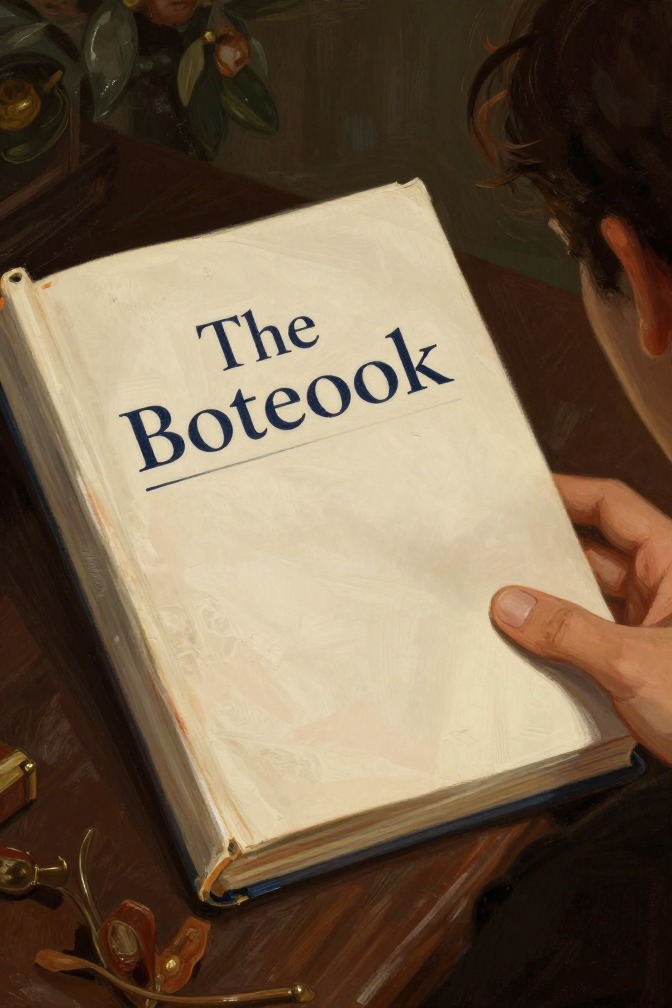
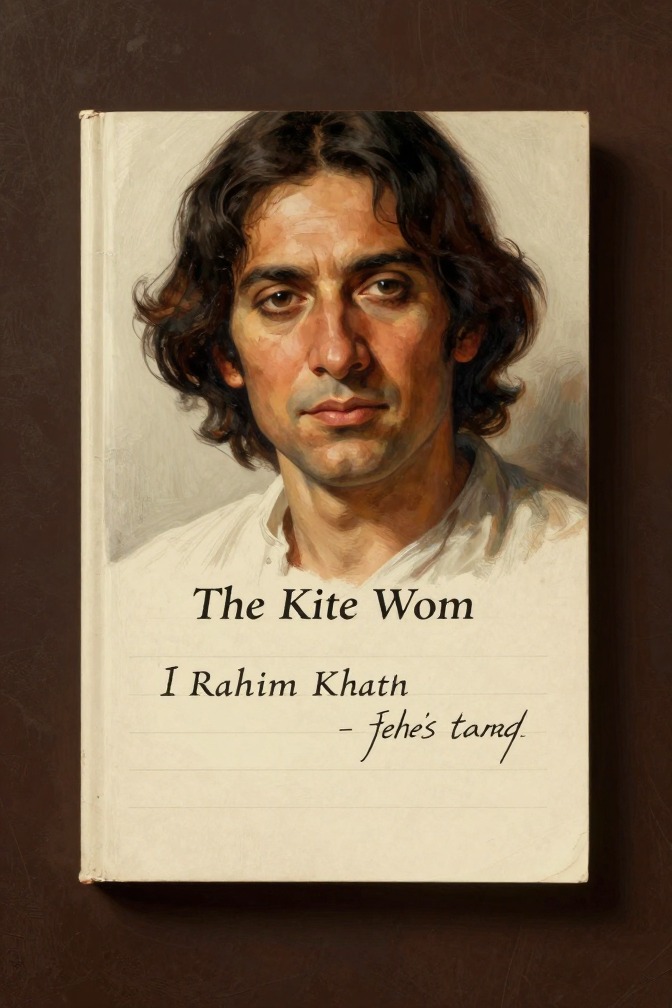
The leather-bound notebook, given to Amir by Rahim Khan on his thirteenth birthday, becomes a symbol of Amir's literary aspirations and a repository for his early stories. It later serves as a tangible link to his past, discovered by Soraya after Baba's death, and ultimately represents the possibility of redemption and the enduring connection to Hassan and Sohrab.
Rahim Khan's letter, delivered to Amir in a Peshawar hospital after his fight with Assef, is the novel's final epistolary revelation. It confesses that Rahim Khan always knew about Amir's betrayal of Hassan in the alley, explains Baba's lifelong guilt over fathering Hassan, and urges Amir to forgive himself. The letter transforms the meaning of the entire story, reframing Baba's philanthropy as atonement and positioning Amir's journey to Kabul as a chance for redemption.
The Northern Alliance was a military-political coalition that fought against the Taliban regime in Afghanistan from the mid-1990s until 2001. In The Kite Runner, the Alliance is depicted as a faction that, after driving the Soviets out, turned Kabul into a battlefield of infighting, causing immense civilian suffering before the Taliban's rise, and later as the force that, with American support, toppled the Taliban after the September 11 attacks.
The Afghan civil war, a period of intense internal conflict following the Soviet withdrawal, devastated Kabul and its people, marking a brutal chapter in the nation's history that directly shaped the lives of the novel's characters.
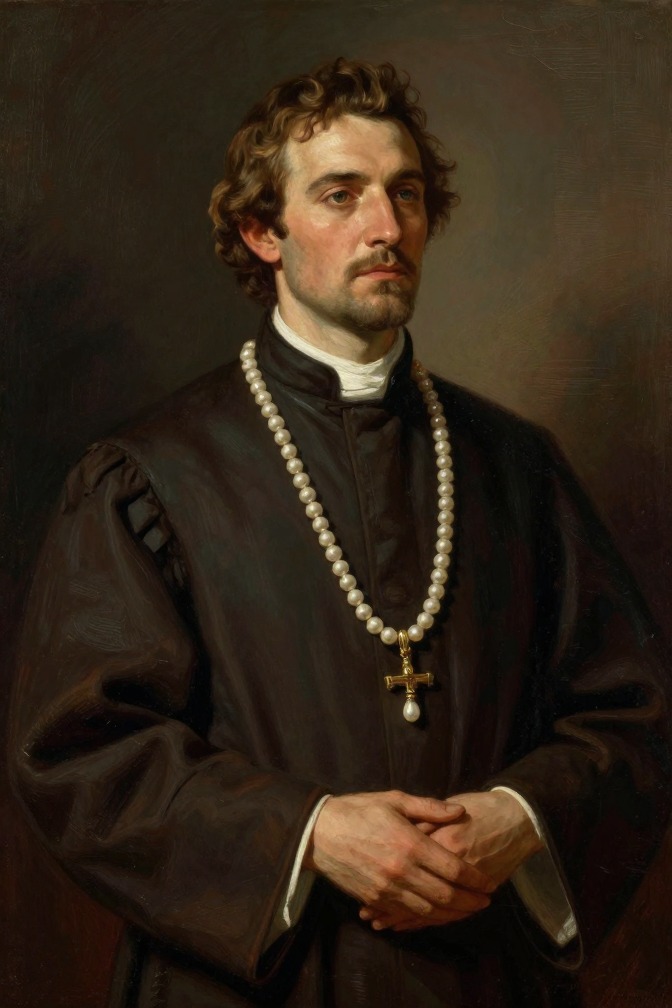
The Priest is a minor but symbolically significant figure in John Steinbeck's The Pearl, who represents the institutional Church's complicity in the colonial social order that keeps Kino's people impoverished and subjugated. He appears twice in the narrative—first to bless Kino's newfound wealth and remind him of his duty to God, and second through the memory of his annual sermon that preaches acceptance of one's station in life. His actions and words reveal how religious authority is deployed to maintain the status quo, discouraging the poor from seeking economic advancement while positioning the Church to benefit from their good fortune.
The ant lion appears in a single, brief but thematically resonant moment during Kino's flight to the mountains, where Kino watches a dusty ant frantically try to escape the sand trap an ant lion has dug for it, a scene that encapsulates the predatory structure of the world Kino himself is entering.
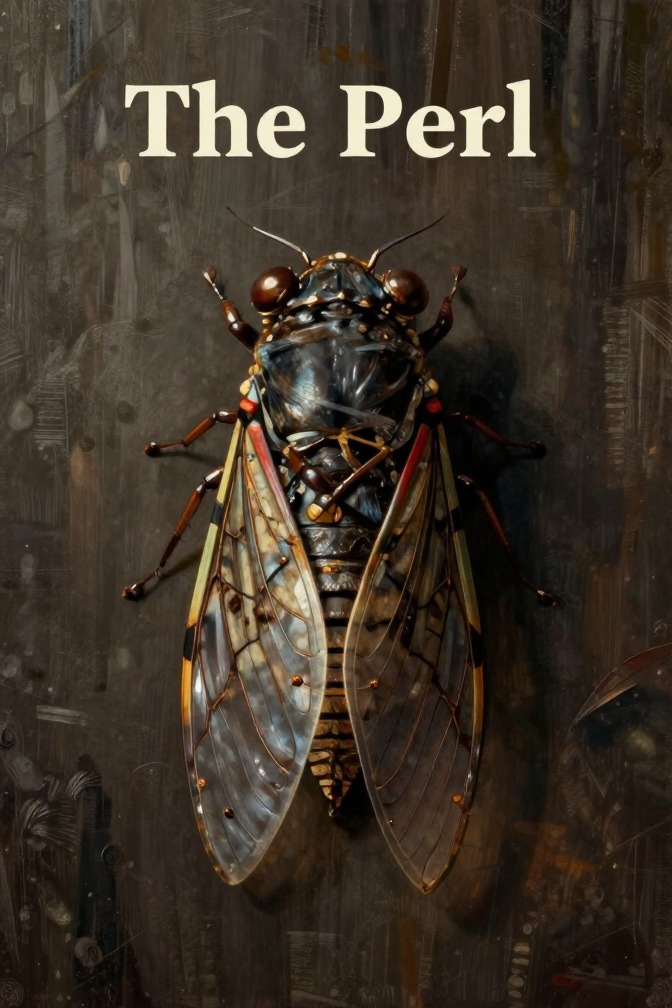
The cicada is a recurring auditory motif in John Steinbeck's novella The Pearl, its metallic ringing filling the mountain cleft during the climactic night when Kino descends to attack the trackers. The insect's sound merges with Kino's internal music, becoming part of the narrative's sonic landscape that expresses the tension between the Song of the Family and the Song of Evil.
The fiddler crab appears as a minor but vivid element of the natural setting in John Steinbeck's novella The Pearl, contributing to the sensory texture of the beach environment and reinforcing the theme of a world governed by instinct and survival rather than human ambition.
The first night attack on Kino's house occurs after the doctor's visit, when an intruder attempts to steal the great pearl. Kino, alerted by a faint sound, springs to defend his family, striking with his knife and suffering a head wound in the struggle. The attack shatters the family's sense of security, drives Juana to demand the pearl be thrown away, and hardens Kino's resolve to keep it, marking the beginning of the escalating violence that will consume them.
This pearl has become my soul is a pivotal expression uttered by Kino in John Steinbeck's The Pearl, marking the moment when his identity becomes inextricably fused with the pearl he has found. The phrase crystallizes the novella's central theme: the pearl, initially a symbol of hope and liberation, transforms into an object of obsession that consumes Kino's moral being, leading him to violence, the destruction of his family, and ultimately the loss of his son.
Foka is a minor character in Mikhail Bulgakov's *The Master and Margarita*, a poet and member of the Massolit literary association who appears in the novel's satirical depiction of the Moscow literary elite. He is best known for his brief but revealing conversation with the poet Amvrosy at the Griboedov restaurant, which encapsulates the gluttony, envy, and petty concerns of the Soviet literary establishment.
Ida Herkulanovna Vors is a minor character in Mikhail Bulgakov's The Master and Margarita, appearing in Nikanor Ivanovich Bosoy's dream as the mistress of Sergei Gerardovich Dunchil, a currency hoarder. She is exposed by the master of ceremonies in the dream-theatre as the keeper of Dunchil's hidden dollars and diamond necklace, embodying the novel's satirical treatment of greed, hypocrisy, and the secret economy of the Soviet era.
Joseph Kaifa, the High Priest of the Sanhedrin in Yershalaim, is the primary antagonist in the Pilate narrative, embodying the inflexible religious and political authority that condemns Yeshua Ha-Nozri. His confrontation with Pontius Pilate over the release of Bar-Rabban reveals the deep conflict between Roman imperial power and Jewish religious law, and his actions set in motion the irreversible tragedy of the crucifixion.
Latunsky is a literary critic in Mikhail Bulgakov's *The Master and Margarita* who leads a vicious press campaign against the master's unpublished novel about Pontius Pilate, publishing an article titled 'A Militant Old Believer' that brands the work as an apology for Jesus Christ and its author as an 'icon-dauber.' His attacks, alongside those of Ariman and Mstislav Lavrovich, trigger the master's psychological collapse, and his name becomes the target of Margarita's vengeful fury during her transformation into a witch, marking him as a symbol of the cowardly, state-serving literary establishment that persecutes genuine art.
Professor Stravinsky is the chief psychiatrist at the elite clinic on the outskirts of Moscow, a figure of calm authority and penetrating intelligence who manages the novel's most volatile characters—Ivan Homeless and the master—with a blend of clinical precision and humane irony. He embodies the rational, institutional response to the supernatural chaos unleashed by Woland, yet his own methods reveal the limits of science when confronted with metaphysical truth.
Stepan Bogdanovich Likhodeev, the director of the Variety Theatre, is a corrupt, alcoholic, and incompetent official who becomes the first Moscow victim of Woland's retinue. His sudden and inexplicable transportation from his apartment in Moscow to Yalta serves as the catalyst for the chaotic events that engulf the theatre and exposes the moral decay of the Soviet cultural establishment.
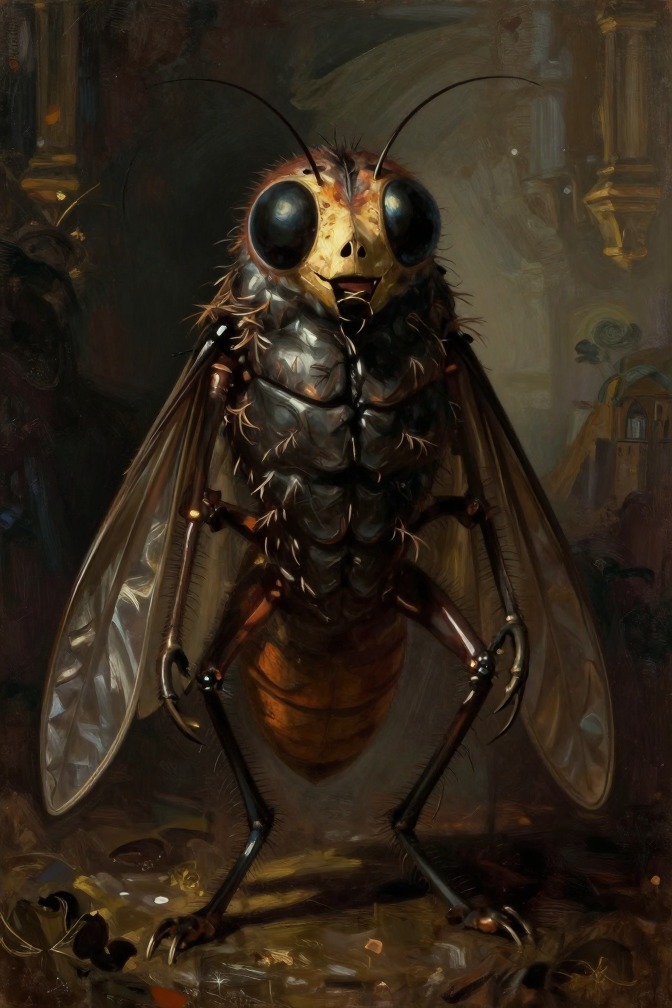
The gadfly is a minor but symbolically charged creature in Mikhail Bulgakov's The Master and Margarita, appearing during the crucifixion of Yeshua Ha-Nozri on Bald Mountain. Its presence, alongside flies and horseflies, underscores the physical degradation and abandonment of the executed, and connects to the novel's broader themes of suffering, the indifference of nature, and the grotesque reality of state-sanctioned violence.
The fifth procurator of Judea, the equestrian Pontius Pilate is the formal title of Pontius Pilate, the Roman governor who presides over the trial of Yeshua Ha-Nozri in the novel. This phrase serves as the final line of the master's novel, marking the completion of his work and the culmination of Pilate's story, which is central to the novel's themes of cowardice, guilt, and the search for truth.