Usury, the practice of lending money at interest, is condemned in Dante's Inferno as a sin against nature and art, placed among the violent against God in the seventh circle of Hell, where usurers are punished on a scorching sand waste under a rain of fire, their suffering a direct consequence of their violation of divine and natural order.
Midnight is a recurring temporal marker in Dante's Divine Comedy, used to structure the journey's chronology, mark transitions between realms, and underscore the poem's themes of spiritual awakening and the passage of time.
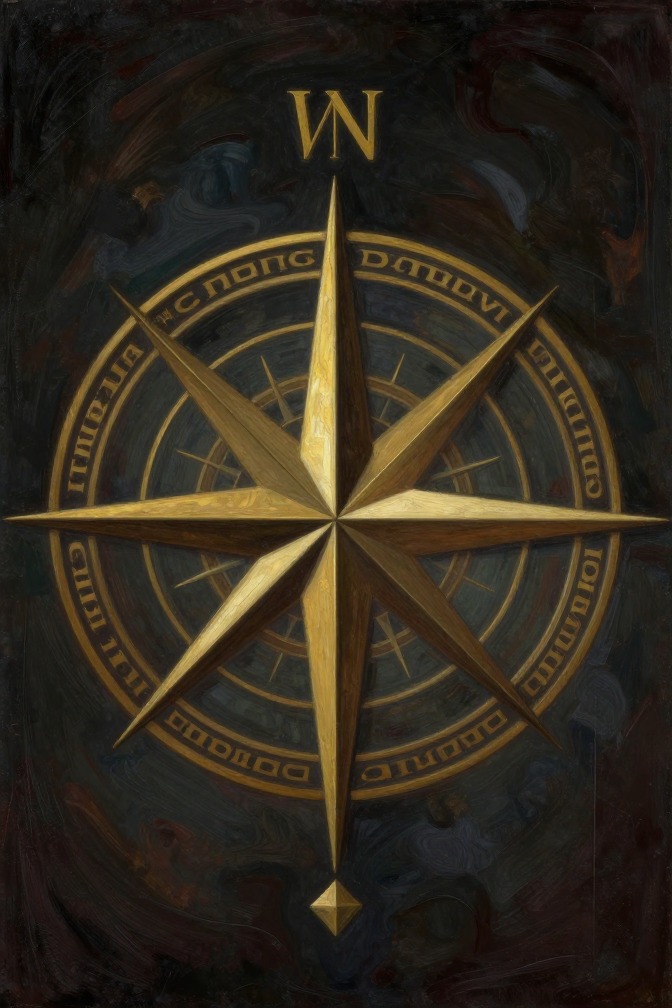
The Compass Rose is a navigational symbol that, in the context of *The Da Vinci Code*, is deeply tied to the concept of the Rose Line, the meridian that once served as the world's prime meridian and passes through the Church of Saint-Sulpice. The symbol's connection to the Rose, a key emblem of the sacred feminine and the Holy Grail, makes it a crucial piece of the novel's symbolic network, linking navigation, secrecy, and the lost goddess.
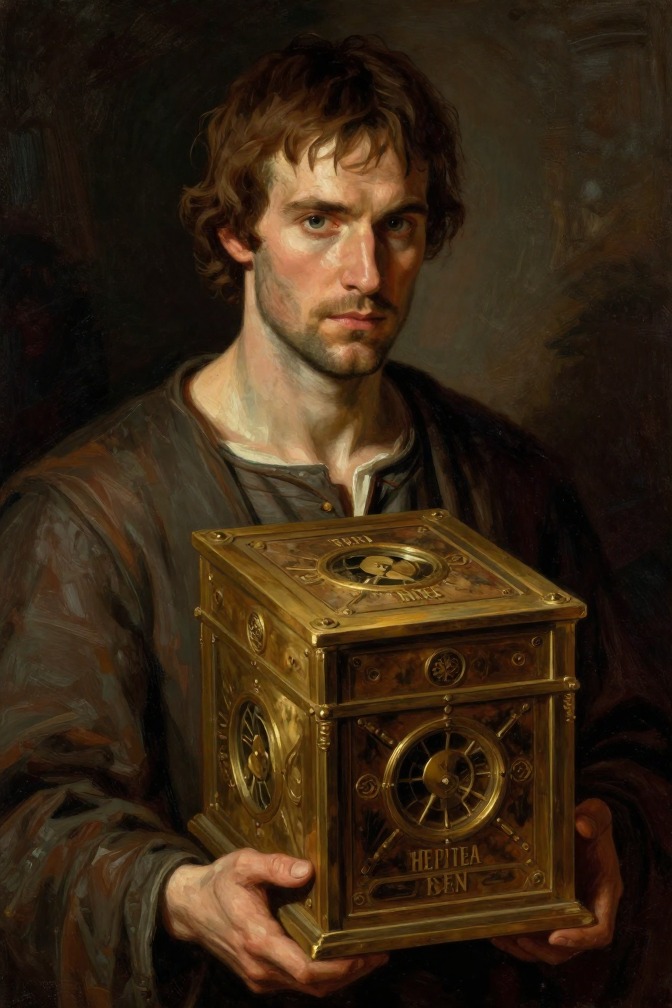
The cryptex is a portable, marble cylinder invented by Leonardo da Vinci and built by Jacques Saunière, designed to protect secret information through a combination lock mechanism that self-destructs if forced open. It serves as the Priory of Sion's keystone—an encrypted map to the Holy Grail—and drives the entire plot as Sophie Neveu and Robert Langdon race to unlock its password.
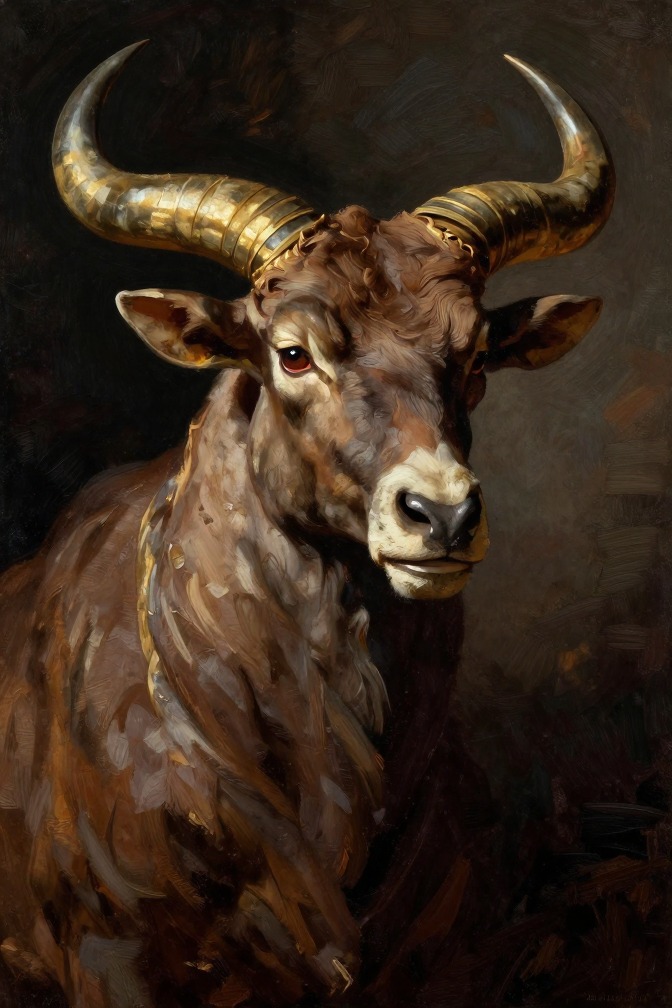
Le Taureau (the Bull) is the epithet of Captain Bezu Fache, the formidable head of the French Judicial Police (DCPJ), whose bull-like physique, aggressive demeanor, and relentless pursuit of Robert Langdon define his role as the primary antagonist in the early stages of the novel.
So dark the con of man is the message Jacques Saunière scrawled across the protective glass of the Mona Lisa in his own blood, using a black-light stylus. It is the final clue in the elaborate code he left for his granddaughter, Sophie Neveu, and it encapsulates the Priory of Sion's core belief: that the early Christian Church deliberately suppressed the sacred feminine, demonized goddess worship, and rewrote history to consolidate patriarchal power.
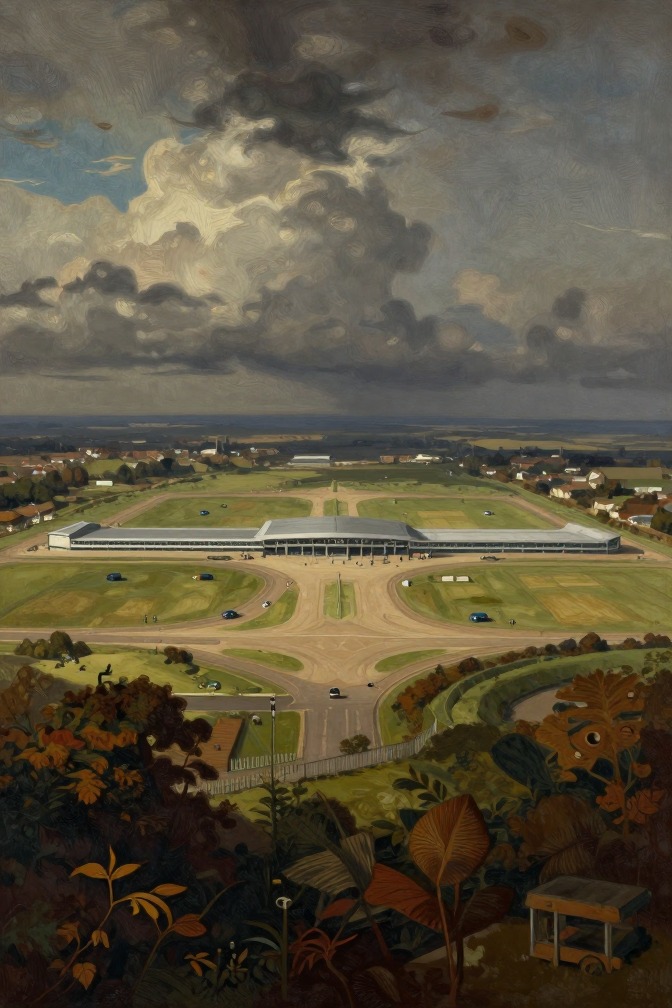
Biggin Hill Airport is the executive airfield in Kent, England, where Sir Leigh Teabing keeps his private Hawker 731 jet and where the fugitives Robert Langdon, Sophie Neveu, and Teabing land after fleeing Paris, only to face a police trap that Teabing outmaneuvers with a bold deception.
The Temple Church, located just off Fleet Street on Inner Temple Lane in London, is a round church built by the Knights Templar in the 12th century. It serves as a key location in the novel where the protagonists initially believe the keystone's poem points to a knight's tomb, only to discover the tombs are empty effigies, leading them to the true location at Westminster Abbey.
Corporal mortification is a central religious practice within Opus Dei, involving the deliberate infliction of physical pain through devices such as the cilice belt and the Discipline, as a means of penance, spiritual purification, and emulation of Christ's suffering.
The Depository Bank of Zurich anonymity policy is a set of operational rules that guarantee total client privacy through numbered accounts, key-only access, and automated retrieval, ensuring that neither the bank staff nor law enforcement can link a safe-deposit box to its owner without the account number.
Miss Josephine Barry is a wealthy, sharp-tongued elderly relative of the Barry family who initially appears as a formidable and rigid figure but gradually reveals a dry wit and capacity for affection, becoming an unlikely kindred spirit and benefactor to Anne Shirley.
Mr. Phillips is the Avonlea schoolmaster during Anne Shirley's early years at Green Gables, a teacher whose methods and personal conduct make him a largely ineffective and often unfair authority figure in Anne's life.
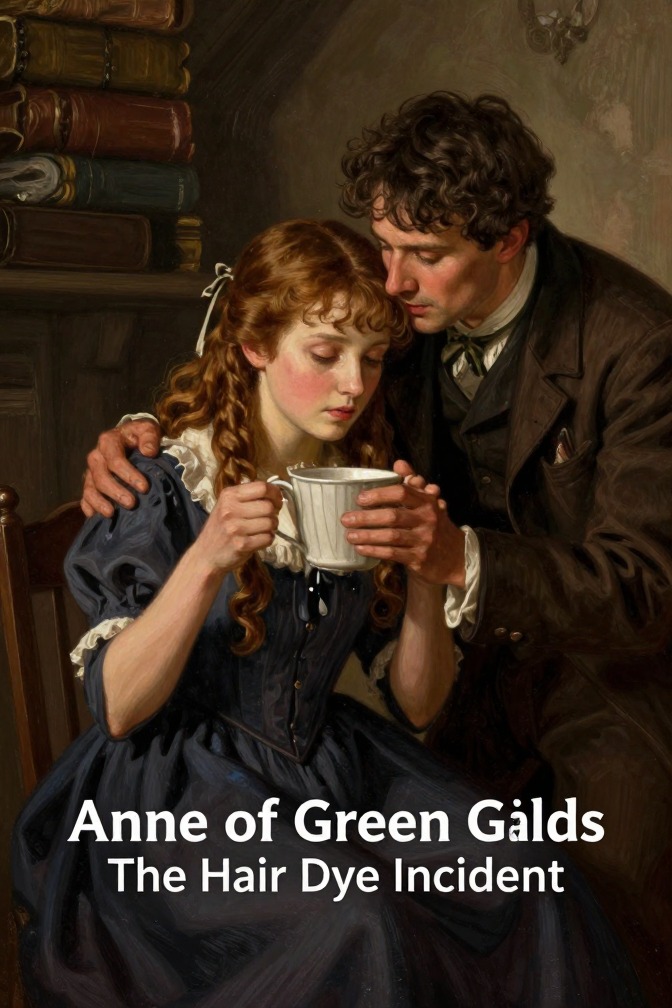
The Hair Dye Incident is a pivotal comic-tragic event in Anne Shirley's early life at Green Gables, where her desperate vanity over her red hair leads her to buy a peddler's hair dye that turns her hair a grotesque green, forcing her to have it cut short and teaching her a lasting lesson about vanity and self-acceptance.
The Birch Path is a narrow, winding footpath through the woods of Avonlea, named by Diana Barry and celebrated by Anne Shirley as one of the most beautiful and romantic routes in the district. It serves as the daily artery of Anne and Diana's friendship, the setting for their most intimate conversations, and a symbol of the imaginative, nature-saturated world that Anne creates around herself at Green Gables.
Anne Shirley's orphanhood is the foundational condition of her life before Green Gables, shaping her identity, her hunger for love and belonging, and her reliance on imagination as a survival mechanism. Born to Walter and Bertha Shirley, both teachers who died of fever when she was three months old, Anne was passed from household to household—first to the impoverished Thomas family, then to the Hammonds, who had eight children including three sets of twins—before landing in the Hopeton orphan asylum. This history of rejection, hard labor, and emotional neglect left her with a deep sense of being unwanted, a fierce longing for a real home, and a richly developed inner world that she used to endure hardship. Her orphanhood is not merely a backstory but an active force that drives her behavior, her desperate gratitude when the Cuthberts keep her, and her eventual transformation into a beloved member of the Green Gables community.
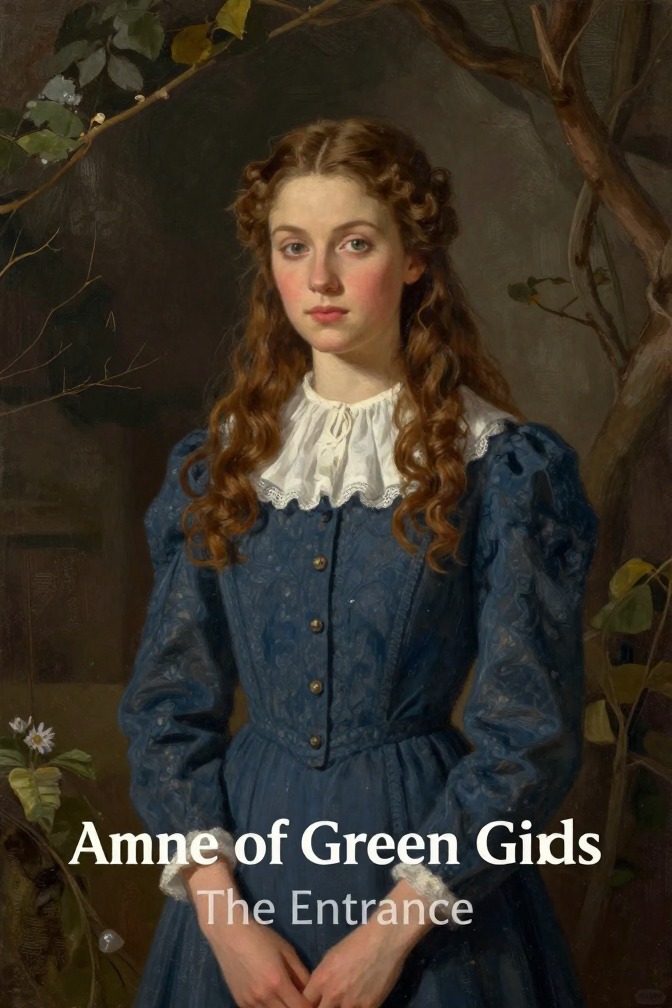
The Entrance is the competitive examination for admission to Queen's Academy, the pivotal academic gate that determines whether Avonlea's advanced students can earn a teaching license and pursue higher education. For Anne Shirley, the Entrance crystallizes her rivalry with Gilbert Blythe, tests the limits of her ambition and anxiety, and ultimately reshapes her life's direction when she chooses to sacrifice her scholarship to keep Green Gables.
The First Reading of the Notebook is the central ritual of the novel's frame narrative, in which the elderly Noah Calhoun reads aloud the story of his and Allie's past love to Allie, who now suffers from Alzheimer's disease and cannot recognize him, in the hope that the miracle of memory and recognition will return to her.
Barnabas is the castle messenger who delivers Klamm's letters to K., becoming a figure of hope and frustration in K.'s quest for recognition. His family's tragic history, revealed through his sister Olga, casts a shadow over his role and deepens the novel's exploration of the castle's inscrutable power.
Friedrich is a high-ranking official in the castle's bureaucracy, known for his exceptional memory and knowledge of human nature. He is a principal secretary to Klamm, and his recognition of Barnabas leads to a crucial summons for K. to meet with Erlanger, marking a significant, albeit fleeting, moment of connection between K. and the castle's authority.
Galater is a castle official who appears only in passing in The Castle, yet his actions decisively shape K.'s fate: he deputizes for Klamm in sending the two assistants to K., and his name surfaces in the villagers' accounts of the castle's workings, linking the bureaucracy's arbitrary power to K.'s struggles.
Miss Gisa is the assistant teacher at the village school, a tall, blonde, handsome young woman whose stiff manner and possessive attachment to her cat define her role as a minor but sharp-edged authority figure in K.'s life. She embodies the village's petty officialdom and its hostility toward K., and her interactions with him—from the morning confrontation over the sleeping arrangements to the deliberate scratching of his hand—mark the low point of his humiliating tenure as school janitor.
K. and the assistants form a relationship defined by forced proximity, mutual suspicion, and escalating conflict, from their first meeting at the Bridge Inn to their final separation. The assistants, Artur and Jeremias, are assigned to K. by the castle, but they prove to be incompetent, intrusive, and ultimately treacherous, undermining K.'s authority and contributing to his isolation. Their presence is a constant irritant, and their actions—from their refusal to obey orders to their role in Frieda's departure—highlight K.'s powerlessness against the castle's machinations.
Olga, the elder sister of the messenger Barnabas, forms a complex and deeply ambivalent relationship with the castle servants, one that is both a means of survival for her ostracized family and a source of personal degradation. Her nightly visits to the Castle Inn stables, where she consorts with the servants for over two years, represent a desperate, semi-official attempt to regain the castle's favor and lift the social exclusion that has fallen on her family since her sister Amalia's defiance of the official Sortini. This relationship is characterized by exploitation, false promises, and a profound asymmetry of power, yet it also provides Olga with a unique, if precarious, connection to the castle and a reservoir of knowledge about its workings.
The relationship between the village and the castle is the foundational power structure of Kafka's novel, defining every social interaction, bureaucratic process, and personal ambition. The castle, an invisible and inaccessible authority, governs the village through a complex, often contradictory administrative system, while the villagers, though ostensibly subordinate, maintain a wary, ritualized distance from its officials. This relationship is characterized by a profound asymmetry of power, a pervasive atmosphere of uncertainty, and a constant negotiation between official decree and local reality, ultimately shaping K.'s entire struggle for recognition and belonging.
Amir is the first-person narrator and protagonist of The Kite Runner, whose journey from a privileged but guilt-ridden boy in 1970s Kabul to a man seeking redemption in America and Taliban-era Afghanistan forms the novel's central arc. His defining act—witnessing the rape of his half-brother and servant Hassan and doing nothing—shapes his identity for twenty-six years, driving him to betray Hassan further, flee the Soviet invasion, build a new life in California, and ultimately return to a war-ravaged Kabul to rescue Hassan's orphaned son, Sohrab, in a final attempt to atone for his past.
Mullah Fatiullah Khan is the short, stubby-faced religious instructor at Amir's school in 1970s Kabul, whose dogmatic teachings on sin and Islamic practice provoke Baba's fierce contempt and crystallize the novel's central conflict between institutional religion and personal morality.
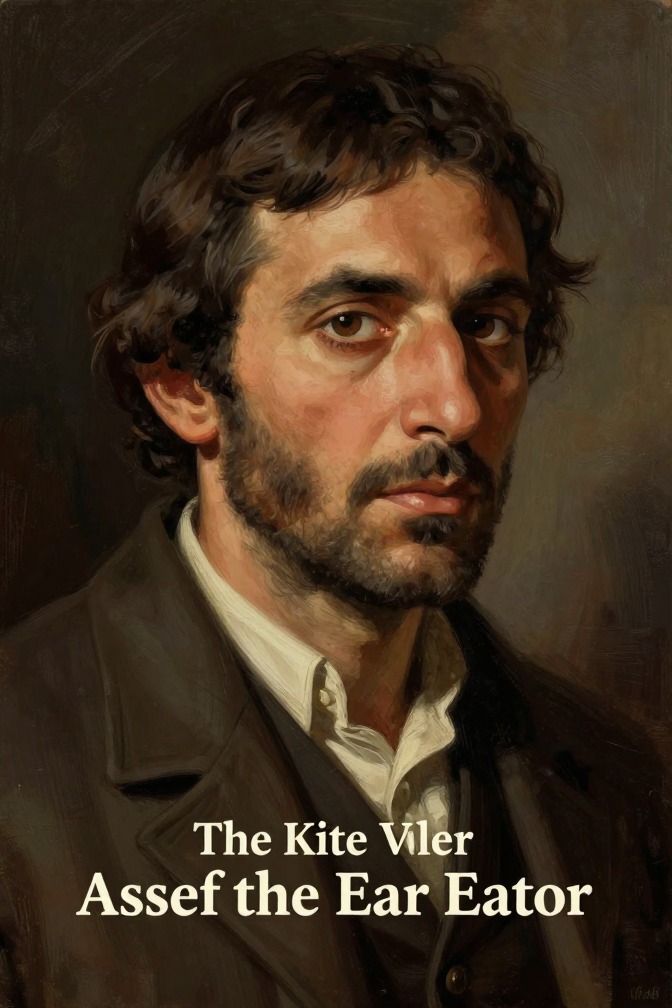
Assef the Ear Eater is the nickname given to Assef, a sociopathic bully in Kabul who terrorizes the neighborhood and later becomes a Taliban official, embodying the novel's exploration of ethnic hatred and violence.
For you, a thousand times over is the defining expression of unconditional loyalty and sacrificial love in Khaled Hosseini's The Kite Runner, first spoken by Hassan to Amir during the 1975 kite tournament and later echoed by Amir to Hassan's son Sohrab as a pledge of redemption.
The leather-bound notebook, given to Amir by Rahim Khan on his thirteenth birthday, becomes a symbol of Amir's literary aspirations and a repository for his early stories. It later serves as a tangible link to his past, discovered by Soraya after Baba's death, and ultimately represents the possibility of redemption and the enduring connection to Hassan and Sohrab.
Rahim Khan's letter, delivered to Amir in a Peshawar hospital after his fight with Assef, is the novel's final epistolary revelation. It confesses that Rahim Khan always knew about Amir's betrayal of Hassan in the alley, explains Baba's lifelong guilt over fathering Hassan, and urges Amir to forgive himself. The letter transforms the meaning of the entire story, reframing Baba's philanthropy as atonement and positioning Amir's journey to Kabul as a chance for redemption.