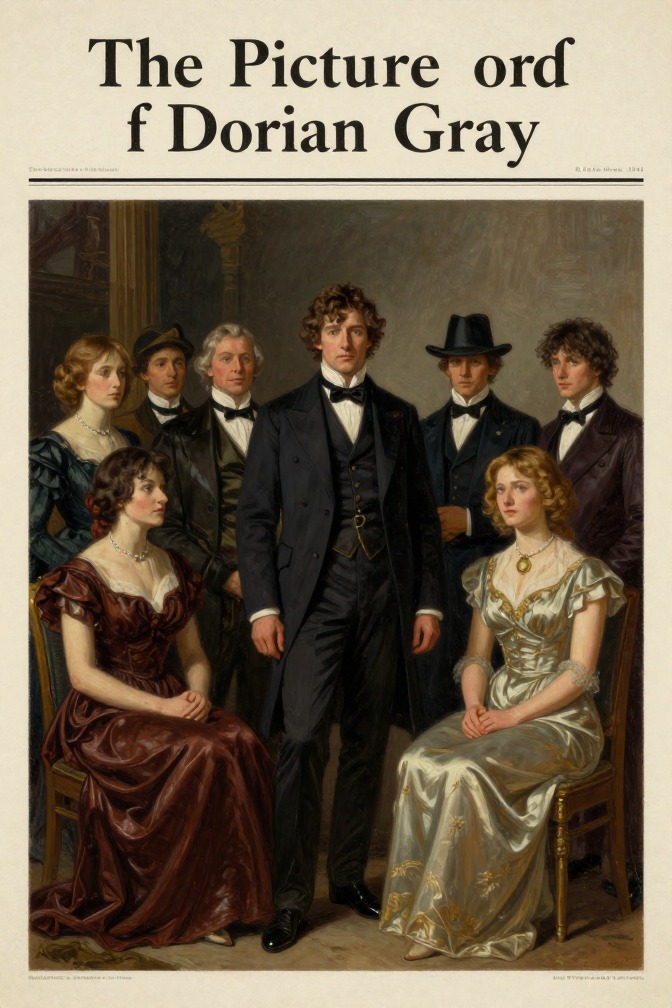
Lord Henry Wotton's aphorism that conscience is merely the trade-name of the firm, uttered in the garden of Basil Hallward's studio, encapsulates his cynical philosophy that moral scruples are a form of cowardice and that the only way to escape temptation is to yield to it. This epigram becomes a foundational doctrine for Dorian Gray, shaping his descent into a life of hedonism and crime, and stands as one of the most quoted expressions of the novel's moral inversion.
Lord Henry Wotton's aphorism that the only way to get rid of a temptation is to yield to it is a central philosophical doctrine in Oscar Wilde's The Picture of Dorian Gray, serving as the intellectual catalyst for Dorian Gray's moral descent and the novel's exploration of hedonism, influence, and the soul.
Lord Henry Wotton's aphorism that "the tragedy of old age is not that one is is old, but that one is young" encapsulates the novel's central paradox: Dorian Gray's physical youth becomes a curse precisely because it never matures, trapping him in a perpetual, morally infantile state while his soul decays.
Algiers is a North African city that serves as a retreat for Dorian Gray, where he maintains a small white-walled house and spends winters, reflecting his pattern of seeking escape from the consequences of his actions and the portrait that bears the burden of his sins.
The East End of London is a recurring setting in Oscar Wilde's *The Picture of Dorian Gray*, representing a world of poverty, vice, and moral decay that stands in stark contrast to the fashionable West End society where Dorian Gray typically moves. It is the place where Dorian first encounters Sibyl Vane, where he later indulges his basest desires, and where the consequences of his corruption are most starkly visible.
Selby Royal is Dorian Gray's country house in Nottinghamshire, a setting that contrasts with his London life and becomes a site of moral decay, social performance, and the concealment of his secret.
The Dudley (also known as the Dudley Gallery) is a London exhibition venue mentioned in Oscar Wilde's *The Picture of Dorian Gray* as the site where Dorian Gray's loaned miniatures become the subject of a scandalous conversation that reveals the extent of his social ruin.
Scotland Yard is the London metropolitan police force that investigates the disappearance of Basil Hallward and, by extension, becomes entangled in the aftermath of Dorian Gray's murder. Though the Yard never solves the case, its official narrative—that Hallward boarded a midnight train to Paris—provides the public cover that allows Dorian to escape immediate suspicion, while the French police's contradictory report that Hallward never arrived in Paris keeps the mystery alive in society gossip.
The St. James's Gazette is a London newspaper that appears in the narrative as the vehicle through which Dorian Gray learns of the official inquest verdict on Sibyl Vane's death, and its marked paragraph becomes a source of anxiety for him.
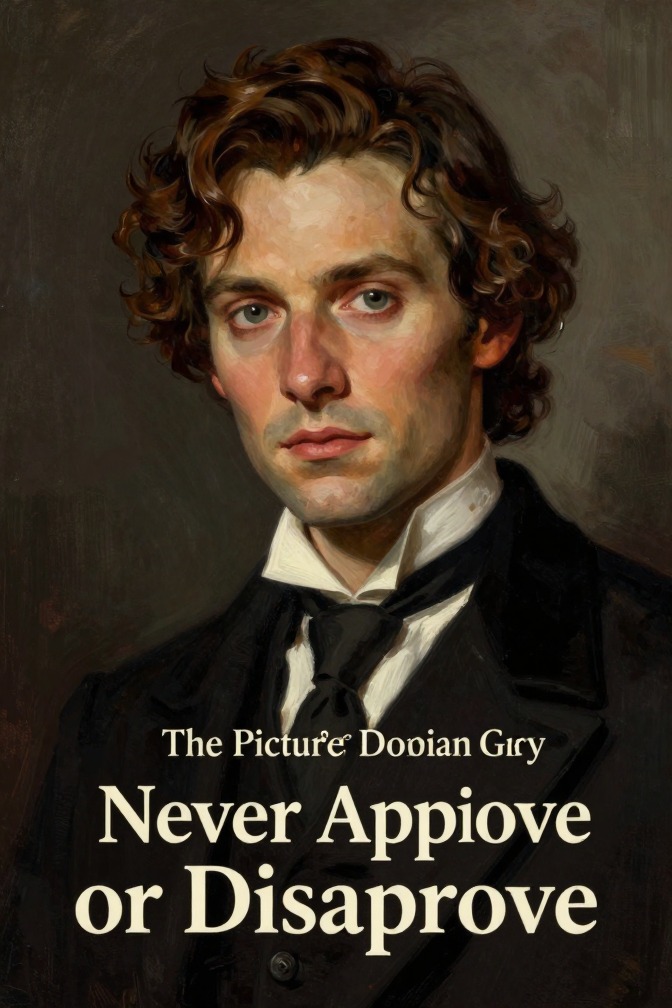
Lord Henry Wotton's principle of never approving or disapproving of anything is a cornerstone of his amoral philosophy, which he articulates directly to Basil Hallward and which profoundly shapes Dorian Gray's descent into hedonism and crime.
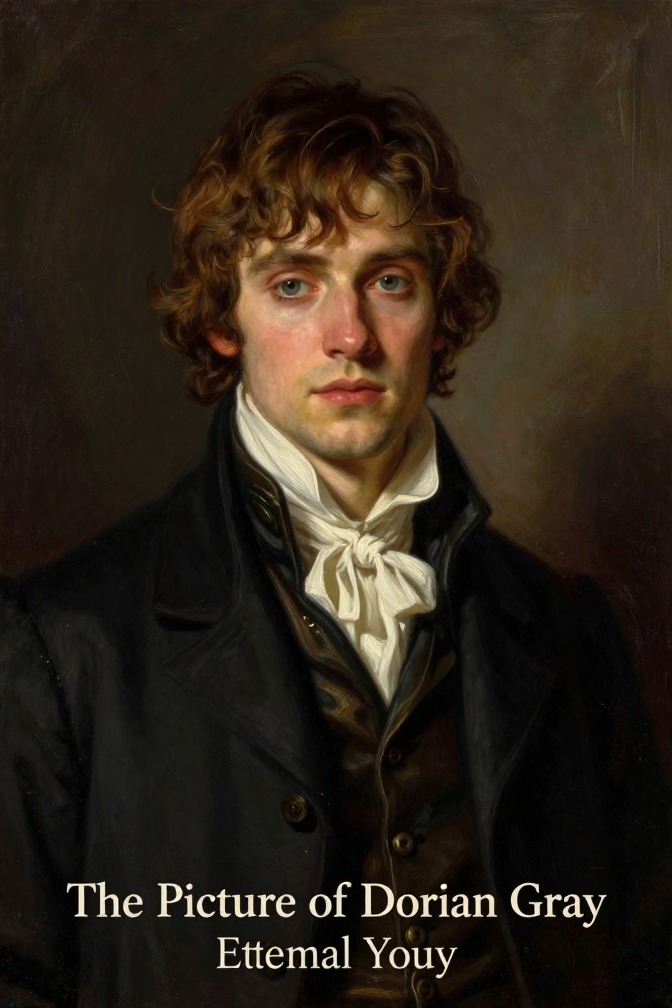
Dorian Gray's Eternal Youth is the central supernatural condition of the novel, a Faustian bargain in which the portrait painted by Basil Hallward ages and bears the marks of sin while Dorian himself remains physically unchanged for nearly two decades, a state that enables his unchecked descent into corruption and crime.
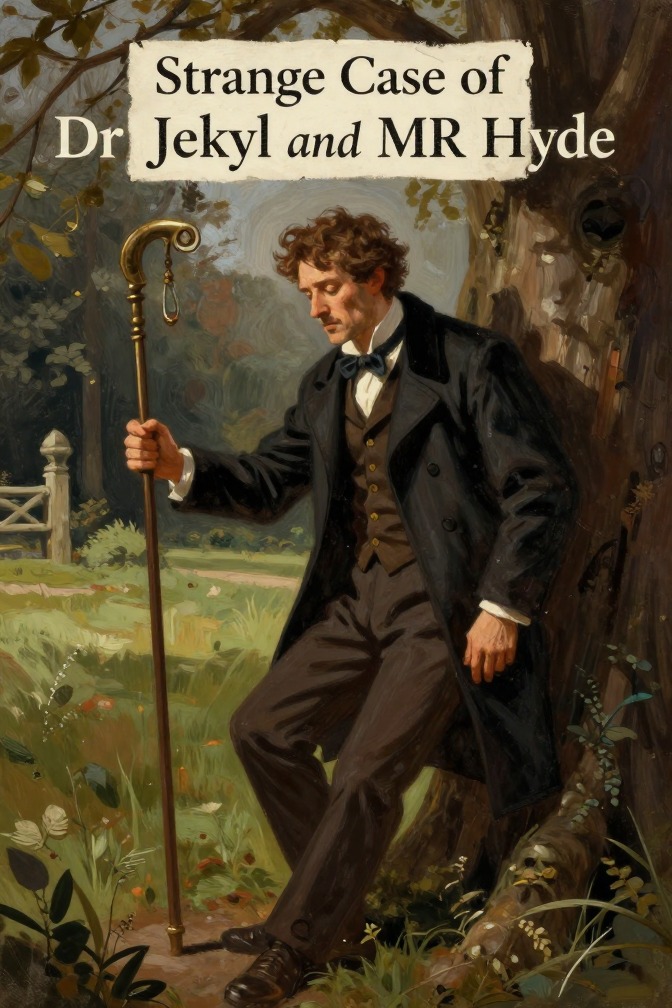
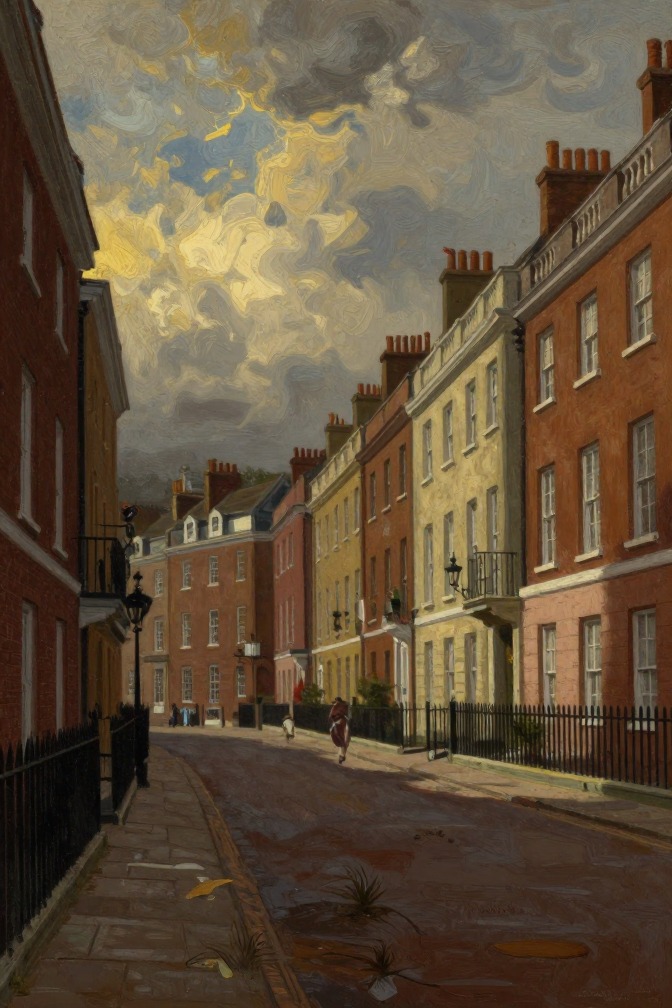
Jekyll's involuntary transformation in Regent's Park is the catastrophic turning point of the novella, the moment when the carefully maintained balance between his two identities collapses without warning and he finds himself permanently trapped in the body of Edward Hyde, a known murderer, with no drug at hand to reverse the change.
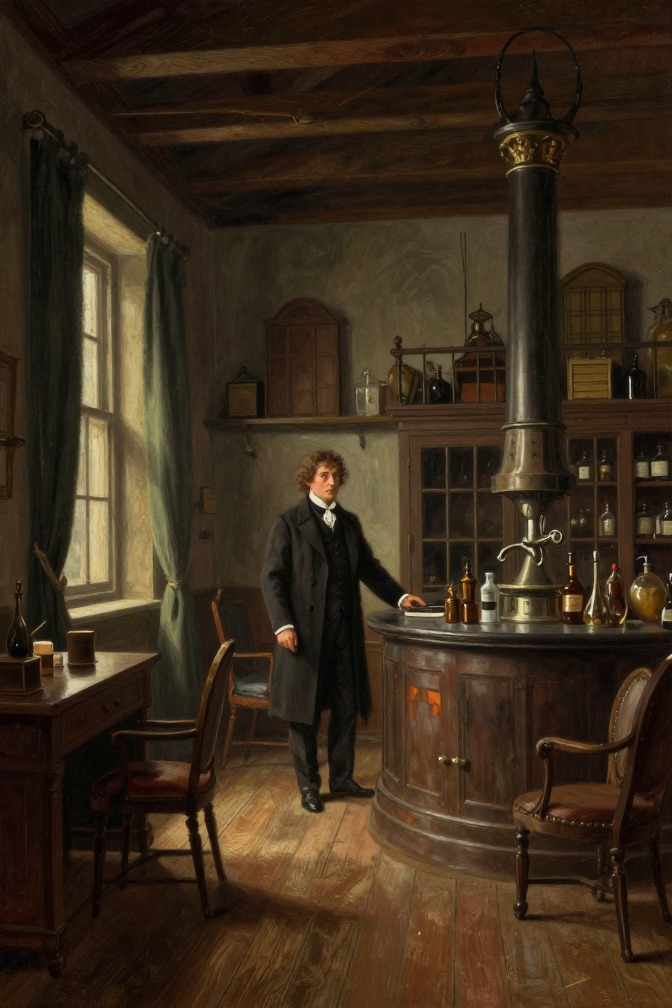
Dr. Jekyll's laboratory is the central physical and symbolic space of Robert Louis Stevenson's novella, serving as the secret gateway between the respectable world of Henry Jekyll and the monstrous existence of Edward Hyde. It is a converted surgical theatre at the back of Jekyll's house in a London square, accessible through a by-street door that becomes the focus of mystery and dread. Within its walls, Jekyll compounds the transformative drug, conducts his experiments on human identity, and ultimately meets his end; the laboratory is both the site of his scientific transgression and the prison where his dual nature plays out its final catastrophe.
Soho is the dismal London district where Edward Hyde maintains a secret residence, a place that starkly contrasts with the respectability of Henry Jekyll's home and underscores the moral and social degradation of Hyde's existence.
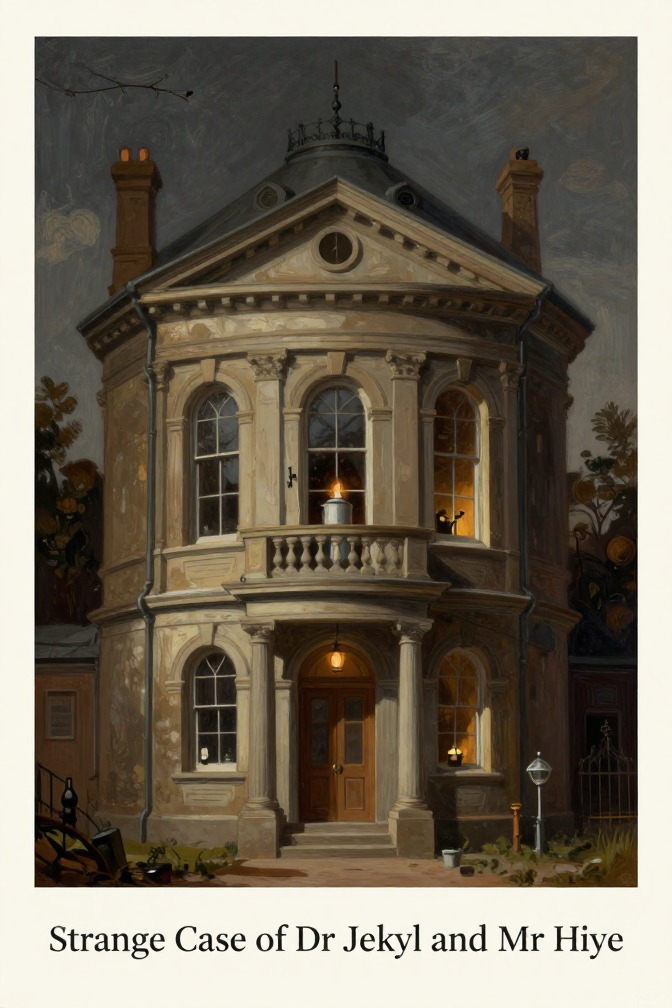
The laboratory building is the physical and symbolic center of Henry Jekyll's secret double life, housing the cabinet where he conducts his transformative experiments and the surgical theatre that connects his respectable home to the by-street door used by Edward Hyde.
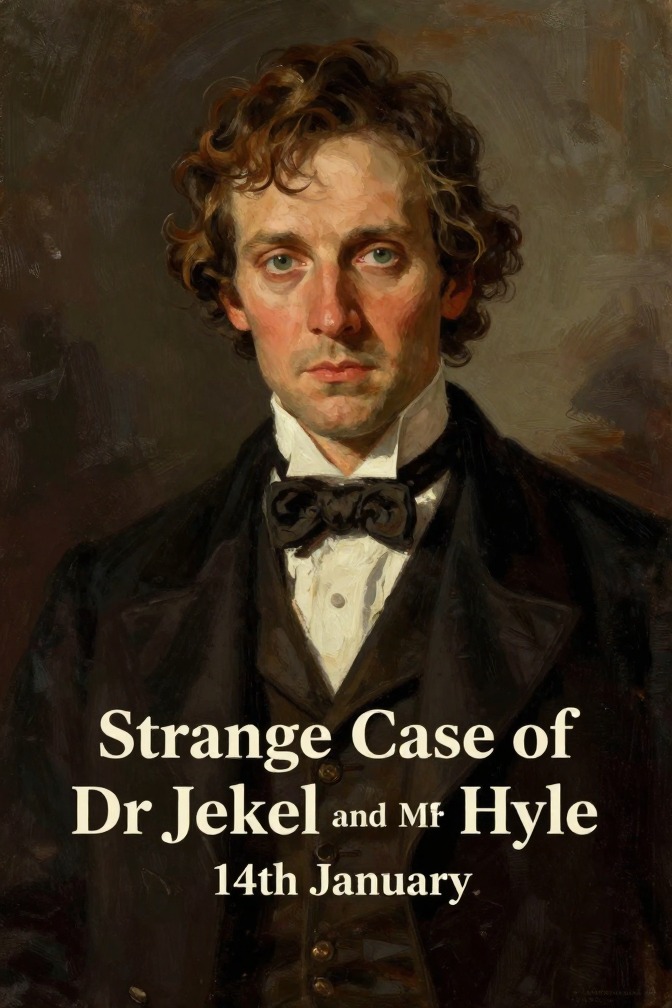
The 14th of January marks a crucial turning point in the narrative, when Mr. Utterson, after being denied access to Dr. Jekyll on the 12th and again on the 14th, witnesses the sudden and catastrophic breakdown of his friend's reclusive life, prompting him to seek out the dying Dr. Lanyon and setting the stage for the final revelations.
Harry Maylie is the son of Mrs. Maylie and the devoted suitor of Rose Maylie, whose unwavering love and willingness to renounce social ambition for a quiet life with her ultimately overcome the obstacles of her uncertain birth and secure their marriage.
Mrs. Mann is the elderly female superintendent of the branch workhouse, or 'farm,' to which the infant Oliver Twist is sent, and she embodies the systematic neglect and exploitation of parish children under the Poor Law, operating a profitable scheme of near-starvation and abuse while maintaining a facade of maternal care before visiting authorities.
Old Sally is the workhouse nurse who attended Oliver Twist's mother, Agnes Fleming, at his birth and who, on her deathbed years later, confesses to having stolen a gold locket and ring from the corpse—a theft that concealed Oliver's identity and inheritance for years.
Fagin's den is the central hideout and criminal headquarters of the Jewish fence Fagin and his gang of child thieves in Charles Dickens's *Oliver Twist*. Located in the squalid, labyrinthine slums of Saffron Hill, London, this decaying, multi-story building serves as both a training ground for pickpockets and a prison for the kidnapped Oliver Twist. The den is a space of profound moral corruption, physical squalor, and psychological terror, where Fagin exerts total control over his young pupils through a mixture of false affection, material reward, and brutal threats. Its dark, confined rooms and hidden treasures symbolize the inescapable trap of criminal life, making it one of the most iconic and oppressive locations in Victorian literature.
Tom Chitling is a minor member of Fagin's gang, a slow-witted and gullible young man who has recently been released from prison and who serves as a foil to the more clever and ruthless members of the criminal underworld.
The rule that the parish surgeon does such matters by contract is a foundational administrative principle of the workhouse system in Oliver Twist, dictating that medical care for the poor is provided not out of professional duty or compassion but as a fixed-price transaction between the parish and a surgeon who undertakes the work for a set fee. This contractual arrangement, established by the Board of Guardians, reduces the life-and-death event of childbirth to a routine, cost-controlled service, and it directly shapes the circumstances of Oliver's birth: the surgeon's detached, mechanical performance of his duties—attending to Oliver's mother only because he is paid to do so—and his immediate departure once the contract is fulfilled, leaving the newborn to the care of a drunken pauper nurse, exemplify the dehumanizing logic of the Poor Law system that Dickens satirizes throughout the novel.
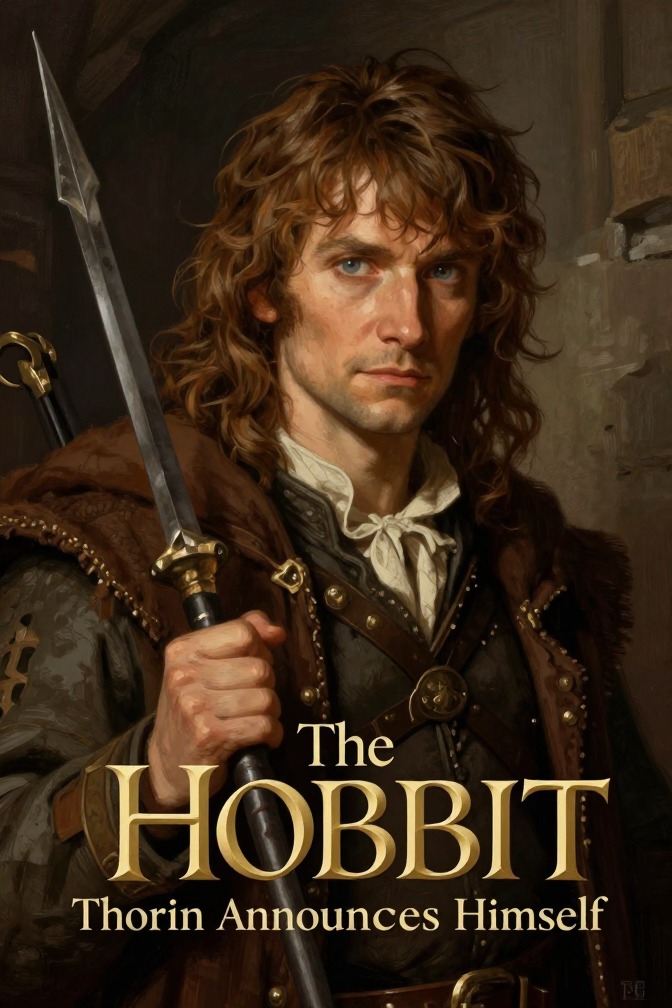
Thorin Oakenshield, the exiled heir to the Kingdom under the Mountain, dramatically announces his identity and his return to the Master of Lake-town, an act that transforms the dwarves' fortunes from fugitives to celebrated heroes and sets the stage for the final phase of their quest.
Balin is a wise, loyal, and observant dwarf of Thorin's company, serving as the group's lookout and a trusted advisor. His deep knowledge of dwarven history, his cautious nature, and his growing respect for Bilbo Baggins mark him as a key figure in the quest to reclaim the Lonely Mountain.
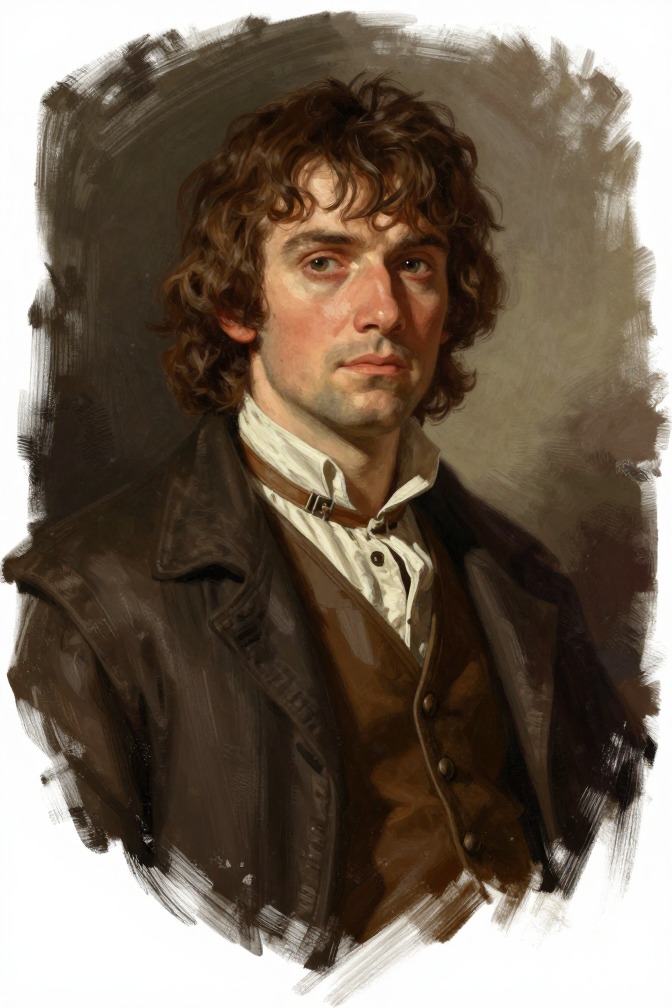
Bungo Baggins, the father of Bilbo Baggins, is a minor but foundational character in The Hobbit, defined by his solid, respectable, and unadventurous nature, which he passed on to his son, and by his construction of the luxurious hobbit-hole Bag-End, the story's central domestic symbol.
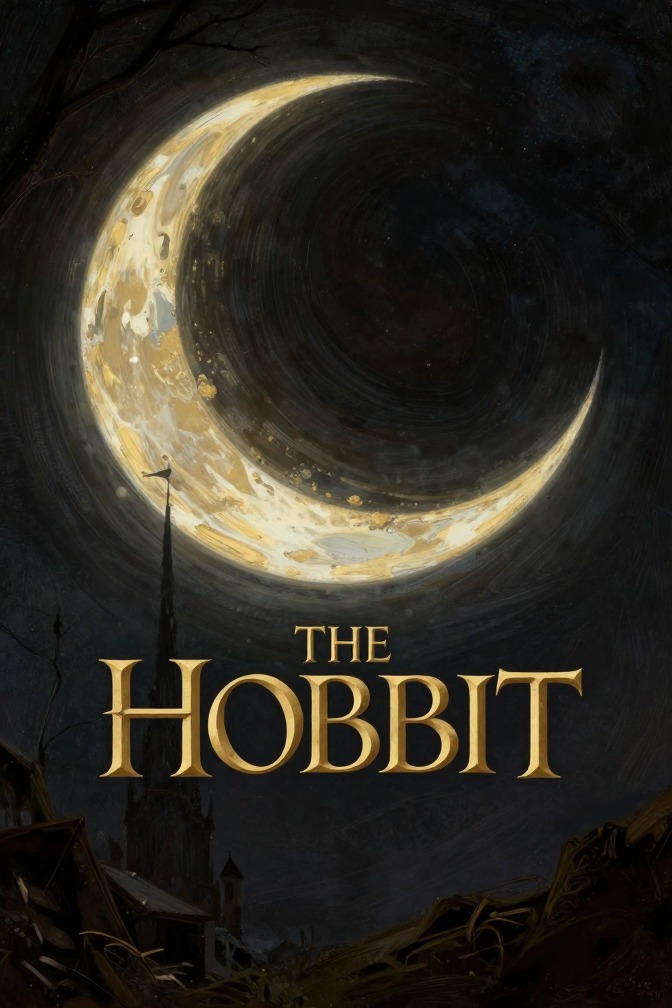
Moon-letters are a form of runic writing invented by the Dwarves, visible only when moonlight shines behind them, and they play a crucial role in revealing the secret entrance to the Lonely Mountain.
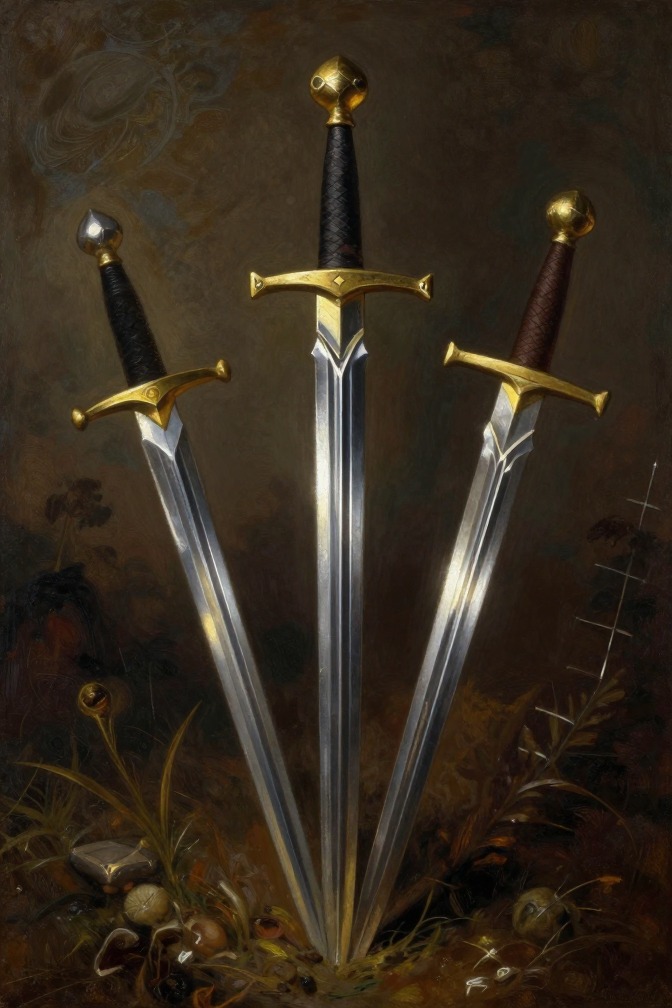
The three elvish blades Orcrist, Glamdring, and Sting are ancient weapons forged in Gondolin for the Goblin-wars, each with a distinct history and role in the quest. Orcrist and Glamdring are recovered from a troll-hoard and later identified by Elrond, while Sting is a smaller knife taken by Bilbo that proves crucial in his encounters with Gollum and the spiders of Mirkwood.
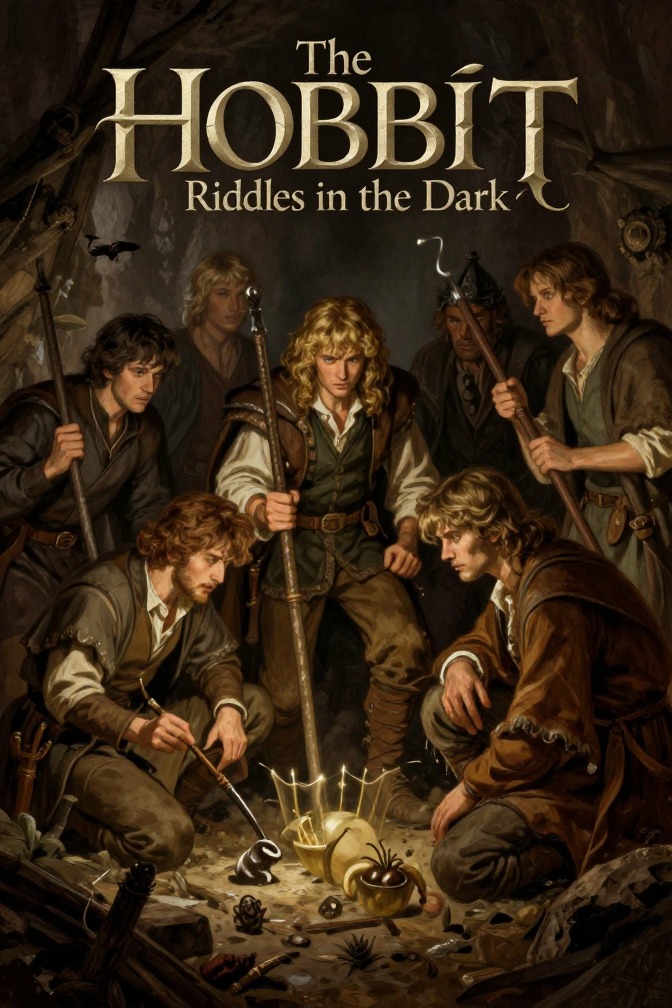
The riddle-game between Bilbo Baggins and Gollum in the dark tunnels beneath the Misty Mountains is the pivotal event of The Hobbit, where Bilbo accidentally acquires the One Ring and discovers its power of invisibility, transforming him from a reluctant burglar into a resourceful adventurer and setting the course for the rest of his journey and the larger legendarium.
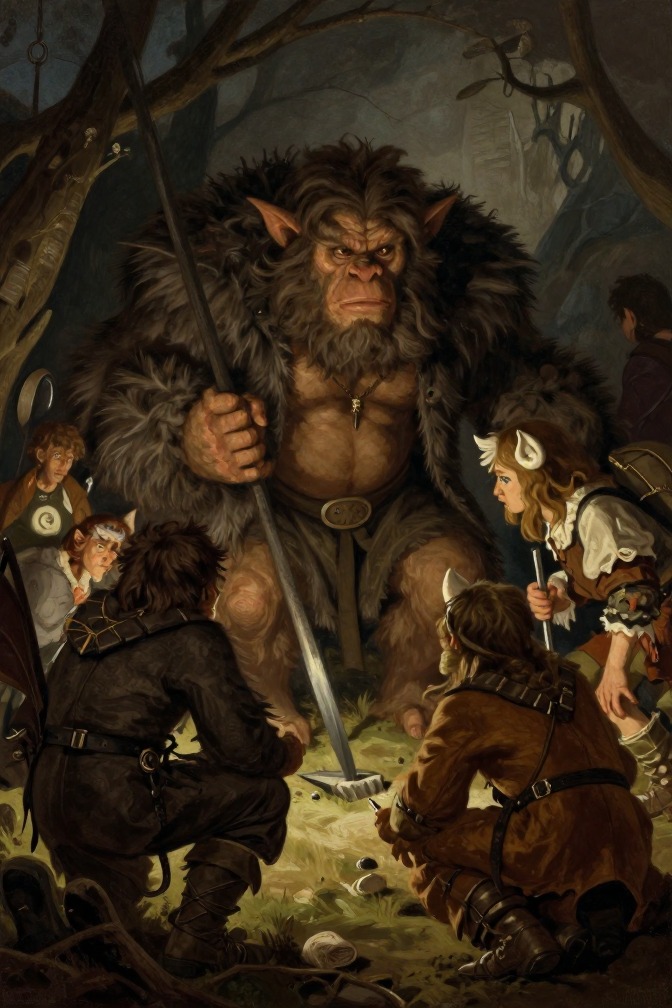
The Trolls' Camp is the first major peril encountered by Thorin and Company after leaving Hobbiton, a night-time confrontation with three trolls—William, Bert, and Tom—that tests the group's cohesion, introduces Bilbo Baggins to the realities of adventure, and ends with the trolls' petrification at dawn through Gandalf's intervention, yielding the company their first weapons and a small hoard of treasure.
Mirkwood is the vast, dark, and dangerous forest that lies east of the Misty Mountains and west of the Lonely Mountain, forming the central barrier on Thorin and Company's quest. It is a place of enchantment, peril, and psychological trial, where the company loses its way, falls prey to giant spiders, and is captured by the Wood-elves, marking a decisive low point in the adventure before their escape and the final approach to the dragon's lair.