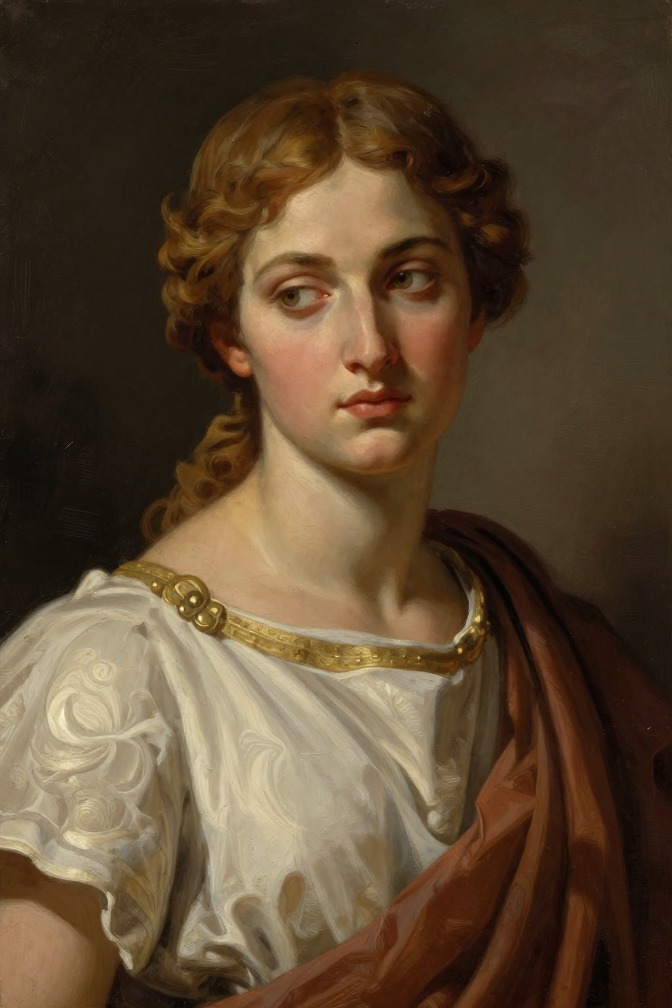
Shae is a camp follower and prostitute who becomes Tyrion Lannister's lover and companion during the War of the Five Kings. Their relationship, initiated when Bronn procures her for Tyrion on the night before the Battle of the Green Fork, provides Tyrion with emotional and physical solace amid his father's contempt, the dangers of battle, and the political intrigues of the Lannister camp. Shae's pragmatic, unillusioned nature and her willingness to perform the role of a devoted lover—whether feigned or genuine—offer Tyrion a rare space of intimacy and acceptance, making her a crucial figure in his personal arc during this period.
Agnes Jemima, later known as Aunt Victoria, is a central protagonist of *The Testaments* whose journey from a cherished but deceived daughter of a Commander to a disillusioned Aunt and finally a fugitive reveals the inner rot of Gilead and the possibility of resistance from within. Her story intertwines with that of her half-sister, Nicole, as they escape Gilead carrying the evidence that will help bring down the regime.
Aunt Estée is a teacher at the Vidala School who tempers the harsh religious instruction of Aunt Vidala with kindness and reassurance, and later plays a crucial role in helping Agnes Jemima escape an unwanted marriage by facilitating her entry into Ardua Hall.
Aunt Helena is one of the four Founding Aunts of Gilead, a senior figure at Ardua Hall who, despite her high rank, is characterized by her physical frailty, weak will, and tendency to follow the prevailing wind, making her the most pliable and least formidable of the Founders.
Roke Knoll is the central, sacred hill on Roke Island, the Isle of the Wise, where the School for Wizards is located. It is a place of immense magical power, its roots reaching down to the center of the earth, and it serves as the site for the most significant and perilous events in Ged's early life, including his first challenge to Jasper and the catastrophic summoning that loosed the shadow.
Colonel Scheisskopf is a fanatical R.O.T.C. graduate who rises through the ranks by obsessing over military parades, eventually becoming a lieutenant general and taking command of all combat operations, embodying the absurdity of bureaucratic ambition in Catch-22.
Major Major Major Major is the squadron commander of the 256th Squadron, a man whose life is a study in mediocrity and isolation. Born with the absurd name that defines his destiny, he is a tall, gawky man who bears a sickly resemblance to Henry Fonda, a fact that haunts him. His tenure as commander is marked by a desperate, failed attempt to find belonging, which is shattered by his promotion, after which he becomes a recluse, forging signatures on official documents to pass the time and hiding from his own men.
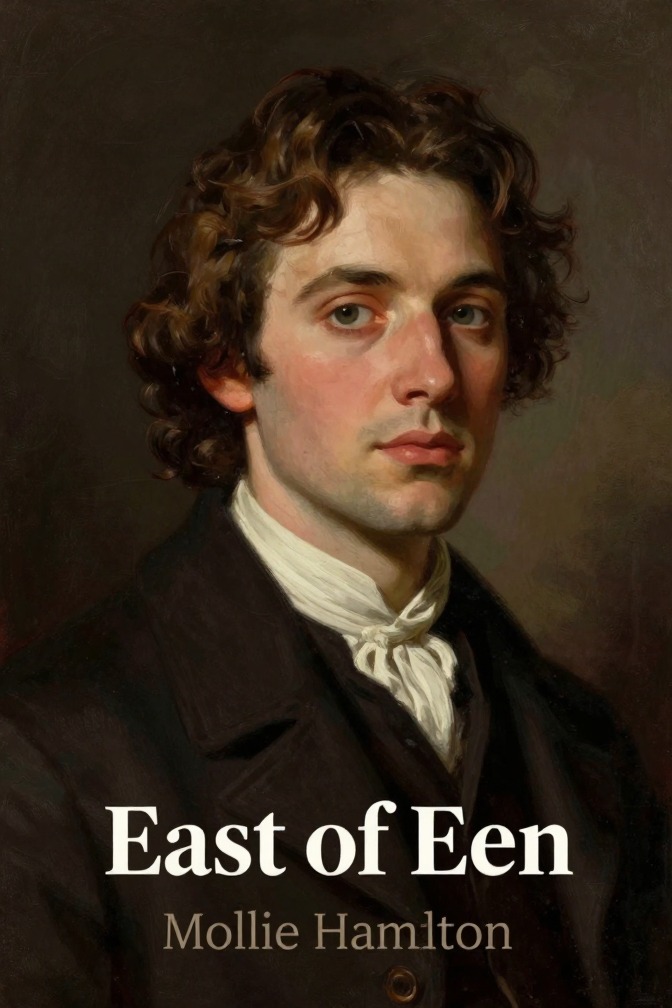
Mollie Hamilton is the youngest daughter of Samuel and Liza Hamilton, distinguished by her striking beauty—blond hair and violet eyes—and her eventual escape from rural poverty into a sophisticated urban life in San Francisco, which marks her as the Hamilton who most fully crossed the class boundary into the metropolitan world.
Rabbit Holman is a minor but recurring character in East of Eden, a local prospector and handyman whose appearances serve as a barometer of the Salinas Valley's social and economic life. He is a figure of comic failure and folk wisdom, embodying the region's hardscrabble persistence and its oral culture of tall tales and shared news.
Dorian Gray's sparing of Hetty Merton is a pivotal late-stage action in which he chooses not to seduce and abandon a young village girl, marking his first conscious attempt at moral reform after years of corruption and crime, yet the portrait's unchanged cruelty reveals the action's underlying vanity and hypocrisy.
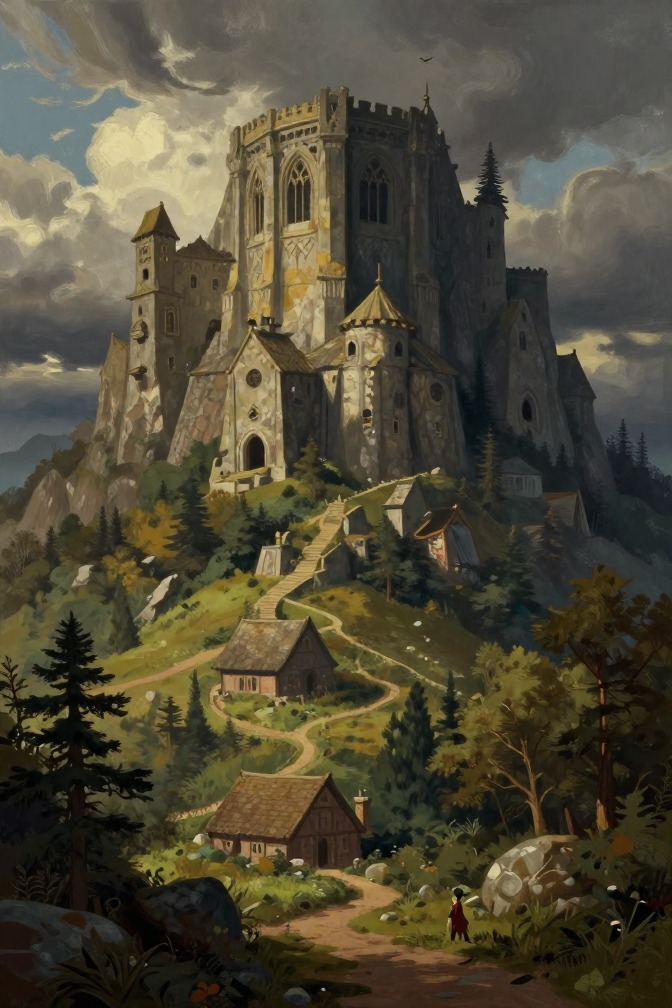
Dragonstone is the ancestral stronghold of House Targaryen, a volcanic island fortress in Blackwater Bay that served as the easternmost outpost of Valyrian power in Westeros. After Robert's Rebellion, it became the seat of Stannis Baratheon, who used it as a base for his claim to the Iron Throne and as the site where Melisandre burned the statues of the Seven and performed human sacrifices. The castle's strategic importance, its association with dragonlords and sorcery, and its role as a launching point for Stannis's northern campaign make it a decisive location in the War of the Five Kings.
The North is the largest and most sparsely populated of the Seven Kingdoms of Westeros, a cold, forested, and mountainous region ruled by House Stark of Winterfell for thousands of years. Its harsh climate, vast wilderness, and adherence to the old gods have shaped a fiercely independent and honor-bound people, making it a central battleground in the wars following Robert Baratheon's death and a key stronghold against the supernatural threat from beyond the Wall.
Ravishment is a contested territory in the riverlands, a site of ancient conflict between House Blackwood and House Bracken, repeatedly destroyed and rebuilt over centuries of feuding.
Charles Decker, the teenage narrator and protagonist of Richard Bachman's novel Rage, is a deeply disturbed high school senior who, after a series of escalating psychological crises and violent acts, takes his algebra class hostage, kills two teachers, and orchestrates a brutal collective assault on a fellow student before being shot and arrested. His story is a first-person chronicle of a descent into madness fueled by a traumatic childhood, a tyrannical father, and a profound alienation from the institutions of family and school.
Aglaya Ivanovna Epanchin, the youngest and most beautiful daughter of General Epanchin, is a proud, capricious, and intellectually fierce young woman whose romantic destiny becomes the central axis of the novel's second half. She is the object of Prince Muishkin's deepest love, the target of Nastasia Philipovna's obsessive letters, and the prize over which Gania Ivolgin schemes. Her character embodies the tension between aristocratic convention and radical personal will, and her ultimate fate—a disastrous marriage to a fraudulent Polish count—represents the novel's bleakest commentary on the impossibility of genuine connection in a corrupt society.
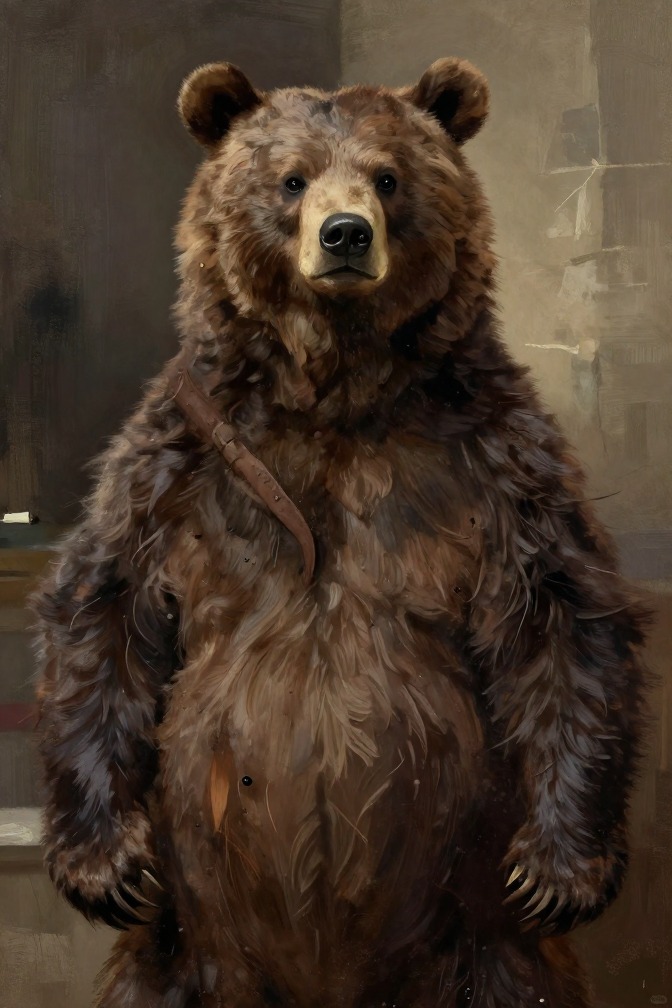
Bear is a formidable and enigmatic field operative of the Night Watch, a shape-shifting magician of immense physical power and few words, whose unwavering loyalty and brutal efficiency in combat make him a cornerstone of the Watch's most dangerous operations.
Egor is a young Moscow boy who becomes a pivotal figure in the Night Watch's struggle against the Darkness after surviving a vampire attack, revealing immense latent magical potential and an undetermined destiny that both Light and Dark forces seek to control.
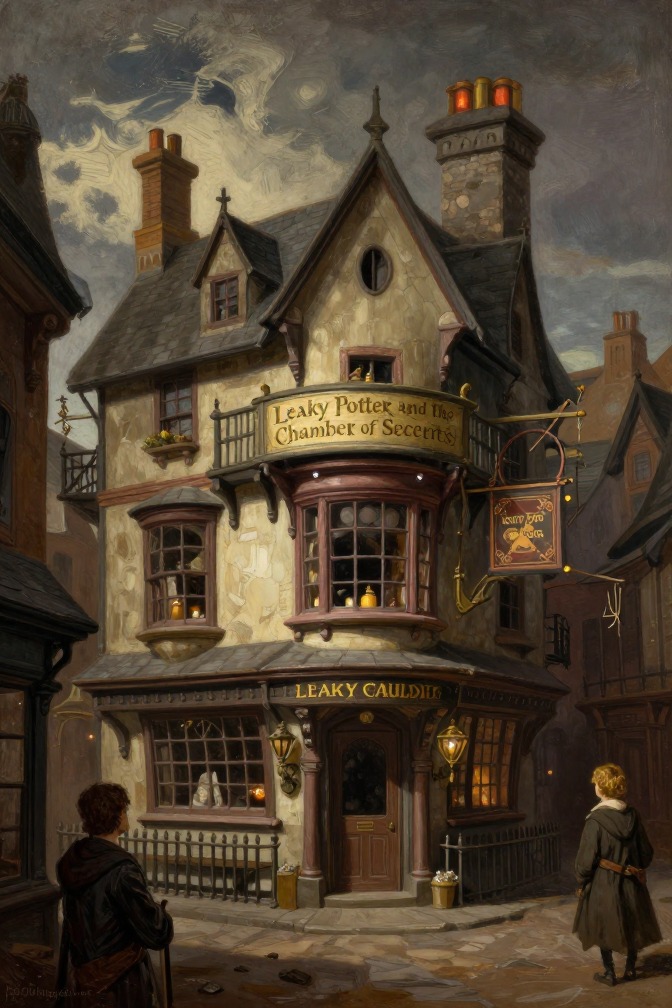
The Leaky Cauldron is a wizarding pub in London that serves as the gateway between the Muggle world and Diagon Alley, functioning as a central meeting point, a hub for travel via Floo powder, and a site of significant social and political encounters in Harry Potter's second year.
The Slytherin common room is the underground headquarters of Slytherin House at Hogwarts School of Witchcraft and Wizardry, a long, low chamber of rough stone walls and ceiling lit by round, greenish lamps hanging on chains, with a fire crackling under an elaborately carved mantelpiece. It is the only place in the castle where Harry Potter and Ron Weasley ever infiltrate another House's territory, doing so in disguise as Vincent Crabbe and Gregory Goyle during their Polyjuice Potion investigation of Draco Malfoy. The room serves as the stage for the revelation that Malfoy is not the Heir of Slytherin, the confirmation that the Chamber of Secrets was opened fifty years earlier, and the disclosure that Lucius Malfoy keeps a secret chamber beneath his drawing-room floor.
Scabbers, the pet rat of Ron Weasley, is revealed to be Peter Pettigrew, an unregistered Animagus who faked his own death and betrayed Harry Potter's parents to Lord Voldemort.
Alcandra, the wife of Polybus of Egyptian Thebes, is a minor but symbolically significant figure in the Odyssey, known only through the lavish gifts she gave to Helen—a golden distaff and a silver work-box—which serve as tokens of the immense wealth and refined craftsmanship of Egypt, and which Helen brings with her to the court of Menelaus, thereby linking the epic's world of heroic exchange to the exotic riches of the East.
Alcmena is the mortal mother of Heracles, mentioned in the Odyssey's Catalogue of Heroines during Odysseus's visit to the Underworld. Her brief appearance serves to link the epic's genealogical tradition to the greatest of Greek heroes and to underscore the theme of divine-mortal unions that produce extraordinary offspring.
Amphialus is a minor Phaeacian athlete who competes in the games held for Odysseus on Scheria, excelling in the jumping contest and thereby illustrating the Phaeacians' cultural pride in athletic prowess.
Apollo is a major Olympian god in the Odyssey, who appears as an archer, a healer, a god of prophecy, and an agent of sudden death. He is not a central character in the poem's action, but his interventions—killing the steersman Phrontis, slaying the giants Otus and Ephialtes, and punishing the archer Eurytus—shape key events and reinforce the poem's themes of divine justice, the limits of human ambition, and the inescapable power of the gods.
Asphalion is a servant in the household of Menelaus, mentioned briefly in Book IV of the Odyssey for his role in pouring water over the hands of guests during a meal, a standard act of hospitality in the epic.
Echephron is one of the sons of King Nestor of Pylos, a minor but dutiful figure who appears in the context of his father's household during Telemachus's visit. He is part of the group of Nestor's sons who gather around their father, assist in the sacrifice to Athena, and help prepare for Telemachus's onward journey, embodying the orderly, hospitable, and pious life of the Pylian court.
Eos, the goddess of the dawn, is a recurring figure in the Odyssey whose daily appearance marks the passage of time and the progression of the narrative. She is most often invoked through the fixed epithet 'rosy-fingered Dawn,' a formula that opens many of the poem's days and structures the epic's chronology from Telemachus's departure to Odysseus's final reunion.
The Graces are the goddesses of charm, beauty, and festivity who appear briefly in the Odyssey to bathe and adorn Aphrodite after her release from the adulterous trap set by Hephaestus, embodying the poem's concern with the restoration of divine order and the celebration of beauty.
Hebe, the goddess of youth and cupbearer to the Olympian gods, appears in the Odyssey as a figure of divine reward and eternal life, most notably as the immortal wife of Heracles after his apotheosis.
Itylus is a minor but symbolically potent figure in the Odyssey, mentioned only in Penelope's extended simile of the nightingale, where his accidental death at his mother's hands becomes a figure for the queen's own endless grief and the poem's larger meditation on maternal sorrow, violent fate, and the limits of song.