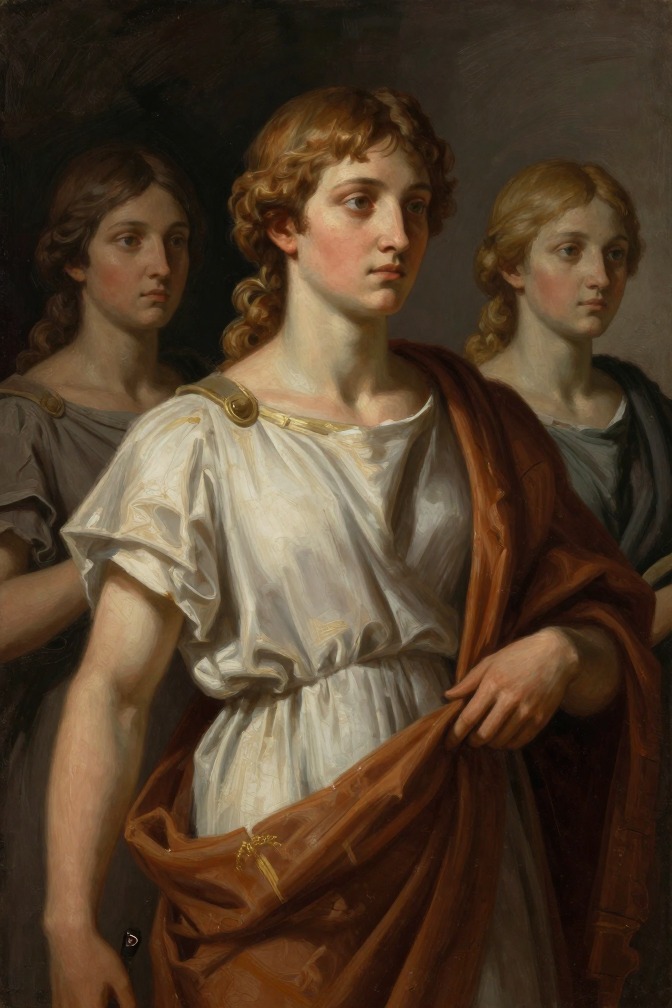
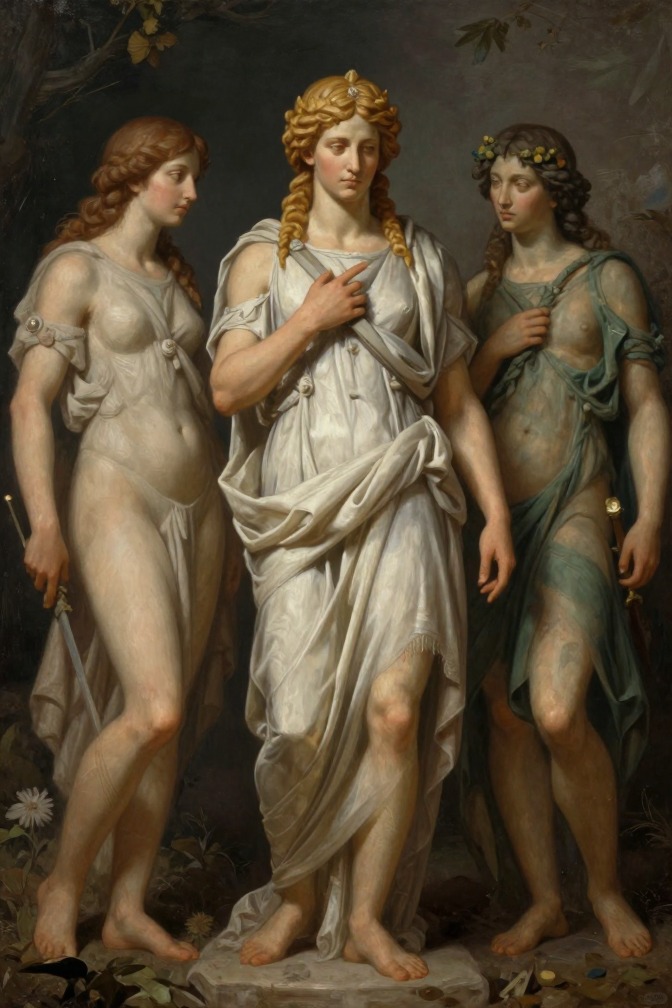
The Graces are the goddesses of charm, beauty, and festivity who appear briefly in the Odyssey to bathe and adorn Aphrodite after her release from the adulterous trap set by Hephaestus, embodying the poem's concern with the restoration of divine order and the celebration of beauty.
Hebe, the goddess of youth and cupbearer to the Olympian gods, appears in the Odyssey as a figure of divine reward and eternal life, most notably as the immortal wife of Heracles after his apotheosis.
Itylus is a minor but symbolically potent figure in the Odyssey, mentioned only in Penelope's extended simile of the nightingale, where his accidental death at his mother's hands becomes a figure for the queen's own endless grief and the poem's larger meditation on maternal sorrow, violent fate, and the limits of song.
Leiocritus, son of Evenor, is a minor suitor in the Odyssey who appears only once, in Book II, where he delivers a brief but revealing speech that encapsulates the suitors' arrogance, their contempt for divine and human authority, and their fatal underestimation of Odysseus. His single intervention—a blunt dismissal of Mentor's warning—marks him as a flat character whose function is to embody the collective hubris that seals the suitors' doom.
The Naiads are the fresh-water nymphs of Greek mythology, who appear in the Odyssey as divine guardians of springs, caves, and rivers, receiving sacrifices from Odysseus and marking the sacred geography of Ithaca.
Noemon, son of Phronius, is a minor but pivotal character in the Odyssey whose voluntary loan of his ship to Telemachus enables the young prince's journey to Pylos and Sparta, inadvertently exposing the suitors' murder plot and setting in motion the chain of events that leads to Odysseus's return and the suitors' destruction.
Oceanus is the primordial river that encircles the earth, serving as the boundary of the known world and the gateway to the underworld in the Odyssey. As a cosmic entity rather than a personalized god, Oceanus marks the limit of mortal and divine geography, the point beyond which lie the dead, the mythical Cimmerians, and the sources of celestial bodies.
Otus is a short-lived giant, the son of Iphimedeia and Aloeus, who with his brother Ephialtes threatened war against the Olympian gods by attempting to pile Mount Ossa on Olympus and Mount Pelion on Ossa to scale heaven itself, but was killed by Apollo before reaching maturity.
Proteus, the Old Man of the Sea, is a shape-shifting sea deity whom Menelaus captures on the island of Pharos to learn how to break his own divinely imposed becalming and to obtain news of the other Achaean leaders after the Trojan War. He reveals the fates of Ajax, Agamemnon, and Odysseus, and prophesies Menelaus's own translation to the Elysian plain, making him a crucial source of hidden knowledge and a structural pivot in the poem's network of nostoi narratives.
Rhexenor is a minor but structurally significant figure in the Odyssey, a Phaeacian prince whose early death by Apollo's arrow left his daughter Arete to be married to her uncle Alcinous, a union that makes Arete the most honoured woman in Scheria and the key figure Odysseus must win over to secure his homecoming.
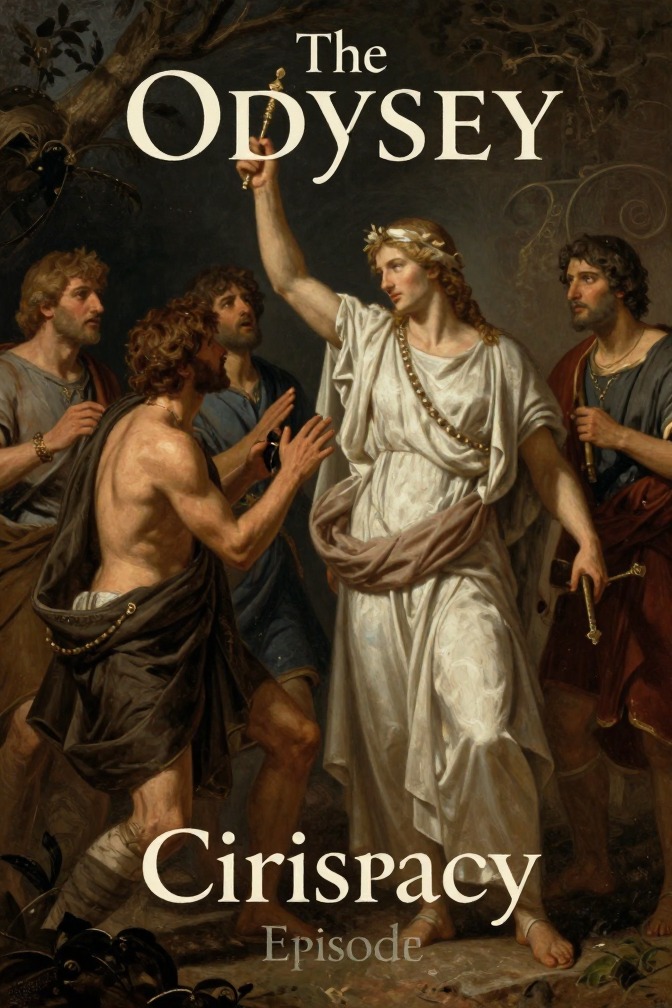
The Circe Episode is the central enchantment-and-transformation sequence in Odysseus's wanderings, where the hero's crew is turned into pigs and Odysseus, with divine aid from Hermes, forces the goddess to restore them and becomes her lover, gaining crucial knowledge for his journey home.
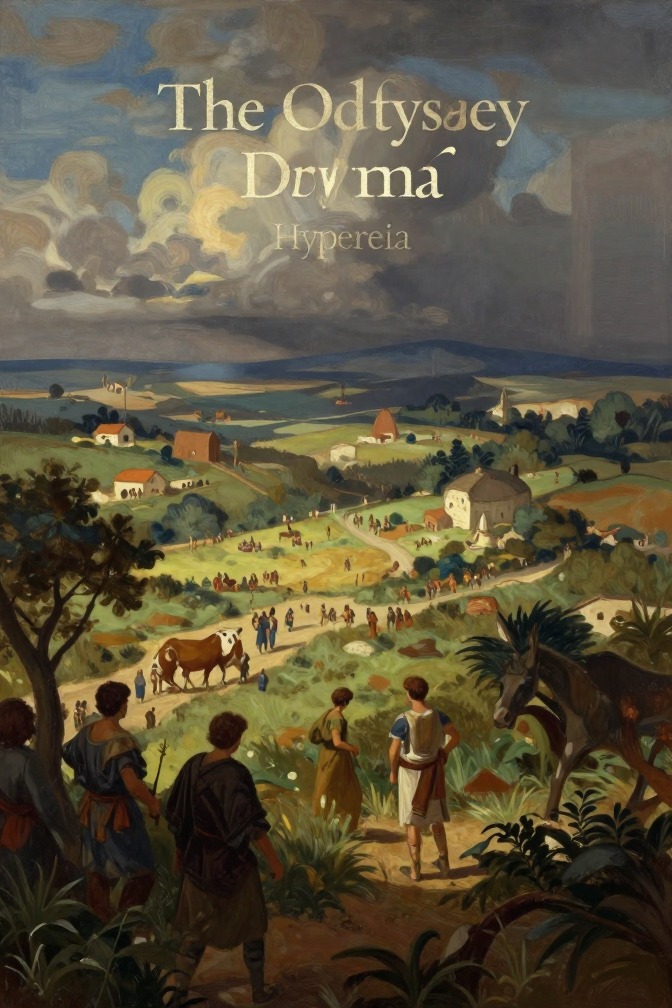
Hypereia is the original homeland of the Phaeacians, a prosperous city they abandoned under pressure from the lawless Cyclopes before resettling in Scheria under King Nausithous. Though never visited in the poem's present action, Hypereia functions as a lost origin point that defines the Phaeacians' identity as a displaced, seafaring people who live apart from other nations.
Odysseus and Nausicaa share a brief but pivotal helper relationship on Scheria, where the young princess, prompted by Athena, rescues the shipwrecked hero, clothes and feeds him, and guides him to her father's palace, setting in motion his return to Ithaca. Their encounter also carries an undercurrent of potential marriage, which Alcinous explicitly offers and Nausicaa herself privately wishes for, though Odysseus gently declines.
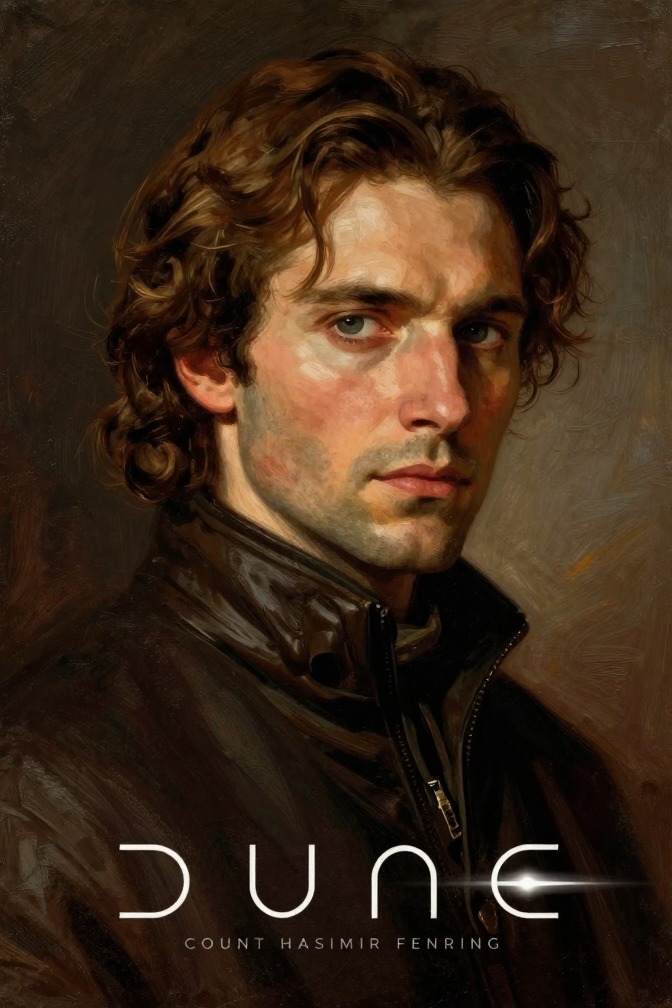
Count Hasimir Fenring is a genetic-eunuch, a childhood companion of the Padishah Emperor Shaddam IV, and one of the deadliest fighters in the Imperium. He serves as the Emperor's trusted agent, notably as Imperial Agent on Arrakis during the Harkonnen regime, and later as Siridar-Absentia of Caladan. Fenring is a master of subtlety and evasion, a man whose furtiveness and inner seclusion make him an anomaly even to the prescient Paul-Muad'Dib. His refusal to kill Paul at the Emperor's command marks a pivotal moment of defiance, and he ultimately joins Shaddam IV in retirement on Salusa Secundus.
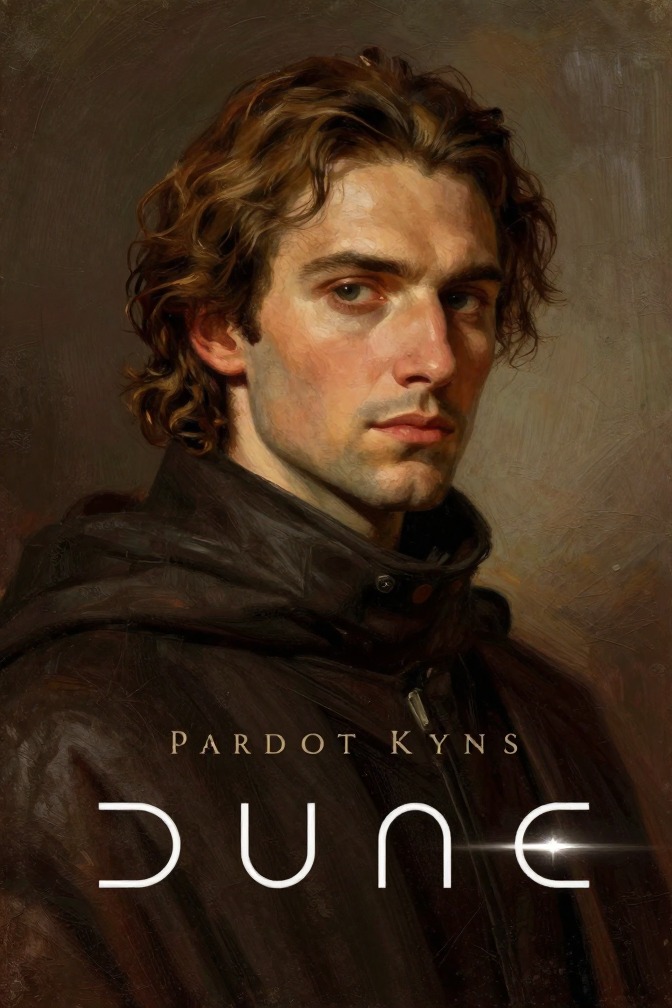
Pardot Kynes, the First Planetologist of Arrakis, is the visionary scientist whose ecological dream of transforming the desert planet into a paradise reshaped the Fremen into an ecological and geological force of almost unlimited potential. His single-mindedness, his marriage into the Fremen, and his revolutionary teachings laid the foundation for the Arrakis terraforming project that would ultimately become the ideological core of Paul-Muad'Dib's power. Kynes's legacy, carried on by his son Liet-Kynes, transformed the Fremen from a scattered, oppressed people into a united force with a sacred goal, making him a pivotal figure whose ideas outlived him and directly enabled the events of the novel.
The Spacing Guild is the monopolistic interstellar transport and banking organization of the Imperium in Frank Herbert's Dune, one of the three legs of the political tripod that maintains the Great Convention alongside the Emperor and the Landsraad. Its power derives from its exclusive control of space travel, which it uses to extract immense wealth and enforce its will, yet its dependence on the spice melange for its navigators' prescience makes it vulnerable to Paul Atreides, who ultimately threatens to destroy the spice to gain control over the Guild.
Al Shockley is Jack Torrance's wealthy, influential friend and former drinking companion who secures Jack the winter caretaker position at the Overlook Hotel, then later demands Jack abandon a planned book about the hotel's dark history, a demand that fuels Jack's resentment and contributes to his psychological unraveling.
Frank Masterton is a minor but vivid character in Stephen King's The Shining, a wholesale vegetable supplier and old friend of Dick Hallorann whose brief appearances establish a warm, profane, and mutually respectful friendship that contrasts sharply with the isolation and hostility of the Overlook Hotel.
Wendy Torrance is the wife of Jack Torrance and mother of Danny Torrance in Stephen King's The Shining. She is a resilient but deeply conflicted woman who must navigate her husband's alcoholism, her son's psychic abilities, and the malevolent influence of the Overlook Hotel, ultimately becoming the protector of her family in a life-or-death struggle.
Fernand Mondego's betrayal of Ali Pasha is the foundational crime that sets in motion the central revenge plot of *The Count of Monte Cristo*. By surrendering the castle of Yanina to the Turks, murdering his benefactor, and selling Ali's wife and daughter into slavery, Fernand secures his own fortune and title, but creates an implacable enemy in Edmond Dantes, who, as the Count of Monte Cristo, systematically destroys Fernand's reputation, family, and life.
Effie Trinket is the District 12 escort, a Capitol official whose annual duty is to preside over the reaping and chaperone the tributes. She embodies the Capitol's artificiality and obliviousness, yet her genuine investment in her tributes' success and her occasional flashes of defiance make her a more complex figure than her garish exterior suggests.
Primrose Everdeen is Katniss's twelve-year-old sister, whose name is drawn at the reaping, triggering Katniss's volunteer tribute and the entire plot of the novel. She embodies innocence, vulnerability, and the emotional stakes of the Hunger Games, serving as the primary motivation for Katniss's survival and rebellion.
Rue is the twelve-year-old female tribute from District 11 in the Seventy-fourth Hunger Games, a small, birdlike girl whose alliance with Katniss Everdeen and tragic death become a pivotal emotional and symbolic turning point in the narrative, transforming Katniss's survival instinct into a conscious act of rebellion against the Capitol.
The sibling relationship between Catherine Earnshaw and Hindley Earnshaw is a central axis of conflict in Wuthering Heights, defined by early rivalry, Hindley's tyrannical rule after their father's death, and Catherine's eventual defiance and estrangement. Their bond, poisoned by jealousy and cruelty, shapes the novel's tragic trajectory and the fates of both houses.
Jane Eyre refuses St. John Rivers's marriage proposal, a climactic act of self-assertion that crystallizes her commitment to personal integrity, emotional authenticity, and moral autonomy over duty, ambition, and religious obligation.
Celine Varens is a French opera-dancer and the former mistress of Edward Fairfax Rochester, whose betrayal and mercenary nature shaped Rochester's cynical view of love and directly led to his taking custody of Adele Varens, the child she claimed was his daughter.
Diana Rivers is one of Jane Eyre's two maternal cousins, a woman of striking intelligence, physical vitality, and deep affection, who, together with her sister Mary and brother St. John, rescues Jane from destitution and becomes a lifelong friend and sister.
Lady Ingram is the haughty, imperious mother of Blanche and Mary Ingram, a dowager whose fierce pride, rigid class prejudice, and contemptuous treatment of governesses mark her as a formidable presence during the house party at Thornfield Hall and a key representative of the aristocratic society that Jane Eyre must navigate and ultimately transcend.
Miss Smith is a minor teacher at Lowood Institution, responsible for needlework instruction and the care of linen and dormitories. Though she appears only in a handful of scenes, her role as a practical, workaday instructor contrasts with the more morally charged figures of Miss Temple and Miss Scatcherd, and she is the teacher who first sets Jane to sewing and who later receives the brunt of the Brocklehurst family's scrutiny during their inspection of the school.
Mr. Wood is the clergyman who officiates at the interrupted wedding of Jane Eyre and Edward Rochester, and who later witnesses the revelation of Rochester's mad wife Bertha Mason. His brief but pivotal role marks the moment when Rochester's concealed marriage is exposed, the ceremony is broken off, and the moral and legal crisis of the novel reaches its climax.