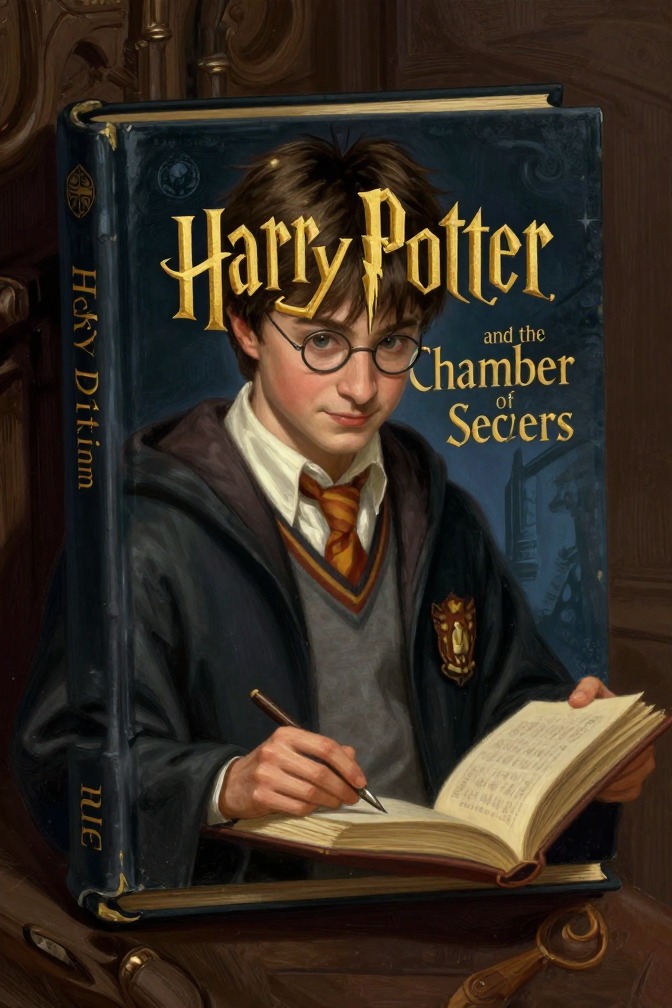
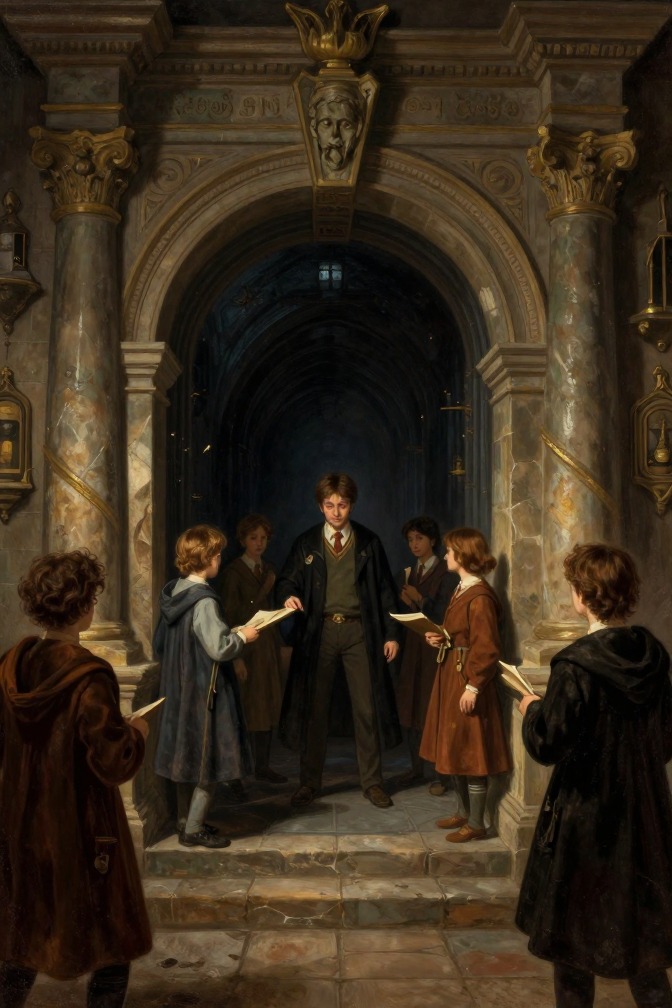
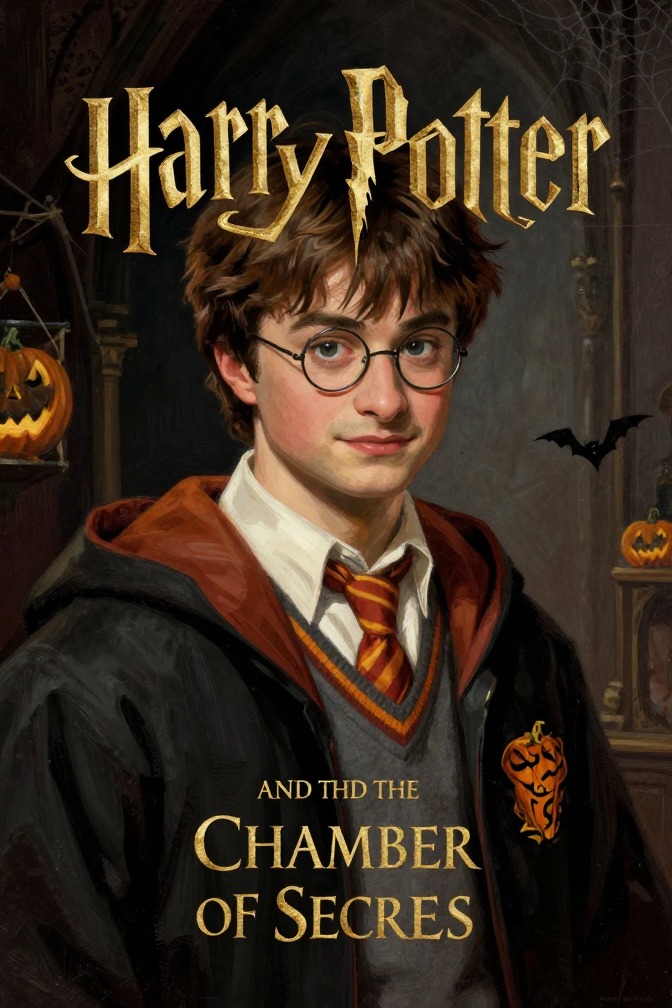
The Ministry of Magic is the governing body of the British wizarding world, responsible for enforcing magical law, regulating underage sorcery, and maintaining the International Statute of Secrecy. In Harry Potter and the Chamber of Secrets, the Ministry appears as a bureaucratic institution whose legal frameworks, enforcement actions, and political vulnerabilities shape the central conflicts of the story.
The Slytherin Quidditch Team is the House Quidditch team representing Slytherin at Hogwarts School of Witchcraft and Wizardry. In Harry Potter's second year, the team is dramatically transformed by the arrival of Draco Malfoy as Seeker and the gift of seven Nimbus Two Thousand and One brooms from Lucius Malfoy, creating an unprecedented equipment advantage that fuels the team's arrogance and intensifies the rivalry with Gryffindor.
The connection between Harry Potter and Lord Voldemort is the central, defining relationship of the narrative, established through a shared magical heritage, a physical scar, and a profound ideological opposition that culminates in a direct confrontation within the Chamber of Secrets.
The Decree for the Reasonable Restriction of Underage Sorcery is a formal legal statute of the Ministry of Magic that prohibits witches and wizards under the age of seventeen from performing magic outside of school, serving as a central plot mechanism in Harry Potter and the Chamber of Secrets by creating legal jeopardy for Harry and exposing the gap between official law and its selective enforcement.
The No evening activities rule is a security measure imposed at Hogwarts School of Witchcraft and Wizardry after a series of attacks by the monster from the Chamber of Secrets. Announced by Professor Minerva McGonagall following the double attack on Hermione Granger and Penelope Clearwater, the rule prohibited all evening activities, including Quidditch training and matches, as part of a broader set of emergency restrictions. It marked a dramatic escalation in the school's response to the crisis, reflecting the heightened fear and the suspension of normal life at Hogwarts.
The Opening of the Chamber of Secrets is a pivotal state in Harry Potter and the Chamber of Secrets, marking the return of a legendary threat to Hogwarts. First announced by a mysterious message on a wall after the petrification of Mrs. Norris, the opening triggers a wave of fear, suspicion, and attacks on Muggle-born students, ultimately revealing the Chamber's existence as a real, recurring danger tied to the school's founder, Salazar Slytherin, and his hidden monster.
The Parseltongue ability is the rare magical power to speak and understand the language of snakes, a gift famously associated with Salazar Slytherin and inherited by his descendants. In Harry Potter and the Chamber of Secrets, this ability becomes a central plot device, marking Harry as a potential heir to Slytherin and ultimately revealing his deep, involuntary connection to Lord Voldemort.
Halloween at Hogwarts is a night of ritual celebration and catastrophic disruption, marking the first attack of the basilisk and the public revelation of the Chamber of Secrets.
The term at Hogwarts School of Witchcraft and Wizardry in Harry Potter's second year is a period of escalating terror and revelation, marked by the opening of the Chamber of Secrets, a series of petrifications, and the unmasking of Tom Riddle's diary as the instrument of a dark plot. It is a time when the school's stability is shattered, Dumbledore is suspended, Hagrid is arrested, and Harry, Ron, and Hermione must uncover the truth behind the attacks, culminating in a confrontation with the Basilisk and the destruction of the diary.
Play actin' is the deliberate performance of illness and weakness that Colin Craven and Mary Lennox adopt to conceal their secret garden activities and Colin's rapid recovery, transforming deception into a source of shared joy and strategic control.
Magic is the central concept in The Secret Garden, representing the life-giving force that restores health and happiness to the children and the garden itself. It is a blend of natural vitality, positive thinking, and the mysterious power of nature, which Colin Craven elevates into a personal philosophy and a scientific experiment.
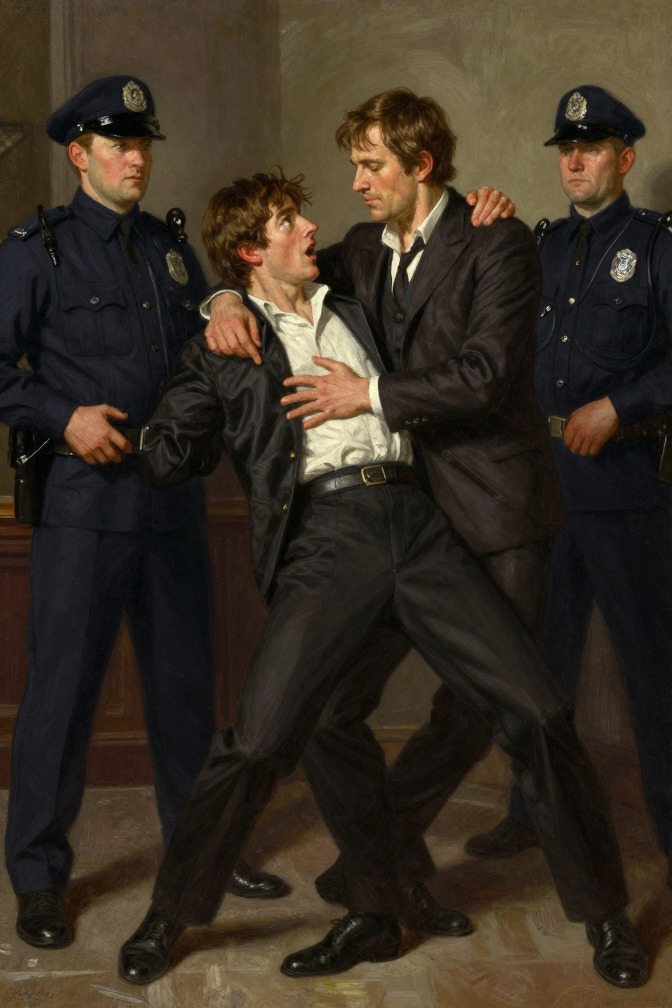
After his release from prison and the Ludovico conditioning, Alex is brutally beaten by his former enemy Billyboy and his former droog Dim, who have both become police officers, in a remote countryside location as a form of unofficial 'summary punishment'.
Center is the central district of the unnamed city in A Clockwork Orange, serving as the primary hub for Alex's nocturnal activities, his visits to the Korova Milkbar and MELODIA record shop, and the site of his return after imprisonment.
The A Clockwork Orange manuscript is the unfinished book written by F. Alexander, a writer whose home is invaded by Alex and his droogs. Alex tears up the pages and later, after undergoing the Ludovico Technique, returns to the cottage HOME, where F. Alexander recognizes him as a victim of the state and plans to use him as a political weapon against the government, while also harboring a growing suspicion that Alex was involved in his wife's rape and death.
The Durango 95 is a stolen automobile that serves as the gang's getaway vehicle during the night of ultra-violence in Part One of A Clockwork Orange, symbolizing the reckless mobility and predatory freedom of Alex and his droogs before his arrest and conditioning.
The Government in A Clockwork Orange is the authoritarian state apparatus that controls society through punitive justice, experimental behavioral conditioning, and propaganda, ultimately prioritizing social order over individual moral freedom.
The Weekly Trumpet is the opposition newspaper that publishes F. Alexander's article denouncing the government's Ludovico Technique, using Alex as a living witness to galvanize public outrage before the general election.
The relationship between Alex and Dr. Brodsky is the central clinical encounter of the novel, in which the state psychiatrist subjects the young criminal to the Ludovico Technique, a conditioning treatment that forcibly suppresses his capacity for violence and, as a side effect, his love of music, thereby raising the novel's core ethical question about the nature of goodness and free will.
The relationship between Alex and the Minister of the Interior is a transactional and exploitative one, in which the Minister first selects Alex as a test subject for the Ludovico Technique and later, after Alex's suicide attempt, co-opts him as a public-relations asset to defend the government's crime-control policies. The Minister treats Alex not as a person but as a tool—first of penal experimentation, then of political propaganda—and Alex, in turn, learns to manipulate the Minister's patronage for his own advantage. Their interactions dramatize the novel's central critique of state power: that both punishment and rehabilitation can be instruments of control rather than justice.
The fight with the polar bear is the pivotal ordeal of John Rowland's survival on the iceberg after the wreck of the Titan, in which the crippled, one-armed sailor kills a starving polar bear with only a jackknife, saving the child Myra and marking his transformation from a degraded drunkard into a selfless protector.
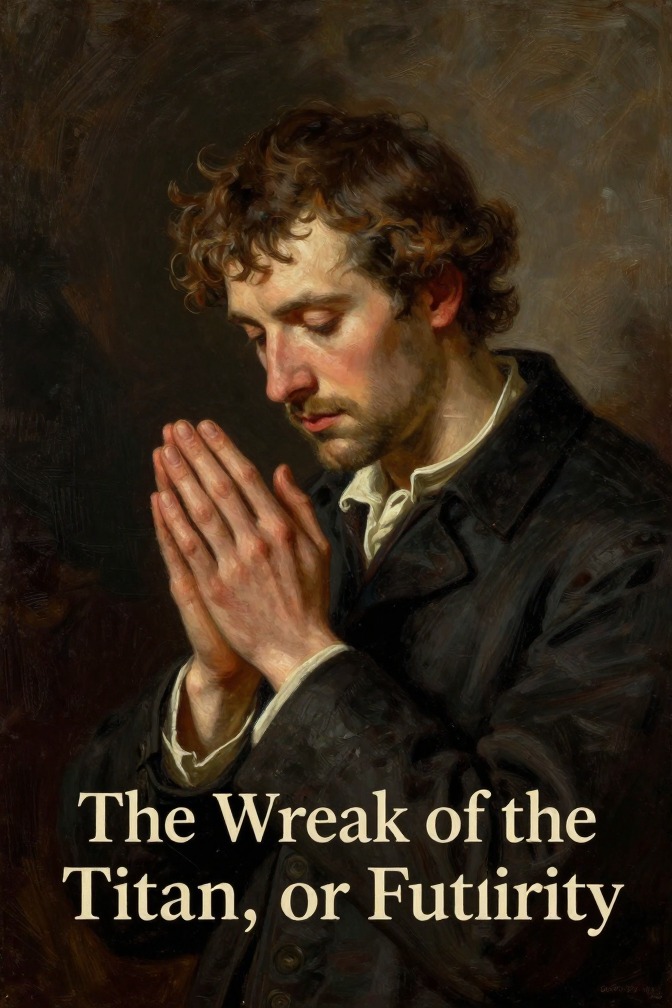
Rowland's prayer is the pivotal moment in which the atheist protagonist, stranded on an iceberg with the injured child Myra, breaks his lifelong denial of God and prays for the first time, begging for the child's life and the mother's safety—a scene that immediately precedes his rescue and marks the beginning of his moral and spiritual transformation.
Dammy is the affectionate nickname that the child Myra Selfridge coins for John Rowland during their ordeal on the iceberg after the wreck of the Titan, and it becomes a recurring motif of their bond, appearing at key moments of crisis, reunion, and separation.
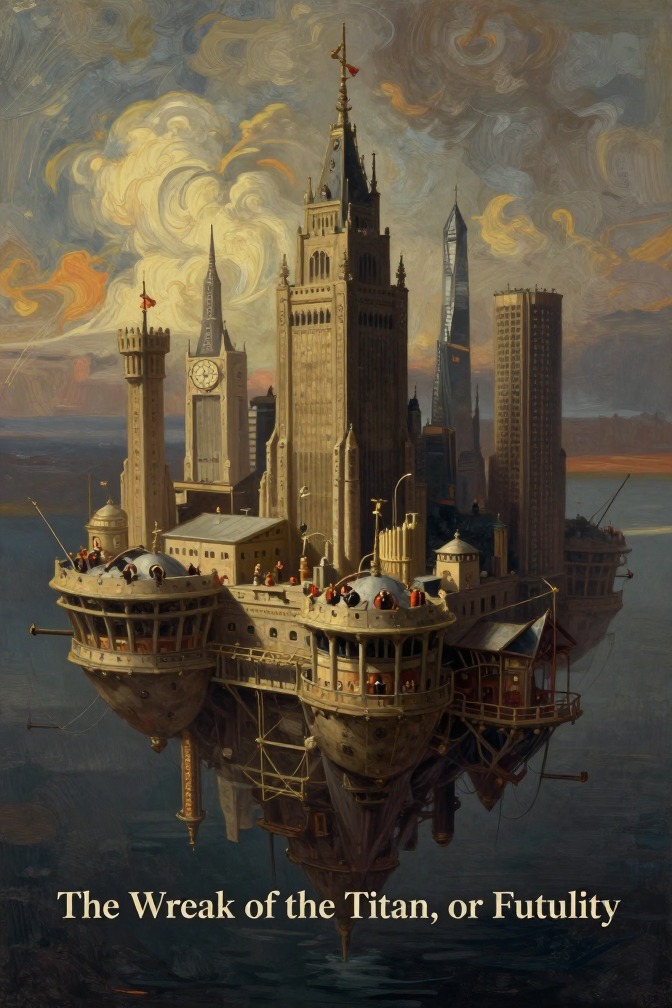
The floating city is the epithet Morgan Robertson's novella The Wreck of the Titan applies to the steamship Titan, the largest and most technologically advanced vessel of its time. The phrase encapsulates the ship's role as a self-contained world of luxury, science, and presumed invincibility, and it becomes bitterly ironic when the Titan—declared unsinkable—sinks on its third return voyage after colliding with an iceberg. The expression underscores the central themes of technological hubris and the fragility of human achievement.
The phrase "the greatest of the works of men" is the opening declaration of Morgan Robertson's 1898 novella *The Wreck of the Titan*, or *Futility*, and it establishes the central theme of technological hubris that governs the entire narrative. Applied to the steamship *Titan*, the phrase encapsulates the era's confidence in engineering, science, and industrial progress, only to be systematically dismantled by the ship's catastrophic destruction. The expression functions as both a proud boast and a tragic irony, framing the *Titan* as a monument to human achievement that becomes the instrument of its own ruin.
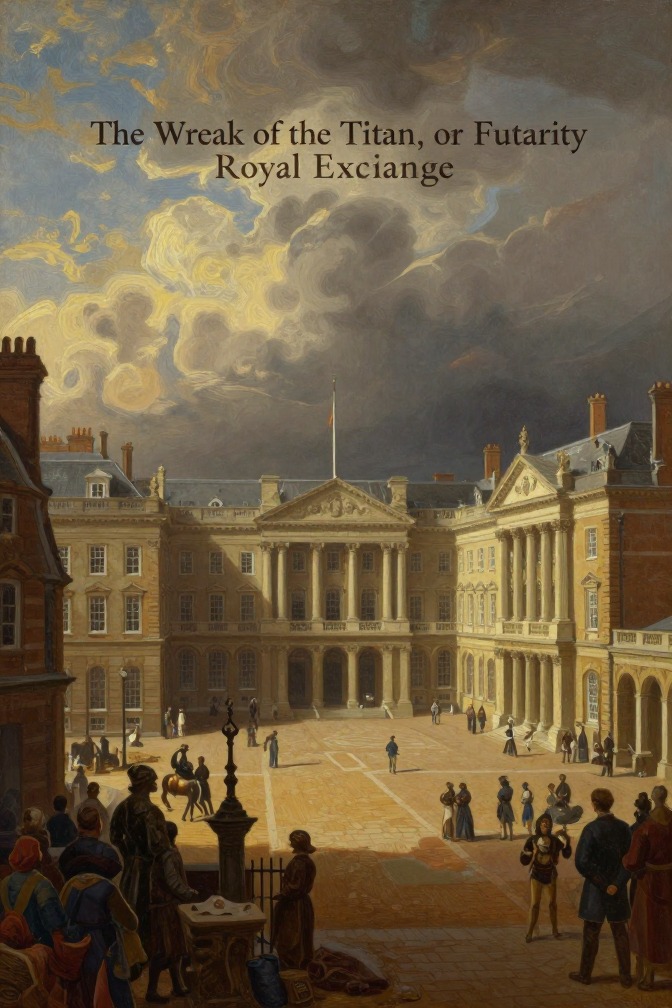
The Royal Exchange in London serves as the headquarters of Lloyds, the immense insurance association, and is the central setting for the financial and legal confrontation following the wreck of the Titan, where the fate of insurance claims, the exposure of Captain Bryce's concealment, and the financial ruin of Mr. Selfridge are decided.
Threadneedle Street, a narrow thoroughfare in the City of London, serves as the setting for the climactic confrontation between the underwriter Mr. Meyer and the officers of the Titan, where the truth about the collision with the Royal Age and the drugging of John Rowland is exposed, leading to the ruin of Captain Bryce and Mr. Austen and the financial collapse of Mr. Selfridge.
The United States Naval Academy is the institution that trained John Rowland, the protagonist of Morgan Robertson's 1898 novella The Wreck of the Titan, and it serves as a marker of his former status and expertise, contrasting sharply with his later degradation and providing the professional knowledge that enables his defiance and eventual redemption.
Rowland's atheism is a defining trait that shapes his character arc in Morgan Robertson's novella, evolving from a defiant denial of God to a desperate prayer for the safety of a child, ultimately revealing the limits of his rationalism and the power of human connection.
Rowland's sobriety marks the final stage of his redemption, transforming him from a disgraced, alcoholic sailor into a self-reliant government clerk, and symbolizing his rejection of the destructive forces that once defined his life.
Armand Moncharmin is one of the two joint managers of the Paris Opera House who succeed MM. Debienne and Poligny, and whose skeptical, rationalist attempts to expose the Opera Ghost as a hoax become the novel's central comic and investigative thread. A wealthy, musically ignorant socialite who admits he cannot tell one key from another, Moncharmin partners with the composer Firmin Richard, and together they endure a series of humiliating supernatural pranks—culminating in the theft of twenty thousand francs from Richard's coat pocket despite a safety-pin—that ultimately force them to accept the ghost's reality.