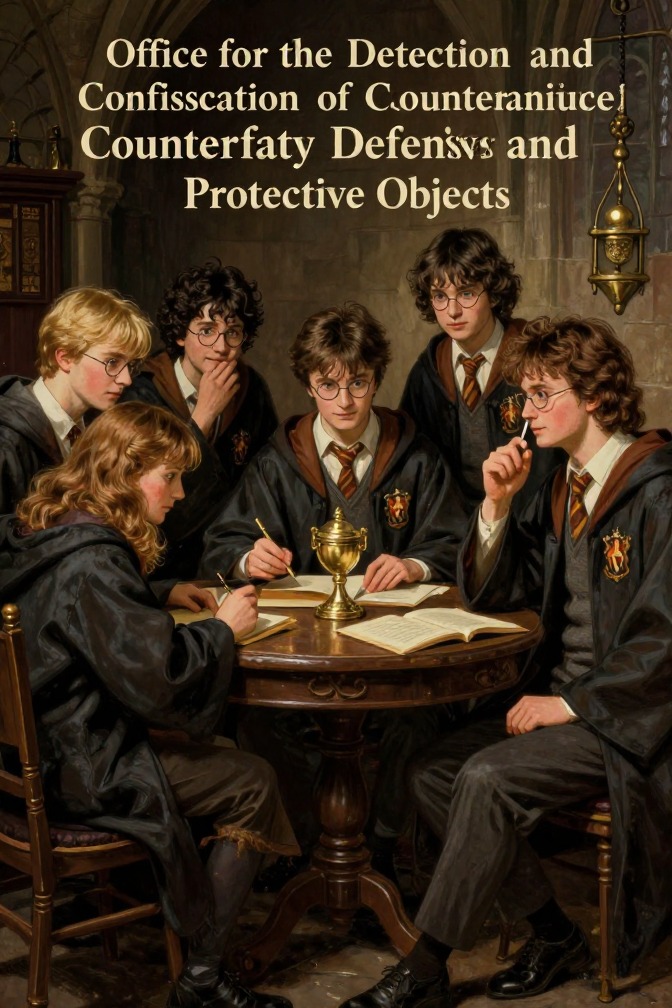
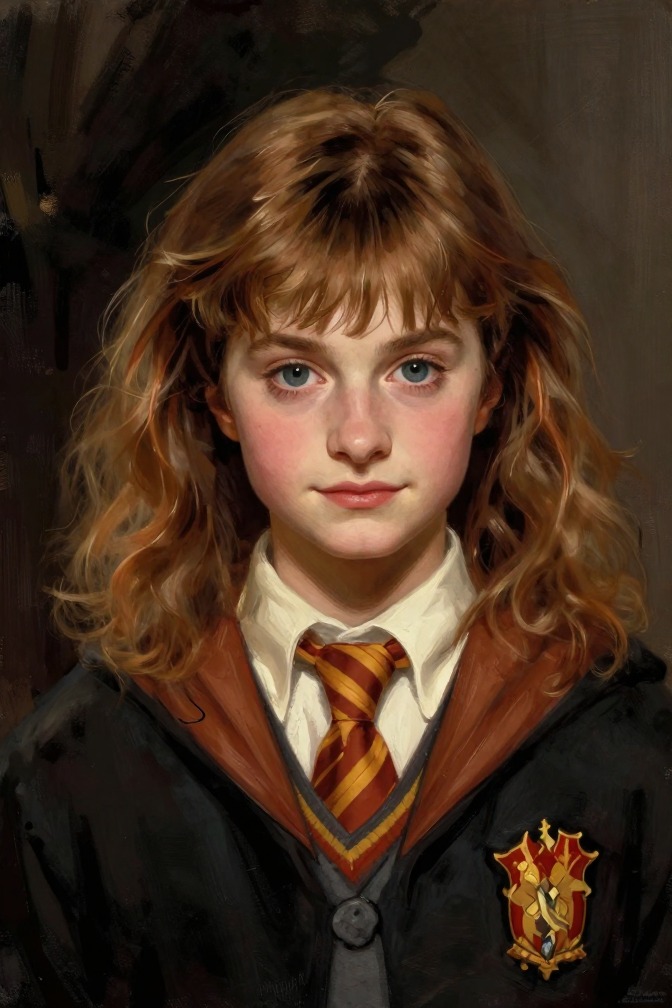
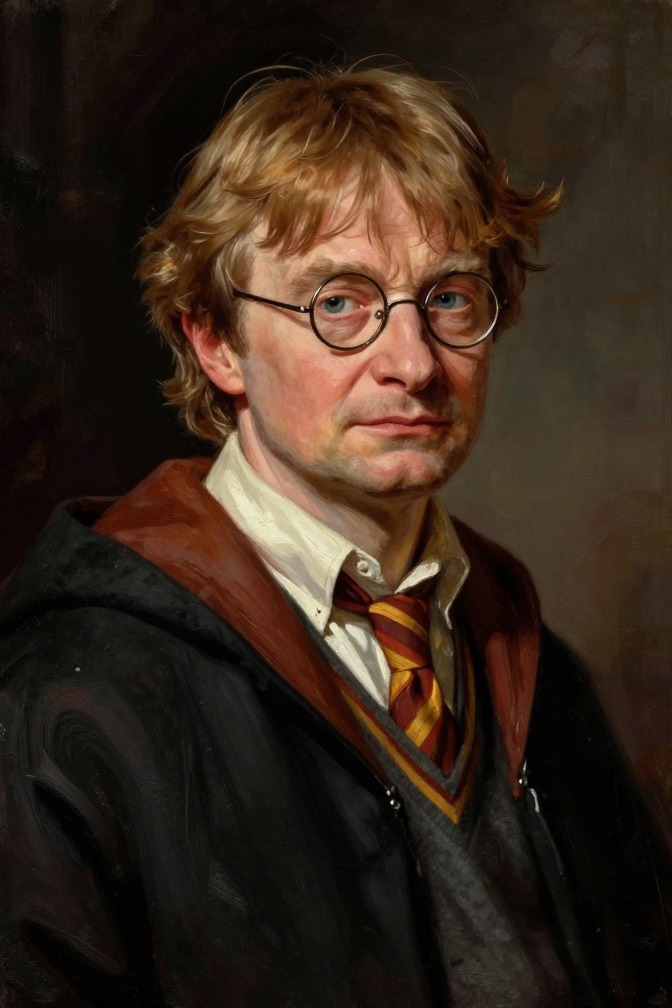
The Office for the Detection and Confiscation of Counterfeit Defensive Spells and Protective Objects is a new Ministry of Magic department established by Minister Rufus Scrimgeour in response to the escalating war with Lord Voldemort, tasked with identifying and removing fraudulent protective items that exploit public fear. Headed by Arthur Weasley, the office represents both the Ministry's attempt to project competence during a crisis and the pervasive anxiety that has created a market for dangerous, unregulated magical goods.
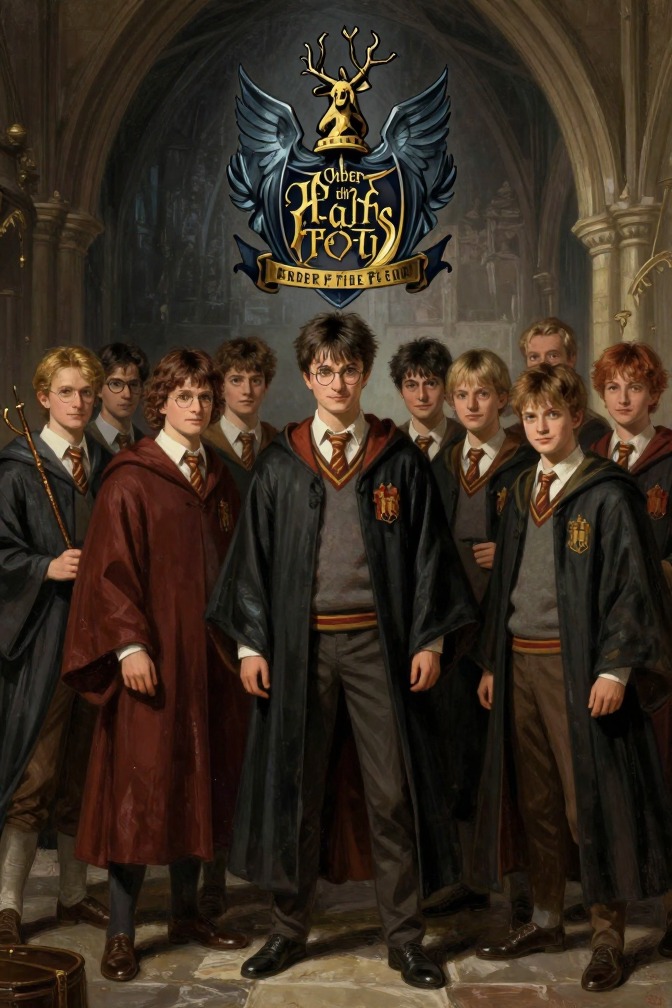
The Order of the Phoenix is a secret society founded by Albus Dumbledore to oppose Lord Voldemort and his Death Eaters. It serves as the primary resistance force throughout the Second Wizarding War, coordinating intelligence, protection, and direct combat against the Dark Lord's forces. Its members, drawn from the Ministry of Magic, Hogwarts staff, and the broader wizarding community, operate under constant threat of infiltration and death, embodying the theme of collective sacrifice against tyranny.
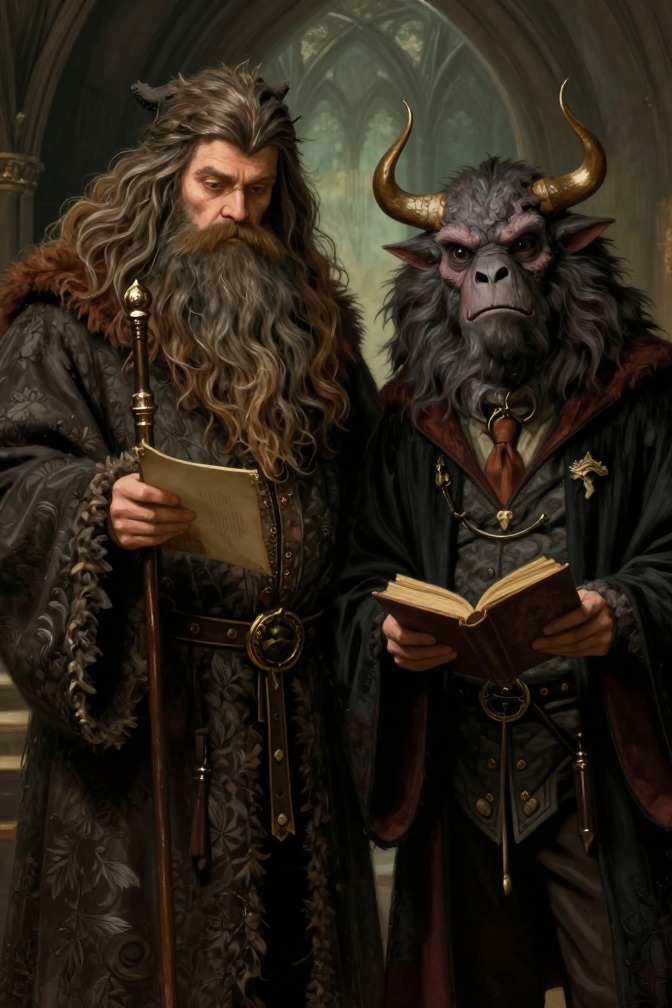
The relationship between Rubeus Hagrid and Aragog, a giant acromantula, is one of the most profound and unusual friendships in the wizarding world, spanning decades from Hagrid's childhood to Aragog's death in Harry's sixth year. It is a bond defined by Hagrid's unwavering loyalty and affection for a creature others find monstrous, a loyalty that ultimately isolates him from the very spider colony he helped raise.
The Cruciatus Curse is one of the three Unforgivable Curses, a torture spell that inflicts unbearable pain on its victim. It is a key tool of Lord Voldemort and his Death Eaters, used for interrogation, punishment, and sadistic pleasure. The curse's use is illegal under wizarding law, and its application in the narrative marks the moral descent of those who wield it, while also testing the limits of Harry Potter's own capacity for violence and mercy.
The Department for the Regulation and Control of Magical Creatures is a division of the British Ministry of Magic responsible for overseeing the import, breeding, sale, and welfare of magical creatures, as well as enforcing relevant laws. It appears in Harry Potter and the Half-Blood Prince primarily as a bureaucratic entity that must be notified of the importation of highly dangerous creatures, and later as an overwhelmed agency struggling to contain a giant rampaging in the West Country.
The Hippogriff Regulation governs the import, ownership, and treatment of hippogriffs within the British wizarding world, a rule that becomes personally significant when Buckbeak, a hippogriff owned by Rubeus Hagrid and later inherited by Harry Potter, is sentenced to death for attacking Draco Malfoy. The regulation's enforcement is shown to be inconsistent and politically motivated, as the Ministry of Magic, under pressure from Lucius Malfoy, pursues execution despite the creature's provocation. Following the death of Sirius Black, Harry inherits Buckbeak, and the Order of the Phoenix, fearing Ministry scrutiny, renames the hippogriff "Witherwings" as a protective measure, highlighting the regulation's role as a tool of both legal authority and covert resistance.
The Hogwarts Common Room Password Rule is a security measure requiring students to provide a regularly changing password to gain entry to their House common rooms, enforced by the sentient portrait guardians. The rule is a central feature of daily life at Hogwarts, reflecting the school's layered security and the Fat Lady's temperamental authority.
Obliviator Practice is the Ministry of Magic's systematic use of memory modification to conceal the existence of the wizarding world from Muggles, a core enforcement mechanism of the International Statute of Secrecy that becomes increasingly strained and morally compromised as Lord Voldemort's open war escalates.
Blood traitor is a derogatory term used within the Wizarding world to describe pure-blood witches and wizards who sympathize with or associate with Muggles and Muggle-borns, thereby betraying the supposed purity of their bloodline. The term is a central marker of the ideological divide that fuels the conflict between the Death Eaters and the Order of the Phoenix, and it is wielded by characters like Draco Malfoy and Bellatrix Lestrange to express contempt and justify persecution. Its usage reveals the deep-seated prejudice and the moral stakes of the series, as characters like the Weasley family proudly embrace the label, turning a slur into a badge of honor.
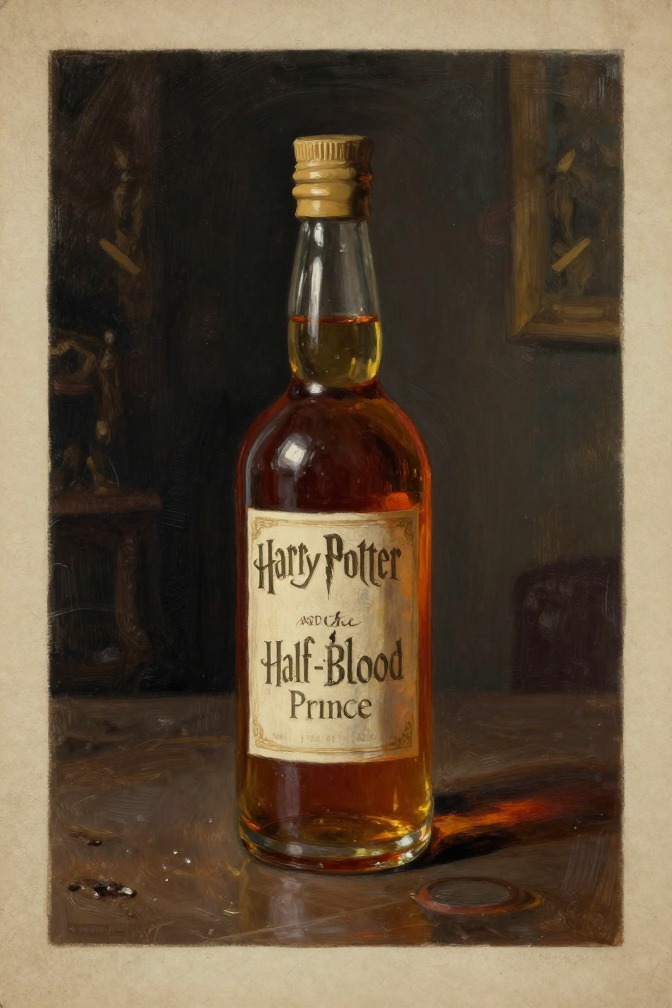
Half-blood is a social classification in the wizarding world denoting a witch or wizard of mixed magical and Muggle ancestry, a status that carries profound social stigma and personal consequence throughout the Harry Potter series. In Harry Potter and the Half-Blood Prince, the term becomes the key to a central mystery: the identity of the Half-Blood Prince, revealed to be Severus Snape, whose own mixed heritage mirrors that of Lord Voldemort and shapes his complex allegiances and resentments.
Love Potion is a magical substance in the wizarding world that creates powerful infatuation or obsession rather than genuine love, and it plays a significant role in the plot of Harry Potter and the Half-Blood Prince, particularly through the accidental poisoning of Ron Weasley with a love potion-laced chocolate.
The Minister of Magic is the highest political office in the British wizarding world, responsible for governing the magical community, maintaining secrecy from Muggles, and coordinating defense against dark forces. During the events of the sixth year at Hogwarts, the office passes from Cornelius Fudge to Rufus Scrimgeour, a transition that reflects the escalating war with Lord Voldemort and the Ministry's fraught relationship with Albus Dumbledore and Harry Potter.
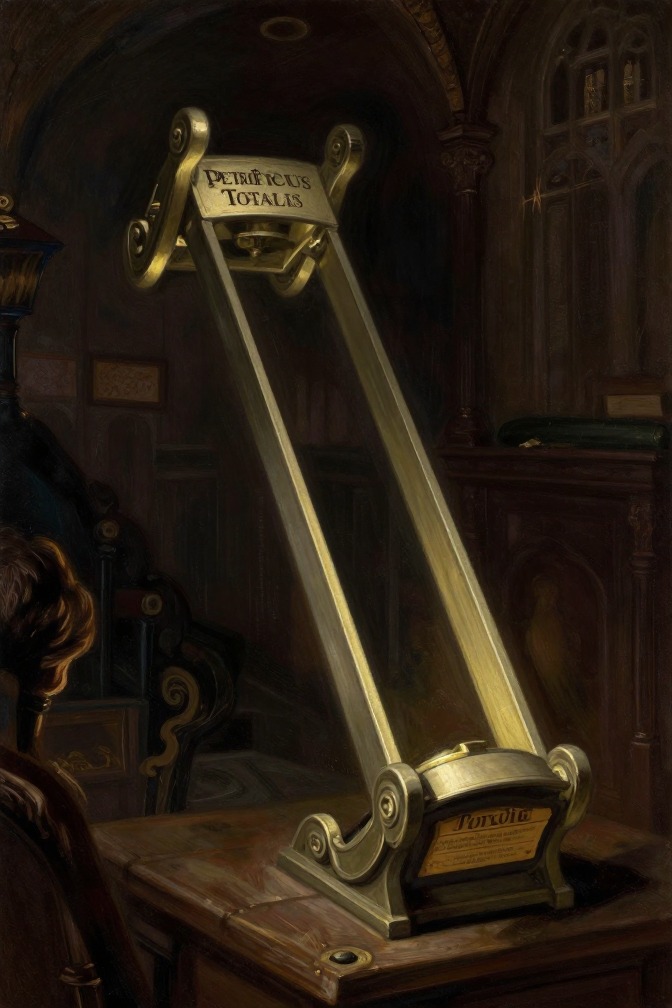
Petrificus Totalus, the Full Body-Bind Curse, is a key immobilizing spell in the Harry Potter series that appears in a critical moment of the sixth book, where it is used by Draco Malfoy to paralyze Harry Potter on the Hogwarts Express, leading to Harry's humiliation and injury, and later by Albus Dumbledore to protect Harry during the confrontation on the Astronomy Tower, a spell that ultimately signals Dumbledore's death.
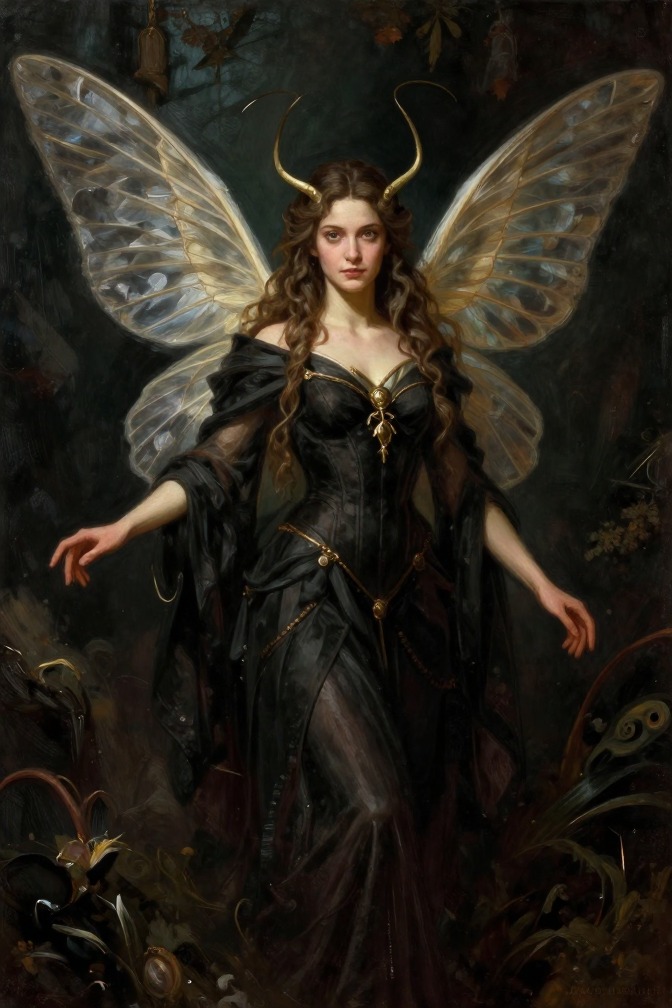
Veela are magical beings of breathtaking beauty, possessing an alluring and dangerous power that affects men almost involuntarily. In Harry Potter and the Half-Blood Prince, the Veela are represented primarily by Fleur Delacour, whose presence at the Burrow and whose engagement to Bill Weasley create significant social and emotional ripples, revealing the complex interplay between supernatural allure, jealousy, and genuine human connection.
A Young Collector is a minor but symbolically charged character in Tennessee Williams's A Streetcar Named Desire, whose brief encounter with Blanche DuBois in Scene Five crystallizes her desperate, predatory romanticism and her pattern of seeking validation through fleeting, illicit intimacies with much younger men.
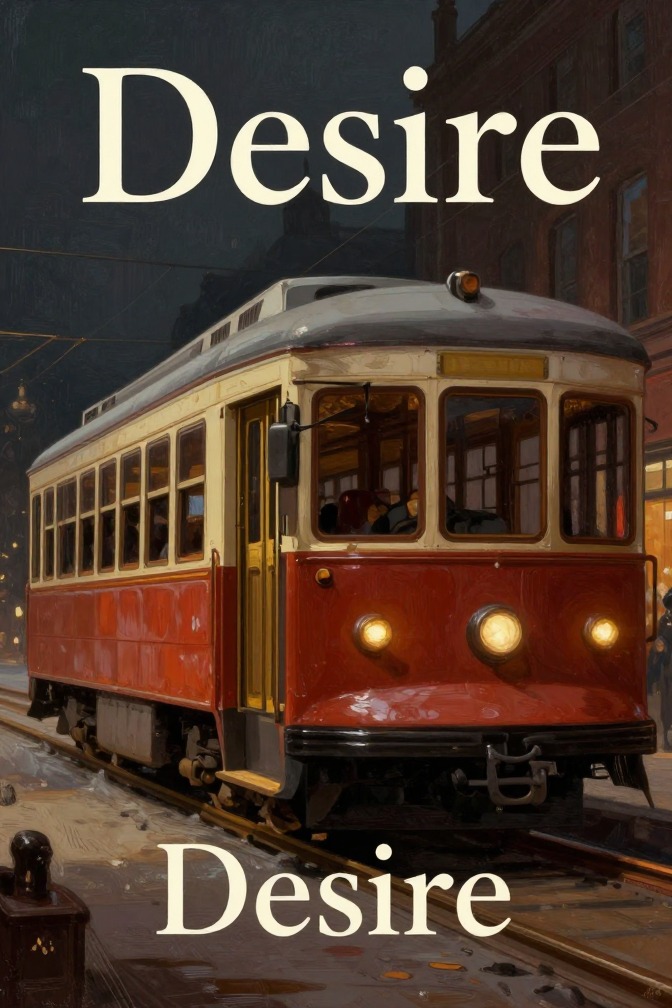
Desire is the name of the streetcar line that Blanche DuBois rides to reach her sister's home in New Orleans, and it becomes the central metaphor of the play for the raw, uncontrollable sexual and emotional forces that drive the characters toward both connection and destruction.
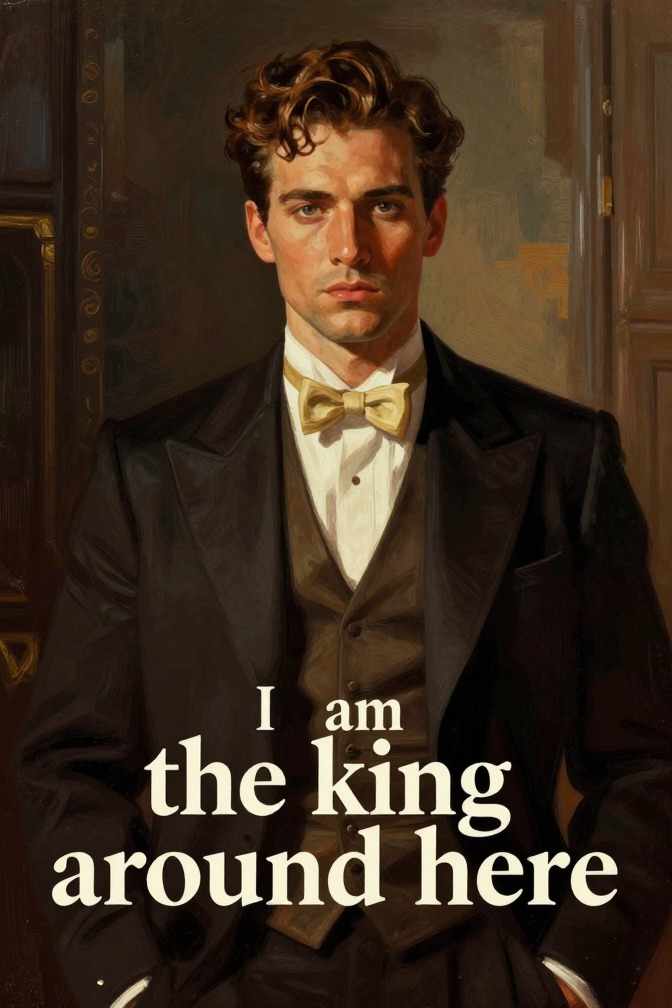
Stanley Kowalski's declaration "I am the king around here" is a pivotal expression of his territorial dominance and patriarchal authority within the Kowalski household, crystallizing the power struggle between his raw, animalistic force and Blanche DuBois's fragile, aristocratic pretensions. The line, delivered during a violent outburst at the birthday supper, marks the climax of Stanley's assertion of control over his wife Stella and her sister, and it resonates with the play's broader themes of class conflict, sexual politics, and the brutal reordering of domestic space in the French Quarter of New Orleans.
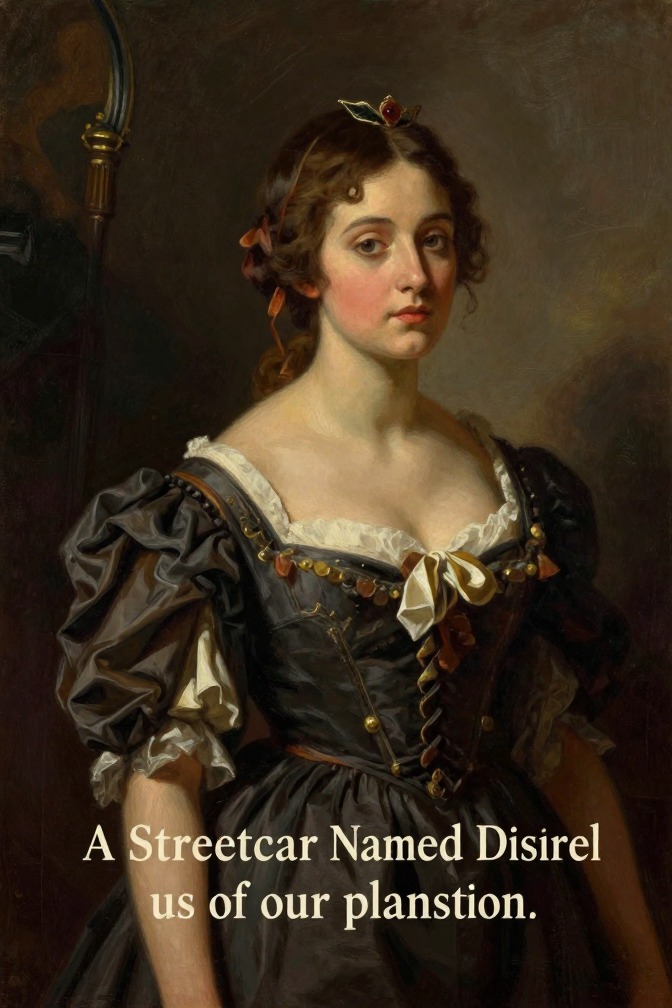
The phrase "the four-letter word deprived us of our plantation" is Blanche DuBois's blunt, bitter explanation for the loss of the family estate, Belle Reve, in Tennessee Williams's A Streetcar Named Desire. It encapsulates her view that the plantation was squandered by generations of DuBois men who traded land for sexual indulgence, and it crystallizes the play's central conflict between the decaying Old South gentility and the raw, sexual, working-class world represented by Stanley Kowalski.
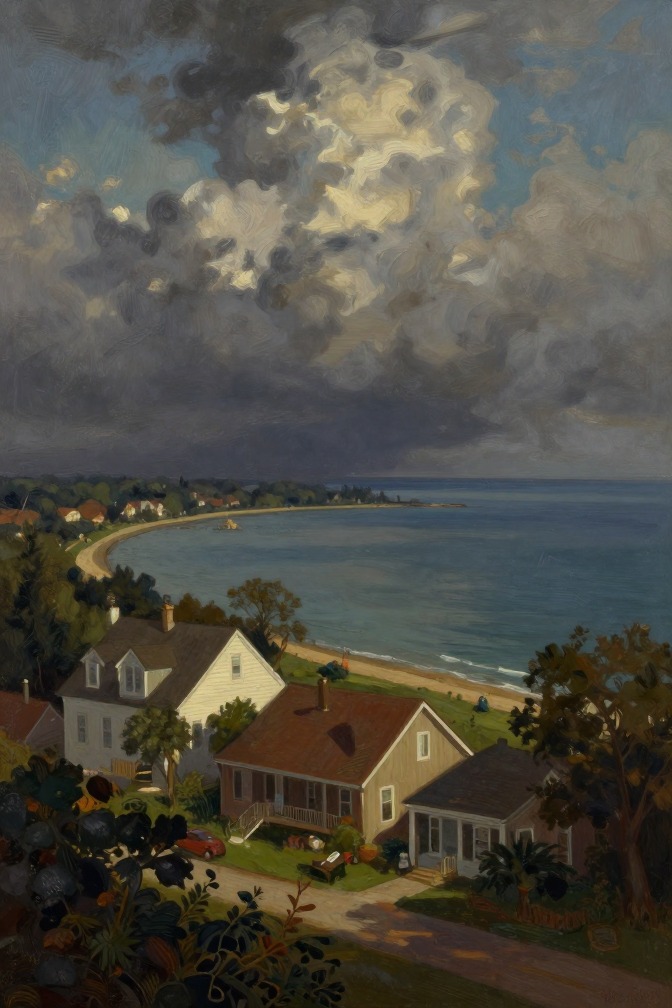
Lake Pontchartrain is the New Orleans lakefront setting for Blanche DuBois and Harold Mitchell's date, the site of their first kiss, and the location of Moon Lake Casino, where the Varsouviana polka played on the night of Allan Grey's suicide, making the lake a recurring locus of romantic hope and traumatic memory.
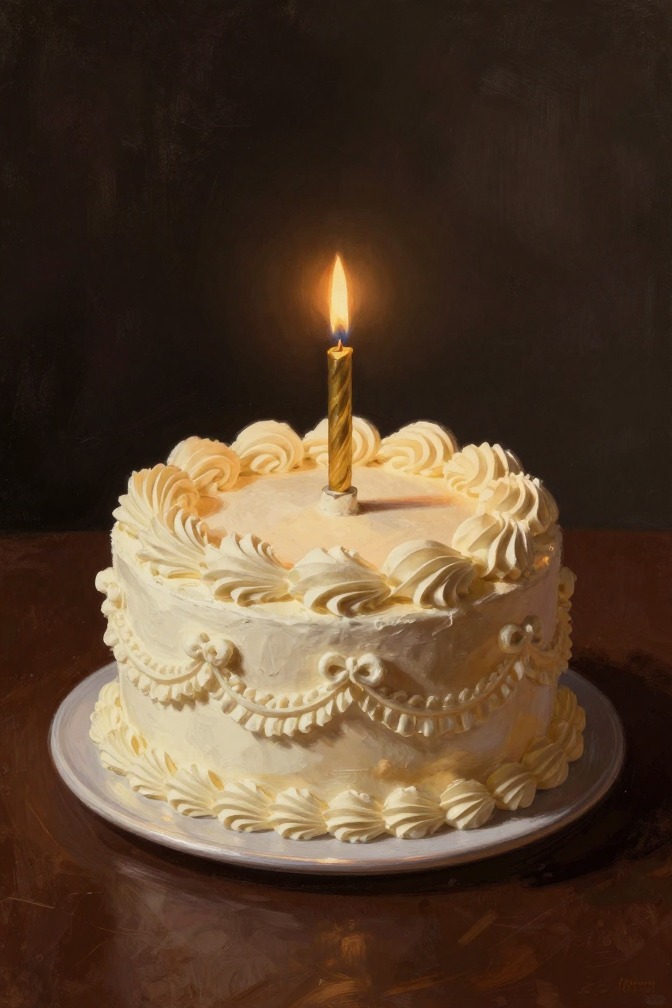
The birthday cake in A Streetcar Named Desire is a white cake with pink candles that Stella prepares for Blanche's birthday supper in Scene Seven, serving as a bitterly ironic symbol of celebration, hope, and the final collapse of Blanche's illusions.
The Flamingo is a second-class hotel in Laurel, Mississippi, where Blanche DuBois stayed after losing Belle Reve, and whose management eventually asked her to leave due to her conduct; it becomes a key piece of evidence in Stanley Kowalski's campaign to destroy her reputation.
1966 was a year of significant professional activity for Tennessee Williams, marked by the Broadway failure of *Slapstick Tragedy* and the publication of a novella and stories collection, *The Knightly Quest*, while the enduring cultural presence of *A Streetcar Named Desire* continued to shape theatrical and literary discourse.
The Brook is a natural feature in the forest near Boston that serves as a symbolic boundary between the world of sin and the world of innocence, and as a mirror reflecting the characters' inner states. It is the site of Pearl's refusal to cross to her mother until Hester resumes the scarlet letter, and its melancholy murmur echoes the sorrow of the characters' lives.
The Meteor is a celestial phenomenon that appears during Arthur Dimmesdale's midnight vigil on the scaffold, taking the shape of a vast, dull red letter 'A' that the minister interprets as a divine revelation of his hidden sin, while the townspeople later read it as a sign of Governor Winthrop's angelic ascension, embodying the novel's central tension between subjective guilt and public interpretation.
The Fox appears briefly but symbolically in The Scarlet Letter, a wild creature of the forest that interacts with Pearl during her mother's meeting with Arthur Dimmesdale. Its presence underscores the child's kinship with the untamed natural world and her separation from the human community.
Walden Pond is a location in the autobiographical frame of Nathaniel Hawthorne's "The Scarlet Letter," mentioned in the Custom-House sketch as the site of Thoreau's hermitage, where Hawthorne once talked with him about pine-trees and Indian relics, representing a past life of intellectual and imaginative freedom that contrasts with the stifling atmosphere of the Custom-House.
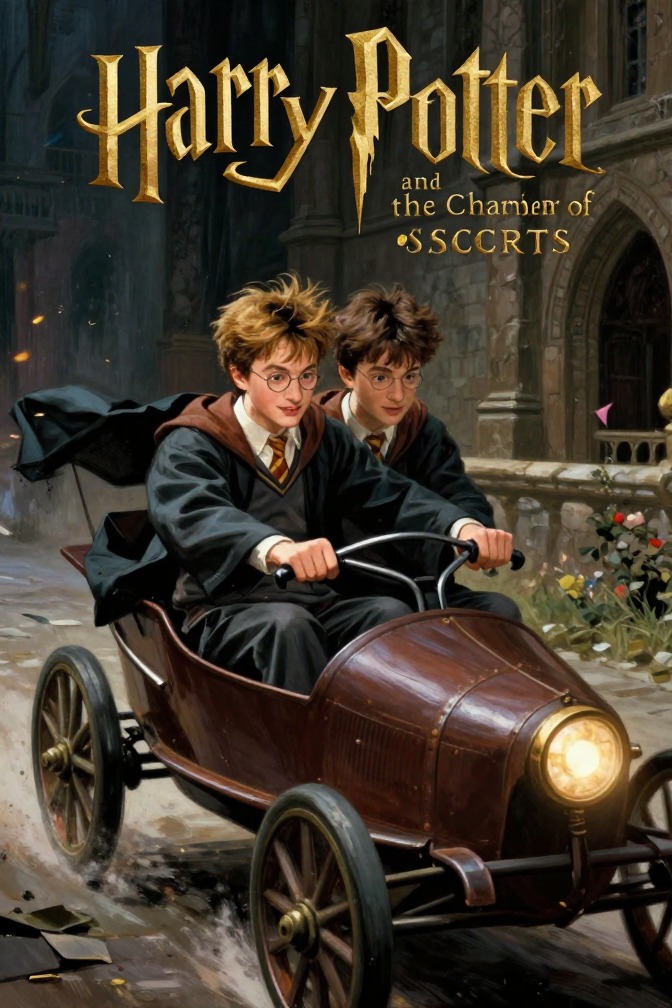
The Flying Car Rescue is the pivotal event in Harry Potter and the Chamber of Secrets where Ron Weasley, along with his twin brothers Fred and George, flies their father's enchanted Ford Anglia to 4 Privet Drive to rescue Harry from the Dursleys' imprisonment. This daring act not only frees Harry from his abusive relatives but also sets off a chain of consequences that includes a crash into the Whomping Willow, a near-expulsion, and the revelation of Arthur Weasley's illegal car enchantment, ultimately shaping the entire second year at Hogwarts.
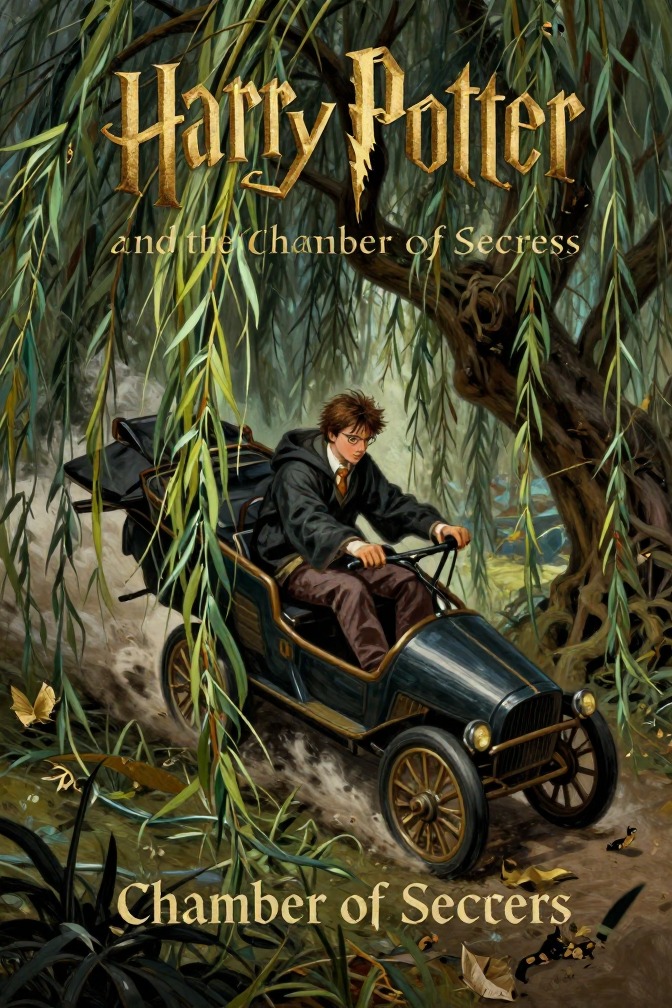
The crash of the flying Ford Anglia into the Whomping Willow is a pivotal event in Harry Potter and the Chamber of Secrets, marking the dramatic and disastrous conclusion of Harry and Ron's unauthorized flight to Hogwarts. This incident not only destroys Ron's wand and strands the boys at the school, but it also triggers a series of consequences: they are caught by Severus Snape, face disciplinary action from Professors McGonagall and Dumbledore, and their actions become known throughout the school, setting the tone for their troubled second year.
Alicia Spinnet is a fourth-year Gryffindor student and one of the three Chasers on the Gryffindor Quidditch team, known for her skill and dedication. She plays a supporting but consistent role in the events of Harry Potter's second year, participating in team practices, matches, and the tense atmosphere following the attacks on students.
Arthur Weasley is the head of the Weasley family, a warm-hearted but financially struggling wizard who works at the Misuse of Muggle Artifacts Office in the Ministry of Magic. His fascination with Muggles and his secret enchantment of a flying Ford Anglia drive much of the book's early plot, while his professional troubles and his family's loyalty become central to the story's conflicts and resolutions.