Magic is the central concept in The Secret Garden, representing the life-giving force that restores health and happiness to the children and the garden itself. It is a blend of natural vitality, positive thinking, and the mysterious power of nature, which Colin Craven elevates into a personal philosophy and a scientific experiment.
Kingsley Avenue is a street in the unnamed city of Anthony Burgess's *A Clockwork Orange*, serving as the location of Municipal Flatblock 18A, the home of Alex and his parents. It appears at two key moments: as the address Alex returns to after his night of violence in Part One, and as the street he walks down after his release from prison in Part Three, where he finds the flatblock's entrance hall cleaned up and the lift working—small signs of a changed world that contrast with his own unchanged status.
The A Clockwork Orange manuscript is the unfinished book written by F. Alexander, a writer whose home is invaded by Alex and his droogs. Alex tears up the pages and later, after undergoing the Ludovico Technique, returns to the cottage HOME, where F. Alexander recognizes him as a victim of the state and plans to use him as a political weapon against the government, while also harboring a growing suspicion that Alex was involved in his wife's rape and death.
The Durango 95 is a stolen automobile that serves as the gang's getaway vehicle during the night of ultra-violence in Part One of A Clockwork Orange, symbolizing the reckless mobility and predatory freedom of Alex and his droogs before his arrest and conditioning.
The Weekly Trumpet is the opposition newspaper that publishes F. Alexander's article denouncing the government's Ludovico Technique, using Alex as a living witness to galvanize public outrage before the general election.
The relationship between Alex and Dr. Brodsky is the central clinical encounter of the novel, in which the state psychiatrist subjects the young criminal to the Ludovico Technique, a conditioning treatment that forcibly suppresses his capacity for violence and, as a side effect, his love of music, thereby raising the novel's core ethical question about the nature of goodness and free will.
Alex and Pete are two members of the original four-droog gang that dominates the first part of A Clockwork Orange. Their relationship traces the arc from loyal follower to quiet dissenter to a final, poignant encounter that marks the end of Alex's youth.
The fight with the polar bear is the pivotal ordeal of John Rowland's survival on the iceberg after the wreck of the Titan, in which the crippled, one-armed sailor kills a starving polar bear with only a jackknife, saving the child Myra and marking his transformation from a degraded drunkard into a selfless protector.
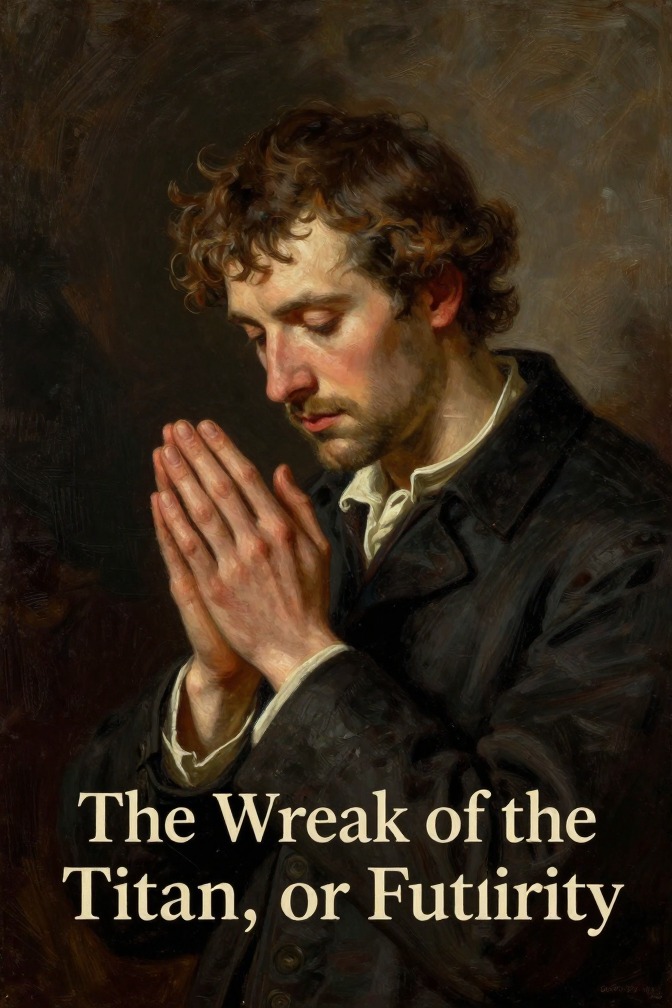
Rowland's prayer is the pivotal moment in which the atheist protagonist, stranded on an iceberg with the injured child Myra, breaks his lifelong denial of God and prays for the first time, begging for the child's life and the mother's safety—a scene that immediately precedes his rescue and marks the beginning of his moral and spiritual transformation.
Captain Barry, the master of the bark Peerless, is a pivotal supporting character in Morgan Robertson's The Wreck of the Titan. He rescues the shipwrecked John Rowland and the child Myra from an iceberg, nurses Rowland back to health, and later becomes his fierce advocate and loyal friend, defending him against the steamship company's officers and helping him reunite with Myra's mother. His actions and testimony are crucial to the story's resolution, embodying loyalty, physical courage, and moral integrity.
George Selfridge is the husband of Myra Selfridge and the father of little Myra, whose marriage to the former Myra Gaunt ended John Rowland's hopes and set his tragic course. He is a military-looking gentleman, a colonel, who appears only briefly in the narrative but whose death from heart failure in Mr. Meyer's office, upon learning of his financial ruin, marks a turning point in the insurance dispute and leaves his granddaughter an orphan on her mother's side.
Myra Gaunt, later Myra Selfridge, is the woman whose rejection of John Rowland's love sets the novella's tragedy in motion. Her marriage to George Selfridge, her fear of Rowland, and her role as the mother of the child Rowland saves from the wreck of the Titan define her as both the object of Rowland's enduring obsession and the beneficiary of his ultimate selflessness.
The loving care of Jesus is a phrase used by Myra Selfridge (née Gaunt) in her account of her failed relationship with John Rowland, encapsulating her evangelical attempt to convert the atheist sailor and the religious conflict that drove them apart. It becomes a recurring motif in the novella, contrasting Rowland's atheism with the Christian piety of the woman he loves, and ultimately frames his own prayer to a God he denies.
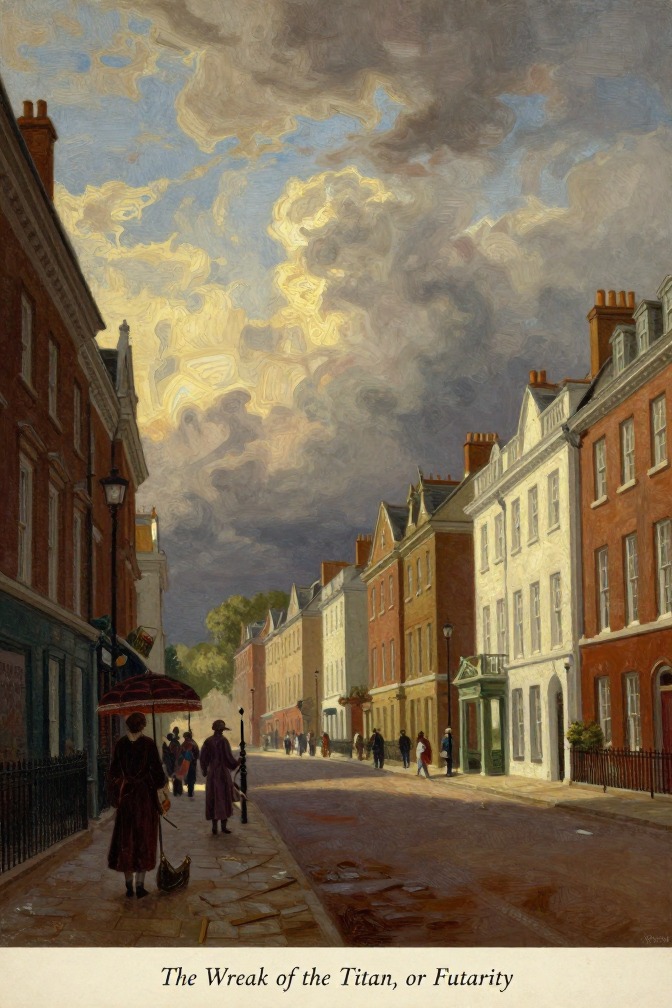
Threadneedle Street, a narrow thoroughfare in the City of London, serves as the setting for the climactic confrontation between the underwriter Mr. Meyer and the officers of the Titan, where the truth about the collision with the Royal Age and the drugging of John Rowland is exposed, leading to the ruin of Captain Bryce and Mr. Austen and the financial collapse of Mr. Selfridge.
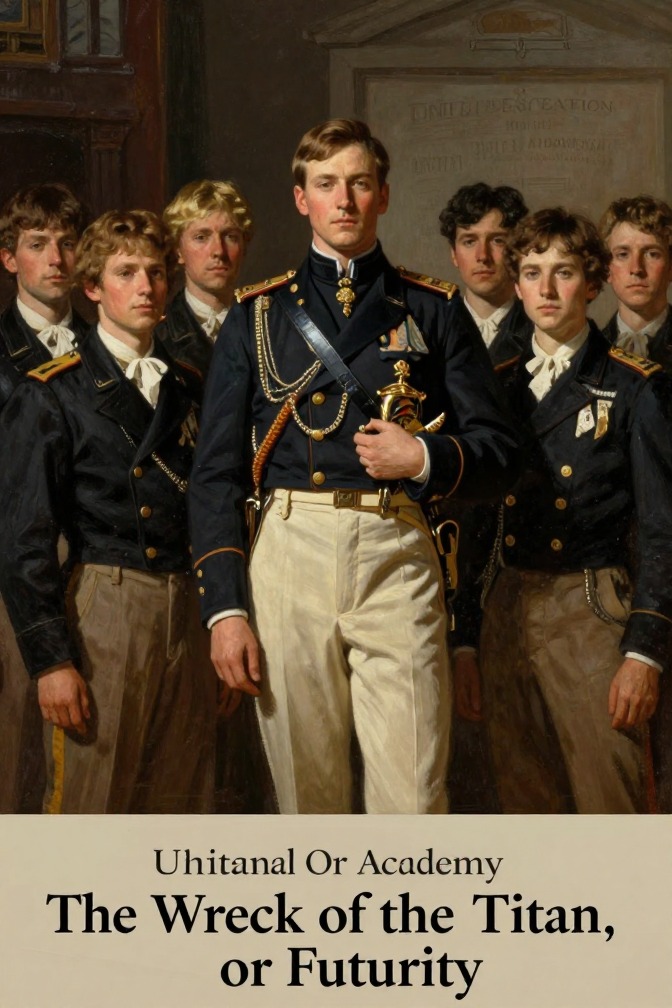
The United States Naval Academy is the institution that trained John Rowland, the protagonist of Morgan Robertson's 1898 novella The Wreck of the Titan, and it serves as a marker of his former status and expertise, contrasting sharply with his later degradation and providing the professional knowledge that enables his defiance and eventual redemption.
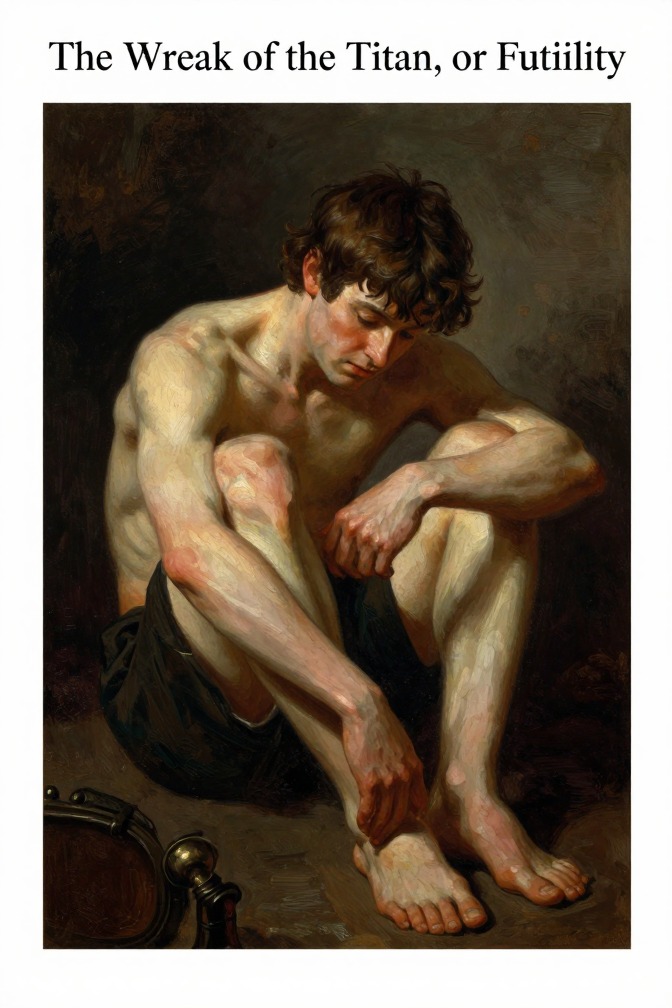
Rowland's sobriety marks the final stage of his redemption, transforming him from a disgraced, alcoholic sailor into a self-reliant government clerk, and symbolizing his rejection of the destructive forces that once defined his life.
Armand Moncharmin is one of the two joint managers of the Paris Opera House who succeed MM. Debienne and Poligny, and whose skeptical, rationalist attempts to expose the Opera Ghost as a hoax become the novel's central comic and investigative thread. A wealthy, musically ignorant socialite who admits he cannot tell one key from another, Moncharmin partners with the composer Firmin Richard, and together they endure a series of humiliating supernatural pranks—culminating in the theft of twenty thousand francs from Richard's coat pocket despite a safety-pin—that ultimately force them to accept the ghost's reality.
Carlotta is the Spanish prima donna of the Paris Opera whose celebrated voice is publicly shattered by the Opera Ghost during a performance of Faust, an event that precipitates her professional collapse and Christine Daae's rise.
M. Poligny is one of the two retiring managers of the Paris Opera House who, along with his colleague M. Debienne, bequeaths the mystery of the Opera Ghost to their successors, Firmin Richard and Armand Moncharmin. His tenure is marked by a superstitious deference to the ghost, culminating in his dramatic flight from Box Five during a performance of La Juive, an incident that cements the ghost's authority over the opera house and sets the stage for the novel's central conflicts.
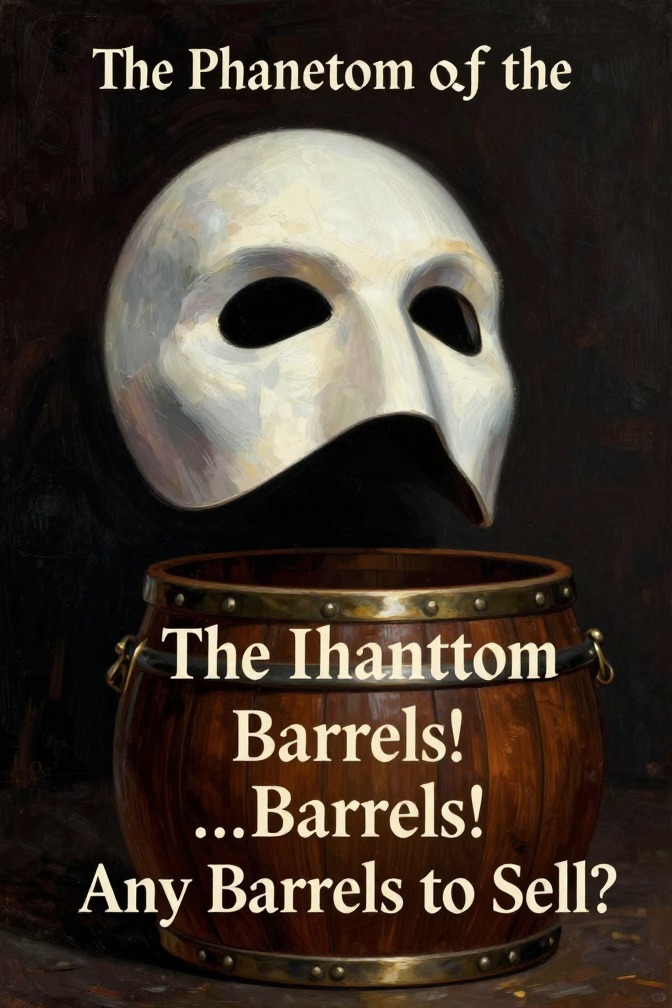
Barrels!...Barrels!...Any Barrels to Sell? is a recurring street cry in Gaston Leroux's The Phantom of the Opera that becomes a haunting motif within the Persian's narrative of the torture-chamber ordeal. First heard as a distant, monotonous chant while the Persian and Raoul de Chagny are trapped in Erik's underground cellar, the phrase transforms from an ordinary Parisian vendor's call into a sinister leitmotif of the gunpowder barrels that threaten to blow up the entire Opera. Its final echo, heard just as the two men are drowning in the flooded torture-chamber, marks the boundary between consciousness and oblivion, and its association with the powder magazine reveals the full scale of Erik's murderous design.
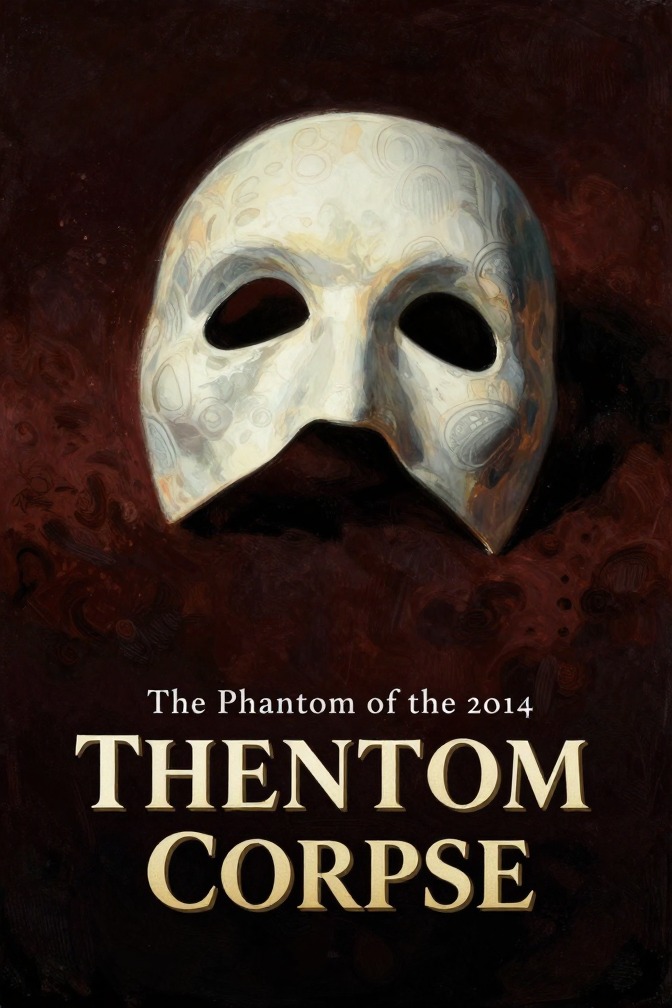
The Living Corpse is the epithet Erik, the Opera Ghost, uses to describe himself in Gaston Leroux's The Phantom of the Opera, encapsulating his tragic condition as a man whose body is a walking death. The phrase first appears in Erik's own mouth during his confession to Christine Daae, when he declares that he is 'built up of death from head to foot' and that 'it is a corpse that loves you.' It later resurfaces in the Persian's account of Erik's early life, where the showman exhibited him as the 'living corpse' at fairs. The term crystallizes the novel's central paradox: a being of extraordinary genius and capacity for love, condemned by his ugliness to a life outside humanity, who can only experience love and tenderness through the lens of death.
The Bois de Boulogne is a Parisian park that becomes the setting for a pivotal, secretive encounter between Christine Daae and Erik, witnessed by Raoul de Chagny, revealing Christine's mysterious captivity and deepening the novel's central love triangle.
Erik's Organ is the massive pipe organ installed in the underground house on the lake, serving as both the instrument through which the Angel of Music gives Christine Daae her daily lessons and the medium for Erik's own magnum opus, Don Juan Triumphant. It is the physical anchor of the voice that captivates Christine, the tool of her musical enchantment, and the symbol of Erik's tragic genius—a sublime artistic power housed in a monster's lair.
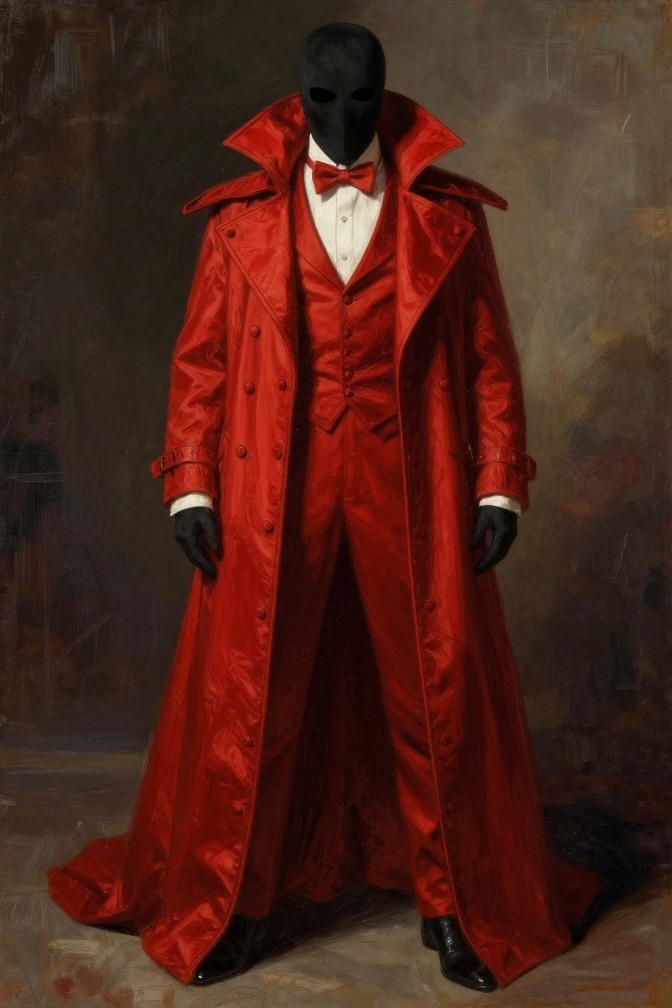
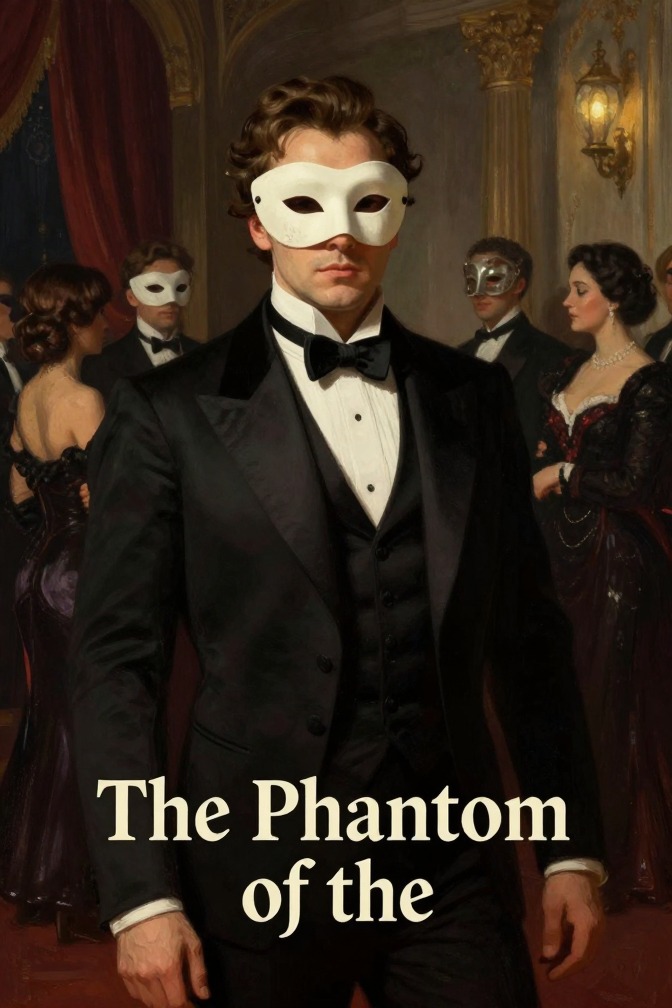
The Red Death Costume is the scarlet, death's-head disguise worn by Erik at the Opera's masked ball, a costume that fuses the carnivalesque with the macabre and becomes a key visual motif linking Erik's spectral identity to the masked ball's revelry and to Raoul's recognition of his rival.
Carlotta and Christine Daae are rival prima donnas at the Paris Opera, whose professional and personal antagonism drives key plot events including Christine's sudden triumph, Carlotta's public humiliation, and the eventual collapse of Carlotta's career.
Christine Daae and her father Daae share one of the most formative relationships in Gaston Leroux's The Phantom of the Opera, a bond that shapes her identity as a singer, her susceptibility to the Angel of Music, and the emotional core of the novel's tragedy. Daddy Daae, a peasant fiddler from Sweden, is both her first music teacher and the source of the legend that ultimately binds her to Erik. His death, his promise to send the Angel of Music from Heaven, and his burial with his violin at Perros-Guirec anchor Christine's spiritual and artistic life, making her father's memory the lens through which she interprets her own miraculous voice and her captivity.
Firmin Richard and Armand Moncharmin are the joint managers of the Paris Opera House who succeed MM. Debienne and Poligny and become the primary human antagonists of the Opera Ghost. Their partnership, formed when Moncharmin, a wealthy amateur, selects Richard as the ideal active manager, is tested by a series of supernatural and financial crises that expose their contrasting temperaments and drive them to mutual suspicion.
The masked ball at the Opera is a pivotal event in Gaston Leroux's The Phantom of the Opera, where Christine Daae secretly meets Raoul de Chagny, revealing the tragic nature of her situation and the looming threat of Erik, the Opera Ghost. This night marks a turning point in their relationship, as Christine's fear and desperation become palpable, and Raoul's jealousy and determination to save her are ignited.
Daisy Wicker is a young woman who works at the Bibelot antique shop in Amity and is revealed to be a lesbian, a fact that becomes a crucial alibi in the escalating personal conflict between Martin Brody and Matt Hooper.
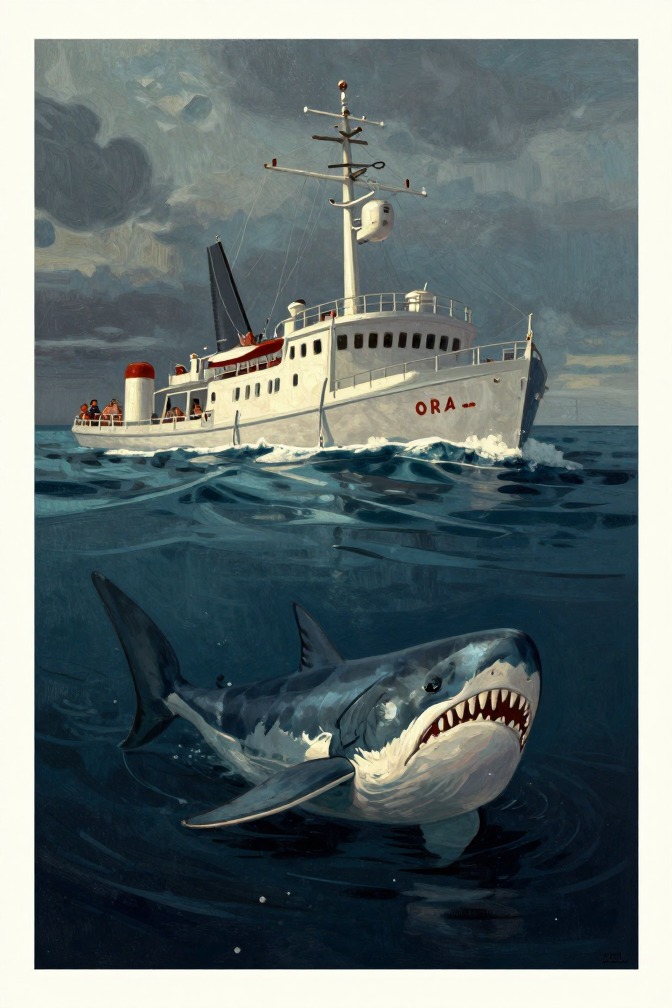
The Sinking of the Orca is the climactic final battle between the great white shark and the men who hunted it, resulting in the destruction of Quint's boat, the death of Quint, and Martin Brody's solitary survival. This event resolves the novel's central conflict through a catastrophic reversal: the hunted becomes the hunter, and the shark's overwhelming power destroys both the vessel and the man who swore to kill it.