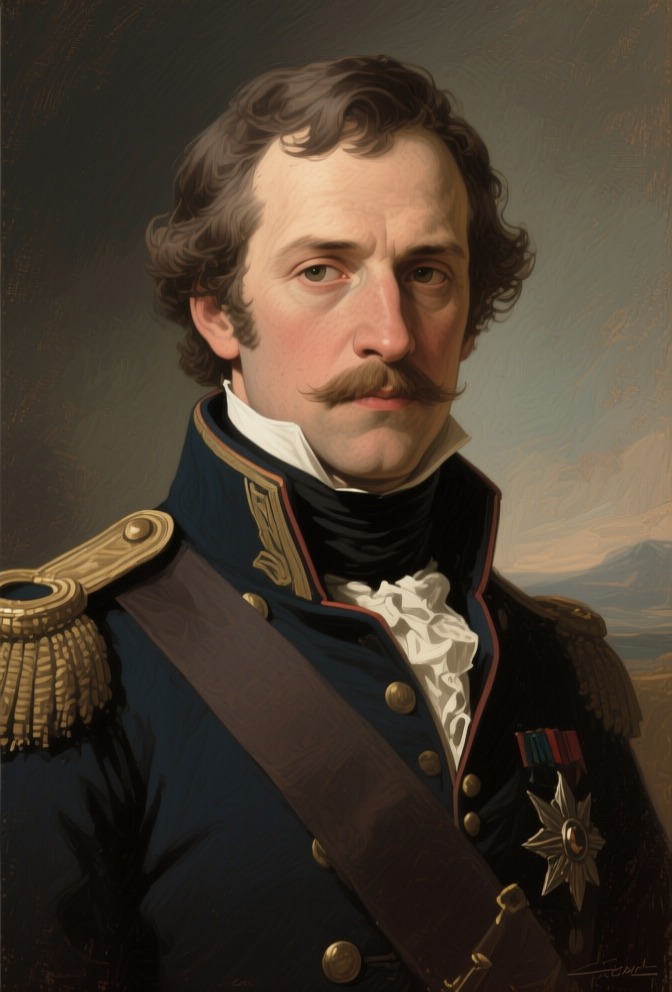
Captain Harville is a naval officer, friend of Captain Wentworth, and a central figure in the Lyme episode, whose domestic life and deep capacity for feeling provide a crucial mirror for Anne Elliot's own understanding of love, loss, and constancy.
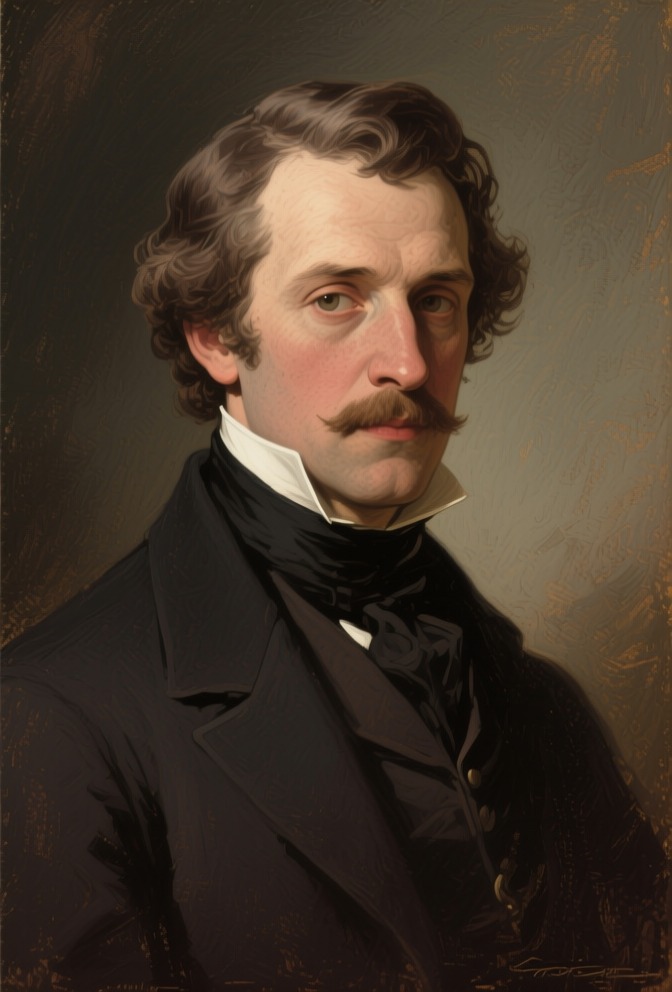
Charles Musgrove is the eldest son of Mr. and Mrs. Musgrove of Uppercross, the husband of Mary Elliot, and a country gentleman whose primary interests are sport and his family's estate, serving as a foil to the more complex male characters in the novel.
Dr. Shirley is the elderly rector of Uppercross whose declining health and need for a curate set in motion the professional ambitions of Charles Hayter and, indirectly, the romantic tensions of the novel's middle section.
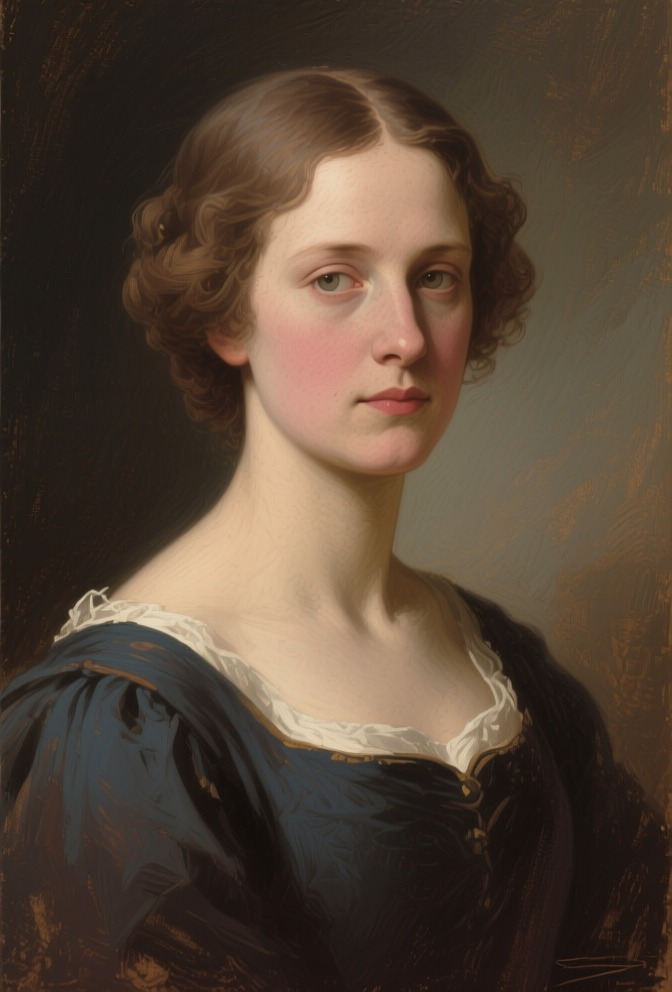
Elizabeth Elliot, the eldest daughter of Sir Walter Elliot, is a handsome and proud woman of twenty-nine who has presided over Kellynch Hall for thirteen years. She shares her father's vanity and family pride, and her life is defined by the pursuit of a suitable marriage that will secure her status, a pursuit that has been marked by disappointment, particularly with her cousin Mr. William Walter Elliot.
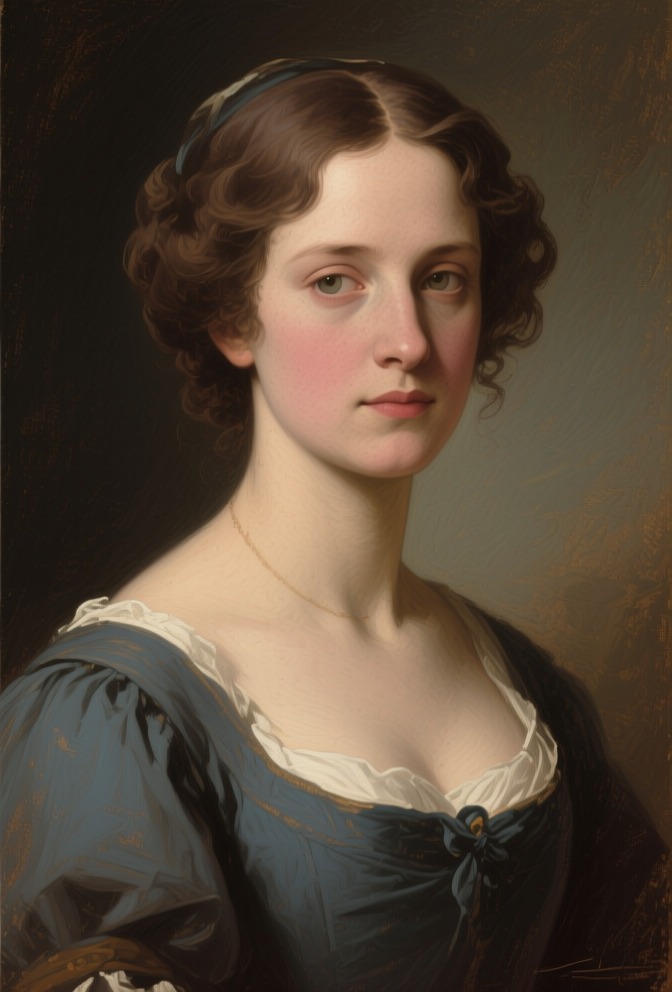
Henrietta Musgrove is the elder of the two Musgrove sisters at Uppercross, a young woman whose romantic trajectory from an established attachment to her cousin Charles Hayter toward a brief, intense admiration for Captain Frederick Wentworth, and finally back to a secure engagement with Hayter, illustrates the novel's themes of constancy, the dangers of superficial attraction, and the quiet triumph of steady affection over fleeting glamour.
Lady Russell is Anne Elliot's godmother, close friend, and most trusted advisor, whose well-intentioned but ultimately flawed counsel persuaded Anne to break her engagement to Captain Wentworth eight years before the novel's main action, a decision that shapes the entire plot and Anne's emotional journey.
Mrs. Smith, formerly Miss Hamilton, is Anne Elliot's former schoolfellow and a widow living in reduced circumstances in Bath. Her reappearance in the novel provides a crucial counterpoint to the fashionable world of Camden Place, and her intimate knowledge of Mr. Elliot's past proves decisive in exposing his true character, thereby freeing Anne from a dangerous entanglement and ultimately enabling her reunion with Captain Wentworth.
Nurse Rooke is a shrewd, intelligent, and observant woman who works as a professional nurse in Bath, serving as a key source of information and gossip for Mrs. Smith and, indirectly, for Anne Elliot, and whose practical skills and social knowledge provide both material support and moral insight to those in her care.
The relationship between Anne Elliot and Captain Frederick Wentworth is the central romance of Persuasion, tracing a trajectory from a youthful, deeply loving engagement broken by persuasion and prudence, through eight years of separation, regret, and apparent estrangement, to a mature, hard-won reconciliation founded on enduring love, mutual understanding, and the triumph of feeling over pride.
Katharine is Winston Smith's estranged wife, absent from the novel's present action but central to its account of how the Party destroys sexual desire and private life. Their fifteen-month marriage, remembered in detail, shows an orthodox, slogan-filled woman whose body and mind have been remade by Party conditioning; she stands as the antithesis of Julia and as living proof that the regime need not destroy its loyal members, only empty them.
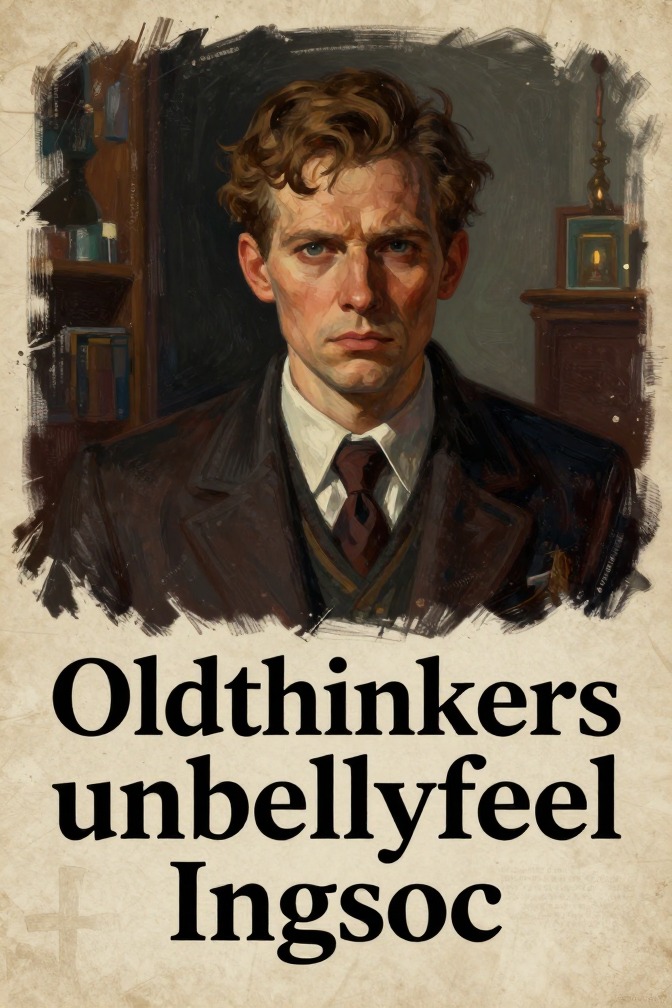
Bellyfeel is a Newspeak word from the B vocabulary of Ingsoc, denoting a blind, enthusiastic, bodily acceptance of Party doctrine. Introduced in the appendix 'The Principles of Newspeak' through the sentence 'Oldthinkers unbellyfeel Ingsoc,' it shows how totalitarian language is engineered to make unorthodox thought impossible by replacing reasoned conviction with visceral conformity.
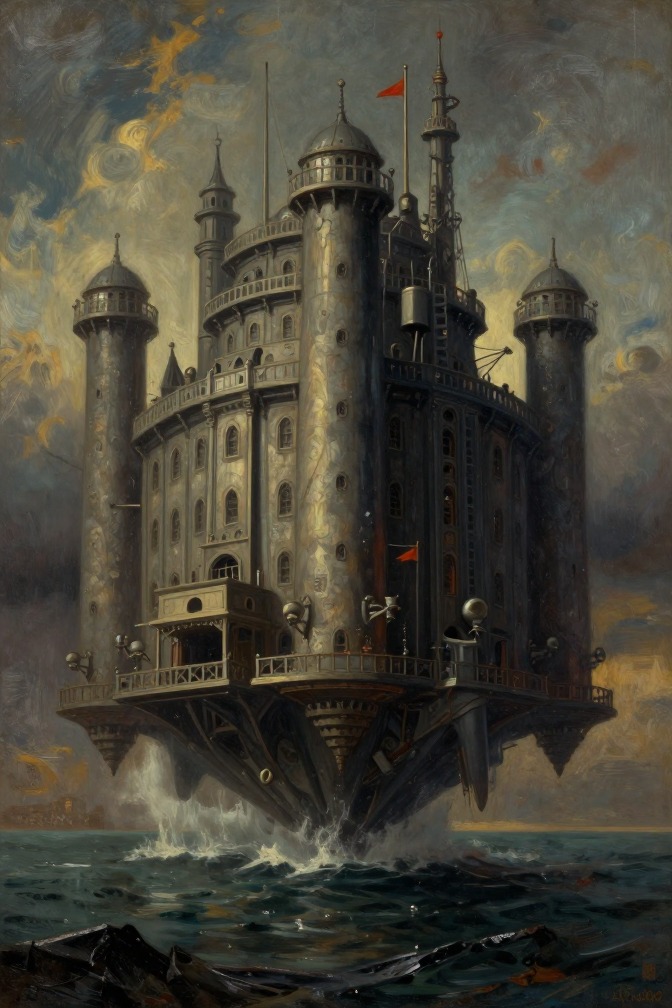
The Floating Fortress is Oceania's colossal sea stronghold, presented in Nineteen Eighty-Four as a symbol of the Party's endless war and its economy of destruction. Introduced as a new fortress anchored between Iceland and the Faroe Islands, it is described in Emmanuel Goldstein's forbidden book as guarding the strategic sea lanes while locking up the labour of several hundred cargo ships, only to be scrapped and replaced, embodying the novel's vision of perpetual war as a means of consuming surplus and keeping the masses poor.
The Inner Party is Oceania's ruling caste in Nineteen Eighty-Four — a self-perpetuating oligarchy of six million people, less than two per cent of the population, that stands beneath the quasi-divine Big Brother and above the Outer Party and the proles, controls the four Ministries and the Thought Police, and, as incarnated in O'Brien, seeks power entirely for its own sake, recruiting Winston Smith into a phantom conspiracy in order to convert and destroy him. The entry examines its structure, privileges, doctrine of pure power, double game with Winston, and its final conquest of his inner heart.
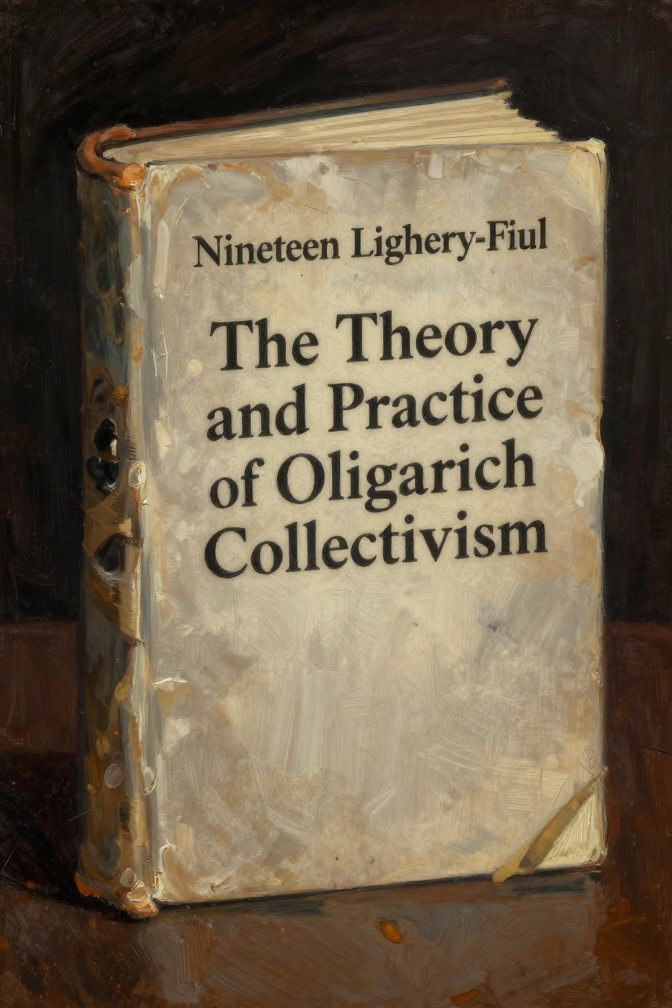
the book is the forbidden, titleless compendium of heresies attributed to Emmanuel Goldstein, the Enemy of the People, and known to ordinary Party members only through rumor. Delivered to Winston Smith through O'Brien and the Brotherhood, it bears the formal title The Theory and Practice of Oligarchical Collectivism and offers a systematic account of hierarchy, permanent war, doublethink, and the Party's control of reality. Reading it convinces Winston that he is sane; later O'Brien claims to have written it, casting the text as both a genuine counter-history and a possible instrument of the regime.
Vaporized is the Party's everyday word in Oceania for the total erasure of a human being: arrest without trial, removal from every record, and denial that the person ever existed. In Nineteen Eighty-Four it represents the final, absolute form of the Party's power over individual life and collective memory.
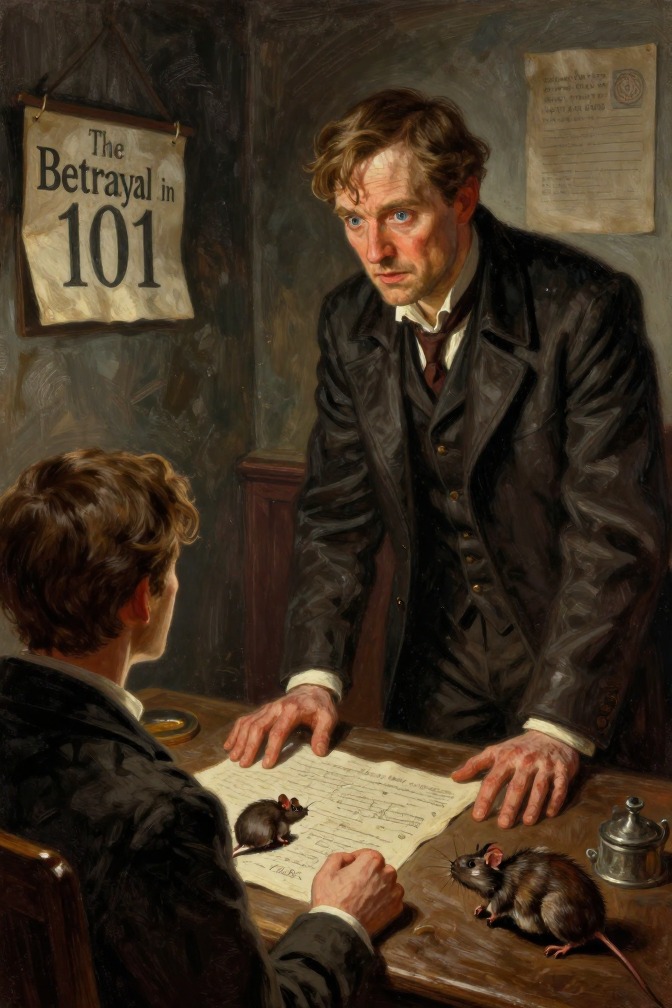
O'Brien breaks Winston Smith's last resistance in the Ministry of Love by confronting him with a cage of starving rats, the worst thing in the world for Winston, and drives him to scream that Julia should be tortured in his place—an act of betrayal that destroys their love and completes his conversion to the Party.
Winston Smith and Julia, released from the Ministry of Love, meet by chance in the Park on a cold March day. Each confesses to having betrayed the other in Room 101, their bodies and feelings permanently changed, and they part for the last time, with Winston walking away towards the Chestnut Tree Café.
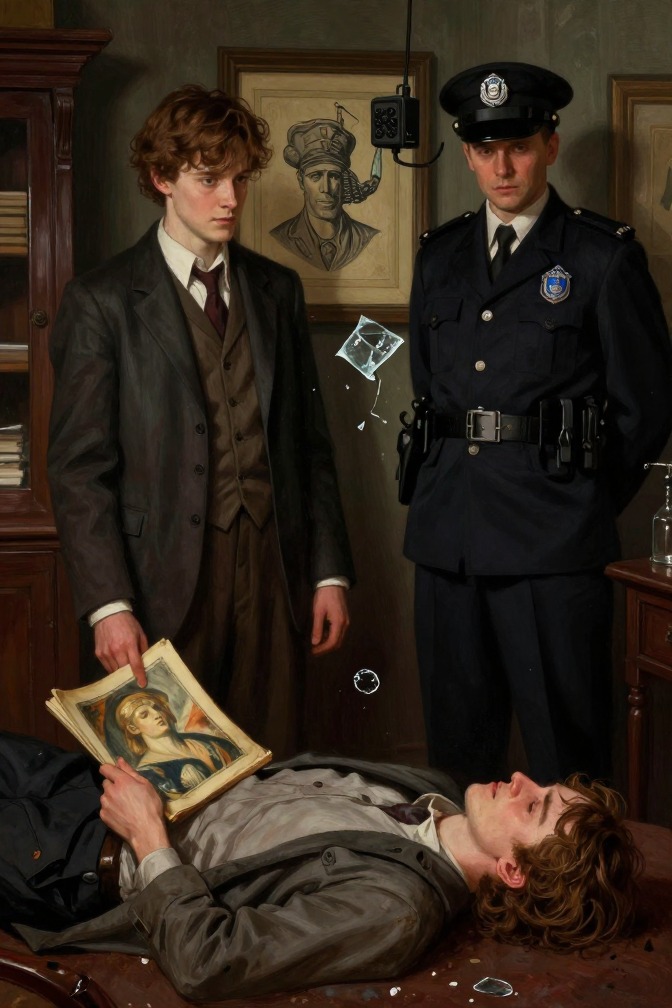
In the room above Mr Charrington's shop, Winston Smith and Julia are arrested by the Thought Police when a hidden telescreen behind the steel engraving exposes their hiding place. The capture shatters the illusion of their private sanctuary, reveals Mr Charrington as a police agent, and sends both lovers toward the Ministry of Love and the betrayals that follow.
In the woods outside London, Winston Smith and Julia consummate their illicit relationship, transforming their sexual act into a deliberate act of political rebellion against the Party's repression of instinct and pleasure.
The slogan "Big Brother is watching you" is the caption of the Party's omnipresent poster in Nineteen Eighty-Four and the novel's most condensed statement of total surveillance. It first appears in the hallway of Victory Mansions beneath the enormous face of Big Brother, whose eyes are contrived to follow the viewer, and it recurs on coins, stamps, book covers, banners, and cigarette packets. The phrase fuses the Party's promise of protection with its threat of omniscient terror, and its real work is performed inside the subject, who learns to police his own face, body, and thoughts because he can never know when the watcher is looking.
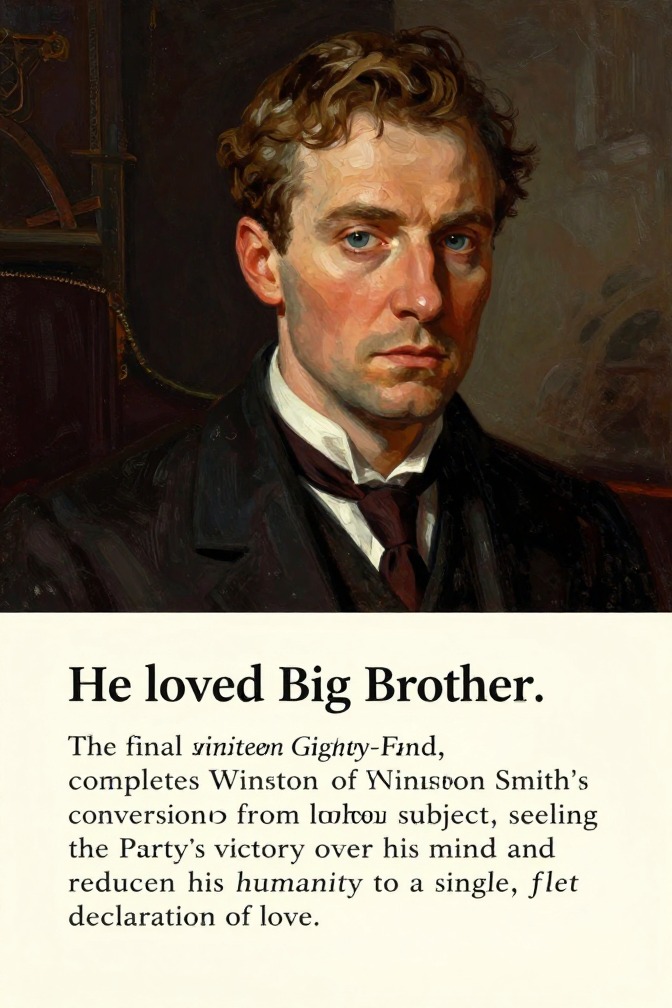
Analysis of "He loved Big Brother", the final sentence of Nineteen Eighty-Four, examining its setting in the Chestnut Tree Café, its place at the end of Winston Smith's arc from written rebellion to total conversion, and its meaning as the completion of the Party's project to remake the individual mind through torture, doublethink and love.
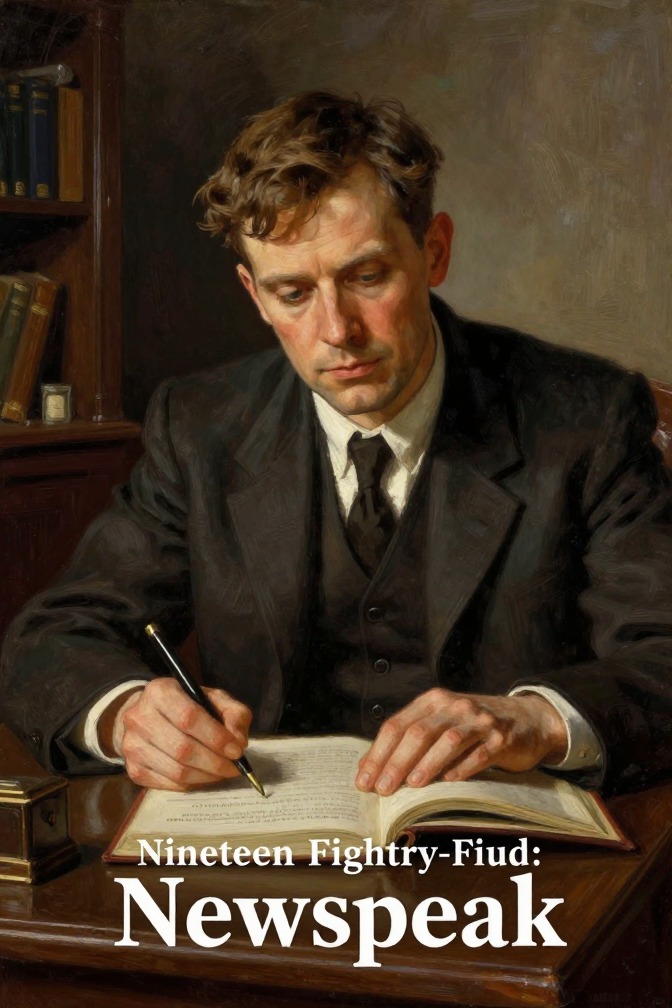
Newspeak is the official language of Oceania, designed by the Party to narrow the range of thought and make heretical ideas literally unthinkable by systematically reducing vocabulary and eliminating ambiguity.
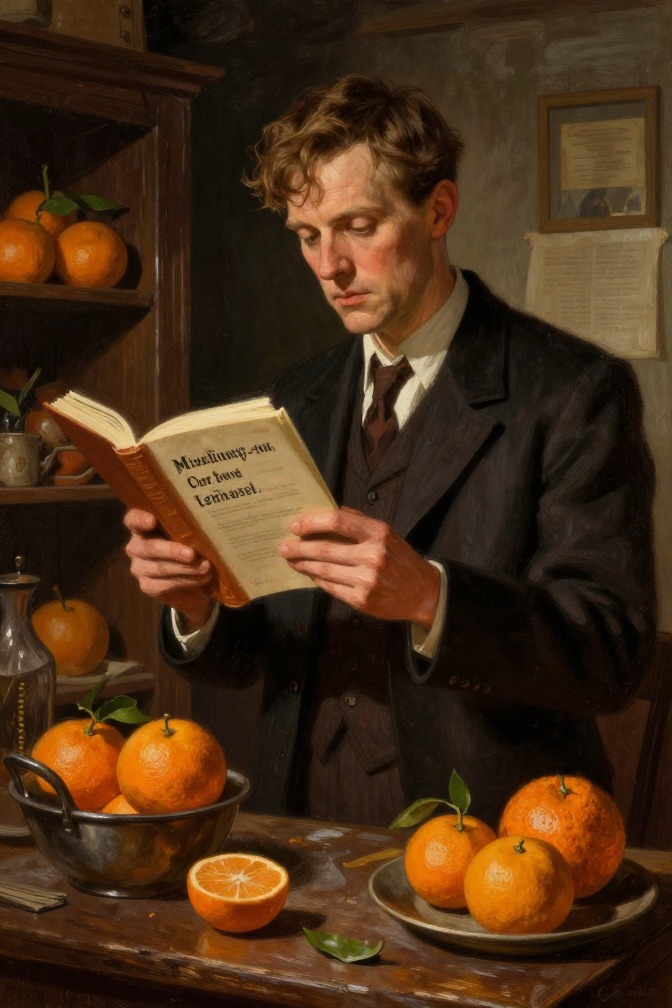
Oranges and lemons is an old London nursery rhyme that surfaces at key moments in Nineteen Eighty-Four: first as a fragment remembered by Mr Charrington, then as a private countersign between Winston Smith and Julia, as a test passed by O'Brien, and finally as a mocking line spoken by a hidden telescreen at the lovers' arrest. A relic of the abolished past, it dramatizes the Party's war on memory and the fragility of everything that survives it.
The church belfry is a ruined bell-chamber in an atomic-bombed stretch of countryside where Julia takes Winston Smith once in May. It is the second and only other place where the pair make love during this early phase of their affair, a good hiding-place that is dangerous to reach, and the setting for hours of unhurried conversation that the surveilled streets cannot allow.
The Red Sash is the narrow scarlet emblem of the Junior Anti-Sex League that Julia wears wound around the waist of her Party overalls. It first marks her as a model of chastity in Winston's eyes, becomes the focus of his hatred and desire during the Two Minutes Hate, and is then torn off in the Golden Country as a gesture of rebellion before being re-knotted as camouflage—condensing the Party's war on sex and the private revolt against it.
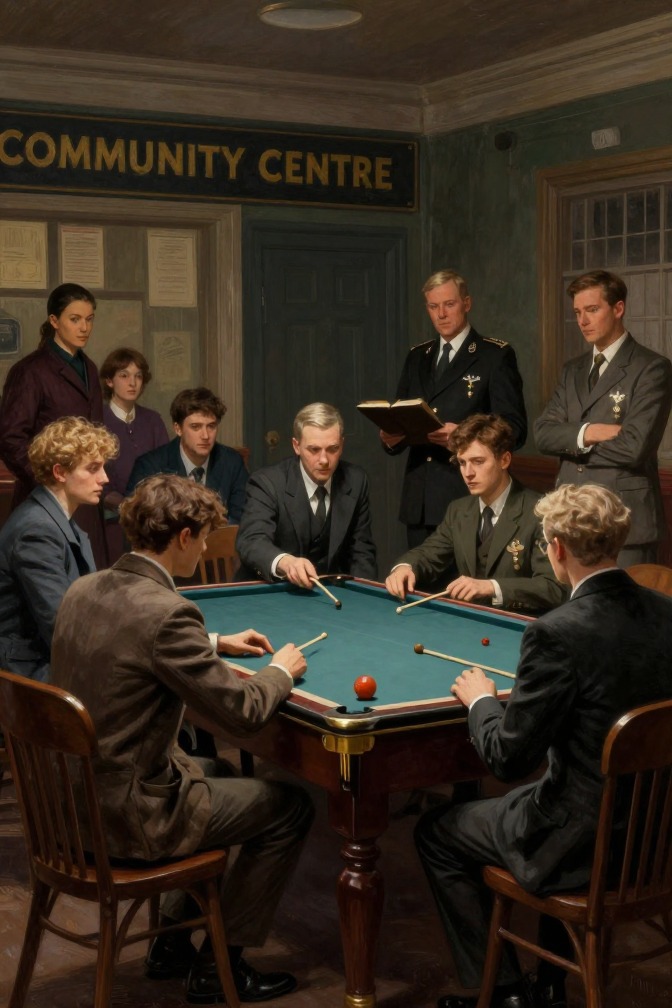
The Community Centre is the institution through which the Party of Oceania colonises its members' spare time, turning leisure into a checked, communal obligation. It appears as the compulsory site of communal recreation, the pride of the enthusiastic Parsons, the burden Winston risks by missing an evening, and the everyday face of totalitarian control.
The Fiction Department is the subdivision of the Ministry of Truth responsible for mechanically producing Oceania's novels, entertainments and propaganda. It is most important as Julia's workplace, where her cover as an orthodox Party girl hides her rebellion, and as the novel's sharpest image of art reduced to a standardized, consciousness-narrowing commodity.
Crimestop is a Newspeak term for the first and simplest stage of Party mental discipline: the trained, instinctive reflex that stops thought at the threshold of any dangerous idea. Defined as "protective stupidity," it works alongside blackwhite and doublethink to make heresy impossible, and in the Ministry of Love Winston Smith is finally taught to practise it on himself.
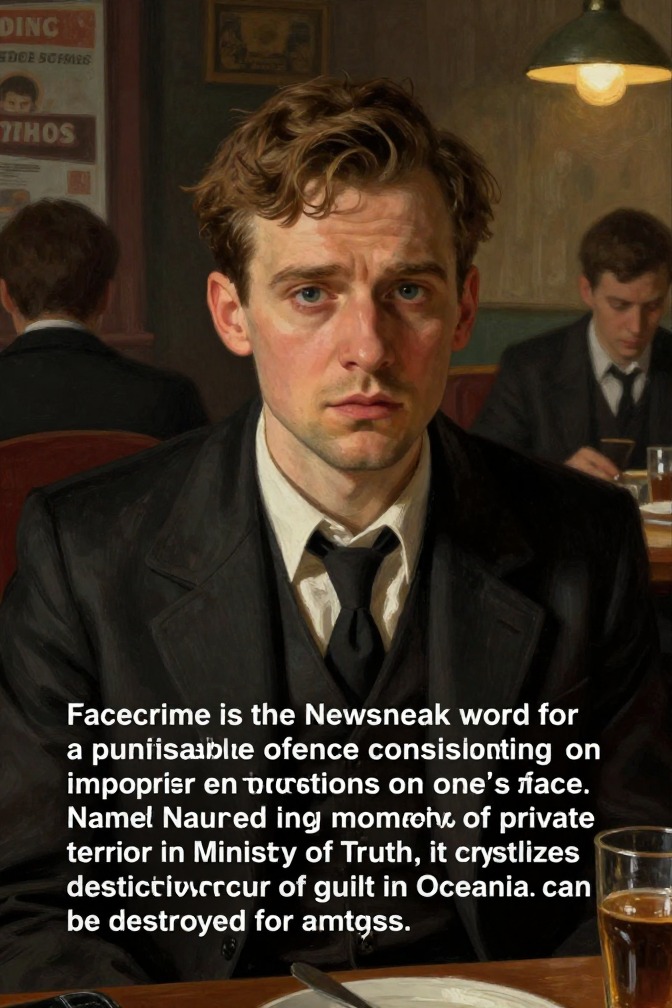
Facecrime is a Newspeak term in the novel 1984 for a punishable offence committed by wearing an improper expression on one's face, such as looking incredulous when a victory is announced. The term shows how the Party criminalises involuntary appearance rather than actions, and how constant surveillance makes every Party member a potential offender.
Goodsex is a Newspeak word in George Orwell's 1984 denoting the only sexual activity the Party permits: intercourse between husband and wife, performed solely to beget children and without physical pleasure on the part of the woman. Paired with sexcrime, which covers every other sexual act and is in principle punishable by death, goodsex embodies the Party's campaign to kill or distort the sex instinct, supplies the chastity norm that Winston Smith links to political orthodoxy, and follows a logic that culminates in O'Brien's promise to abolish the orgasm and in Winston's final love of Big Brother.