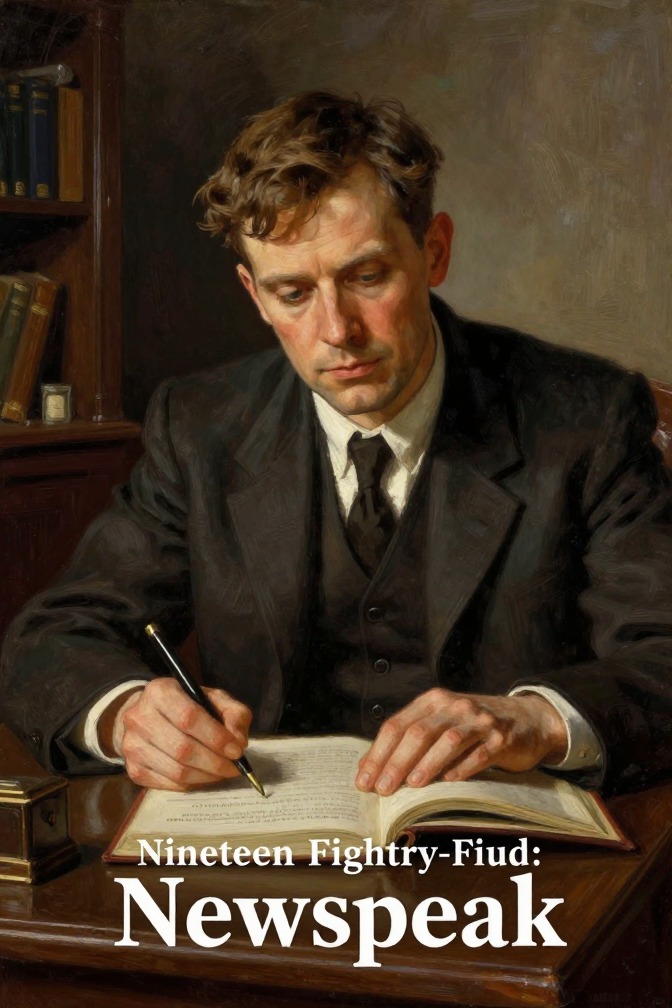
Newspeak is the official language of Oceania, designed by the Party to narrow the range of thought and make heretical ideas literally unthinkable by systematically reducing vocabulary and eliminating ambiguity.
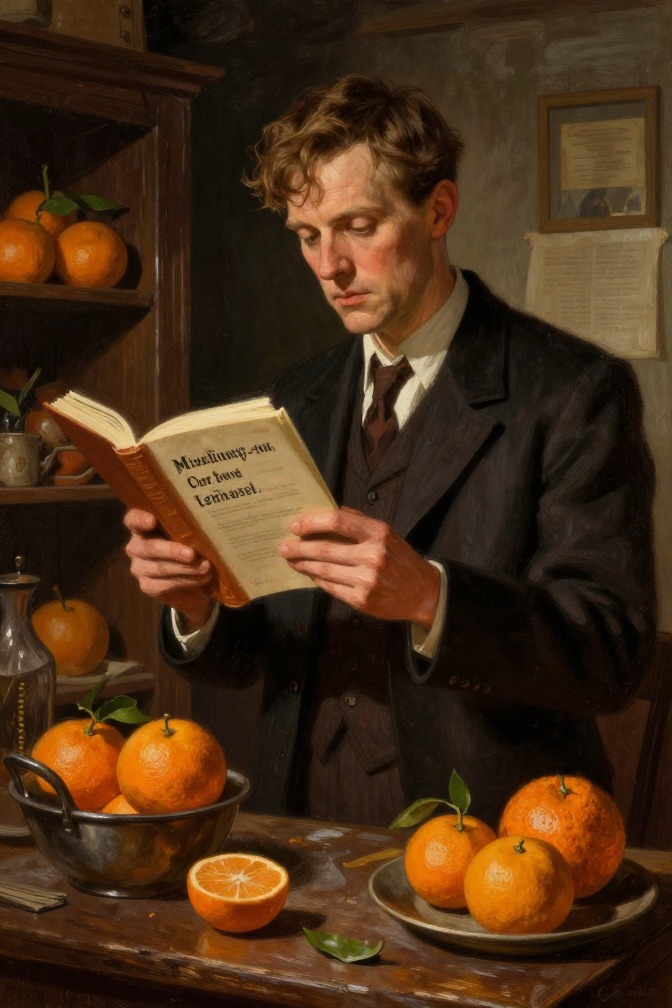
Oranges and lemons is an old London nursery rhyme that surfaces at key moments in Nineteen Eighty-Four: first as a fragment remembered by Mr Charrington, then as a private countersign between Winston Smith and Julia, as a test passed by O'Brien, and finally as a mocking line spoken by a hidden telescreen at the lovers' arrest. A relic of the abolished past, it dramatizes the Party's war on memory and the fragility of everything that survives it.
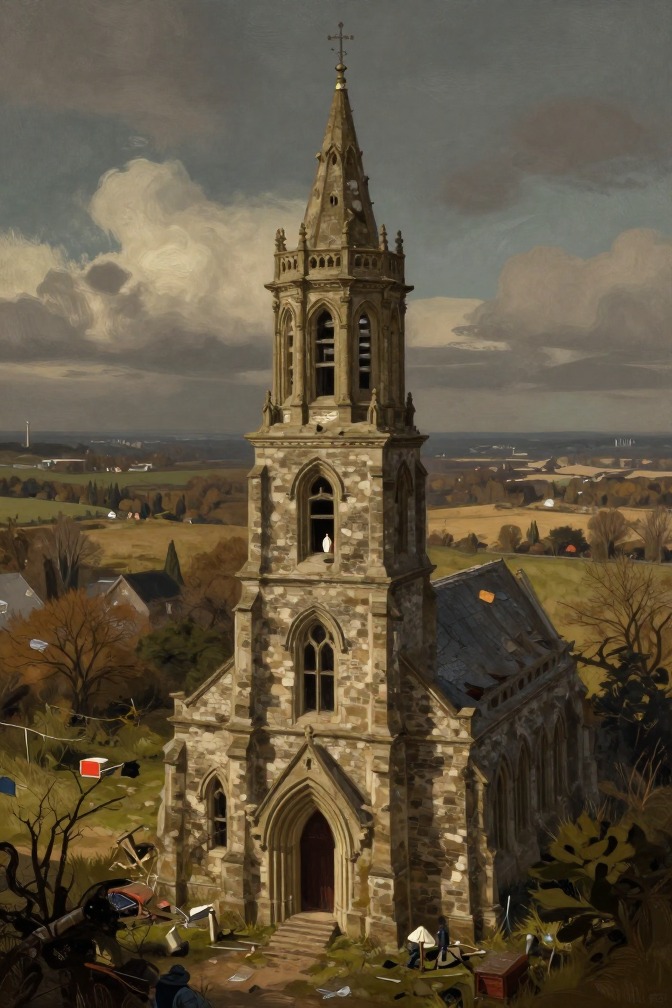
The church belfry is a ruined bell-chamber in an atomic-bombed stretch of countryside where Julia takes Winston Smith once in May. It is the second and only other place where the pair make love during this early phase of their affair, a good hiding-place that is dangerous to reach, and the setting for hours of unhurried conversation that the surveilled streets cannot allow.
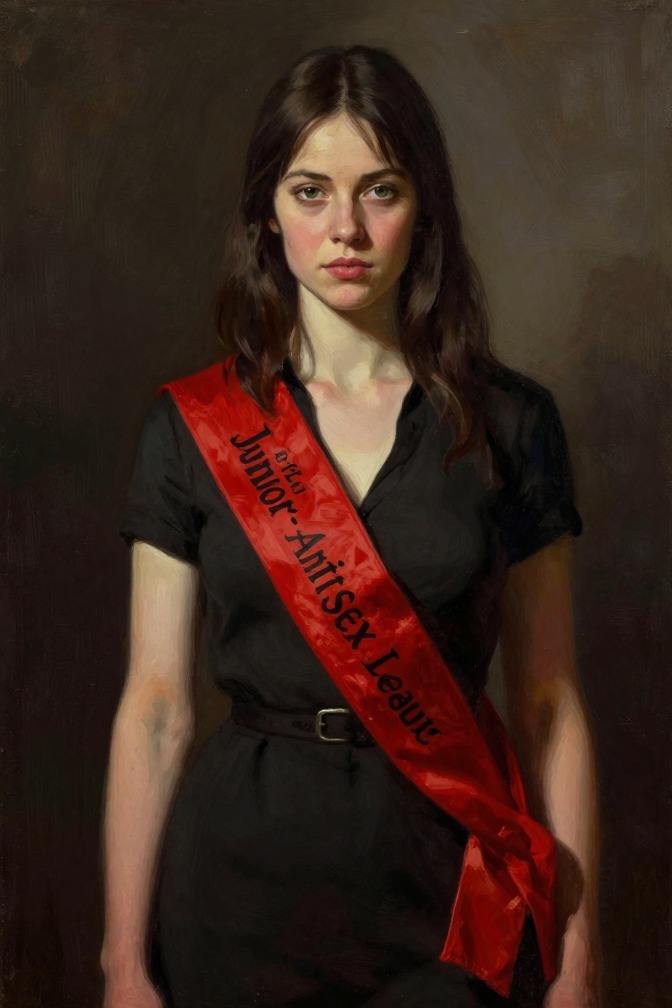
The Red Sash is the narrow scarlet emblem of the Junior Anti-Sex League that Julia wears wound around the waist of her Party overalls. It first marks her as a model of chastity in Winston's eyes, becomes the focus of his hatred and desire during the Two Minutes Hate, and is then torn off in the Golden Country as a gesture of rebellion before being re-knotted as camouflage—condensing the Party's war on sex and the private revolt against it.
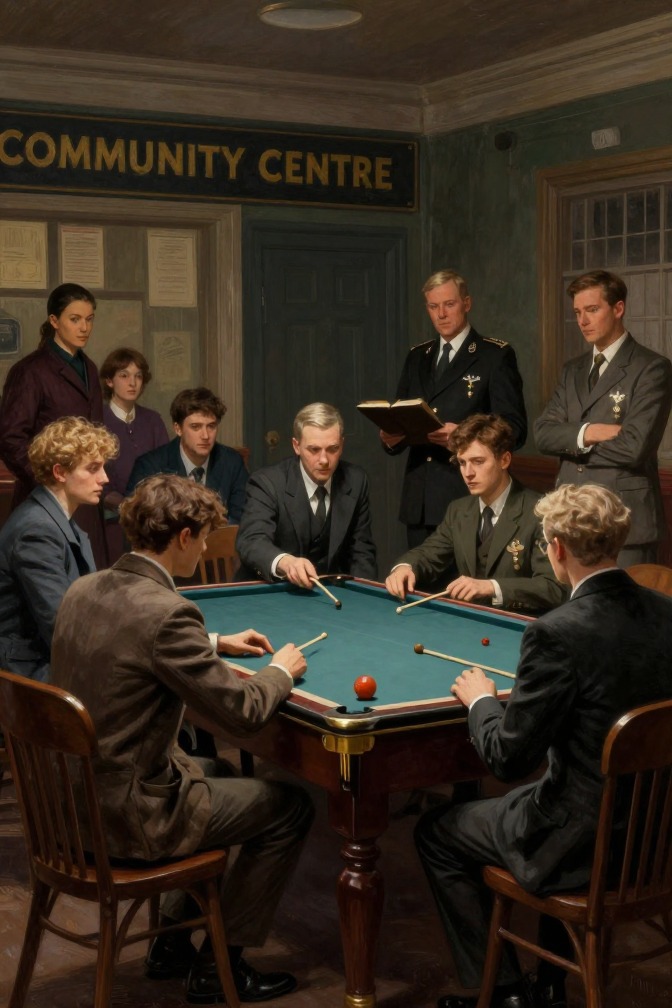
The Community Centre is the institution through which the Party of Oceania colonises its members' spare time, turning leisure into a checked, communal obligation. It appears as the compulsory site of communal recreation, the pride of the enthusiastic Parsons, the burden Winston risks by missing an evening, and the everyday face of totalitarian control.
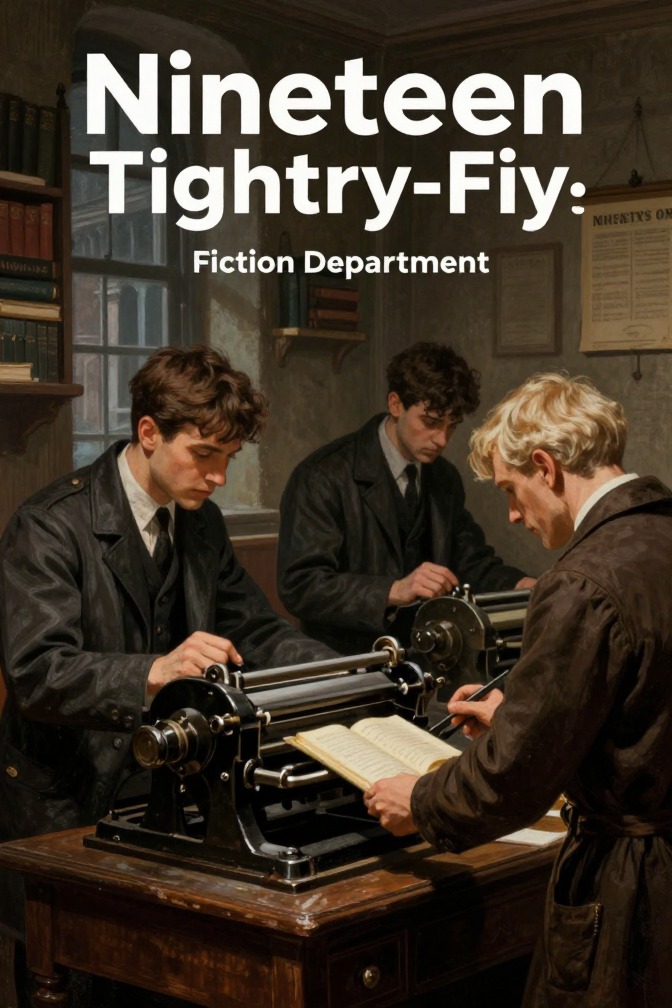
The Fiction Department is the subdivision of the Ministry of Truth responsible for mechanically producing Oceania's novels, entertainments and propaganda. It is most important as Julia's workplace, where her cover as an orthodox Party girl hides her rebellion, and as the novel's sharpest image of art reduced to a standardized, consciousness-narrowing commodity.
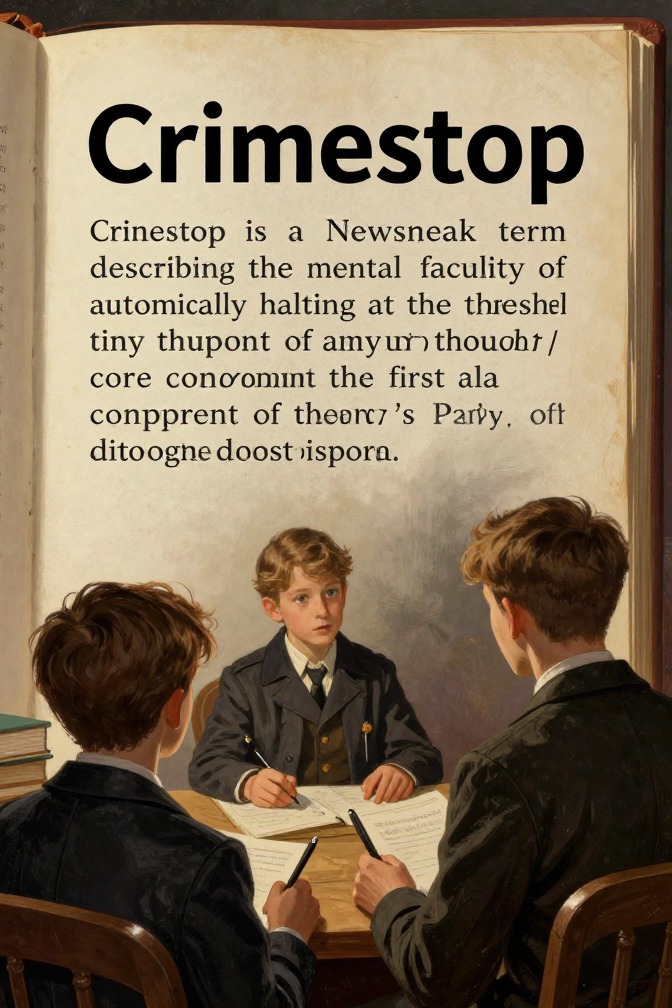
Crimestop is a Newspeak term for the first and simplest stage of Party mental discipline: the trained, instinctive reflex that stops thought at the threshold of any dangerous idea. Defined as "protective stupidity," it works alongside blackwhite and doublethink to make heresy impossible, and in the Ministry of Love Winston Smith is finally taught to practise it on himself.
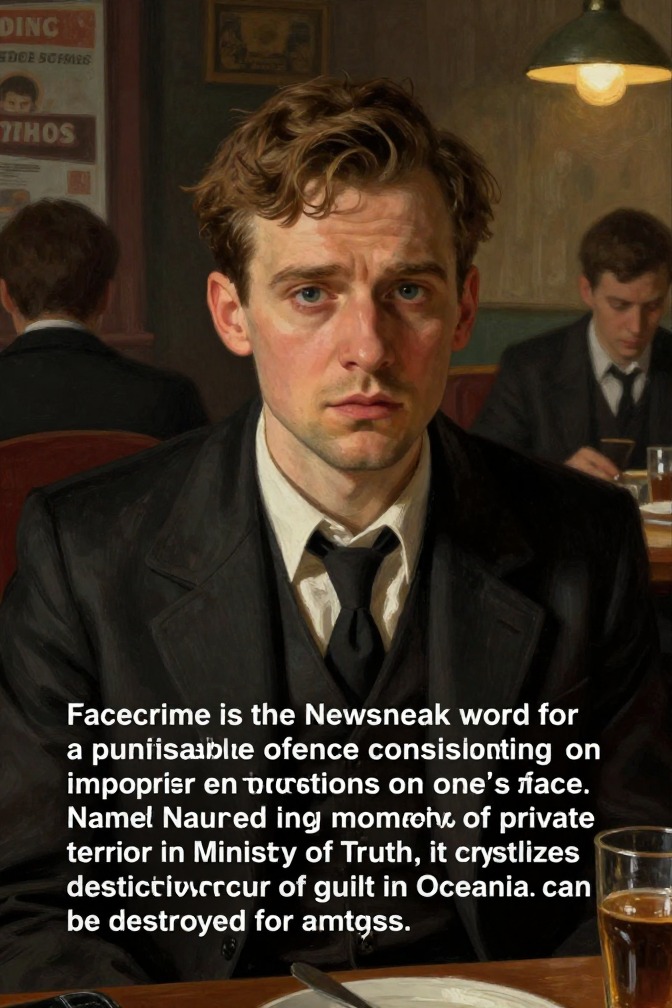
Facecrime is a Newspeak term in the novel 1984 for a punishable offence committed by wearing an improper expression on one's face, such as looking incredulous when a victory is announced. The term shows how the Party criminalises involuntary appearance rather than actions, and how constant surveillance makes every Party member a potential offender.
Goodsex is a Newspeak word in George Orwell's 1984 denoting the only sexual activity the Party permits: intercourse between husband and wife, performed solely to beget children and without physical pleasure on the part of the woman. Paired with sexcrime, which covers every other sexual act and is in principle punishable by death, goodsex embodies the Party's campaign to kill or distort the sex instinct, supplies the chastity norm that Winston Smith links to political orthodoxy, and follows a logic that culminates in O'Brien's promise to abolish the orgasm and in Winston's final love of Big Brother.
The Party's doctrine that the proles were natural inferiors is a foundational rule of Ingsoc, held simultaneously with the claim that the Party liberated them, and sustained by doublethink, falsified records, and the reduction of human beings to biological function. Winston Smith's growing recognition of prole humanity forms the narrative's counterpoint, while Orwell's own democratic socialism exposes the doctrine as a tool of power rather than a description of reality.
Laerceus is a minor but symbolically significant craftsman in the Odyssey, the goldsmith whom Nestor summons to gild the horns of a heifer being sacrificed to Athena, and whose artisanal skill is implicitly linked to the divine craftsmanship that later authenticates Odysseus's identity through the bed he built.
Polytherses is the father of Ctesippus, one of the suitors of Penelope, and is mentioned only in the context of his son's violent death during the massacre of the suitors in Odysseus's hall.
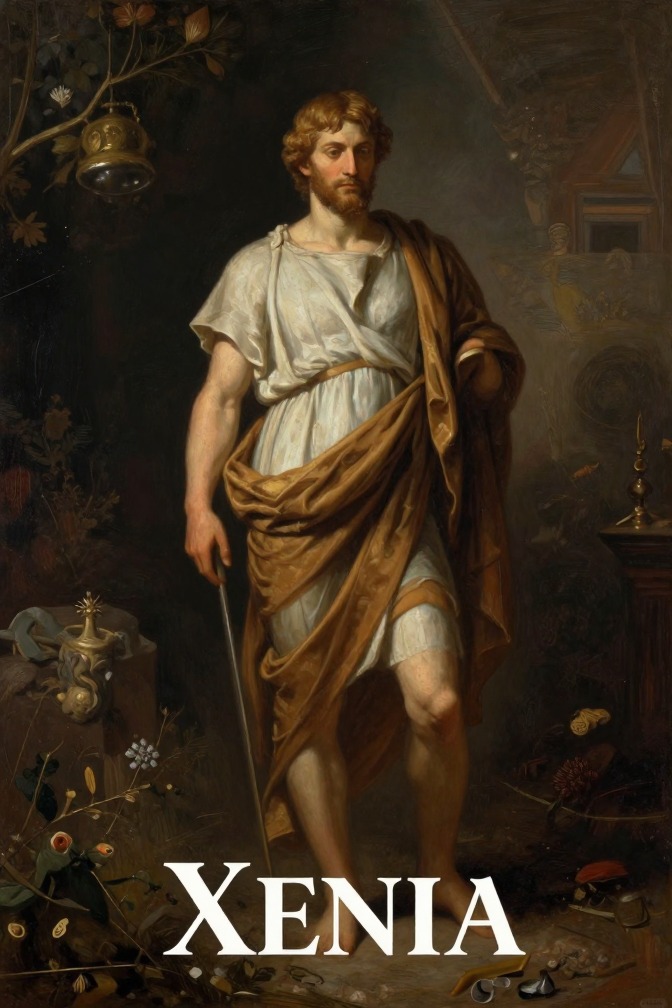
Xenia, the ancient Greek code of hospitality and guest-friendship, is the central social and moral principle that governs the world of the Odyssey, shaping the fate of characters and providing the ethical framework against which actions are judged.
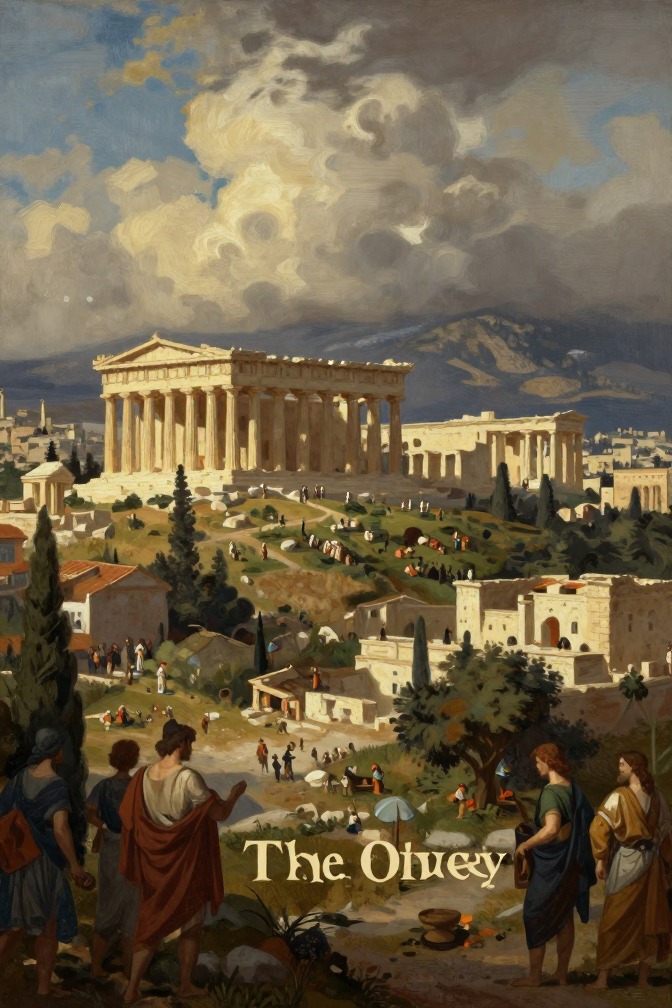
Athens appears in the Odyssey as a significant but peripheral location, mentioned in connection with the return voyages of Menelaus and Orestes, and as the destination of Minerva after she leaves Scheria. The city serves as a geographical reference point for the poem's narrative of homecoming and justice, and its mention contributes to the broader framework of Greek heroic geography.
Erymanthus is a mountain in the Peloponnese, most famous in the Odyssey as the setting for the hunt in which Odysseus received the distinctive scar that later enables his recognition by Euryclea and his household. The mountain appears in the poem as a wild, wooded landscape associated with the goddess Artemis and the hunt, and its mention serves to anchor Odysseus's early life in a world of aristocratic prowess and divine favor.
Gyrae is a rocky promontory in the Aegean Sea where the Greek hero Ajax the Lesser met his death by drowning after boasting that he could escape the sea despite the gods' enmity, an event that Proteus recounts to Menelaus in Book IV of the Odyssey as a cautionary tale of divine punishment for hubris.
The Hellespont is the narrow strait connecting the Aegean Sea to the Sea of Marmara, best known in the Odyssey as the site of the Achaean fleet's departure for Troy and as the location of Achilles' tomb, a landmark that marks the boundary between the world of the Trojan War and the hero's homeward journey.
Lacedaemon, the kingdom of Menelaus and Helen, serves as the destination of Telemachus's quest for news of his father and as a model of heroic wealth, hospitality, and the lingering sorrow of the Trojan War.
Cape Malea, the southeastern promontory of the Peloponnese, functions in the Odyssey as the decisive geographical threshold where Odysseus's homeward voyage is catastrophically derailed, transforming a straightforward return into the ten-year ordeal that constitutes the poem's central narrative.
Olympus is the divine mountain home of the Olympian gods in the Odyssey, serving as the seat of cosmic authority where Zeus presides over councils that determine the fates of mortals and immortals alike, and where Athena repeatedly intervenes on behalf of Odysseus.
Thesprotia is a region in northwestern Greece that appears in the Odyssey as a crucial source of information about Odysseus's fate. In the false tale Odysseus tells Eumaeus, and again in his account to Penelope, he claims to have visited Thesprotia and heard from King Pheidon that Odysseus is alive, gathering treasure, and about to return home. Thesprotia thus functions as a narrative device that allows Odysseus, while still in disguise, to deliver credible news of his own imminent return, reinforcing the theme of cunning and layered storytelling.
Troy, the great city of King Priam on the coast of Asia Minor, is the central objective of the Trojan War and the point of departure for Odysseus's long journey home. Its sacking by the Achaeans, achieved through the stratagem of the wooden horse, is the foundational event of the Odyssey, shaping the fates of all the returning heroes and providing the backdrop against which Odysseus's own nostos is measured.
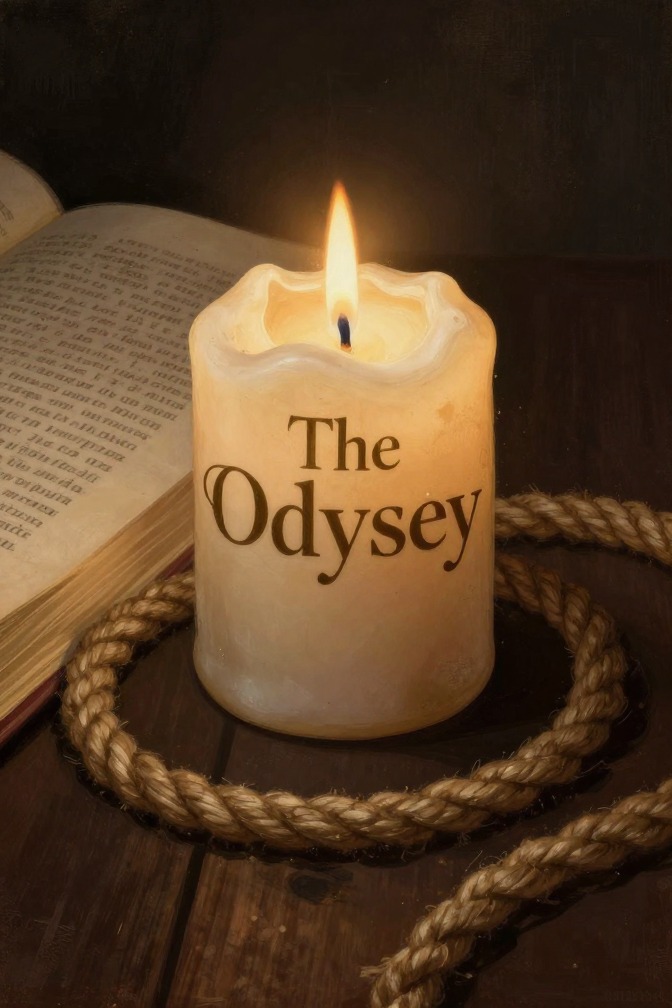
The wax for ears and the binding ropes are the paired precautions Odysseus takes against the Sirens' lethal song, a set of instructions given by Circe and executed with the crew's cooperation. The wax blocks the sailors' hearing so they can row safely, while the ropes lash Odysseus to the mast so he can hear the song without being destroyed. Together they form a controlled experiment in desire: one man permitted to experience a fatal temptation, the rest protected from it by a simple physical barrier.
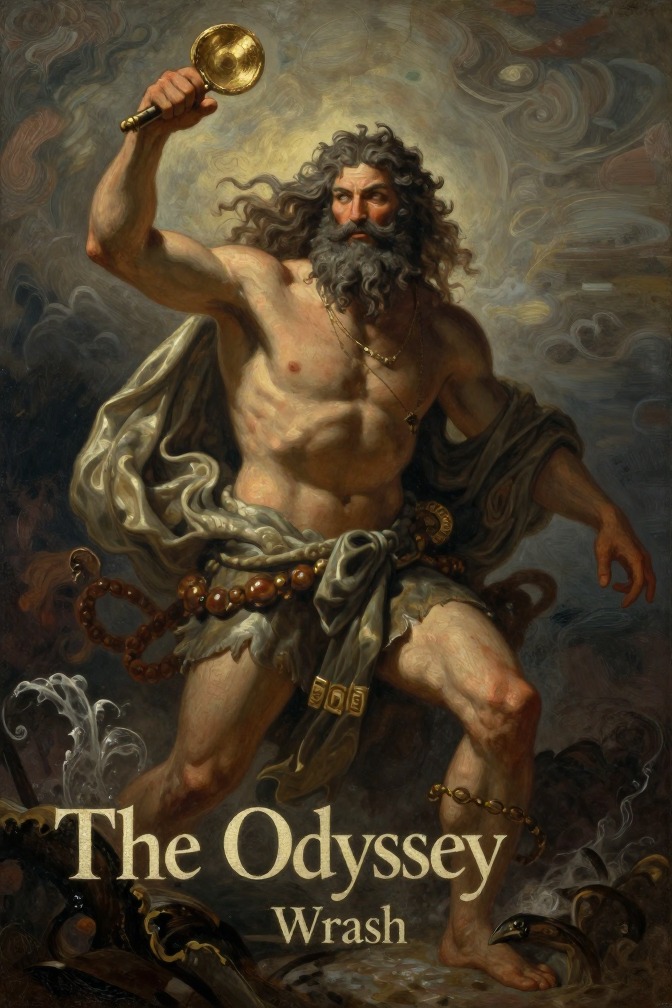
Poseidon's Wrath is the relentless divine anger that the sea-god Poseidon directs against Odysseus throughout the Odyssey, originating from Odysseus's blinding of Poseidon's son, the Cyclops Polyphemus. This wrath functions as the primary supernatural obstacle preventing Odysseus's return to Ithaca, shaping the entire narrative arc of his wanderings and testing his endurance, cunning, and relationship with other gods, especially Athena.
Victor Frankenstein destroys the partially completed female creature he had promised to create as a companion for his original monster, an act that triggers the monster's vow of revenge and leads directly to the murders of Henry Clerval and Elizabeth Lavenza.
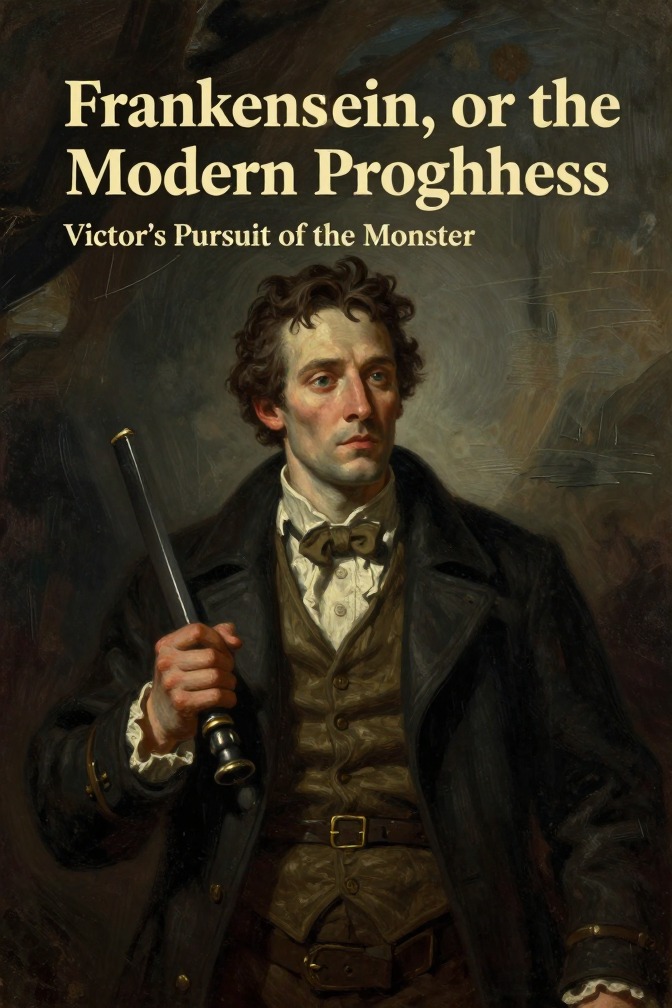
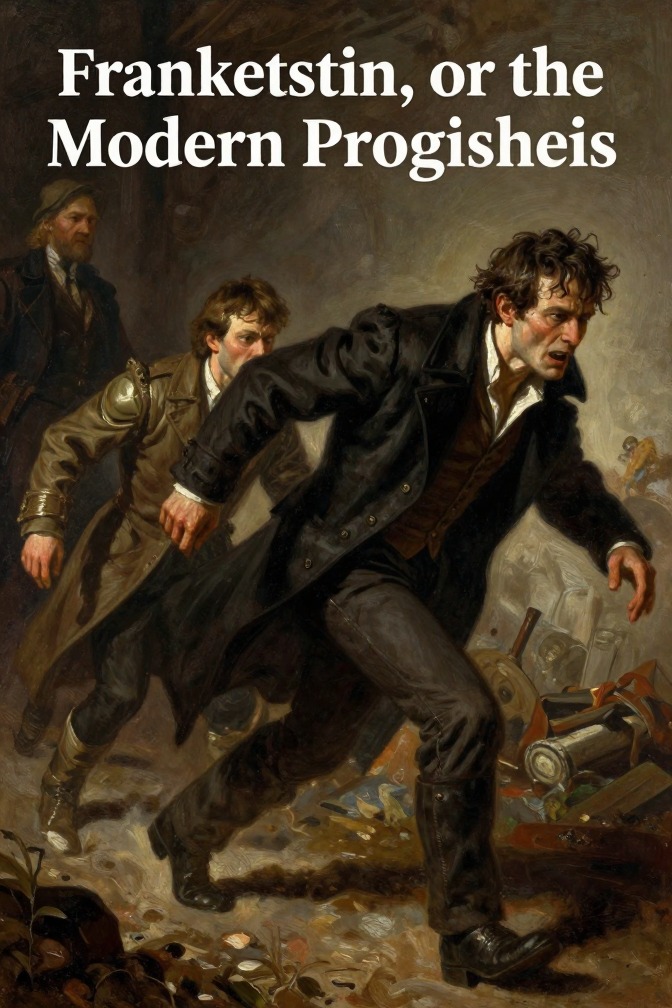
Victor Frankenstein's pursuit of the monster across the globe, from Geneva to the Arctic, is the final, consuming action of his life, transforming him from a guilt-ridden creator into a relentless avenger and ultimately leading to his own death aboard Robert Walton's ship.
In Frankenstein, dangerous knowledge is the central theme that drives the narrative, representing the pursuit of forbidden scientific discovery that leads to destruction and misery. Victor Frankenstein's relentless quest to uncover the secrets of life results in the creation of the monster, a catastrophic act that ruins his life and the lives of those he loves. The novel warns that the acquisition of knowledge, when pursued without moral responsibility and in defiance of natural limits, becomes a perilous force that corrupts and destroys.
Victor Frankenstein's creation of the monster is the pivotal event of the novel, a catastrophic act of scientific hubris that transforms a dream of bestowing life into a nightmare of horror and sets in motion a chain of destruction that consumes everyone Victor loves.
Victor Frankenstein's meeting with Professor Waldman at the University of Ingolstadt is the decisive intellectual turning point of his early life, redirecting his scientific ambitions from the discredited alchemy of Agrippa and Paracelsus toward the modern chemistry and natural philosophy that will enable his creation of the monster.
After the murder of his wife Elizabeth, Victor Frankenstein dedicates himself entirely to hunting down the monster he created, pursuing it across Europe, Russia, and the Arctic ice in a desperate quest for revenge that ultimately leads to his own death.