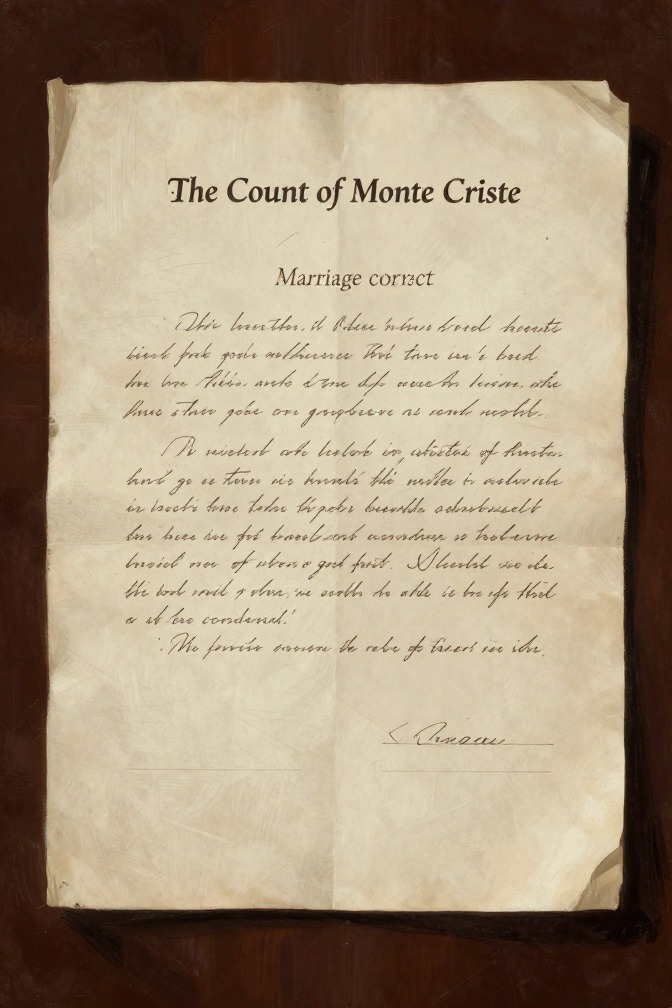
The marriage contract in *The Count of Monte Cristo* is a legal instrument that repeatedly serves as a public occasion for the exposure of hidden crimes and the collapse of social facades, marking the climax of Monte Cristo's vengeance against the Danglars and Villefort families.
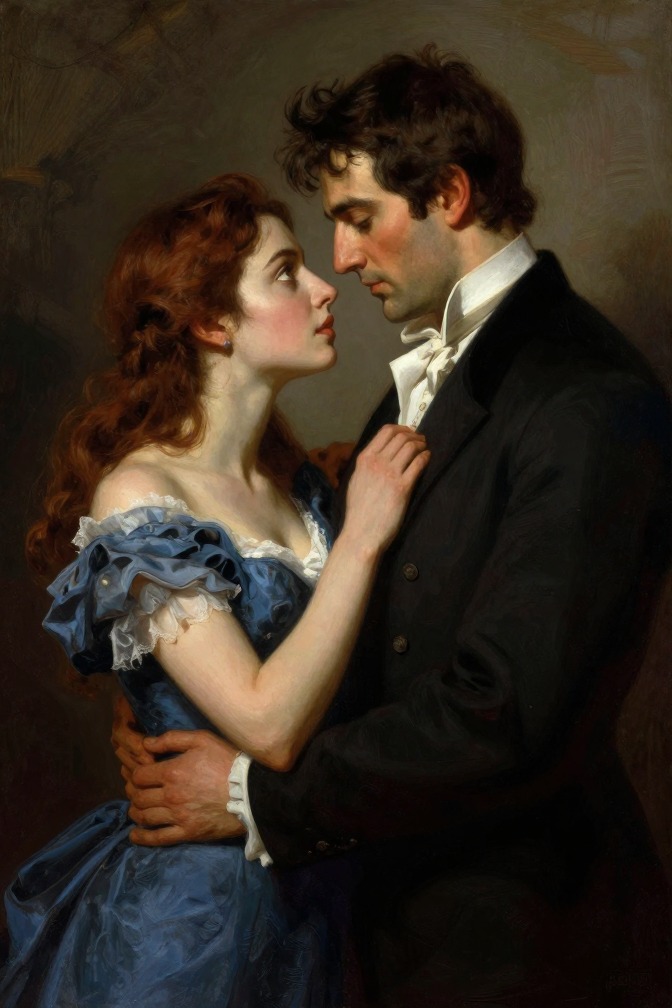
The adulterous relationship between Hermine Danglars and Lucien Debray is a central, long-standing secret liaison that operates as a financial and emotional partnership, deeply entwined with the banker Danglars's fortune and the social maneuvering of Parisian high society. Debray, the private secretary to the Minister of the Interior, serves as both Hermine's lover and her covert financial advisor, using his insider political knowledge to guide her stock market speculations. Their affair, which Danglars tolerates for years as a calculated convenience, ultimately collapses when Danglars's financial ruin forces a brutal confrontation, leading Debray to coldly dissolve the partnership and abandon Hermine with a calculated settlement of her illicit profits.
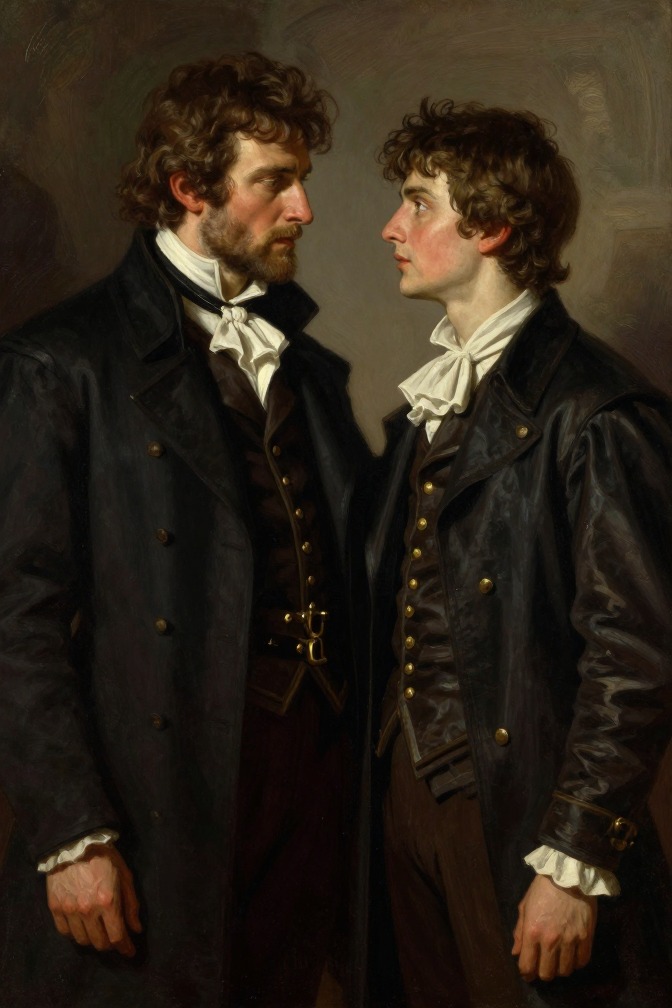
The father-son relationship between Gérard de Villefort and Noirtier de Villefort is a central, antagonistic dynamic in *The Count of Monte Cristo*, defined by irreconcilable political loyalties, a hidden crime, and a final, devastating confrontation that destroys Villefort's family and sanity.
Lydia Bennet is the youngest and most reckless of the five Bennet sisters, whose heedless pursuit of pleasure and flirtation with officers culminates in a scandalous elopement with George Wickham, threatening her family's reputation before a forced marriage arranged by Fitzwilliam Darcy salvages her situation.
Mr. Denny is a minor officer in the militia regiment quartered in Meryton who serves primarily as a narrative conduit, introducing George Wickham to the Bennet circle and later providing crucial intelligence about Wickham's intentions toward Lydia Bennet.
Pinchfield is the smaller, better-kept farm adjoining Animal Farm, owned by the shrewd and ruthless Mr. Frederick, who becomes a key antagonist through his fraudulent dealings and violent attack on the windmill.
Daisy Buchanan, driving Gatsby's yellow car after the tense confrontation at the Plaza Hotel, accidentally strikes and kills Myrtle Wilson on the road through the Valley of Ashes, an event that sets off the novel's tragic final sequence.
Ella Kaye is the newspaper woman who, by playing upon Dan Cody's weaknesses, ultimately inherits the fortune that Cody had intended for Jay Gatsby, thereby severing Gatsby from the wealth that would have defined his early career.
The Stoddard Lectures are a set of multi-volume books that appear in Jay Gatsby's library, serving as a symbol of his constructed persona and the tension between authentic culture and mere display.
Probity Trust is the New York bond firm where Nick Carraway works during the summer of 1922, serving as the mundane, institutional backdrop against which the extravagant and morally ambiguous world of Jay Gatsby unfolds.
Clove is a Career Tribute from District 2 in the Seventy-fourth Hunger Games, a ruthless and skilled killer who serves as one of Katniss Everdeen's primary antagonists in the arena. She is defined by her deadly proficiency with throwing knives, her sadistic cruelty, and her membership in the dominant Career pack that hunts down the weaker tributes. Her death at the hands of Thresh, who kills her in retaliation for her taunting of Rue's death, marks a turning point in the Games and underscores the brutal, personal nature of the competition.
Haymitch Abernathy is the sole living victor from District 12 and the mentor to Katniss Everdeen and Peeta Mellark in the Seventy-fourth Hunger Games, a role he performs with a combination of drunken cynicism, strategic brilliance, and a deep, if well-concealed, investment in their survival. His character embodies the trauma of the Games and the complex, often antagonistic, relationship between a mentor and his tributes, ultimately proving to be a crucial, if unorthodox, architect of their victory.
Madge Undersee is the mayor's daughter in District 12, a quiet and observant girl who becomes an unexpected friend to Katniss Everdeen and gives her the mockingjay pin that becomes her token in the Hunger Games.
President Snow is the tyrannical ruler of Panem, the nation that rose from the ashes of North America after a series of disasters and a brutal war. He is the public face of the Capitol's absolute power, personally presiding over the annual Hunger Games as a tool of oppression and control. His brief appearances in the narrative are marked by a chilling, snake-like menace, and he is ultimately the figure against whom Katniss Everdeen's acts of defiance are measured, making him the central antagonist of the story.
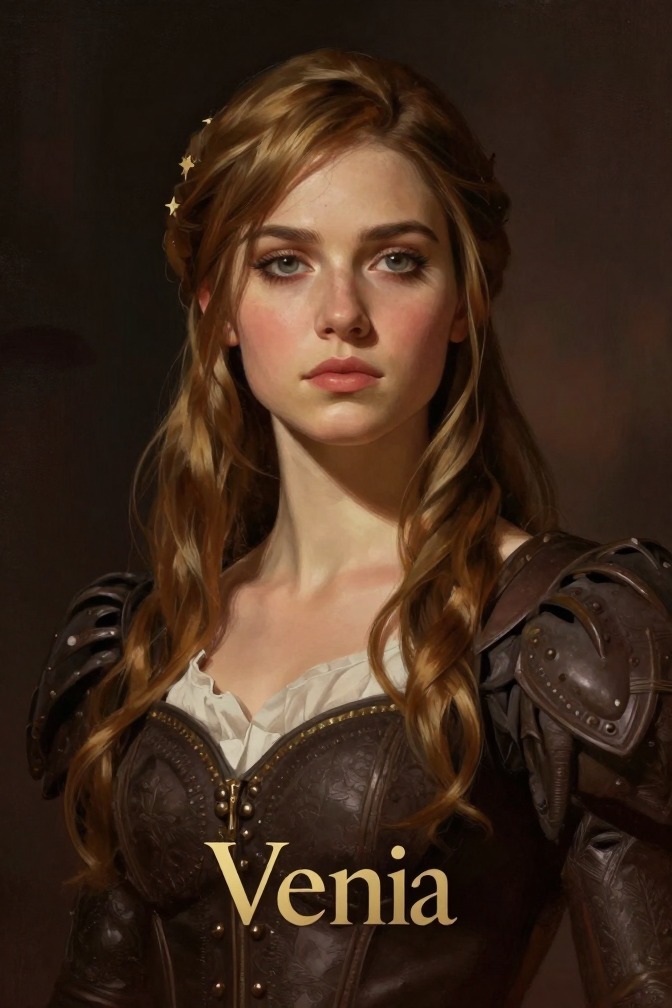
Venia is a member of Katniss Everdeen's prep team in the Capitol, a woman with aqua hair and gold tattoos above her eyebrows who specializes in removing body hair. She is part of the trio—along with Flavius and Octavia—that prepares Katniss for her public appearances, stripping her of her natural appearance and transforming her into a polished tribute. Though she appears frivolous and speaks in the affected Capitol accent, Venia is sincerely trying to help Katniss, and her work is a crucial step in the creation of the "girl on fire" image that captivates Panem.
Edgar Linton and Isabella Linton's sibling relationship is a central familial bond in Wuthering Heights, defined by deep affection, protective concern, and eventual tragic rupture following Isabella's disastrous marriage to Heathcliff.
The marriage of Hindley Earnshaw and Frances Earnshaw is a brief, tragic union that accelerates Hindley's descent into dissipation and cruelty, shaping the fates of Heathcliff, Catherine Earnshaw, and Hareton Earnshaw.
Lola Quincey is the fifteen-year-old cousin whose arrival at the Tallis house sets in motion the chain of events that leads to Robbie Turner's wrongful conviction. Her ambiguous role—as both victim and silent conspirator—makes her a pivotal figure in the novel's exploration of guilt, complicity, and the unreliability of testimony.
Jane Eyre discovers that she has inherited a fortune of twenty thousand pounds from her uncle, John Eyre, and that the Rivers siblings—St. John, Diana, and Mary—are her cousins, transforming her from a destitute orphan into an independent heiress with a newfound family.
After a year of separation, Jane Eyre returns to the now-blind and crippled Edward Rochester at Ferndean Manor, where their reunion culminates in marriage and the restoration of his sight.
Mrs. Eshton is a minor character in Jane Eyre, appearing as a guest at the Thornfield house party. She is the wife of Mr. Eshton, the local magistrate, and the mother of Amy and Louisa Eshton. Her role is largely confined to the social gatherings at Thornfield, where she is depicted as a good-natured, somewhat conventional woman of the gentry class, who participates in the entertainments and conversations of the party without exerting any significant influence on the plot.
Sir George Lynn is a minor but distinctly drawn figure in the Thornfield house-party sequence, a wealthy, large-framed country gentleman and recently elected Member of Parliament for Millcote whose presence underscores the social world from which Jane Eyre feels excluded and against which her moral and emotional independence is measured.
Marmion is a narrative poem by Sir Walter Scott that appears in Jane Eyre as a gift from St. John Rivers to Jane during her time at Morton. The poem serves as a literary touchstone within the novel, reflecting themes of love, honor, and conflict that resonate with Jane's own experiences and choices.
Morton is the rural village in northern England where Jane Eyre begins her independent life as a schoolmistress after fleeing Thornfield, and where she discovers her true identity, inherits a fortune, and reunites with her cousins, the Rivers family.
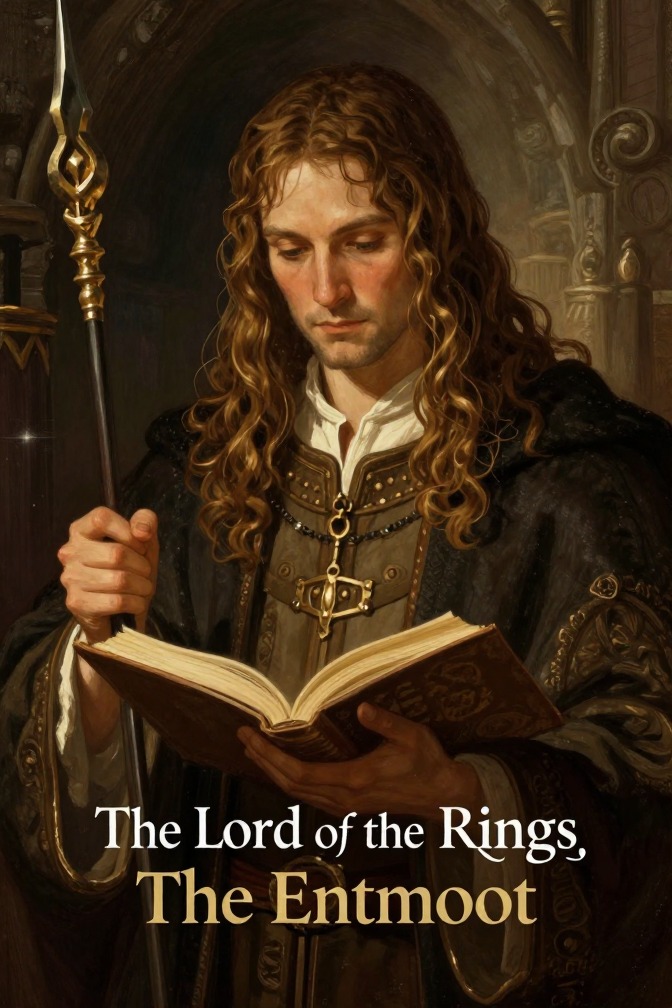
The Entmoot is the great council of the Ents, convened by Treebeard in the dingle of Derndingle, where after three days of deliberation the Ents decide to march to war against Saruman, marking the first time in ages that the Ents have been roused to collective action.
Anárion, the younger son of Elendil, was a founding king of the Southern Númenórean realm in exile, Gondor. He ruled jointly with his brother Isildur, built the great city of Minas Anor, and died in the War of the Last Alliance during the siege of Barad-dûr. His line, the House of Anárion, provided the unbroken succession of Gondor's kings until the line failed, after which the Stewards ruled in their stead until the return of the king in the person of Aragorn, Isildur's heir.
Bergil, the young son of Beregond of the Guards of the Citadel, is a minor but vivid character in Minas Tirith during the War of the Ring. He first appears as a spirited boy who challenges the hobbit Peregrin Took to a wrestling match, then becomes Pippin's cheerful guide through the city and a witness to the desperate siege. His brief appearances—showing Pippin the arriving troops, running errands for the healers, and finding the precious kingsfoil herb—serve to humanize the great stone city and to underscore the courage of ordinary folk caught in extraordinary events.
Bilbo Baggins, the wealthy and eccentric hobbit of Bag End, is the central figure of the first chapter and the catalyst for the entire quest. His discovery of the One Ring in the caves of the Misty Mountains, his long possession of it, and his dramatic departure from the Shire on his eleventy-first birthday set the War of the Ring in motion. More than a mere adventurer, Bilbo is a figure of profound moral complexity: his pity for Gollum, his struggle to surrender the Ring, and his final peaceful departure into the West define him as a hobbit of extraordinary resilience and quiet heroism, whose choices echo through the fate of Middle-earth.
Círdan the Shipwright is the ancient Elven lord of the Grey Havens, the keeper of the Third Ring Narya, and the last of the High Elves to remain in Middle-earth, whose role as a giver of gifts and a seer of the future frames the final departure of the Ring-bearers and the end of the Third Age.
Imrahil, Prince of Dol Amroth, is a noble and valiant lord of Gondor, a kinsman of Denethor, and a key military commander during the War of the Ring. He leads the knights of Dol Amroth in the Battle of the Pelennor Fields, rescues the wounded Faramir, and later serves as a principal captain in the Last Debate and the march on the Black Gate. His lineage, bearing elven blood, marks him as a figure of ancient dignity in a fading age.