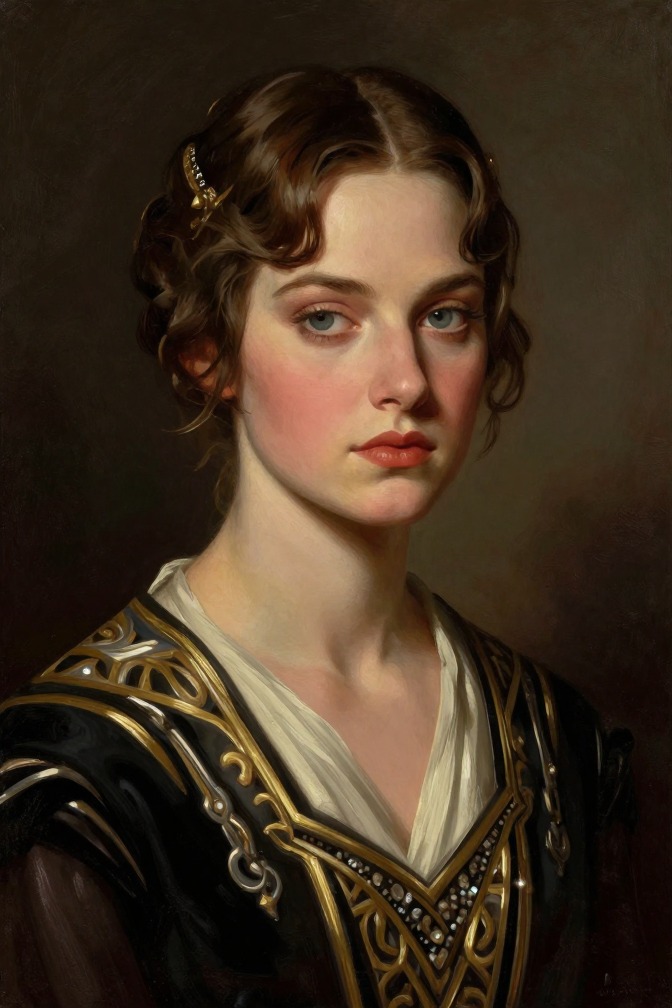
The Absolute Morphodite Snowman is a snow sculpture built by Jem and Scout Finch during a rare snowfall in Maycomb, Alabama. It begins as a mud-and-snow caricature of their neighbor Mr. Avery, then is transformed by Atticus Finch into a figure resembling Miss Maudie Atkinson, and finally is destroyed in the fire that consumes Miss Maudie's house. The snowman serves as a symbol of childhood creativity, social transgression, and the community's response to the unusual and the grotesque.
Mrs. Dubose's withdrawal fits are the physical and psychological manifestations of her deliberate, agonizing effort to break free from a morphine addiction before her death, a process that becomes the novel's central illustration of true courage.
Dick Hallorann is the Overlook Hotel's head cook, a tall black man in his late fifties with a gentle Southern accent and a modest afro graying at the temples. He possesses a powerful psychic ability he calls "shining," which allows him to read thoughts, sense emotions, and perceive past and future events. Hallorann becomes a crucial ally to Danny Torrance, recognizing the boy's extraordinary talent and warning him about the hotel's dangers. His journey from Florida to the snowbound Overlook forms the novel's final rescue attempt, culminating in a violent confrontation with the possessed Jack Torrance and the hotel's supernatural forces.
Elaine is a minor but symbolically significant character in Stephen King's *The Shining*, the unseen upstairs neighbor whose violent relationship with her partner Tom provides a grim counterpoint to the Torrance family's own domestic struggles. Though she never appears on stage, her nightly ordeal of being reduced to tears and pleading—"Don't, Tom. Please don't"—becomes a haunting refrain that echoes the novel's central themes of domestic violence, helplessness, and the cyclical nature of abuse. Her presence in the narrative serves as a barometer for the Torrances' precarious stability and a foreshadowing of the violence that will eventually consume the family at the Overlook Hotel.
Howard Cottrell is a snowplow driver who aids Dick Hallorann during his desperate journey to the Overlook Hotel, providing crucial assistance, equipment, and local knowledge that enable Hallorann to continue his rescue mission despite a blizzard.
Stuart Ullman is the fastidious, condescending manager of the Overlook Hotel who hires Jack Torrance as the winter caretaker despite deep personal reservations, and whose rigid professionalism and hidden knowledge of the hotel's sordid past set the stage for the Torrances' isolation.
Watson is the Overlook Hotel's garrulous, foul-mouthed maintenance man who shows Jack Torrance the boiler and furnace, reveals the hotel's dark history, and embodies the practical, cynical voice of the working-class West.
Mrs. Grubach's lodging house is the central domestic space in Franz Kafka's The Trial, where Josef K. is arrested, where he pursues a fraught relationship with his fellow tenant Miss Bürstner, and where the ordinary routines of bourgeois life are progressively invaded by the opaque machinery of the court.
Enrique is the social worker assigned to Theodore Decker's case after the museum bombing that killed Theo's mother. He is a tough-looking, good-natured man who, along with his Korean colleague, informs Theo of his mother's death, questions him about his father's whereabouts, and arranges his temporary placement with the Barbour family.
Gyuri is Boris Pavlikovsky's loyal driver and trusted associate, a Ukrainian-American with a criminal past who plays a crucial role in the recovery of The Goldfinch. He is a stoic, capable figure whose unwavering loyalty and practical skills—from driving getaway cars to assembling firearms—make him indispensable in the dangerous underworld of the novel's climax.
Jose is a warm-hearted, athletic Dominican doorman at the Sutton Place building where Theo Decker lived with his mother, Audrey. He is one of the few stable, affectionate figures in Theo's fractured childhood, and his loyalty and kindness—from protecting Theo's suitcase to offering a warning about his father's dangerous associates—make him a symbol of the lost, safe world of Theo's pre-explosion life.
Mr. Neuspeil is Theo Decker's English teacher at his Upper West Side school, who, after the museum bombing that killed Theo's mother, gives him a blank notebook and encourages him to write as a way of processing his grief.
Naaman Silver, also known as Bobo Silver, is a loan shark and debt collector who appears in Las Vegas to pressure Larry Decker over a gambling debt. His visit to the Decker home marks a turning point in the novel, exposing the family's financial desperation and contributing to the chain of events that leads to Larry's death.
Boris Pavlikovsky's relationship with Kotku (Kylie Hutchins) is a volatile, possessive, and ultimately destructive teenage romance that unfolds in Las Vegas, marked by intense infatuation, jealousy, and physical violence, and which fundamentally alters Boris's friendship with Theo Decker.
Theo Decker's relationship with George Bracegirdle, his mother's lawyer and the custodian of his educational trust fund, is a formal, protective, and legally consequential bond that spans Theo's adolescence and young adulthood. Bracegirdle acts as a gatekeeper to the funds Audrey Decker set aside for her son, shielding them from Theo's father Larry's predatory attempts to seize them, and later serves as a cautious but supportive advisor as Theo navigates his orphanhood, his return to New York, and his early career in the antiques trade.
The Duc de Blacas is a loyal royalist courtier and minister to King Louis XVIII during the Hundred Days, whose persistent warnings about Napoleon's return are dismissed by the king until the usurper's landing in France is confirmed, after which he is humiliated and his political influence collapses.
Selim is the loyal Albanian bodyguard and fire-keeper of Ali Pasha of Yanina, whose unwavering devotion to his master leads him to guard the powder magazine of the island refuge and ultimately to die by treachery when he is tricked into extinguishing the match that would have destroyed the enemy.
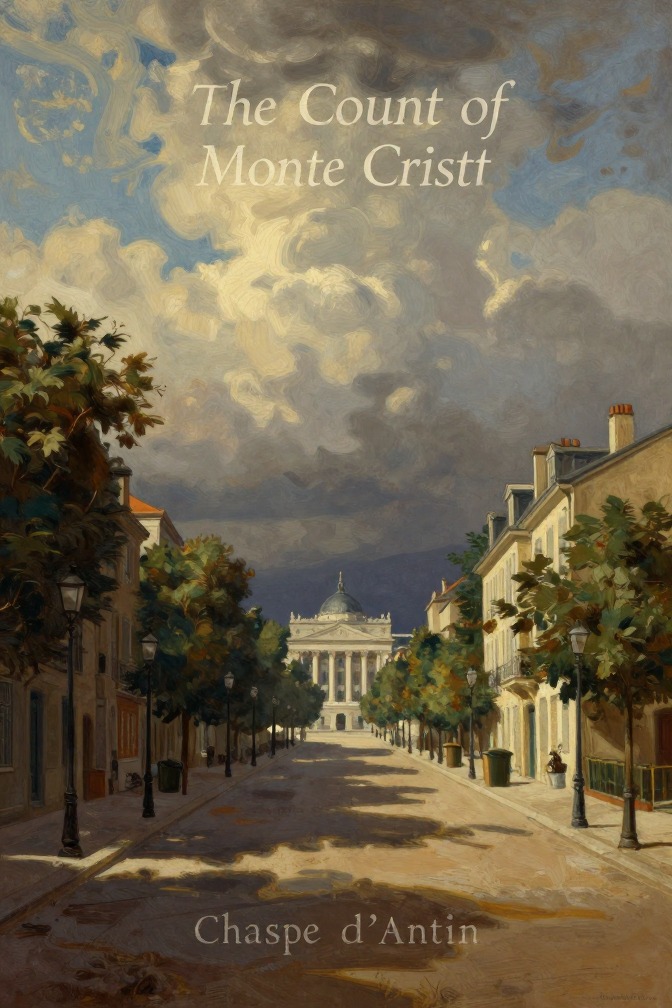
Chaussee d'Antin is a major Parisian boulevard that serves as the financial and social epicenter of the novel, housing the opulent residence of the banker Baron Danglars and functioning as the primary stage for the novel's intricate schemes of wealth, speculation, and social climbing.
Leghorn (Livorno) is a major Tuscan port city that serves as a crucial hub for Edmond Dantes' transformation and early operations after his escape from the Chateau d'If. It is where he first regains his human appearance, acquires his initial wealth by selling diamonds, purchases a yacht, and establishes the financial and logistical foundations of his new identity as the Count of Monte Cristo. The city also functions as a base for the smuggling network through which Dantes eventually reaches the Island of Monte Cristo and recovers the Spada treasure.
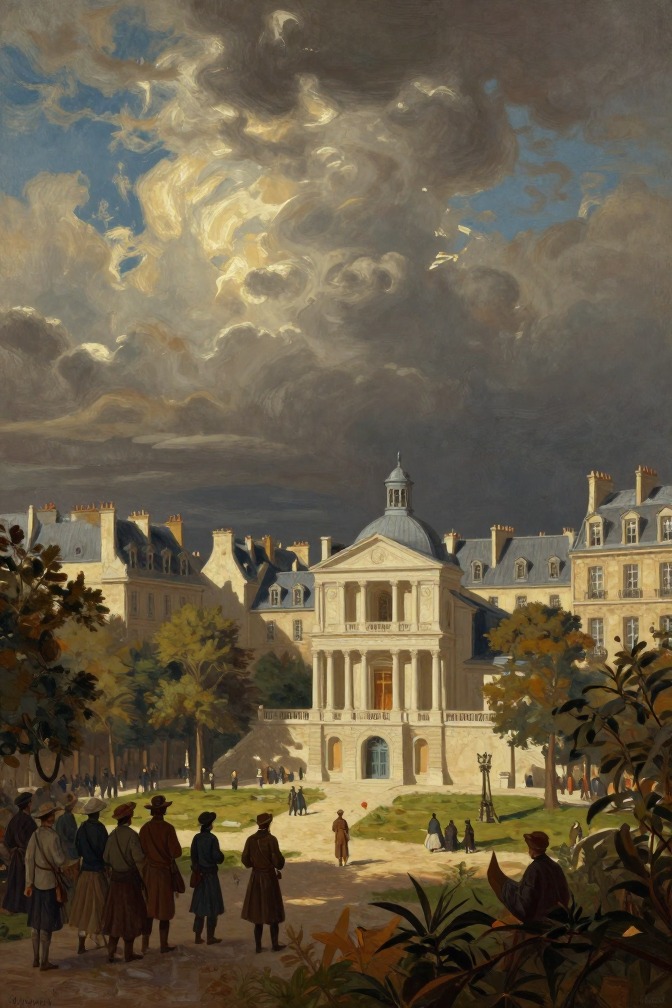
Paris is the central urban setting of *The Count of Monte Cristo*, serving as the primary stage for Edmond Dantes's elaborate revenge against those who wronged him. The city is depicted as a glittering but morally corrupt capital of wealth, power, and social intrigue, where the aristocracy, finance, and justice intersect. It is the home of Dantes's enemies—Danglars, Fernand Mondego, and Villefort—and the arena where the Count of Monte Cristo, having transformed himself, systematically dismantles their lives through social manipulation, financial ruin, and exposure of their crimes.
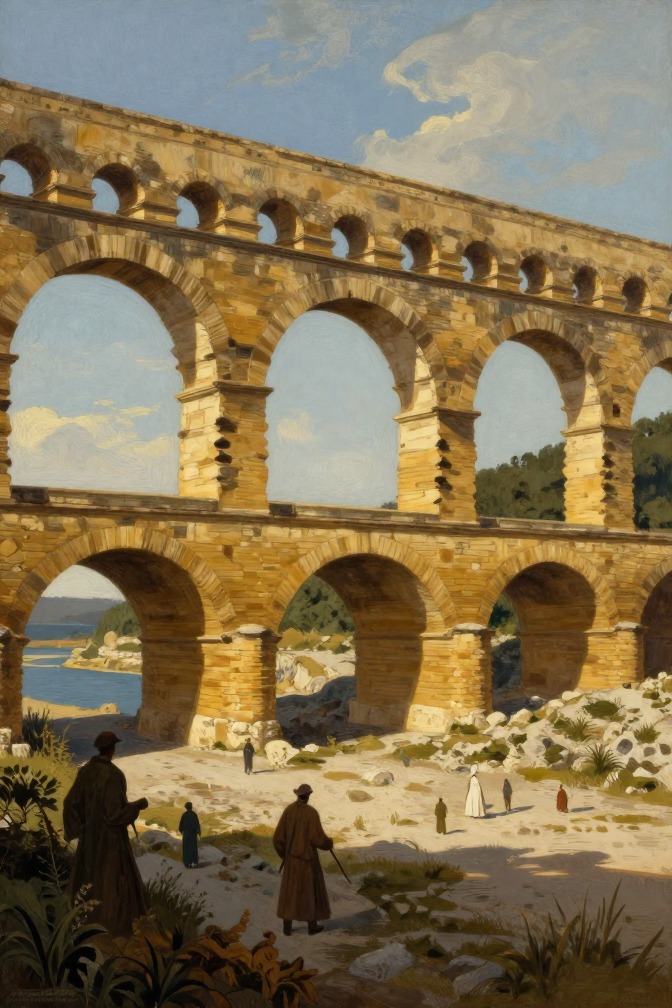
The Pont du Gard is a roadside inn on the post road between Beaucaire and Bellegarde, owned by Gaspard Caderousse and his wife La Carconte. It is the setting for the pivotal scene in which the disguised Count of Monte Cristo, posing as the Abbe Busoni, extracts from Caderousse the full story of the conspiracy that sent Edmond Dantes to prison, and then gives him the diamond that leads to his ruin.
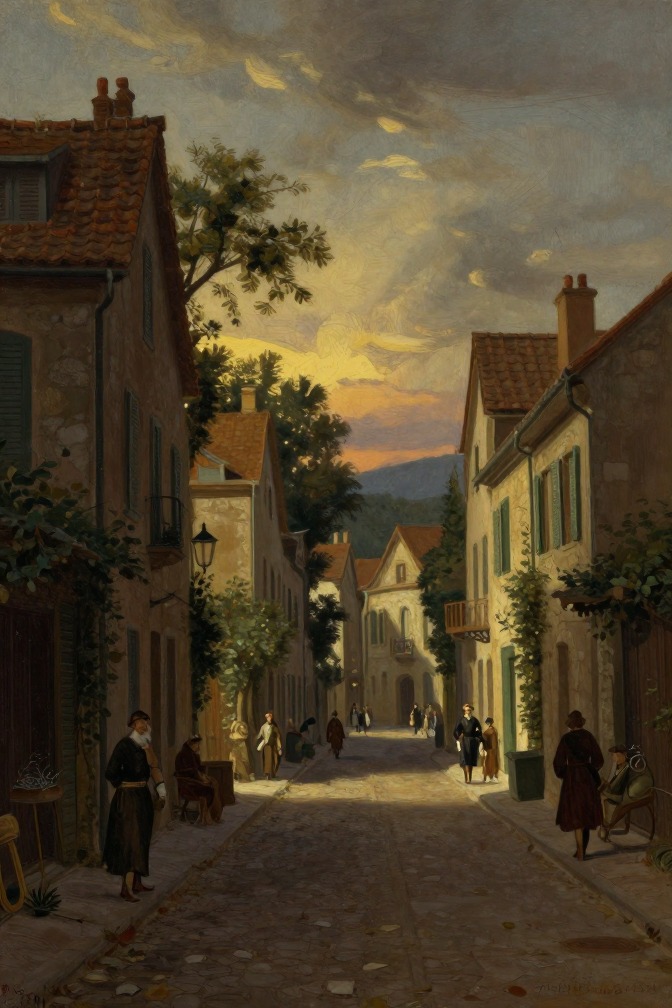
Rue du Helder is the Parisian address of the Morcerf family, specifically the pavilion of Albert de Morcerf, and serves as the primary setting for the social life of the young Parisian elite, including the breakfast party where the Count of Monte Cristo is introduced to Parisian society.
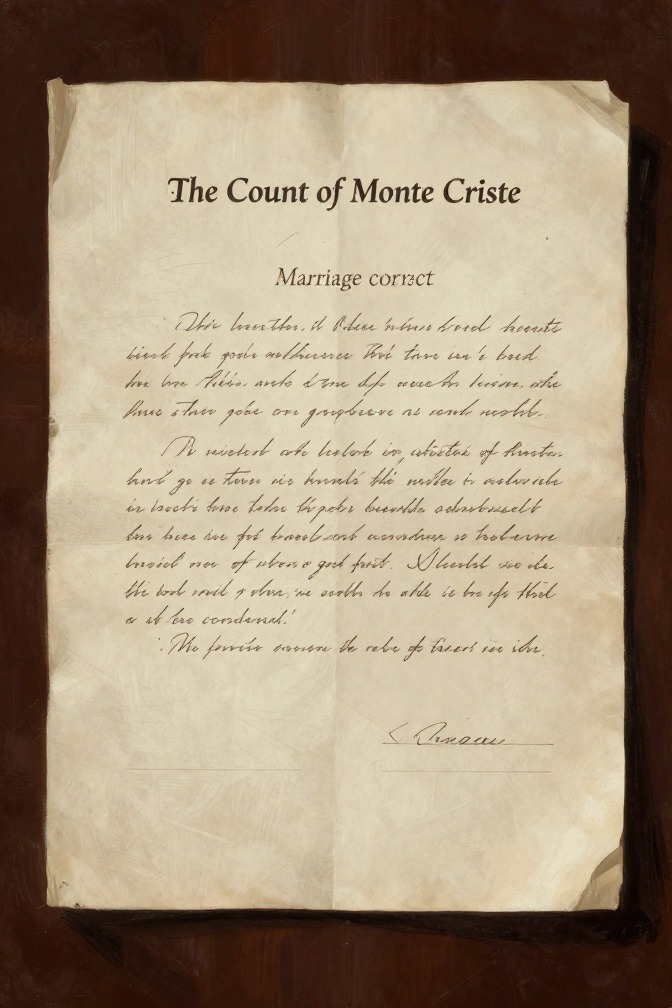
The marriage contract in *The Count of Monte Cristo* is a legal instrument that repeatedly serves as a public occasion for the exposure of hidden crimes and the collapse of social facades, marking the climax of Monte Cristo's vengeance against the Danglars and Villefort families.
The adulterous relationship between Hermine Danglars and Lucien Debray is a central, long-standing secret liaison that operates as a financial and emotional partnership, deeply entwined with the banker Danglars's fortune and the social maneuvering of Parisian high society. Debray, the private secretary to the Minister of the Interior, serves as both Hermine's lover and her covert financial advisor, using his insider political knowledge to guide her stock market speculations. Their affair, which Danglars tolerates for years as a calculated convenience, ultimately collapses when Danglars's financial ruin forces a brutal confrontation, leading Debray to coldly dissolve the partnership and abandon Hermine with a calculated settlement of her illicit profits.
The father-son relationship between Gérard de Villefort and Noirtier de Villefort is a central, antagonistic dynamic in *The Count of Monte Cristo*, defined by irreconcilable political loyalties, a hidden crime, and a final, devastating confrontation that destroys Villefort's family and sanity.
Lydia Bennet is the youngest and most reckless of the five Bennet sisters, whose heedless pursuit of pleasure and flirtation with officers culminates in a scandalous elopement with George Wickham, threatening her family's reputation before a forced marriage arranged by Fitzwilliam Darcy salvages her situation.
Mr. Denny is a minor officer in the militia regiment quartered in Meryton who serves primarily as a narrative conduit, introducing George Wickham to the Bennet circle and later providing crucial intelligence about Wickham's intentions toward Lydia Bennet.
Pinchfield is the smaller, better-kept farm adjoining Animal Farm, owned by the shrewd and ruthless Mr. Frederick, who becomes a key antagonist through his fraudulent dealings and violent attack on the windmill.
Daisy Buchanan, driving Gatsby's yellow car after the tense confrontation at the Plaza Hotel, accidentally strikes and kills Myrtle Wilson on the road through the Valley of Ashes, an event that sets off the novel's tragic final sequence.
Ella Kaye is the newspaper woman who, by playing upon Dan Cody's weaknesses, ultimately inherits the fortune that Cody had intended for Jay Gatsby, thereby severing Gatsby from the wealth that would have defined his early career.