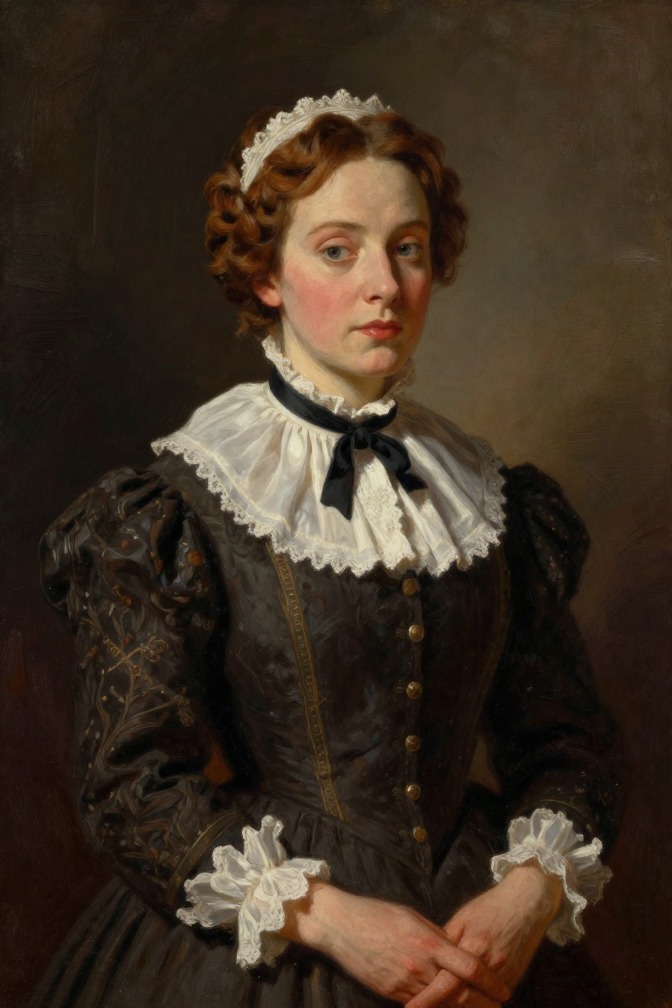
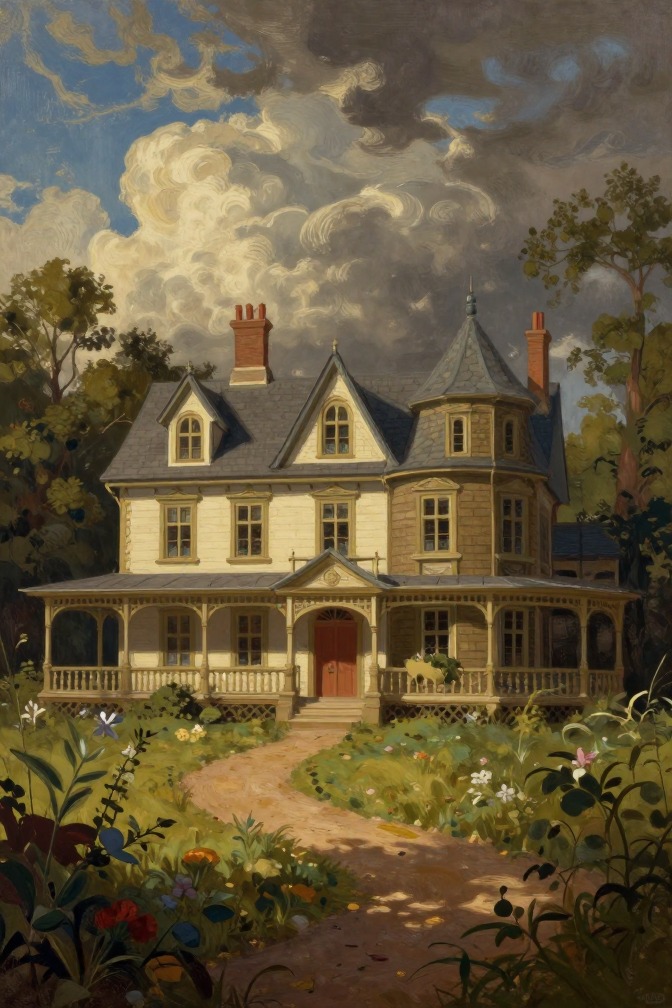
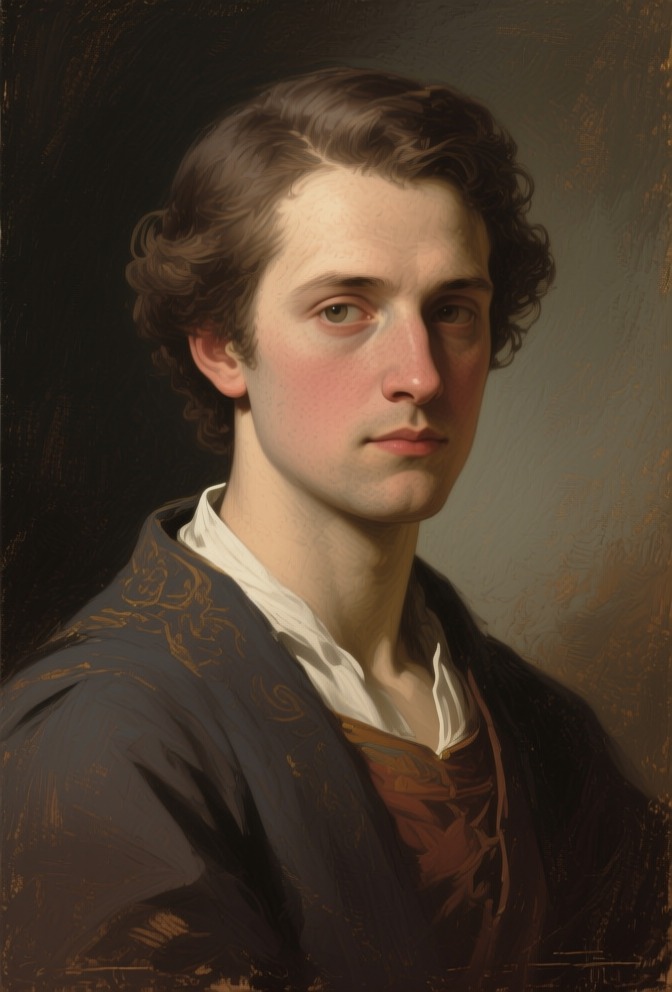
Aunt Em is Dorothy's aunt and guardian on the Kansas prairie, a woman whose youthful vitality has been drained by the harsh environment, leaving her gaunt, gray, and rarely smiling. She serves as the emotional anchor of Dorothy's quest, representing the home and family the girl longs to return to, and her final embrace of Dorothy underscores the story's central theme that there is no place like home.
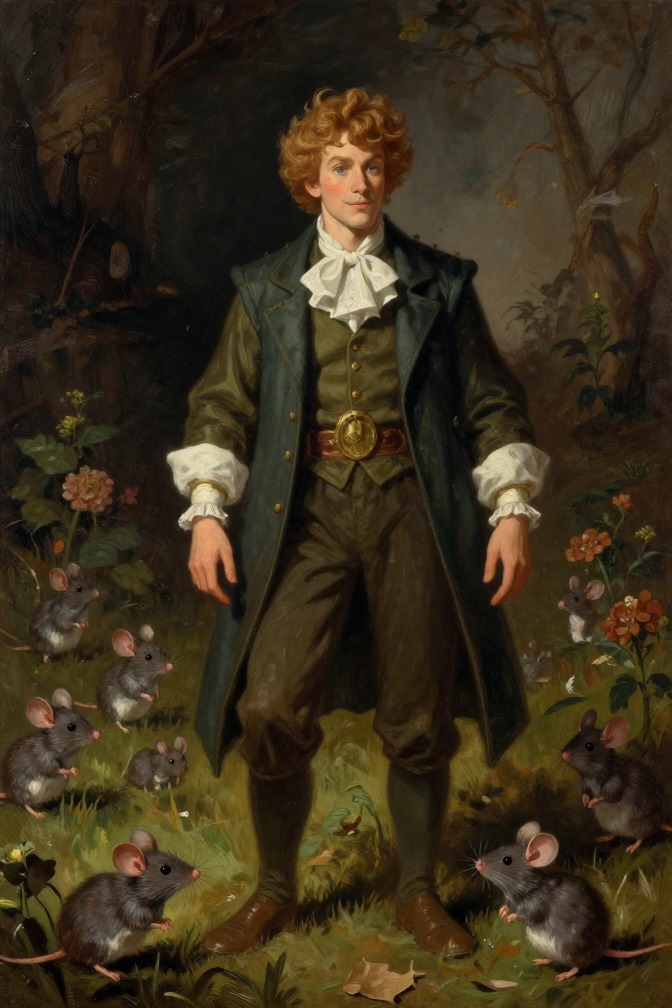
The Field Mice are a vast community of tiny, sentient rodents living in the grasslands near the Deadly Poppy Field, ruled by a dignified Queen. They become crucial allies to Dorothy and her companions, rescuing the Cowardly Lion from the poppies' lethal sleep and later providing directions when the travelers lose their way.
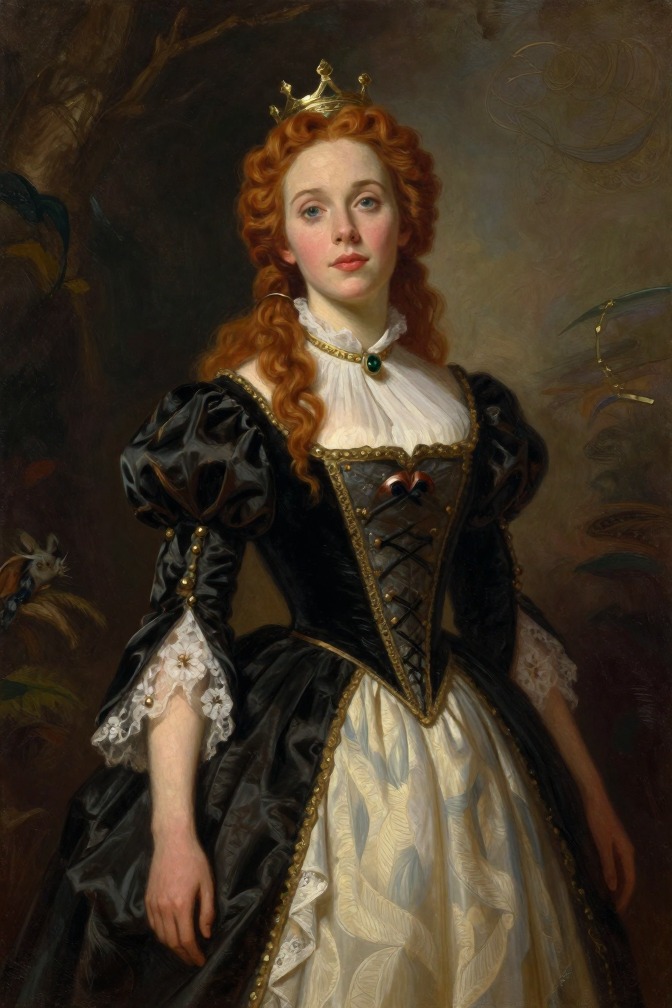
The Queen of the Field Mice is a diminutive but authoritative ruler of thousands of field mice who, after being saved from a wildcat by the Tin Woodman, mobilizes her entire population to rescue the Cowardly Lion from the deadly poppy field, and later provides crucial guidance to Dorothy and her companions on their journey.
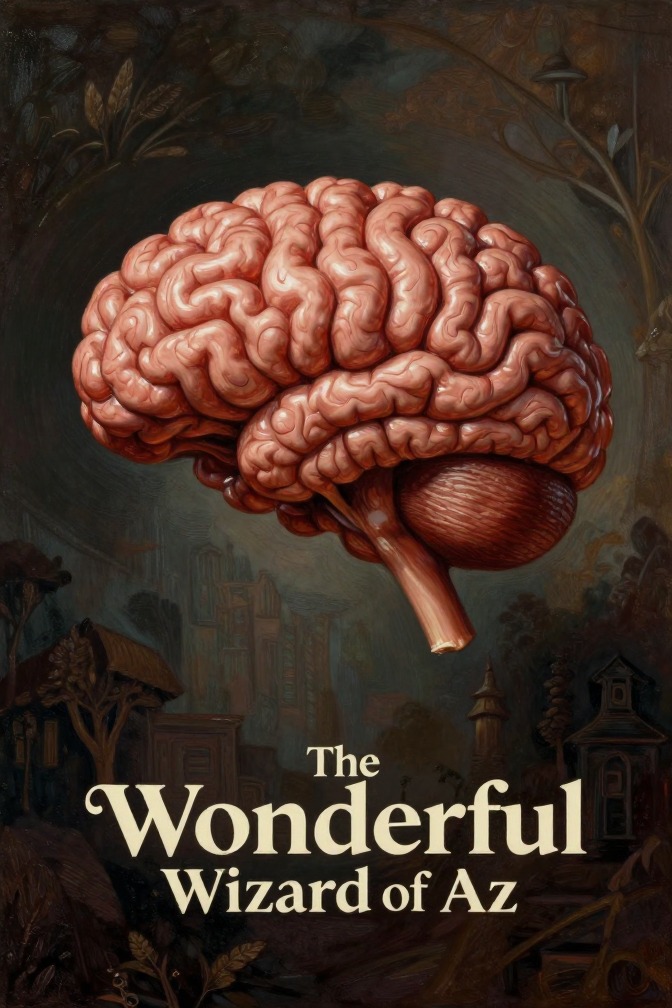
Brains are the object of the Scarecrow's quest in The Wonderful Wizard of Oz, representing the desire for knowledge, wisdom, and social respect. The concept is explored through the Scarecrow's belief that his straw-stuffed head lacks the capacity for thought, his journey to the Emerald City to ask Oz for brains, and the eventual revelation that he already possesses the intelligence he seeks.
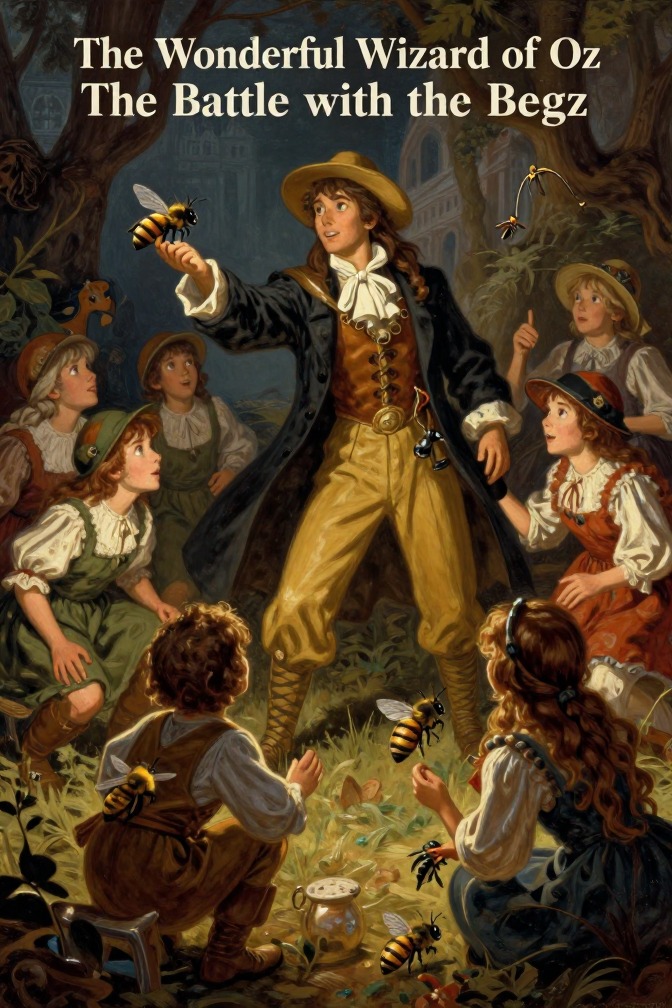
The Battle with the Bees is the third of four magical assaults the Wicked Witch of the West sends against Dorothy and her companions after they enter the Winkie Country. When her wolves and crows have been destroyed, the Witch summons a swarm of black bees to sting the travelers to death. The Scarecrow devises a clever defense: the Tin Woodman removes his straw and covers Dorothy, Toto, and the Cowardly Lion, leaving only the tin man exposed. The bees break their stings against the metal and die, and the party reassembles the Scarecrow and continues their journey.
Boq's house is the home of the richest Munchkin in the land, where Dorothy spends her first night in Oz and is celebrated as a sorceress after accidentally killing the Wicked Witch of the East.
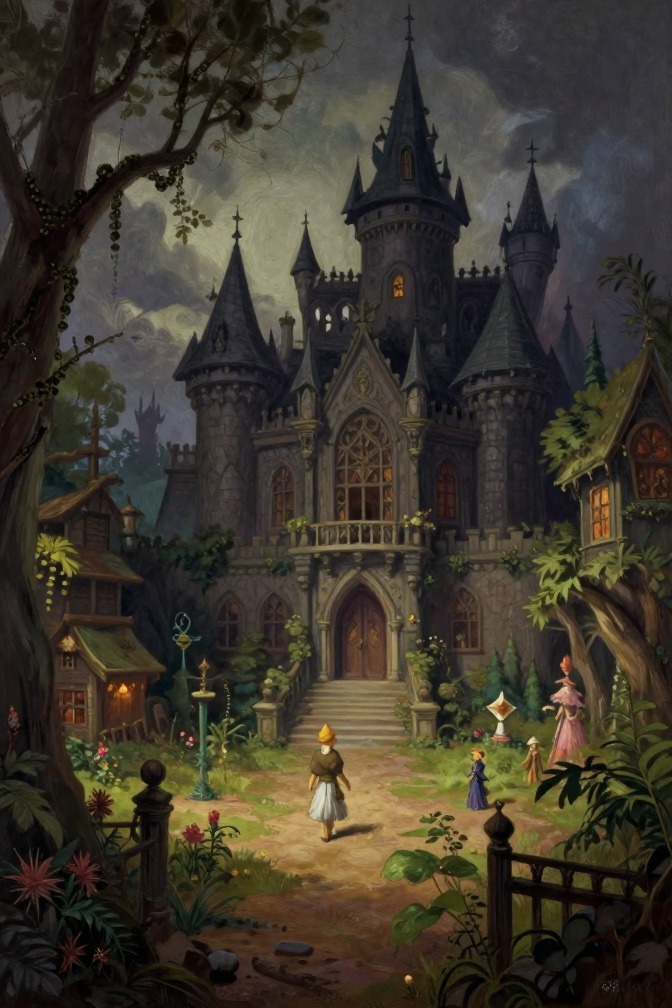
The Wicked Witch's Courtyard is the enclosed prison yard within the Castle of the Wicked Witch of the West where the Cowardly Lion is held captive after being captured by the Winged Monkeys, and it becomes the site of a tense standoff between the Witch and the Lion that defines their relationship during Dorothy's captivity.
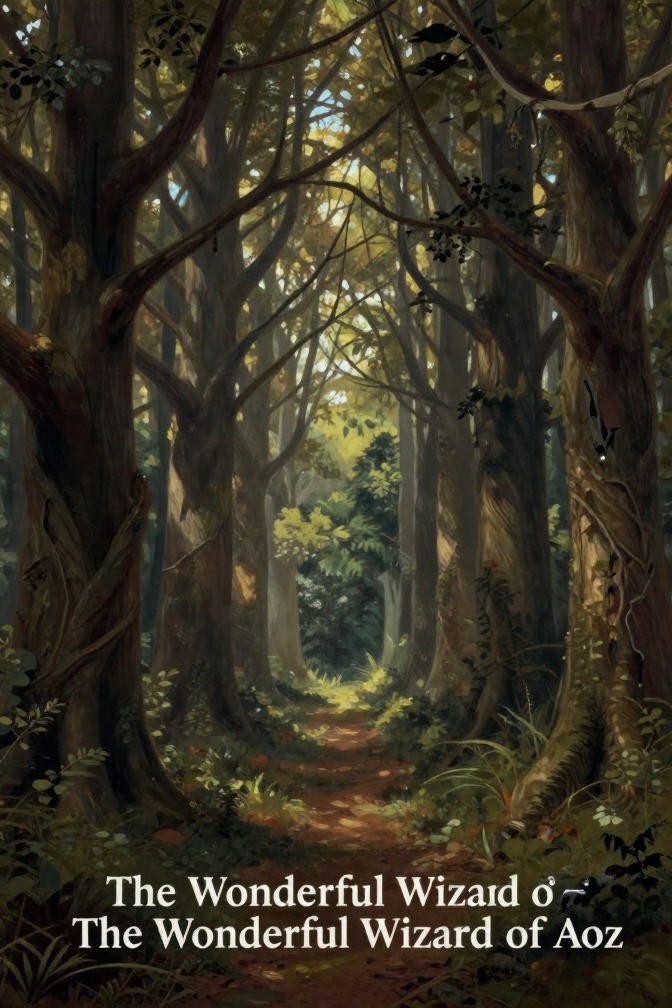
The Fighting Trees Forest is a dangerous woodland encountered by Dorothy and her companions on their journey south from the Emerald City to seek Glinda's help, where the trees themselves actively attack travelers to prevent passage.
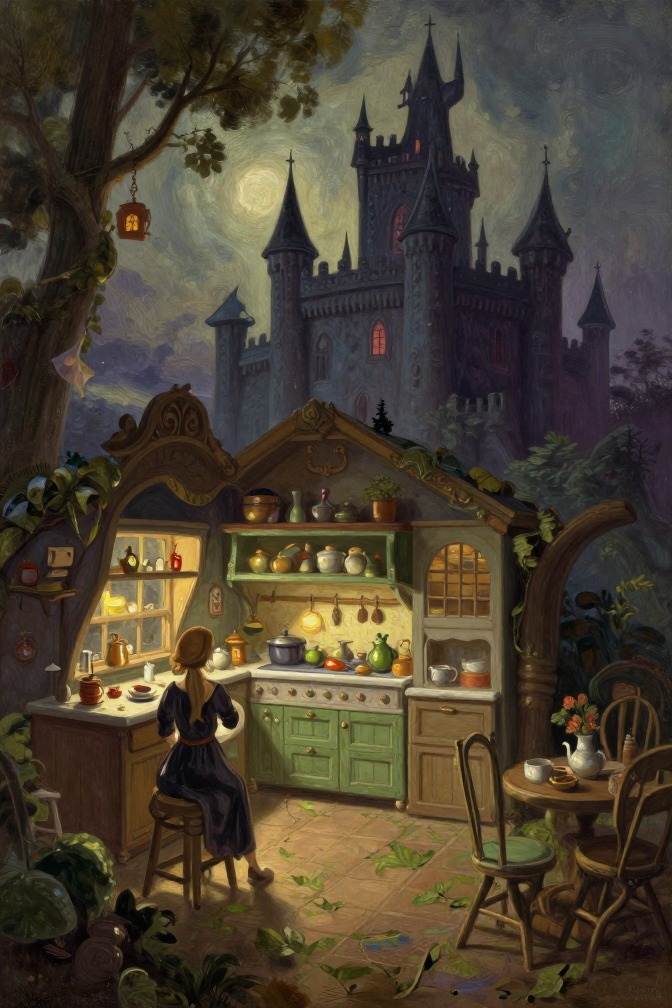
The Wicked Witch's Kitchen is the domestic workspace within the Castle of the Wicked Witch of the West where Dorothy is forced into servitude, and it becomes the site of the Witch's dramatic melting, marking the story's decisive turning point.
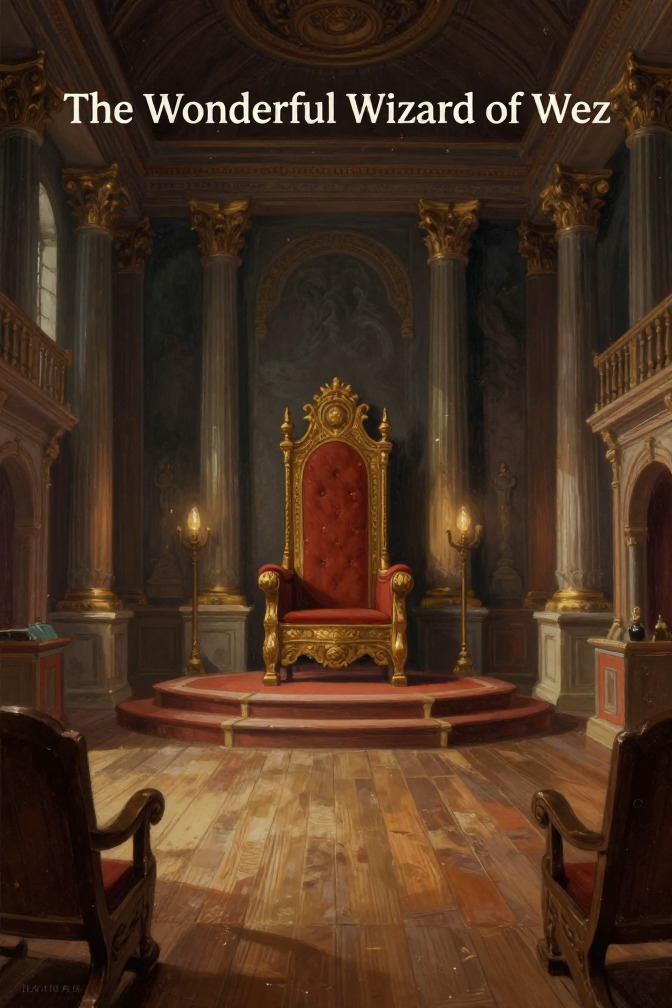
The Throne Room is the central chamber of Oz's Palace in the Emerald City, where the Wizard Oz receives visitors while concealing his true identity behind a series of elaborate illusions. It is the site of the story's most critical revelations: the unmasking of Oz as a humbug, the bestowal of brains, heart, and courage upon the Scarecrow, Tin Woodman, and Cowardly Lion, and the assignment of the quest to destroy the Wicked Witch of the West. The room's shifting appearances—from a giant floating Head to a lovely Lady, a terrible Beast, and a Ball of Fire—embody the theme of deceptive authority that runs through the novel.
The China Wall is a smooth, white china barrier that separates the travelers from the Dainty China Country, a fragile land of living porcelain people and objects. It marks a pivotal transition in Dorothy's journey south, introducing a realm where beauty and brittleness coexist and where the travelers must confront the consequences of their own clumsiness in a world that cannot be easily repaired.
The Tall Tree is the location in the Winkie Country where the Winged Monkeys deposited the Scarecrow's clothes after dismantling him, and where Dorothy and her companions later recovered them.
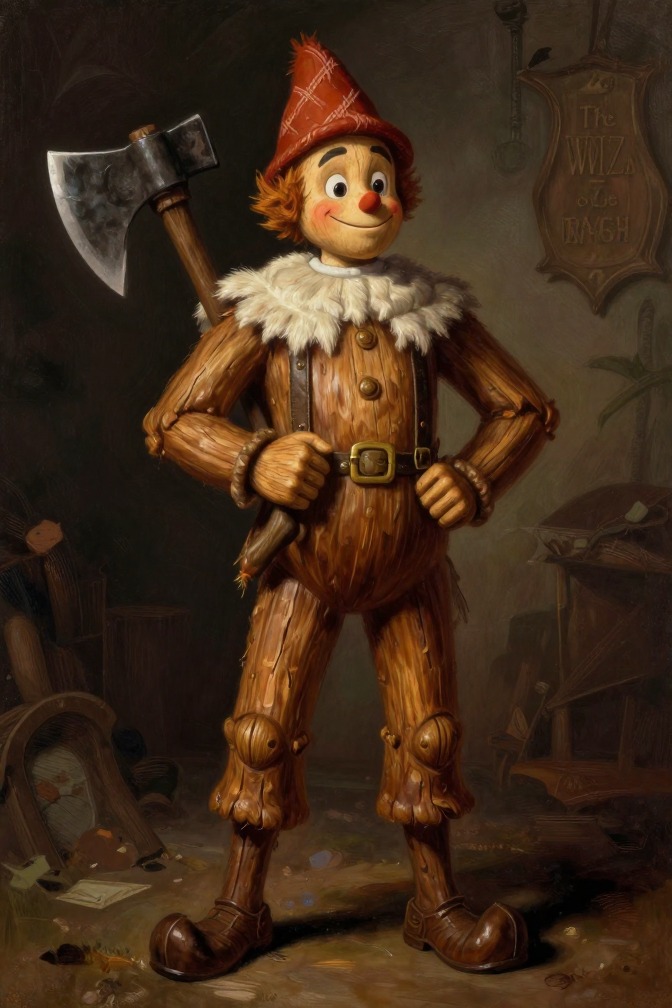
The Tin Woodman's Axe is a crucial tool and weapon carried by the Tin Woodman throughout his journey in the Land of Oz. It serves both as a practical instrument for clearing paths and building structures, and as a symbol of his identity and his quest for a heart. The axe undergoes a significant transformation after the Woodman's rescue, being fitted with a new handle of solid gold and polished to a brilliant shine, reflecting the care and gratitude of the Winkies.
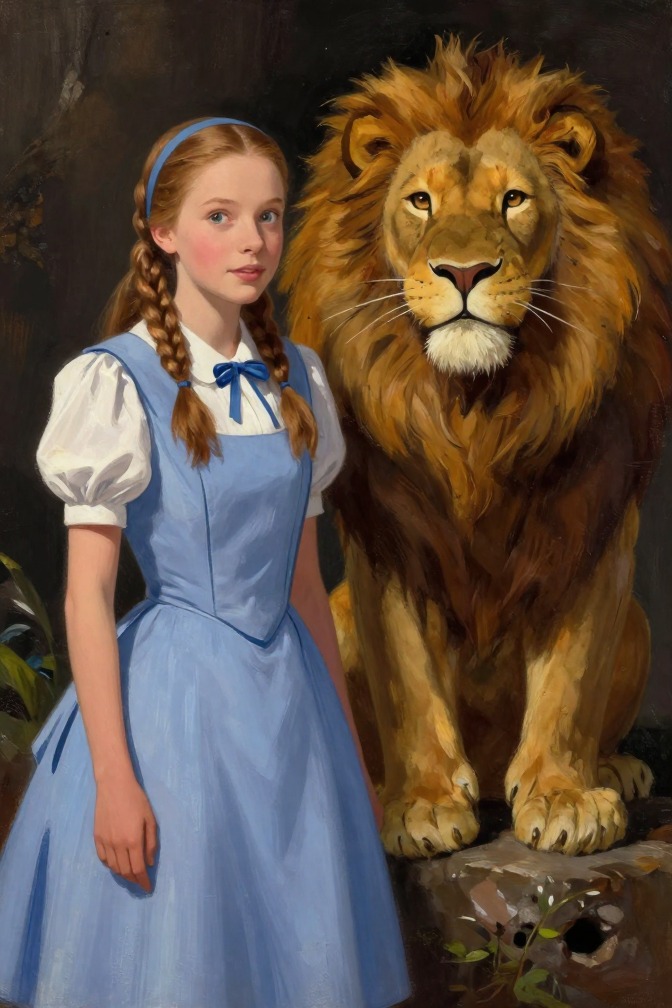
Dorothy and the Cowardly Lion form a deep, protective bond that begins with a confrontation and evolves into mutual care, with Dorothy defending the Lion from his own fears and the Lion offering her physical protection and emotional comfort during their journey through Oz.
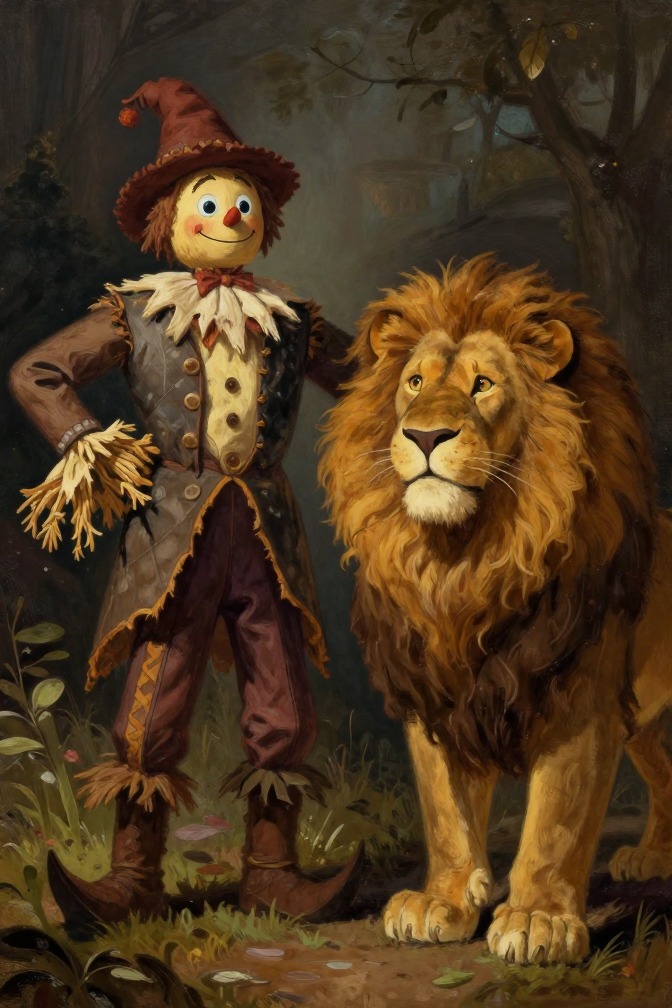
Oz, the Scarecrow, the Tin Woodman, and the Cowardly Lion share a relationship built on mutual need, deception, and eventual fulfillment, as the false Wizard imposes a deadly task on each companion before granting their wishes, only to be revealed as a humbug who cannot truly perform magic.
The Lion's relationship with the forest beasts transforms from a solitary, self-doubting cowardice to a recognized kingship earned through a decisive act of courage, fundamentally altering his identity and the social order of the forest.
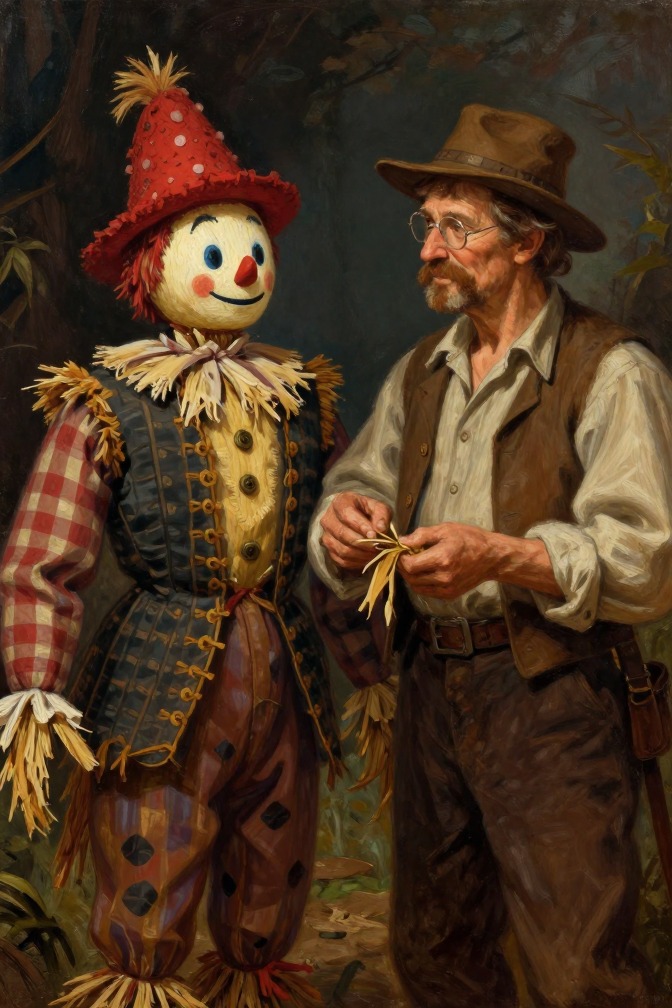
The Scarecrow and the Munchkin farmer who created him share a brief, utilitarian relationship defined by the farmer's practical need for a crow-scarer and the Scarecrow's subsequent abandonment, which sets the stage for his quest for brains.
The Wicked Witch of the East ruled the Munchkins as a tyrannical overlord for many years, forcing them into perpetual slavery until her accidental death when Dorothy's house landed on her, an event that immediately liberated the Munchkin people and set the entire plot of The Wonderful Wizard of Oz in motion.
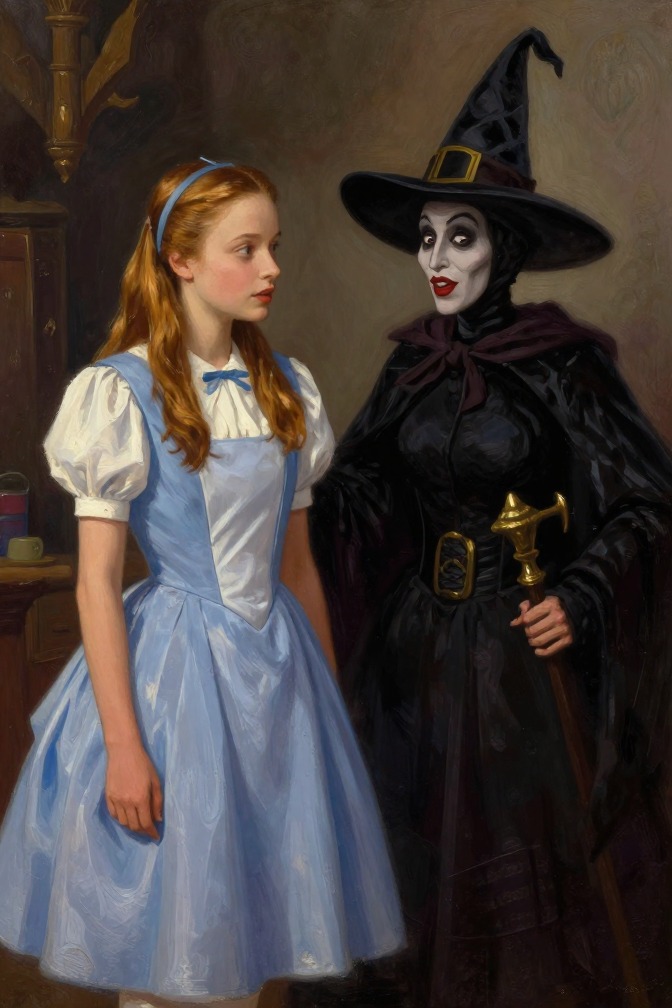
The relationship between Dorothy and the Wicked Witch of the West is a central antagonistic dynamic in *The Wonderful Wizard of Oz*, defined by the Witch's relentless attempts to destroy Dorothy and her companions, Dorothy's accidental victory through a bucket of water, and the Witch's ultimate melting, which frees the Winkies and allows Dorothy to claim the Witch's Golden Cap.
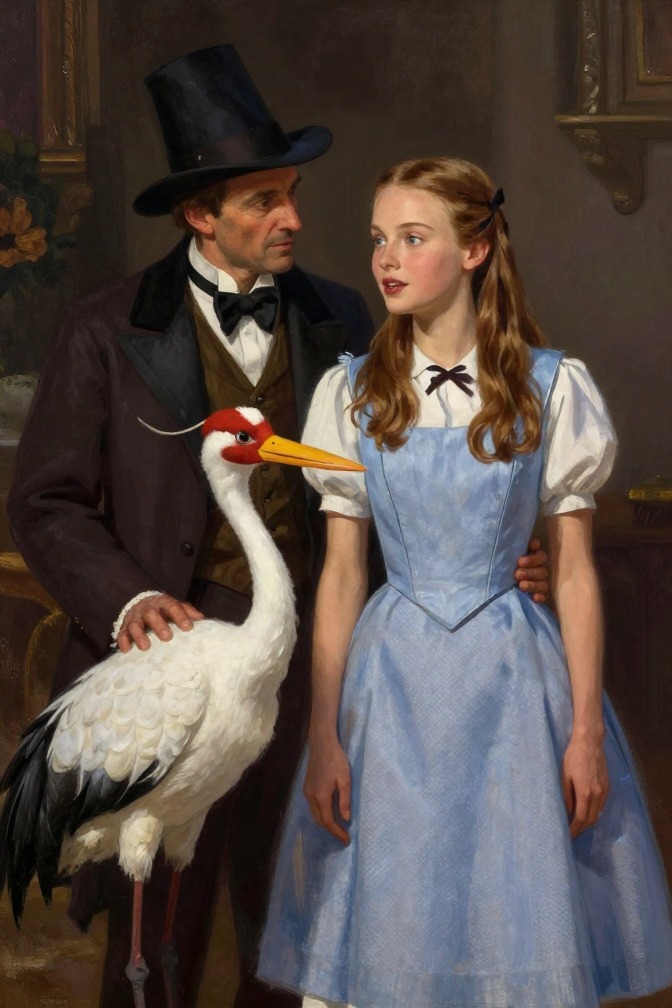
Dorothy and the Stork form a brief but decisive rescue relationship when the Stork retrieves the Scarecrow from the middle of a river, saving him from being stranded forever and allowing the party to continue their journey to the Emerald City.
The One Visitor Per Day Rule is a procedural restriction imposed by Oz, the Great and Terrible, which dictates that each of Dorothy's companions must be granted an audience with the Wizard on separate days, thereby controlling the pace of their encounters and reinforcing Oz's mystique.
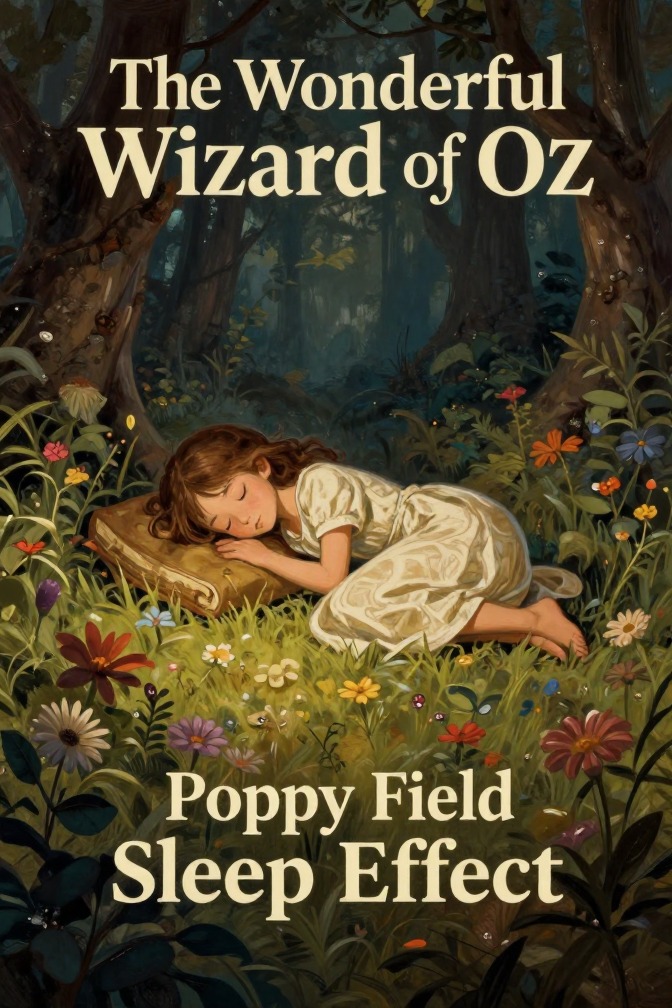
The Poppy Field Sleep Effect is a natural hazard in the Land of Oz that causes anyone who breathes the concentrated scent of the scarlet poppies to fall into a deep, potentially eternal sleep, a danger that nearly kills Dorothy, Toto, and the Cowardly Lion during their journey to the Emerald City.
The Spectacles Rule is a governing ordinance in the Emerald City, enforced by the Guardian of the Gates, requiring all visitors and residents to wear locked green spectacles to prevent them from being blinded by the city's supposed brilliance, a deception that maintains the illusion of the city's emerald nature.
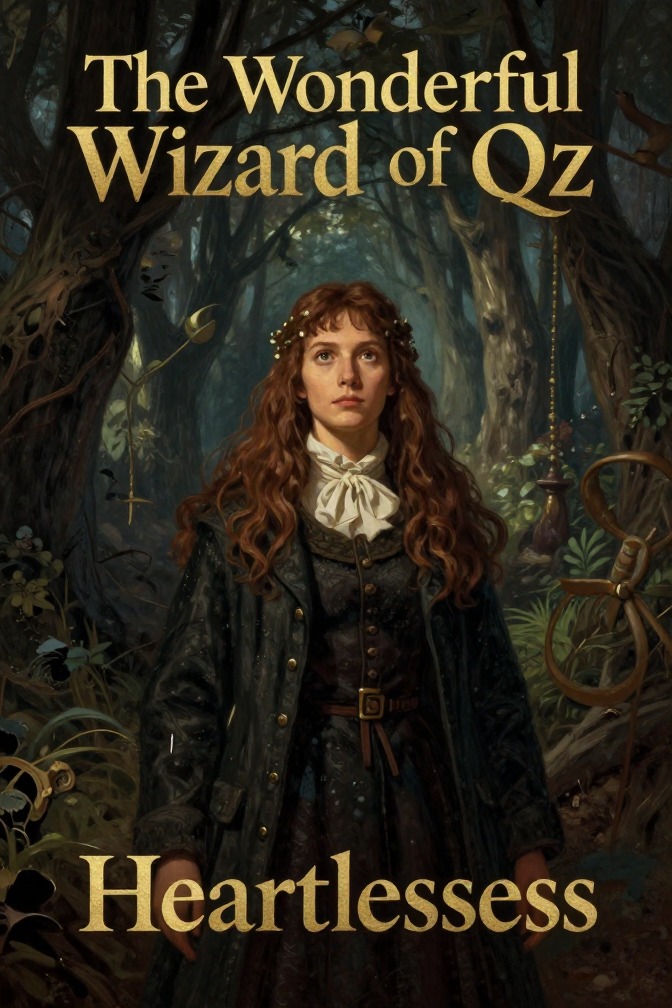
Heartlessness, in the context of The Wonderful Wizard of Oz, is the defining condition of the Tin Woodman, a state of being without a heart that he experiences as a profound emotional and existential loss, driving his quest to the Emerald City and shaping his meticulous, compassionate behavior.
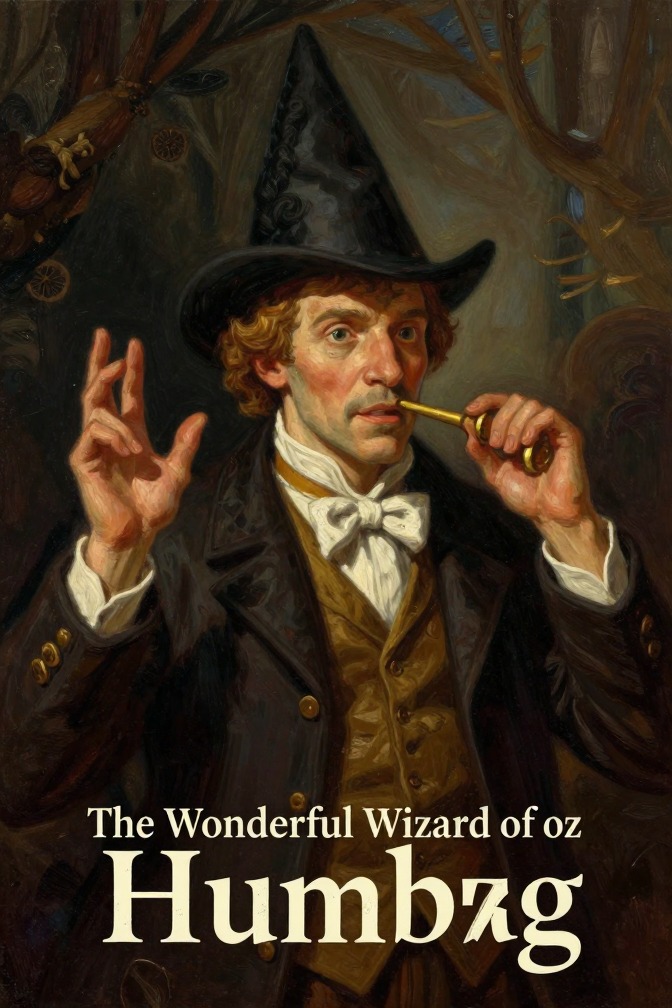
Humbug is the central revelation of Oz's true nature in L. Frank Baum's The Wonderful Wizard of Oz, exposing the Great Wizard as a common man with no magical powers who has maintained his rule through elaborate deception.
Sleep is a recurring state in *The Wonderful Wizard of Oz* that functions as both a natural human need and a supernatural danger, most notably through the deadly poppy field whose scent induces an irreversible slumber. It marks transitions between adventures, provides respite, and becomes a plot device that separates the companions and requires rescue.
The car bomb that killed Neil and Melanie, the adoptive parents of Daisy (later revealed as Baby Nicole), is the pivotal event that shatters her ordinary life, forces her into the underground, and sets in motion the mission that will ultimately lead to the collapse of Gilead.
Melanie is the co-owner of The Clothes Hound, a used-clothing store in Toronto, and the adoptive mother of Daisy (later revealed to be Baby Nicole). She and her partner Neil are killed by a car bomb planted by Gilead agents, an event that sets Daisy on the path to discovering her true identity and joining the Mayday resistance.
Professor Maryanne Crescent Moon is the chair of the Thirteenth Symposium on Gileadean Studies, a figure who embodies the academic and institutional framework through which the history of Gilead is examined and commemorated in the post-Gilead era.
In *The Testaments*, the Dog appears as a recurring figure in Aesop's fable of the Fox and the Cat, as a simile for the predatory nature of Gilead's hunters, and as a symbol of the threat of detection and violence that pursues the fugitives.