The Thank Tank is a repurposed police-station isolation cell used by Commander Judd and the Eyes to break the will of female detainees during the early consolidation of Gilead. It is the site of Aunt Lydia's systematic psychological and physical torture, which transforms her from a defiant judge into a collaborator, and becomes the crucible in which she forges the cold, strategic ruthlessness that will define her decades-long rule over Ardua Hall.
The Thanks Giving is a ceremonial event at Ardua Hall in which returning Pearl Girls present the converts they have gathered, are promoted to full Aunts, and the new 'Pearls' are formally welcomed into Gilead. It is a pivotal ritual that both celebrates the missionary work of the Pearl Girls and serves as the public stage for the introduction of Nicole (under the name Jade) into Gilead, setting in motion the novel's climactic escape and the collapse of the regime.
The Thirteenth Symposium on Gileadean Studies is the academic conference at which the three recovered documents—the Ardua Hall Holograph and the two witness testimonies of Agnes Jemima and Nicole—are presented, authenticated, and interpreted for a future audience, providing the final scholarly frame that confirms the fall of Gilead and the survival of its key figures.
The Black Van is the vehicle used by the Sons of Jacob to transport arrested professional women—including Aunt Lydia—from their workplaces to the stadium prison during the coup that established Gilead. It functions as a threshold between the old world of legal rights and the new order of arbitrary detention, and its design—windowless, with a solid panel separating the prisoners from the driver—enforces the complete disorientation and powerlessness of its passengers.
The Grey Van is a key vehicle in the Mayday escape network, used to transport the protagonist Daisy (later revealed as Baby Nicole) from the SanctuCare refugee shelter to the safe house at Carnarvon, and later to the Carpitz safe house, marking the beginning of her journey into Gilead.
Ada and Melanie were close friends and Mayday colleagues who ran The Clothes Hound, a used clothing store in Toronto that served as a cover for their work with the Underground Femaleroad. Their partnership was built on mutual trust, shared risk, and a deep commitment to helping women escape Gilead, a bond that ultimately cost them their lives when they were killed by a car bomb orchestrated by Gilead's Eyes.
Agnes Jemima and Nicole (half-sisters) are the two young women whose parallel testimonies form the core of The Testaments. Raised apart—Agnes within Gilead as the adopted daughter of a Commander’s Wife, Nicole in Canada as the secretly protected Baby Nicole—they discover their shared mother through the Bloodlines Genealogical Archives and are brought together by Aunt Lydia’s plan to smuggle a microdot of incriminating evidence out of Gilead. Their escape from Ardua Hall, harrowing journey to Canada, and reunion with their mother provide the narrative engine that triggers the regime’s collapse.
The relationship between Aunt Elizabeth and Aunt Lydia is a complex power dynamic within the Gilead regime, characterized by Lydia's manipulation of Elizabeth's guilt and fear to secure her loyalty and eliminate their mutual rival, Aunt Vidala.
Aunt Lydia and Commander Judd share a complex, mutually dependent relationship that evolves from captor and captive to wary allies, each wielding power over the other through secrets, fear, and strategic necessity. Their bond is central to the survival of Gilead's regime and to Aunt Lydia's secret plan to undermine it.
Melanie and Neil are the proprietors of The Clothes Hound, a used clothing store in Toronto, and the adoptive parents of Daisy, who is later revealed to be Baby Nicole. Their murder by a car bomb, orchestrated by Gilead's Eyes, is the inciting event that forces Daisy to learn her true identity and ultimately agree to infiltrate Gilead as a Mayday operative.
Color Coding for Women's Status is a foundational visual and social system in Gilead that assigns specific colors and patterns to women's clothing based on their rank and function, making hierarchy legible at a glance and reinforcing the regime's ideology of separate spheres.
The Early Marriage Mandate for Girls was a central pillar of Gilead's social order, requiring girls from elite families to be married young, often in their early teens, to prevent premarital encounters and ensure control over female sexuality and reproduction. This mandate was enforced through a combination of religious indoctrination, social pressure, and the threat of severe punishment, shaping the lives of characters like Agnes Jemima and Becka, who faced forced marriages that led to desperate acts of resistance.
The Gilead Girls' Dress Code was a rigid, color-coded system of modesty and status that governed the clothing of girls from elite families in Gilead, enforcing their role as 'precious flowers' to be protected from male lust and marking their progression toward marriage.
Women Must Not Strike Men is a foundational rule of Gilead that codifies female physical submission to male authority, permitting women to use violence only in state-sanctioned executions such as Particicutions. The rule is enforced through education, religious doctrine, and social conditioning, and its violation carries severe consequences.
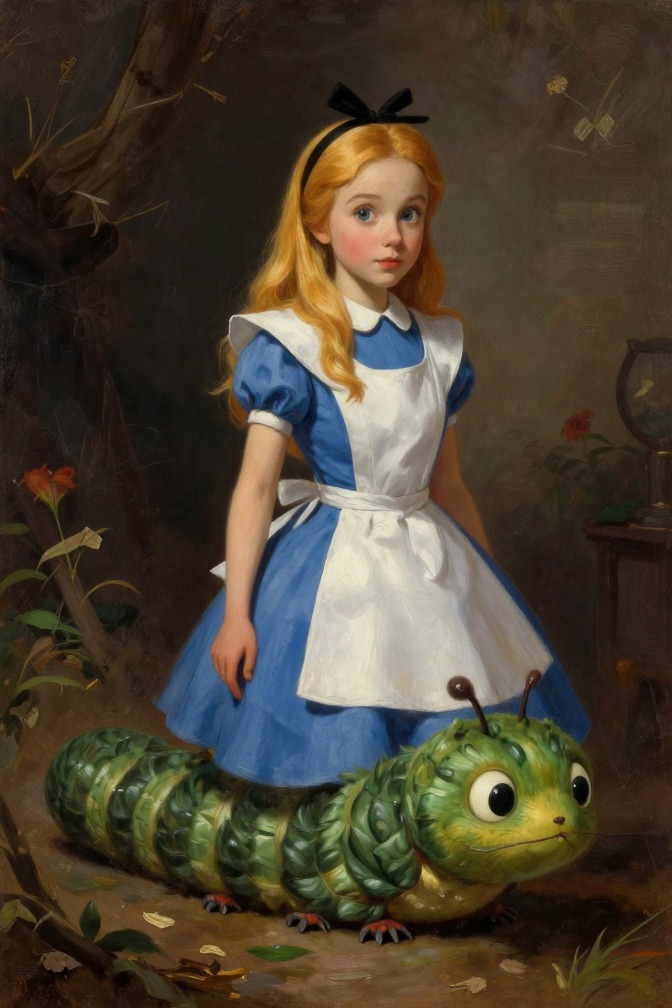
The Caterpillar is a pivotal figure in Wonderland who challenges Alice's sense of identity and provides her with the means to control her size, embodying the absurd logic and authority of the dream world.
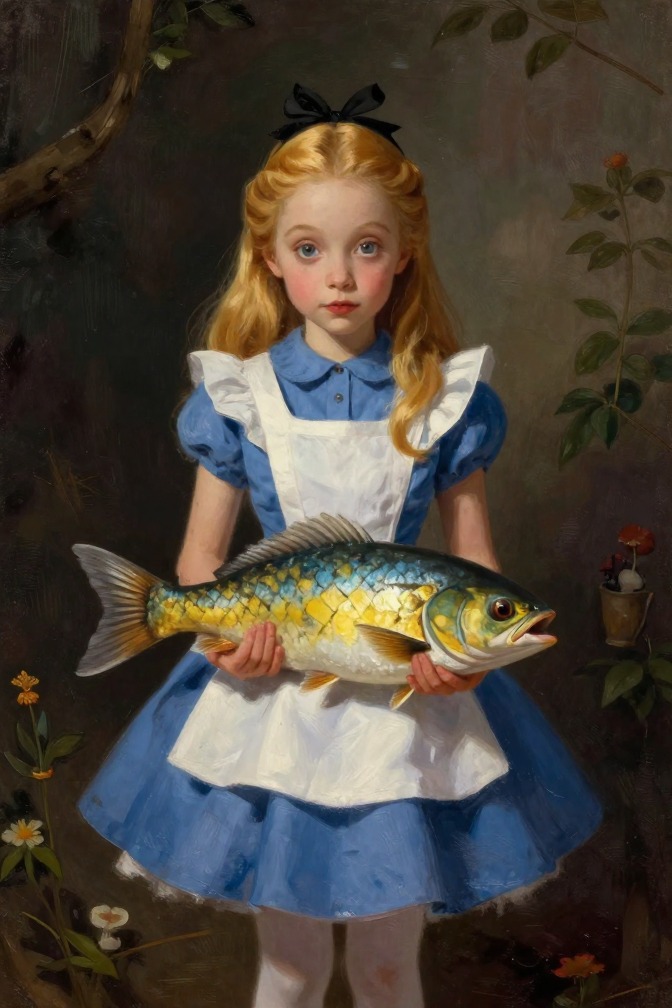
The Fish-Footman is a minor Wonderland functionary who delivers the Queen of Hearts' croquet invitation to the Duchess, embodying the absurd formality and bureaucratic nonsense that pervade the realm.
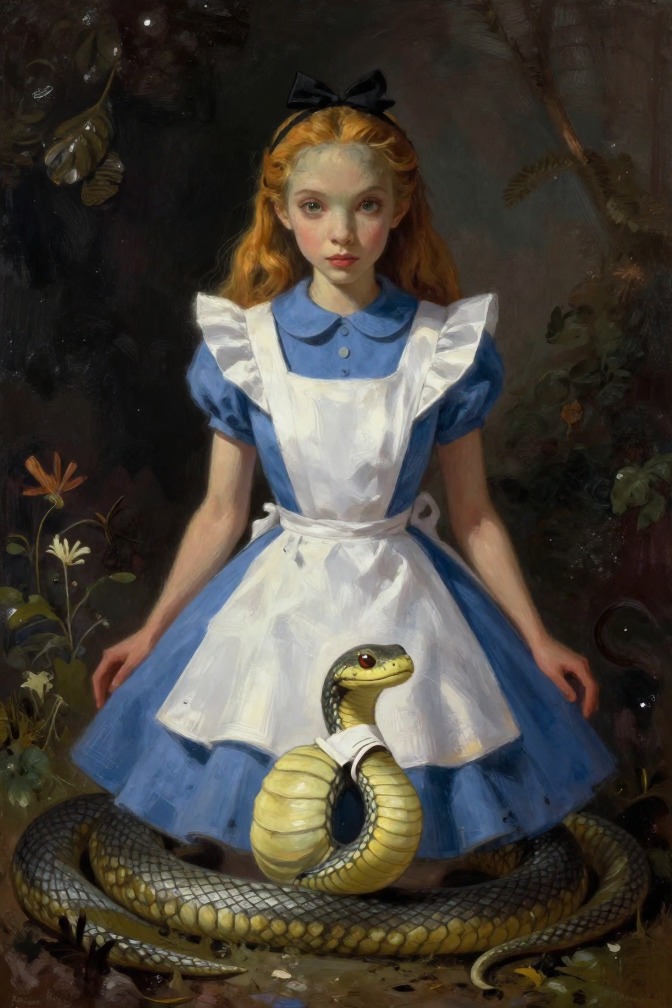
The Serpent is a recurring figure of accusation and misidentification in Alice's Adventures in Wonderland, embodying the anxiety of predation and the breakdown of stable identity. Though never a single character, the label "Serpent" is applied by the Pigeon to Alice when her elongated neck makes her appear snake-like, and the word surfaces again in the Duchess's kitchen and in Alice's own thoughts about cats and bats, linking the creature to themes of fear, mistaken identity, and the arbitrary nature of Wonderland's categories.
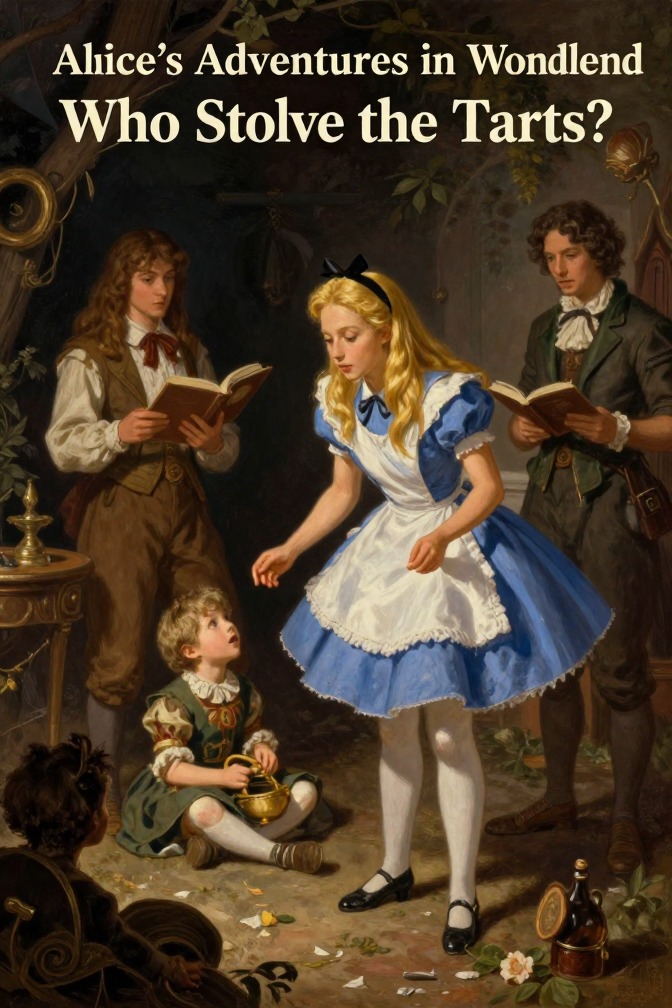
The trial of the Knave of Hearts for stealing the Queen of Hearts' tarts is the climactic event of Alice's Adventures in Wonderland, a chaotic and absurd legal proceeding that parodies the justice system and culminates in Alice's final confrontation with the arbitrary authority of the Queen of Hearts, leading to her awakening from the dream.
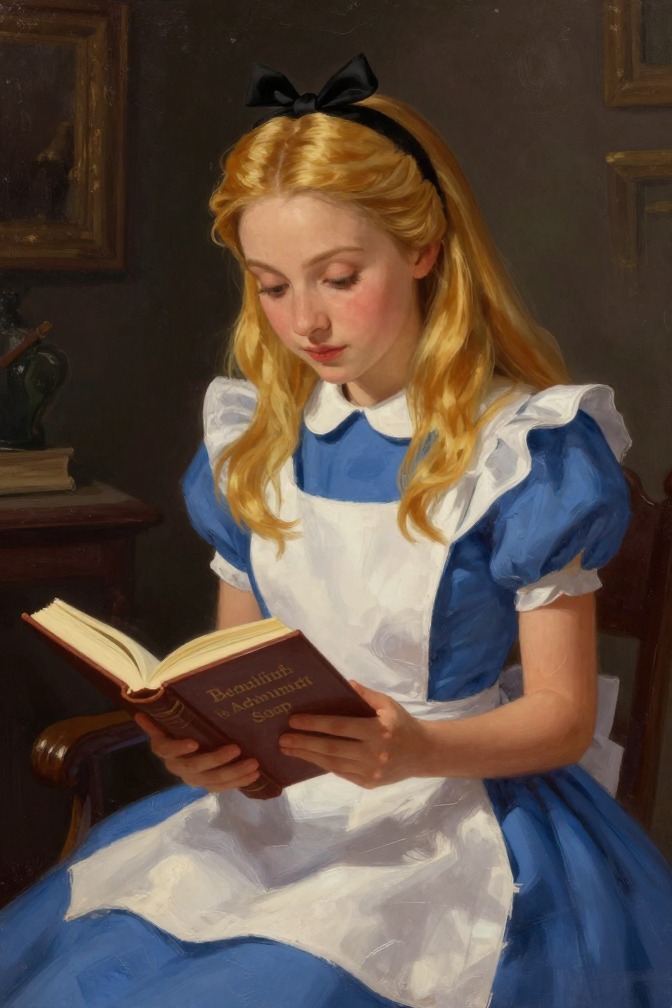
Beautiful Soup is a song sung by the Mock Turtle in Chapter X of Alice's Adventures in Wonderland, a melancholy, parodic ballad that mourns a lost culinary pleasure and encapsulates the Mock Turtle's sentimental, self-pitying character. Its performance is interrupted by the call of the trial, and its lingering refrain echoes in the dreamlike closing of the book, marking it as one of the most memorable and thematically resonant nonsense poems in the story.
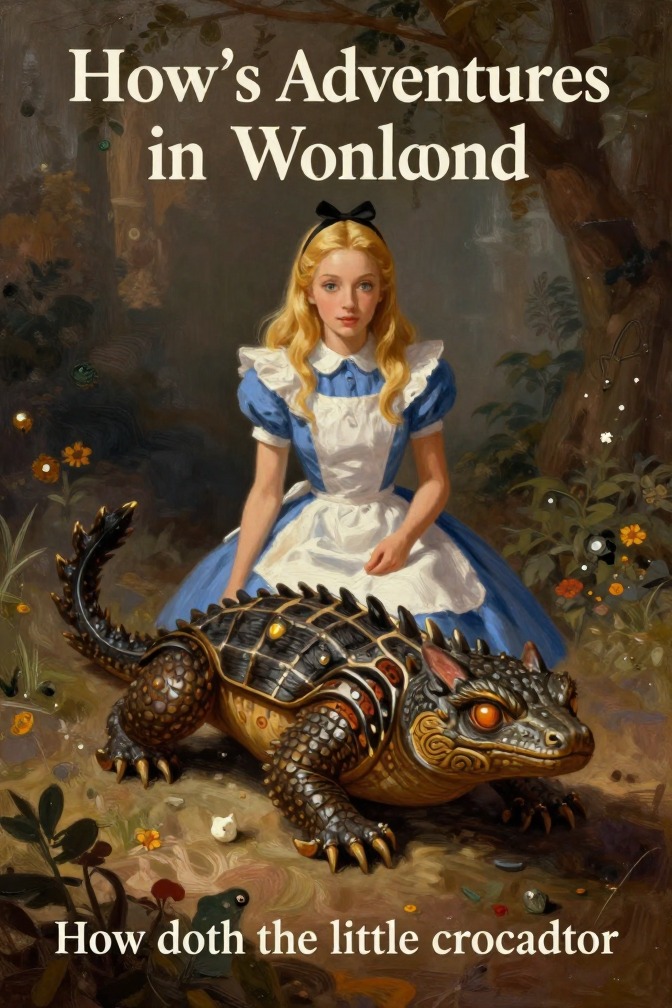
How doth the little crocodile is a parodic poem recited by Alice in Wonderland, replacing the original moralistic verses of Isaac Watts's "Against Idleness and Mischief" with a celebration of a crocodile's predatory cunning, and it becomes a key marker of Alice's lost identity and the breakdown of her learned knowledge.
The hall is the central, shape-shifting location in Wonderland that Alice first enters after falling down the rabbit-hole, serving as the threshold between the ordinary world and the dreamlike realm, and as the recurring site of her attempts to reach the beautiful garden.
The March Hare's house is the setting of the Mad Tea-Party, one of the most iconic and absurd episodes in Wonderland, where Alice encounters the Hatter, the March Hare, and the Dormouse in a perpetual tea-time that defies logic and social convention.
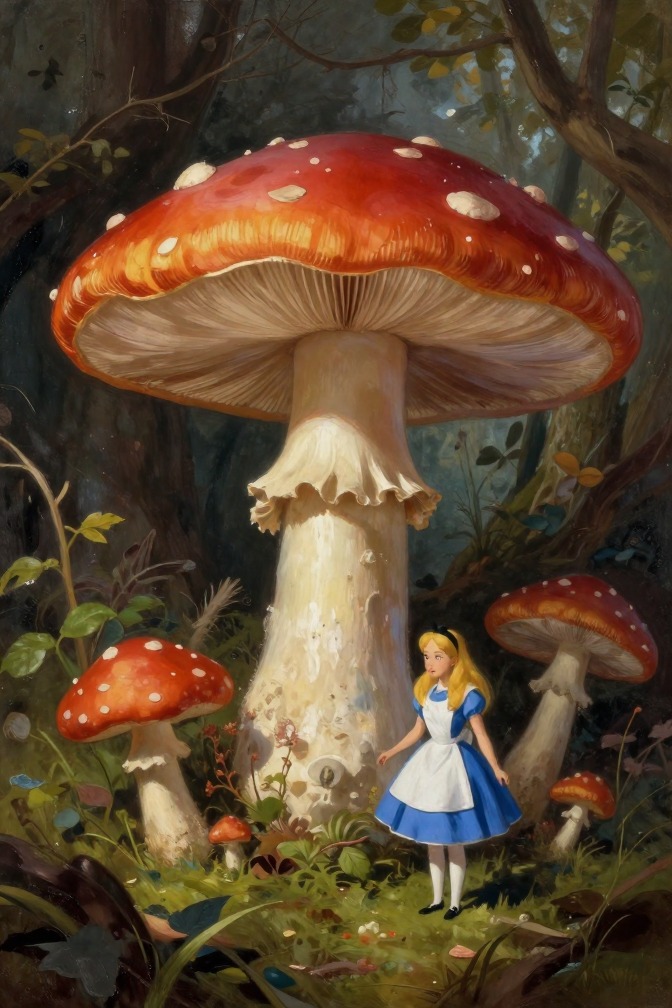
The mushroom is a pivotal location in Wonderland where Alice meets the Caterpillar, receives the crucial advice that different sides of the mushroom will make her grow taller or shorter, and uses this knowledge to control her size throughout her adventures.
The wood is a recurring location in Wonderland that serves as a transitional space where Alice seeks refuge, encounters strange creatures, and undergoes significant physical and psychological changes, marking it as a threshold between the ordered world above and the chaotic logic of Wonderland.
The Jury slate is a mundane schoolroom object that becomes a central prop in the absurd legal proceedings of the Queen of Hearts' Court, where the jurors' frantic, literal-minded writing on their slates parodies the logic of evidence and justice.
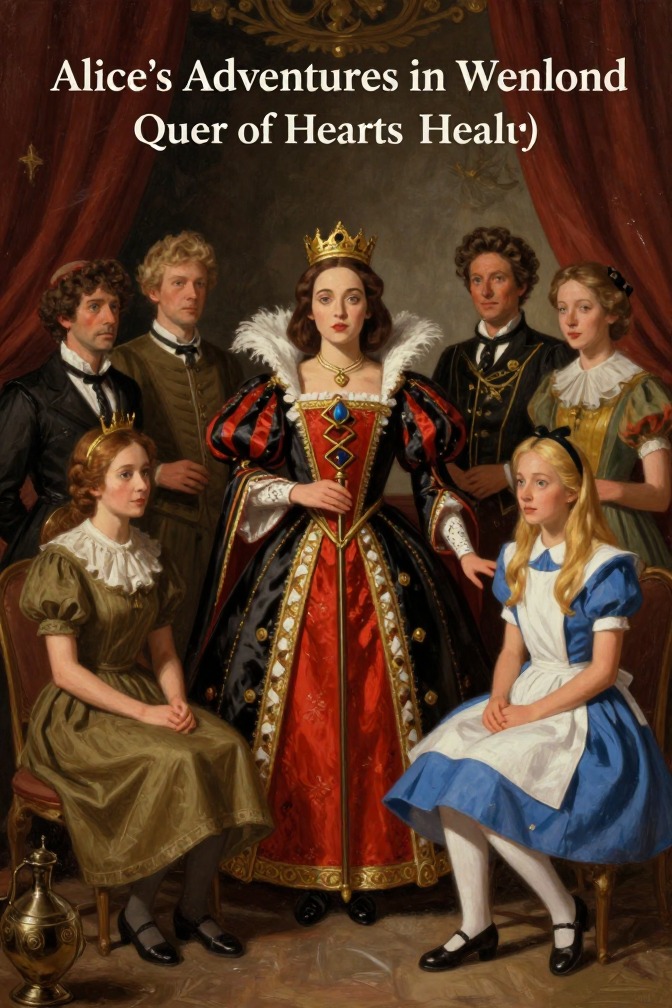
The Queen of Hearts' Court is the climactic setting of Alice's Adventures in Wonderland, where the arbitrary and terrifying power of the Queen of Hearts is exercised through a mock trial of the Knave of Hearts, and where Alice finally confronts and rejects the absurd authority of Wonderland, leading to her awakening from the dream.
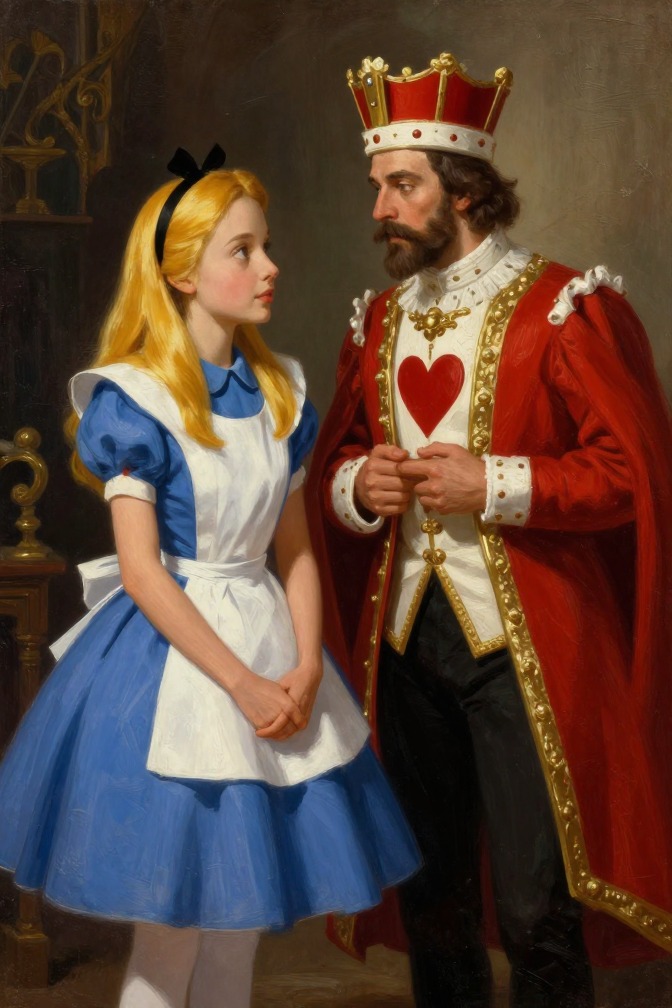
Alice and the King of Hearts share a relationship defined by the King's timid, ineffectual authority and his occasional, cautious leniency toward Alice, which contrasts sharply with the Queen of Hearts' violent impulsiveness and ultimately proves powerless against the Queen's reign of terror.
In Albert Camus's *The Fall*, God is a central yet paradoxical concept, invoked by the narrator Jean-Baptiste Clamence not as a source of faith or salvation, but as a figure whose absence defines the modern condition. God's sole usefulness, Clamence argues, would be to guarantee innocence, a function that has been abandoned, leaving humanity to face judgment without a law. The concept is explored through Clamence's reinterpretation of Christ's crucifixion, his rejection of divine judgment in favor of human condemnation, and his ultimate usurpation of a god-like role as the judge-penitent who dominates a world without grace.
Judgment is the central, obsessive theme of Jean-Baptiste Clamence's confession in *The Fall*, a force he both craves and flees. It is the mechanism by which he once felt immune, the weapon he sees turned against him, and the trap he finally claims to master by becoming a judge-penitent. Clamence's entire narrative is a struggle to escape the judgment of others while simultaneously positioning himself as the ultimate judge of all humanity.
The islands are a recurring motif in Jean-Baptiste Clamence's confession, representing an idealized realm of freedom, sensuality, and domination that stands in stark contrast to the foggy, canal-bound Amsterdam where he now lives. They function as a symbol of lost innocence, a geographical and psychological escape from guilt, and a site of colonial desire and mastery.