Every Man is a King is a political slogan invoked by Stanley Kowalski during a birthday supper confrontation to assert his absolute authority within his household, drawing on the populist rhetoric of Louisiana governor Huey Long to justify his dominance over Stella and Blanche.
The rule that "the lady must entertain the gentleman" is a social code Blanche DuBois invokes to explain her strained performance of gaiety during her date with Harold Mitchell, revealing the gendered labor and economic desperation underlying her romantic strategies.
The Law of nature is a rule invoked by Blanche DuBois in A Streetcar Named Desire to justify her performance of feminine charm and social obligation, revealing the coercive structure that governs her behavior and her precarious position as a single woman.
1936 marks a pivotal year in Tennessee Williams's early development as a playwright, when he enrolled in extension courses at Washington University in St. Louis and began the formal study of drama that would lead to his first full-length production the following year.
1937 was a pivotal year in Tennessee Williams's early career, marked by the first full production of one of his plays, his transfer to the University of Iowa, and the beginning of his lifelong engagement with the social and theatrical forces that would culminate in A Streetcar Named Desire.
1947 was the pivotal year in which Tennessee Williams's A Streetcar Named Desire premiered on Broadway, marking a transformative moment in American theater by blending poetic language with raw realism and achieving both critical and popular success.
1954 was a significant year in Tennessee Williams's career, marked by the publication of his short story collection *Hard Candy* and the continued resonance of his earlier masterpiece *A Streetcar Named Desire*, which had premiered in 1947 and whose themes of social and personal conflict remained deeply relevant.
1959 was a significant year in the career of Tennessee Williams, marked by the Broadway opening of Sweet Bird of Youth and the release of its film adaptation, as well as the film version of Suddenly Last Summer, and it also serves as a reference point for the enduring legacy of A Streetcar Named Desire.
1969 was a pivotal year in the life of Tennessee Williams, marked by his involuntary commitment to a psychiatric hospital, the publication of a play collection, and the release of a film adaptation of his work, reflecting the escalating personal and professional crises that defined his later career.
1972 was a significant year in the later career of Tennessee Williams, marked by the off-Broadway premiere of Small Craft Warnings and the receipt of an honorary doctorate, set against the broader context of the play A Streetcar Named Desire's enduring legacy and the legal framework that governed its production.
1973 was a significant year in the later career of Tennessee Williams, marked by the Broadway premiere of the revised play *Out Cry* and the publication of a short story collection, as well as being a period when the playwright reflected on the tension and violence of his era.
1975 was a significant year in Tennessee Williams's later life, marked by the publication of his novel *Moise and the World of Reason* and his *Memoirs*, as well as a period of reflection on his career and the social themes of his work.
1978 is a year in the chronology of Tennessee Williams's life and career, marked by the premiere of his play Tiger Tail and the continued publication of his works, set against the broader historical context of the late 1940s in which A Streetcar Named Desire is set.
Christmas in A Streetcar Named Desire is a temporal marker that anchors key events in Blanche DuBois's past and present, revealing the economic and emotional fault lines of her life. It is the season of her last encounter with the wealthy Shep Huntleigh, the birth date of Stanley Kowalski, and the symbolic backdrop against which Blanche's illusions of rescue and her brother-in-law's brute reality clash most starkly.
Chillingworth's Interview with Hester in Prison is the first private confrontation between Hester Prynne and her husband, Roger Chillingworth, after her public shaming, during which he extracts a vow of secrecy, reveals his intention to discover her lover, and establishes the terms of his disguised identity as a physician.
Governor Bellingham is a high-ranking colonial magistrate in Boston who embodies the stern authority of the Puritan establishment, presiding over Hester Prynne's public shaming and later attempting to remove her daughter Pearl, yet he ultimately participates in the civic ceremonies that mark the colony's political life.
Roger Chillingworth is the vengeful physician who, after discovering his wife Hester Prynne's adultery, dedicates himself to a systematic psychological torture of her secret lover, the Reverend Arthur Dimmesdale, transforming from a learned scholar into a demonic figure consumed by revenge.
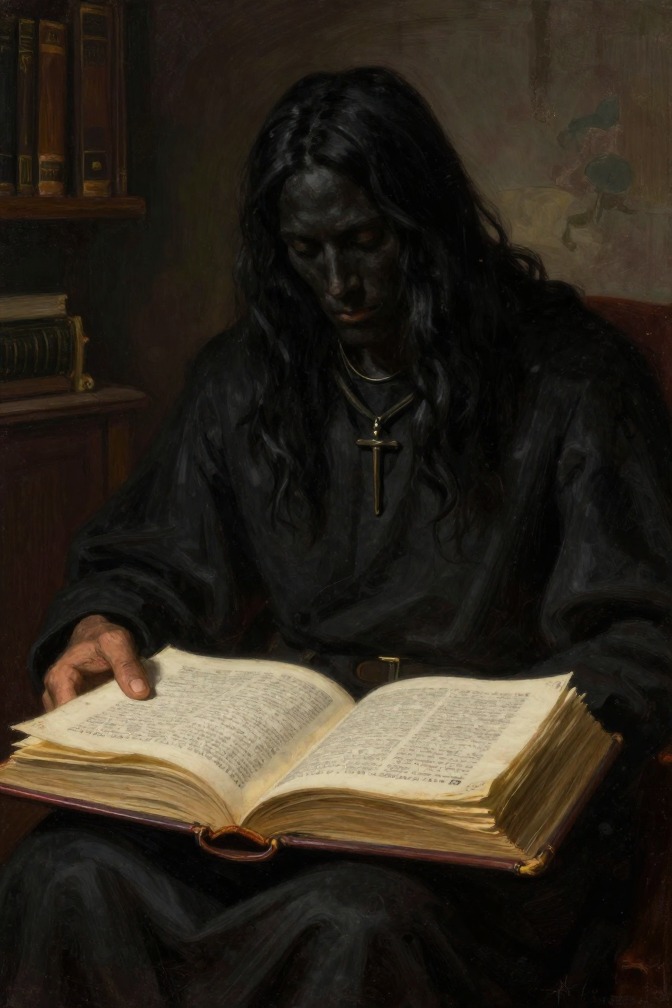
The Black Man's Book is a supernatural ledger in Puritan folklore, symbolizing the pact between sinners and the devil, which appears in the novel as a folkloric motif that Hester Prynne and Arthur Dimmesdale confront, representing the temptation to sign away one's soul and the hidden mark of sin.
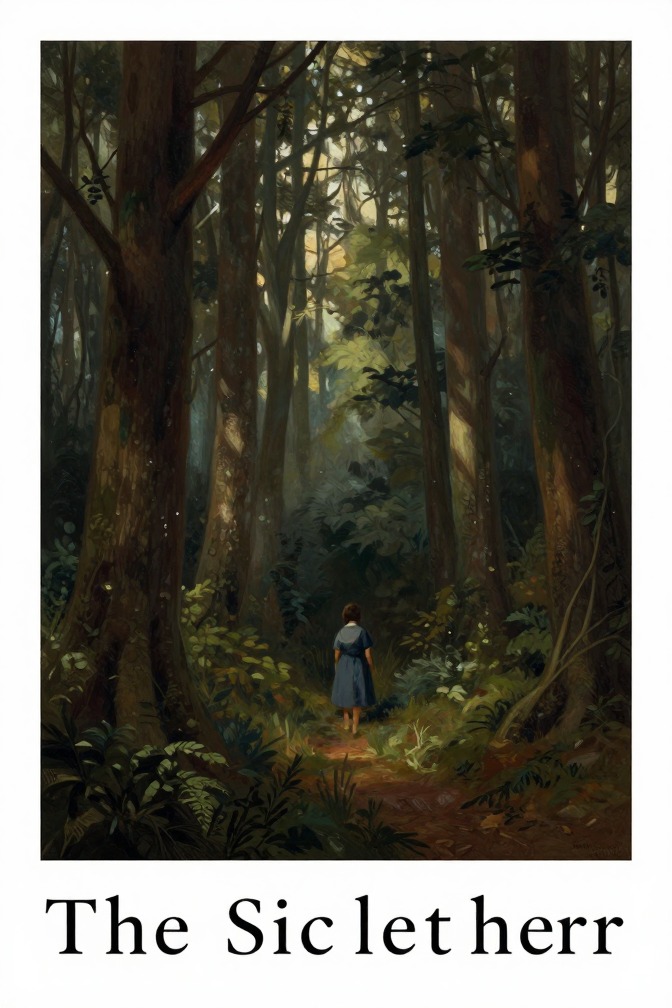
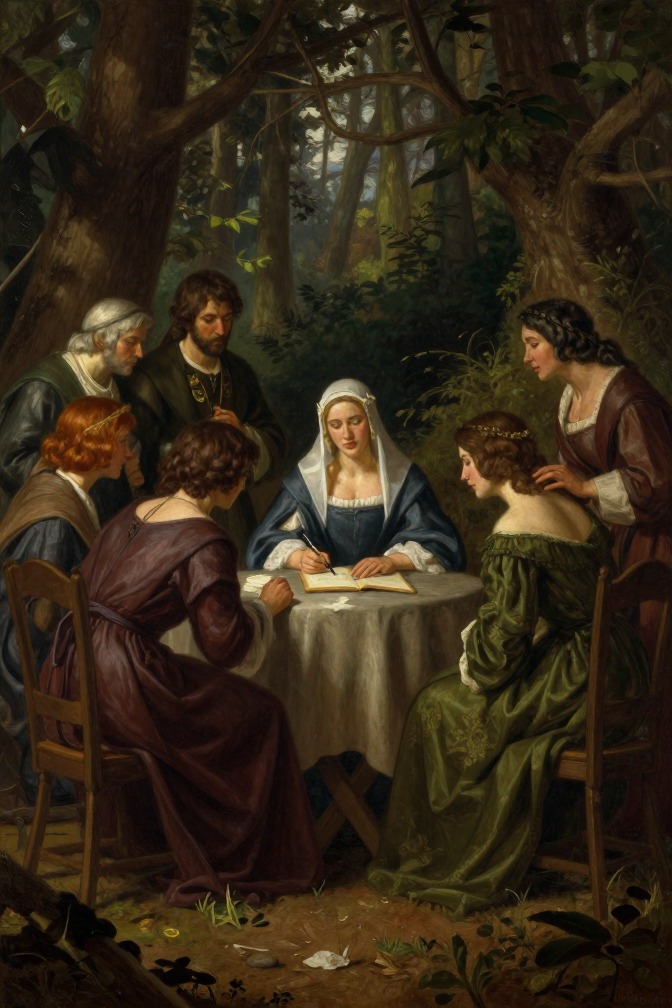
The Forest in Nathaniel Hawthorne's *The Scarlet Letter* is a complex symbolic space that functions as a moral wilderness, a refuge from Puritan society, and a site of truth, passion, and natural law. It stands in stark opposition to the rigid, judgmental town of Boston, offering Hester Prynne and Arthur Dimmesdale a place where they can shed their public identities and confront their authentic selves. The forest is not merely a setting but an active participant in the narrative, embodying the wild, untamed forces of nature and the human heart that the Puritan community seeks to suppress.
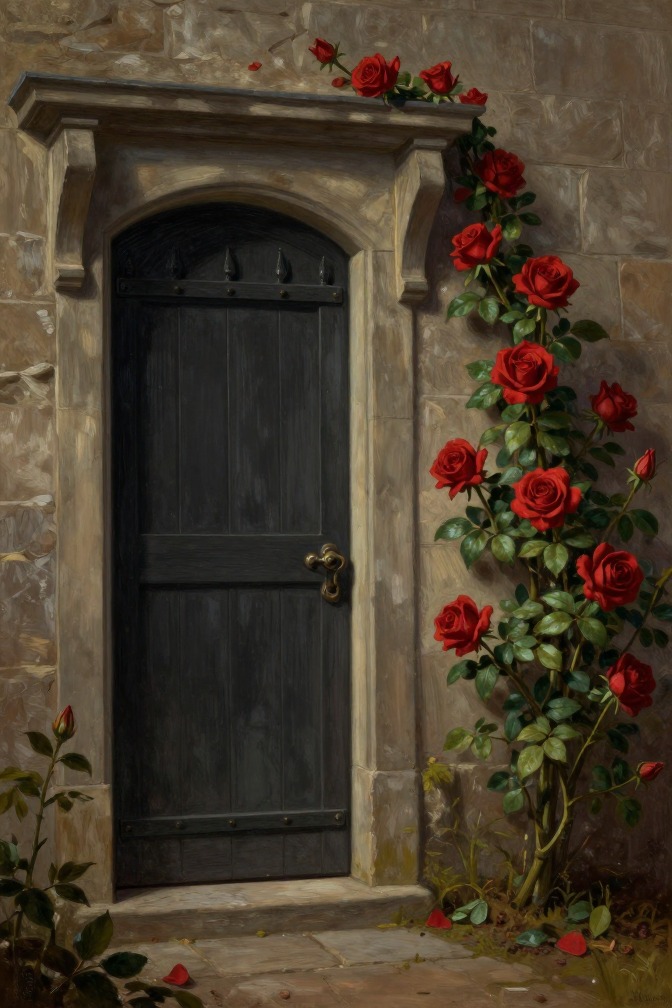
The prison door and the wild rose-bush form the threshold of The Scarlet Letter, establishing the novel's central tension between the harsh, unforgiving legal and moral order of Puritan society and the natural world's capacity for pity, beauty, and grace. The prison, an ugly edifice of iron and oak, represents the black flower of civilization, while the rose-bush, rooted at its threshold, offers a fragile, fragrant token of Nature's kindness to the condemned. This symbolic pairing recurs throughout the narrative, linking the scaffold, the Governor's mansion, the forest, and the meteor-lit sky, and ultimately framing Hester Prynne's scarlet letter as a badge of shame that, like the rose, can be transformed into a symbol of compassion and counsel.
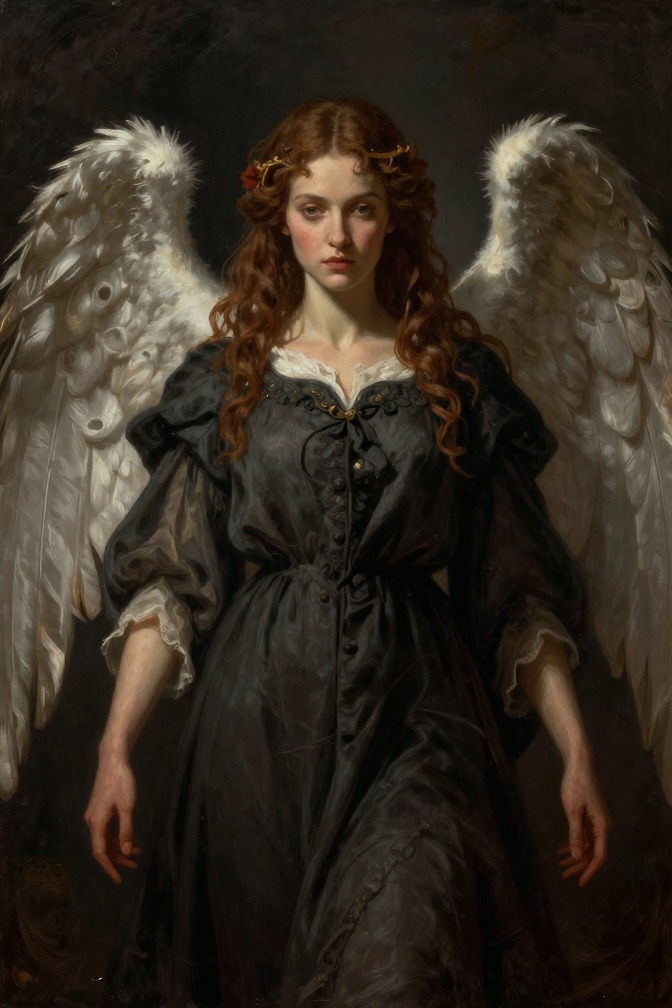
In Nathaniel Hawthorne's The Scarlet Letter, the Angel appears not as a single embodied character but as a recurring image and conceptual figure that marks the boundary between human judgment and divine grace, between the earthly and the celestial. The angelic is invoked to describe the minister Arthur Dimmesdale's perceived holiness, to contrast with the demonic, and to frame the ultimate meaning of the scarlet letter itself. The concept serves as a crucial thematic counterpoint, illuminating the novel's central concerns with sin, hypocrisy, redemption, and the limits of human perception.
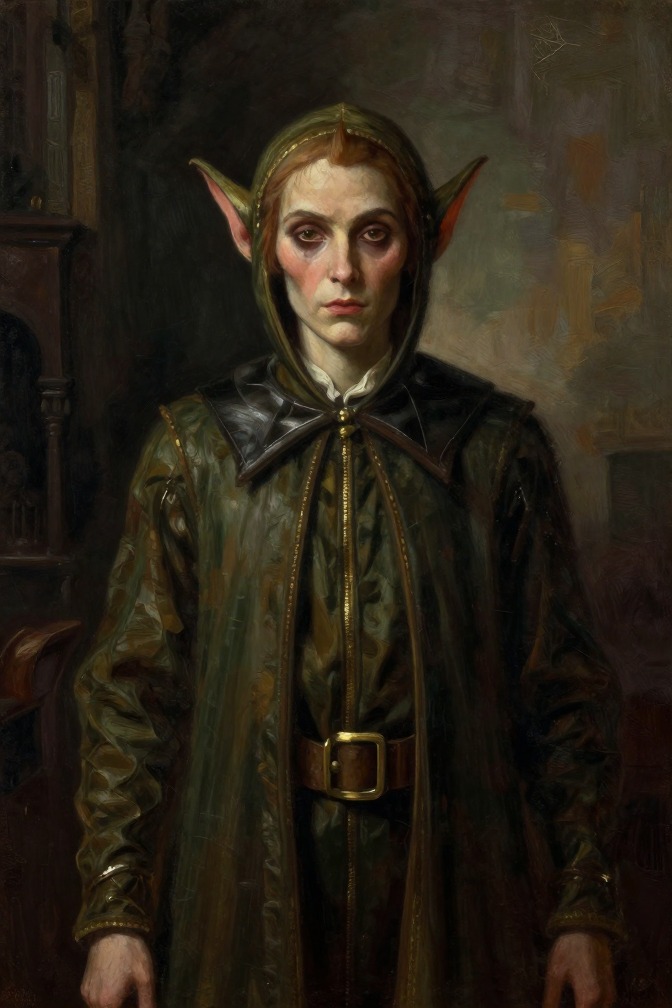
In Nathaniel Hawthorne's The Scarlet Letter, the elf (or sprite) is a recurring conceptual figure used to describe Pearl, the daughter of Hester Prynne. Pearl is repeatedly characterized as an elf-child, an airy sprite, or an elfish being, a designation that captures her otherworldly, capricious, and morally ambiguous nature. This elfish identity serves as a central metaphor for her role as the living embodiment of the scarlet letter, a symbol of sin that is also endowed with a wild, untamable life force. The elf-concept in the novel is not a literal supernatural creature but a narrative device that mediates between the natural and the supernatural, the innocent and the demonic, and the human and the symbolic, ultimately reflecting the novel's deep engagement with the ambiguity of sin, identity, and social ostracism.
In Nathaniel Hawthorne's *The Scarlet Letter*, the Fairy is a recurring figure of speech and imaginative reference, used to describe the elusive, otherworldly, and morally ambiguous qualities of the child Pearl, and to frame the symbolic and aesthetic dimensions of the scarlet letter itself.
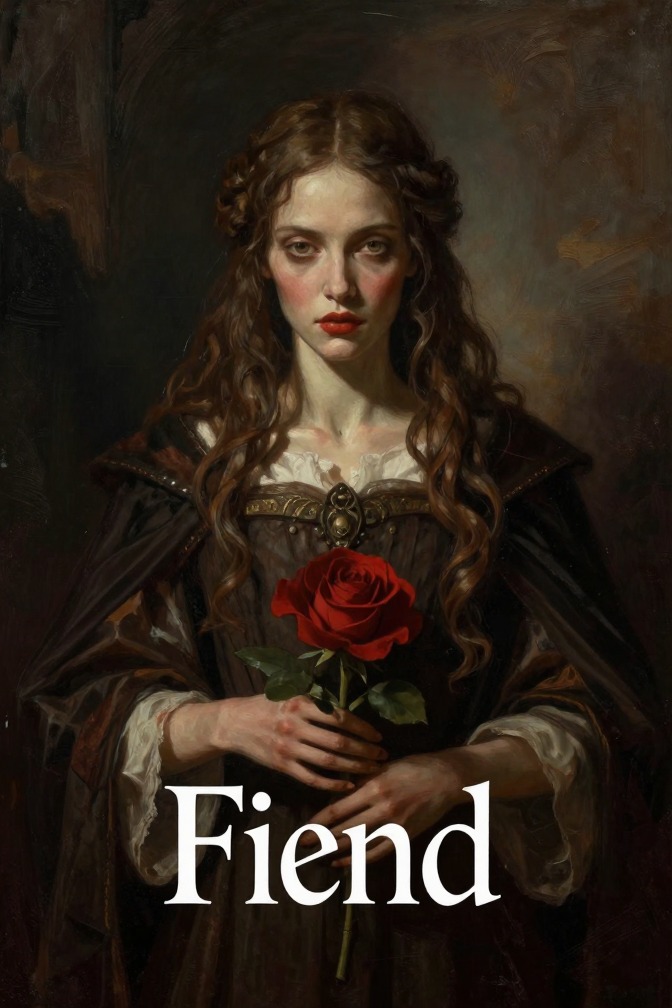
The Fiend in Nathaniel Hawthorne's *The Scarlet Letter* is not a literal demon but a pervasive symbolic presence that embodies the psychological and spiritual torment of hidden sin, manifesting through the characters' guilt, the narrative's Gothic atmosphere, and the community's superstitious imagination.
The Five-finger, or starfish, is a minor but symbolically resonant creature in Nathaniel Hawthorne's The Scarlet Letter, appearing only once in a brief but vivid description of Pearl's seaside play. It serves as a marker of Pearl's wild, untamed nature and her connection to the natural world, contrasting with the rigid Puritan society that surrounds her.
The partridge appears briefly in the forest scene of The Scarlet Letter as a protective mother bird whose encounter with Pearl illustrates the child's wild, untamed nature and her kinship with the natural world.
The Wolf appears briefly but symbolically in Nathaniel Hawthorne's The Scarlet Letter, as a creature of the wild forest that recognizes a kindred wildness in the child Pearl, and as a figure in the minister Arthur Dimmesdale's self-tormenting visions.
The Forest Meeting is the pivotal scene in which Hester Prynne and Arthur Dimmesdale reunite in the wilderness, confess their hidden truths, and plan to flee Boston together, marking a decisive turn in their relationship and the novel's moral trajectory.
The Black Man is a figure of diabolical temptation in the folklore of Puritan New England, invoked throughout The Scarlet Letter as a symbol of secret sin, damnation, and the forest's lawless power. He appears not as a character but as a pervasive cultural myth—a dark tempter who roams the woods with a great book in which sinners sign their names with their own blood, leaving an indelible mark upon their bosoms. The novel uses this figure to dramatize the characters' inner guilt, their fear of exposure, and the boundary between public righteousness and hidden transgression.
The Prince of the Air is a folkloric epithet for Satan used in the Puritan community of The Scarlet Letter, invoked by Mistress Hibbins and repeated by Pearl to express the child's supposed demonic lineage and her defiant, otherworldly nature.