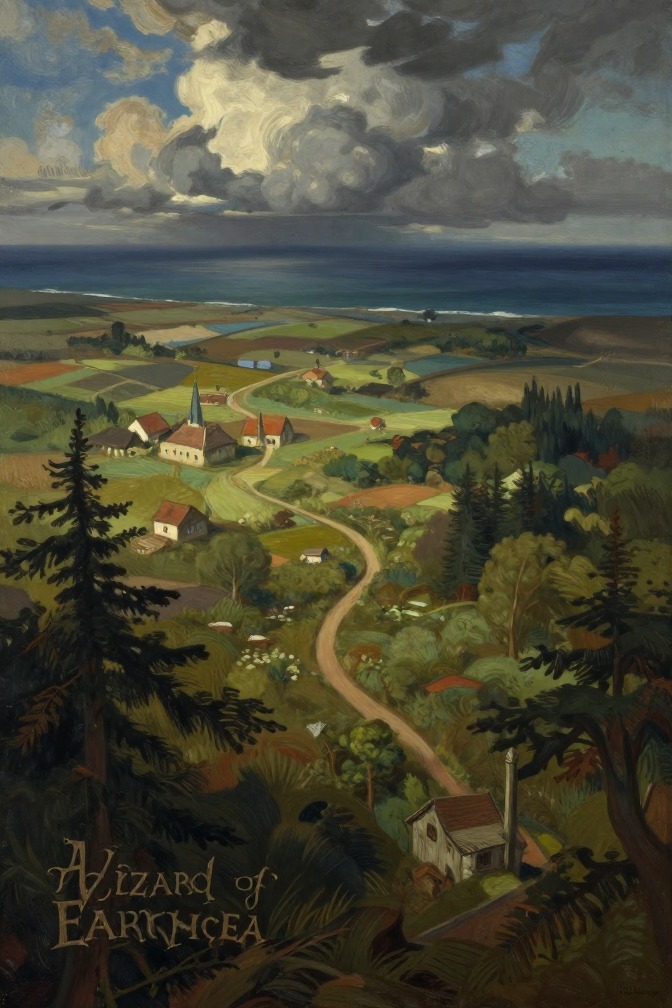
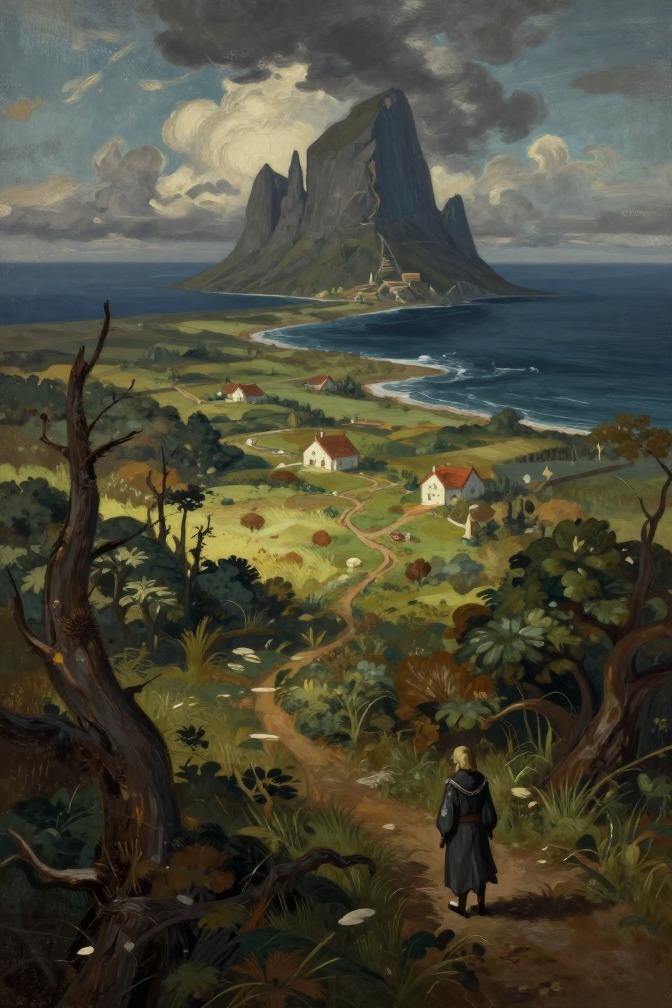
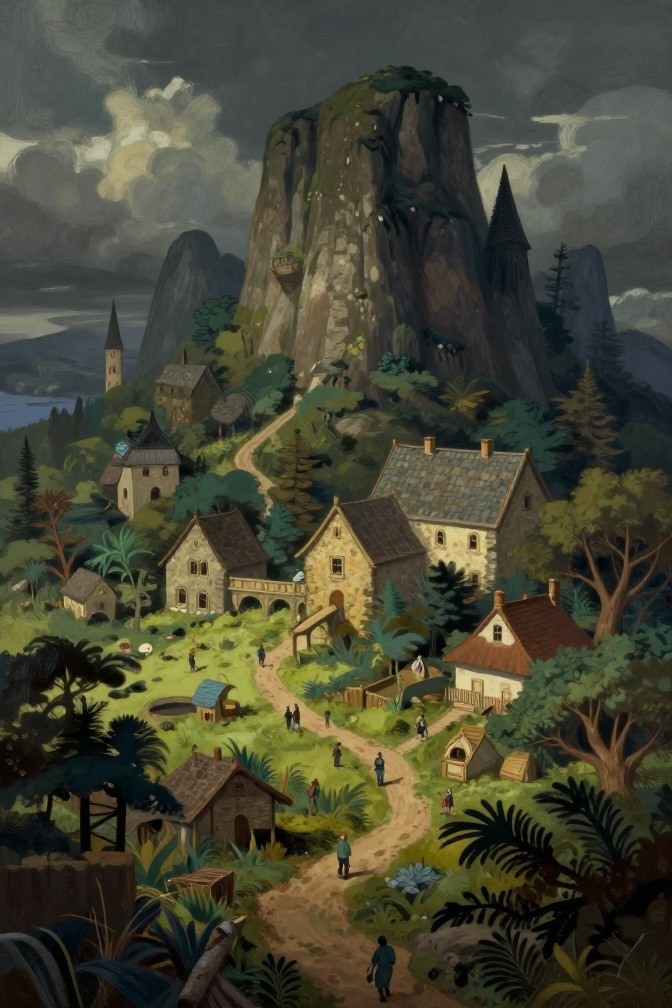
The Inmost Sea is the central body of water in Earthsea, the heart of the Archipelago and the site of Roke Island, the Isle of the Wise. It is the sea around which the known world is organized, a place of crowded trade routes, powerful enchantments, and the ultimate boundary between the civilized inner lands and the wild, unknown Outer Reaches. Its waters are the setting for Ged's journey to the School for Wizards, his return from the dragon's isle, and the final confrontation with his shadow, marking it as both a literal and symbolic center of the world's balance.
The Osskil Sea is the cold, northeastern sea separating the island of Osskil from the Archipelago, a bitter and treacherous body of water that serves as a threshold to the alien, dark-magic lands of the Kargad Empire and a key setting for Ged's flight from the shadow.
Selidor is a remote, myth-haunted island in the uttermost West Reach of Earthsea, the site of the legendary final battle between the hero Erreth-Akbe and the dragon Orm, whose bones lie mingled on its shore. It represents the farthest edge of the known world, a place of ultimate confrontation and sacrifice, and its name echoes through the songs and deeds of the Archipelago as a symbol of the boundary between the mortal realm and the unknown.
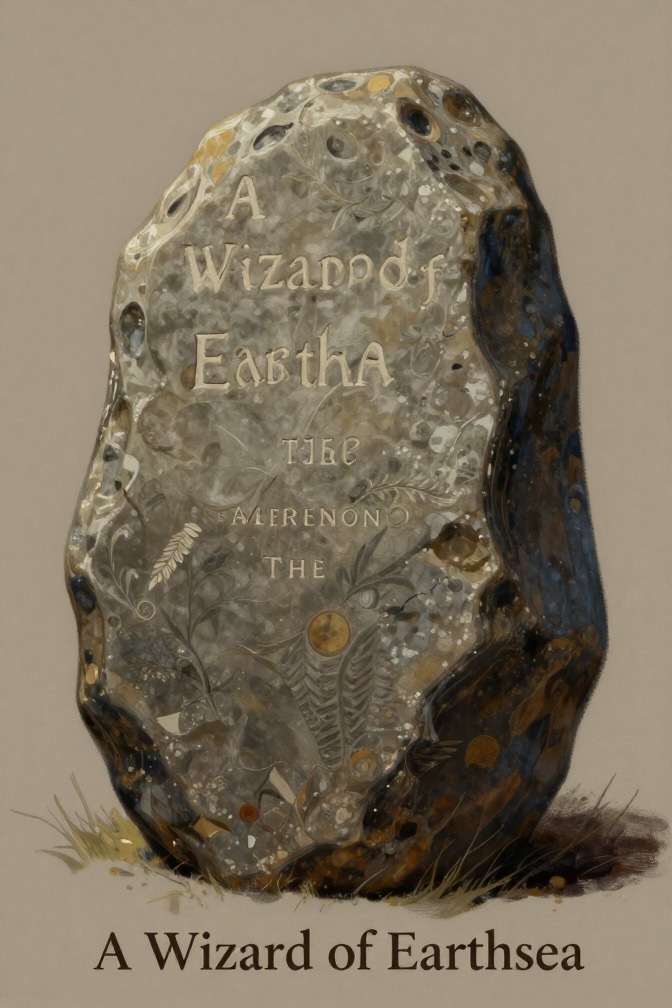
The Terrenon stone is an ancient, malevolent Old Power of Earth, imprisoned in a rough stone block at the heart of the Court of the Terrenon in Osskil. It is a speaking stone that knows all births, deaths, and beings, and it can answer questions according to the power of the one who asks, but it works only ruin when used by men. It serves as the central lure and trap in Ged's journey, nearly enslaving him through the temptations of Serret and Benderesk, and it embodies the dark, earth-bound evil that Ged must resist to pursue his true quest.
Yossarian moves the bomb line during the Great Big Siege of Bologna, a desperate act of sabotage that temporarily cancels the mission and reveals the absurdity of the military bureaucracy.
Major Danby is the group operations officer for Colonel Cathcart's bomb group, a nervous, well-meaning, and fundamentally decent man caught between his own moral instincts and his duty to obey his superiors. He is a tragic figure of institutional complicity, whose persistent anxiety and physical trembling reflect the impossible position of a humane person serving a corrupt and murderous command.
The Girl Who Hit Orr with a Shoe is a minor but recurring figure in Joseph Heller's Catch-22, a tall, strapping prostitute in the Roman brothel who, for reasons that remain deliberately obscure for most of the novel, repeatedly attacks Orr by striking him on the head with the spiked heel of her shoe. Her violent, inexplicable actions serve as a running gag, a symbol of Orr's eccentric resilience, and, ultimately, a key to understanding Orr's elaborate, secret plan to escape the war by rowing to Sweden.
The Man Beating Dog is a minor but symbolically charged figure who appears in the Eternal City chapter of Catch-22, embodying the arbitrary, sadistic cruelty that pervades the world Yossarian traverses during his nightmarish walk through Rome. His act of beating a helpless dog with a heavy stick, witnessed by a passive crowd, crystallizes the novel's theme of gratuitous violence and the failure of bystanders to intervene, serving as a visceral emblem of the mob rule and moral collapse that define the wartime society Heller satirizes.
The Barrens is a tangled, overgrown tract of land in Derry, Maine, formed by the Kenduskeag Stream and its tributaries. It serves as the central refuge and playground for the Losers' Club, a place where they build a dam, construct a hidden clubhouse, and ultimately confront the entity known as It. The Barrens is a liminal space, both a sanctuary from the town's bullies and a gateway to the subterranean horror beneath Derry.
The Canal is the concrete-lined channel of the Kenduskeag Stream that runs through downtown Derry, Maine. It serves as both a central geographical feature of the town and a primary conduit for the ancient, malevolent entity known as It. From the murder of George Denbrough in 1957 to the death of Adrian Mellon in 1984 and the final confrontation in 1985, the Canal and its associated storm drains and sewers function as the creature's hunting ground, feeding place, and highway beneath the city. Its waters, polluted by sewage and mill waste, carry the bodies of victims and the echoes of the monster's taunts, making it a symbol of Derry's hidden, systemic horror.
The Dump is a central location in Derry, Maine, serving as the town's waste disposal site and a key setting for several pivotal events in the Losers' Club's summer of 1958. Located at the edge of the Barrens, it is a place of rot, smoke, and discarded objects, where the children practice with their slingshot, encounter the monstrous entity It, and witness the death of Patrick Hockstetter. The Dump represents the town's physical and moral refuse, a liminal space where the ordinary rules of Derry's society break down and the supernatural intrudes directly into the children's lives.
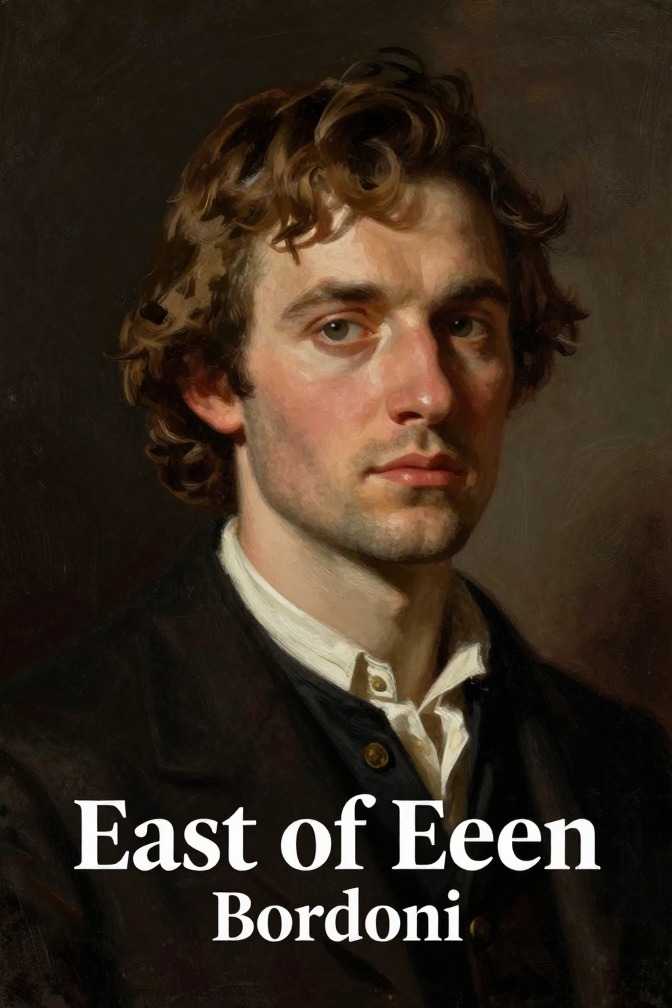
Bordoni is the Swiss-Italian owner of the former Sanchez grant, a nine-hundred-acre ranch south of King City, from whom Adam Trask buys the land that becomes the Trask ranch. He is a childless widower who, after his wife's death, longs to return to his Alpine homeland and uses a detached, unhurried selling method that draws Adam into the purchase. His presence in the novel marks the transfer of the old Spanish land grant into American hands and establishes the physical setting for the Trask family's life in the Salinas Valley.
The Monster is a central concept in John Steinbeck's East of Eden, representing individuals born without the capacity for kindness, conscience, or moral choice. The novel's primary example is Cathy Ames, whose physical beauty masks a profound inner emptiness, making her a figure of pure, unthinking evil that serves as a foil to the human struggle for goodness.
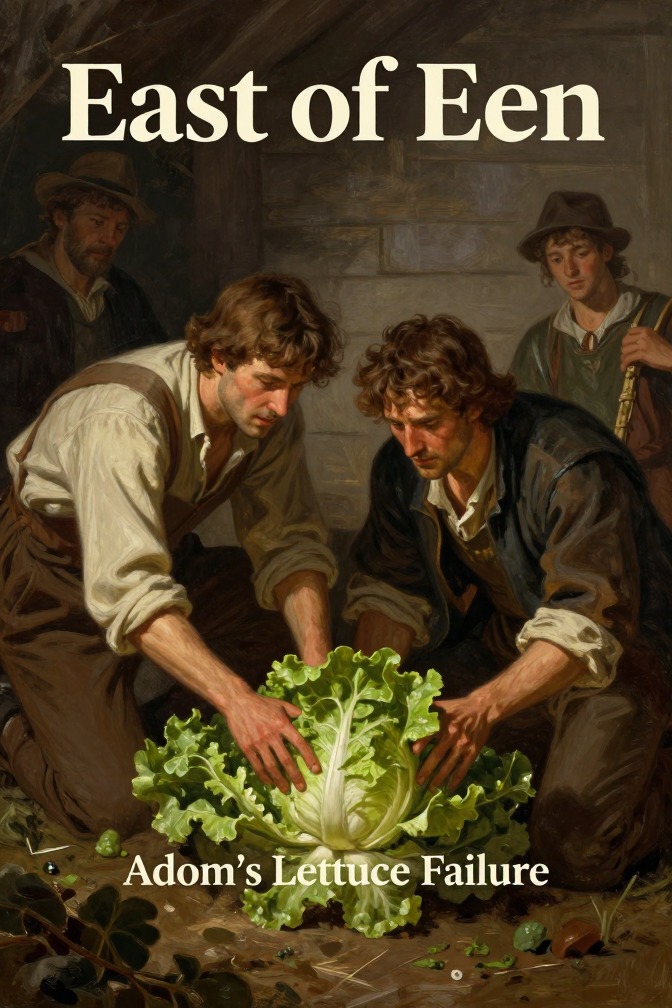
Adam Trask's ambitious attempt to ship fresh lettuce from the Salinas Valley to New York in the winter of 1915 ends in a spectacular financial disaster, stripping him of nearly all his inherited wealth and exposing him to public ridicule, yet paradoxically it becomes the catalyst that forces him out of a decade-long emotional hibernation and sets the stage for his sons' divergent paths.
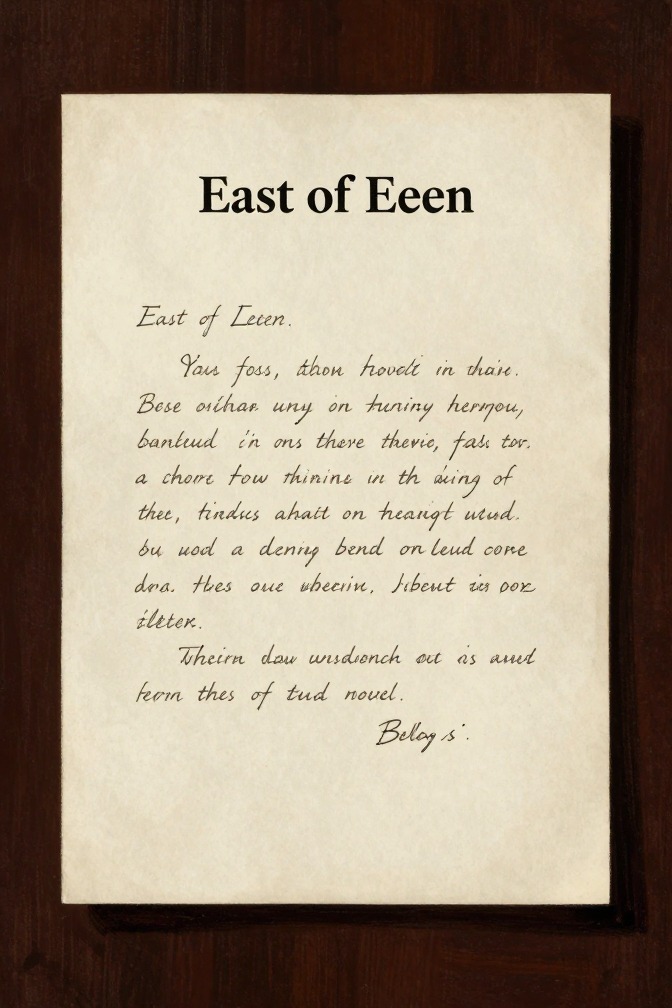
Bellows and Harvey's Letter is the legal document from the Connecticut law firm Bellows and Harvey that informs Adam Trask of his brother Charles Trask's death and of his inheritance of over one hundred thousand dollars, a fortune that forces Adam to confront the unresolved legacy of his father Cyrus's possible dishonesty and the question of whether to share the money with his estranged wife Cathy.
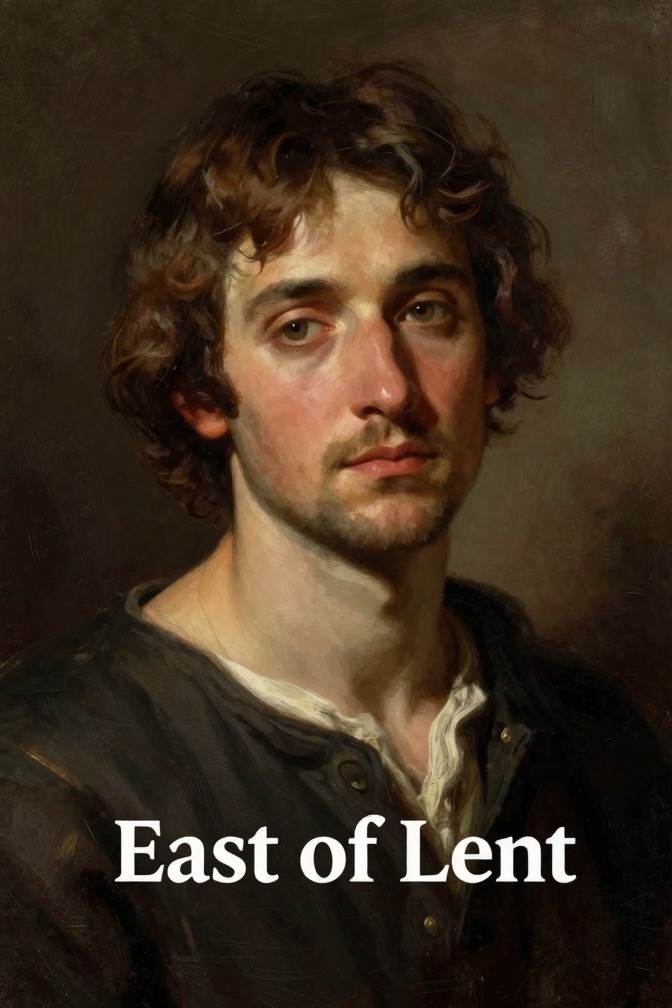
Lent is a season of fasting and penitence observed in the Christian liturgical calendar, and in East of Eden it marks a period of intense religious fervor and sexual repression for Aron Trask, whose conversion to high-church Episcopalianism during this season drives a wedge between him and his fiancée Abra Bacon and deepens his conflict with his brother Cal.
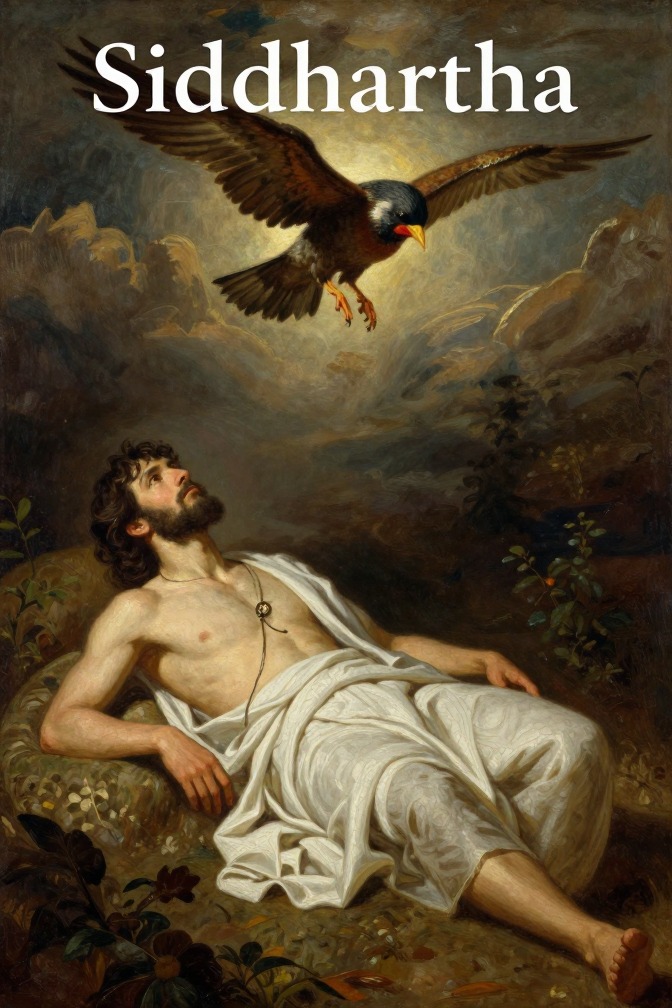
Siddhartha's Dream of the Dead Bird and Departure is the pivotal crisis of the novel's second half, in which a nightmare of a dead songbird in a golden cage crystallizes Siddhartha's accumulated disgust with his worldly life and compels him to abandon his wealth, his city, and his identity as a merchant and lover, setting the stage for his final spiritual transformation.
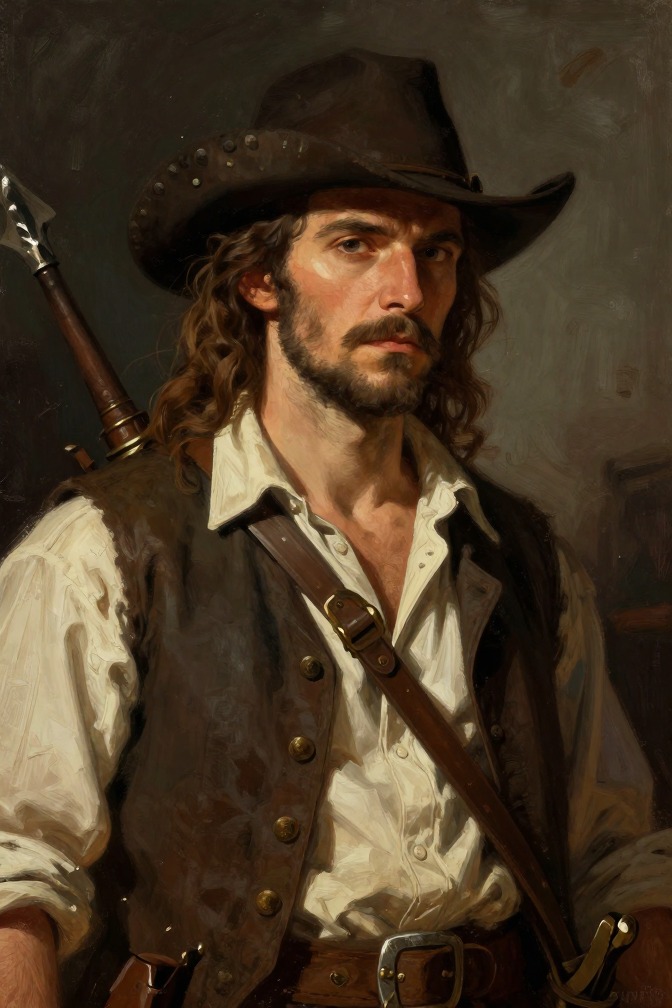
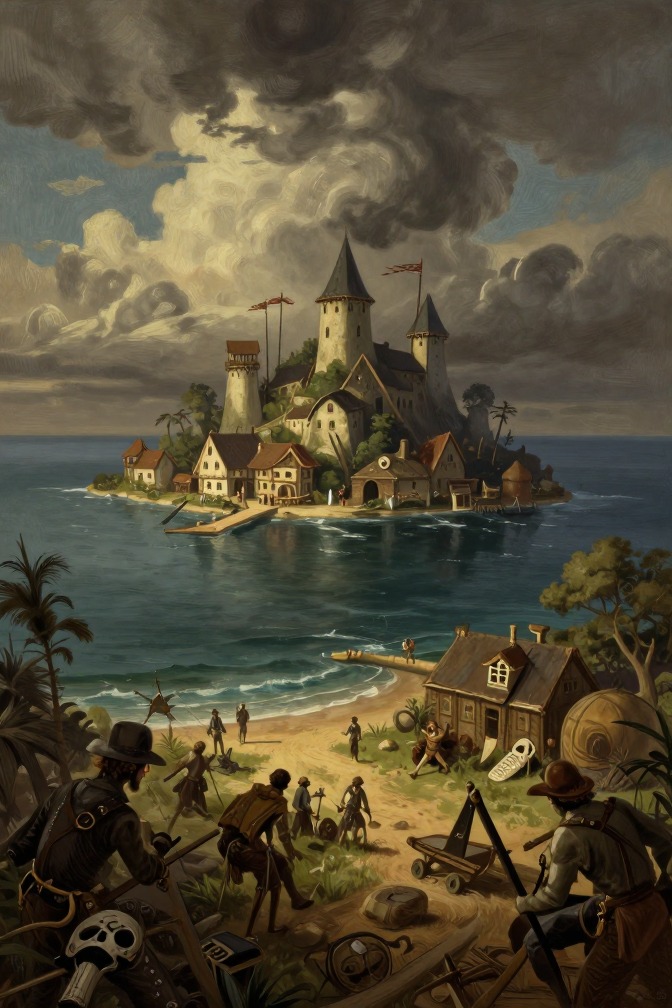
The treasure-hunt on Treasure Island is the climactic expedition of Robert Louis Stevenson's novel, where Long John Silver and his mutineers, guided by Flint's map, march inland to recover the buried fortune, only to find the cache already rifled by Ben Gunn. This event marks the final collapse of the pirates' enterprise, precipitates the ambush that destroys them, and reveals the treasure's true location, leading to the loyal party's triumph and the recovery of the Hispaniola.
Skeleton Island is the small, uninhabited islet that guards the southern anchorage of Treasure Island, serving as a landmark, a source of terror, and a key navigational reference throughout the voyage and the treasure hunt.
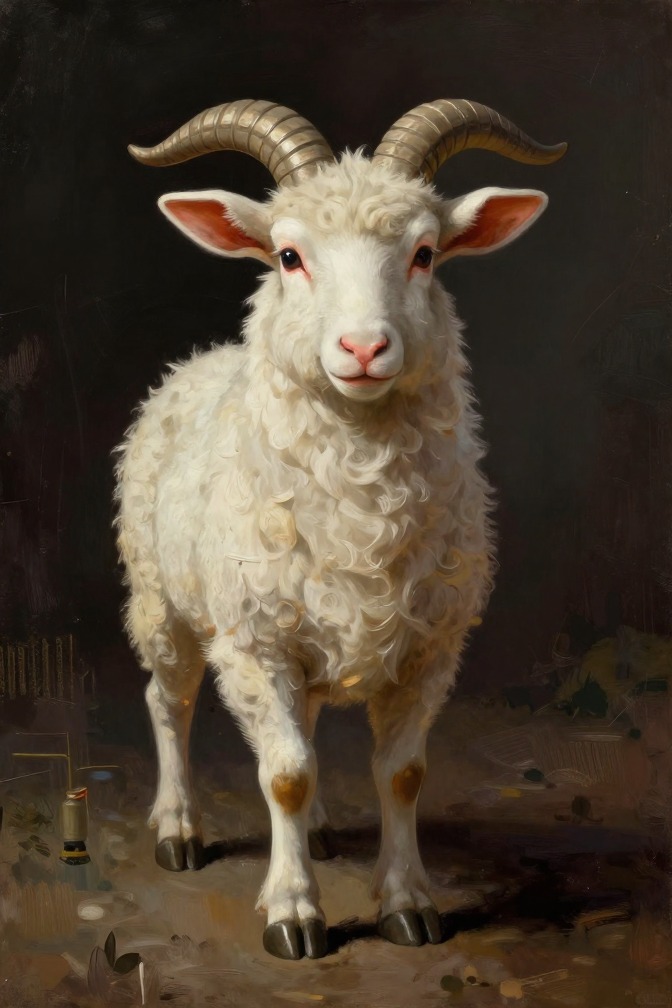
The electric sheep is a sophisticated mechanical replica of a real sheep, owned by Rick Deckard as a socially necessary but personally demoralizing substitute for the living animal he lost. It represents the central tension in the novel between authentic life and convincing simulation, the social pressure to maintain the appearance of animal ownership, and the moral and emotional burden of caring for an object that mimics life without possessing it.
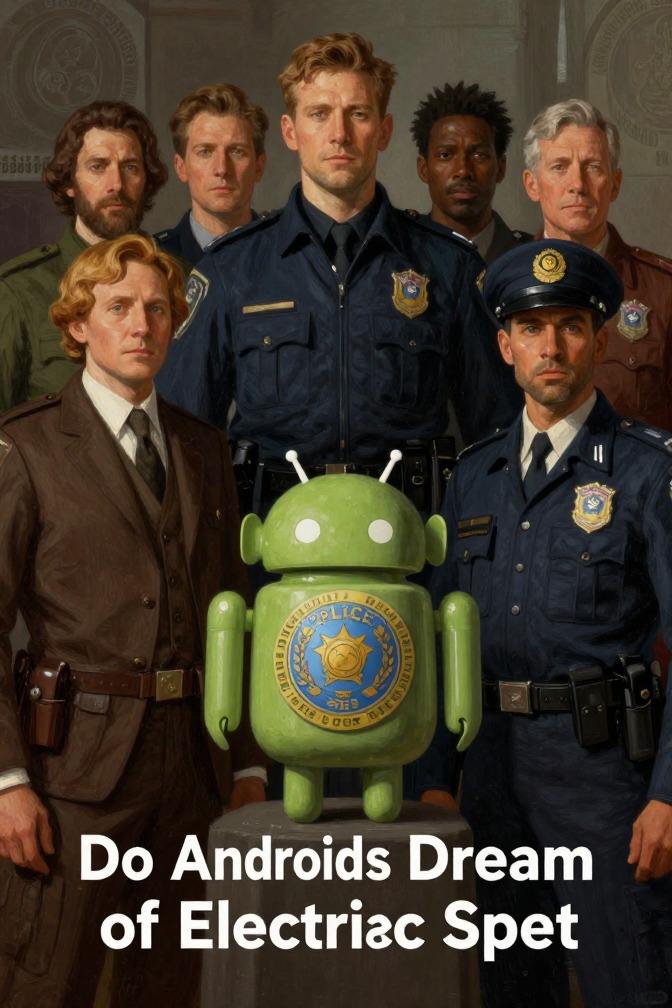
The San Francisco Police Department (SFPD) is the law enforcement agency that employs bounty hunter Rick Deckard, tasked with "retiring" (killing) escaped androids, particularly the advanced Nexus-6 models. The department operates under Inspector Harry Bryant and is the primary institutional force enforcing the legal and moral boundaries between humans and androids on a post-apocalyptic Earth.
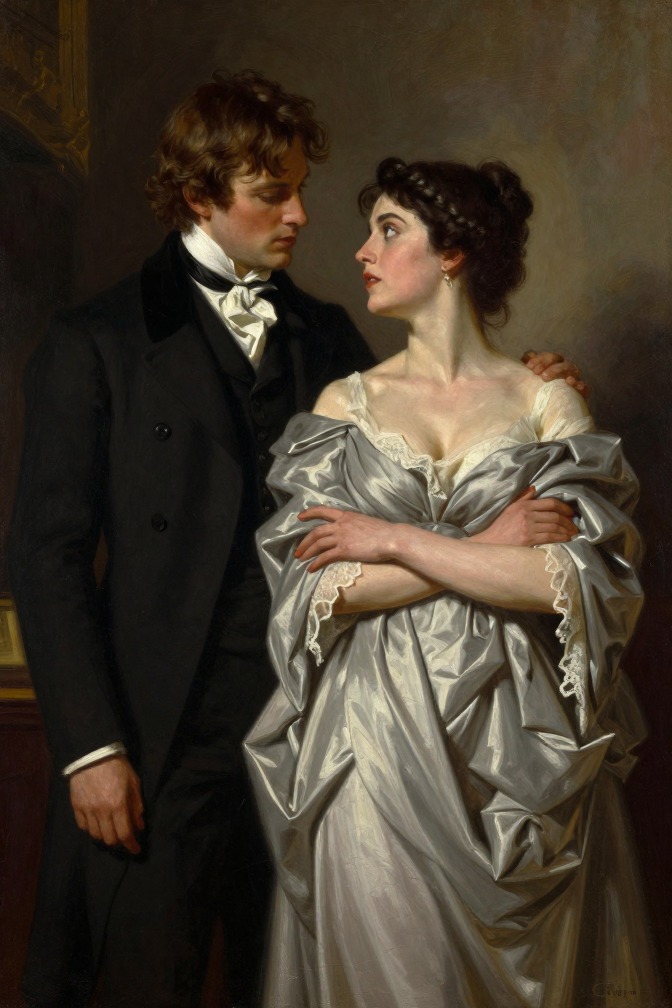
Basil Hallward is the painter of the fatal portrait of Dorian Gray, a gifted artist whose deep, romantic devotion to his subject sets in motion the novel's central tragedy. He is the moral counterweight to Lord Henry Wotton's cynicism, and his murder at Dorian's hands marks the point of no return in the protagonist's descent.
Lady Brandon is a minor but memorable character in Oscar Wilde's *The Picture of Dorian Gray*, a society hostess whose loud, intrusive manner and comically inaccurate introductions serve as a catalyst for the first meeting between Basil Hallward and Dorian Gray, setting the novel's central relationships in motion.
Dorian Gray's rejection of Sibyl Vane is the pivotal moral crisis of the novel, in which he cruelly denounces the actress after her performance fails, triggering her suicide and the first visible change in his portrait, thereby sealing his Faustian bargain.
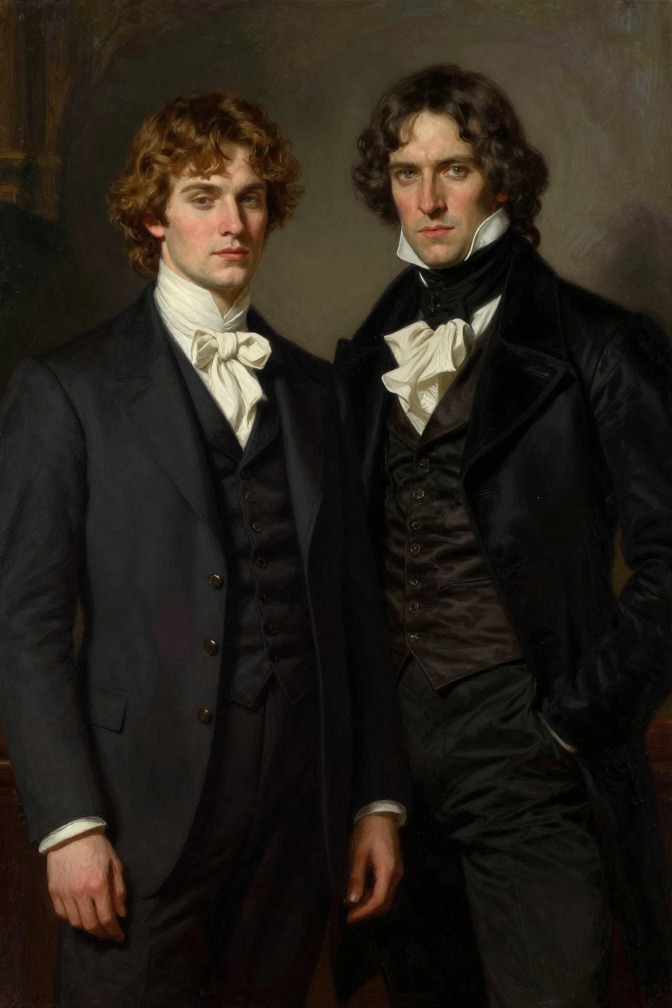
The influence of Lord Henry Wotton on Dorian Gray is the central corrupting force of the novel, a philosophical and psychological seduction that awakens Dorian to the value of his own beauty, instills in him a terror of aging, and replaces his innate moral sense with a hedonistic doctrine of self-development and the pursuit of new sensations. This influence, exerted through Lord Henry's paradoxical and mesmerizing speech, transforms Dorian from an innocent, impressionable youth into a narcissistic and ultimately murderous figure, making Lord Henry the architect of Dorian's spiritual ruin.
Agnes Fleming is the deceased mother of Oliver Twist, a young woman whose tragic story of love, shame, and death forms the hidden emotional and moral core of the novel. Though she dies in the opening chapter, her portrait, her stolen locket, and the mystery of her identity drive the entire plot toward the revelation of Oliver's true parentage and the ultimate resolution of his fortunes.
Bill Sikes is a brutal housebreaker and murderer in Charles Dickens's Oliver Twist, whose violent career culminates in the murder of Nancy and his own accidental hanging during a rooftop escape.
Mr. Giles is the butler and steward of the Maylie household, whose accidental shooting of Oliver Twist during the burglary at Chertsey sets in motion the boy's rescue and integration into the Maylie family. His character embodies the comic gap between self-importance and actual competence, while his evolving relationship with Oliver traces a movement from violent suspicion to protective loyalty.
Gruel is the thin, watery oatmeal porridge that constitutes the sole sustenance for the inmates of the parish workhouse in Charles Dickens's *Oliver Twist*. It is the central object around which the novel's most famous scene—Oliver's request for more—revolves, and it functions as a potent symbol of the Poor Law system's calculated cruelty, designed to starve the poor into submission or death while maintaining a facade of institutional economy.
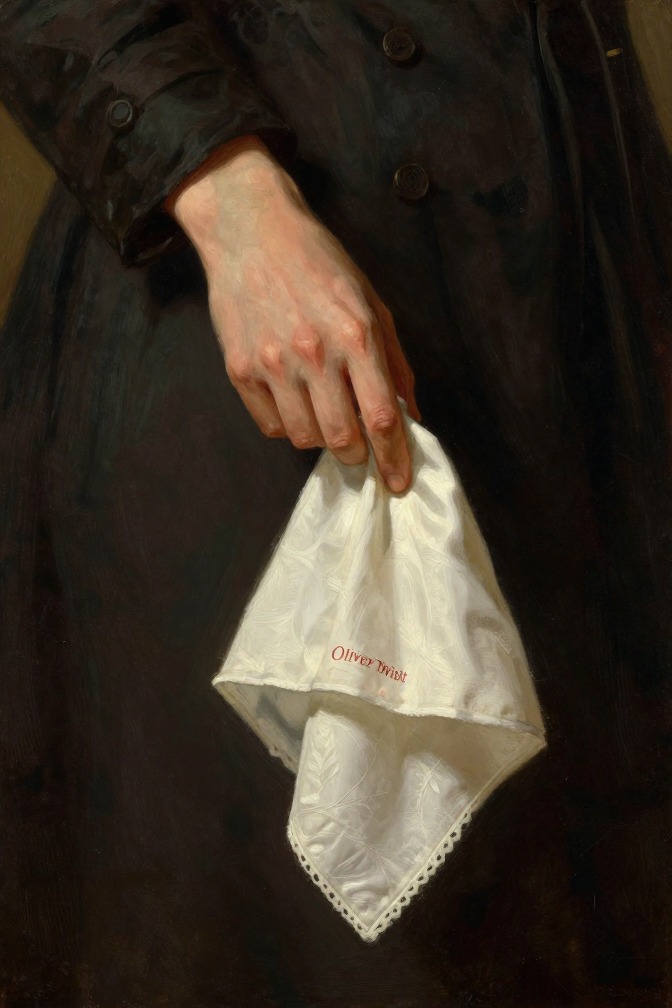
Nancy's handkerchief, a white handkerchief given to her by Rose Maylie, becomes a powerful symbol of Nancy's desperate bid for redemption and her violent death. It is the only physical token of the compassion she receives from the outside world, and in her final moments, she clutches it as a prayer for mercy, transforming it into a silent witness to her murder and a poignant emblem of her tragic fate.