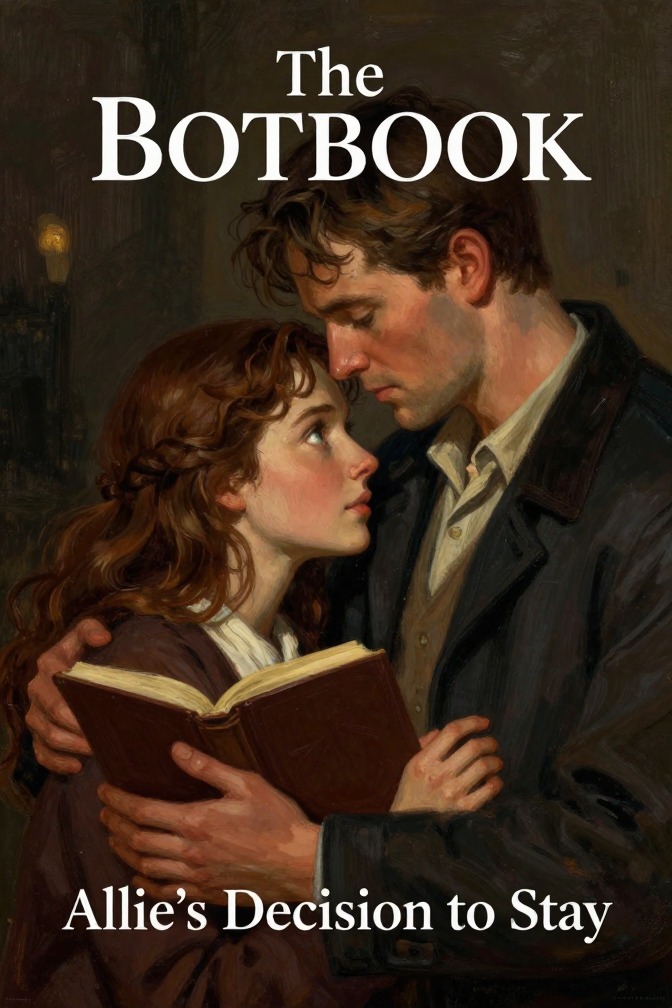
Allie's Decision to Stay is the pivotal event in The Notebook where Allie Nelson, engaged to Lon Hammond Jr., chooses to remain with Noah Calhoun after a three-week separation, defying her mother's earlier interference and the social class barriers that once divided them. This decision, made after a stormy reunion and a confrontation with her fiancé, resolves the novel's central romantic conflict and sets the course for a lifelong marriage, ultimately becoming the foundation of the story Noah reads to Allie in her old age.
Frieda is a pivotal character in Kafka's The Castle, a former barmaid at the Castle Inn and Klamm's lover who becomes K.'s fiancée, only to leave him for the assistant Jeremias. Her arc traces the collision between the castle's hierarchical world and K.'s quest for recognition, embodying themes of desire, betrayal, and the impossibility of escape.
Rahim Khan's revelation is the pivotal disclosure that Hassan was not Ali's biological son but Baba's, making Hassan Amir's half-brother. This truth, revealed in Peshawar in June 2001, shatters Amir's understanding of his past, his father, and his own identity, and sets him on a path to redeem his betrayals by rescuing Hassan's orphaned son, Sohrab.
Nang and namoos (honor and pride) is the foundational code of Pashtun male identity in The Kite Runner, a rigid social framework that governs public reputation, family chastity, and the obligation to defend both through action. The code drives Baba’s lifelong concealment of Hassan as his son, General Taheri’s obsessive guarding of Soraya’s reputation, and the community’s double standard that punishes women for sexual transgression while excusing men. It also shapes Amir’s internal conflict: his failure to live up to this code in the alley becomes the central wound of his life, and his eventual willingness to risk his life for Sohrab represents a belated, personal reclamation of honor on his own terms.
Ivan Nikolaevich Ponyrev, who writes under the pseudonym Homeless, is a poet and a member of the Massolit literary association. He is the first major character introduced in the novel and undergoes a profound transformation from a dogmatic Soviet poet to a tormented witness of supernatural truth, ultimately becoming a disciple of the Master and a historian haunted by the spring full moon.
Koroviev, also known as Fagott and the Checkered One, is a key member of Woland's demonic retinue in The Master and Margarita. He serves as an interpreter, trickster, and master of ceremonies, orchestrating many of the novel's most spectacular and satirical events, from the black magic seance at the Variety Theatre to the haunting of Nikanor Ivanovich Bosoy. His character embodies the carnivalesque spirit of the novel, blending buffoonery with menace, and his actions consistently expose the hypocrisy and corruption of Soviet society.
Mark Ratslayer is a Roman centurion in Pontius Pilate's service, distinguished by his immense height, disfigured face, and brutal efficiency. He appears as the enforcer of Roman authority, first beating Yeshua Ha-Nozri into submission and later commanding the execution on Bald Mountain. His character embodies the physical and moral violence of the empire, yet his own history of suffering—maimed by Germanic warriors—complicates any simple judgment of him as merely evil.
The Master is the unnamed, reclusive author of a novel about Pontius Pilate and Yeshua Ha-Nozri, whose work is rejected by the Soviet literary establishment, leading to his mental breakdown, confinement in a psychiatric clinic, and eventual supernatural release into an eternal refuge with his beloved Margarita.
The dove appears as a recurring motif in The Master and Margarita, most notably during Pontius Pilate's interrogation of Yeshua Ha-Nozri, where its flight across the colonnade marks the moment a decisive formula takes shape in the procurator's mind. The bird's presence also punctuates the opening scene at the Patriarch's Ponds and echoes through the novel's symbolic landscape, linking the ancient and contemporary narratives through a shared image of fragile, fleeting life.
Sairy Wilson is a frail, dying woman traveling west with her husband Ivy Wilson, whose quiet dignity, selfless generosity, and profound understanding of human connection make her a brief but luminous presence in the Joads' journey. Though her body is ravaged by illness, she offers the Joads her tent for Grampa's deathbed, her quilt for his shroud, and her Bible page for his epitaph; she later asks Jim Casy for a prayer not as a religious rite but as a way to feel the closeness she once knew when she sang. Her death is anticipated by everyone but Ivy, and her final gift to the Joads is the model of a grace that asks for nothing in return.
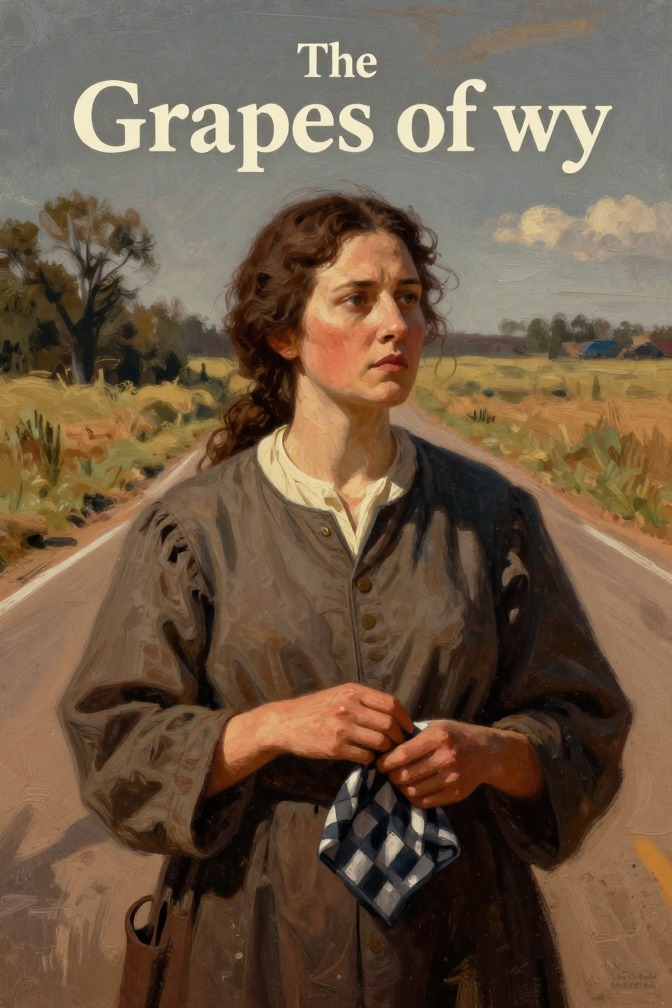
The mother road is the name given to U.S. Highway 66 in John Steinbeck's The Grapes of Wrath, the main migrant road that carries dispossessed Dust Bowl families from Oklahoma to California. It is the central artery of the Joads' journey and the symbolic spine of the novel, representing both the promise of escape and the grinding reality of displacement.
Eugenia Antonucci is the secretary of Ignazio Busoni, the director of the Museo dell’Opera del Duomo, who plays a brief but crucial role in the narrative by relaying Busoni’s dying message to Robert Langdon. Her actions—preserving and then sharing a voicemail from the deceased Busoni—provide Langdon with the vital clue “Paradise Twenty-five,” which ultimately guides him toward the hidden Dante death mask and the next stage of his quest.
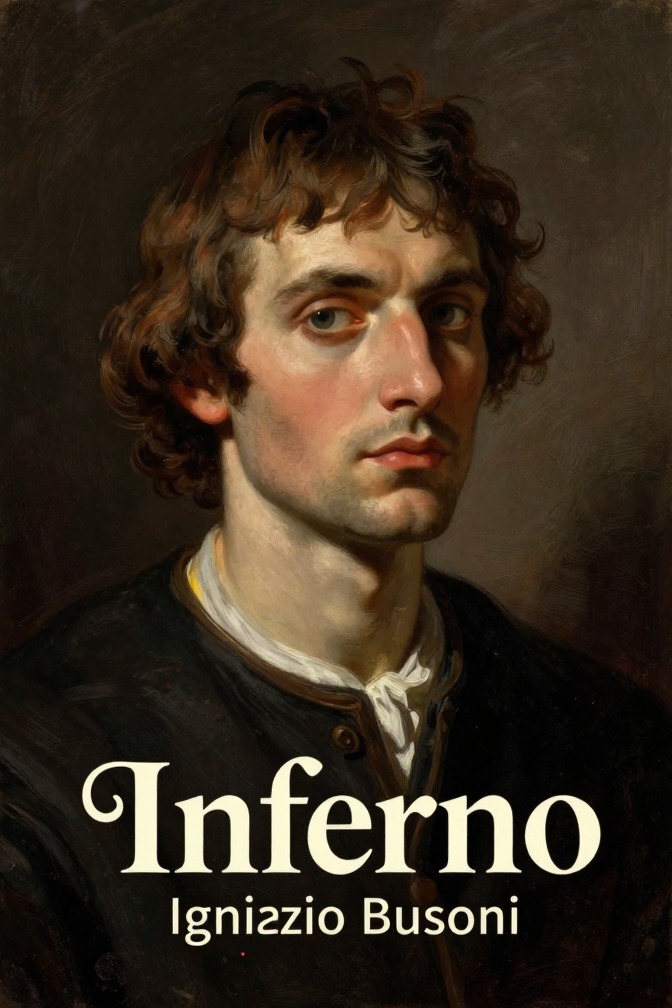
Ignazio Busoni, the jovial and corpulent director of the Museo dell'Opera del Duomo, is a pivotal figure in the early stages of the crisis. Known affectionately as "il Duomino" for his passion for Florence's cathedral and his own considerable girth, he is a Dante scholar and a trusted acquaintance of Robert Langdon. His actions on the night of his death—aiding Langdon in the theft of Dante's death mask from the Palazzo Vecchio—set the entire treasure hunt in motion, and his dying message provides the crucial clue that guides Langdon toward the final location of Zobrist's plague.
Laurence Knowlton is a senior facilitator aboard The Mendacium, the Consortium's mobile command vessel, who is tasked with preparing Bertrand Zobrist's video for global media release. His growing unease with the video's content and his eventual breach of protocol to alert the provost mark him as a key figure in the Consortium's internal crisis, embodying the tension between institutional loyalty and moral conscience.
The Provost is the enigmatic, deeply tanned leader of the Consortium, a secretive organization that provides covert services—including safe havens and disinformation—to powerful clients. His rigid adherence to two golden rules—never break a promise and never lie to a client—drives the plot's central crisis when he accepts Bertrand Zobrist as a client, unwittingly enabling the creation of a sterility plague. The Provost's moral framework, built on compartmentalization and non-judgment, ultimately collapses when he views Zobrist's video, forcing him to break his own protocol and ally with his adversary, Elizabeth Sinskey, in a desperate attempt to avert global catastrophe.
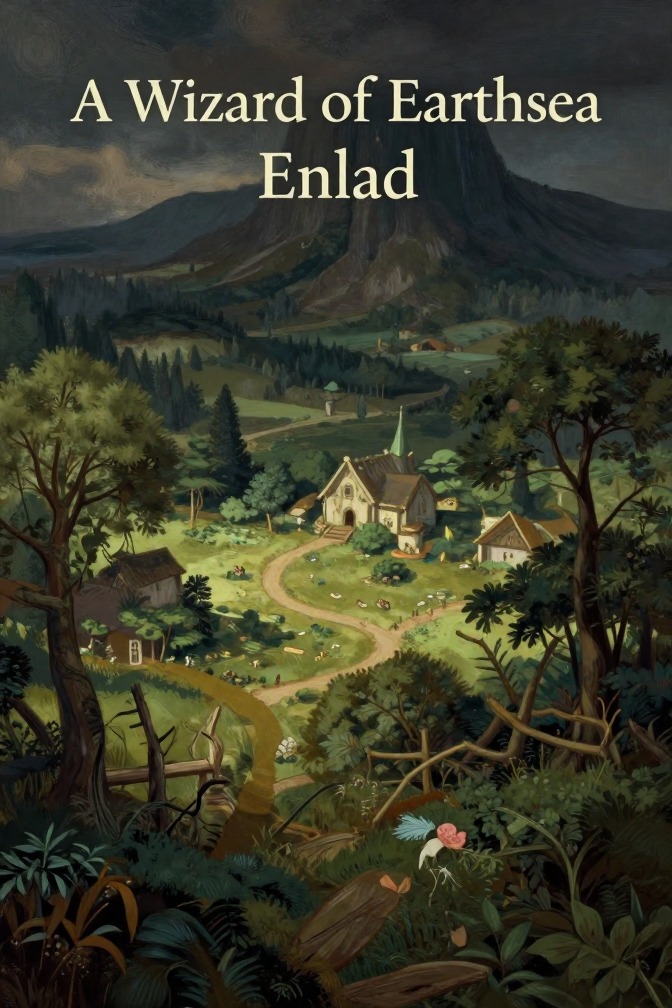
Enlad is a myth-haunted island in the Archipelago of Earthsea, central to the history of the Kargad Empire's invasions and the setting of the ancient Deed of Enlad, which tells of the love of Morred and Elfarran and the island's subsequent ruin.
Hort Town is a lawless port in the South Reach of Earthsea, notorious for its slave trade and criminal traffic, and serves as the destination Ged would have been taken to had the ship Shadow failed to reach Roke Island during a storm.
The Inmost Sea is the central body of water in Earthsea, the heart of the Archipelago and the site of Roke Island, the Isle of the Wise. It is the sea around which the known world is organized, a place of crowded trade routes, powerful enchantments, and the ultimate boundary between the civilized inner lands and the wild, unknown Outer Reaches. Its waters are the setting for Ged's journey to the School for Wizards, his return from the dragon's isle, and the final confrontation with his shadow, marking it as both a literal and symbolic center of the world's balance.
The Osskil Sea is the cold, northeastern sea separating the island of Osskil from the Archipelago, a bitter and treacherous body of water that serves as a threshold to the alien, dark-magic lands of the Kargad Empire and a key setting for Ged's flight from the shadow.
Selidor is a remote, myth-haunted island in the uttermost West Reach of Earthsea, the site of the legendary final battle between the hero Erreth-Akbe and the dragon Orm, whose bones lie mingled on its shore. It represents the farthest edge of the known world, a place of ultimate confrontation and sacrifice, and its name echoes through the songs and deeds of the Archipelago as a symbol of the boundary between the mortal realm and the unknown.
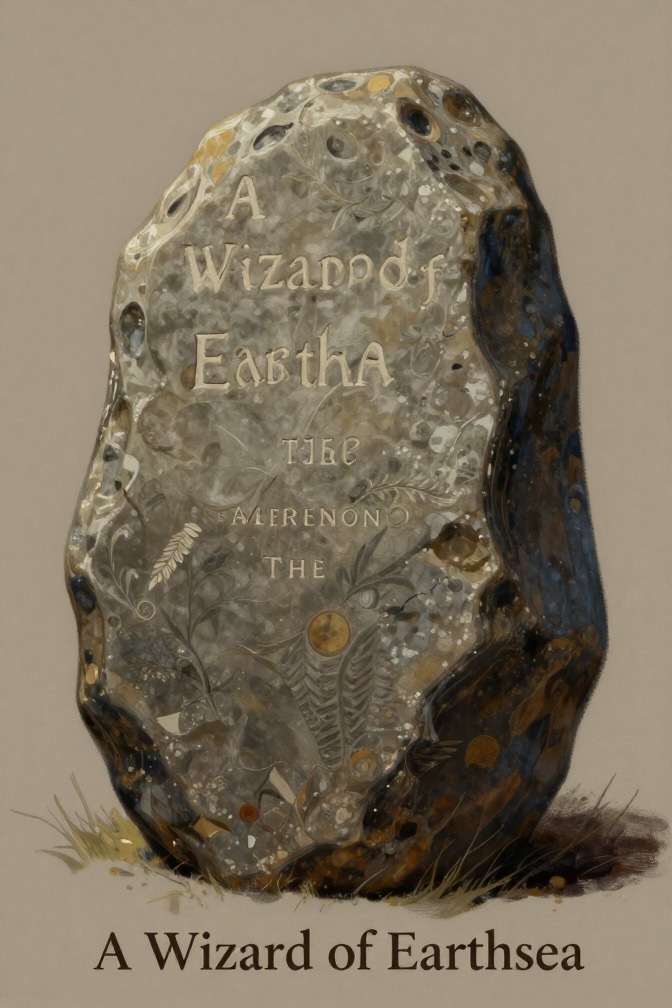
The Terrenon stone is an ancient, malevolent Old Power of Earth, imprisoned in a rough stone block at the heart of the Court of the Terrenon in Osskil. It is a speaking stone that knows all births, deaths, and beings, and it can answer questions according to the power of the one who asks, but it works only ruin when used by men. It serves as the central lure and trap in Ged's journey, nearly enslaving him through the temptations of Serret and Benderesk, and it embodies the dark, earth-bound evil that Ged must resist to pursue his true quest.
Yossarian moves the bomb line during the Great Big Siege of Bologna, a desperate act of sabotage that temporarily cancels the mission and reveals the absurdity of the military bureaucracy.
Major Danby is the group operations officer for Colonel Cathcart's bomb group, a nervous, well-meaning, and fundamentally decent man caught between his own moral instincts and his duty to obey his superiors. He is a tragic figure of institutional complicity, whose persistent anxiety and physical trembling reflect the impossible position of a humane person serving a corrupt and murderous command.
The Girl Who Hit Orr with a Shoe is a minor but recurring figure in Joseph Heller's Catch-22, a tall, strapping prostitute in the Roman brothel who, for reasons that remain deliberately obscure for most of the novel, repeatedly attacks Orr by striking him on the head with the spiked heel of her shoe. Her violent, inexplicable actions serve as a running gag, a symbol of Orr's eccentric resilience, and, ultimately, a key to understanding Orr's elaborate, secret plan to escape the war by rowing to Sweden.
The Man Beating Dog is a minor but symbolically charged figure who appears in the Eternal City chapter of Catch-22, embodying the arbitrary, sadistic cruelty that pervades the world Yossarian traverses during his nightmarish walk through Rome. His act of beating a helpless dog with a heavy stick, witnessed by a passive crowd, crystallizes the novel's theme of gratuitous violence and the failure of bystanders to intervene, serving as a visceral emblem of the mob rule and moral collapse that define the wartime society Heller satirizes.
Yossarian and Hungry Joe share a relationship defined by mutual incomprehension, inverted responses to danger, and a grim camaraderie born of shared terror. Hungry Joe, a photographer who has flown six combat tours, suffers nightly screaming nightmares when not flying and is calm only when on combat duty; Yossarian, who refuses to fly more missions, tries to help him but is dismissed as crazy. Their bond is tested by Hungry Joe's manic energy, his obsession with photographing naked women, and his eventual death—found with a cat on his face—which leaves Yossarian as the last of his friends alive.
The Barrens is a tangled, overgrown tract of land in Derry, Maine, formed by the Kenduskeag Stream and its tributaries. It serves as the central refuge and playground for the Losers' Club, a place where they build a dam, construct a hidden clubhouse, and ultimately confront the entity known as It. The Barrens is a liminal space, both a sanctuary from the town's bullies and a gateway to the subterranean horror beneath Derry.
The Canal is the concrete-lined channel of the Kenduskeag Stream that runs through downtown Derry, Maine. It serves as both a central geographical feature of the town and a primary conduit for the ancient, malevolent entity known as It. From the murder of George Denbrough in 1957 to the death of Adrian Mellon in 1984 and the final confrontation in 1985, the Canal and its associated storm drains and sewers function as the creature's hunting ground, feeding place, and highway beneath the city. Its waters, polluted by sewage and mill waste, carry the bodies of victims and the echoes of the monster's taunts, making it a symbol of Derry's hidden, systemic horror.
The Dump is a central location in Derry, Maine, serving as the town's waste disposal site and a key setting for several pivotal events in the Losers' Club's summer of 1958. Located at the edge of the Barrens, it is a place of rot, smoke, and discarded objects, where the children practice with their slingshot, encounter the monstrous entity It, and witness the death of Patrick Hockstetter. The Dump represents the town's physical and moral refuse, a liminal space where the ordinary rules of Derry's society break down and the supernatural intrudes directly into the children's lives.
Bordoni is the Swiss-Italian owner of the former Sanchez grant, a nine-hundred-acre ranch south of King City, from whom Adam Trask buys the land that becomes the Trask ranch. He is a childless widower who, after his wife's death, longs to return to his Alpine homeland and uses a detached, unhurried selling method that draws Adam into the purchase. His presence in the novel marks the transfer of the old Spanish land grant into American hands and establishes the physical setting for the Trask family's life in the Salinas Valley.