The milk run is a recurring term in Catch-22 that denotes a combat mission considered so safe and easy that it is likened to a routine delivery of milk. The term embodies the novel's central irony: the military's euphemistic language masks the ever-present danger of death, and what is promised as a milk run can turn lethal without warning, exposing the absurd gap between official rhetoric and lived reality.
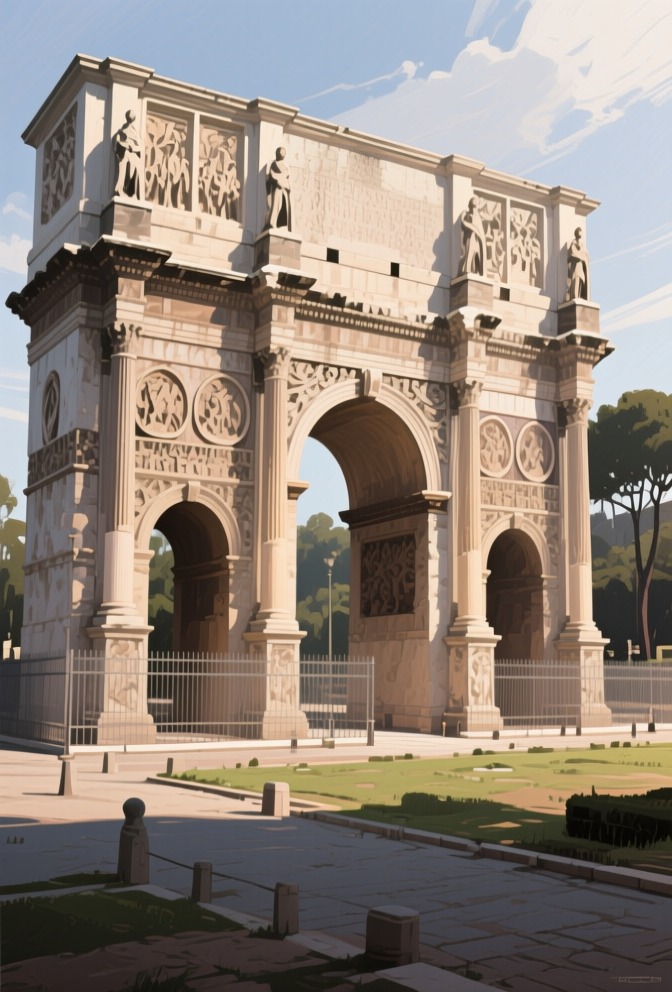
The Arch of Constantine is a ruined Roman monument in Rome that appears in the novel as a symbol of the Eternal City's decay and the collapse of historical meaning, marking Yossarian's desolate walk through a city where all structures—physical and moral—have fallen.
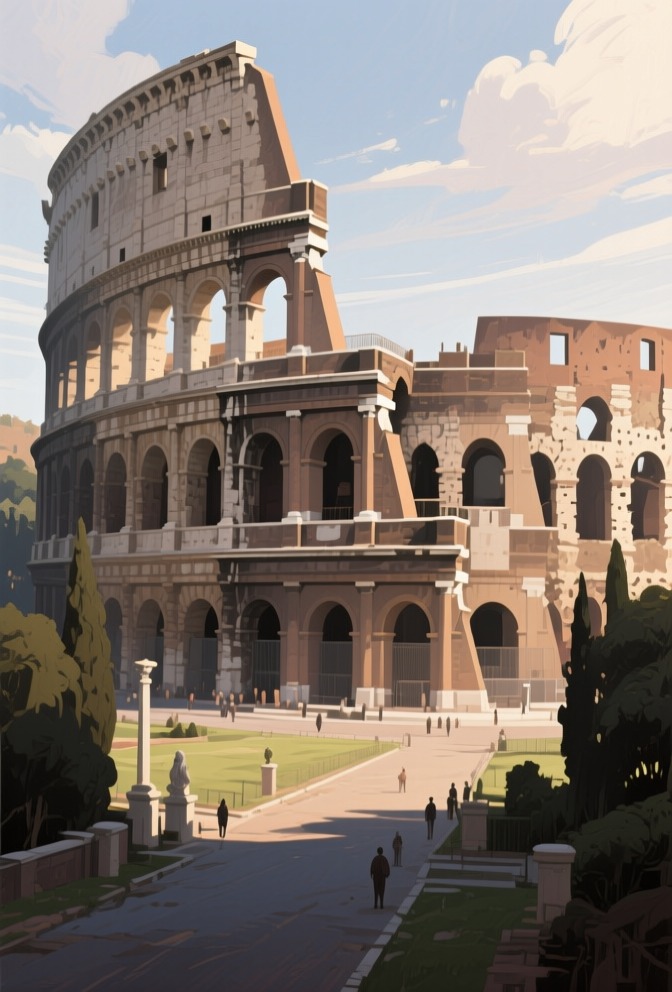
The Colosseum in Rome appears in Catch-22 as a dilapidated shell, a symbol of the decay and ruin that pervade the Eternal City during Yossarian's nightmarish journey through the city after the brothel is raided.
Sicily is a recurring location in Joseph Heller's Catch-22, serving as a site for Milo Minderbinder's economic machinations, Yossarian's sexual encounters, and the novel's exploration of commodification and moral decay. It is where Milo sources cheap eggs to manipulate markets, where Yossarian and Orr encounter prostitutes with shaved heads, and where the syndicate's logic of profit extends to the exploitation of human bodies and wartime scarcity.
Egyptian cotton is a commodity that nearly destroys Milo Minderbinder's syndicate after he purchases the entire crop on a whim in Cairo, forcing him to desperate measures—including bombing his own squadron—to recoup his losses.
The hard-boiled egg is a recurring object in Catch-22 that first appears as a symbol of Milo Minderbinder's entrepreneurial genius and the syndicate's power, but later recurs in contexts of death, decay, and the reduction of human life to mere matter, ultimately serving as a stark emblem of the novel's central themes of mortality and the absurdity of war.
Hungry Joe's camera is a recurring object in Catch-22 that embodies his compulsive, frustrated attempts to capture and possess the sexualized female body, a drive that mirrors his broader psychological disintegration and the novel's critique of the futile pursuit of unattainable desires.
Morphine is a medical substance that appears in Catch-22 as a symbol of institutional neglect and the failure of systems meant to protect soldiers. Its absence at critical moments, particularly during Snowden's death, reveals the moral bankruptcy of the syndicate and the military bureaucracy, while its presence in other contexts highlights the arbitrary and often cruel nature of the war machine.
Nately's whore's knife is a recurring weapon of vengeance in Joseph Heller's Catch-22, used by Nately's whore in her relentless, multi-city attempts to murder Yossarian after she learns of Nately's death. The knife appears in several forms—a potato peeler, a bread knife, a steak knife, a carving knife—and becomes a symbol of the inescapable, irrational consequences of war, as the woman holds Yossarian responsible for the death of the man she loved. Its repeated appearances, across Rome and Pianosa, transform it from a simple kitchen implement into an instrument of traumatic retribution that finally drives Yossarian to flee for Sweden.
Peanut brittle is a recurring food item in Catch-22, most closely associated with the lead bombardier Havermeyer, who eats it constantly. The candy functions as a marker of Havermeyer's oblivious, self-satisfied character and, through its sticky crumbs and his compulsive consumption, becomes a small but vivid emblem of the novel's larger themes of mindless consumption, the trivialization of violence, and the grotesque juxtaposition of the mundane with the horrific.
The 256th Squadron is the combat unit on Pianosa to which Yossarian, Orr, Nately, and many other central characters belong. It is a microcosm of the absurd and lethal bureaucracy of war, where the men live in tents, fly combat missions from a nearby airfield, and are subject to the arbitrary and escalating mission quotas set by Group Headquarters. The squadron is the primary setting for much of the novel's action, from the daily life in the tent area to the chaos of Milo's bombing raid and the Thanksgiving revelry.
Colonel Cathcart's bomb group is the combat unit at the center of Catch-22, a B-25 bomber group stationed on Pianosa under the command of Colonel Cathcart. It is defined not by its military mission but by Cathcart's relentless, self-serving escalation of the required number of combat missions—from twenty-five to eighty—as a means of personal advancement. The group becomes a closed system in which the logic of Catch-22 traps every man, a bureaucratic machine that converts fear, loyalty, and even death into raw material for the ambitions of its commanders.
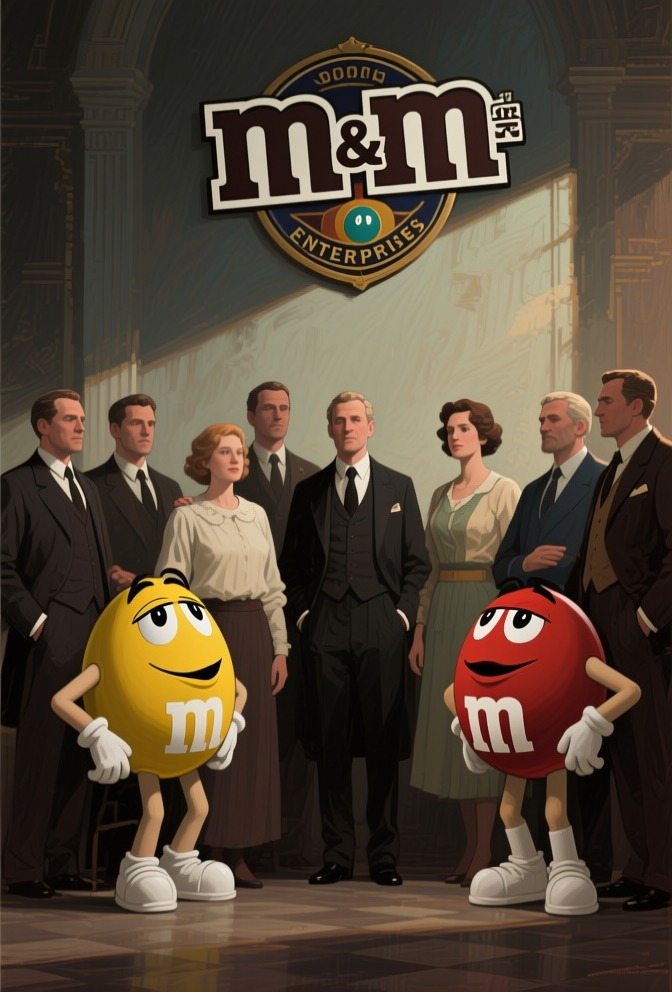
M & M Enterprises, also known as the syndicate, is Milo Minderbinder's vast, international business cartel that operates within and beyond the U.S. Army Air Corps during World War II. It begins as a mess-hall supply operation and expands into a global network of planes, contracts, and commodities, embodying the novel's central critique of unchecked capitalism and moral relativism. The syndicate's principle that "everybody has a share" is used to justify any action, including bombing its own squadron, trading with the enemy, and stealing medical supplies, ultimately revealing how profit-driven logic can subsume all ethical and patriotic considerations.
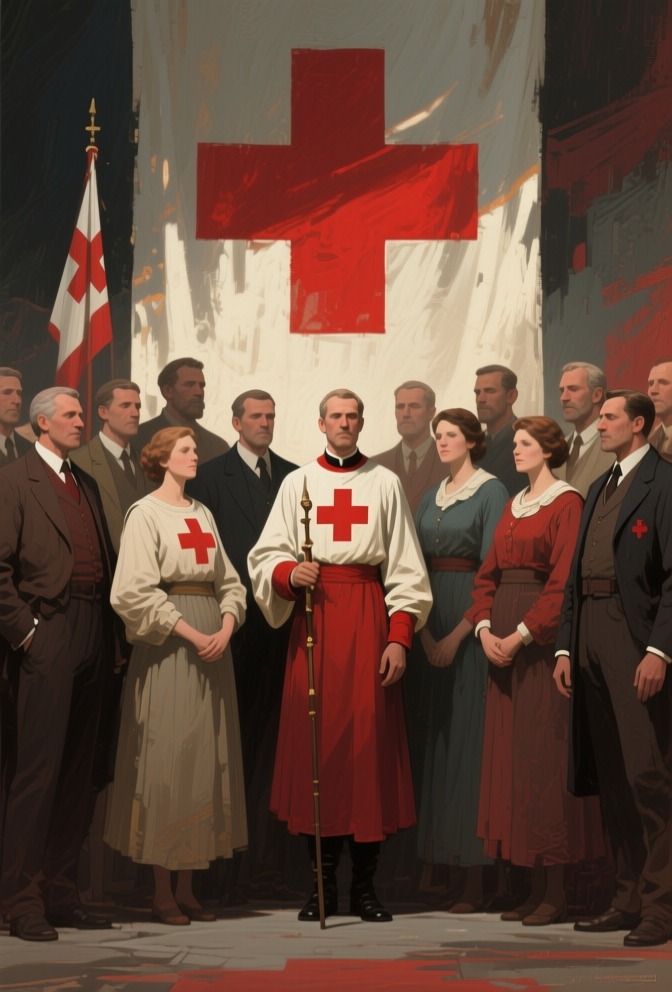
The Red Cross appears in Catch-22 as a mundane, bureaucratic setting that underscores Yossarian's emotional isolation and the absurdity of military life. It is the site where Yossarian, after being attacked by Nately's whore, seeks refuge to clean his wounds, and where he later eats breakfast while grappling with the loss of Luciana. The organization itself is never a source of aid or comfort; instead, it functions as a hollow institutional backdrop against which personal crises unfold.
Yossarian and McWatt share a complex bond defined by McWatt's reckless joy in flying and Yossarian's desperate fear of death. McWatt is Yossarian's preferred pilot, yet his thrill-seeking—buzzing tents and skimming mountains—drives Yossarian to the brink of violence. Their relationship culminates in tragedy when McWatt, after accidentally killing Kid Sampson with his propeller, flies his plane into a mountain rather than face the consequences.
Fear is the central, pervasive emotional state that drives Yossarian's actions and defines his worldview in Catch-22. It is not merely a reaction to combat but a profound, existential terror that shapes his relationships, his strategies for survival, and his ultimate rebellion against the military system. The novel meticulously charts the gradations of this fear, from the rational dread of death to the paralyzing horror of cosmic indifference, making it the primary lens through which the absurdity and brutality of war are experienced.
Pneumonia is a recurring motif in Catch-22, serving as both a literal disease and a symbolic instrument of fate. It is the means by which Chief White Halfoat, a Native American from Oklahoma, has determined to die, as an act of revenge against the white men who have exploited his family. The disease also functions as a narrative device that removes characters from the squadron, either through death or hospitalization, and is contrasted with other ailments and the absurd logic of Catch-22.
Christmas in Catch-22 is a bitterly ironic non-event, a holiday stripped of its traditional meaning and repurposed as a tool of bureaucratic ambition. It appears not as a celebration but as a deadline: Colonel Cathcart, desperate for publicity, decides to speed up the production of condolence letters by volunteering his group for the dangerous mission to Avignon, hoping to generate enough casualties to get his name into the Christmas issue of The Saturday Evening Post. The holiday thus becomes a symbol of the military's grotesque manipulation of human life and sentiment for personal gain.
New Year's Eve in Catch-22 is not a celebration but a night of drunken, violent chaos that exposes the raw, uncontainable terror and nihilism simmering beneath the military's brittle order. It is the night when Yossarian, reduced to a whimpering wreck by a drunken prank involving machine-gun fire, charges out to kill the perpetrators and instead punches Nately in the face, breaking his nose—an act of misdirected rage that crystallizes the novel's central theme: the impossibility of directing one's fury at the true source of one's destruction.
November in Catch-22 is a month of administrative and narrative significance, marking the official publication of the novel itself and serving as a temporal backdrop for key events involving Milo Minderbinder's syndicate, Colonel Cathcart's ambitions, and the oppressive machinery of Catch-22. It is a period when the war's absurdities are laid bare through bureaucratic maneuvers, commercial profiteering, and the relentless escalation of combat missions.
The fall of Naples is a recurring historical event in Catch-22 that serves as a trigger for Major -- de Coverley's ritual of commandeering an airplane and flying to newly captured cities to rent apartments for the squadron's rest leaves, a pattern that underscores the absurdity and bureaucratic inertia of war.
The invasion of southern France, a major Allied military operation in August 1944, is referenced in Catch-22 as a distant historical event that paradoxically intensifies the war's absurd pressures on the men of Pianosa. Its occurrence triggers a cascade of bureaucratic and psychological consequences: the chaplain's despair over Nately's death, the revelation of Snowden's secret about human mortality, and the escalating mission quotas that drive Yossarian toward his final act of defiance. The invasion serves as a temporal marker of the war's relentless advance, against which the individual's struggle for survival becomes both more urgent and more futile.
On the last day of school in June 1958, Ben Hanscom, a lonely, overweight eleven-year-old, is attacked by Henry Bowers and his friends after refusing to let Henry copy his exam answers. Chased through the streets of Derry, Ben escapes by falling into the Barrens, a wild, overgrown ravine. There he fights back, injures Henry, and hides in a root cave. This fall marks his first encounter with the Losers' Club and his entry into the summer's escalating confrontation with the ancient evil haunting Derry.
Beverly Marsh's escape from her abusive father, Al Marsh, is a pivotal event in the summer of 1958 that forces her to fully commit to the Losers' Club and their fight against It. After her father, possessed by the malevolent entity, attacks her in their apartment, Beverly flees through the streets of Derry, narrowly escaping his murderous rage. This violent rupture from her home life solidifies her bond with the other Losers and drives her to join them in their final confrontation with the monster that has been terrorizing the town.
In the spring of 1958, Henry Bowers, driven by his father's racist hatred and his own burgeoning cruelty, ambushed Mike Hanlon on a muddy road near the Bowers farm. Henry knocked Mike down, smeared mud over his face, ears, and clothes, and screamed racial epithets at him, then boasted of having poisoned Mike's dog, Mr. Chips. The attack left Mike humiliated and terrified, and his father, Will Hanlon, chose not to report it to the police, believing that such confrontations were an inescapable part of being Black in Derry.
Eddie Kaspbrak kills Henry Bowers in self-defense when Henry, escaped from Juniper Hill and armed with a switchblade, attacks him in his hotel room at the Derry Town House in the early hours of May 31, 1985. The confrontation ends with Eddie impaling Henry on a broken Perrier bottle, a violent conclusion to a lifelong enmity that began in the summer of 1958.
The final battle between the Losers' Club and It takes place in the creature's subterranean lair under Derry in the early morning of May 31st, 1985. After Eddie Kaspbrak is killed by the Spider, Bill Denbrough and Richie Tozier pursue the wounded entity into a dark tunnel, where they deliver a killing blow by crushing Its heart. Ben Hanscom destroys the Spider's eggs, and the survivors—Bill, Richie, Beverly Rogan, and Ben—escape through the collapsing sewer system as a supernatural storm devastates the town above. The battle ends the 27-year cycle of terror, but at the cost of Eddie's life and the permanent scarring of the survivors' memories.
The Giant Bird at the Ironworks is a pivotal event in the summer of 1958, when Mike Hanlon, exploring the ruins of the Kitchener Ironworks on his father's suggestion, is attacked by a monstrous bird that embodies the shape-shifting entity haunting Derry. The encounter marks Mike's first direct confrontation with the supernatural evil and serves as the catalyst that draws him into the Losers' Club, completing the circle of seven children destined to fight It.
Chief Andrew Rademacher is the Derry Police Chief during the 1985 cycle of murders, a skeptical and pragmatic official who dismisses supernatural explanations for the town's violence and focuses on conventional police work, but whose death in a bizarre accident underscores the lingering malevolence of Derry.
Dr. Handor is the family physician of Eddie Kaspbrak in Derry, Maine, who prescribes HydrOx Mist—a placebo of hydrogen, oxygen, and camphor—for Eddie's asthma, a deception condoned by pharmacist Mr. Keene. His medical complicity with Sonia Kaspbrak's overprotectiveness makes him a figure of institutional weakness rather than healing, and his role in the summer of 1958 exposes the novel's critique of adult authority that fails children confronting supernatural evil.