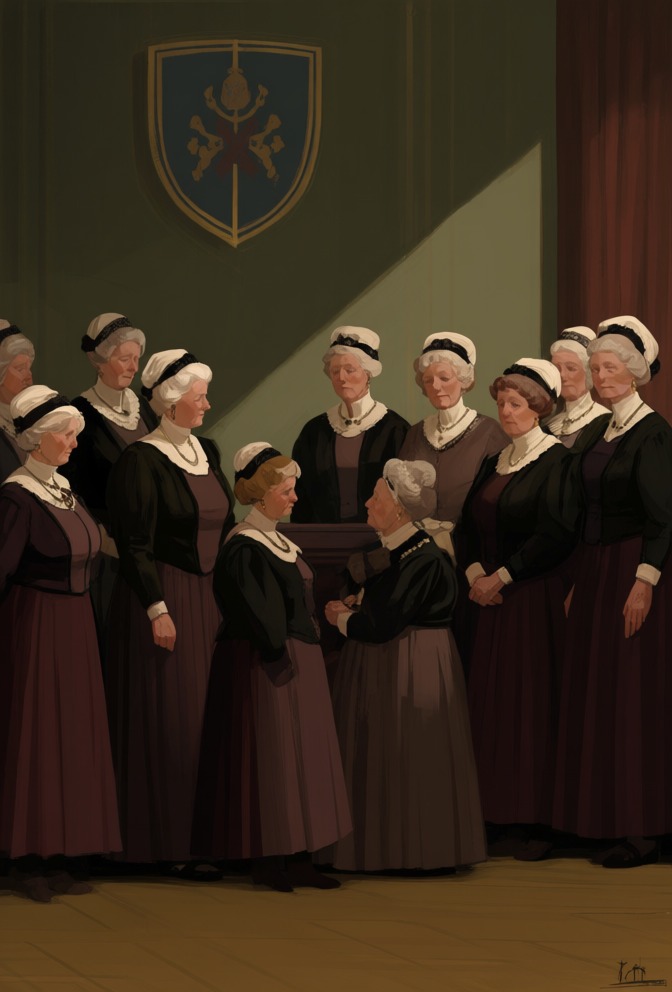
The Derry Ladies' Society is a local civic organization in Derry, Maine, that sponsors community events and exercises a conservative gatekeeping role over the town's public memory. During the 1984 Canal Days Festival, the Society vetoed exhibits and photographs proposed by librarian Michael Hanlon for the Canal Days Museum, including the notorious tramp-chair from the 1930s and images of the Bradley Gang after their shootout, preferring to "accentuate the positive." The Society's decisions reflect the broader pattern of selective forgetting that characterizes Derry's relationship with its violent history.
Bill Denbrough and Audra Phillips are a married couple whose relationship is tested when Bill is called back to his childhood home of Derry, Maine, to confront a supernatural entity. Their bond, forged in Hollywood and sustained through years of mutual support, is strained by Bill's hidden past and the traumatic events that unfold in Derry, culminating in Audra's catatonia and Bill's desperate attempt to save her through a final, reckless bicycle ride.
Bill Denbrough and Beverly Marsh share a deep, lifelong bond that begins in childhood during the summer of 1958, when they are both members of the Losers' Club. Their relationship is marked by mutual admiration, a powerful first love, and a shared commitment to fighting the entity terrorizing Derry. As adults, their connection is rekindled during a reunion called by Mike Hanlon, leading to a brief but intense affair that reawakens their buried memories and strengthens their resolve to confront It one final time.
Bill Denbrough and Eddie Kaspbrak share a deep, almost brotherly friendship that forms the emotional core of the Losers' Club. Bill is Eddie's hero and protector, the one who never mocks his asthma and who gives him the courage to face his fears. Eddie, in turn, is Bill's loyal navigator and a source of unexpected bravery, ultimately sacrificing his life to save Bill during the final confrontation with It.
Bill Denbrough and Susan Browne had a brief, intimate relationship during Bill's early career as a writer. Susan was his literary agent, a small, energetic woman who advised him against going to Hollywood. Their relationship ended when Bill moved to California to work on the film adaptation of his novel *The Black Rapids*, where he met and married actress Audra Phillips.
Henry Bowers and Belch Huggins were the core members of a violent clique that terrorized the Losers' Club throughout the summer of 1958. Their relationship, built on shared cruelty and Henry's dominance, culminated in a fatal chase into the Derry sewers, where Belch was killed by the entity known as It.
Patrick Hockstetter, a deeply disturbed boy from Derry, murdered his infant brother Avery by suffocation, an act that revealed his complete lack of empathy and his sociopathic nature. This early crime, which went undetected, established a pattern of cruelty that would later make him a tool for the entity known as It, and his eventual death at the hands of the creature was a direct consequence of his own monstrousness.
Richie Tozier's relationship with his father, Wentworth Tozier, is defined by affectionate, teasing banter and a mutual understanding that masks deeper tensions. Wentworth, a dentist, uses playful manipulation and a sharp wit to manage Richie's exuberance, while Richie deploys his comedic Voices to negotiate for privileges. Their dynamic is one of loving but strategic sparring, where Wentworth's calm authority consistently outmaneuvers Richie's theatrical charm, revealing a father who both indulges and disciplines his son's irrepressible nature.
Ben's Rock-Throwing Rule is a personal moral principle that Ben Hanscom, a member of the Losers' Club, articulates and enforces during the apocalyptic rockfight in the Barrens in July 1958. The rule, which states that one should not throw rocks at girls, emerges from Ben's outrage when Henry Bowers targets Beverly Marsh with a rock, and it marks a decisive moment in the conflict, reinforcing the Losers' solidarity and their rejection of the bullies' indiscriminate cruelty.
Catholic Friday Abstinence is a religious rule observed by the Catholic characters in Stephen King's *It*, particularly Richie Tozier, who explains it to his friends as a prohibition against eating meat on Fridays. The rule is presented as a childhood belief that is both serious and somewhat arbitrary, highlighting the power of religious and parental authority in shaping the characters' worldviews.
Audra Denbrough's catatonia is the psychological state of profound unresponsiveness into which Bill Denbrough's wife falls after being exposed to the deadlights of It, the ancient entity beneath Derry, Maine. This condition, which renders her motionless, speechless, and unresponsive to external stimuli, becomes the central crisis of the novel's final movement, forcing Bill to confront the limits of his power and to find a way to reach her through a desperate act of faith and memory.
Derry's cycle of violence is a recurring pattern of extreme brutality and child murders that erupts in the town of Derry, Maine, approximately every twenty-seven years, driven by the predatory entity known as It. This cycle, documented by Mike Hanlon through historical research, marks periods when the town's already elevated violent crime rate spikes to a furious peak, culminating in a catastrophic event that temporarily satiates or weakens the entity before it enters a dormant phase. The cycle is central to the novel's plot, as the Losers' Club first confronts It during the 1957-58 cycle and is called back in 1985 to face its return.
The Losers' Club's blood oath is a solemn promise made by seven children in the summer of 1958 to return to Derry and destroy the entity known as It if it ever resumed its cycle of murder. Sealed by cutting their palms with a shard of glass and clasping hands in a circle, the oath bound them together across twenty-seven years, serving as the narrative and moral foundation for their adult reunion and final confrontation.
1958 is the pivotal summer in which the seven members of the Losers' Club—Bill Denbrough, Beverly Marsh, Ben Hanscom, Richie Tozier, Eddie Kaspbrak, Stanley Uris, and Mike Hanlon—first unite, confront the shape-shifting entity known as It, and drive it into a decades-long hibernation. This single season contains the entire arc of their childhood ordeal: the formation of their friendship in the Barrens, the escalating encounters with It in its many guises, the apocalyptic rockfight that cements their bond, the making of silver slugs, the failed attempt to kill It at 29 Neibolt Street, and the final underground battle that ends with It wounded and the Losers' blood oath to return if It ever awakens again.
The Alisal is a small stream and valley on the eastern side of the Salinas Valley, at the foot of the Gabilan Mountains, that serves as the setting for a crucial romantic and symbolic picnic between Cal Trask and Abra Bacon in the spring of 1918. Its wild azaleas, which bloom only briefly, become a fixed symbol for the couple's deferred happiness, and the place itself is the site where Cal confesses his guilt over Aron's death and Abra chooses to stand with him rather than abandon him.
The Monterey County Bank is the financial institution where Kate Trask, operating under the name Kate, keeps her safe-deposit box, which holds over one hundred thousand dollars in gold certificates and her marriage certificate, making it a key location in the novel's exploration of hidden wealth, identity, and the legacy of crime.
New York is the distant, mythic metropolis that haunts the edges of East of Eden, serving as a symbol of escape, ambition, and the corrupting allure of wealth. It is the destination Cathy Ames flees to in her mind, the place where Mr. Edwards maintains his respectable family while running his whorehouse circuit, and the ultimate goal of Kate's plans for a new life of refined cruelty. The city represents a world of anonymity and power, a stark contrast to the intimate, moral landscape of the Salinas Valley, and its presence in the narrative underscores the characters' struggles with identity, freedom, and the inescapable weight of their pasts.
The Trask pond is the shallow body of water on the Connecticut farm where Adam Trask's mother, Mrs. Trask, drowned herself in a ritualized suicide, and it later becomes a recurring symbol of maternal abandonment, guilt, and the hidden truths that shape the lives of Adam and his sons.
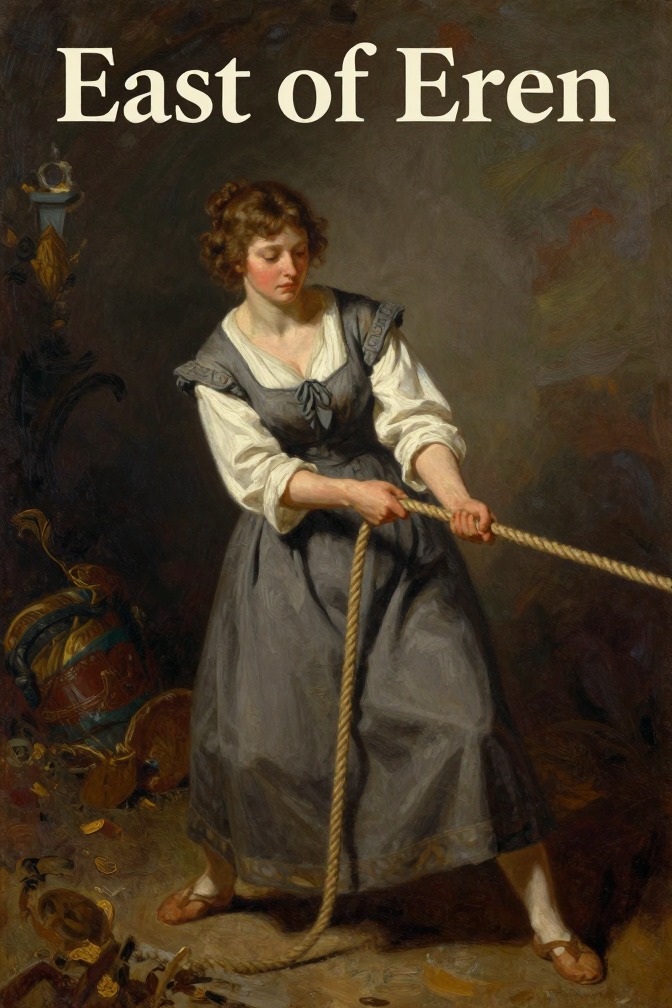
Liza Hamilton's Pulling Rope is a blue-velvet birthing rope embroidered with hundreds of tiny pink flowers, made by Liza Hamilton for the birth of her first child and used over decades to assist countless births in the Salinas Valley. It embodies Liza's practical, unsentimental strength and her role as a matriarch whose handmade objects carry the weight of communal life and tradition.
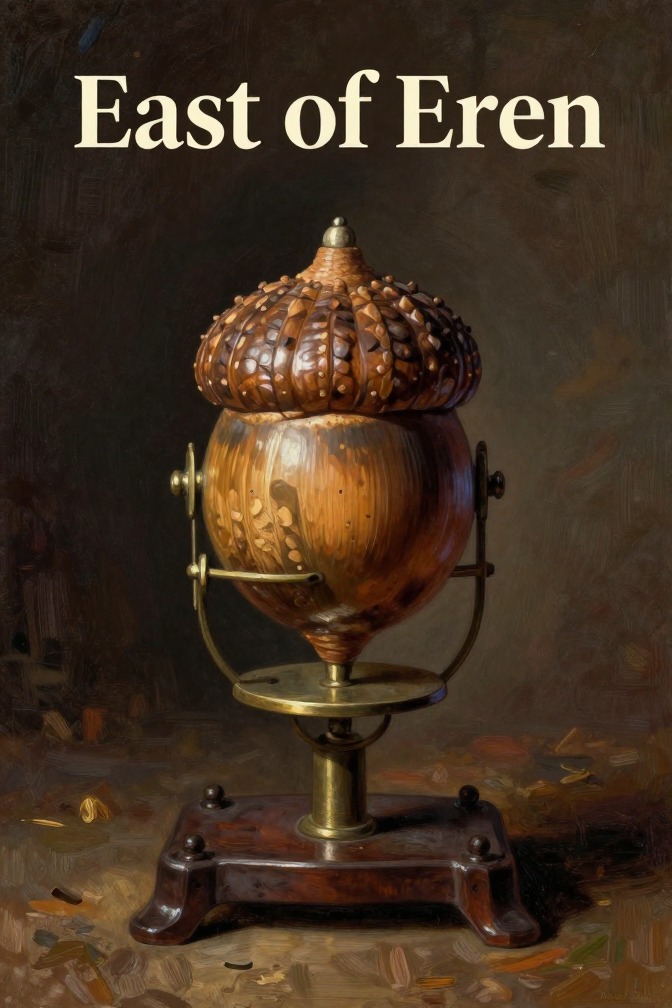
The Acorn-Picking Machine is an invention conceived by Tom Hamilton in the wake of his father Samuel Hamilton's death, designed to gather acorns mechanically to feed pigs as part of a plan to raise money for a trip to Europe with his sister Dessie. The machine represents Tom's attempt to manufacture purpose and joy through labor and invention, but it ultimately becomes a symbol of his inability to escape the family pattern of impractical dreaming and the tragic consequences of his suppressed guilt.
The Prohibition of Alcohol, as enforced by Liza Hamilton, is a rigid moral code that forbids the consumption of alcoholic beverages, viewing it as a sin against God. This rule shapes the Hamilton household, creating a tension between Liza's uncompromising stance and her family's natural inclinations, and it serves as a key example of the conflict between strict morality and human desire in the novel.
The Great Story Rule, articulated by Lee in John Steinbeck's East of Eden, holds that a story endures only if it is about everyone—if the hearer recognizes it as deeply personal and familiar. Lee formulates this principle during the naming of the twins, arguing that the Cain and Abel narrative has survived not because of its foreignness but because it mirrors the universal human experience of rejection, anger, guilt, and the struggle for love. The rule serves as a key to understanding the novel's own structure and its central moral inquiry.
The 1860s in *East of Eden* form the foundational decade for the Trask family saga, marked by the American Civil War, the wounding of Cyrus Trask, and the birth of Adam Trask, events whose consequences ripple through the entire novel.
The 1880s in East of Eden form a crucial transitional decade that spans Adam Trask's army service, his wandering years, and the early settlement of the Salinas Valley, while also witnessing the rise of Cyrus Trask's fraudulent military reputation and the accumulation of his mysterious fortune.
The 1890s in East of Eden is the decade of Adam Trask's wandering, a period of rootlessness and transformation that follows his discharge from the cavalry and precedes his return to the Connecticut farm. It is the time when Adam becomes a bindlestiff, learns the tramp's life, endures the brutality of a Florida road gang, and finally escapes, an experience that strips away his remaining illusions and forges a new, hardened self.
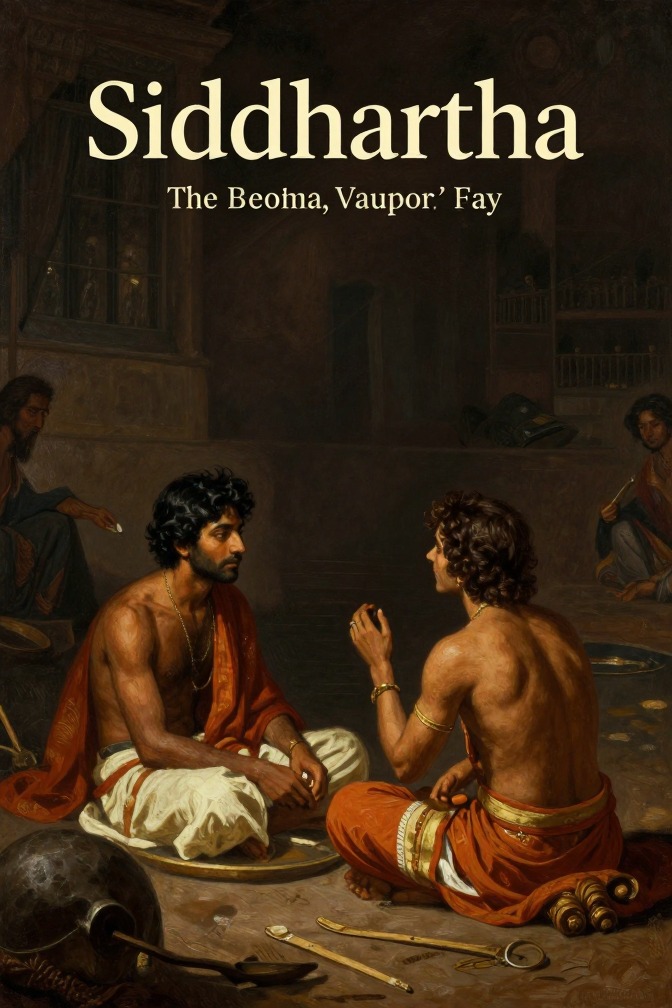
The Conversation with Gotama is a pivotal encounter in which Siddhartha, after hearing the Buddha's teachings, respectfully declines to become a disciple, articulating his conviction that salvation cannot be transmitted through teachings but must be discovered through one's own experience, and that the Buddha's enlightenment is a unique, inexpressible event that no doctrine can replicate.
The Decision to become a Samana is the foundational act of Siddhartha's quest, a deliberate rupture with his privileged Brahman life that sets the entire narrative in motion. It is not a youthful whim but a profound, existential crisis made manifest through a silent, night-long vigil that breaks his father's will and redefines Siddhartha's relationship to authority, tradition, and the self.
Joining the Samanas marks Siddhartha's first decisive break from his Brahmin upbringing and his entry into a life of radical asceticism, a three-year period during which he learns extreme self-denial, meditation, and the temporary escape from the self, only to ultimately conclude that these practices are a dead end on the path to enlightenment.
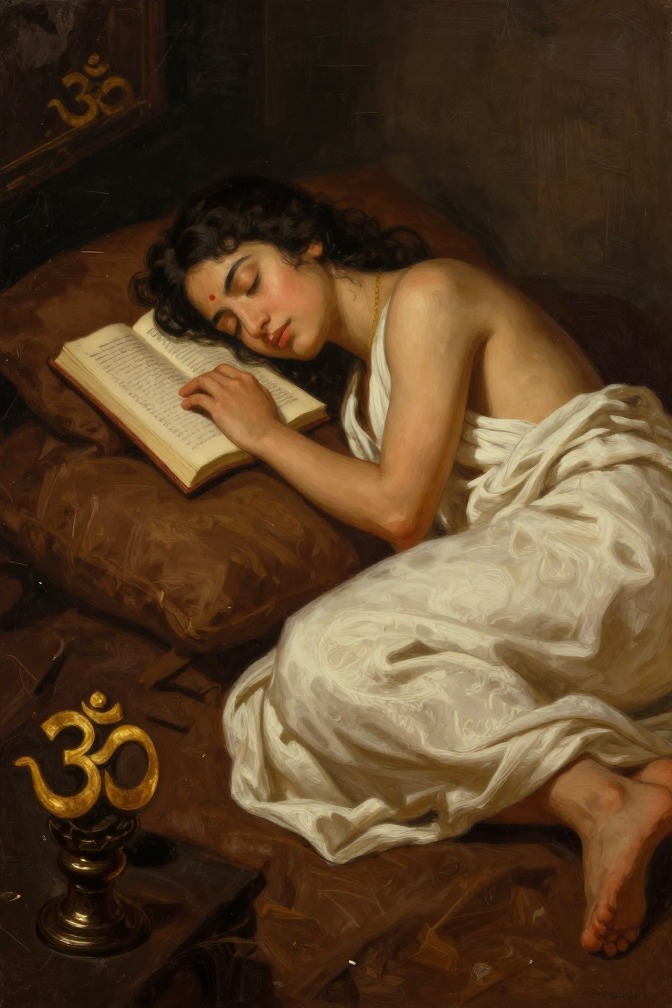
Reciting Om and falling into deep sleep is the pivotal moment of Siddhartha's spiritual rebirth, occurring at the riverbank after his failed suicide attempt, where the sacred syllable Om re-enters his consciousness and he collapses into a profound, dreamless sleep that transforms him from a despairing, world-weary man into a renewed, childlike seeker.
Siddhartha, after abandoning his life as a wealthy merchant and gambler, meets the ferryman Vasudeva by the same river he had crossed decades earlier, and through Vasudeva's silent, listening presence and the river's teachings, he begins a new life as a ferryman's apprentice, learning to listen, to accept the oneness of existence, and to heal his spiritual wound.