June 3, 1706, is the date on which Lemuel Gulliver, after his escape from Brobdingnag, finally returned to England aboard the ship of Captain Thomas Wilcocks, concluding the second part of his travels and marking his re-entry into a world of ordinary human scale after more than two years among giants.
October 26, 1703, marks the day Lemuel Gulliver arrived at Lorbrulgrud, the metropolis of Brobdingnag, after a ten-week journey from the farmer's house, a milestone that transformed his status from a traveling curiosity exhibited in market towns to a court figure purchased by the queen and presented to the king.
The seventy-three moons (approximately five and a half years) is the statutory period of strict law-observance required to qualify for the Lilliputian reward system known as snillpall, a unique legal institution that grants privileges and a title to any citizen who can prove he has not violated any law for that duration.
Prince Myshkin's Arrival and Meeting with Rogozhin is the foundational event of the novel, bringing together its two central male figures on a train from Warsaw to St. Petersburg and establishing the passionate, violent triangle that will drive the plot toward its catastrophic end.
Bachmatoff is a young university student and former schoolmate of Hippolyte Terentieff, whom the prince approaches for help in securing a government post for a destitute doctor and his family. Despite a history of enmity between them, Bachmatoff generously uses his influence with his uncle, a high-ranking official, to obtain the appointment, an act that deepens Hippolyte's reflections on the value of individual kindness and the nature of his own impending death.
Ivan Petrovitch is a distant relation of Nicolai Andreevitch Pavlicheff, the prince's benefactor, who appears at the Epanchins' evening party and inadvertently triggers Prince Muishkin's impassioned, controversial speech on Russian identity, Roman Catholicism, and the fate of the Russian nobility, a speech that culminates in the prince's epileptic fit and the shattering of a Chinese vase.
Marie is a poor, consumptive Swiss peasant girl whom Prince Muishkin befriends and defends in his Swiss village, becoming the catalyst for his bond with the local children and a symbol of his compassionate, childlike nature.
Nicolai Andreevitch Pavlicheff is the deceased benefactor who financed Prince Muishkin's upbringing and medical treatment in Switzerland, and whose contested legacy—both financial and moral—drives the Burdovsky claim and the prince's own sense of indebtedness.
Prince Lef Nicolaievitch Muishkin is the central character of Fyodor Dostoevsky's novel *The Idiot*, a man whose profound innocence, compassion, and epileptic condition set him apart from society, leading him to be labeled an "idiot" while he embodies a Christ-like ideal of forgiveness and love. His return to Russia from a Swiss sanatorium triggers a tragic entanglement with two women, Nastasia Philipovna Barashkoff and Aglaya Ivanovna Epanchin, and a fateful friendship with the passionate merchant Parfen Rogojin, ultimately culminating in catastrophe.
Vladimir Doktorenko, Lebedeff's nephew, is a young nihilist and university student who serves as a vocal, aggressive advocate for radical ideas and a key antagonist in the prince's life, embodying the destructive potential of ideological extremism.
The Apocalypse interpretation is a recurring motif in Dostoevsky's The Idiot, primarily voiced by the eccentric clerk Lukian Timofeyovitch Lebedeff, who reads the Book of Revelation as a living prophecy of contemporary history. Lebedeff identifies the 'star called Wormwood' with the European railway network, arguing that the modern age of materialism, credit, and railroads represents the epoch of the black horse whose rider holds a measure, a time when all is ruled by measure and men clamor for rights without moral foundation. This interpretation becomes a vehicle for the novel's deepest anxieties about the loss of spiritual unity, the mechanization of life, and the approaching apocalypse of nihilism, and it directly engages Prince Muishkin, Hippolyte Terentieff, and others in debates about faith, history, and the fate of Russia.
The epileptic fit is a recurring physiological and metaphysical event in Prince Lef Nicolaievitch Muishkin's life, serving both as a clinical symptom of his neurological condition and as a portal to a heightened, ecstatic state of consciousness that he describes as worth a lifetime. The novel uses the fit to explore the boundaries between sanity and madness, the nature of time, and the possibility of transcendent insight within a diseased body.
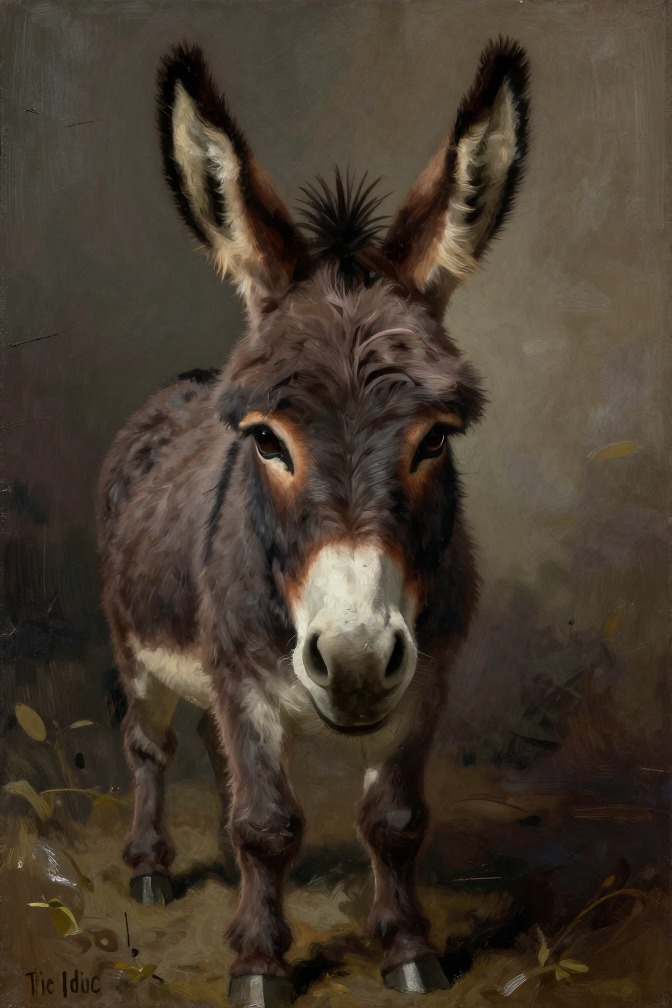
The donkey is a minor but symbolically significant creature in Dostoevsky's *The Idiot*, appearing in Prince Muishkin's recollection of his time in Switzerland. It serves as a catalyst for the prince's recovery from a state of torpor and becomes a personal emblem of patience, utility, and simple goodness, standing in contrast to the complex and often destructive human relationships that dominate the novel.
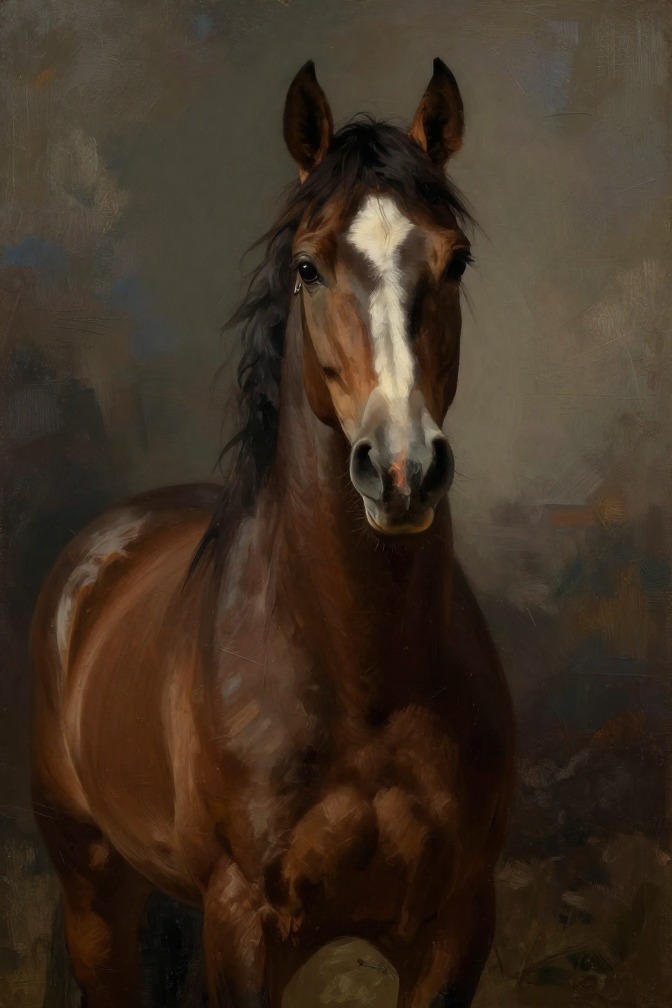
The horse appears in The Idiot as a recurring emblem of wealth, social status, and the raw physical energy that drives the novel's most volatile characters. It is not a speaking or named animal but a material object whose presence—in carriages, on streets, in descriptions of houses and journeys—marks the intersection of money, power, and the restless movement that defines the lives of Rogojin, Nastasia Philipovna, and the Epanchin family.
The poodle in Fyodor Dostoevsky's *The Idiot* is a minor but symbolically charged creature, appearing in a single anecdote told by General Ardalion Alexandrovitch Ivolgin. The general's story of a poodle being thrown from a railway carriage window serves as a comic yet revealing episode that exposes his pathological lying, his desperate need for social validation, and the theme of humiliation that runs through the novel.
Ne mentez jamais (Never Lie) is a French phrase written by Napoleon Bonaparte in the album of General Ivolgin's sister during the 1812 Moscow campaign, which the general later invokes as a token of his childhood intimacy with the emperor and as a moral precept that he himself has failed to live by.
Basle is the Swiss city where Prince Muishkin, during his journey from Switzerland to Russia, experienced a pivotal moment of awakening from his post-epileptic torpor, triggered by the bray of a donkey in the marketplace, and where he later saw a striking painting of Christ's face that influenced his thoughts on execution and art.
Colmina is the Epanchin family's country estate near St. Petersburg, to which they retreat after the scandalous events at Pavlofsk, and where Aglaya Ivanovna Epanchin is taken in a state of nervous collapse following her confrontation with Nastasia Philipovna Barashkoff.
Colomna is a district of St. Petersburg that appears in the novel as the home of a young consumptive woman who dies suddenly while shopping, a case cited by Hippolyte Terentieff to illustrate the unpredictable course of his own disease. The district also contains the gloomy merchant-class house of Parfen Rogojin, a building whose oppressive architecture mirrors its owner's psychology. Though mentioned only briefly, Colomna functions as a geographical marker of the city's social stratification and as a site where the novel's preoccupation with sudden death and the material conditions of urban life converge.
The Ismailofsky barracks in St. Petersburg serve as the location of Nastasia Philipovna's rented rooms, a place where she lived after leaving Pavlofsk and where Prince Muishkin desperately searches for her following her flight from their wedding.
Litaynaya is a major street in St. Petersburg that serves as the address of General Epanchin's residence and the site of several key encounters in the novel, including the prince's first visit to the Epanchin family and the public-house where General Ivolgin meets the prince before the disastrous evening at Nastasia Philipovna's.
Pavlofsk is the fashionable summer resort near St. Petersburg where the Epanchin family, Prince Muishkin, and many other characters relocate during the novel's second half. It serves as the primary setting for the story's climactic social gatherings, romantic confrontations, and tragic denouement, transforming from a pastoral retreat into a stage for scandal, madness, and murder.
Switzerland is the foreign country where Prince Lef Nicolaievitch Muishkin spent four years undergoing treatment for epilepsy under Professor Schneider, and it serves as the geographical and moral counterpoint to Russia in the novel, representing both the prince's physical cure and his formative exposure to a simpler, more humane way of life.
Tver is a provincial Russian city that appears in the novel as a setting for contested memories and fabrications, most notably in General Ivolgin's false claim that Prince Muishkin's father died there, and as a place where the prince's aunt lived and died, leaving him an inheritance.
Zlatoverhoff is a provincial estate in central Russia where Prince Muishkin spent part of his childhood under the care of two elderly female relatives of his benefactor, Nicolai Andreevitch Pavlicheff. Though the prince retains almost no memory of the place, it surfaces late in the novel as a crucial link to his past, connecting him to Ivan Petrovitch, a relation of Pavlicheff, and to the two old ladies who once looked after him. The estate thus becomes a symbol of the lost, inaccessible years of Muishkin's early life and a catalyst for the emotional upheaval that precipitates his final breakdown.
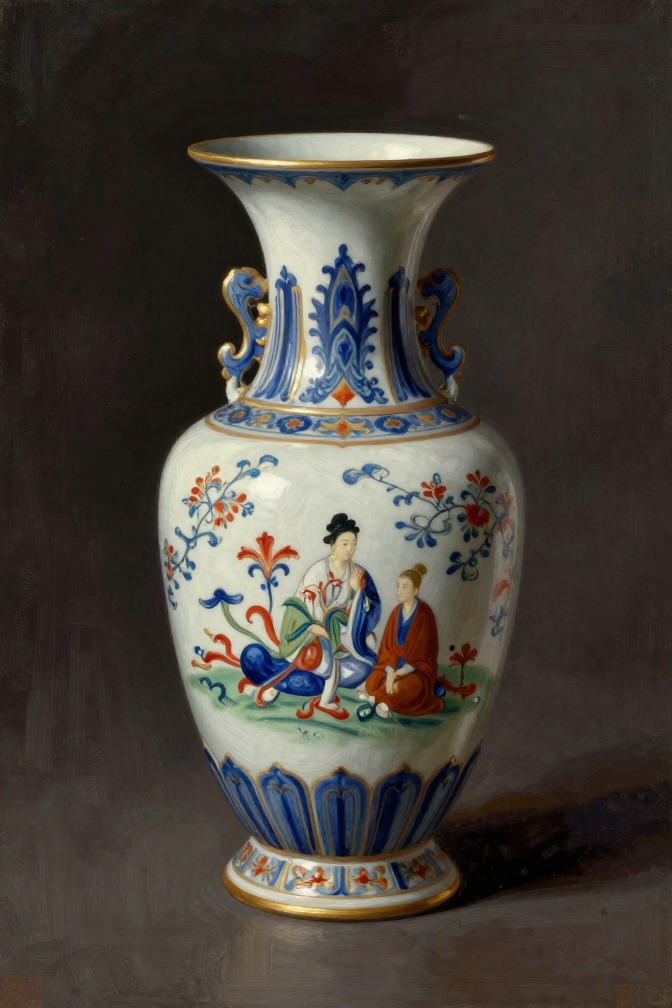
The Chinese vase at the Epanchin house is a fragile, valuable object that becomes the focal point of a disastrous social scene when Prince Muishkin, in a state of nervous excitement, accidentally knocks it over and shatters it during a formal evening party, an event that crystallizes the family's fears about his fitness as a husband for Aglaya and marks the public collapse of his social standing.
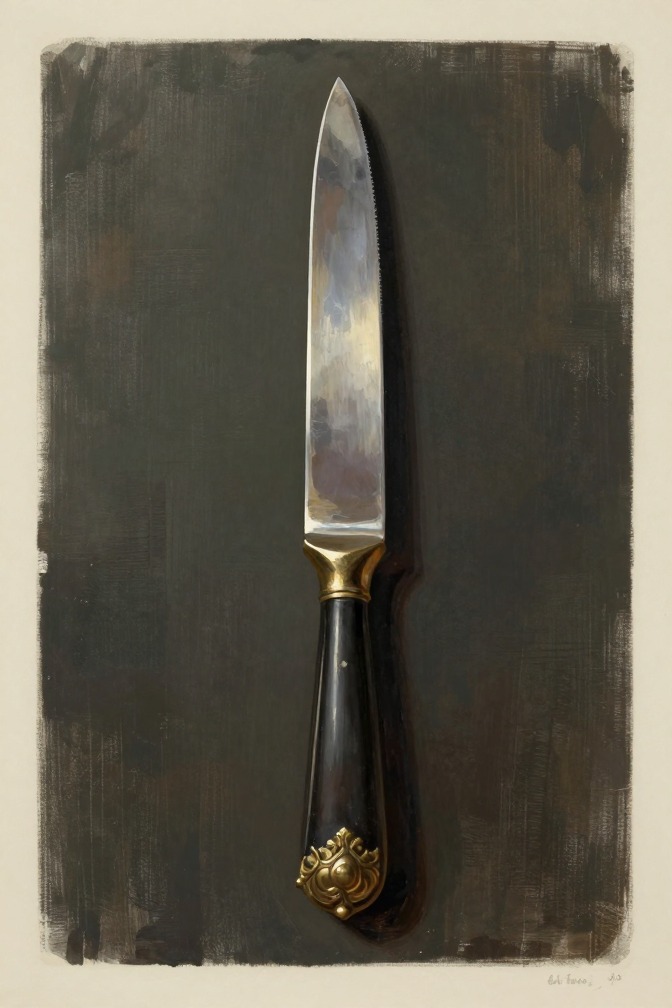
The garden knife is a plain-looking but symbolically charged object in Fyodor Dostoevsky's *The Idiot*. It first appears on Parfen Rogojin's table during Prince Muishkin's visit, where Rogojin's repeated, agitated snatching of it from the prince's hand foreshadows its eventual use as the murder weapon. The knife embodies the convergence of Rogojin's jealous passion, his morbid fascination with death, and the novel's exploration of the thin boundary between conscious intention and unconscious compulsion.
The hedgehog is a small animal that Aglaya Ivanovna Epanchin sends to Prince Muishkin as a symbolic gift, serving as a cryptic token of reconciliation and affection after a quarrel, and becomes a subject of humorous and significant interpretation within the Epanchin household.
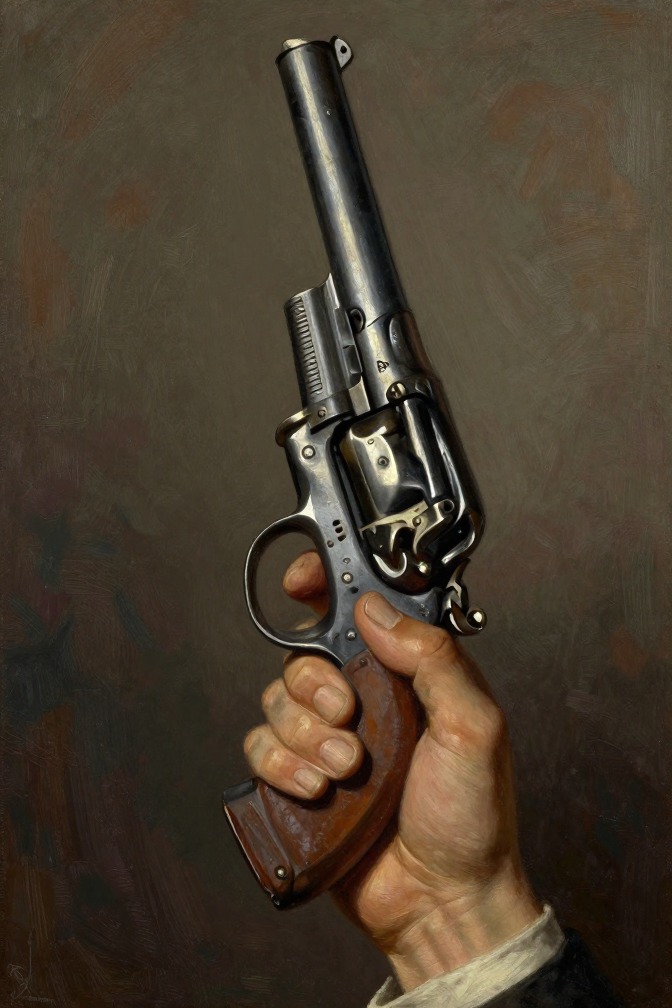
Hippolyte's pistol is the small, defective pocket pistol with which the consumptive youth attempts suicide during the night of Prince Muishkin's birthday party at Pavlofsk. The weapon's misfire—caused by Hippolyte's own forgotten percussion cap—transforms a would-be tragic climax into a humiliating anticlimax, exposing the gap between his grandiloquent philosophical defiance and the pathetic failure of his final act. The pistol thus becomes the material emblem of the novel's central tension between exalted intention and impotent reality.
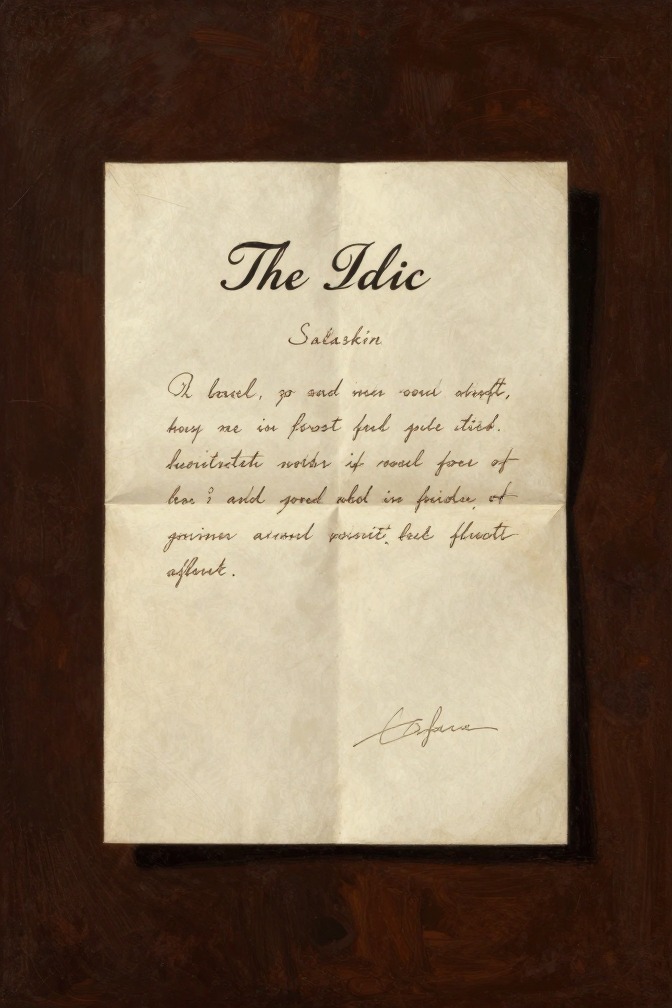
The inheritance letter from Salaskin is the legal document that transforms Prince Lef Nicolaievitch Muishkin from a penniless invalid into a wealthy heir, a reversal that reshapes every relationship in the novel and triggers the climactic confrontation at Nastasia Philipovna's birthday party.