The transistor radio, specifically Corky Herald's twelve-band Sony, becomes a crucial object during the Placerville High School hostage crisis, serving as the primary conduit for the outside world's framing of the event and revealing the students' growing awareness of their own role in the narrative.
The Placerville High School Greyhounds are the school's football team, a source of local pride and a symbol of conventional masculine achievement. The team's 11-0 record and the status of its players, particularly center Buck Thorne and former star running back Ted Jones, reveal the school's social hierarchy and the pressures of small-town athletic glory.
The relationship between Charles Decker and his father, Carl Decker, is a central, destructive force in the novel, characterized by Carl's rigid, violent masculinity and his profound disappointment in his son, which Charlie internalizes and ultimately rebels against in a climactic physical confrontation.
The relationship between hostage-taker Charles Decker and police captain Frank Philbrick is a tense, adversarial negotiation that defines the final phase of the Placerville High School hostage crisis. Philbrick, the Maine State Police commander, attempts to assert authority through tough talk and a failed sniper attack, but Decker consistently outmaneuvers him, forcing Philbrick into a humiliating retreat and ultimately into a direct confrontation that ends with Decker being shot.
The bond between Charlie Decker and his mother Rita Decker is the central protective relationship of his childhood, a refuge from his father's violence and contempt that shapes his emotional development and ultimately becomes entangled in the psychological collapse that leads to his murderous rampage.
Ted Jones and Sandra Cross's sexual relationship is a pivotal revelation during the hostage crisis, exposing the hypocrisy of Ted's public image and catalyzing the classroom's collective psychological breakdown.
A single step outside the circle means death is a rule established by Charlie Decker during the hostage crisis in Room 16, transforming a verbal conflict between Irma Bates and Grace Stanner into a ritualized physical contest. The rule defines the boundary of a chalk circle drawn on the classroom floor, and its enforcement becomes a pivotal moment in the crisis, revealing the shifting power dynamics and the students' complicity in Decker's game.
Don't Let 'Em Give You No Lip is a rule of the kid business articulated by Principal Thomas Denver, which Charlie Decker systematically violates and inverts during his hostage crisis, revealing the rule's function as a mechanism of institutional control and its ultimate failure when confronted with genuine personal attack.
Keep It Tight and Keep It Right is the personal motto of Carl Decker, Charlie Decker's father, and encapsulates a rigid, perfectionist worldview that treats life as a precious antique car requiring constant maintenance and zero tolerance for flaws. The motto governs Carl's approach to everything from home maintenance to his son's upbringing, and it becomes a central symbol of the oppressive, unyielding standard against which Charlie is measured and found wanting, directly fueling the father-son conflict that underpins Charlie's psychological unraveling.
December 5, 1976, is the date of a letter from Joe McKennedy to Charlie Decker, written while Charlie is institutionalized at Augusta State Hospital following his trial and sentencing for the murders of Jean Underwood and John Downes Vance. The letter provides a crucial window into the aftermath of the hostage crisis, revealing the fates of several classmates, Charlie's ongoing silence, and the enduring bond between the two friends.
The day before Thanksgiving is a recurring temporal marker in Charlie Decker's narrative, used to frame key moments of violence, humiliation, and psychological breakdown. It appears in the context of Irma Bates's scream during the hostage crisis, the circle-fight ritual between Irma and Grace Stanner, and the final attack on Ted Jones, linking these events to a calendar of domestic and institutional cruelty.
The summer before his junior year at Placerville High School, Charles Decker traveled to Bangor with his friend Joe McKennedy for a weekend with Joe's brother Pete, an experience that included his first use of marijuana and a failed sexual encounter at a party on Schoodic Point—a sequence of events that deepened his sense of alienation and foreshadowed his later psychological collapse.
The third of March is the day Charlie Decker, armed with a pipe wrench, attacked his chemistry teacher Mr. Carlson in a Placerville High School classroom, an act of violence that set the stage for his later, far deadlier rampage and his final confrontation with his father.
Gulliver's escape from Brobdingnag occurs when an eagle carries off his travelling-box and drops it into the sea, where he is rescued by an English ship, ending his two-year captivity among giants.
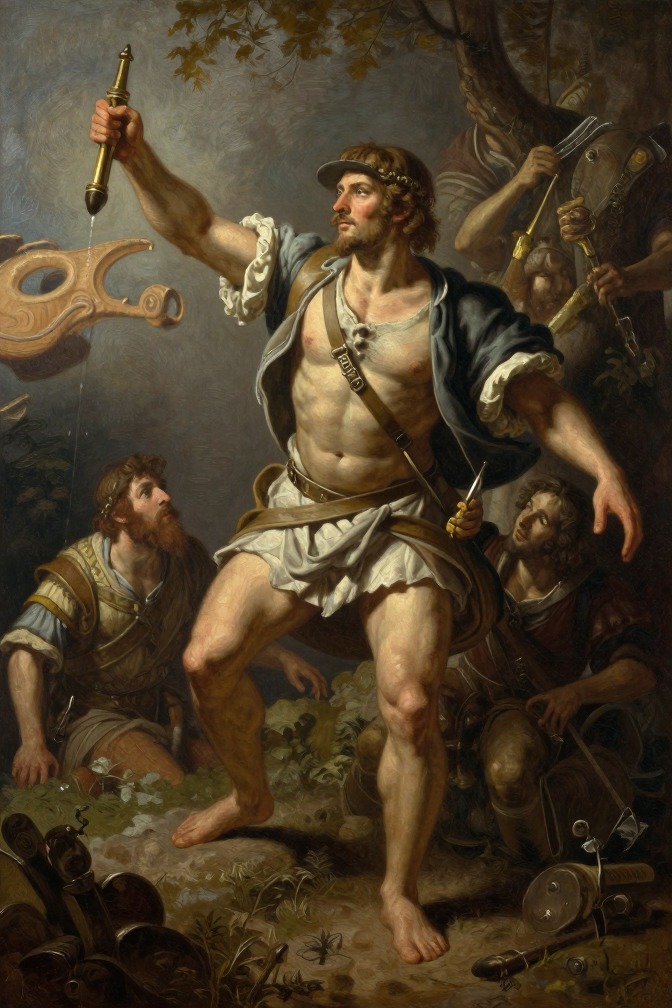
The Extinguishing of the Lilliputian palace fire is a pivotal event in which Lemuel Gulliver, having been awakened at midnight by cries of "burglum," rushes to the imperial palace and, finding the conventional buckets inadequate, extinguishes the blaze by urinating on it, an act that saves the building but earns him the empress's undying enmity and becomes a key article in the subsequent impeachment against him.
Reldresal, the Principal Secretary for Private Affairs in Lilliput, is a key political figure who acts as Gulliver's primary ally and informant within the Lilliputian court, navigating the empire's internal factions and external threats while ultimately advocating for a brutal compromise that saves Gulliver's life at the cost of his eyes.
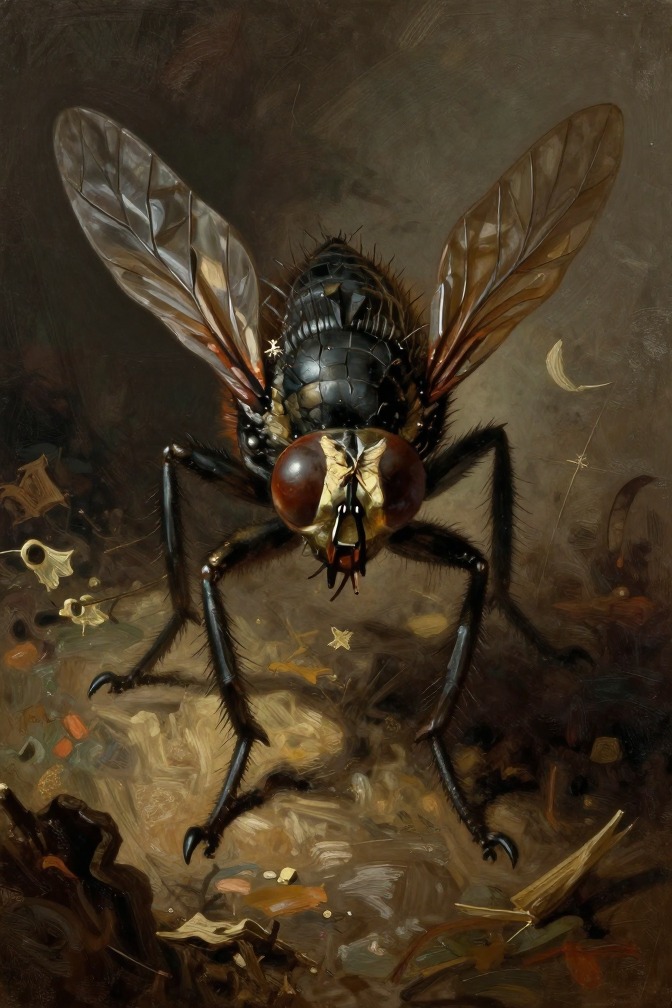
The Brobdingnagian fly is a giant insect in the land of Brobdingnag, described by Lemuel Gulliver as being as large as a Dunstable lark, which torments him with its size, noise, and stings, and serves as a vivid emblem of his vulnerability and the grotesque scale of the world around him.
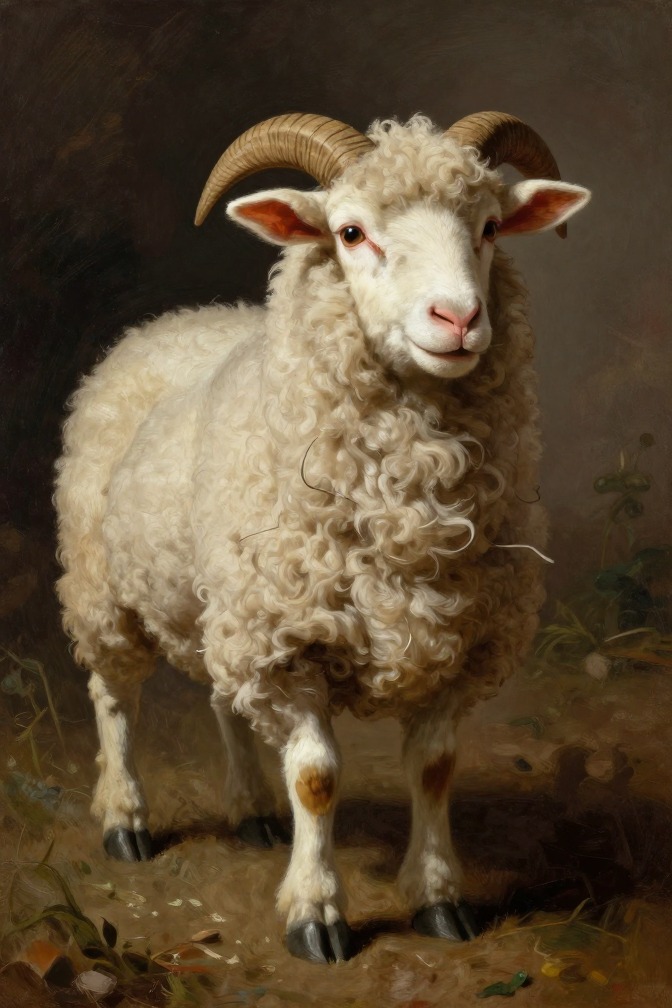
The Lilliputian sheep are the miniature livestock of the diminutive island empire, standing about an inch and a half tall and serving as a key source of food and economic value for both the Lilliputians and, later, for Lemuel Gulliver himself, who transports a breeding pair back to England.
Gulliver's capture by the farmer in Brobdingnag is the pivotal event that transforms him from a shipwrecked survivor into a captive curiosity, initiating his prolonged ordeal among giants and establishing the central dynamic of powerlessness and exhibition that defines his second voyage.
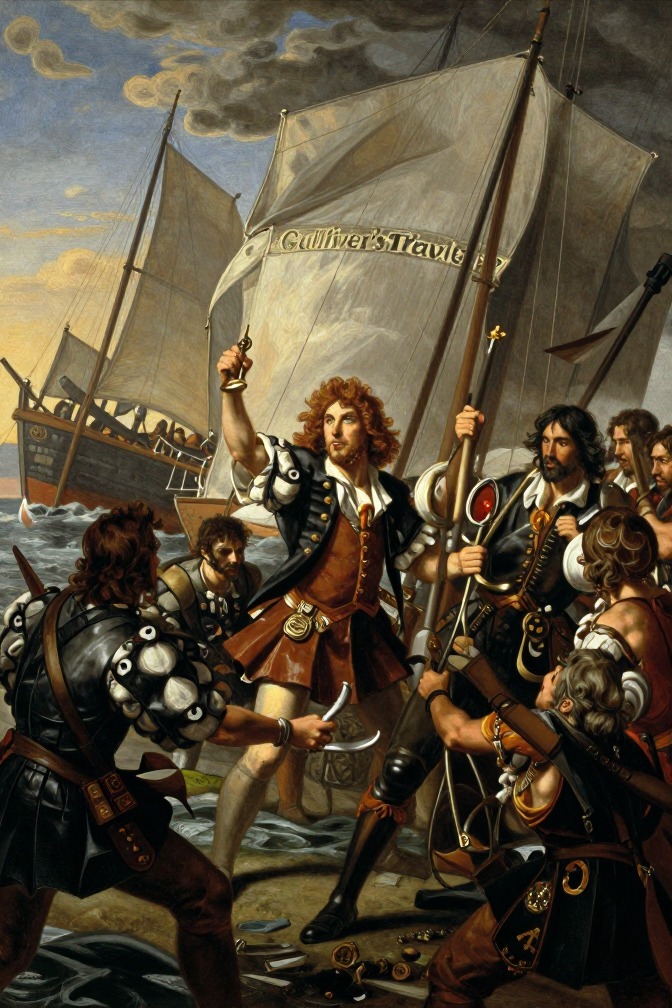
Gulliver's capture of the Blefuscu fleet is the pivotal military action in Part I of Gulliver's Travels, in which Lemuel Gulliver single-handedly seizes the entire navy of the rival empire of Blefuscu, preventing an invasion of Lilliput and earning the highest title of honor, but also planting the seeds of his own downfall through the resentment of the Lilliputian court.
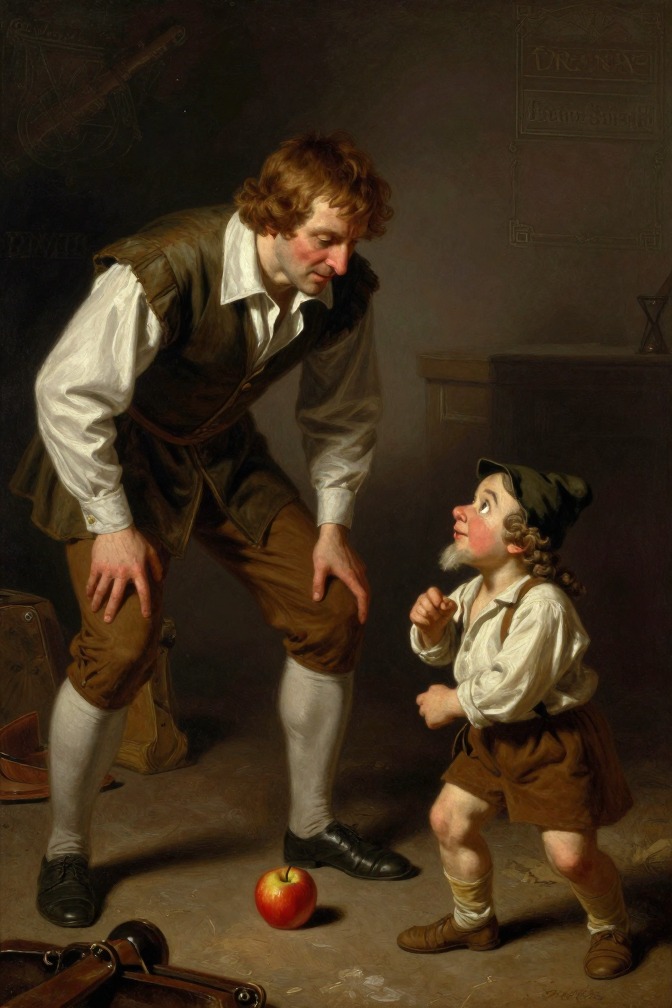
The apple incident with the dwarf is a malicious prank in Brobdingnag in which the queen's dwarf, resentful of Gulliver's diminutive size, shakes a dwarf apple tree over Gulliver's head, causing a dozen apples—each as large as a Bristol barrel—to knock him flat. The event crystallizes the ongoing antagonism between Gulliver and the dwarf, illustrates the physical dangers of Gulliver's extreme smallness in a giant world, and ends with Gulliver pardoning the dwarf at his own request, a gesture that underscores his precarious social position and his strategy of magnanimity.
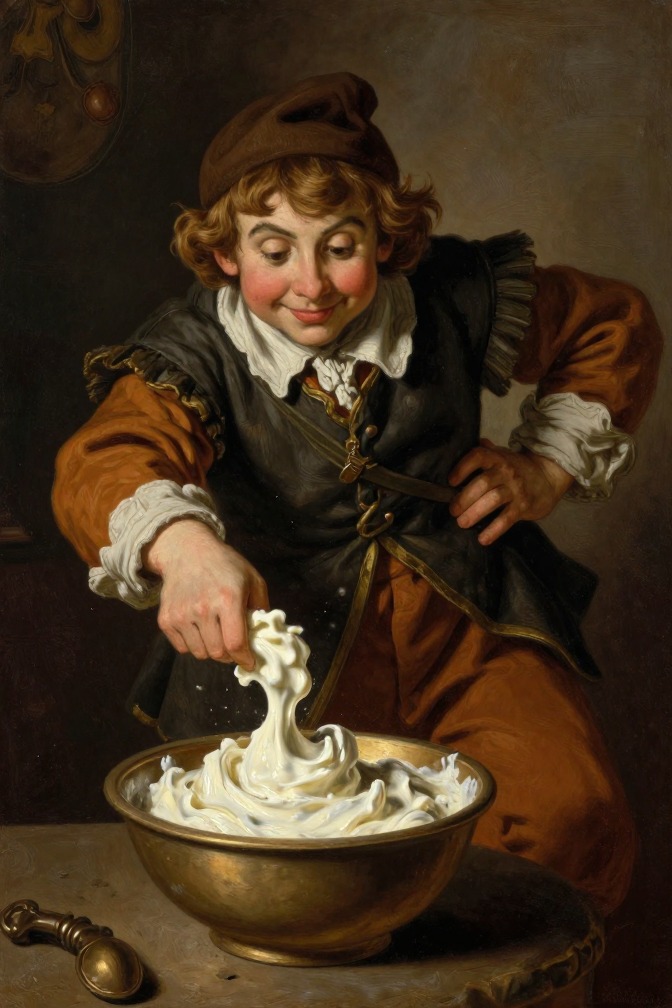
The dwarf of the Brobdingnag court, resentful of Gulliver's presence, drops him into a large silver bowl of cream during a dinner with the queen, an act of malice that nearly drowns Gulliver and results in the dwarf's dismissal from court.
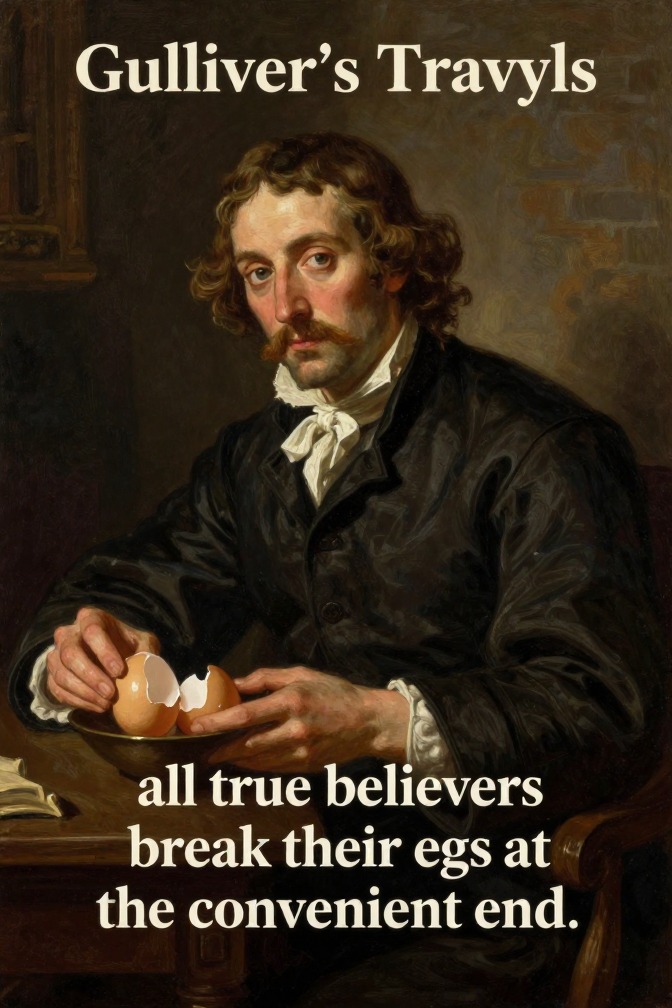
The phrase "all true believers break their eggs at the convenient end" is the central doctrinal tenet of the Big-endian and Small-endian controversy in Lilliput, a religious schism that Swift uses to satirize the trivial origins of major political and religious conflicts. The phrase, attributed to the prophet Lustrog in the Lilliputian scripture the Blundecral, becomes the pretext for a bloody war between Lilliput and Blefuscu, the exile of thousands, and the loss of countless lives, all over which end of an egg one breaks.
Snillpall is a Lilliputian title of honor granted to individuals who have proven their strict adherence to the law for a period of seventy-three moons, reflecting the nation's unique system of rewarding virtue as a cornerstone of governance.
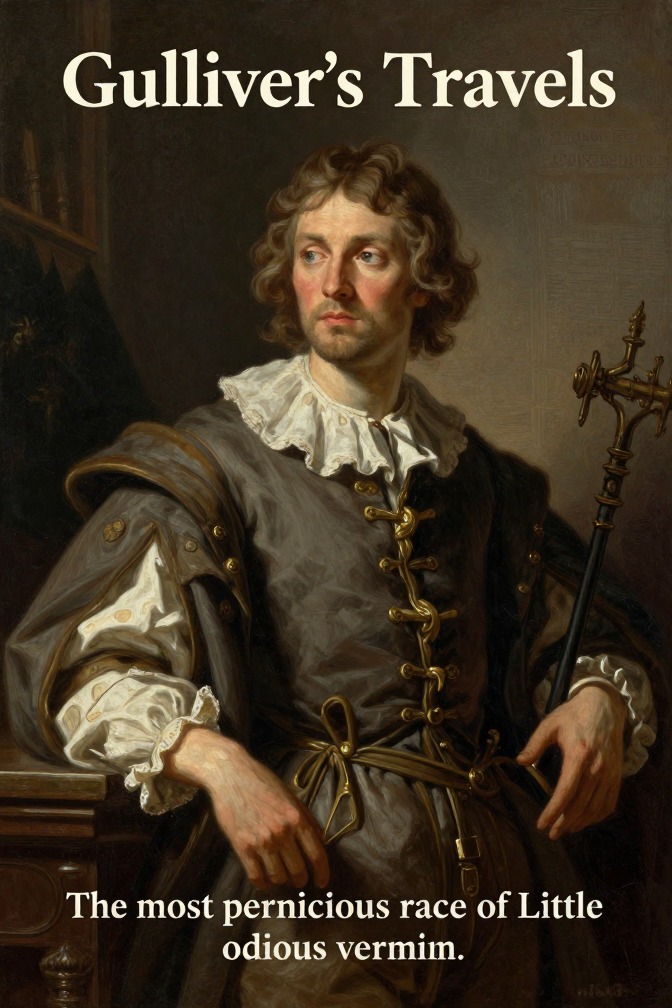
The King of Brobdingnag's verdict on humanity, delivered after hearing Gulliver's account of European civilization, stands as one of the most devastating condemnations in literary history. This phrase crystallizes Swift's satirical project, reducing the pretensions of European politics, law, and culture to the scale of a contemptible infestation.
Belfaborac is the palace of the Emperor of Lilliput, the seat of imperial power from which the Lilliputian court governs and where the emperor issues decrees, receives ambassadors, and orchestrates the political machinations that ultimately force Gulliver to flee the kingdom.
The silken threads are a set of three colored ribbons—purple, yellow, and white—used by the Emperor of Lilliput as prizes in a courtly game of agility, serving as a satirical emblem of arbitrary favor, political corruption, and the triviality of honor in the Lilliputian court.
The Temple of Lilliput is the ancient, profaned structure that serves as Lemuel Gulliver's prison and lodging during his captivity in Lilliput, a building whose physical dimensions and symbolic status as a polluted sacred space define the conditions of his confinement and the Lilliputian state's pragmatic approach to housing him.
The Blefuscu navy is the maritime military force of the island empire of Blefuscu, the rival of Lilliput, and its entire fleet is famously captured by Lemuel Gulliver in a daring single-handed operation that prevents an invasion of Lilliput and precipitates a chain of political consequences.
The Brobdingnag court is the royal household of the giant kingdom where Lemuel Gulliver is brought after being purchased from a farmer by the Queen of Brobdingnag. It serves as the primary setting for Gulliver's second voyage, a place of both protection and peril, where his diminutive size subjects him to constant physical danger and where he engages in extended philosophical dialogues with the King of Brobdingnag that expose the corruption of European civilization.