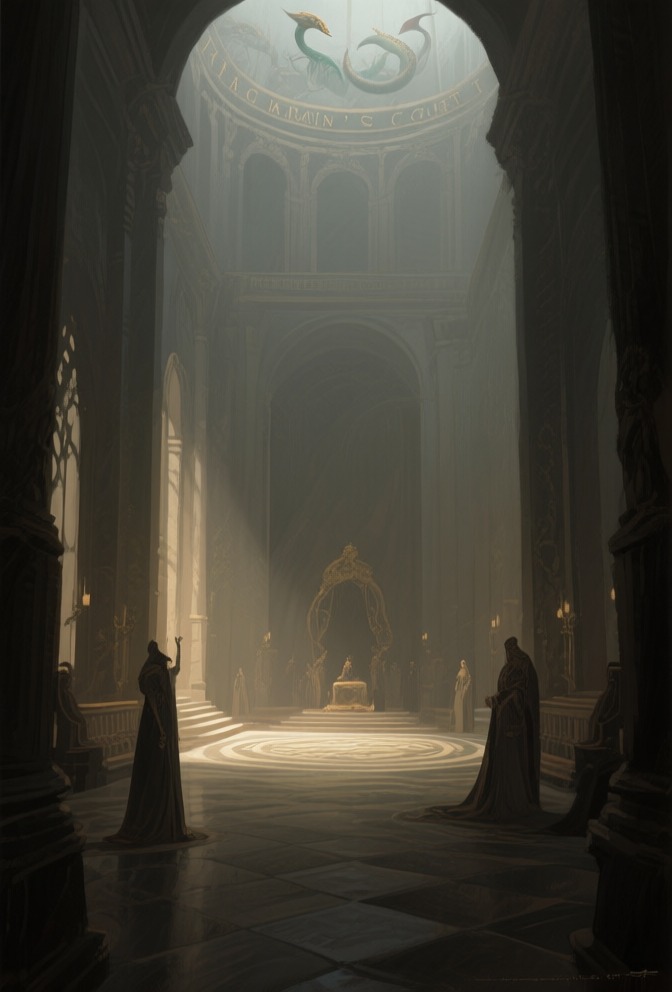
The Merman's Court is the great hall of the New Castle in White Harbor, the seat of House Manderly. It is the setting for a pivotal confrontation in which Davos Seaworth, Hand of King Stannis Baratheon, pleads for Lord Wyman Manderly's allegiance, only to be publicly condemned and sentenced to death in a mummer's farce designed to deceive the Freys.
The Narrow Sea is the body of water separating the continent of Westeros from the eastern continent of Essos. It is the central maritime corridor of the known world, crossed by countless fleets, exiles, traders, and invaders throughout history. Its waters witness the passage of armies, the flight of fugitives, and the arrival of dragons, making it a constant presence in the lives of characters from both continents.
Norvos is a Free City in Essos, known for its strict religious culture and its role as the birthplace of Mellario of Norvos, wife of Prince Doran Martell of Dorne. The city is mentioned in the context of the Dornish succession and the history of House Martell.
Old Wyk is the most sacred island of the Iron Islands, the site of the kingsmoot where Euron Greyjoy was crowned King of the Iron Islands, and the location of Nagga's Hill, where the ancient kings of the isles were once chosen.
The Plaza of Purification is a central public square in Meereen, infamous as the site where Daenerys Targaryen executed one hundred sixty-three Great Masters in retaliation for the slave children nailed to mileposts along the road from Yunkai. The plaza becomes a recurring symbol of the brutal, unresolved tension between the queen's liberating ideals and the violent costs of conquest, and later serves as the location where she receives the bones of a child killed by her dragon Drogon, marking the moment her rule begins to unravel.
The Reach is one of the constituent regions of the Seven Kingdoms of Westeros, a fertile and populous land ruled from Highgarden by House Tyrell. Its wealth, agricultural abundance, and powerful armies make it a decisive prize in the wars that follow Robert Baratheon's death. The Reach's allegiance shifts from Renly Baratheon to the Lannister-Tyrell alliance, and its military strength—especially the forces of Houses Tyrell, Tarly, and Redwyne—shapes the outcome of the War of the Five Kings and the subsequent struggle for the Iron Throne.
Sea Dragon Point is a remote, thinly populated peninsula on the western coast of the North, between the Bay of Ice and the Stony Shore, that Asha Greyjoy considers as a potential site for a new kingdom of her own after her failure at the kingsmoot and the loss of her father's conquests.
The Smoking Sea is the stretch of ocean surrounding the Valyrian Peninsula, poisoned and made unnavigable by the Doom of Valyria four centuries before the events of A Dance with Dragons. Its waters are perpetually hot, choked with ash and floating pumice, and said to be haunted by demons and the restless dead. The sea functions as a near-impassable barrier between the eastern and western halves of the known world, a cursed boundary that only the most desperate or foolhardy sailors dare to cross.
Stone Hedge is the ancestral seat of House Bracken, a castle in the riverlands that was burned during the War of the Five Kings. It appears in A Dance with Dragons as the base from which Lord Jonos Bracken besieges the rival Blackwood stronghold of Raventree Hall, and as the site where Jaime Lannister negotiates the end of the siege.
Storm's End is the ancient fortress of House Baratheon, a massive castle on the stormy coast of the Stormlands, renowned for its immense curtain wall and its legendary resistance during Robert's Rebellion. In A Dance with Dragons, it serves as a contested prize: held by Stannis Baratheon's men after his departure for the Wall, it becomes a target for the returning Golden Company and the exiled lord Jon Connington, who plans to take it by guile to secure a base for the pretender Aegon Targaryen.
The War of the Ninepenny Kings was a conflict fought in the Stepstones during the reign of King Jaehaerys II Targaryen, pitting the forces of the Iron Throne and its allies against the Band of Nine, a league of ambitious exiles, pirates, and sellswords who sought to carve out new kingdoms. The war is remembered as the final Blackfyre Rebellion, ending the male line of House Blackfyre and providing a proving ground for many of the warriors who would later shape the destinies of the Seven Kingdoms.
Huckleberry Finn is the juvenile pariah of St. Petersburg, the son of the town drunkard, who lives a life of absolute freedom outside the constraints of society. He is cordially hated and dreaded by all the mothers of the town, yet envied by every respectable boy, including Tom Sawyer, for his gaudy outcast condition. Huck becomes Tom's closest ally in the graveyard murder, the pirate adventure on Jackson's Island, the treasure hunt in the haunted house, and the final recovery of the gold, and his eventual adoption by the Widow Douglas forces him into a painful confrontation with the demands of civilization.
Nargis is the youngest of Jalil's three wives, a minor but telling figure in Mariam's early life whose presence in the household underscores the legitimacy and privilege from which Mariam is excluded, and who later participates in the family council that decides Mariam's fate.
Jalil's inheritance, a sum of money in a burlap sack and a letter of apology, arrives too late for Mariam but becomes the material foundation for Laila's return to Kabul and her new life as a teacher.
The deciphering of the zodiacal code is the pivotal intellectual breakthrough in the investigation, where William of Baskerville, using his knowledge of Arabic cryptography and Aristotelian logic, decodes the secret message left by the murdered translator Venantius of Salvemec. This event transforms a series of baffling clues into a concrete, actionable directive—"Secretum finis Africae manus supra idolum primum et septimum de quatuor"—which directly points to the hidden entrance of the forbidden "finis Africae" and the lost second book of Aristotle's Poetics, the object around which the entire murder plot revolves.
Captain Wolfgang Beck is the Wehrmacht officer who requisitions Vianne Mauriac's home, Le Jardin, in Carriveau, and whose presence forces the sisters into opposing stances of accommodation and defiance. His character traces a tragic arc from a polite, homesick soldier who tries to act as a gentleman, through a deepening moral conflict as he witnesses Nazi atrocities, to his violent death at the hands of the women he has tried to protect. Beck's fate crystallizes the novel's central question: whether a decent man can serve an evil regime without being destroyed by it.
Julien is the son of Vianne Mauriac, born after World War II and raised in the United States. In the present-day frame narrative of 1995, he is a successful surgeon who, after his father's death and Vianne's cancer diagnosis, takes charge of her care, selling her Oregon beach house and moving her to the Ocean Crest Retirement Community. His controlling, well-meaning love is built on an incomplete version of his mother, and his discovery of her wartime past—including her role as a passeur and the existence of her sister Isabelle's heroism—forces a fundamental re-evaluation of the woman he thought he knew.
Monsieur Humbert is a minor character in the novel, a pudgy, nervous butcher from Paris who, along with his wife Patricia, offers Isabelle Rossignol a ride south during the exodus of June 1940. His brief appearance highlights the chaos, scarcity, and collapse of ordinary life as refugees flee the German advance, and his failure to secure enough petrol strands Isabelle, forcing her to continue on foot and setting her on the path toward her eventual resistance work.
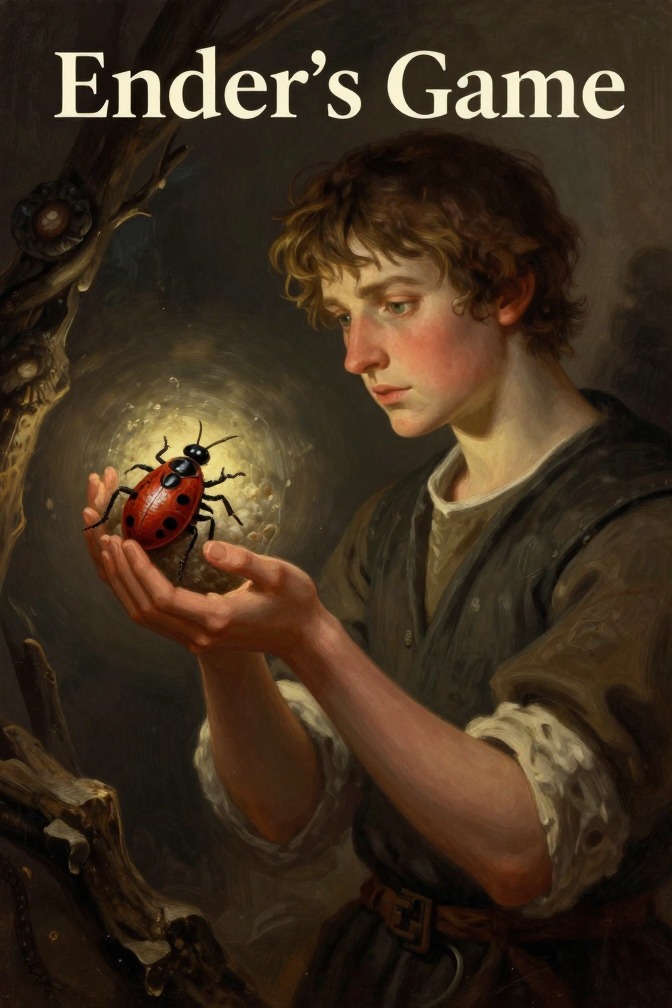
Ender discovers and takes the bugger queen's cocoon, a pivotal act of redemption and understanding that transforms his role from destroyer to speaker for the dead.
Ender turns defeat into draw against Leopard Army is a pivotal early battle in Ender's Game, where Ender, disobeying orders, single-handedly salvages a hopeless situation for Salamander Army by using his legs as a shield and firing from a hidden position, transforming a certain loss into a draw and demonstrating his tactical genius.
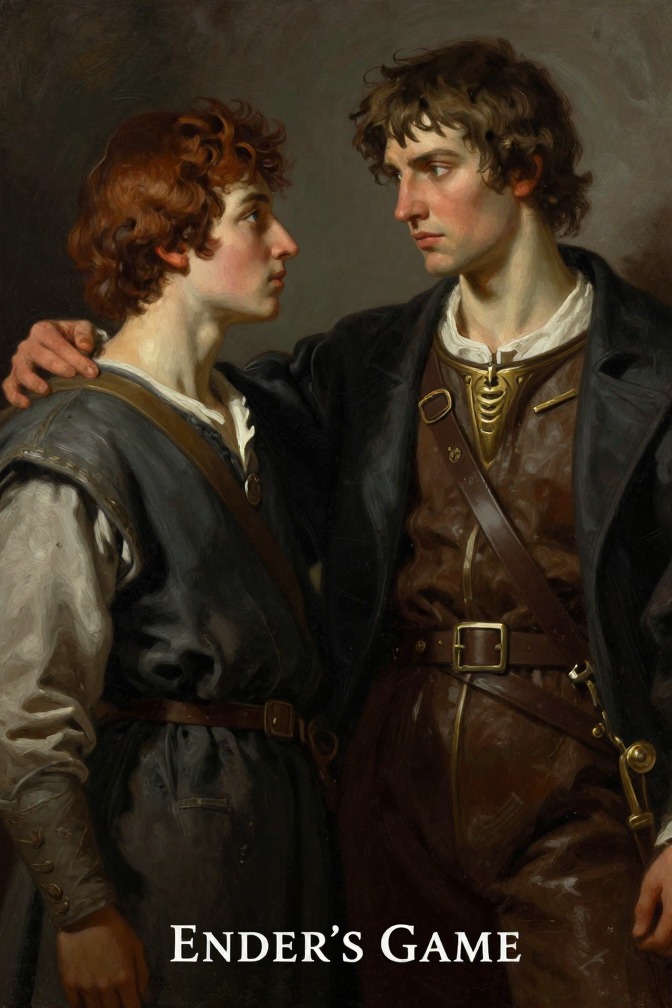
Ender Wiggin, the protagonist of Orson Scott Card's Ender's Game, is a child genius selected by the International Fleet to save humanity from the alien Buggers. His journey from a bullied Third on Earth to the commander of humanity's fleet in the Third Invasion is marked by isolation, manipulation, and moral conflict. Ender's decisive significance lies in his ability to understand his enemies so deeply that he can defeat them, culminating in the accidental genocide of the Bugger species and his subsequent role as their Speaker for the Dead.
Locke and Demosthenes are the pseudonymous online identities created by Peter and Valentine Wiggin, two child prodigies who, through their writings, influence global politics and help shape the post-war world order. Their partnership is a complex blend of collaboration and manipulation, with Peter as the strategist and Valentine as the writer, ultimately leading to Peter's rise as Hegemon and Valentine's escape with Ender.
Harold Lauder's repeated use of the proverb 'Every dog has his day' marks a crucial turning point in his character arc, transforming from a bitter, rejected adolescent into a smiling, calculating traitor who has fully committed to his revenge against the Boulder Free Zone. The phrase first appears as a bitter, self-justifying mantra after he reads Fran Goldsmith's diary and discovers she loves Stu Redman, and later becomes a chillingly cheerful sign-off that signals his final, murderous intentions.
Annmarie is a minor character in the novel, remembered by Charles Decker as a girl he dated once, on a trip to Harrison State Park with his friend Joe McKennedy and her sister Rosalynn. The outing is recalled primarily for Decker's severe anxiety, which caused him to vomit in the car, an incident that left him with lasting shame and a sense of social failure.
Don Grace is the school psychologist and guidance counselor at Placerville High School who becomes a central figure in the hostage crisis when Charlie Decker forces him into a humiliating psychological interrogation over the intercom, breaking his professional composure and revealing his vulnerability.
George Yannick is a minor but revealing character in the hostage crisis at Placerville High School, whose actions and observations illuminate the group dynamics of the classroom and the psychological unraveling of both the captor and his classmates.
Jerry Mueller is a small-time marijuana dealer in Oldtown, Maine, whose apartment becomes the setting for Charlie Decker's first experience with cannabis during a weekend trip to Bangor with Joe McKennedy and his brother Pete. Jerry's unassuming, friendly demeanor—he is fully clothed, listens to bluegrass music, and wears a button reading "GOLDILOCKS LOVED IT"—contrasts sharply with Charlie's anxious expectations of a stereotypical drug den. The encounter introduces Charlie to marijuana and, through a shared interest in bluegrass, briefly offers him a rare moment of uncomplicated happiness before the weekend's events spiral into a humiliating sexual failure that deepens his psychological isolation.
Scragg Simpson is a minor character in Richard Bachman's novel Rage, a college student at the University of Maine who appears during Charlie Decker's flashback to a weekend trip to Bangor with his friend Joe McKennedy. He serves as a social connector, introducing the narrator to a party scene that leads to a pivotal and traumatic failed sexual encounter, and his brief presence underscores the casual, countercultural atmosphere of the college social world that Charlie observes from the margins.
Ted Jones is a popular, handsome Placerville High School senior whose carefully constructed image of success and moral superiority is systematically dismantled during Charlie Decker's hostage crisis, culminating in a brutal collective assault by his classmates that leaves him catatonic.
Thomas Denver is the principal of Placerville High School, a tall, cadaverous man who represents the institutional authority that Charlie Decker violently rejects. His confrontation with Charlie in the administration office triggers the breakdown of conventional power, as Charlie's personal attacks leave Denver unable to respond, setting the stage for the hostage crisis.