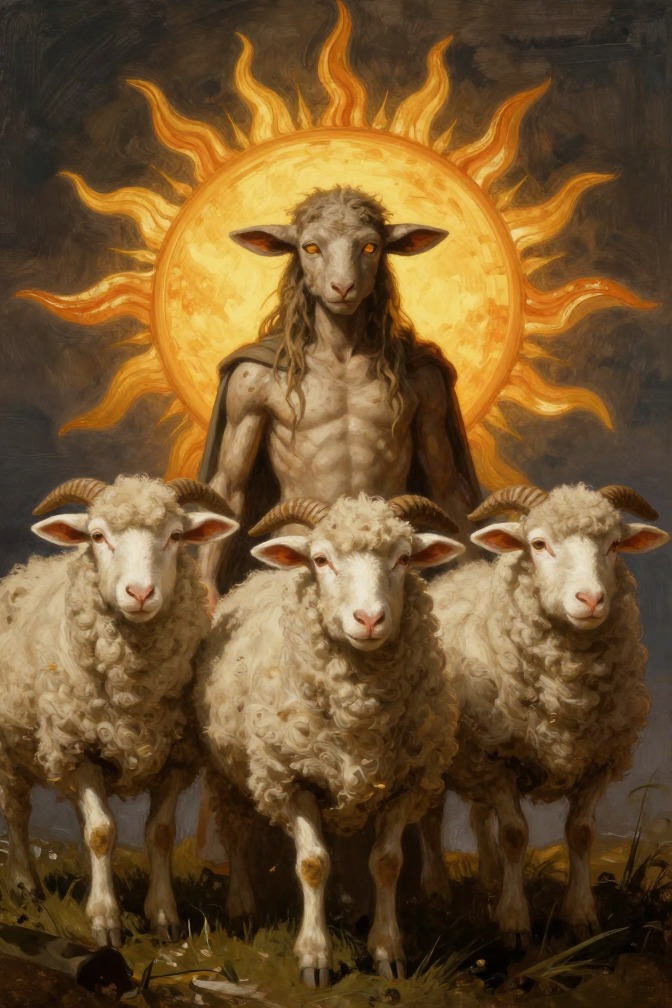
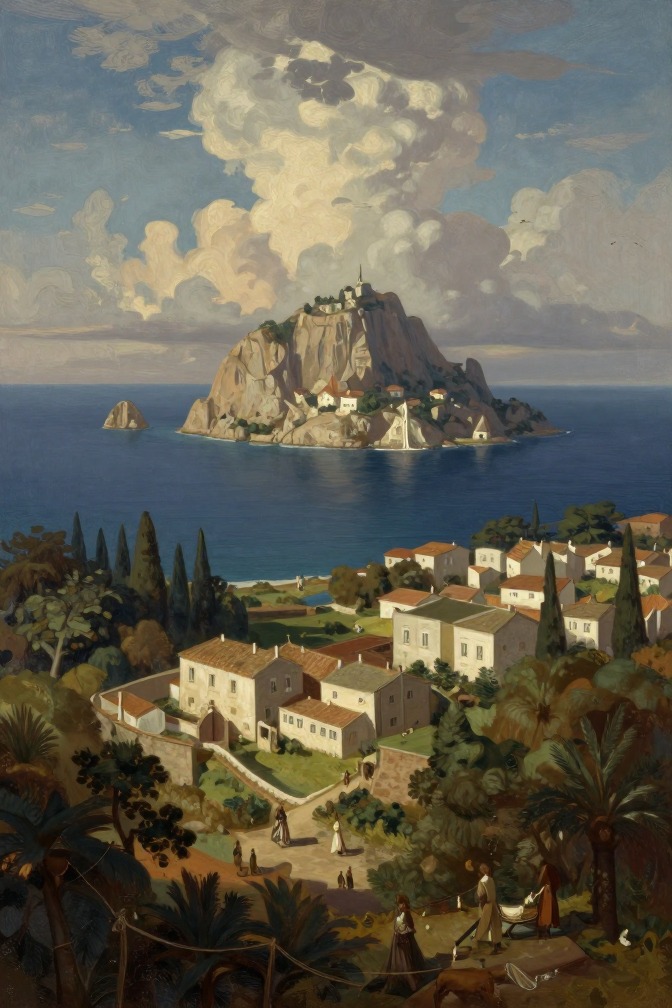
The Sheep of the Sun are the sacred, immortal flocks belonging to the sun-god Helios, pastured on the Thrinacian island. Their slaughter by Odysseus's starving crew, despite explicit warnings from Teiresias and Circe, triggers the destruction of the last of his ships and the death of all his remaining men, fulfilling the prophecy that seals Odysseus's solitary return.
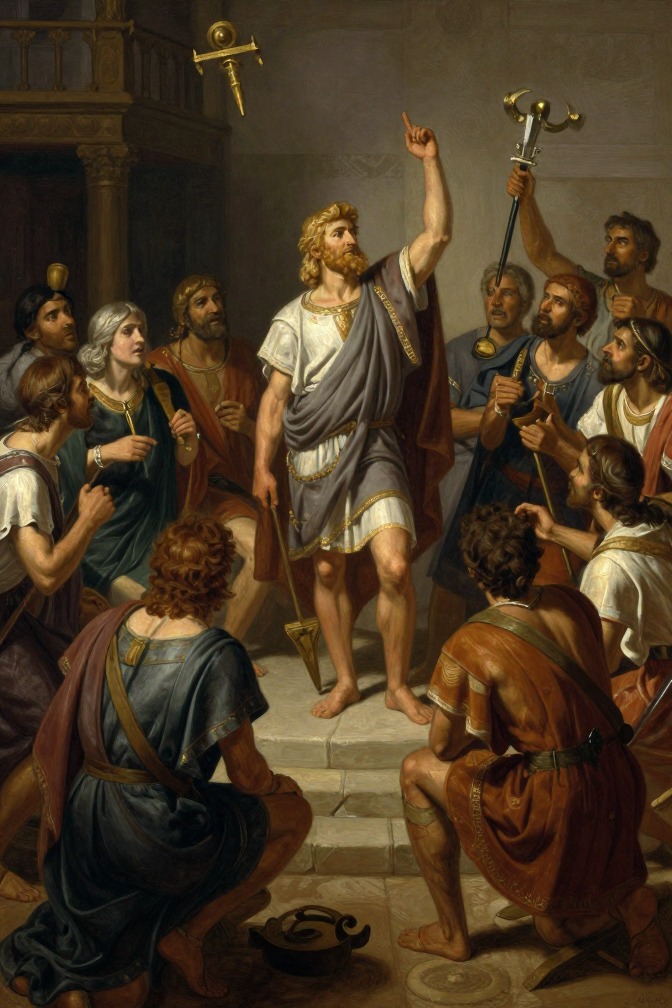
Telemachus's Assembly is the first public gathering of the Ithacan people in nearly twenty years, convened by the young prince to denounce the suitors who are devouring his father's estate and to seek public support for his impending journey in search of news of Odysseus. The assembly marks Telemachus's emergence as a political actor, exposes the deep social and moral crisis in Ithaca, and sets in motion the central conflicts of the poem's first half.
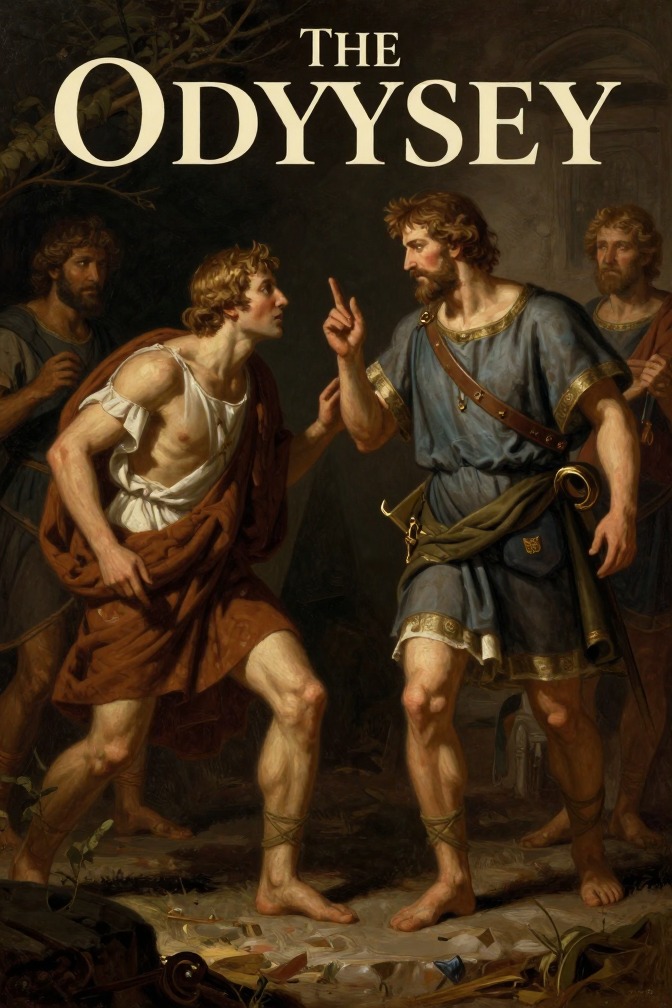
The Visit to Laertes is the final recognition scene of the Odyssey, in which Odysseus, after slaughtering the suitors and being reunited with Penelope, seeks out his aged father on the remote farm and proves his identity through the shared memory of the orchard and the scar from the boar's tusk, restoring the three-generation male line of the house of Odysseus.
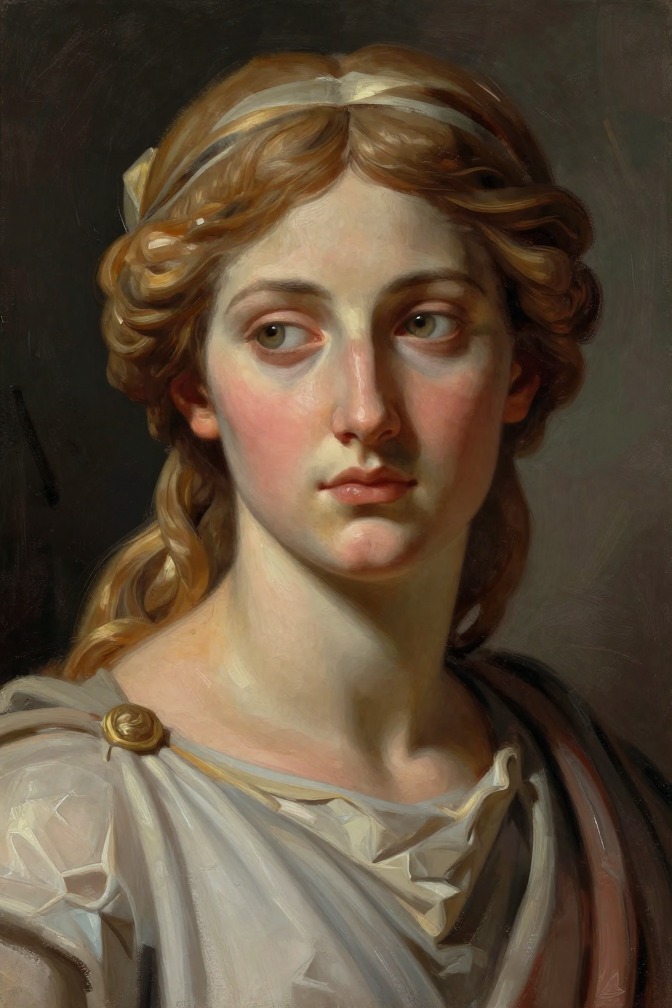
The formulaic epithet "grey-eyed Athene" (or "grey-eyed Athena") is the most frequent and thematically charged descriptive tag for the goddess Athena in the Odyssey. It appears at pivotal moments of divine intervention, marking her as the embodiment of piercing intelligence, strategic clarity, and protective foresight—the quality that most consistently guides Odysseus and Telemachus toward their respective goals.
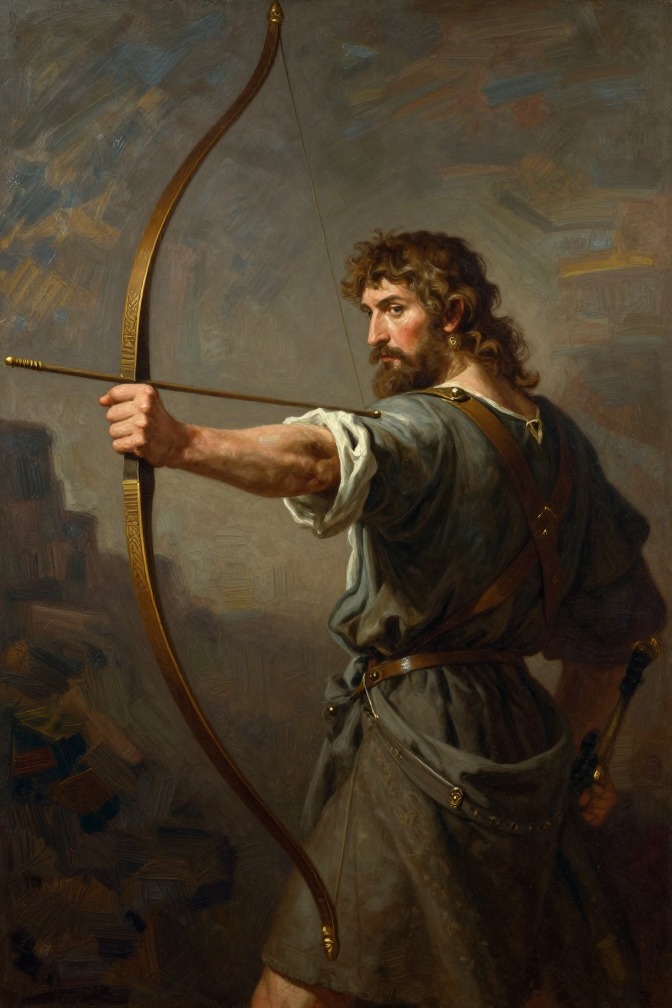
The mighty bow of Ulysses is the central object of the poem's climactic contest and slaughter, a gift from Iphitus that serves as both a token of heroic friendship and an instrument of decisive vengeance, its unstringability by the suitors proving their inferiority and its stringing by Odysseus triggering the massacre that restores order to Ithaca.
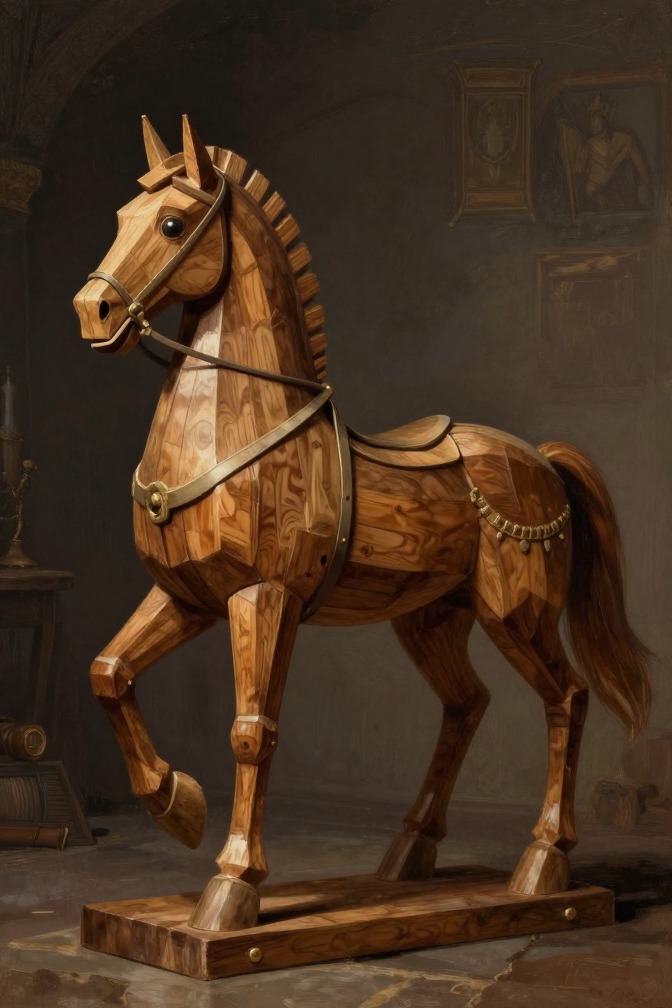
The wooden horse is the central stratagem of the Trojan War in the Odyssey, a massive hollow construction devised by Epeus with Athena's aid and filled with Greek warriors, which the Trojans themselves drag inside their city walls, leading to the sack of Troy. It functions as the ultimate symbol of Odysseus's cunning and the decisive turning point of the war, and its story is performed twice within the poem—once by the bard Demodocus at the Phaeacian court and once by Odysseus himself—each performance triggering a different kind of recognition and emotional response.
The Aeolian island is the floating, bronze-walled home of Aeolus, the mortal keeper of the winds, where Odysseus and his crew are hosted for a month and given a bag containing all storm winds to ensure a safe return to Ithaca, only to have their voyage ruined when the crew opens the bag out of greed, causing the winds to escape and blow them back to the island, where Aeolus refuses further help, marking a pivotal failure of leadership and trust.
Lemnos is an island in the northern Aegean Sea that appears in the Odyssey as a destination for Hephaestus, a place associated with the Sintians, and a reference point in the suitors' threats against Telemachus and the beggar Odysseus.
Marathon is a location in Attica mentioned in the Odyssey as a place visited by Athena after leaving Scheria, and it is also referenced in the context of the suitors' depredations and the idealized landscape of the Phaeacian gardens.
The lotus fruit is a plant encountered by Odysseus and his crew on their journey home from Troy; eating it causes those who taste it to lose all desire to return home, forgetting their past and their purpose, and it becomes a defining test of Odysseus's leadership and the theme of temptation versus longing for home.
The Trojans are the people of Troy, the great city besieged and sacked by the Achaeans in the Trojan War, whose destruction forms the distant backdrop of the Odyssey and whose surviving members appear as antagonists, victims, and foils throughout the poem.
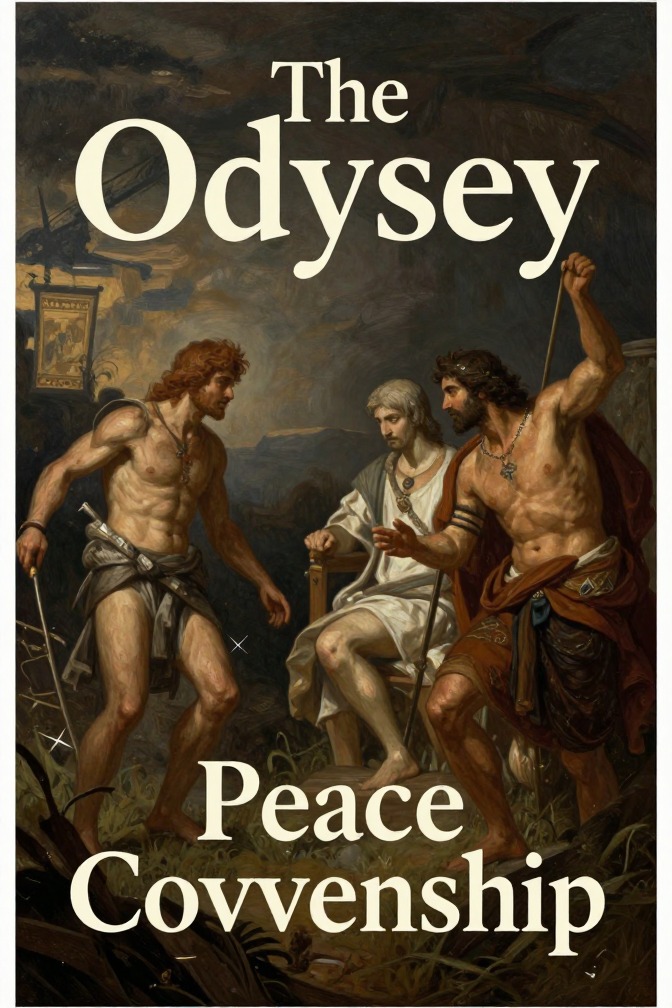
The Peace covenant between Odysseus and the Ithacans is the final settlement that ends the civil war on Ithaca after the slaughter of the suitors, transforming private vengeance into a publicly sanctioned, divinely ordained reconciliation that restores order to the kingdom.
The Peace Covenant is the final settlement imposed by Athena at the end of the Odyssey, ending the civil war between Odysseus and the families of the slain suitors and restoring lawful rule to Ithaca.
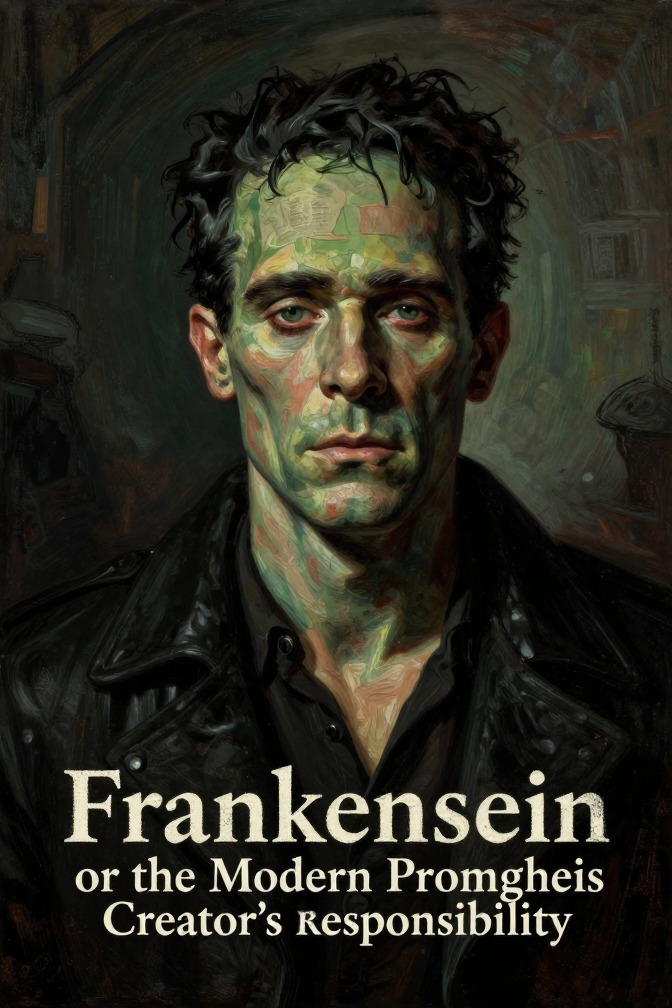
The concept of Creator's Responsibility in Frankenstein examines the ethical obligations a creator owes to their creation, and the catastrophic consequences when those duties are abandoned. Victor Frankenstein's failure to nurture, guide, or even acknowledge his creature leads directly to the novel's spiral of murder and despair, making the theme a central moral framework of the story.
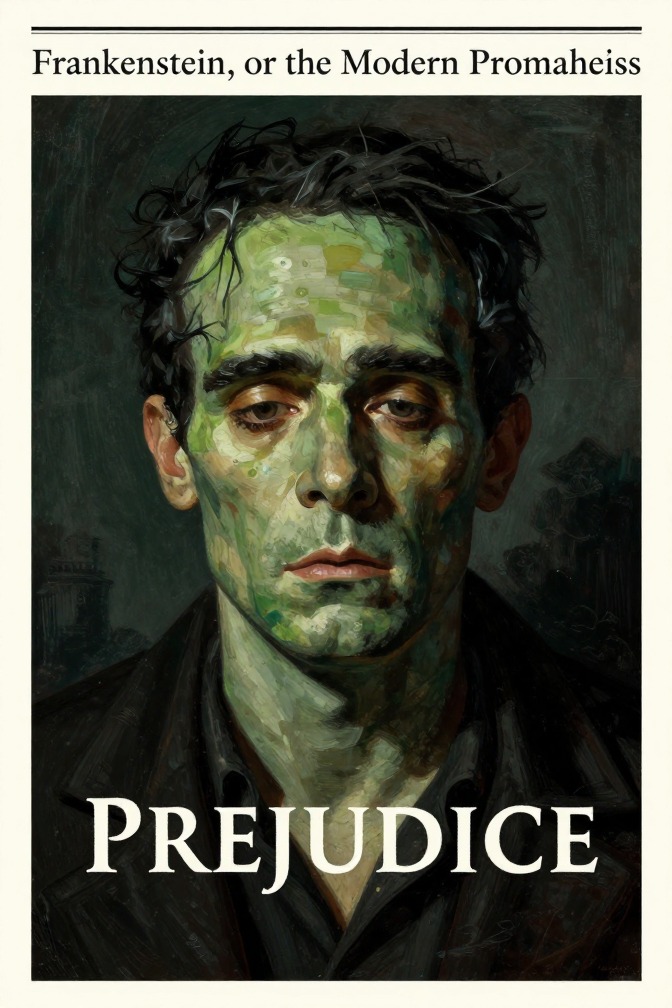
Prejudice, the reflexive judgment of others based on appearance rather than character, operates as the central engine of tragedy in Mary Shelley's Frankenstein. The monster's entire descent into vengeful violence is precipitated by the instantaneous, visceral horror his appearance provokes in every human being he encounters, a pattern of rejection that forecloses every attempt he makes at companionship and moral development. This systematic prejudice, which the monster himself comes to internalize and articulate, transforms a being initially capable of benevolence into the very monster others assume him to be, making the novel a profound critique of how social condemnation can create the evil it purports to discover.
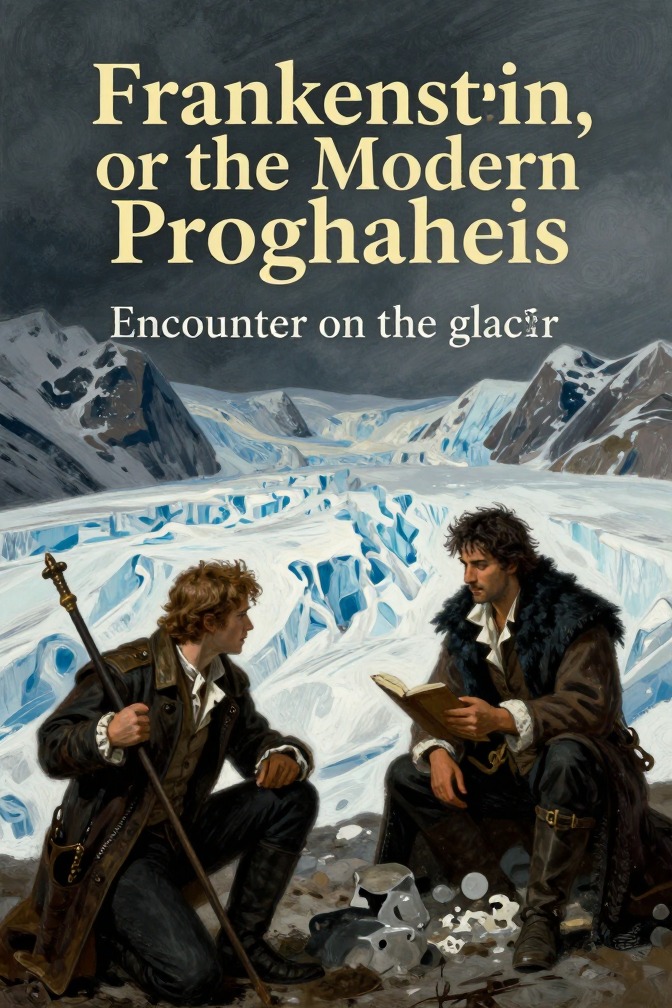
The encounter on the glacier is the pivotal confrontation between Victor Frankenstein and the monster on Montanvert, where the creature narrates his tragic history and demands a female companion, forcing Victor to confront his responsibilities as a creator.
Victor Frankenstein's journey to England, undertaken in the late autumn of 17—, is a pivotal expedition that he conceives as a necessary step to fulfill his promise to create a female companion for the monster, but which instead becomes a descent into deeper isolation, horror, and tragedy as he travels through the Rhine, the Netherlands, and England, ultimately leading to the destruction of the female creature and the murder of his closest friend.
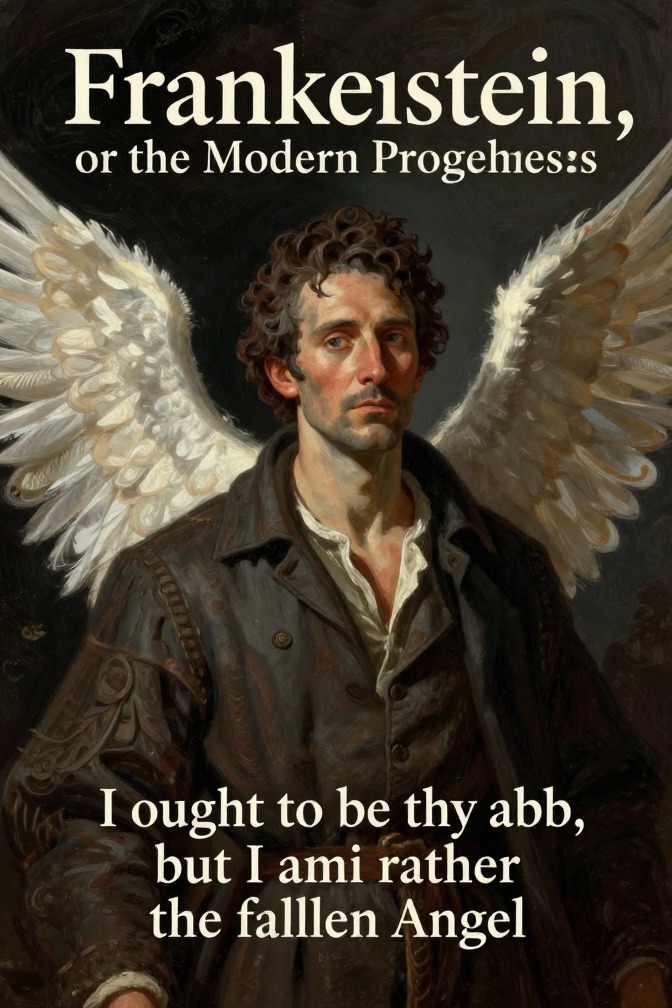
The monster's lament, 'I ought to be thy Adam, but I am rather the fallen angel,' crystallizes his tragic self-conception as a being created for love and companionship who, rejected by his maker and all humanity, has been twisted into a figure of vengeance and destruction.
Austria is a European nation that appears in Frankenstein as the origin of the dungeons where Safie's father, the Turk, is imprisoned, as the source of the Austrian government that restores part of Elizabeth's inheritance, and as a political entity whose dungeons and power structures shape the fates of several characters.
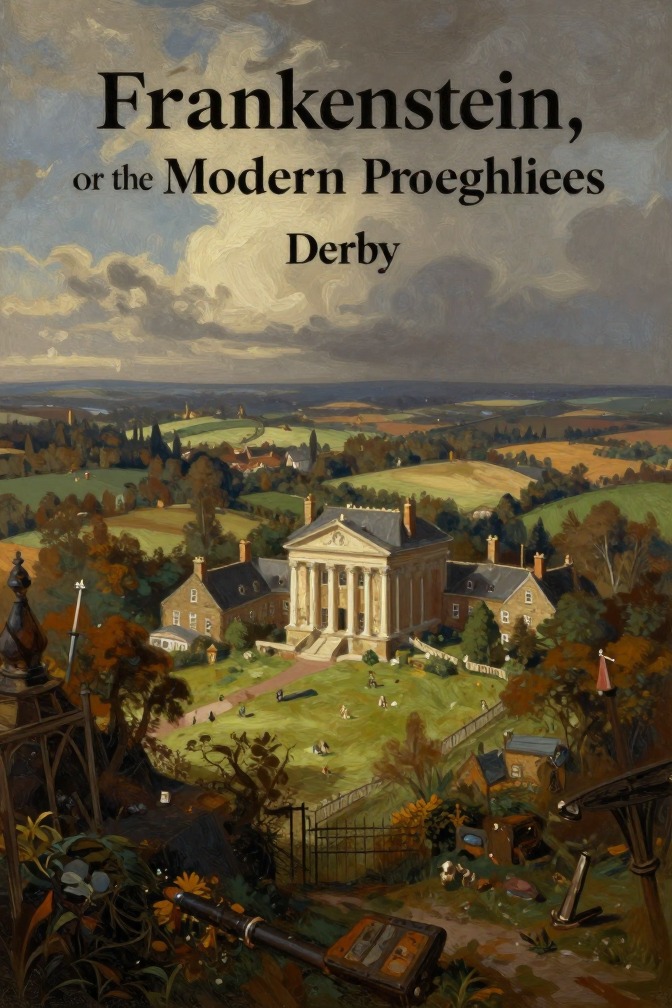
Derby is a city in England that Victor Frankenstein and Henry Clerval pass through during their tour of the British countryside, serving as a transitional point in Victor's journey toward the remote location where he intends to fulfill his promise to the monster.
Havre-de-Grace is the French port from which Victor Frankenstein and his father sail after Victor's release from prison in Ireland, marking the final stage of his return to Geneva and the resumption of his tragic trajectory.
India is a distant but symbolically significant destination in Mary Shelley's Frankenstein, representing the intersection of colonial ambition, romantic idealism, and the tragic consequences of Victor Frankenstein's secret pact with his creature. Though never visited by the protagonist, India appears as the ultimate goal of Henry Clerval's planned expedition and as a counterpoint to the monster's proposed exile in South America, highlighting themes of exploration, cultural encounter, and the pursuit of glory.
Ingolstadt is the Bavarian university town where Victor Frankenstein pursues his studies in natural philosophy and chemistry, and where he creates the monster in a secret laboratory, an act that sets the entire tragic narrative in motion.
Lausanne is the Swiss lakeside town where Victor Frankenstein, returning from Ingolstadt to Geneva after the murder of his brother William, stops for two days in a state of paralyzing fear and dread, unable to proceed. It marks the first moment in the novel where his guilt and terror crystallize into a physical paralysis that foreshadows his entire tragic trajectory.
London serves as a pivotal location in Victor Frankenstein's narrative, a city of refuge and despair where he and Henry Clerval reside for several months, and where Victor's psychological torment deepens as he collects materials for his dreaded second creation.
Lyons is the French city through which Felix De Lacey conducted the escaped Turkish merchant and his daughter Safie during their flight from Paris to Italy, a journey that ultimately led to the ruin of the De Lacey family and set the stage for the monster's encounter with them.
Milan is a major Italian city that appears in Victor Frankenstein's early childhood memories and in his feverish dreams during his nervous breakdown, serving as a site of family travel and a recurring symbol of lost innocence and psychological trauma.
Mont Saleve is the steep, nearly perpendicular hill that bounds the Plainpalais region south of Geneva, serving as the site where Victor Frankenstein first confirms the monster's guilt in the murder of his brother William and as a recurring symbol of the creature's superhuman mobility and Victor's helplessness.
Montanvert is the glacier in the Alps where Victor Frankenstein confronts the monster he created, a pivotal location that serves as the stage for the creature's demand for a female companion and the revelation of his tragic history.
The Orkney Islands serve as the remote, desolate setting where Victor Frankenstein attempts to fulfill his promise to create a female companion for the monster, only to destroy the unfinished creature in a fit of horror and moral revulsion, an act that precipitates the monster's vow of revenge on Victor's wedding night and the subsequent murders of Henry Clerval and Elizabeth Lavenza.