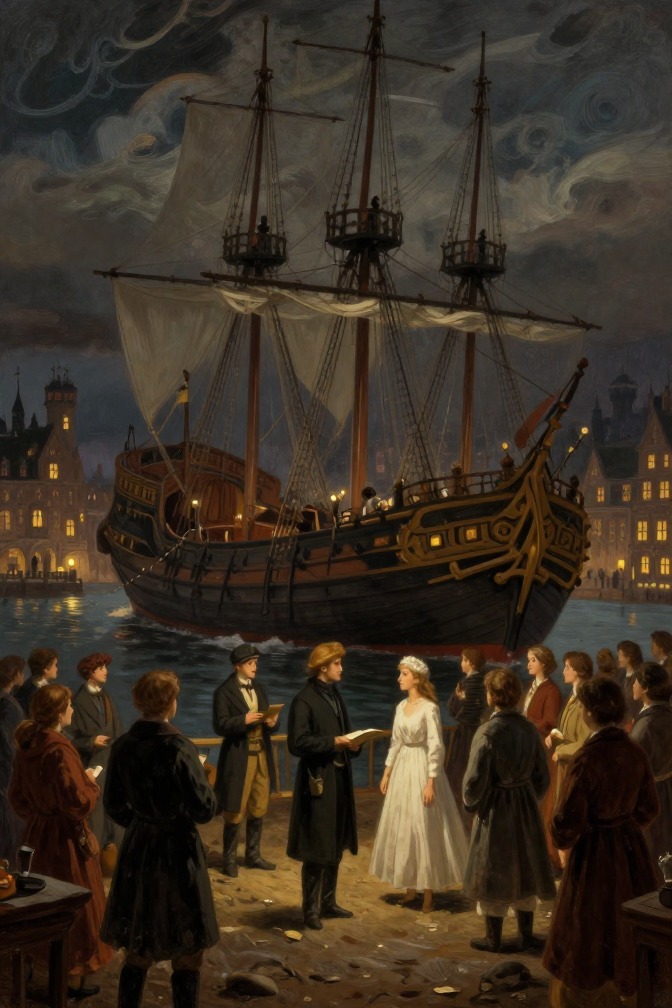
The ship is a location visited by Scrooge and the Ghost of Christmas Present, representing the farthest reach of Christmas cheer and human connection, even in the most isolated and perilous circumstances.
The iron frame is the medical apparatus that supports Tiny Tim's limbs, marking him as a cripple and serving as the story's most potent symbol of vulnerability, mortality, and the moral stakes of Scrooge's transformation.
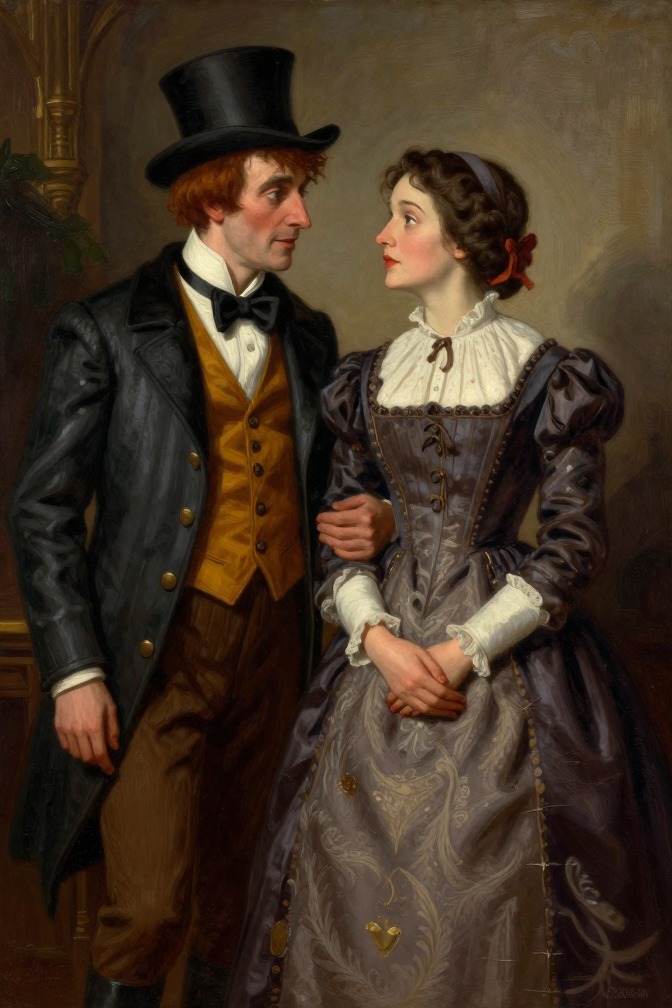
The marriage of Bob Cratchit and Mrs. Cratchit is a central domestic relationship in A Christmas Carol, defined by mutual affection, shared hardship, and a resilient partnership that anchors the Cratchit family through poverty and grief. Their bond is tested by Tiny Tim's illness and death, but it endures as a model of loving cooperation and quiet strength, ultimately rewarded by Scrooge's redemption.
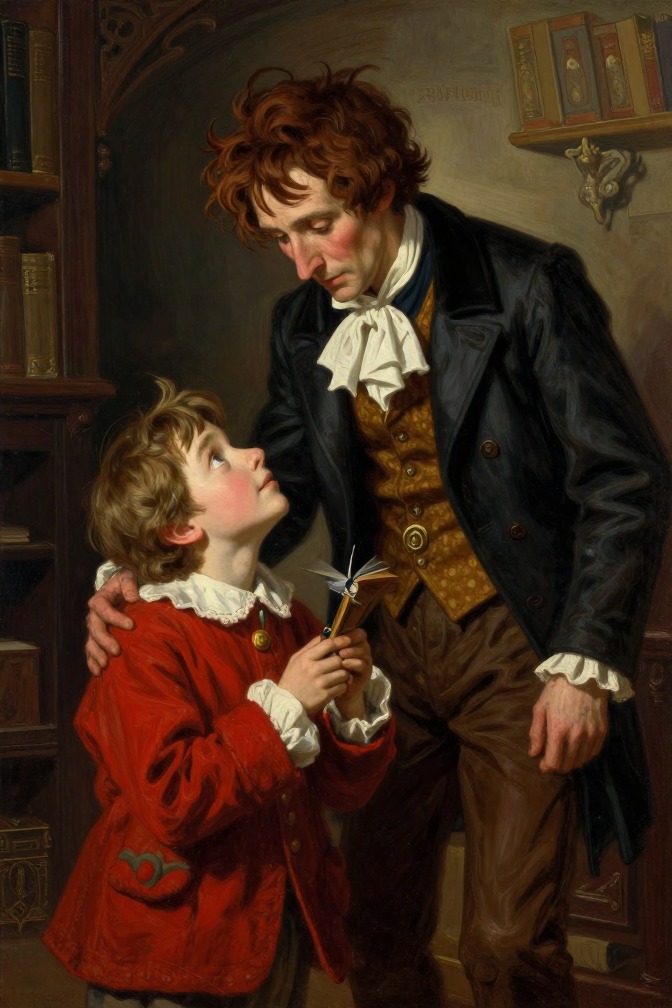
The father-son relationship between Bob Cratchit and Tiny Tim is the emotional heart of A Christmas Carol, embodying the values of love, gratitude, and resilience in the face of poverty and disability, and serving as the primary catalyst for Scrooge's moral transformation.
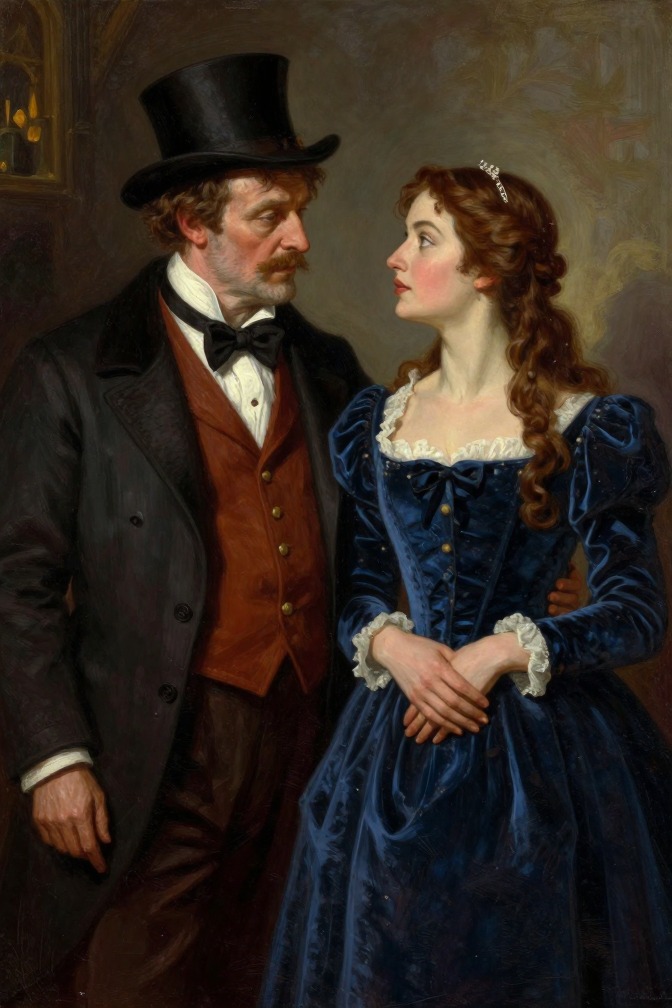
Scrooge and Belle Former Engagement is a pivotal relationship in Charles Dickens's A Christmas Carol, representing the emotional cost of Scrooge's transformation from a loving young man into a miser. The engagement, broken by Belle when Scrooge's obsession with wealth displaces his affection, serves as a key episode in the Ghost of Christmas Past's tour, revealing the personal loss that underlies Scrooge's isolation and setting the stage for his eventual redemption.
The Scrooge and Fezziwig Apprenticeship is a formative relationship from Ebenezer Scrooge's youth, presented during the Ghost of Christmas Past's visit. It contrasts the warmth, generosity, and communal joy of Fezziwig's employment with the cold, miserly path Scrooge later chose, and it becomes a crucial emotional catalyst for Scrooge's reclamation.
The relationship between Ebenezer Scrooge and the Ghost of Christmas Past is the first and most psychologically penetrating of the three spirit visitations, initiating Scrooge's moral reclamation by forcing him to confront the childhood neglect, lost love, and formative experiences that shaped his miserly character.
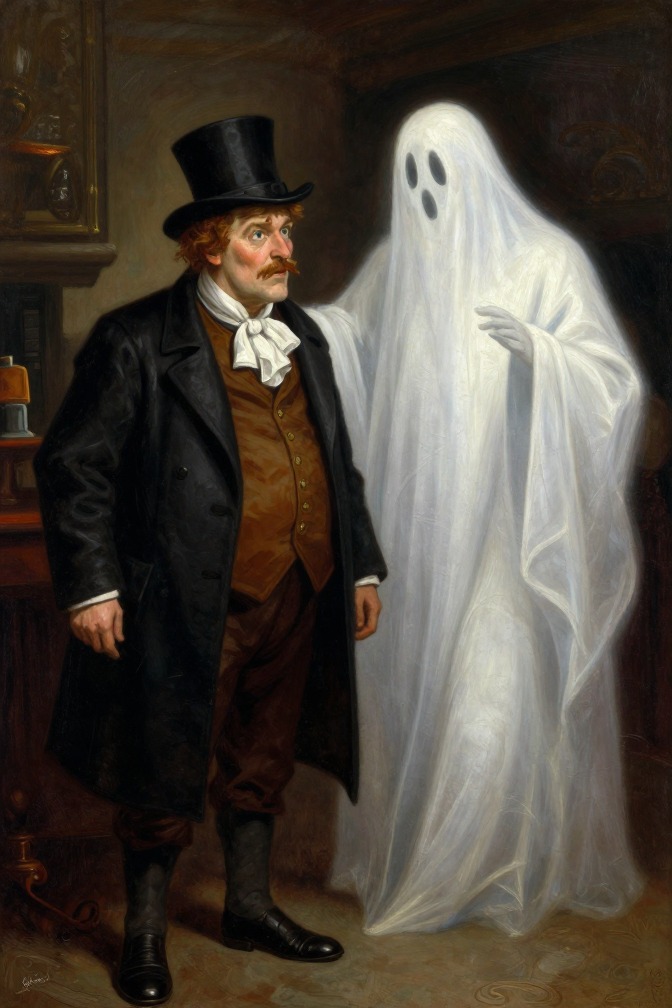
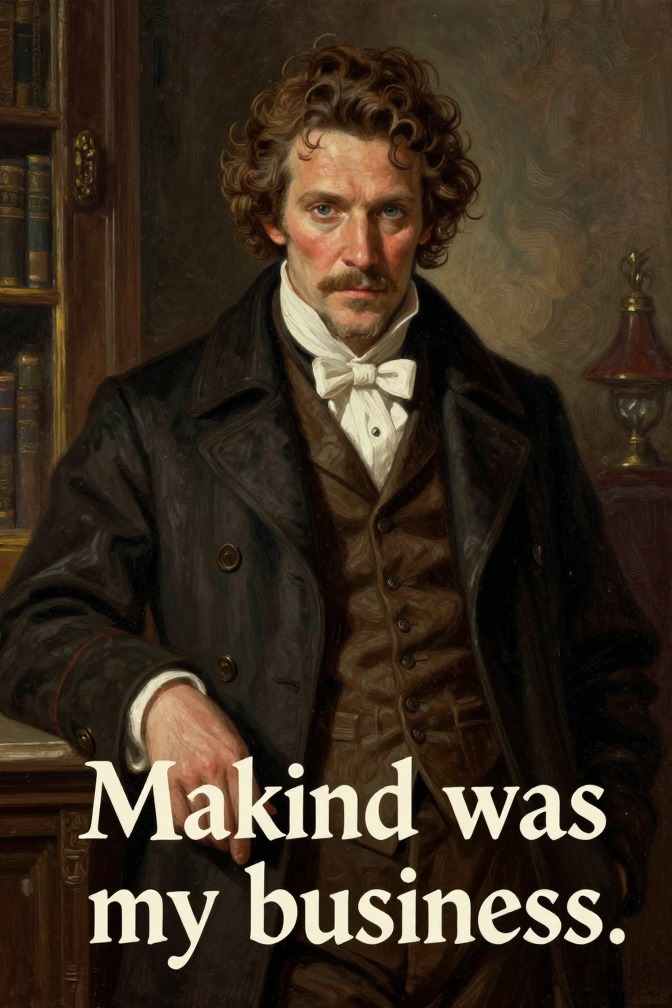
The Scrooge and Marley Partnership is the foundational business and symbolic relationship of Charles Dickens's *A Christmas Carol*, representing the worldly, money-centered existence that Ebenezer Scrooge must transcend. The firm, known as Scrooge and Marley, outlives Jacob Marley's death by seven years, with Scrooge retaining his partner's name above the warehouse door and answering to either surname. Marley's ghostly return, bound by a chain forged in life, serves as the catalyst for Scrooge's moral reckoning, revealing that the partnership's true business—mankind's welfare—was tragically neglected.
The bond between Ebenezer Scrooge and his younger sister Fan is a brief but emotionally decisive relationship in his early life, remembered through the Ghost of Christmas Past as the sole source of warmth and rescue from a neglected childhood, and whose early death leaves a lasting wound that shapes his later isolation and his eventual redemption through her son, Fred.
The phrase "Mankind was my business" is the central ethical declaration of Jacob Marley's Ghost in Charles Dickens's A Christmas Carol, articulating the story's moral thesis that human relationships and communal welfare, not financial profit, constitute the true business of life.
The Poor Law is a system of public welfare legislation that Scrooge invokes to justify refusing charity, and which the story systematically critiques through the Ghost of Christmas Present's rebuke and the contrasting vitality of the Cratchit family.
The spirit must walk abroad is a metaphysical rule articulated by Jacob Marley's Ghost in A Christmas Carol, which holds that every person's inner spirit is required to engage actively with fellow human beings during life; failure to do so condemns the spirit to wander after death, witnessing the happiness it could have shared but cannot now attain.
Ignorance is a ghastly, wolfish boy revealed by the Ghost of Christmas Present, who embodies the social evil of willful ignorance and is presented as a dire threat to humanity's future.
Christmas Eve is the pivotal temporal setting of Charles Dickens's *A Christmas Carol*, serving as the night on which Ebenezer Scrooge undergoes his supernatural transformation. It is the day of the story's opening, the night of the three ghostly visitations, and the threshold between Scrooge's miserly past and his redeemed future.
Anne accepts Captain Wentworth's renewed proposal after receiving his passionate letter, leading to their reconciliation and engagement.
Louisa Musgrove's fall from the Cobb at Lyme is the pivotal accident of the novel, a moment of sudden, shocking violence that reverses the romantic trajectory of the story, forces a crisis of character for Captain Wentworth, and ultimately liberates him from a mistaken attachment.
Walter Musgrove is the younger son of Charles and Mary Musgrove, a two-year-old child at Uppercross Cottage whose determined, sturdy, and mischievous behavior provides a minor but telling contrast to the more passive and querulous temperament of his mother, and whose interactions with his aunt Anne Elliot reveal both her patient authority and the spontaneous kindness of Captain Wentworth.
Louisa Musgrove's fall from the Cobb at Lyme is the novel's central crisis, a moment of physical catastrophe that precipitates a complete reconfiguration of the romantic landscape, freeing Captain Wentworth from a perceived obligation and ultimately enabling his reconciliation with Anne Elliot.
The reunion of Anne Elliot and Captain Frederick Wentworth at Uppercross, after eight years of separation, is the pivotal event that reopens the central wound of the novel and sets the entire second half of the plot in motion. Their first meeting in the drawing-room of Uppercross Cottage is a scene of intense, suppressed emotion, marked by Wentworth's cold politeness and Anne's silent mortification, immediately establishing the painful distance between them and the unresolved feelings that will drive the narrative toward its eventual reconciliation.
Captain Frederick Wentworth's description of his ideal woman—"a strong mind, with sweetness of manner"—serves as a concise expression of the qualities he most values and, ironically, as an exact portrait of Anne Elliot, the woman he believes he has lost. The phrase encapsulates the central tension of Persuasion between firmness of character and gentleness of disposition, and it becomes a touchstone for the novel's exploration of constancy, persuasion, and the nature of true attachment.
The phrase 'the elegance of mind and sweetness of character' is the narrator's description of Anne Elliot's intrinsic worth, which stands in stark contrast to the superficial values of her father and sister, and which Captain Wentworth ultimately recognizes as the ideal combination of qualities in a woman.
The phrase 'the misery of such happiness, or the happiness of such misery' captures Anne Elliot's paradoxical emotional state upon unexpectedly encountering Captain Wentworth at the White Hart in Bath, a moment that condenses the novel's central tension between past pain and present hope, between the agony of unresolved love and the ecstasy of its possible renewal.
The precious name of Lady Elliot represents the pinnacle of social and familial aspiration in Persuasion, embodying the dignity, property, and continuity of the Elliot baronetcy. For Anne Elliot, the prospect of bearing this name is a deeply ambivalent temptation—a vision of restored belonging and maternal legacy that she must ultimately renounce because it is inseparable from a man she cannot love. For Sir Walter Elliot, the name is the central ornament of his vanity, the title he reads in the Baronetage with unflagging devotion. The phrase crystallizes the novel's tension between inherited rank and personal worth, between the allure of a fixed social identity and the claims of authentic feeling.
The steadiness of principle and the obstinacy of self-will is a key thematic distinction in Jane Austen's Persuasion, articulated by Captain Frederick Wentworth during his walk with Louisa Musgrove to Winthrop. It contrasts the admirable, reasoned firmness of a collected mind with the reckless, selfish stubbornness that masquerades as resolve, a distinction that becomes central to the novel's moral and romantic resolution.
Kellynch Lodge is the residence of Lady Russell in the village of Kellynch, serving as a secondary home for Anne Elliot and a site of quiet reflection, strategic planning, and emotional refuge throughout the novel.
London is the distant metropolitan center that shapes the ambitions, movements, and social calculations of the Elliot family and their circle in Jane Austen's Persuasion, serving as a site of annual leisure, professional advancement, and the scene of Mr Elliot's early rejection of the family.
Plymouth is a port city in Devon that serves as a key naval and maritime hub in Persuasion, where Captain Frederick Wentworth's ship HMS Laconia docks and where he performs a crucial act of friendship by rushing to inform Captain Benwick of Fanny Harville's death.
Mr Elliot's letter to Charles Smith is a damning piece of private correspondence from 1803 that exposes William Walter Elliot's true character: his contempt for the Elliot family, his mercenary motives, and his cold-blooded ambition, serving as the crucial evidence that finally convinces Anne Elliot of his duplicity.
The Admiralty, the British government department responsible for naval affairs, appears in Persuasion as a distant, bureaucratic force whose decisions shape the careers and fortunes of the Royal Navy officers who form the novel's most admirable social group. It is depicted as an institution capable of sending men to sea in unseaworthy ships, yet also as the arbiter of promotion and prize money that enables men like Captain Frederick Wentworth to rise by merit rather than birth.
The marriage of Admiral Croft and Sophia Wentworth is a model of companionate happiness in Persuasion, contrasting sharply with the unhappy or unequal marriages that surround it. Their union, formed quickly during wartime and sustained by mutual affection, shared activity, and a complete absence of vanity or pretension, provides a living counterexample to the Elliot family's obsession with rank and appearance. The Crofts' relationship is not merely a background detail but a thematic touchstone: it demonstrates the kind of steady, affectionate partnership that Anne Elliot has always desired and that she ultimately achieves with Captain Wentworth.