The Winter Festival is a recurring seasonal celebration in Earthsea, marking the winter solstice and the beginning of the new year, and serves as a key temporal marker for Ged's journey and the narrative's cyclical structure.
Lieutenant Travers is a minor officer in the Santa Ana Army Air Force Base who appears in the cadet-training flashback, notable for his brief but revealing commentary on Lieutenant Scheisskopf's character and for his role in the novel's critique of military absurdity through his detached, analytical observations about flagellation and parade competence.
Feather in cap vs black eye is a recurring conceptual binary in Catch-22 that structures Colonel Cathcart's obsessive, self-defeating calculus of career advancement. The metaphor, which Cathcart himself formalizes on a ledger, opposes a "feather in his cap" (any achievement that might impress his superiors and bring him closer to a general's star) against a "black eye" (any embarrassment, failure, or scandal that could damage his reputation). This binary governs every decision Cathcart makes, from volunteering his men for dangerous missions to raising the number of required combat tours, and it exposes the absurd logic by which personal ambition, not military strategy, drives the war effort. The concept ultimately reveals that Cathcart's system is self-defeating: the very actions that earn him a feather—such as forcing his men to fly more missions—also produce black eyes when men die or rebel, and the two categories often collapse into each other, as when a medal is awarded for a mission that was itself a disaster.
Milk runs are a recurring concept in Joseph Heller's Catch-22, referring to combat missions that are officially designated as easy, low-risk targets. The term embodies the novel's central absurdity: the military's promise of safety is always contingent and deceptive, as even supposedly safe missions can turn deadly, and the designation itself is a tool of manipulation used by commanders like Colonel Cathcart and Colonel Korn to maintain control over the men.
Field mice appear in Catch-22 as a recurring motif tied to Havermeyer's nightly shooting sprees, symbolizing the casual, almost recreational violence that permeates the squadron. Havermeyer, a lead bombardier who never takes evasive action, spends his evenings baiting and killing mice with a stolen .45 pistol, treating the tiny mammals as disposable targets. The mice also surface in other contexts—as objects of fear in Hungry Joe's nightmares, as part of the squadron's decaying environment, and as a metaphor for the vulnerability of the powerless. Their presence underscores the novel's themes of arbitrary cruelty, the normalization of death, and the ecological and psychological toll of war.
The law of supply and demand is a recurring economic principle in Joseph Heller's Catch-22, invoked and grotesquely manipulated by Milo Minderbinder to justify his syndicate's predatory practices. Milo treats the law not as a neutral market force but as a moral and rhetorical weapon, using it to rationalize price gouging, profiteering from war, and even bombing his own squadron. The novel exposes how the abstraction of supply and demand can be twisted to serve greed, erode ethics, and commodify human life itself.
The Twenty-third Psalm, beginning 'The Lord is my shepherd,' is a biblical verse that appears in Catch-22 as a point of contention between Colonel Cathcart and the chaplain, symbolizing the colonel's desire to sanitize religion for morale and public relations, and ultimately revealing the novel's critique of institutional hypocrisy and the commodification of faith.
The Splendid Atabrine Insurrection is a minor but revealing episode in Joseph Heller's Catch-22, a conflict that begins during the flight of Yossarian's bomber group from the United States to Pianosa and culminates in Appleby's formal report against Yossarian for refusing to take his Atabrine tablets. The incident exposes the absurdity of military discipline, the arbitrary enforcement of regulations, and the way institutional loyalty is measured through meaningless acts of compliance.
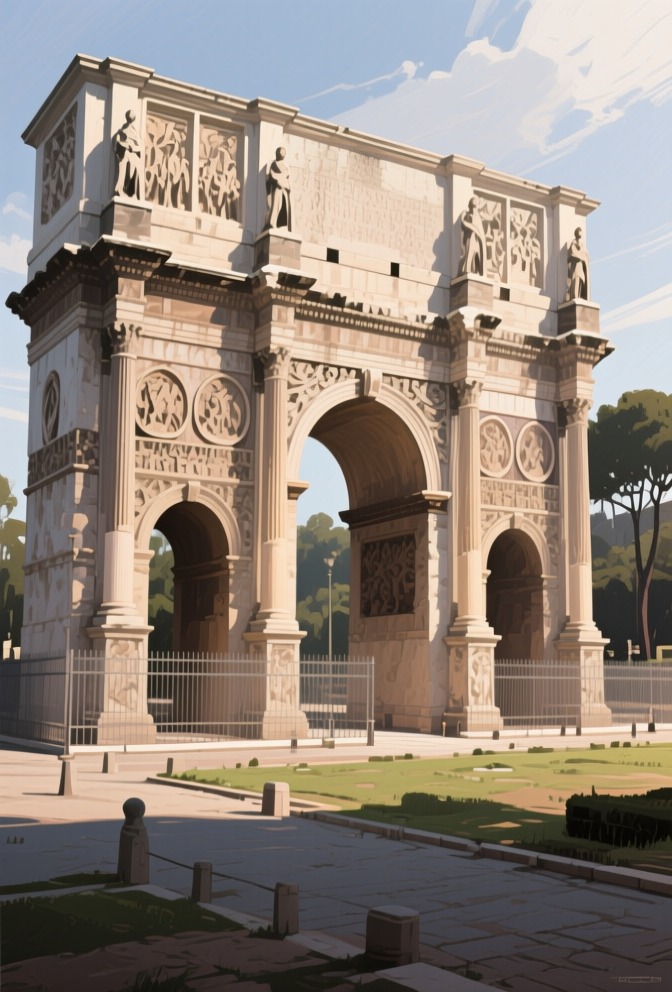
The Arch of Constantine is a ruined Roman monument in Rome that appears in the novel as a symbol of the Eternal City's decay and the collapse of historical meaning, marking Yossarian's desolate walk through a city where all structures—physical and moral—have fallen.
Rome is the ancient capital city in Italy that serves as the primary destination for rest leaves and black-market operations for the men of Colonel Cathcart's bomb group. It is a place of both pleasure and horror, where Yossarian pursues love and escape, witnesses the brutal destruction of a brothel by military police invoking Catch-22, and where Aarfy commits a murder that goes unpunished. The city embodies the novel's central paradox: a site of civilization and history that has become a lawless, nightmarish landscape of arbitrary violence and institutionalized hypocrisy.
Sicily is a recurring location in Joseph Heller's Catch-22, serving as a site for Milo Minderbinder's economic machinations, Yossarian's sexual encounters, and the novel's exploration of commodification and moral decay. It is where Milo sources cheap eggs to manipulate markets, where Yossarian and Orr encounter prostitutes with shaved heads, and where the syndicate's logic of profit extends to the exploitation of human bodies and wartime scarcity.
Egyptian cotton is a commodity that nearly destroys Milo Minderbinder's syndicate after he purchases the entire crop on a whim in Cairo, forcing him to desperate measures—including bombing his own squadron—to recoup his losses.
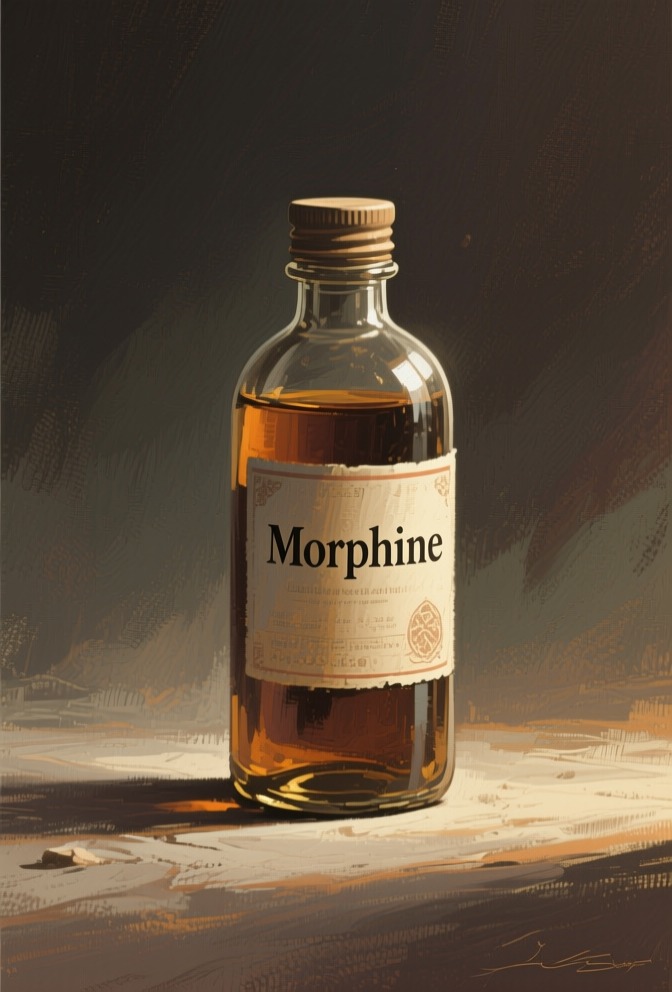
Morphine is a medical substance that appears in Catch-22 as a symbol of institutional neglect and the failure of systems meant to protect soldiers. Its absence at critical moments, particularly during Snowden's death, reveals the moral bankruptcy of the syndicate and the military bureaucracy, while its presence in other contexts highlights the arbitrary and often cruel nature of the war machine.
General Dreedle's wing is the combat command structure under which Colonel Cathcart's bomb group operates in Joseph Heller's Catch-22. As the wing commander, General Dreedle embodies the old-school military establishment—blunt, pragmatic, and indifferent to the bureaucratic gamesmanship of officers like General Peckem. His wing is the arena in which the novel's central conflicts over mission quotas, authority, and survival play out, and his eventual replacement by General Peckem marks a decisive shift in the novel's power dynamics.
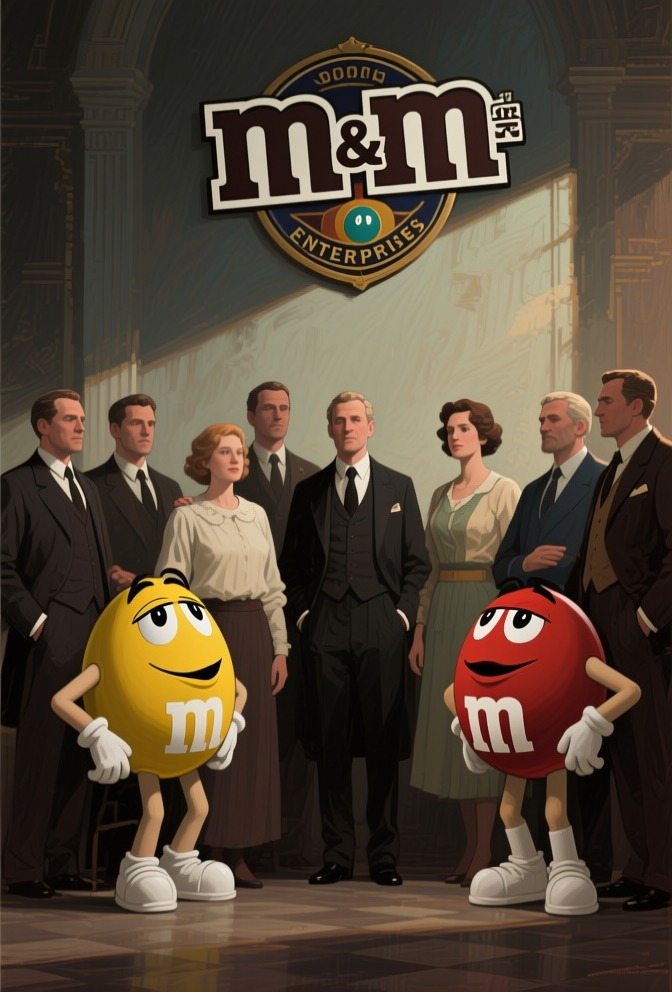
M & M Enterprises, also known as the syndicate, is Milo Minderbinder's vast, international business cartel that operates within and beyond the U.S. Army Air Corps during World War II. It begins as a mess-hall supply operation and expands into a global network of planes, contracts, and commodities, embodying the novel's central critique of unchecked capitalism and moral relativism. The syndicate's principle that "everybody has a share" is used to justify any action, including bombing its own squadron, trading with the enemy, and stealing medical supplies, ultimately revealing how profit-driven logic can subsume all ethical and patriotic considerations.
The C.I.D. (Criminal Investigation Division) is a recurring bureaucratic presence in Catch-22, embodying the novel's satire of institutional absurdity. Its agents repeatedly fail to solve the case of forged signatures on censored letters, instead becoming entangled in the very Catch-22 logic they are meant to enforce. The organization's investigations are consistently undermined by the system's own contradictions, revealing the impotence of official authority in a world governed by irrational rules.
The F.B.I. appears in Catch-22 as a shadowy, bureaucratic force that opens a file on Major Major for his choice of academic major, reflecting the novel's satire of institutional paranoia and the arbitrary exercise of power.
The Special Service Corps is the military organization commanded by General P. P. Peckem, a pompous and ambitious officer who uses it as a vehicle for bureaucratic self-aggrandizement and for waging a turf war against General Dreedle's combat wing. Under Peckem's leadership, the Corps is dedicated not to supporting combat troops but to generating memoranda, staging U.S.O. shows, and ultimately capturing all bomber groups for itself. Its defining moment of triumph—absorbing combat operations—immediately backfires when Peckem's own protégé, Colonel Scheisskopf, is promoted over him and takes command, turning the Corps into an instrument for enforcing military parades.
The U.S.O. (United Service Organizations) is a recurring institutional presence in Catch-22, used by General Peckem as a tool in his bureaucratic war against General Dreedle and by Colonel Cargill as a vehicle for his trademark incompetence. The organization's shows and performers are deployed not for troop morale but as pawns in the power struggles among high-ranking officers, and the men's response to them is uniformly one of sullen, coerced attendance. The U.S.O. thus becomes a symbol of the military's hollow, self-serving institutional machinery.
The War Department is the U.S. government agency that, in Catch-22, becomes the distant, bureaucratic source of official notifications of death and the arbiter of benefits, whose impersonal procedures and contradictory communications create absurd and tragic consequences for characters like Doc Daneeka and his wife.
Nately and his whore share a deeply asymmetrical relationship that begins with Nately's infatuation and her indifference, transforms when she falls in love after a good night's sleep, and ends tragically with her grief-driven attempt to murder Yossarian after Nately's death.
Yossarian and McWatt share a complex bond defined by McWatt's reckless joy in flying and Yossarian's desperate fear of death. McWatt is Yossarian's preferred pilot, yet his thrill-seeking—buzzing tents and skimming mountains—drives Yossarian to the brink of violence. Their relationship culminates in tragedy when McWatt, after accidentally killing Kid Sampson with his propeller, flies his plane into a mountain rather than face the consequences.
Catch-22 is the central paradoxical rule of Joseph Heller's novel, a self-contradicting bureaucratic logic that traps soldiers in an infinite loop of combat duty by defining sanity and insanity in mutually exclusive terms. It functions as both a specific military regulation and a pervasive metaphor for the absurd, inescapable systems of power that govern the characters' lives.
In Catch-22, the state of being hospitalized is a recurring refuge for Yossarian, a strategic retreat from the war that he manipulates through feigned illness and exploits for safety, comfort, and a temporary suspension of the military's death sentence. The hospital is presented as a paradoxical space: a sanctuary of order and care that contrasts with the chaotic, lethal absurdity of the outside world, yet one that is itself subject to the same irrational Catch-22 logic and haunted by the very mortality it seeks to hold at bay.
Fear is the central, pervasive emotional state that drives Yossarian's actions and defines his worldview in Catch-22. It is not merely a reaction to combat but a profound, existential terror that shapes his relationships, his strategies for survival, and his ultimate rebellion against the military system. The novel meticulously charts the gradations of this fear, from the rational dread of death to the paralyzing horror of cosmic indifference, making it the primary lens through which the absurdity and brutality of war are experienced.
Pneumonia is a recurring motif in Catch-22, serving as both a literal disease and a symbolic instrument of fate. It is the means by which Chief White Halfoat, a Native American from Oklahoma, has determined to die, as an act of revenge against the white men who have exploited his family. The disease also functions as a narrative device that removes characters from the squadron, either through death or hospitalization, and is contrasted with other ailments and the absurd logic of Catch-22.
Christmas in Catch-22 is a bitterly ironic non-event, a holiday stripped of its traditional meaning and repurposed as a tool of bureaucratic ambition. It appears not as a celebration but as a deadline: Colonel Cathcart, desperate for publicity, decides to speed up the production of condolence letters by volunteering his group for the dangerous mission to Avignon, hoping to generate enough casualties to get his name into the Christmas issue of The Saturday Evening Post. The holiday thus becomes a symbol of the military's grotesque manipulation of human life and sentiment for personal gain.
January is a month that appears in the narrative of Catch-22 primarily as a temporal marker for Nately's birthday, which he mentions will occur in January if he lives, and as a point of contrast with the chaotic, timeless wartime experience on Pianosa. The month itself carries no plot significance but serves as a poignant reminder of the youth and vulnerability of the characters, particularly Nately, whose anticipated twentieth birthday in January underscores the tragic waste of young lives in war.
September in Catch-22 marks the turning of the season and the moral weather of the novel: the cold, wet autumn that follows the deaths of Kid Sampson and McWatt, the disappearance of Orr, and the relentless raising of combat missions. It is the month in which the chaplain, wandering through the woods, encounters the haunted Captain Flume, who has been living as a fugitive in the forest since Chief White Halfoat threatened to cut his throat. Flume’s prophecy—that he will return to the squadron when winter comes and Chief White Halfoat dies of pneumonia—becomes a cryptic, almost scriptural promise that the chaplain clings to as a sign of hope. September thus functions as a threshold between the dwindling, deceptive safety of summer and the full, crushing weight of the war’s absurd machinery, a month in which the novel’s atmosphere thickens with dread, decay, and the faint possibility of deliverance.
Sunday in *Catch-22* is the day of the weekly parade, a ritual of martial order that Lieutenant Scheisskopf pursues with fanatical zeal, and also a day of violent, carnivalesque release, as seen in the Thanksgiving celebration that spills into Sunday. The day oscillates between the absurd discipline of the parade ground and the chaotic, drunken excess that subverts it, embodying the novel's central tension between oppressive military structure and the anarchic human impulse to resist it.