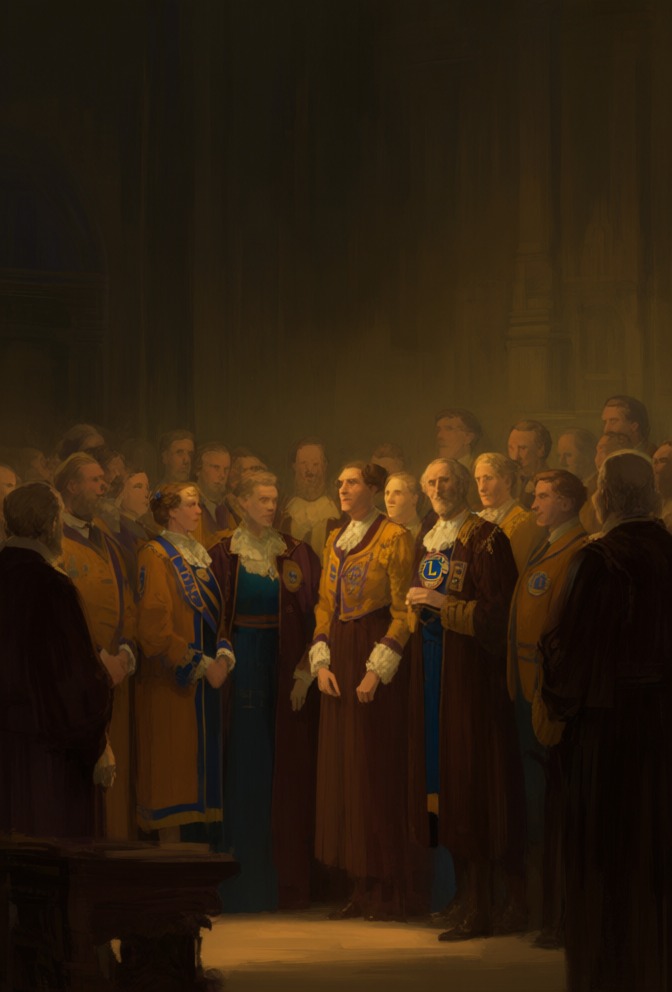
The Derry Lions, a local chapter of the international service organization, is a recurring fixture in the town of Derry, Maine, appearing in the novel as a signpost of civic life and community identity. Its presence is most notably marked by a sign proclaiming "DERRY LIONS ROAR FOR THE UNITED FUND!" which greets Richie Tozier as he re-enters the town in 1985, and by its involvement in the annual Canal Days Festival, where it ran a Pitch Til U Win stall. The organization's name is also invoked in a more mundane context, as Elfrida Marsh had purchased a two-year supply of light bulbs from the Lions during their annual sale. The club's existence is a small but persistent detail that underscores the ordinary, community-oriented surface of Derry, a surface that belies the town's deep and recurring horror.
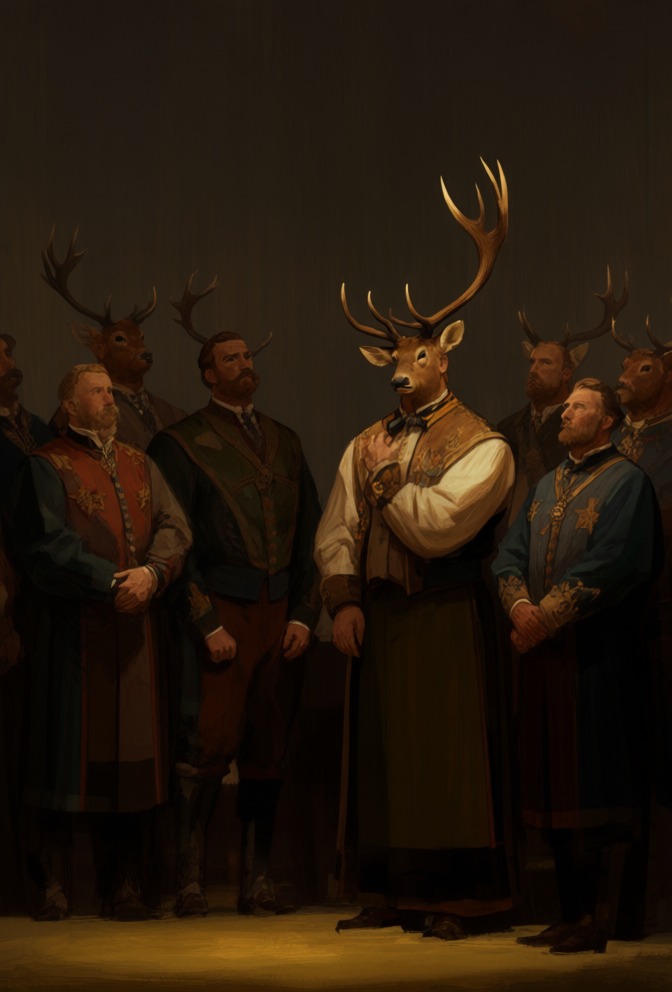
The Elks is a fraternal organization that appears as a minor but recurring civic presence in Derry, Maine, its sign marking the town's border alongside those of the Rotary Club and the Lions Club, and its name invoked by Mr. Nell as a potential destination for the boys' misdeeds.
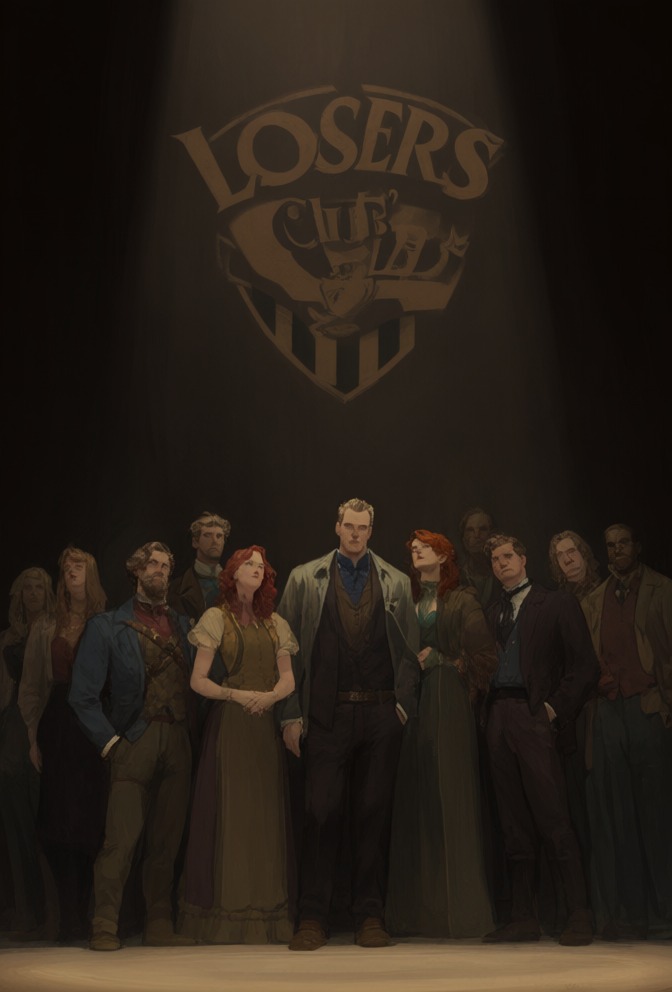
The Losers' Club is the name adopted by seven misfit children in Derry, Maine, during the summer of 1958: Bill Denbrough, Beverly Marsh, Ben Hanscom, Richie Tozier, Eddie Kaspbrak, Stanley Uris, and Mike Hanlon. Bound together by their shared outsider status and a series of terrifying encounters with a shape-shifting entity they call It, the club becomes the vehicle through which they confront and temporarily defeat the monster. Their blood oath to return if It ever reawakens drives the novel's 1985 narrative, when the adult survivors reunite to finish the fight.
The Maine Legion of White Decency was a Northern offshoot of the Ku Klux Klan active in Derry, Maine, during the late 1920s and early 1930s. It was the organization responsible for the fire at the Black Spot, a segregated nightclub for Black soldiers, on a November night in 1930, a massacre that killed over sixty people and ended the cycle of violence in Derry for that period. The Legion's actions, and the town's subsequent collective amnesia about them, serve as a key example of the systemic, cyclical evil that permeates Derry's history, an evil that the Losers' Club would later confront in its supernatural form.
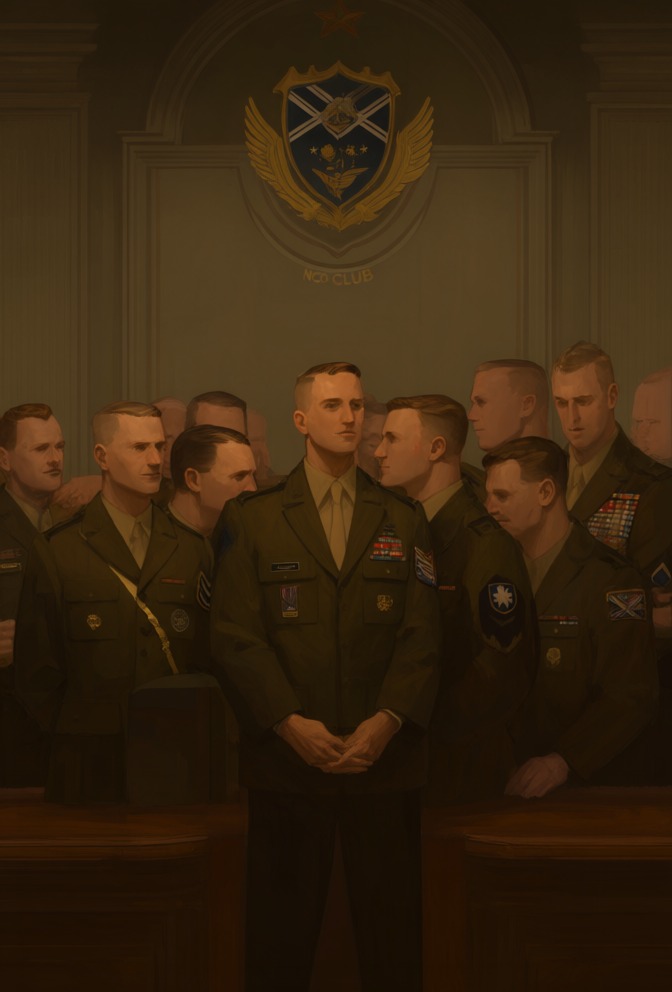
The NCO Club was a segregated recreational facility for white non-commissioned officers at the Derry Army Air Corps Base in the late 1920s and early 1930s. Its existence and the exclusion of black soldiers from Company E from using it directly led to the creation of the Black Spot, a makeshift club for the black enlisted men. The NCO Club's role in enforcing racial segregation on the base was a key factor in the social tensions that culminated in the 1930 fire at the Black Spot, a mass-casualty event that ended a cycle of violence in Derry.
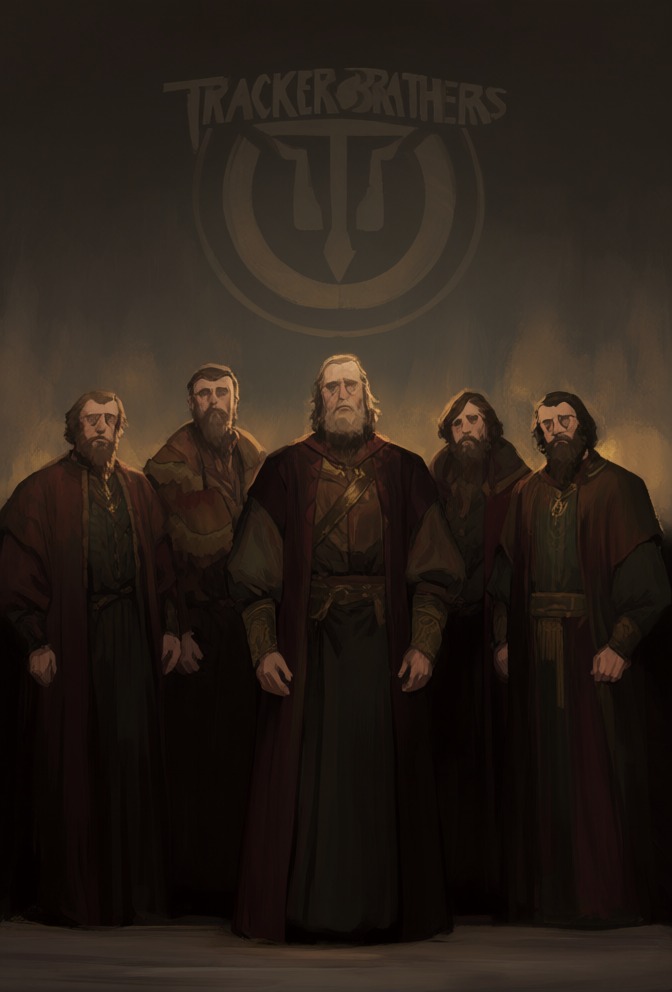
Tracker Brothers is a trucking depot in Derry, Maine, that serves as a key setting for the Losers' Club's childhood activities, particularly baseball games and the site of Eddie Kaspbrak's traumatic encounter with the leper. The depot's decline and eventual closure mirror the town's decay and the passage of time.
Eddie Kaspbrak's relationship with his mother, Sonia Kaspbrak, is the central, defining force of his childhood and a key source of his psychosomatic asthma. Sonia's overprotectiveness, her insistence on Eddie's fragility, and her emotional manipulation create a symbiotic bond that Eddie struggles to break, even as an adult. This relationship is a primary example of how the evil in Derry manifests through familial dysfunction, trapping Eddie in a cycle of dependency and fear that he must confront to face the monster.
Henry Bowers and Ben Hanscom are locked in a relationship of relentless, escalating persecution that begins with a schoolroom refusal and culminates in a near-fatal carving and a chase into the Barrens, where Ben's desperate resistance marks a decisive turning point in the Losers' Club's collective defiance.
Ben's Mother's No-Alone Rule is a safety directive imposed by Arlene Hanscom on her son Ben during the summer of 1958, when a series of child murders terrorized Derry, Maine. The rule forbade Ben from going anywhere alone and required him to be home by suppertime, reflecting both a mother's desperate love and the town's pervasive, unspoken complicity with the evil that stalked its children.
Mandy Fazio's Dump Rule is the unwritten but strictly enforced prohibition against children playing in the Derry town dump, enforced by the dump's keeper, Mandy Fazio. The rule reflects the broader adult anxiety about the dangers lurking in Derry's marginal spaces during the summer of 1958, a period marked by a series of child murders. It also serves as a narrative device that channels the Losers' Club's activities away from the dump and deeper into the Barrens, where their crucial confrontations with the town's evil take place.
The Derry Police Department's Stranger Danger Rules, prominently publicized during the 1958 child-murder crisis, instruct children never to talk to strangers or accept rides from anyone they do not know well. These rules are enforced through school assemblies, a citywide 7 P.M. curfew, and parental warnings, yet they prove tragically insufficient against the shape-shifting entity Pennywise, which easily circumvents them by adopting familiar or non-threatening forms.
The Shoplifting Prohibition is a rule prominently displayed in the Center Street Drug Store in Derry, warning customers that shoplifting is a crime and will be prosecuted. For Eddie Kaspbrak, this sign becomes a source of anxiety, making him feel guilty even when he has done nothing wrong, and it reflects the broader atmosphere of surveillance and control in Derry.
The Standpipe Lockdown Policy was a municipal regulation enacted in Derry, Maine, following a series of tragic drownings and a fatal infant accident within the Standpipe, a historic water tower and public observation tower. The policy permanently closed the Standpipe to the general public, locking both the ground-level door and the interior door leading to the platform over the water, effectively ending the decades-old tradition of family picnics and sightseeing at the tower. This rule transformed the Standpipe from a beloved community landmark into a forbidden, haunted space, and its enforcement created a site of profound terror for the Losers' Club, particularly Stanley Uris, who encountered the dead boys there.
The Stepfather's Hammer Rule is a domestic prohibition imposed by Richard P. Macklin on his stepsons, Eddie and Dorsey Corcoran, forbidding them from touching his Scotti recoilless hammer. The rule is enforced through threats of extreme violence and serves as a marker of the escalating abuse that culminates in Dorsey's murder and Eddie's disappearance.
The destruction of downtown Derry is the catastrophic physical collapse of the city's commercial core on May 31st, 1985, triggered by a supernatural storm and the death of the entity It, which had long sustained the town's infrastructure. The event marks the final, visible unraveling of Derry's unnatural cohesion, as the Canal's underground supports fail, buildings sink into the street, and the Standpipe collapses, killing dozens and leaving the city permanently scarred.
The Losers' Club's blood oath is a solemn promise made by seven children in the summer of 1958 to return to Derry and destroy the entity known as It if it ever resumed its cycle of murder. Sealed by cutting their palms with a shard of glass and clasping hands in a circle, the oath bound them together across twenty-seven years, serving as the narrative and moral foundation for their adult reunion and final confrontation.
1985 is the year of the reunion, when the adult members of the Losers' Club return to Derry, Maine, after receiving phone calls from Mike Hanlon, who has summoned them to fulfill a blood oath made in 1958 to confront the ancient, shape-shifting entity known as It. The year marks the climax of a new cycle of violence and the final, decisive battle against It, which results in the deaths of Eddie Kaspbrak and Stanley Uris, the destruction of much of downtown Derry, and the permanent end of the entity's reign of terror.
August 1958 is the climactic month of the Losers' Club's childhood confrontation with the entity known as It. During this period, the seven children—Bill Denbrough, Beverly Marsh, Ben Hanscom, Richie Tozier, Eddie Kaspbrak, Stanley Uris, and Mike Hanlon—are driven into the sewers beneath Derry by Henry Bowers and his gang, where they face the creature in its lair. The month culminates in the Ritual of Chüd, a psychic battle that wounds It severely and forces it into a deep hibernation. The children emerge from the underground, make a blood oath to return if It ever awakens, and then begin the gradual forgetting of their shared ordeal. This month marks both the end of their childhood innocence and the forging of a bond that will draw them back to Derry twenty-seven years later.
The Canal Days Festival, held in Derry from July 15th to 21st, 1984, was a week-long centenary celebration of the Canal's opening, intended to boost the city's morale, image, and economy. It was during this festival that Adrian Mellon won the paper hat that would later provoke his murder, and the festival's final night saw his ritualistic killing, an event that Mike Hanlon would later identify as the first clear sign that the cycle of violence in Derry had begun again.
June of 1958 is the pivotal summer in Stephen King's *It* when the seven members of the Losers' Club first unite and confront the ancient, shape-shifting entity that haunts Derry, Maine. This period marks the end of their childhood innocence and the beginning of their battle against Pennywise the Dancing Clown, a conflict that will define their lives and culminate in a blood oath to return if the horror ever resurfaces.
The 27-year cycle is the recurring period of intensified violence, child disappearances, and supernatural predation that defines the history of Derry, Maine. Every quarter-century or so, the entity known as It awakens from a dormant state and feeds on the town's children, leaving a trail of mutilated bodies and unsolved disappearances. The cycle is marked by a crescendo of horror that culminates in a catastrophic event—such as the explosion of the Kitchener Ironworks in 1906, the fire at the Black Spot in 1930, or the final confrontation with the Losers' Club in 1958—after which It returns to hibernation and the town's collective memory of the terror fades. The cycle's regularity and the town's complicity in forgetting it form the central structural principle of the novel, driving the plot from the initial murders in 1957-58 to the adult Losers' return in 1985.
The Bradley Gang shootout of 1929 was a pivotal, violent event in Derry's history that marked the beginning of a new cycle of terror in the town, characterized by a brutal, extrajudicial massacre of the gang by armed townspeople, a slaughter that was subsequently covered up and denied by the community.
The Fourth of July in 1958 is a pivotal day in Derry, Maine, when Mike Hanlon first sees Pennywise the Dancing Clown in person during the town's Independence Day parade, confirming that the monster haunting Derry is real and that his own terrifying encounter with a giant bird at the Kitchener Ironworks two months earlier was not a hallucination. This sighting, and the subsequent revelation of Mike's story to the Losers' Club, completes the seven-member circle and sets the stage for the group's first coordinated actions against It.
The winter of 1957-58 in Derry, Maine, was the season in which the cycle of terror that would culminate in the summer of 1958 began. It was marked by the murder of George Denbrough in October 1957, the first of a series of child killings that terrorized the town, and by the initial, isolated encounters of the future Losers' Club members with the entity that would later be known as It. This period established the atmosphere of fear, the curfew, and the psychological groundwork for the children's eventual confrontation.
The coyote is a recurring wild creature in the Salinas Valley landscape of John Steinbeck's East of Eden, appearing as a symbol of the region's harsh, untamed nature and as a figure of cunning survival. It is associated with the marginal lands where the poor and desperate live, and its howl is described as a blend of sorrow and laughter, reflecting the novel's themes of loneliness, predation, and the thin line between human and animal existence.
Adam Trask's enlistment in the United States Army, orchestrated by his father Cyrus Trask, marks the end of his violent childhood and the beginning of a military career he never wanted, setting the stage for his lifelong struggle against authority and violence.
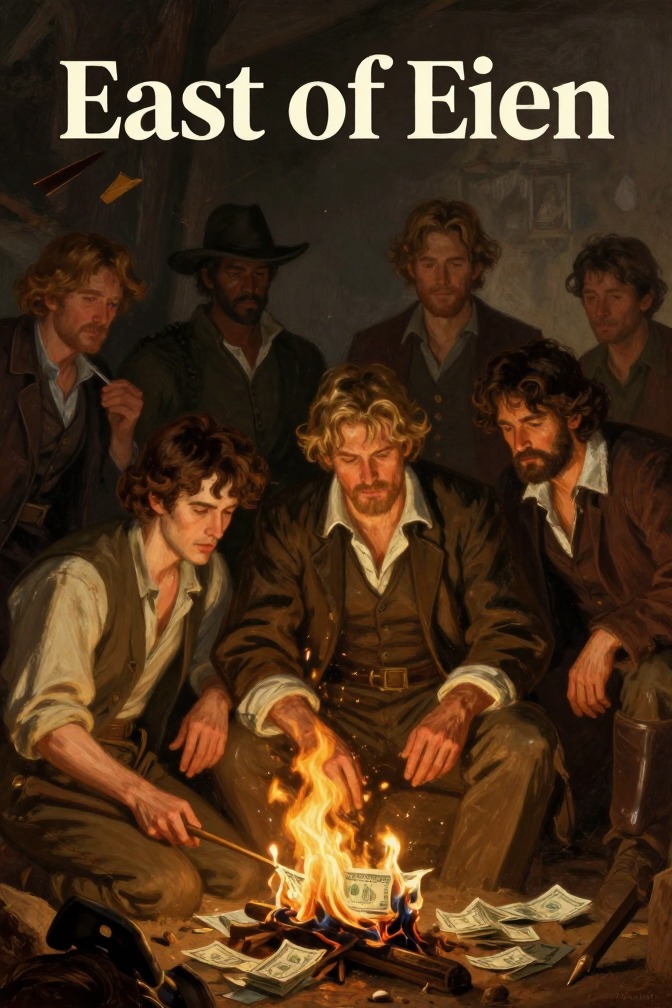
Cal Trask burns the fifteen thousand dollars he earned from his bean speculation, a dramatic act of self-punishment after his father Adam rejects the money and condemns the profit as tainted by war. The scene marks the climax of Cal's guilt over revealing their mother Kate to Aron, and it crystallizes the novel's central struggle between inherited evil and the power of choice.
East of Eden is the central symbolic concept of John Steinbeck's novel, referring both to the geographical land of Nod where Cain dwelt after killing Abel and to the novel's overarching theme of moral choice, inherited guilt, and the possibility of redemption. The phrase appears in the biblical story of Cain and Abel, which the characters Samuel Hamilton, Adam Trask, and Lee discuss at length, and it becomes the lens through which the novel examines the human condition—the struggle between good and evil, the burden of ancestry, and the power of individual choice encapsulated in the Hebrew word timshel ('thou mayest').
The free, roving mind is a central philosophical concept in John Steinbeck's East of Eden, articulated most explicitly in the novel's thirteenth chapter. It represents the individual human intellect in its most precious and vulnerable state—unfettered, exploratory, and creative. The novel posits this solitary, undirected mind as the most valuable thing in the world, the one instrument of genuine creation, and the primary target of the mass movements and collective systems that Steinbeck saw as the great danger of his time. The concept is woven into the narrative's deepest structure, informing the characters' struggles for autonomy, the narrator's own authorial stance, and the book's ultimate affirmation of individual moral choice.
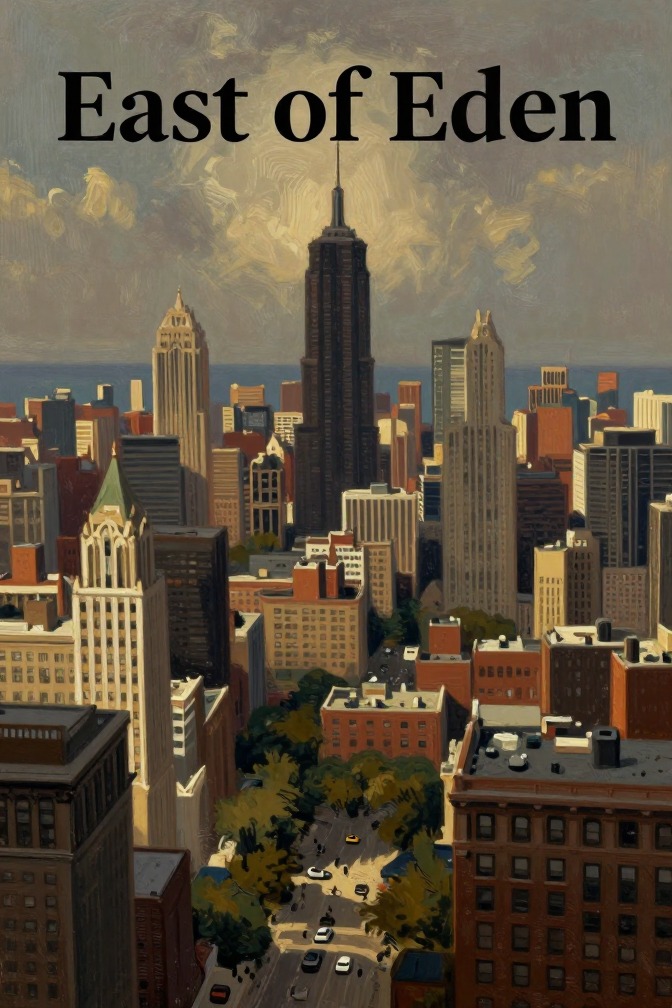
Chicago is a pivotal urban setting in John Steinbeck's East of Eden, serving as a site of psychological crisis, military routine, and economic ambition for the Trask family. It is where Adam Trask re-enlists in the army after failing to return home, where his father Cyrus Trask has become a powerful figure in the Grand Army of the Republic, and where, decades later, Cal Trask's bean speculation with Will Hamilton is tied to the city's commodity markets.