Place is the central social hierarchy in the Pacific States of America, a system of rank and status imposed by the Japanese conquerors that governs every interaction between the white American underclass and their Japanese rulers. It is a pervasive, often unspoken code that determines deference, humiliation, and even survival, shaping the lives of characters like Robert Childan, Frank Frink, and Nobusuke Tagomi. The novel explores how Place is both a source of constant anxiety and a target of subversion, ultimately questioning its legitimacy and suggesting the possibility of a world beyond it.
Wu is a central aesthetic and philosophical concept in Philip K. Dick's The Man in the High Castle, articulated by Paul Kasoura in his analysis of the Edfrank jewelry. It denotes a quality of authentic, formless presence that arises from the artisan's creative act, distinct from both historicity and conventional artistic merit, and it becomes a pivotal point of moral and cultural reckoning for Robert Childan.
Pearl Harbor is the pivotal historical event in the alternate-history world of The Man in the High Castle, where the Japanese attack on the U.S. Pacific Fleet succeeds catastrophically, destroying the fleet and enabling Japan and Germany to win World War II. In the novel's present, it is remembered as the moment that sealed the Axis victory, and its absence in the counterfactual novel-within-the-novel, The Grasshopper Lies Heavy, marks the crucial divergence point that leads to an Allied triumph.
World War II in this alternate history ended with the Axis powers victorious, reshaping global power structures and the lives of the characters. The war's outcome is the foundational premise of the novel, influencing every aspect of the depicted world, from the political dominance of Germany and Japan to the personal traumas and social hierarchies experienced by the characters.
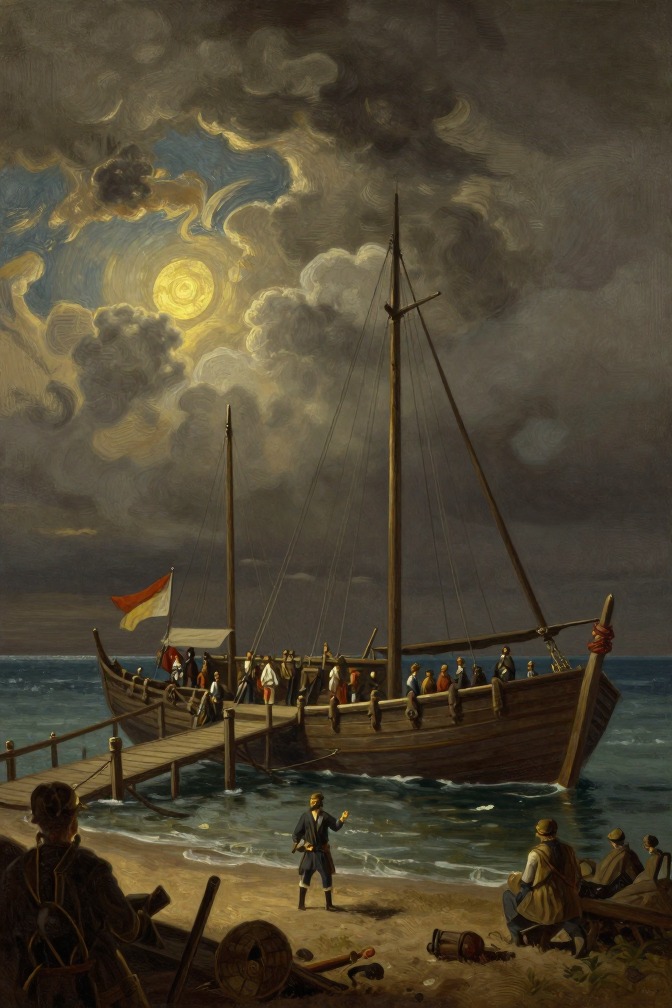
The Abandonment of the Hispaniola is the pivotal action in Treasure Island where the loyal party, led by Captain Smollett, Dr. Livesey, and Squire Trelawney, evacuates the ship and retreats to the stockade on Treasure Island, marking the formal beginning of the mutiny and the island conflict.
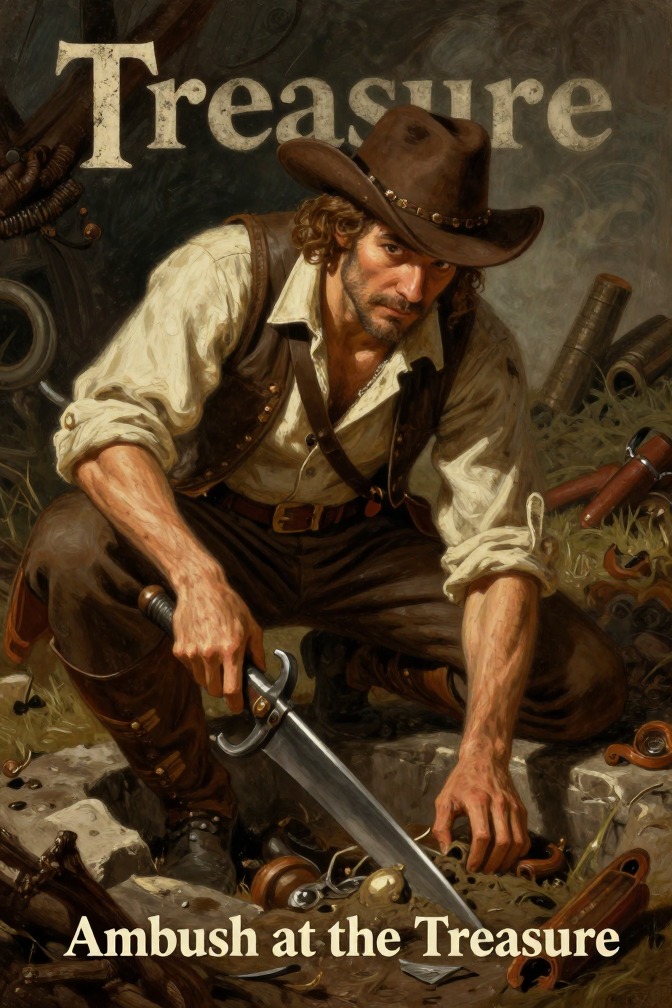
The Ambush at the Treasure Pit is the climactic reversal of Treasure Island, where the mutineers' long-sought treasure is found already rifled, triggering a violent confrontation that ends with the death of George Merry and the decisive defeat of the pirate faction, secured by Dr. Livesey, Abraham Gray, and Ben Gunn.
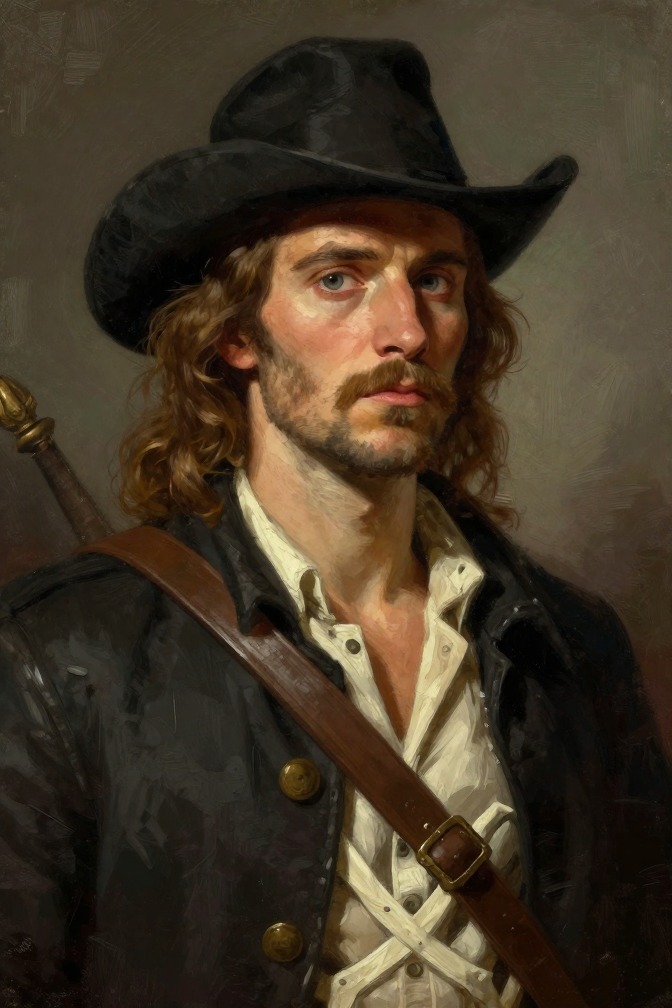
Ben Gunn is a marooned sailor on Treasure Island whose three years of solitary survival, secret discovery of Flint's treasure, and eventual alliance with Jim Hawkins and the loyal party prove decisive in the outcome of the treasure hunt and the defeat of the mutineers.
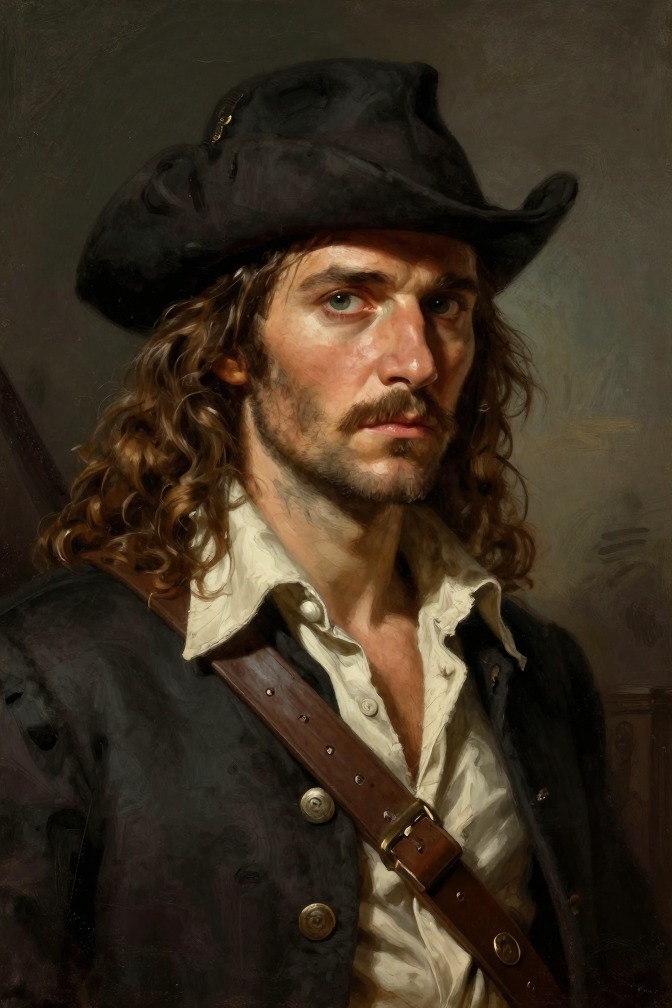
Black Dog is a minor but pivotal figure in Robert Louis Stevenson's Treasure Island, a mutilated former shipmate of Billy Bones whose sudden appearance at the Admiral Benbow Inn triggers the chain of events that leads to the discovery of the treasure map. He is a pale, tallowy creature missing two fingers from his left hand, and his presence connects the old buccaneer's hidden past to the larger pirate conspiracy that drives the novel's plot.
Dick is a young, impressionable sailor aboard the Hispaniola who is corrupted by Long John Silver into joining the pirate mutiny, only to be later haunted by superstitious terror and a fever that marks him as one of the most psychologically vulnerable members of the crew.
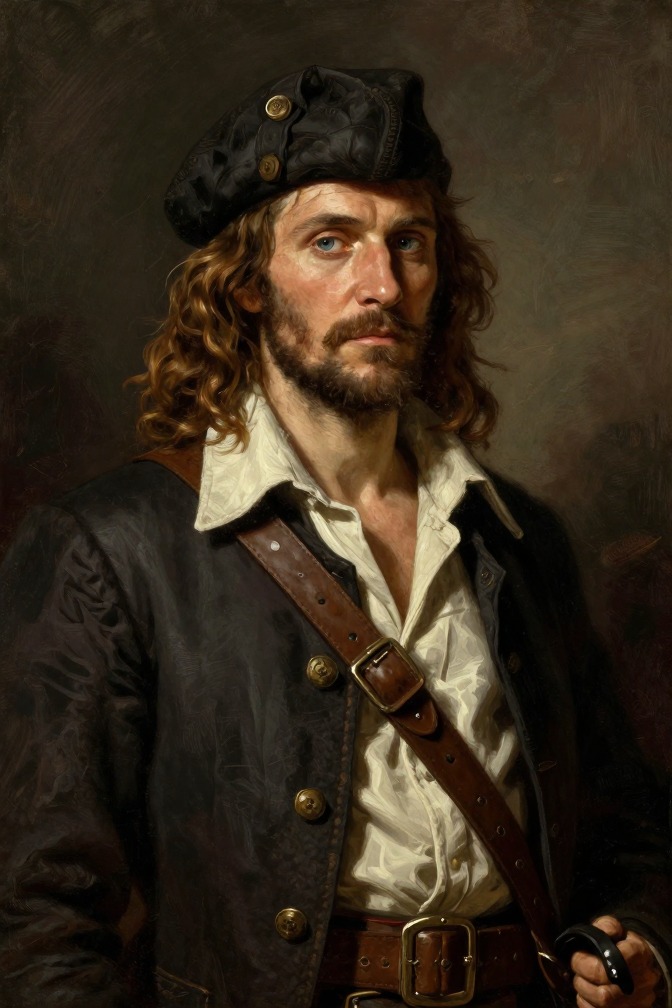
Tom Morgan is a minor but recurring pirate in Robert Louis Stevenson's Treasure Island, first seen at Long John Silver's Spy-glass Tavern in Bristol and later among the mutineers on the island. He is an old, grey-haired, mahogany-faced sailor who serves as a loyal follower of Silver, though he is notably superstitious and easily frightened. Morgan's appearances trace the arc of the pirate crew from recruitment to defeat, and his fate—left behind on Treasure Island—underscores the grim consequences of the treasure hunt.
The Jolly Roger, the black flag of piracy, is a recurring symbol in Treasure Island that marks the mutineers' takeover of the Hispaniola and their defiance of lawful authority. Its appearance, capture, and striking by Jim Hawkins chart the shifting fortunes of the pirates and the loyal party, embodying the novel's central conflict between order and lawlessness.
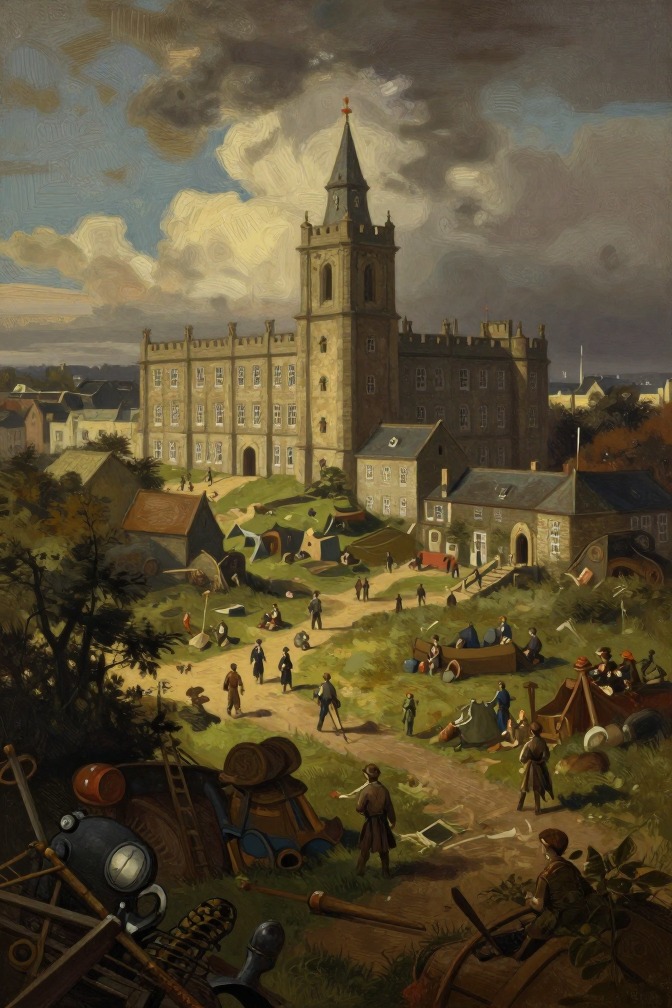
Bristol is the bustling English port city where Squire Trelawney outfits the Hispaniola for the treasure voyage, and the place where the novel's central antagonist, Long John Silver, is first encountered at his tavern, the Spy-glass. It serves as the crucial point of departure for the adventure and the final destination upon the crew's return, framing the entire narrative as a journey that begins and ends in this commercial hub.
Execution Dock is the infamous riverside gallows in London where condemned pirates were hanged, their bodies left to rot in chains as a warning. In Treasure Island, it serves as the ultimate symbol of the fate awaiting the mutineers and the moral reckoning that haunts Long John Silver, who repeatedly invokes it as the grim alternative to success.
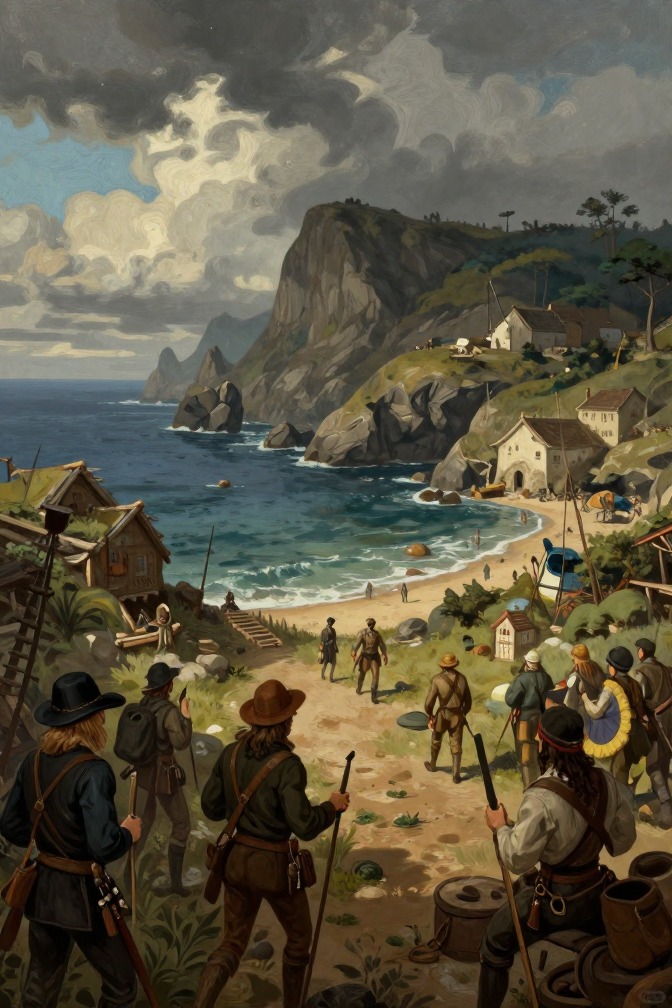
Rum Cove is a small, sheltered anchorage on Treasure Island, notable as the nearest landing point to Ben Gunn's cave and the site where the treasure was loaded aboard the Hispaniola after its recovery. It serves as the final staging ground for the treasure's removal and the departure from the island, marking the conclusion of the treasure hunt.
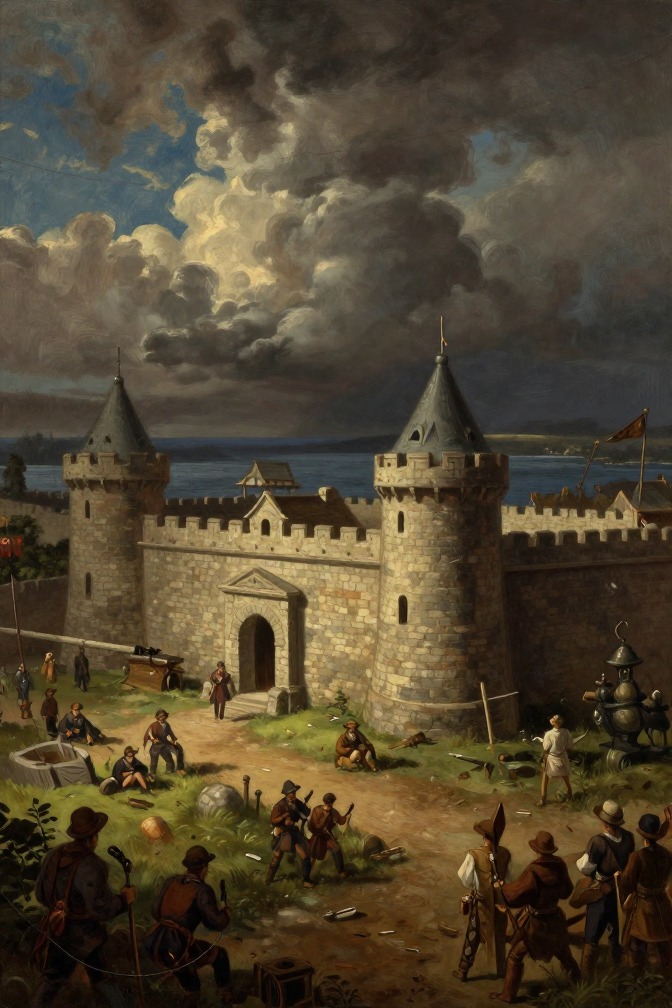
The Stockade is a fortified log-house on Treasure Island, built years earlier by the pirate Captain Flint and later used by the loyal party as their defensive stronghold during the mutiny. It becomes the central site of the siege, the negotiations with Long John Silver, and the final battle that decides the fate of the treasure hunt.
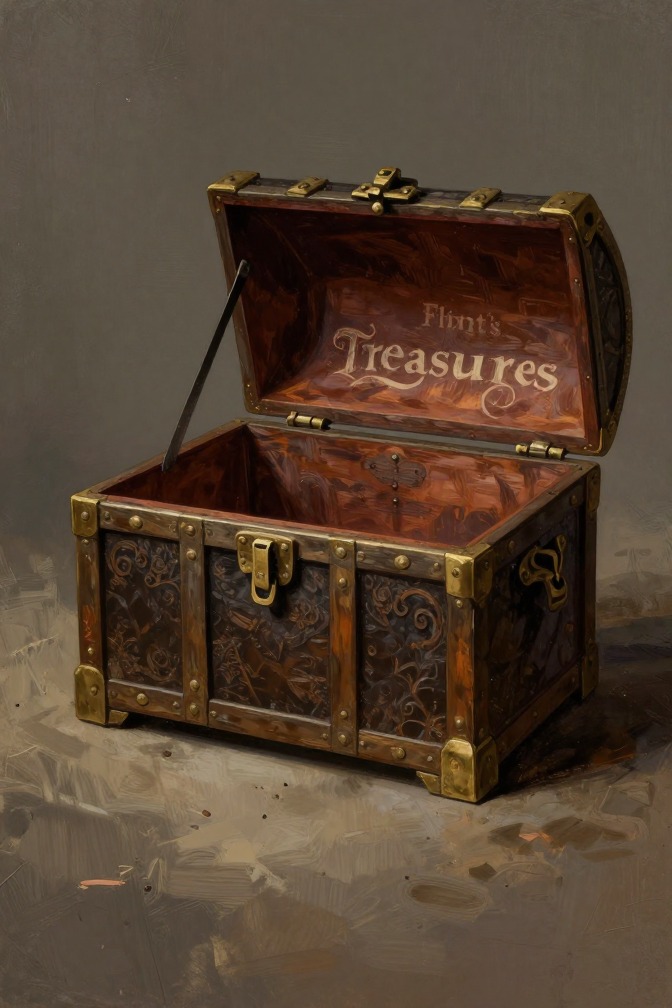
Flint's treasure is the buried hoard of gold and silver amassed by the notorious pirate Captain Flint, whose hidden location on Treasure Island drives the entire plot of Robert Louis Stevenson's novel. The treasure's discovery, loss, and final recovery shape the fates of every character, from the mutinous crew to the loyal adventurers, and its immense value—estimated at seven hundred thousand pounds—becomes the central object of desire and conflict.
The retirement of Irmgard Baty is the final killing Rick Deckard performs in his marathon hunt of the eight escaped Nexus-6 androids, a moment that completes his physical mission but deepens his moral exhaustion. After he has already killed Pris Stratton—a duplicate of Rachael Rosen—and cornered Roy and Irmgard Baty in John Isidore's apartment, Irmgard attempts a decoy ambush, but Deckard shoots her before she can fire. Her death, together with Roy's, ends the last of the illegal android group, yet the act leaves Deckard hollow, confirming his growing conviction that he has become an instrument of entropy rather than justice.
The electric animal is a central concept in Philip K. Dick's novel, representing a technologically produced ersatz creature that mimics a living animal but is composed of circuitry and machinery. It serves as a status symbol, a source of social anxiety, and a profound philosophical challenge to the definitions of life, empathy, and reality in a post-apocalyptic world where genuine animals are nearly extinct.
Retiring is the euphemistic term used by bounty hunters for the killing of escaped androids, a practice that forms the economic and moral core of Rick Deckard's profession and the central ethical conflict of the novel.
The synthetic memory system is a technology used by the Rosen Association to implant false personal histories into Nexus-6 androids, enabling them to believe they are human and thus evade detection by empathy-based tests like the Voigt-Kampff scale. Its existence blurs the line between authentic human experience and programmed identity, raising profound questions about selfhood, memory, and the nature of consciousness in the novel.
Mors certa, vita incerta is a Latin expression meaning 'Death is certain, life is uncertain,' used by Hannibal Sloat, the owner of the Van Ness Pet Hospital, as a philosophical remark that encapsulates the bleak, entropic worldview pervading post-apocalyptic Earth in Philip K. Dick's novel.
The Penfield mood organ is a device that allows its user to dial up any desired emotional state, from professional alertness to ecstatic bliss to six-hour self-accusatory depression, and it is central to the daily life of Rick and Iran Deckard, revealing the novel's concern with the technological management of authentic feeling in a world drained of life.
Role-taking Blockage in the Undeteriorated Schizophrenic is an academic article written by Lurie Kampff eight years before the events of the novel, which established the theoretical foundation for distinguishing human schizophrenics from androids by arguing that the diminished empathic faculty found in human mental patients is superficially similar to but fundamentally different from the role-taking blockage exhibited by humanoid robots, thereby justifying the use of the Voigt-Kampff Empathy Test as a reliable diagnostic tool in police work.
The cycle of life is a central concept in Philip K. Dick's Do Androids Dream of Electric Sheep?, representing the eternal, repetitive pattern of ascent, death, and rebirth that defines the Mercerite faith and, by extension, the novel's philosophical structure. It is the fundamental rhythm of existence, experienced through fusion with Wilbur Mercer, and it provides a framework for understanding suffering, mortality, and the possibility of renewal in a world devastated by World War Terminus.
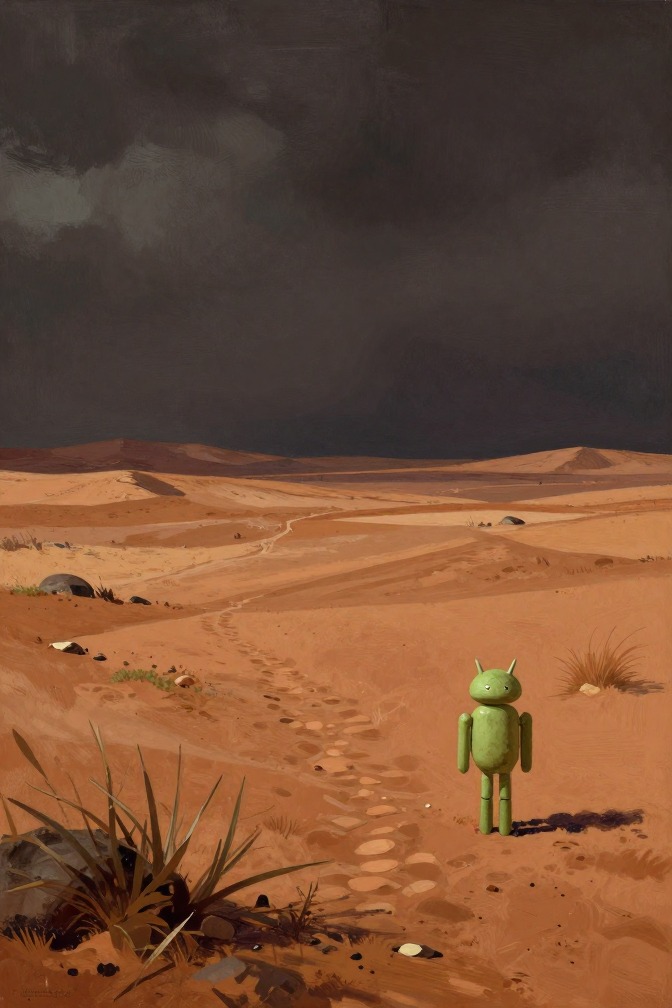
Mars is the primary colony world in the novel, a barren, inhospitable planet to which Earth's government encourages mass emigration through a combination of radioactive fallout and the promise of free android servants. It functions as both a settler destination and the manufacturing hub for the Nexus-6 androids, making it central to the story's themes of exploitation, alienation, and the blurred boundaries between human and machine.
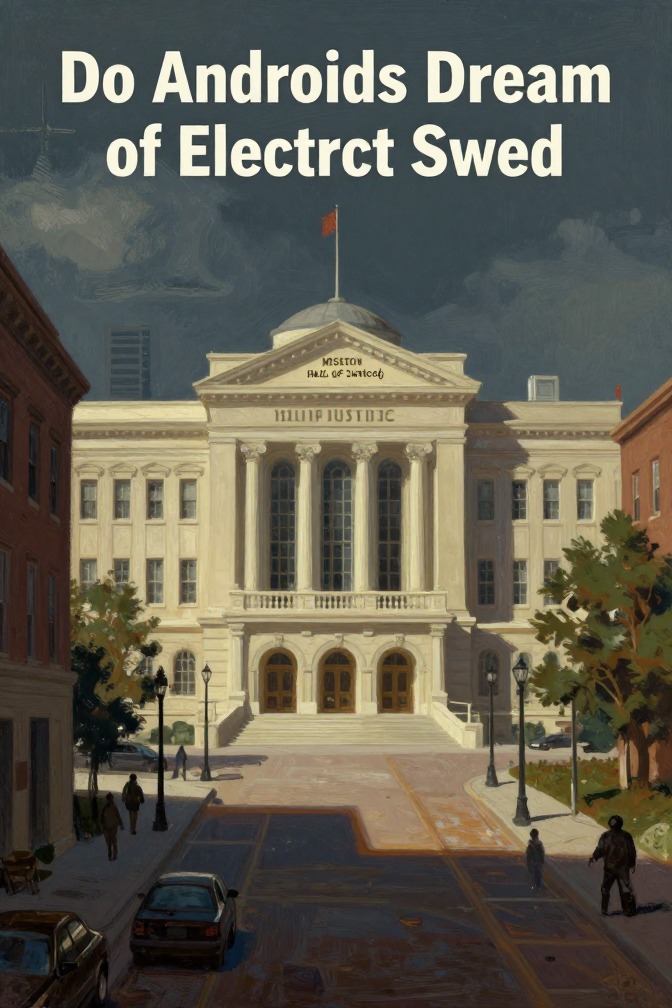
The Mission Street Hall of Justice is a modern, baroque police building that serves as the headquarters of an android-run police agency operating parallel to the legitimate San Francisco Police Department. It is the site where bounty hunter Rick Deckard is arrested after Luba Luft calls for help, and where he discovers that Inspector Garland and many of the officers are androids who have infiltrated the human justice system.
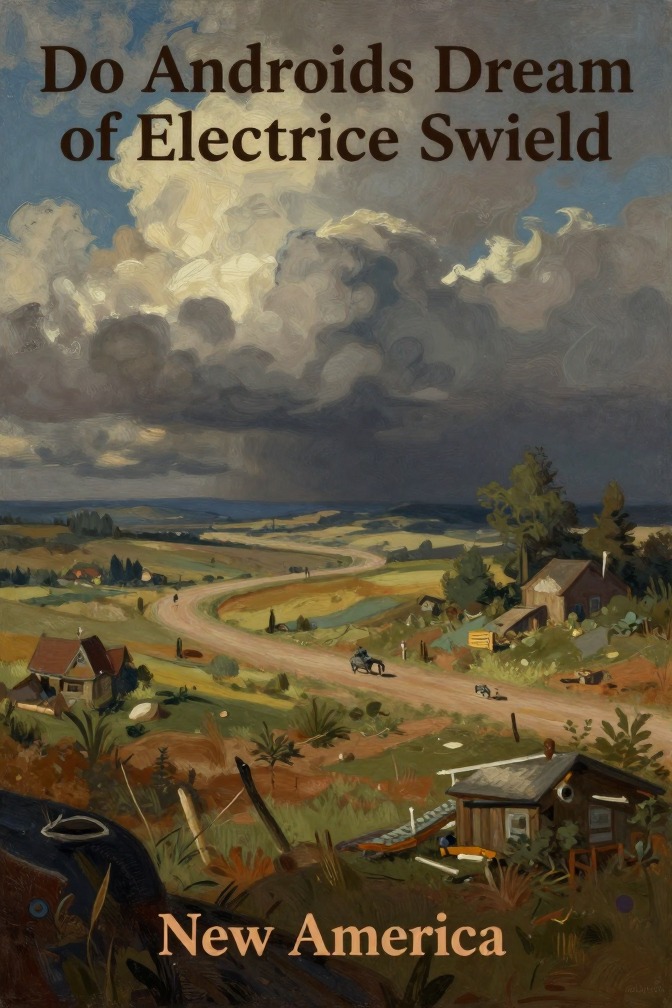
New America is the chief United States settlement on Mars, founded as part of the U.N. colonization program that offered emigrants a free android servant as an incentive to leave radioactive Earth. It represents the promise of a new life free from contamination and the threat of being classified as a "special," but also embodies the colonial power dynamics and the commodification of android labor.
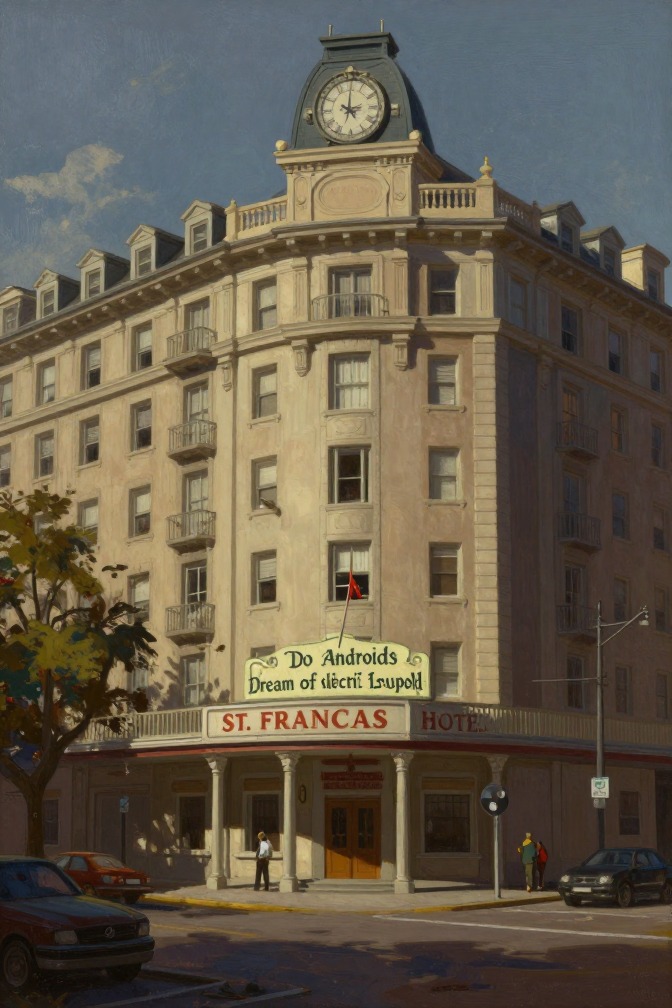
The St. Francis Hotel is the only halfway decent hotel still operating in the Bay Area in the post-apocalyptic world of 1992, serving as the setting for Rick Deckard's pivotal meeting with Rachael Rosen, where their sexual encounter fundamentally alters his ability to continue as a bounty hunter.
The Van Ness Pet Hospital is a deliberately misnamed repair shop for false animals, run by the aging Hannibal Sloat in a dust-eroded San Francisco. It serves as the workplace of the chickenhead John Isidore, whose inability to distinguish real from electric animals leads to a crisis when he accidentally lets a genuine cat die, forcing the shop to confront the moral and economic weight of living creatures in a world where animal life is sacred and scarce.
The War Memorial Opera House in San Francisco serves as the primary setting for Rick Deckard's confrontation with the Nexus-6 android Luba Luft, a pivotal encounter that tests the limits of the Voigt-Kampff empathy test and forces Deckard to confront his own humanity.