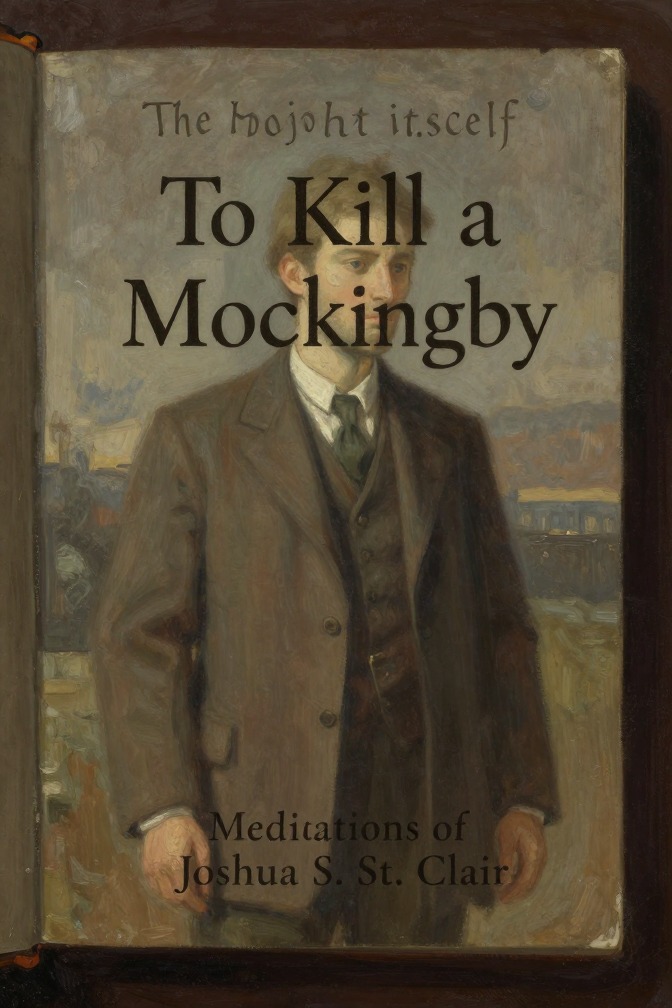
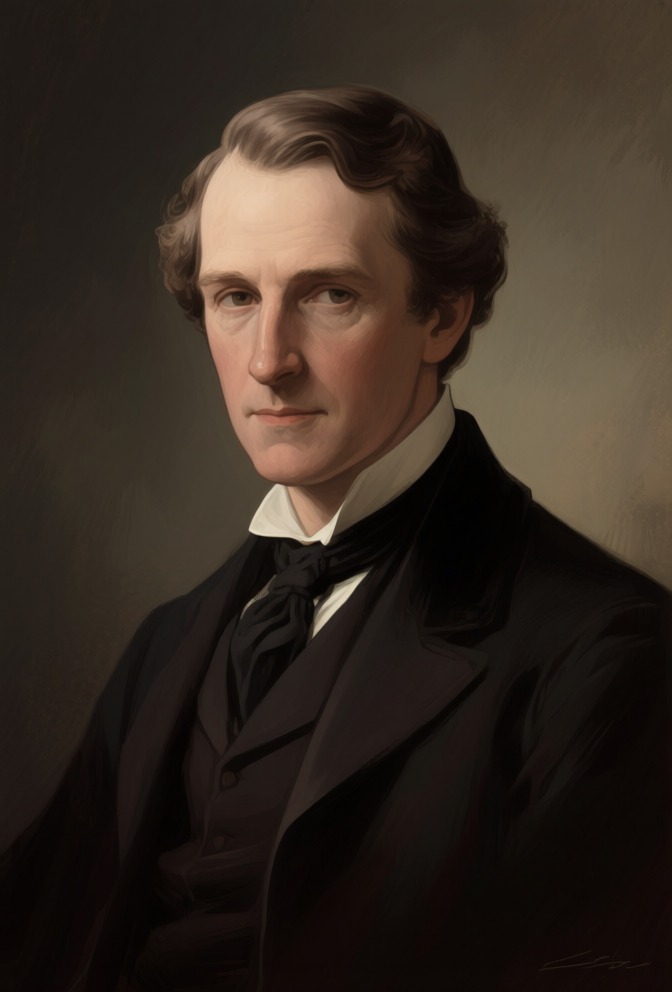
The Meditations of Joshua S. St. Clair is a purple-covered book written by a mentally unstable Finch ancestor, introduced by Aunt Alexandra as a tool to instill family pride in Jem and Scout, but its legacy is undercut by Atticus's irreverent account of Cousin Joshua's attempted shooting of a university president.
Atticus Finch and Miss Maudie Atkinson share a friendship rooted in mutual respect, sharp wit, and a shared moral compass that sets them apart from much of Maycomb. Their bond is revealed through playful banter, quiet support during crises, and a deep, unspoken understanding of each other's character, making Miss Maudie one of the few adults who truly comprehends Atticus's principles and his approach to raising his children.
Atticus Finch and Simon Finch (descendant and ancestor) traces the lineage from the founding patriarch of the Finch family in Alabama to his great-grandson, the novel's moral center. Simon Finch, a self-made frontiersman, established Finch's Landing and a family fortune built on enslaved labor, while Atticus, a lawyer in the declining town of Maycomb, inherits not wealth but a name burdened by history. Their relationship is one of inheritance without direct contact—Atticus never knew Simon—yet the ancestor's choices echo through the generations, shaping the family's place in Maycomb's rigid caste system and informing Atticus's own understanding of honor, conscience, and what it means to be a Finch.
Atticus Finch and Tom Robinson (lawyer-client) is the central legal relationship in the novel, defining the moral conflict of Maycomb. Atticus, a white lawyer, agrees to defend Tom, a Black man falsely accused of raping a white woman, knowing the case is unwinnable in a racist court. This relationship exposes the deep racial divisions of the town, tests Atticus's integrity and his children's understanding of justice, and becomes the crucible through which the novel explores courage, conscience, and the failure of the legal system.
Atticus Finch and Uncle Jack Finch are brothers who share a close, affectionate bond, yet embody contrasting approaches to parenting and understanding children. Jack, the younger brother, is a doctor who visits Maycomb annually at Christmas, and his interactions with Scout and Jem reveal a man who is kind but initially lacks the deep, patient wisdom that defines Atticus. Their relationship serves as a foil, highlighting Atticus's unique philosophy of child-rearing and moral integrity.
Mad Dog (Rabies) is a state of lethal disease that erupts in the quiet town of Maycomb during an unseasonably cold February, transforming the familiar pet Tim Johnson into a shambling, mindless threat and forcing the revelation of Atticus Finch's long-hidden skill as a marksman, which in turn reshapes his children's understanding of their father and of courage itself.
The Snowfall is a rare and transformative weather event in Maycomb County, marking the first snow since 1885 and serving as a catalyst for the children's creative snowman-building, the destructive house fire, and the revelation of Boo Radley's protective presence.
Moira is Offred's closest friend from the time before Gilead, a fiercely independent, witty, and resourceful woman whose acts of defiance—including a daring escape from the Red Center—become a symbol of resistance and a source of hope for Offred, though her eventual fate at Jezebels reveals the regime's capacity to co-opt even the most rebellious spirits.
Offred's Mother is a vivid, contentious presence in Offred's memory—a feminist activist from the pre-Gilead era whose life of protest, single motherhood, and uncompromising beliefs stands in stark opposition to the regime that later erased her. She appears only in flashback and recollection, yet her example haunts Offred's narrative as both a lost model of resistance and a source of unresolved conflict.
The Commander takes Offred to Jezebel's, a secret hotel brothel for high-ranking officials, where she reunites with Moira and confronts the regime's hypocrisy and her own complicity.
Amazing Grace is a Christian hymn that Offred recalls in her room in the Commander's house, a forbidden song whose lyrics about being "free" mark it as dangerous under Gilead's theocratic censorship, and whose private singing becomes a small act of internal resistance and a link to her lost past.
The Angels of Light are a military division within the Republic of Gilead, deployed in the Appalachian Highlands to suppress Baptist guerrilla forces through aerial bombardment and ground operations.
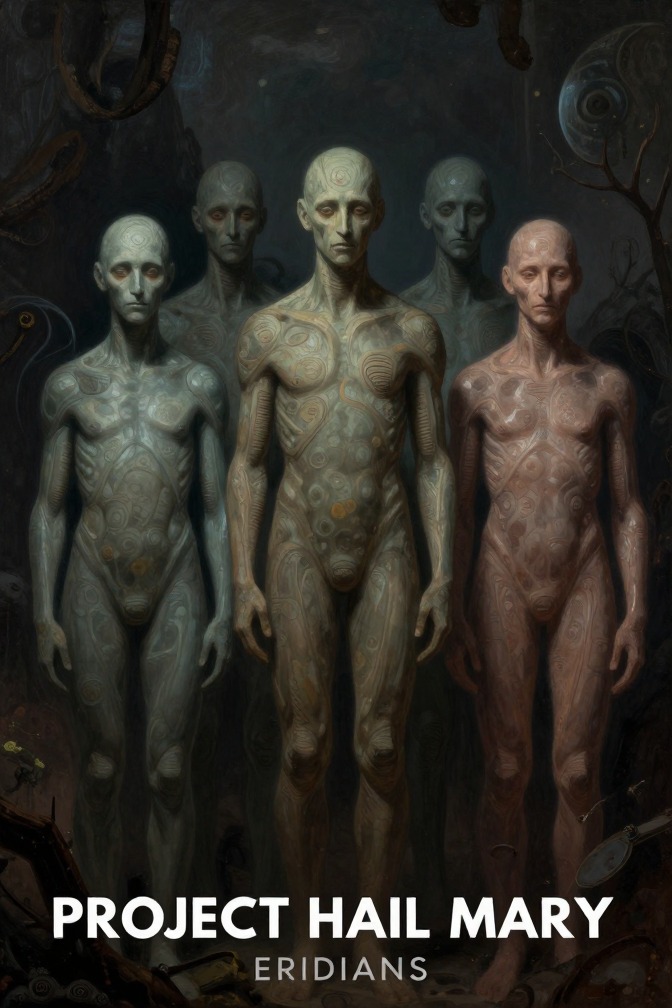
The Eridians are the intelligent, pentagonally symmetrical alien species from the 40 Eridani system, first encountered by Ryland Grace in the Tau Ceti system. They are a technologically advanced civilization that independently developed interstellar travel using Astrophage as fuel, but their biology and culture are radically different from humanity's: they are blind, relying on sophisticated echolocation for spatial perception; they breathe ammonia at 29 atmospheres of pressure and live at temperatures above 200 degrees Celsius; and their bodies are largely inorganic, with mercury-based blood, metallic bones, and a steam-powered muscular system. The sole surviving Eridian, Rocky, becomes Grace's closest ally and friend, and together they work to save both their homeworlds from the Astrophage infestation.
The Goldilocks Zone Is for Idiots is the provocative title of a scientific paper written by Ryland Grace, which argues that the assumption that life requires liquid water is a flawed and narrow-minded constraint on the search for extraterrestrial biology. This paper, a defiant farewell to the academic establishment, becomes the very reason Eva Stratt recruits Grace for the Hail Mary mission, making it a pivotal document that shapes the entire narrative.
Delbert Grady is the former winter caretaker of the Overlook Hotel who, during the winter of 1970-71, murdered his wife and two daughters with a hatchet and a shotgun before committing suicide, an event that serves as a dark omen for Jack Torrance and his family.
Larry Durkin is the owner of the Conoco gas station in Sidewinder, Colorado, who provides Dick Hallorann with a snowmobile and essential winter gear during the blizzard, enabling Hallorann's desperate journey to rescue the Torrance family at the Overlook Hotel.
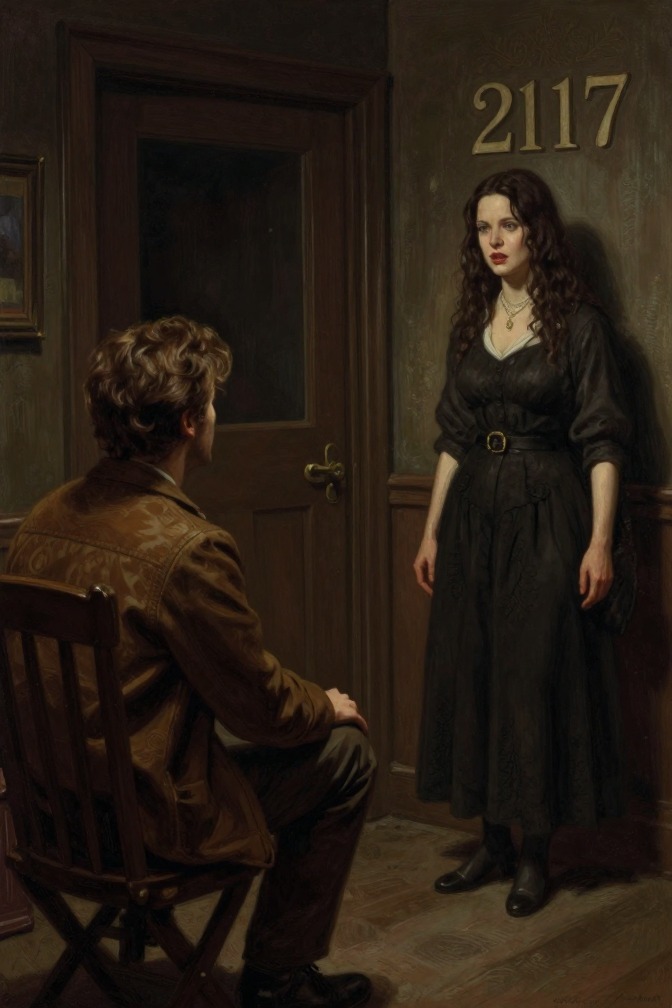
Danny Torrance, driven by a morbid curiosity that the Overlook Hotel itself seems to encourage, disobeys Dick Hallorann's warning and uses the stolen passkey to enter Room 217, where he discovers the corpse of a woman in the bathtub. The dead woman, a grotesque and bloated figure, sits up and chokes him, leaving visible bruises on his neck and sending him into a catatonic state that shatters the family's fragile peace and forces a confrontation with the hotel's malevolent power.
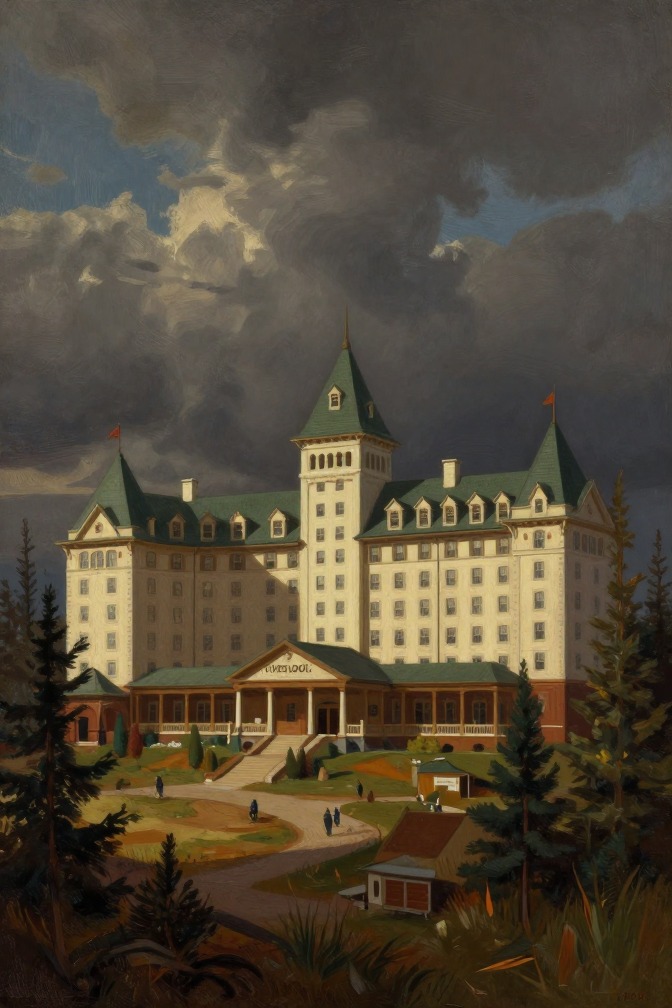
The Overlook Hotel is a vast, isolated resort in the Colorado Rockies, built between 1907 and 1909, that serves as the primary setting and antagonist of the novel. Its long history of violence, corruption, and tragedy has imbued the building with a malevolent, semi-sentient force that preys on the psychic vulnerability of its inhabitants, particularly the Torrance family, whom it seeks to absorb and destroy.
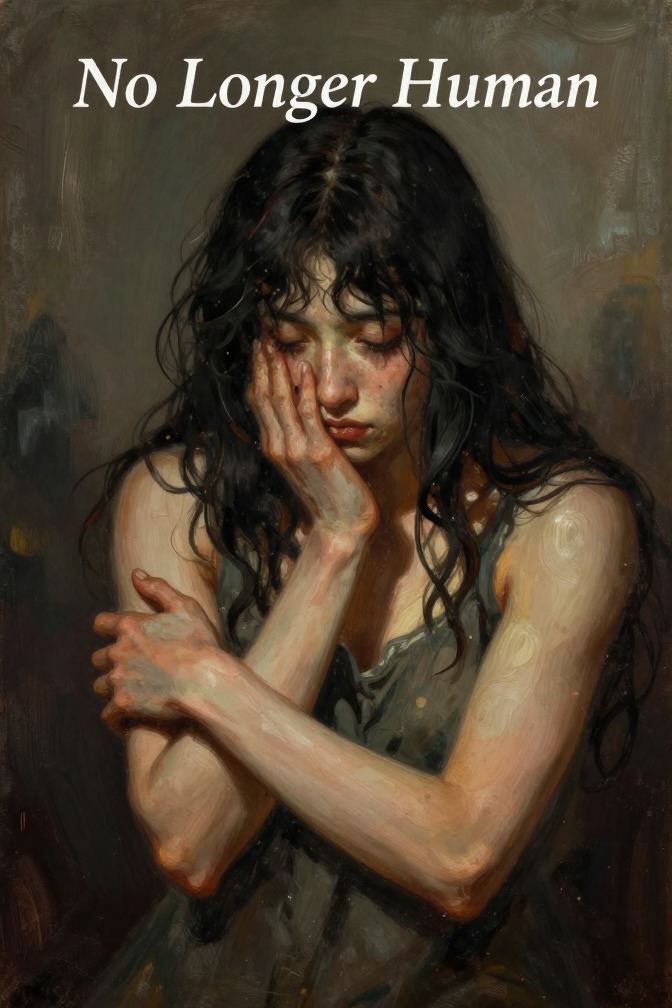
Shame is the central, defining emotional state of Yozo's life in No Longer Human, a pervasive and inescapable condition that shapes his every action and relationship. It is not merely a feeling of embarrassment but a profound, existential conviction of being fundamentally flawed and disqualified from the human race, a 'life of much shame' that drives his clowning, his self-destructive behavior, and his ultimate alienation.
Dr. Huld is a defense lawyer who represents Josef K. in his mysterious trial, but his methods—relying on personal connections with court officials, endless delays, and psychological manipulation—prove ineffective and ultimately harmful, embodying the court's corrupt and inscrutable nature.
Titorelli is a painter and court trustee in Franz Kafka's The Trial who offers Josef K. a cynical education in the court's inner workings, presenting the only concrete—if deeply compromised—pathways for a defendant to avoid conviction.
The Court presumes guilt is the foundational operating principle of the legal system in Franz Kafka's The Trial, dictating that every accused person is considered guilty from the moment of arrest, that this presumption cannot be overturned by evidence or argument, and that the entire machinery of the court is designed to confirm rather than test this assumption.
Everett is Pippa Blackwell's boyfriend, a music librarian from London who accompanies her on a visit to Hobie's house in New York. He is described as a slight, wide-eyed, blandly cheerful Englishman whose presence triggers intense jealousy and despair in Theo, who is hopelessly in love with Pippa. Everett is a vegetarian, financially dependent on Pippa's inheritance, and represents the stable, conventional life that Pippa has chosen—a life from which Theo feels permanently excluded.
Grisha is a Russian-Jewish mover and storage worker who becomes a trusted ally and confidant to Theo Decker during his years working at Hobart and Blackwell. A blunt, cynical, and fiercely loyal figure, Grisha serves as a bridge between the workshop's artistic ideals and the harsh realities of the antiques trade, offering Theo both practical help and unsentimental advice about the business's precarious finances.
Jerome is a drug dealer in New York City who supplies Theodore Decker with prescription opioids and other narcotics for years, becoming a central figure in Theo's addiction and a marker of his descent into dependency.
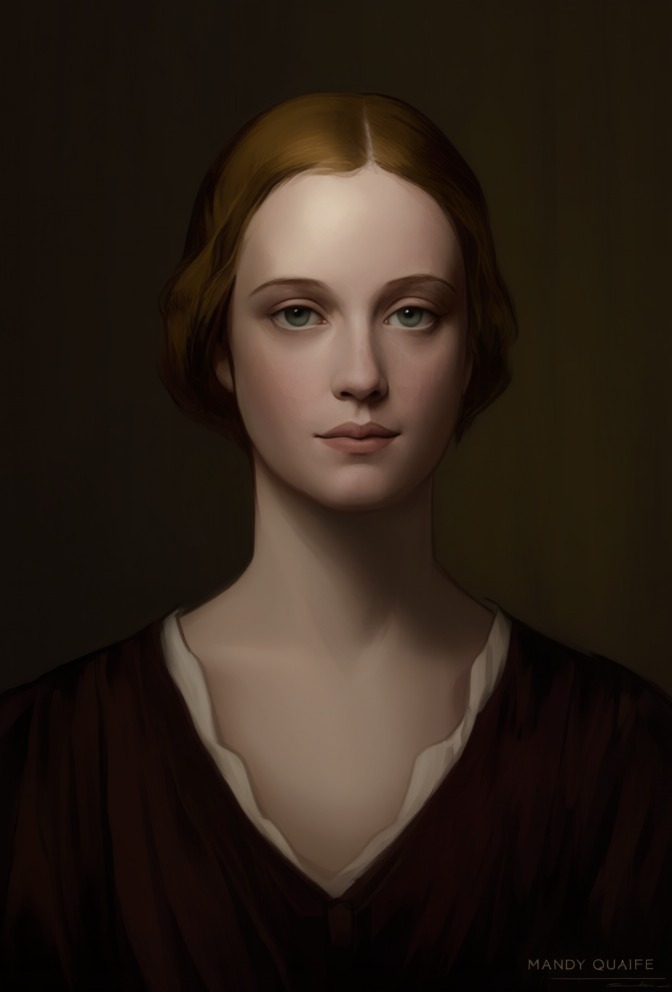
Mandy Quaife is a minor character at Theo Decker's Upper West Side school, remembered primarily for her reaction to Tom Cable's public shunning of Theo after the museum bombing that killed Theo's mother.
Mr. Beeman is the headmaster of Theo Decker's Upper West Side school, whose decision to suspend Theo for smoking on school property sets in motion the chain of events that leads to Theo and his mother visiting the Metropolitan Museum of Art on the day of the terrorist bombing that kills her. Though he later attempts to offer support, his officious manner and his role as the catalyst for the tragedy make him a figure Theo comes to hate irrationally.
Myriam is a lean, steely-eyed woman who works as Boris Pavlikovsky's right-hand operative, handling logistics and intelligence for his criminal network. She is introduced when Boris and Theo Decker reunite on St. Mark's Place in New York, and she later facilitates the Amsterdam operation to recover The Goldfinch. Her cold competence, serpentine elegance, and unspoken authority mark her as a key figure in the underworld that surrounds Boris.
Phil Lefkow is a minor character in Theo Decker's early-college program, known only through a single text message sent to Theo via Andy Barbour's phone during Theo's visit to Hobie's house in Greenwich Village.
Pippa Blackwell is the red-haired girl Theo Decker meets at the Metropolitan Museum of Art on the day of the bombing that kills his mother and her uncle Welty. She is the niece of Welton Blackwell, the old man who dies beside Theo in the wreckage, and the ward of James Hobart. Her survival of the explosion, her severe injuries, and her subsequent removal to Texas and then to a Swiss boarding school for traumatized children create a permanent, unfulfilled longing in Theo that shapes his entire adult life. She is the living embodiment of the lost world of that day, and the object of a love so consuming that it prevents him from fully committing to anyone else.