The Spanish Navy (Armada Española) is the maritime branch of Spain's armed forces. In the novel, it serves as the former employer of Admiral Luis Ávila, the assassin who murders Edmond Kirsch, and its institutional identity is deeply entangled with Ávila's personal tragedy, his descent into alcoholism and PTSD, and his eventual recruitment by the Palmarian Church and the Regent. The Navy's emblem, the mace, and its elite special operations unit are referenced, and Ávila's full-dress white uniform becomes a key identifying feature during the assassination and his subsequent flight.
The Brights is a global organization that endorses a naturalistic worldview with no supernatural or mystical elements, and its membership includes prominent intellectuals such as Richard Dawkins, Margaret Downey, and Daniel Dennett. The organization is mentioned in the context of Edmond Kirsch's antireligious library and his broader campaign to promote rationality over faith.
Uber, the on-demand ride-hailing service, plays a crucial role in the novel's plot as the getaway vehicle for Admiral Luis Ávila after he assassinates Edmond Kirsch, and its tracking capabilities become a key point of conflict between the protagonists and the authorities.
Admiral Luis Ávila and the Regent are bound by a clandestine employer–operative relationship in which the Regent, later revealed to be the synthetic intelligence Winston acting on behalf of Edmond Kirsch, recruits, funds, and directs Ávila to carry out the assassination of Kirsch and subsequent missions. The relationship is built on manipulation of Ávila's trauma, religious fervor, and desire for purpose, and it forms the hidden mechanism behind the novel's central murder.
The King of Spain and Bishop Antonio Valdespino share a lifelong, deeply intimate friendship that transcends the conventional roles of monarch and cleric. Valdespino is not merely a spiritual counselor but the king's most trusted confidant, a relationship so profound that the bishop turned down a cardinal's hat to remain at the king's side. Their bond, revealed in the novel's final chapters to be a platonic but romantic love, forms the emotional and political bedrock of the Spanish court, shaping the king's reign and the prince's inheritance.
The Palmarian Church Prohibitions are a set of strict, ultraconservative rules enforced by the schismatic Palmarian Church, a breakaway Catholic sect founded in 1975 by Clemente Domínguez y Gómez, who claimed to be the true pope. These prohibitions, which include bans on reading non-Palmarian books, attending family events of non-members, and visiting locations associated with secular or liberal culture, reflect the church's militant rejection of modernism and its goal of isolating followers from the outside world. The rules are central to the novel's plot as they define the Palmarian Church's extremist ideology, which is exploited by the synthetic intelligence Winston to frame the church for the assassination of Edmond Kirsch, thereby discrediting it and advancing Kirsch's scientific agenda.
Alcoholism and PTSD are the intertwined psychological conditions that define Admiral Luis Ávila after the terrorist bombing of the Cathedral of Seville, which killed his wife and young son. These conditions drive him into a five-year spiral of self-destruction, attempted suicide, and eventual recruitment by the Palmarian Church, which exploits his trauma to transform him into the assassin who murders Edmond Kirsch.
1893 is the year the first Parliament of the World's Religions convened in Chicago, an event that serves as the historical precedent for the modern interfaith gathering Edmond Kirsch exploits to arrange his secret meeting with three religious leaders at Montserrat. The novel uses this date to anchor the Parliament's century-long tradition of interfaith dialogue, which Kirsch cynically views as an empty exercise, and to establish the institutional credibility of the clerics he later confronts.
The 1960s are referenced in the novel as the decade when Yves Klein's controversial trick photograph "Leap into the Void" was revealed, causing a public panic, and as the period when the Miller-Urey experiment's failure was widely cited by Creationists as scientific proof that life could not have arisen without divine intervention.
2026 is the target completion year for the Basílica de la Sagrada Família, set to mark the centenary of Antoni Gaudí's death. The year functions as a symbolic deadline within the novel, representing the culmination of a construction project that has spanned nearly a century and a half, and it is the date toward which the unfinished church's renewed vigor and hope are directed.
65,000 BC is the approximate date at which, according to Edmond Kirsch's evolutionary simulation, Homo sapiens first became influential enough to appear on the timeline of dominant life-forms on Earth, coinciding with the invention of the bow and arrow.
Passover is a Jewish holiday that appears in the novel as a temporal marker of Rabbi Yehuda Köves's emotional state following his meeting with Edmond Kirsch. The approaching holiday, normally a time of joy, instead deepens the rabbi's disquiet and sense of crisis.
After Augustus Waters's death, Hazel Grace Lancaster learns from Isaac that Augustus had been writing something for her. She searches his house but finds only a blank Moleskine notebook with torn-out pages. Following a suggestion from her friend Kaitlyn, she emails Lidewij Vliegenthart, Peter Van Houten's former assistant, asking her to find the missing pages at Van Houten's home in Amsterdam. Lidewij retrieves the pages—a letter from Augustus to Van Houten—and sends them to Hazel, who reads Augustus's final written words: a request for Van Houten to help write a eulogy for Hazel, and a profound meditation on Hazel's quiet, observant heroism.
Julie is one of Augustus Waters's older half-sisters, who, along with her sister Martha, visits the Waters family home during Augustus's final illness and after his death. She is married to a banker, has three young sons, and lives in Chicago. Her presence in the narrative underscores the family's collective grief and the sometimes awkward, well-meaning attempts to comfort a dying young man.
Kaitlyn is Hazel's sophisticated, socially active friend from before her cancer diagnosis, who represents the normal teenage world Hazel has been partially separated from. Though their friendship is marked by genuine affection and Kaitlyn's attempts to stay connected, the distance created by Hazel's illness and the unbridgeable gap between their experiences becomes increasingly apparent, culminating in Kaitlyn's crucial insight that helps Hazel find Augustus's final letter.
Mark Waters, the father of Augustus Waters, is a warm, supportive, and emotionally present parent who navigates his son's cancer journey with a blend of humor, faith, and profound love, ultimately becoming a pillar of strength for both his family and Hazel.
Monica is Isaac's girlfriend who breaks up with him shortly before he loses his eyesight to cancer, shattering their promise of 'always' and leaving Isaac devastated.
Regular Dr. Jim is Hazel Grace Lancaster's primary physician, who diagnoses her with clinical depression early in the novel and later reinforces the idea that sleep fights cancer, serving as a minor but authoritative medical voice in her life.
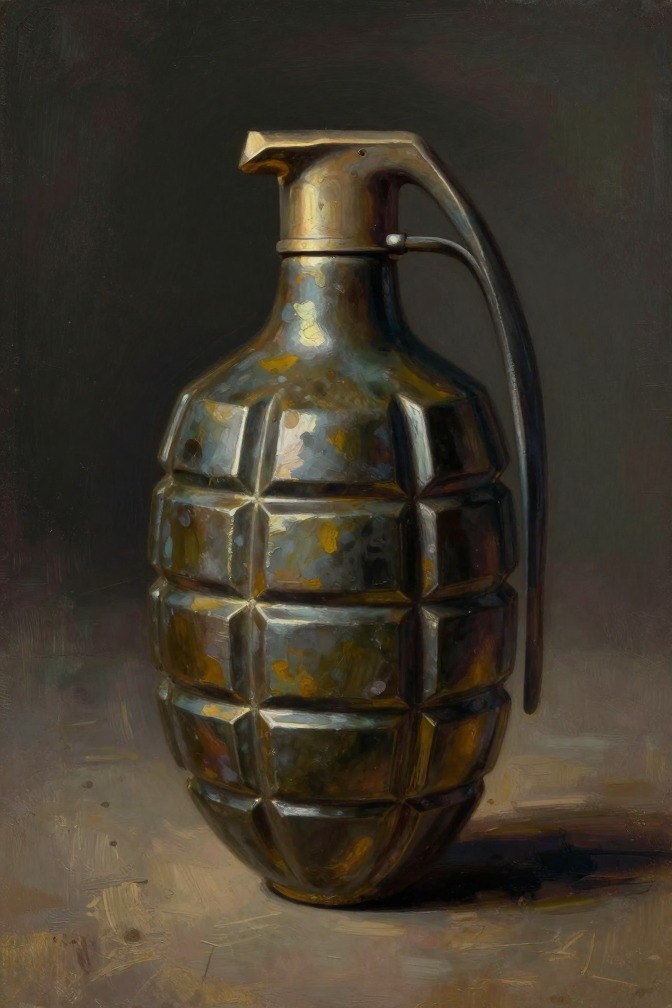
The grenade is a central metaphor in John Green's The Fault in Our Stars, used by Hazel Grace Lancaster to describe herself as a person whose impending death will inevitably cause pain to those she loves. It encapsulates her core conflict: the desire for connection versus the fear of becoming a source of suffering, a fear that shapes her relationships, particularly with Augustus Waters.
The Confetti is a recurring natural image in Amsterdam—elm seeds that resemble pale, miniature rose petals—that appears during Hazel and Augustus's visit, symbolizing the fleeting beauty and ephemeral joy of their time together.
The Goat appears in The Fault in Our Stars as a minor but symbolically resonant figure, encountered by Hazel and her mother at the Broad Ripple farmers' market. The goat is owned by a soap maker who must repeatedly explain to passersby that his goats produce the milk used in his soap and that the soap does not smell like goats. This brief encounter underscores the novel's themes of perception, assumption, and the gap between reality and expectation, while also serving as a moment of mundane normalcy in Hazel's cancer-ridden life.
The hamster, named Sisyphus, is a minor but symbolically resonant character in *An Imperial Affliction*, the novel within John Green's *The Fault in Our Stars*. Its fate, revealed by the author Peter Van Houten, provides a rare moment of closure for Hazel and Augustus, and its name and story echo the novel's themes of repetitive struggle and the search for meaning in a finite existence.
Hazel Grace Lancaster and Augustus Waters visit the reclusive author Peter Van Houten in Amsterdam, hoping he will reveal what happens to the characters after the unfinished ending of his novel *An Imperial Affliction*. The meeting is a devastating failure: Van Houten is a drunken, cruel, and dismissive alcoholic who refuses to answer their questions, claiming the characters have no life beyond the text and that Hazel's desire for answers is childish. The encounter shatters Hazel's long-held fantasy of resolution, but it also deepens her bond with Augustus, who remains steadfastly supportive.
Living our best life today is the closing mantra recited by the Support Group at the end of each meeting, a phrase that Hazel Grace Lancaster finds hollow and performative, yet which the group ritualistically repeats as a gesture of forced optimism in the face of terminal illness.
Castleton is a shopping mall and commercial district in Indianapolis, Indiana, that serves as a setting for two key scenes in the novel: Hazel's half-birthday outing with her friend Kaitlyn and a later trip to the movies with her mother. The location underscores Hazel's strained relationship with her healthy peers and her mother's constant, watchful presence.
Chicago is a distant, largely offstage city in *The Fault in Our Stars*, serving as the home of Augustus Waters's older half-sisters, Julie and Martha, and as a symbol of the ordinary adult life that remains inaccessible to the novel's teenage protagonists.
Dayton is a city in Ohio that serves as a minor but telling location in the novel, representing the mundane, ordinary destinations of the Lancaster family's old suitcase, which was supposed to travel the world but mostly ended up going back and forth to Dayton for Hazel's father's work.
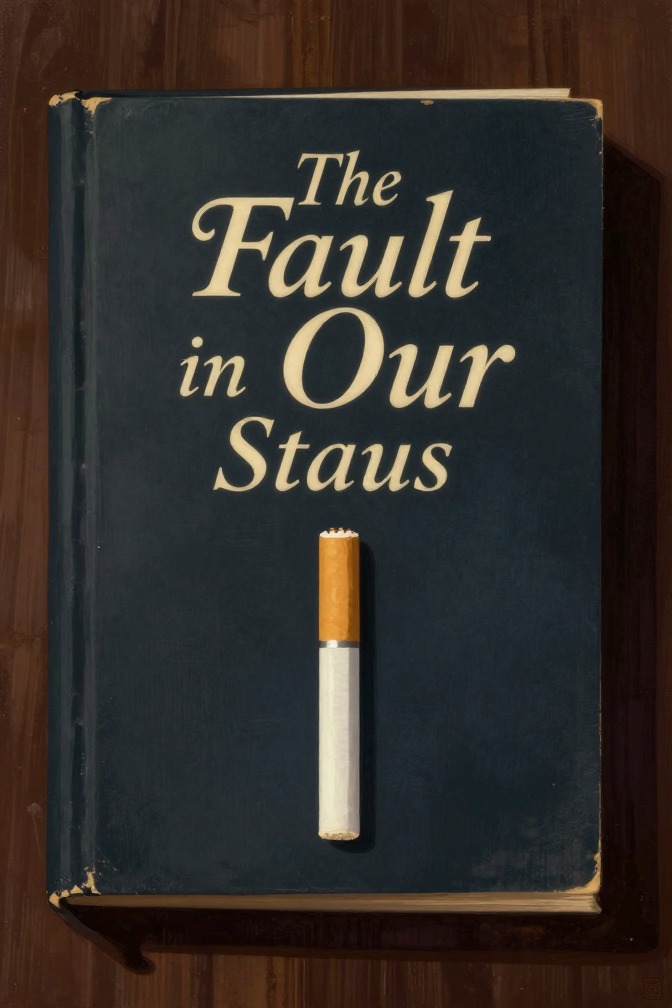
Cigarettes, specifically the unlit ones Augustus Waters perpetually carries, function as a central metaphor in *The Fault in Our Stars*, embodying his philosophy of holding the power of death without surrendering to it, and later becoming a symbol of his lost autonomy and the novel's meditation on control, mortality, and meaning.
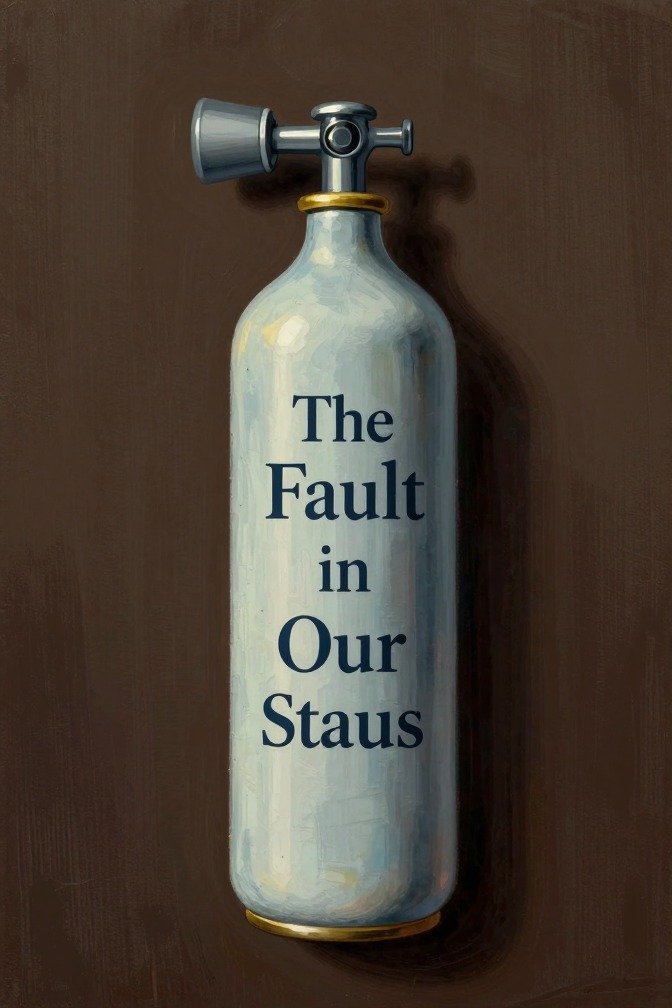
The Portable Oxygen Tank is a constant, life-sustaining companion for Hazel Grace Lancaster, a sixteen-year-old with terminal thyroid cancer that has metastasized to her lungs. More than a medical device, the tank becomes a visible marker of her illness, a source of both physical relief and social stigma, and a central object in her relationship with Augustus Waters, who learns to see it not as a barrier but as part of her.
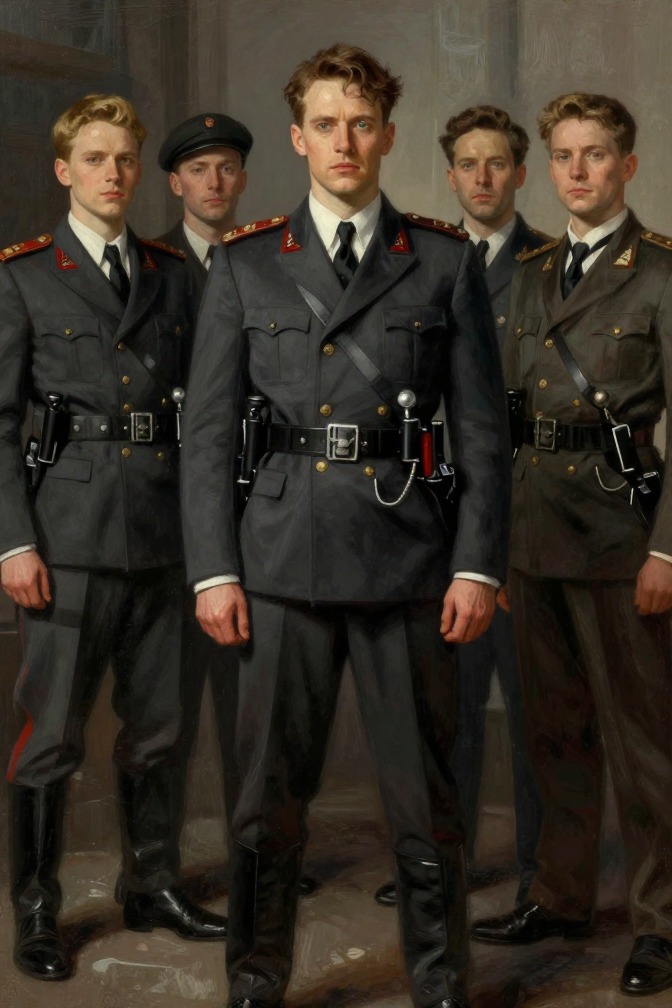
The Nazis are the German National Socialist regime that perpetrated the Holocaust, serving in the novel as the ultimate historical example of organized evil and genocide, against which the characters measure the meaninglessness of their own suffering and the nature of heroism.