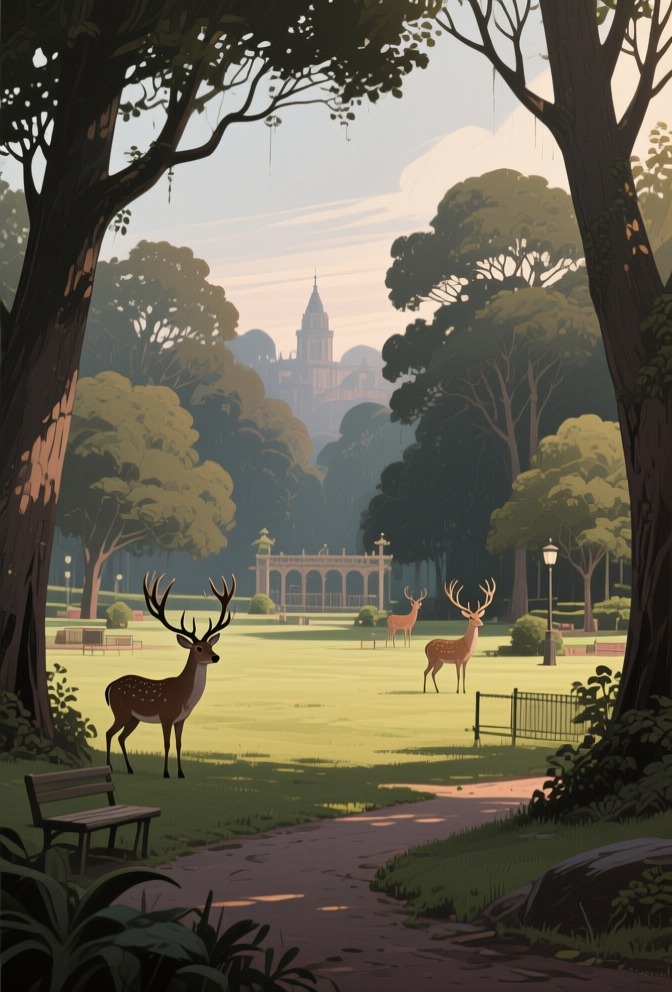
Oz Deer Park is a former royal hunting ground in the Emerald City that, by the time of the Wizard's reign, has been stripped of its deer and Deer, becoming a barren, snowy expanse that Elphaba crosses on her way to an assassination attempt, symbolizing the Wizard's systematic erasure of Animal life and the desolation of the natural world under his rule.
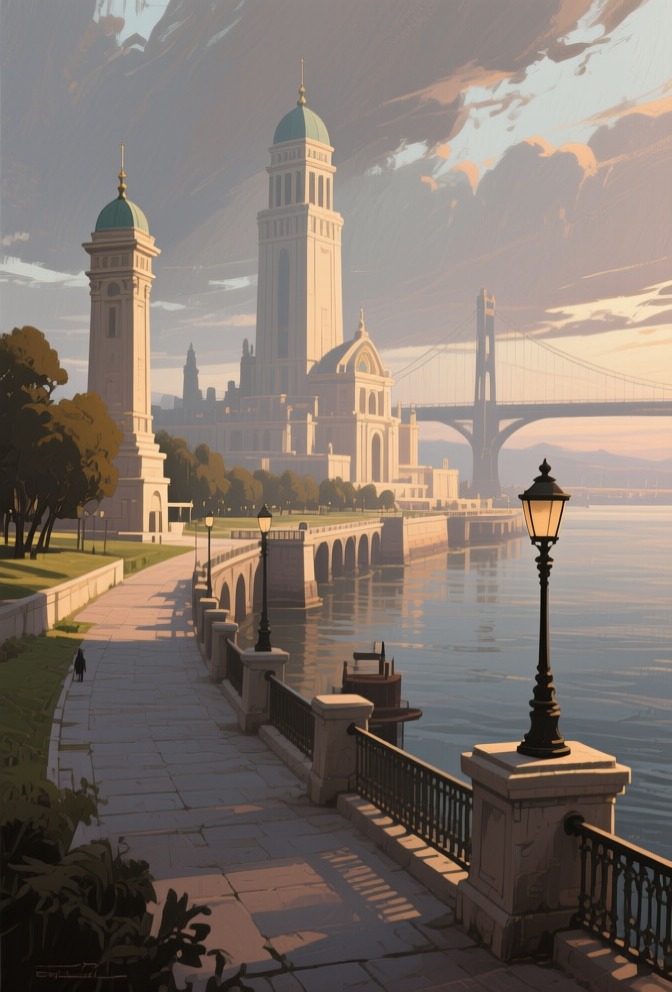
The Ozma Embankment is a location in the Emerald City where Elphaba walks during her reconnaissance on Lurlinemas Eve, the night she intends to assassinate Madame Morrible. It serves as a transitional space in the city's geography, connecting the Law Courts Bridge to the abandoned rose gardens of the Royal Mall, and marks a stage in Elphaba's final, failed attempt at political violence.
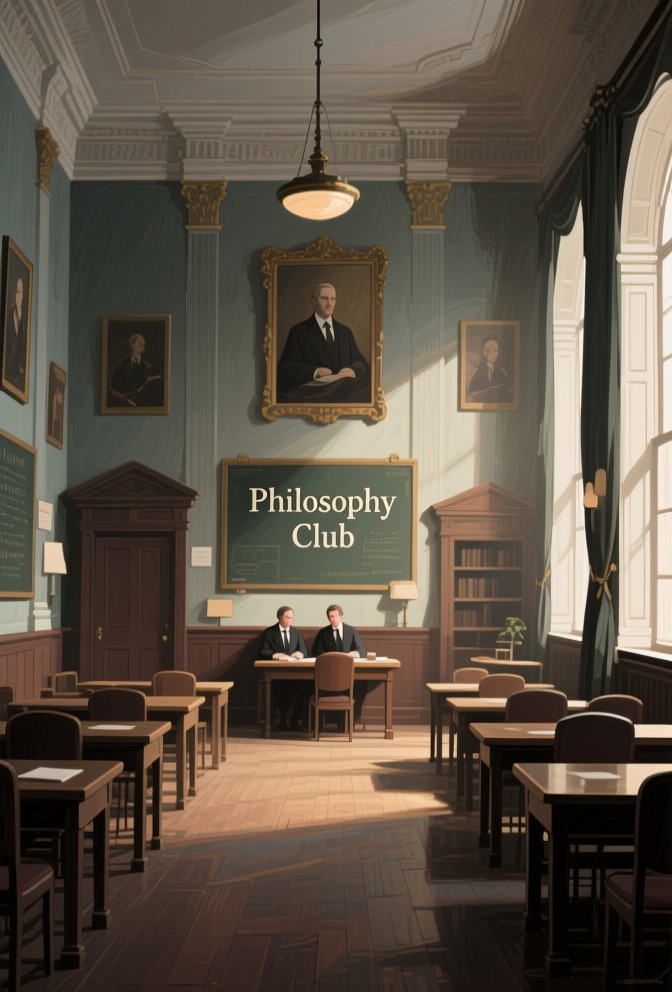
The Philosophy Club is a notorious underground establishment in Shiz, known for its decadent entertainments and secretive, transgressive rituals that blend pleasure faith, magic, and sexual exploitation. It serves as a site of moral corruption and a stark contrast to the university's academic ideals, where characters confront the darkest aspects of Oz's society.
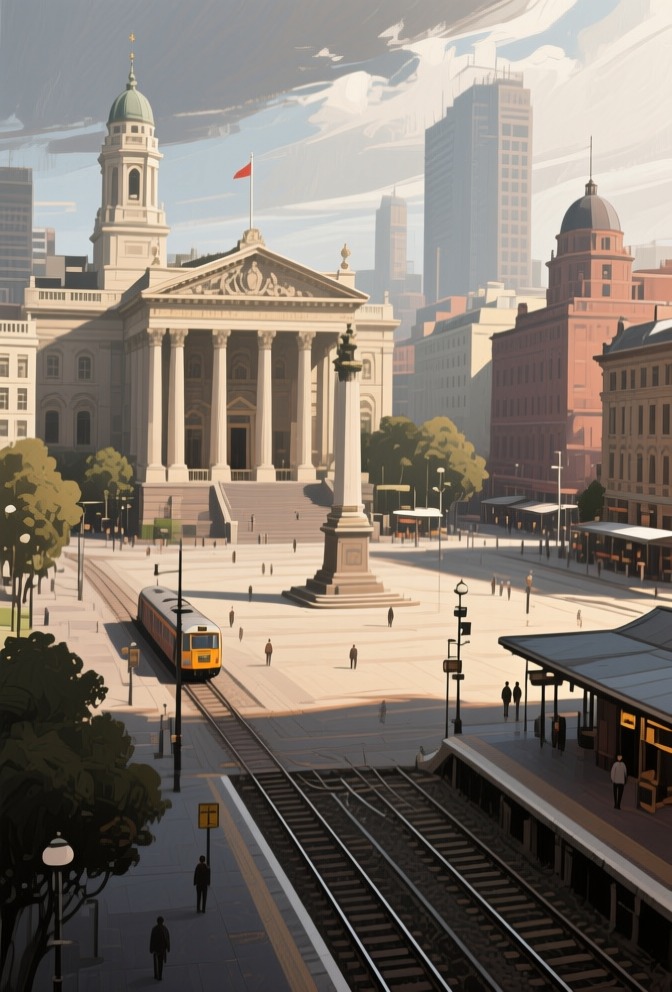
Railway Square is the bustling central transport hub of Shiz, a place of first impressions, chance encounters, and secret meetings that shape the lives of the university's students. It is where Elphaba and Boq deepen their friendship and conspire in their secret research for Doctor Dillamond, and where the city's social and political tensions—between classes, species, and ideologies—are made visible.
Red Windmill is the garrison town below Kiamo Ko in the Vinkus, where the Wizard's reconnaissance army is stationed to keep Elphaba in check and where Dorothy and her companions receive a royal welcome before their final ascent to the castle.
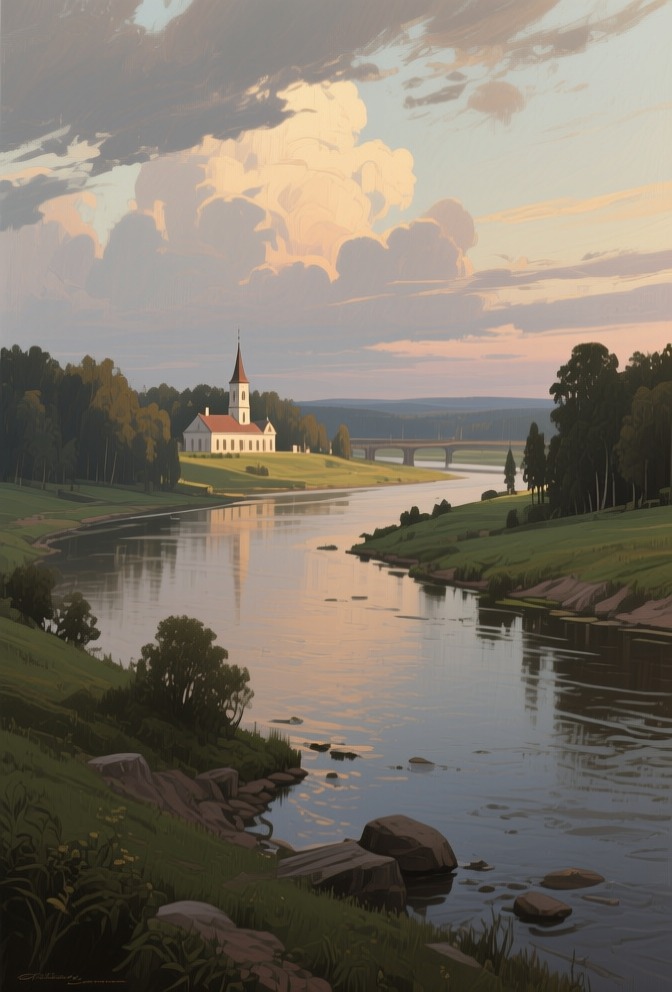
Restwater is Oz's largest lake, a vast body of water that serves as a crucial geographical boundary and a site of significant narrative events, including Elphaba's flight across it during her journey to Colwen Grounds.
Shin Road is the principal thoroughfare connecting the Emerald City to the university city of Shiz, serving as the route Elphaba takes when she leaves the capital after her failed audience with the Wizard and later as the path Fiyero follows while stalking her on Lurlinemas Eve.
Tenmeadows is the ancestral seat and margreavate of Avaric, a wealthy and privileged Gillikinese nobleman who was a contemporary of Elphaba, Glinda, and Boq at Shiz University. The estate functions as a symbol of inherited aristocratic power and economic capital within the social hierarchy of Oz, and it is from this position of unearned advantage that Avaric moves through the world, his status granting him access and immunity that characters like Boq and Elphaba lack.
The Vinkus River is a major waterway in the Vinkus region of Oz, flowing through the Great Kells mountains and past the Arjiki stronghold of Kiamo Ko. It is a powerful tributary of the Vinkus River on which the Ozma Regent once planned to build a dam and channel water into the center of Oz during the worst of the droughts. The river's course and the terrain around it define the landscape of the Vinkus, serving as a boundary and a lifeline for the nomadic tribes and the castle's inhabitants.
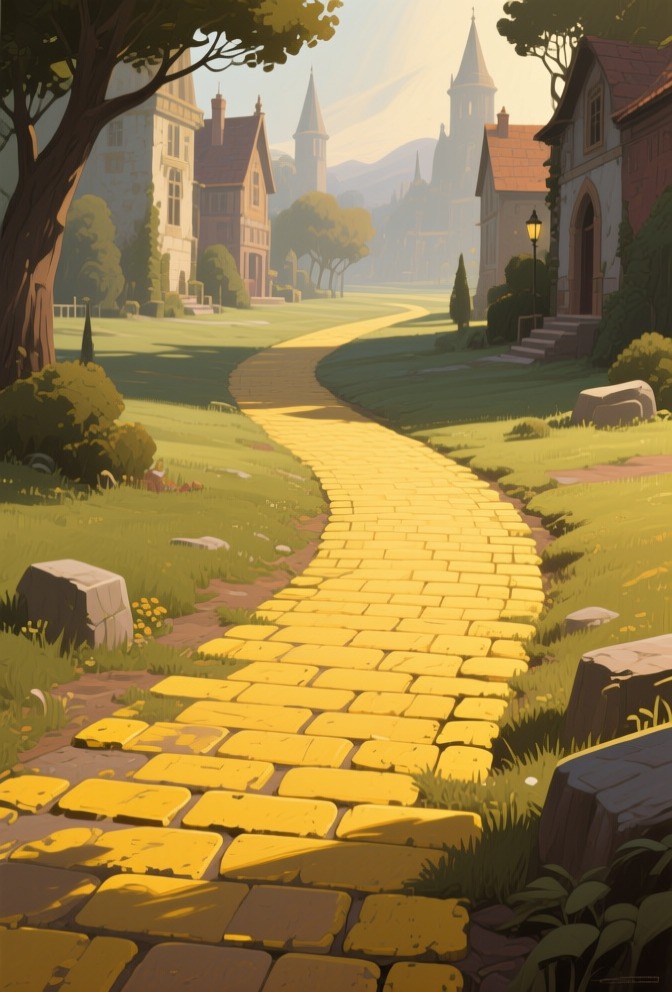
The Yellow Brick Road is the central thoroughfare of Oz, a golden-paved route that connects the eastern farmlands of Munchkinland to the Emerald City. Originally commissioned by the Ozma Regent as a project of progress and control, the road becomes a symbol of the Wizard's oppressive reach, a site of political resistance, and the path along which Dorothy and her companions travel, ultimately leading to the confrontation with the Wicked Witch of the West.
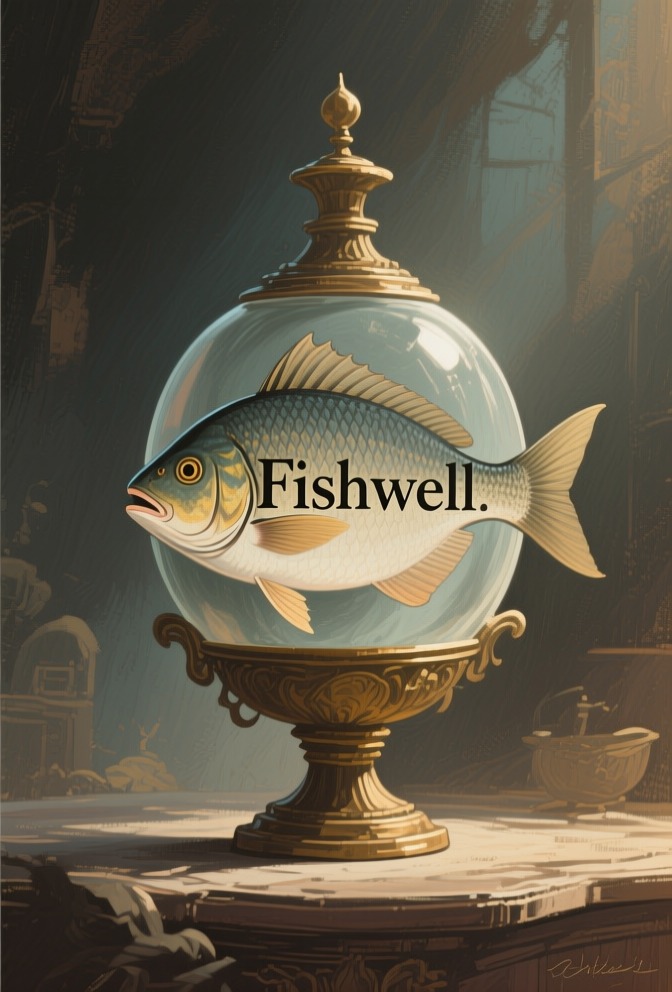
The Fishwell is a deep, dark well in the basement of Kiamo Ko, the Arjiki mountain stronghold, that serves as a source of fish for the castle's inhabitants and becomes the site of a near-fatal drowning and a mysterious encounter with a talking golden carp.
The Yunamata are a Vinkus tribe encountered by the Grasstrail Train during its journey through Kumbricia's Pass. They are portrayed as soft, compliant, and hospitable, but their arrival terrifies the travelers more than an attack would have. Their behavior reminds Elphaba of the Quadlings she grew up with, and they ultimately leave without making trouble, disappointing the hired rafiqi who expected to negotiate.
Elphaba and Fiyero's love affair is a clandestine, passionate, and ultimately tragic relationship that unfolds in the Emerald City years after their student days at Shiz University, becoming the central emotional and moral crucible of Elphaba's life. It transforms her from a hardened, isolated underground activist into a vulnerable lover, only to shatter her when Fiyero is murdered by the Gale Force, an event that drives her into years of guilt, silence, and a quest for atonement that shapes her identity as the Wicked Witch of the West.
The Female inheritance of Eminence is the legal and customary rule in Munchkinland that the title of Eminent Thropp and its attendant estate and responsibilities pass through the female line, descending to the firstborn daughter unless there are no daughters, in which case the eldest son inherits. This rule shapes the lives of the Thropp women across generations, determining Melena's desperate flight from her inheritance, Elphaba's status as the rightful heir she rejects, and Nessarose's rise to power as the Wicked Witch of the East.
The Quadlings' oppressed state is a systematic condition of dispossession, cultural erasure, and violent exploitation imposed by the Wizard's regime, driven by the discovery of ruby deposits in their homeland and enforced through military occupation, forced displacement, and the destruction of their traditional way of life.
The Yellow Brick Road, once a symbol of Oz's unification and progress, has fallen into a state of disrepair and fragmentation, reflecting the political decay and social unrest that have overtaken the land. Originally built to connect the far reaches of Oz to the Emerald City, the road is now torn up by agitators, neglected by a distant government, and physically broken, serving as a literal and metaphorical path of hardship for those who travel it.
Highsummer is the midsummer month in Oz, a time of leisure and social gatherings for the wealthy, as seen when Galinda and her friends rent a house on Lake Chorge.
Lurlinemas is the most important annual festival in Oz, a syncretic holiday that blends ancient pagan traditions honoring the Fairy Queen Lurline with later unionist Christian observances, and serves as a key temporal marker for family gatherings, gift-giving, and the emotional climax of Elphaba's failed assassination attempt.
The Massacre at Far Applerue was a pivotal atrocity in the escalating conflict between the Wizard of Oz's regime and the secessionist Free State of Munchkinland, serving as the final catalyst that transformed Nessarose from a religious recluse into the revolutionary leader known as the Wicked Witch of the East.
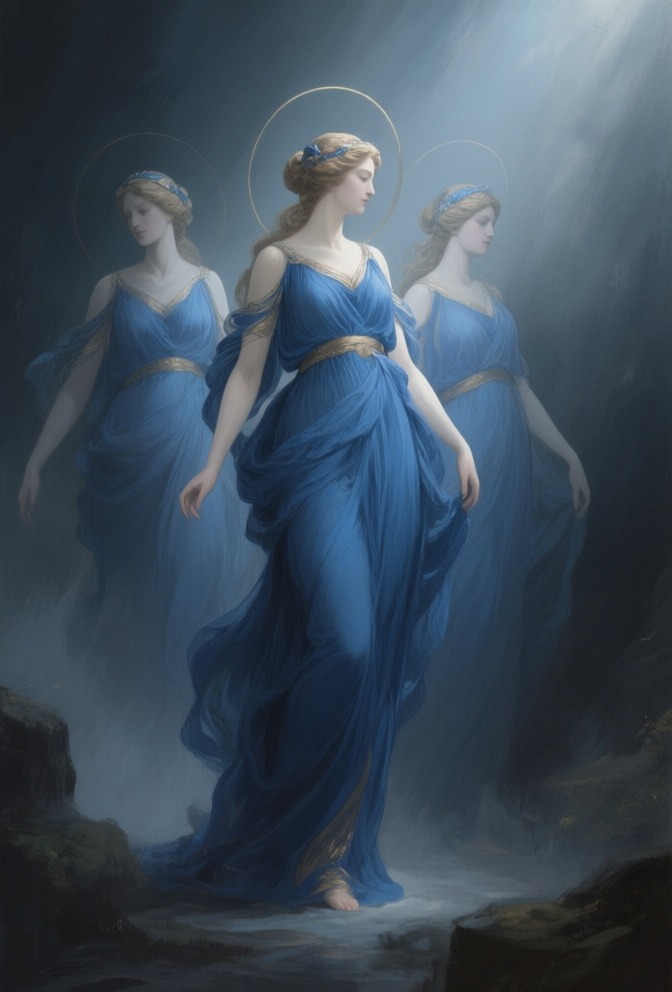
The Blue Graces are a religious order of healers in Meereen, serving the Temple of the Graces and tending to the sick and wounded. They are distinguished by their blue robes and veils, and their role becomes increasingly significant as the pale mare, a deadly bloody flux, spreads through the city and its besieging armies.
The Butcher King is the derisive title given to Cleon the Great, the former slave who seized power in Astapor after Daenerys Targaryen overthrew the city's slaveocracy. His brief, brutal reign is defined by military incompetence, the restoration of slavery under new masters, and a catastrophic war against Yunkai that ends in the city's destruction by fire, famine, and the bloody flux.
The floppy ears is a Ghiscari garment, the tokar, which Daenerys Targaryen is compelled to wear as a symbol of her acceptance of Meereenese culture and authority, a pragmatic concession that underscores the tension between her identity as a foreign conqueror and her need to rule a city that views her as a barbarian.
The Old Way is the traditional code of conduct among the ironborn of the Iron Islands, centered on reaving, raiding, and taking what one desires by strength rather than through trade or diplomacy. It stands in direct opposition to the New Way, which emphasizes commerce and peaceful integration with the Seven Kingdoms. The Old Way is invoked by characters such as Balon Greyjoy, Aeron Damphair, and Victarion Greyjoy as a source of cultural identity and pride, but its brutal practices—including the taking of thralls and salt wives—are increasingly challenged by the changing political landscape of Westeros and the ambitions of Euron Greyjoy.
The Shavepate, also known as Skahaz mo Kandaq, is a Meereenese nobleman who becomes one of Daenerys Targaryen's most ruthless and trusted advisors, commanding the Brazen Beasts and advocating for brutal reprisals against the Sons of the Harpy. His shaved head marks him as a traitor to the old slaving families, and his unwavering loyalty to Daenerys is matched only by his thirst for vengeance against the city's Great Masters.
The stallion that mounts the world is a Dothraki prophecy foretelling the birth of a great khal who will unite the Dothraki people and conquer the world. Daenerys Targaryen's unborn son Rhaego was prophesied to be this figure, but he died in the womb, and the prophecy remains unfulfilled.
The Golden Company, a sellsword company of exiled Westerosi and their descendants, lands on Cape Wrath under the command of Jon Connington, the exiled Lord of Griffin's Roost and former Hand of the King, who has dyed his hair blue and concealed his identity. They swiftly capture Griffin's Roost, Crow's Nest, and Rain House, taking the stormlords by surprise. Connington reveals his true purpose: to restore Prince Aegon Targaryen, the son of Rhaegar Targaryen, to the Iron Throne. Over the objections of the cautious captain-general Homeless Harry Strickland, Connington and the young prince persuade the company's captains to abandon the plan to join Daenerys Targaryen in Meereen and instead sail west to invade Westeros directly, aiming to raise their banners and win the throne before Daenerys can arrive.
Jon Snow is stabbed by his own brothers of the Night's Watch after announcing his plan to march south against Ramsay Bolton, an act that constitutes a direct violation of the Watch's vow of non-interference in the realm's conflicts.
Mance Rayder, the King-Beyond-the-Wall, is publicly burned alive by Stannis Baratheon and Melisandre before the assembled wildling captives at Castle Black, an execution that serves as a brutal display of royal power and religious conversion, yet is later revealed to be a glamor that allowed the real Mance to survive and undertake a secret mission.
Iron Lances is a sellsword company hired by Yunkai during the siege of Meereen, one of several free companies arrayed against Daenerys Targaryen. Though they appear only in passing reports and camp gossip, their presence underscores the scale of the coalition facing the dragon queen and the precariousness of her position.
Kill the boy and let the man be born is a recurring thematic expression in A Dance with Dragons, articulated by Maester Aemon Targaryen to Jon Snow as counsel on command, and later internalized by Jon as a brutal imperative for leadership, sacrifice, and the suppression of personal feeling in the face of duty.