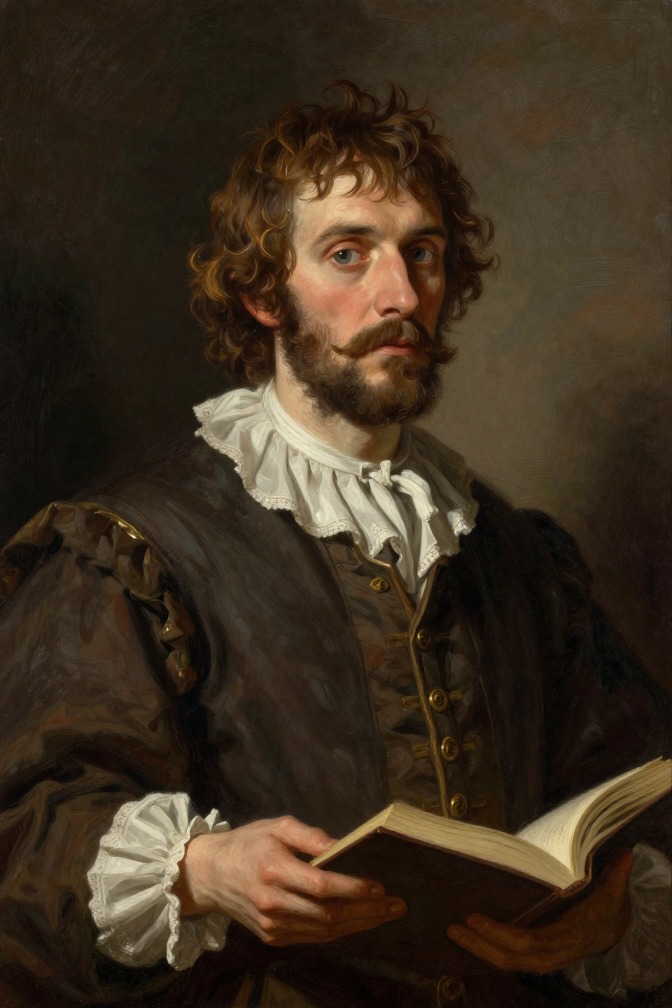
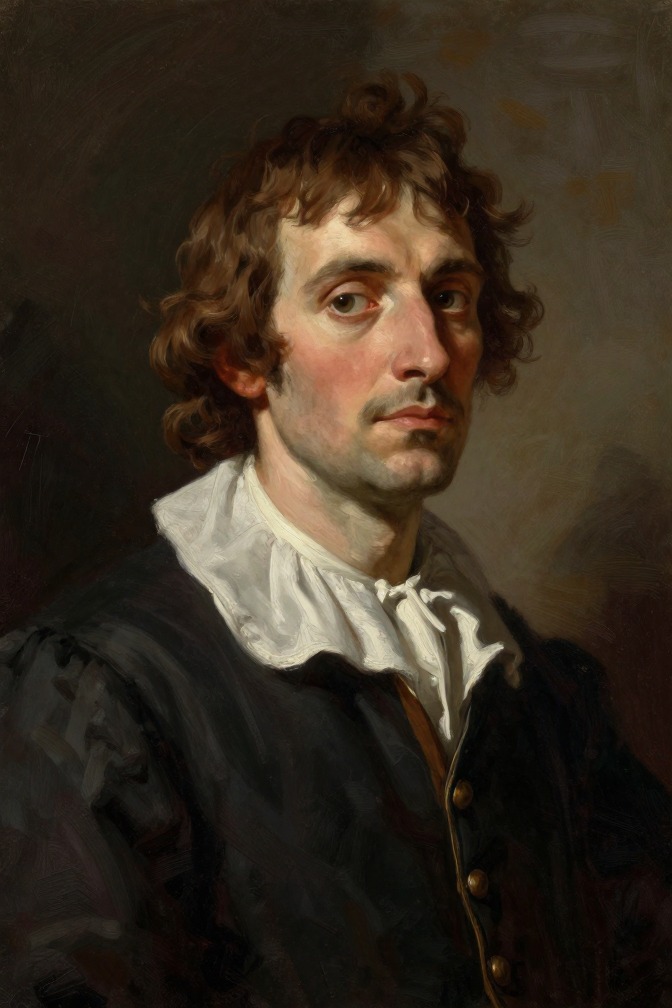
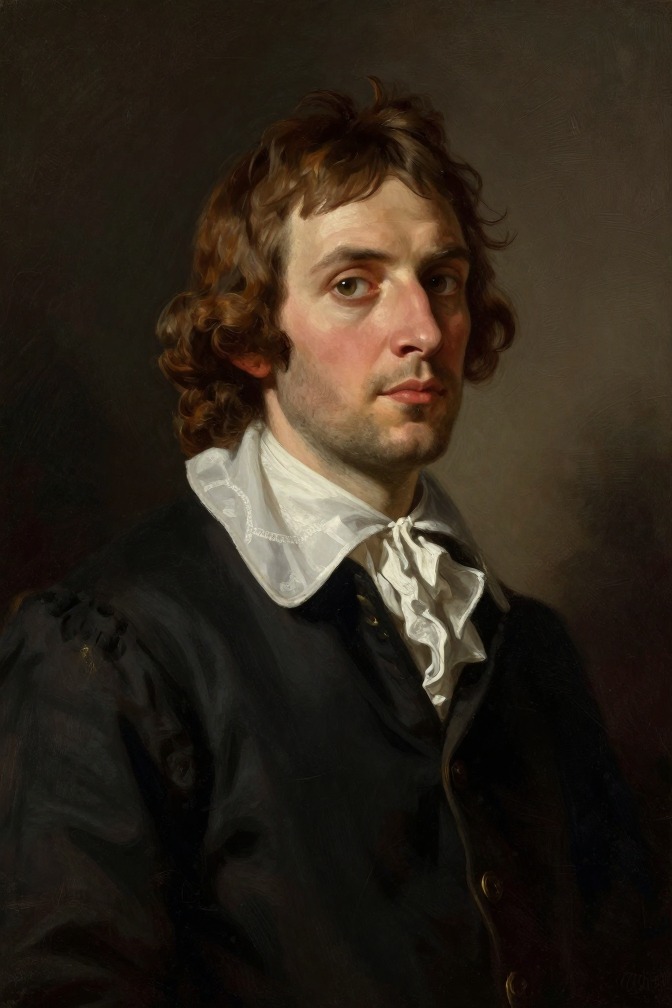
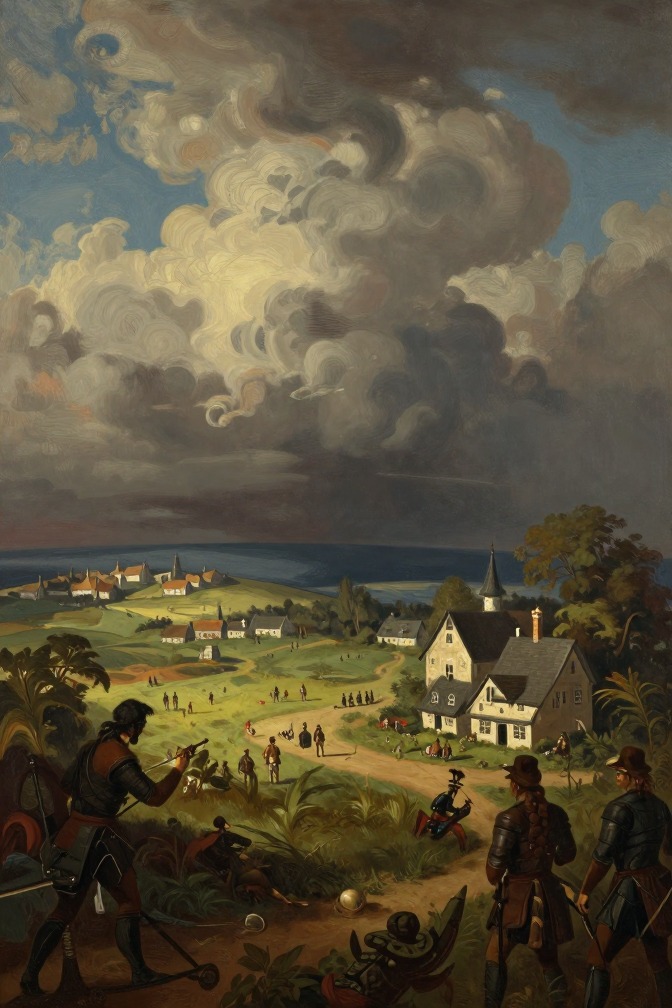
The relationship between Charles Decker and Principal Thomas Denver is the central antagonistic adult-student dynamic that precipitates the hostage crisis. Denver, a veteran administrator who has been in "the kid business" since 1947, represents the institutional authority that Charlie despises and ultimately destroys through psychological warfare. Their confrontation in Denver's office, where Charlie refuses to be treated as a file and reduces the principal to impotent rage, marks the point of no return for Charlie's rampage.
Keep It Tight and Keep It Right is the personal motto of Carl Decker, Charlie Decker's father, and encapsulates a rigid, perfectionist worldview that treats life as a precious antique car requiring constant maintenance and zero tolerance for flaws. The motto governs Carl's approach to everything from home maintenance to his son's upbringing, and it becomes a central symbol of the oppressive, unyielding standard against which Charlie is measured and found wanting, directly fueling the father-son conflict that underpins Charlie's psychological unraveling.
Insanity is the central legal and psychological category in Richard Bachman's Rage, functioning simultaneously as a clinical diagnosis, a legal verdict, and a contested identity that Charles Decker both claims and rejects. The novel uses the concept to interrogate the boundary between rational agency and pathological compulsion, ultimately leaving the question unresolved even after the court has spoken.
The fall of 1962 is the season in which a foundational trauma of Charles Decker's childhood occurs: his father Carl Decker throws him to the ground after he breaks the storm windows, an event that crystallizes the violent, contemptuous father-son dynamic that shapes Charlie's later psychological collapse and his eventual hostage-taking and murders at Placerville High School.
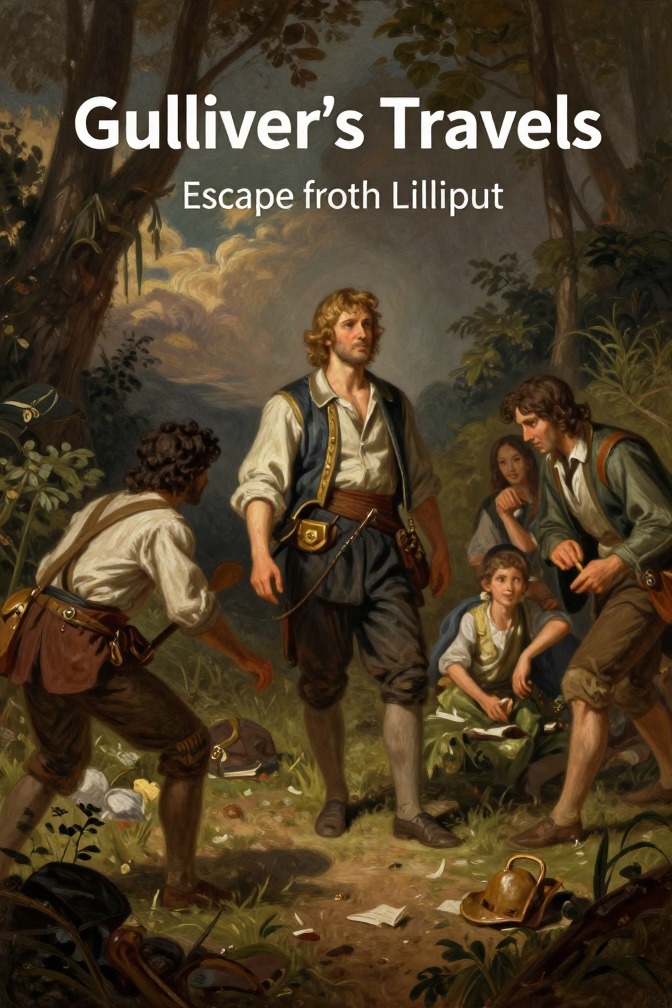
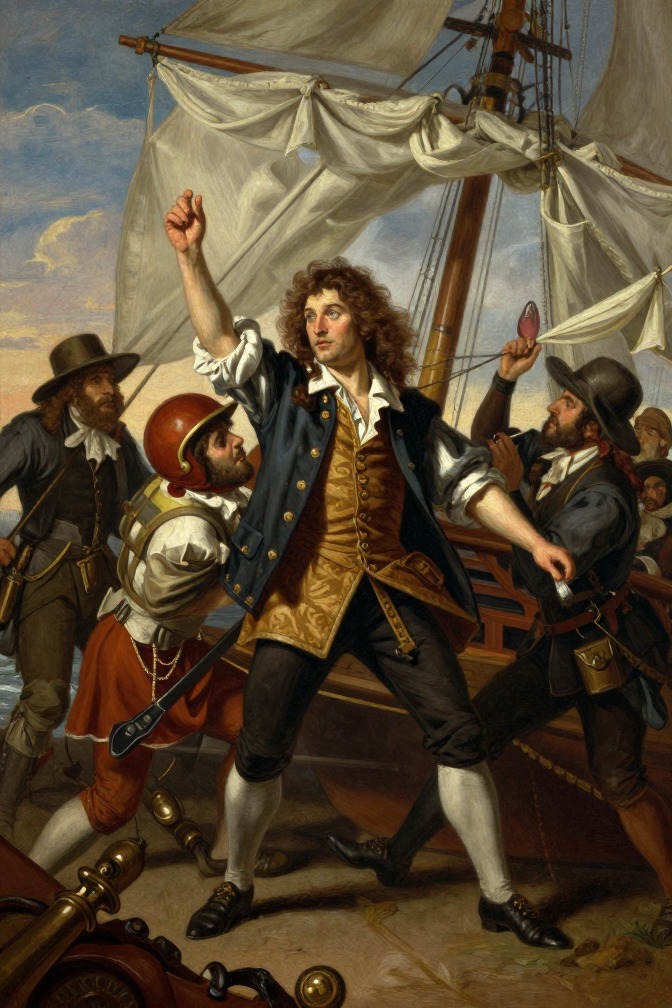
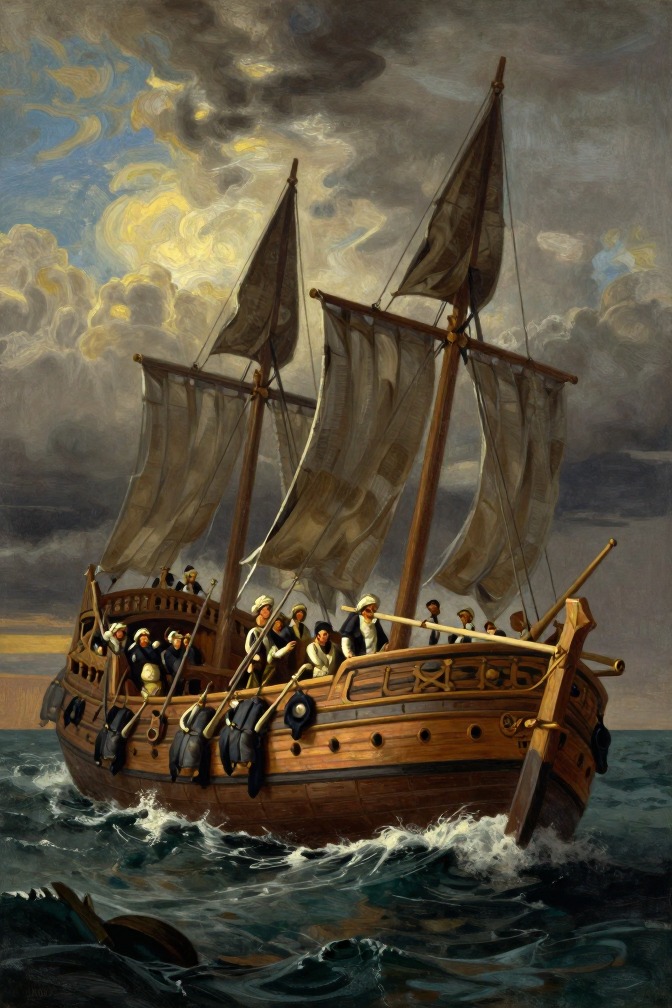
Gulliver's escape from Lilliput to Blefuscu is a decisive turning point in the first voyage, where he flees a conspiracy of court enemies who have drawn up articles of impeachment against him for high treason, and by seizing a man-of-war and sailing to the rival empire, he preserves his eyesight and his liberty while exposing the treacherous ingratitude of the Lilliputian court.
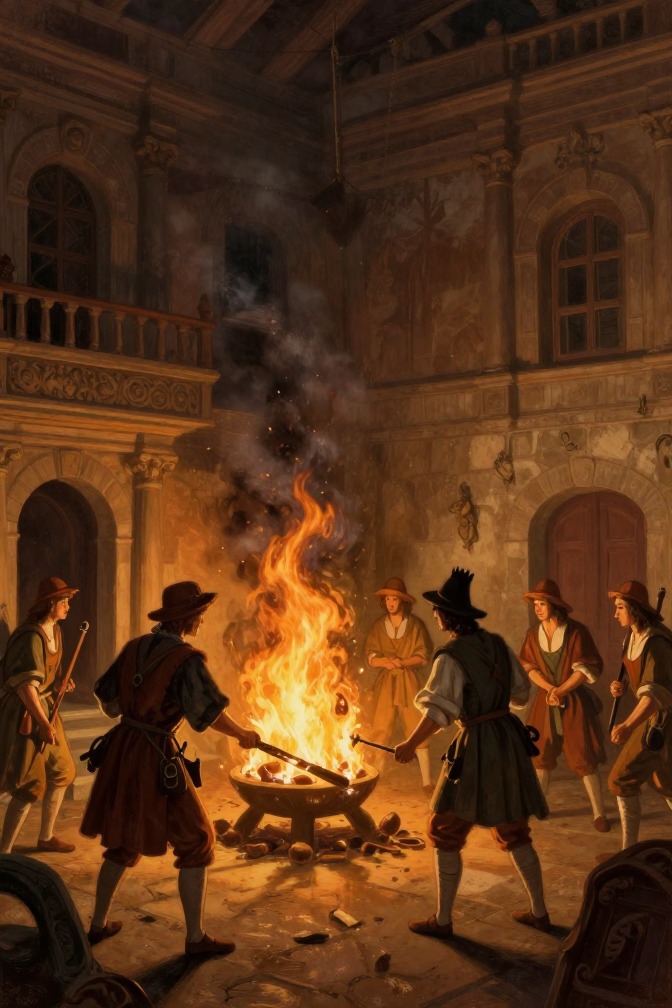
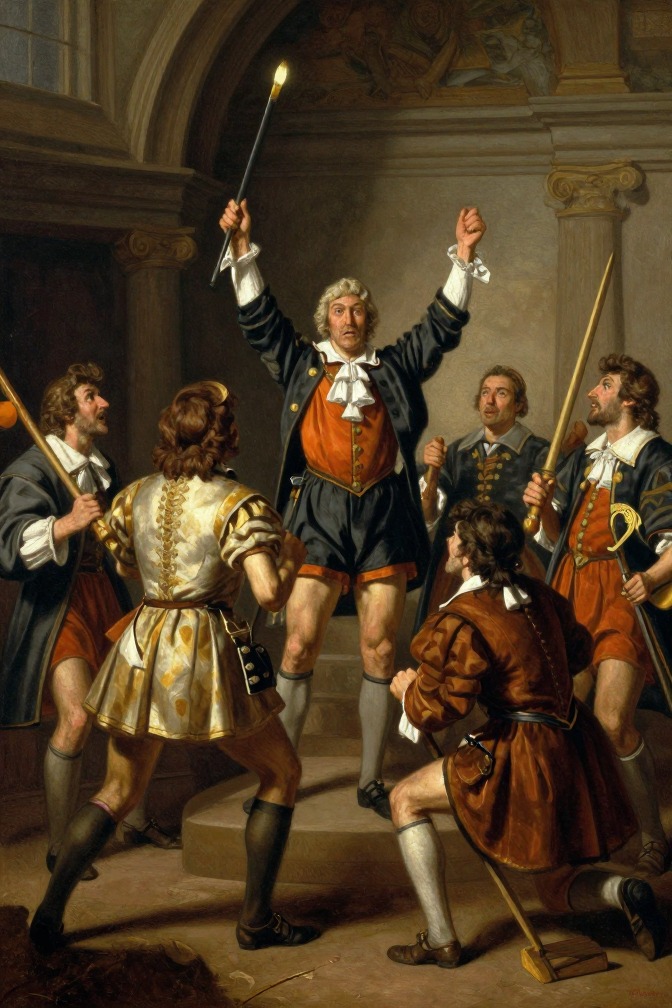
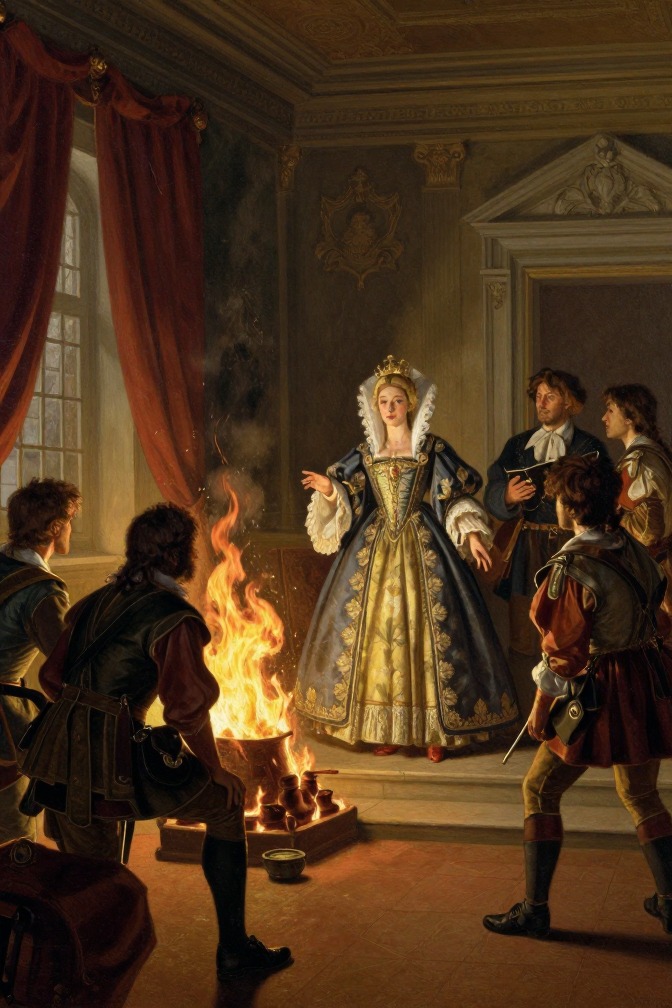
The Extinguishing of the Lilliputian palace fire is a pivotal event in which Lemuel Gulliver, having been awakened at midnight by cries of "burglum," rushes to the imperial palace and, finding the conventional buckets inadequate, extinguishes the blaze by urinating on it, an act that saves the building but earns him the empress's undying enmity and becomes a key article in the subsequent impeachment against him.
Edmund Burton is a minor but structurally significant character in Gulliver's Travels, appearing only in the first chapter as the father of Mary Burton, whom Gulliver marries. His role is confined to the backstory of Gulliver's early life in London, providing the financial portion that enables Gulliver to establish himself as a surgeon and later to set up a household. Though he never appears in the narrative present, Burton's existence as a hosier in Newgate Street and his provision of a four-hundred-pound dowry anchor Gulliver's social and economic position before his voyages begin, marking the ordinary world from which the hero departs.
Reldresal, the Principal Secretary for Private Affairs in Lilliput, is a key political figure who acts as Gulliver's primary ally and informant within the Lilliputian court, navigating the empire's internal factions and external threats while ultimately advocating for a brutal compromise that saves Gulliver's life at the cost of his eyes.
Captain William Prichard, master of the Antelope, is the commander who hires Lemuel Gulliver for the voyage that leads to the shipwreck and Gulliver's first encounter with Lilliput, making him the catalyst for the entire Lilliput adventure.
Gulliver's rescue by the English ship is the climactic event of his voyage to Brobdingnag, in which he is carried out to sea in his travelling box by an eagle, dropped into the ocean, and eventually discovered and taken aboard the merchant ship of Captain Thomas Wilcocks, an encounter that returns him to his own world and to his own size.
The shipwreck of the Antelope on November 5, 1699, is the initiating catastrophe of Gulliver's first voyage, casting him alone onto the shores of Lilliput and setting in motion his entire adventure among the six-inch inhabitants.
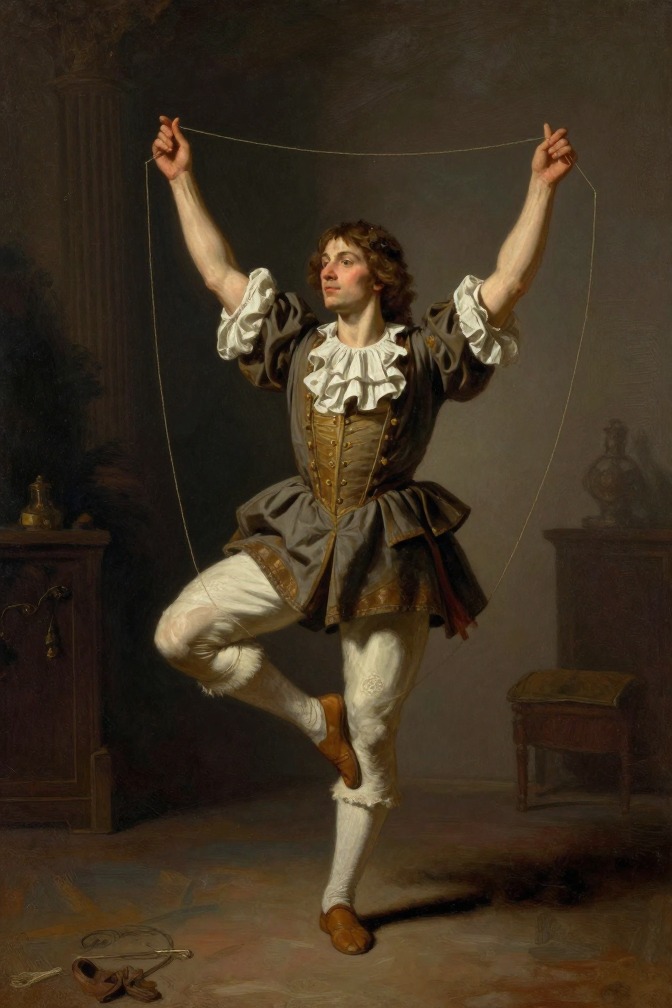
The court diversions of Lilliput are a set of elaborate and dangerous entertainments practiced at the Lilliputian court, including rope-dancing, leaping over sticks, and military exercises, which serve as satirical allegories for the corrupt and arbitrary methods of political advancement in Swift's contemporary England.
The emperor's search of Gulliver's pockets is a pivotal event in Lilliput where the Lilliputian authorities, acting under the emperor's orders, conduct a meticulous inventory of the Man-mountain's belongings, transforming his everyday European objects into exotic, dangerous, and incomprehensible artifacts, thereby establishing the power dynamics of surveillance and control that define his captivity.
The fire in the empress's apartment is a pivotal event in Gulliver's Travels that transforms Gulliver's status from celebrated hero to condemned traitor, as his unorthodox method of extinguishing the blaze—urinating on the palace—violates a fundamental law against touching the royal person and incurs the empress's lasting enmity, ultimately catalyzing the conspiracy that forces his flight from Lilliput.
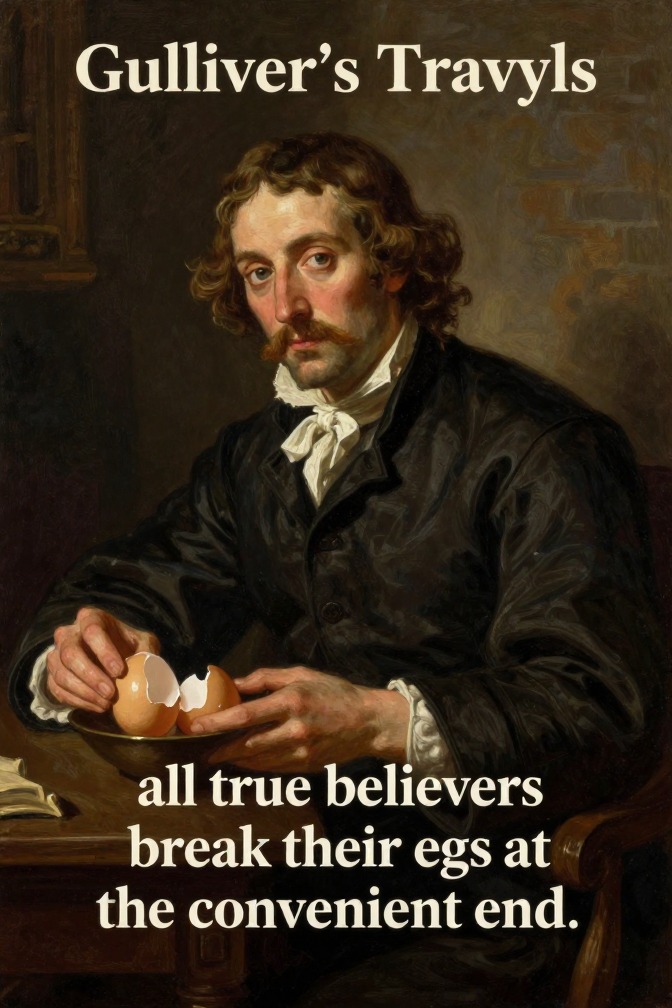
The phrase "all true believers break their eggs at the convenient end" is the central doctrinal tenet of the Big-endian and Small-endian controversy in Lilliput, a religious schism that Swift uses to satirize the trivial origins of major political and religious conflicts. The phrase, attributed to the prophet Lustrog in the Lilliputian scripture the Blundecral, becomes the pretext for a bloody war between Lilliput and Blefuscu, the exile of thousands, and the loss of countless lives, all over which end of an egg one breaks.
Borach nevola is a Lilliputian phrase meaning "stand out of the way" or "beware below," used by the tiny inhabitants to warn each other when the giant Gulliver drops heavy objects from above. It appears in the narrative as a practical cry of caution during the scene where Gulliver, having consumed two hogsheads of wine, is signaled to throw down the empty vessels, and the Lilliputians below shout the phrase to clear the area. The expression encapsulates the Lilliputians' pragmatic ingenuity and their constant negotiation of the physical danger posed by the Man-mountain's scale.
Lumos kelmin pesso desmar lon emposo is the Lilliputian phrase for the oath of peace that Lemuel Gulliver was required to swear before he could be granted his liberty, a ceremonial formula that bound him to the Emperor of Lilliput and the kingdom's laws.
Peplom selan is a Lilliputian exclamation of universal shout and acclamation, first heard when the Lilliputians celebrated Gulliver's consumption of two hogsheads of wine and later used as a general cry of wonder and approval throughout his captivity.
Quinbus Flestrin, meaning "Man-Mountain" in the Lilliputian language, is the official title given to Lemuel Gulliver by the people of Lilliput, encapsulating their perception of him as a colossal, awe-inspiring, and potentially dangerous being whose every possession and action is measured against their diminutive scale.
The King of Brobdingnag's remark that whoever could make two ears of corn grow where only one grew before would serve his country better than all politicians is the most concentrated expression of the Brobdingnagian king's political philosophy and the moral center of Gulliver's second voyage.
Blefuscu is the rival empire to Lilliput, separated by an eight-hundred-yard channel, and the object of a long and bitter war over the correct way to break eggs. Its fleet is famously captured by Lemuel Gulliver, who later escapes there to avoid execution in Lilliput, and from whose shores he finally departs for home.
Mildendo is the capital metropolis of Lilliput, a city of precise geometric design and miniature scale that serves as the seat of the Lilliputian emperor's power and the stage for the central political and social dramas of Gulliver's first voyage.
Gulliver's hat is a seemingly trivial personal object that becomes a significant material artifact in Lilliput, serving as a marker of Gulliver's foreignness, a source of comic misunderstanding, and a physical link between his world and the miniature one he inhabits.
The rope-dancing thread is a slender white thread used in Lilliput for a court diversion that determines high office and favor, serving as a central satirical device in Jonathan Swift's Gulliver's Travels to expose the absurdity of political advancement through arbitrary physical performance.
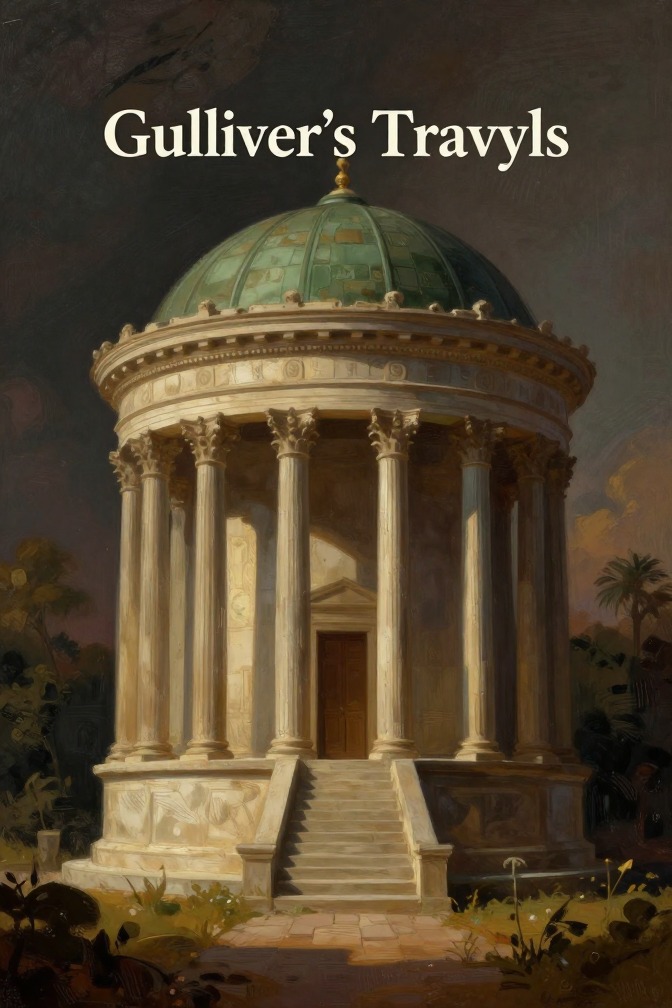
The Temple of Lilliput is the ancient, profaned structure that serves as Lemuel Gulliver's prison and lodging during his captivity in Lilliput, a building whose physical dimensions and symbolic status as a polluted sacred space define the conditions of his confinement and the Lilliputian state's pragmatic approach to housing him.
The Big-endians are a religious and political faction in Lilliput who insist on breaking eggs at the larger end, a practice that led to a schism, violent rebellions, and a protracted war with the neighboring empire of Blefuscu, serving as a central satirical device in Jonathan Swift's critique of irrational religious conflict and political factionalism.
The Blefuscu court is the imperial government of the island empire of Blefuscu, the rival of Lilliput, which plays a crucial role in the first part of Gulliver's Travels as the object of Lilliputian aggression, the recipient of Gulliver's diplomatic visit, and the site of his final preparations for departure from the miniature world.
The relationship between Lemuel Gulliver and Flimnap, the Lord High Treasurer of Lilliput, is one of covert enmity masked by outward civility, driven by Flimnap's jealousy over Gulliver's success and his fear of the financial drain Gulliver represents, culminating in Flimnap's central role in the conspiracy to impeach Gulliver for treason.
The relationship between Lemuel Gulliver and Glumdalclitch, the nine-year-old daughter of the Brobdingnagian farmer who first captured him, is the most sustained and emotionally complex bond in Gulliver's Travels, defined by her unwavering care, his deep dependence, and a mutual affection that transcends their vast size difference, making her his sole protector and confidante in a world where he is otherwise a helpless curiosity.
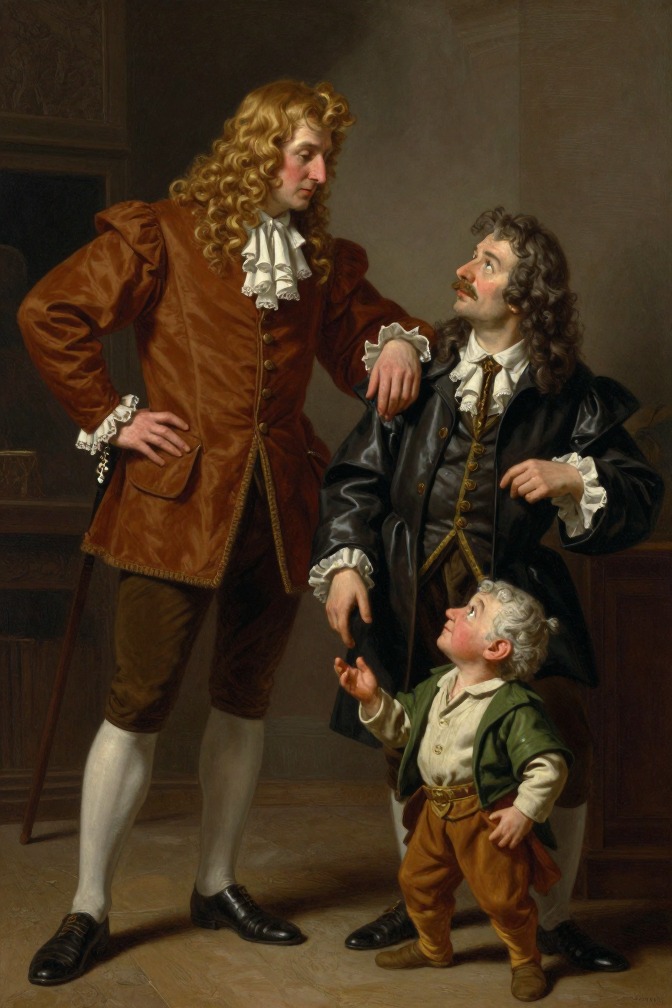
Gulliver and the dwarf of Brobdingnag share a relationship defined by the dwarf's persistent, malicious envy and physical aggression toward Gulliver, which ultimately leads to the dwarf's disgrace and removal from court, while Gulliver's responses reveal his own vulnerability, pride, and the social dynamics of size and status in Brobdingnag.