Ace Merrill is the leader of Castle Rock's juvenile delinquent gang, a violent and charismatic bully who terrorizes the younger boys and later, as an adult, becomes a faded regular at a local bar.
Billy May is a minor character in the embedded story "Stud City," the younger half-brother of the narrator Chico (Edward May) and the son of Sam May and his second wife Virginia. He appears as a frightened, vulnerable child caught in the violent domestic conflicts that erupt after his older brother Johnny's death, and his presence underscores the emotional wreckage left by the family's unspoken secrets.
Chopper is the feared guard dog of the Castle Rock Dump, owned by dump-keeper Milo Pressman. Though the subject of terrifying local legends that portray him as a half-breed hellhound capable of attacking specific body parts on command, Chopper is revealed to be a medium-sized black-and-white mongrel whose actual ferocity falls comically short of his mythic reputation. His encounter with the four boys—Gordon Lachance, Chris Chambers, Teddy Duchamp, and Vern Tessio—during their journey to find the body of Ray Brower exposes the gap between the town's monstrous stories and the dog's clumsy, ineffective reality, while also serving as a catalyst for Teddy Duchamp's explosive defense of his father's honor.
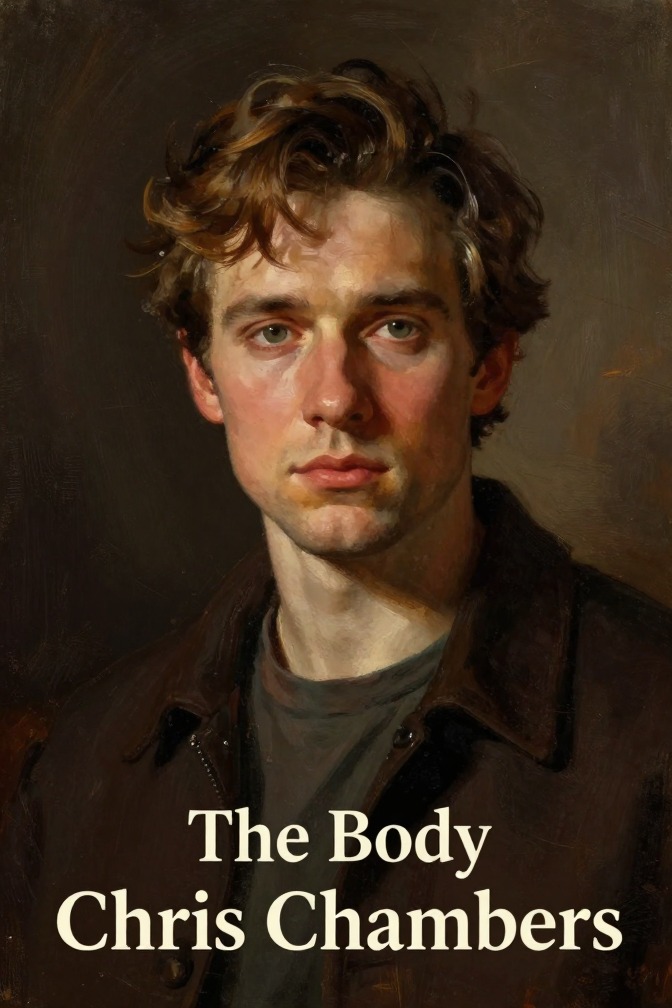
Chris Chambers is the toughest, smartest, and most morally complex member of the four-boy gang at the heart of Stephen King's novella "The Body." As the de facto leader of the group, he drives the quest to find the body of a missing boy, Ray Brower, and his fierce loyalty, hidden intelligence, and painful awareness of the town's low expectations for him define both the adventure and its aftermath. Chris's arc—from a boy burdened by his family's reputation and his own past theft, through a moment of armed brinkmanship against older bullies, to his eventual escape to college and tragic death—makes him the story's emotional and ethical center.
Dennis Lachance is the deceased older brother of narrator Gordon Lachance, whose death in a Jeep accident at Fort Benning, Georgia, in April 1960, casts a long shadow over the Lachance family and shapes Gordon's sense of invisibility and loss throughout the summer of the novel's central adventure.
Eyeball Chambers, whose real name is Richard Chambers, is a minor antagonist in the story, known as the older brother of Chris Chambers and a member of Ace Merrill's juvenile delinquent gang. He embodies the town's low expectations for the Chambers family and participates in the confrontation over Ray Brower's body, ultimately contributing to the violence against his own brother.
Johnny is the deceased older brother of Chico (Edward May) in the embedded story "Stud City," a character whose death by a racing car at Oxford Plains Speedway haunts the narrative and shapes Chico's grief, guilt, and conflicted relationship with his stepmother Virginia.
Milo Pressman is the dump-keeper of the Castle Rock Dump, a middle-aged man whose fearsome reputation—built largely on the legend of his dog Chopper—collapses into farce when the boys confront him, revealing a petty, blustering figure whose threats are hollow and whose authority is easily defied.
Mr. Chambers is the alcoholic, abusive father of Chris Chambers, whose violent rages and chronic drunkenness define the domestic terror that Chris must endure and ultimately escape. His presence in the story is felt through the bruises and broken bones Chris carries to school, the welfare checks that sustain the family, and the psychological weight of a town that expects Chris to become just like him.
Norman Duchamp is the father of Teddy Duchamp, a World War II veteran who stormed the beach at Normandy and later, in a psychotic episode, burned his son's ears on a cast-iron stove, leading to his institutionalization at Togus VA Hospital. His violent act and subsequent confinement define Teddy's identity and fuel the central conflict of the story, as Teddy's fierce loyalty to his father clashes with the town's perception of him as a 'loony.'
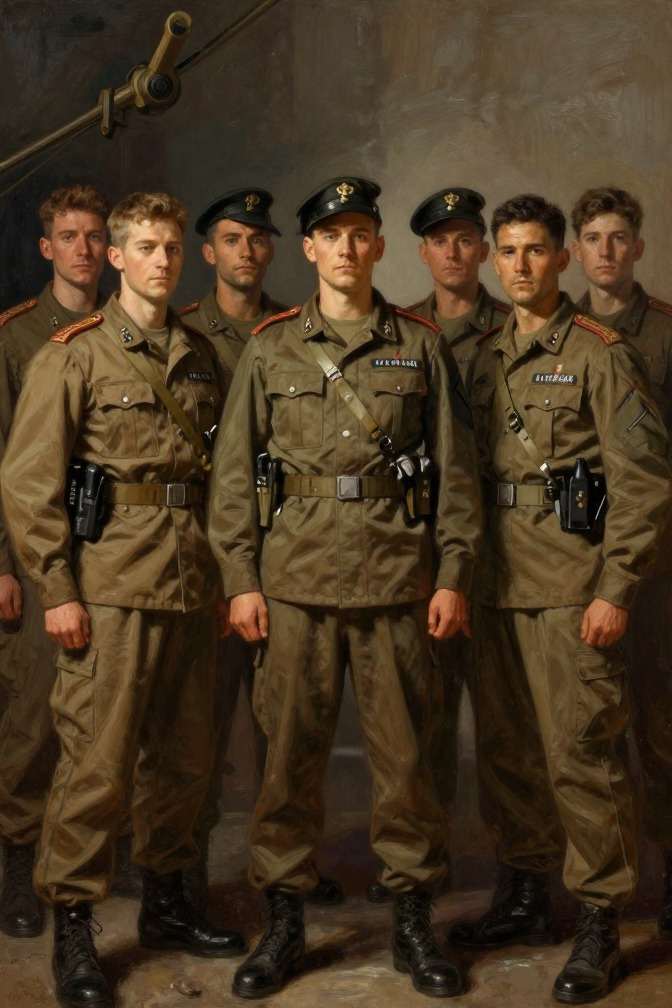
Le Dio is a fictional French town created by Gordon Lachance as the setting for a long-running series of war stories he wrote between the ages of nine and fourteen. The Le Dio stories, which follow a squad of American soldiers fighting to retake the town from the Nazis, became a central part of the friendship between Gordon and Teddy Duchamp, who was the most devoted reader of the series. The stories represent Gordon's earliest sustained effort to transform the raw material of his life and imagination into fiction, and they serve as a precursor to his later, more mature work.
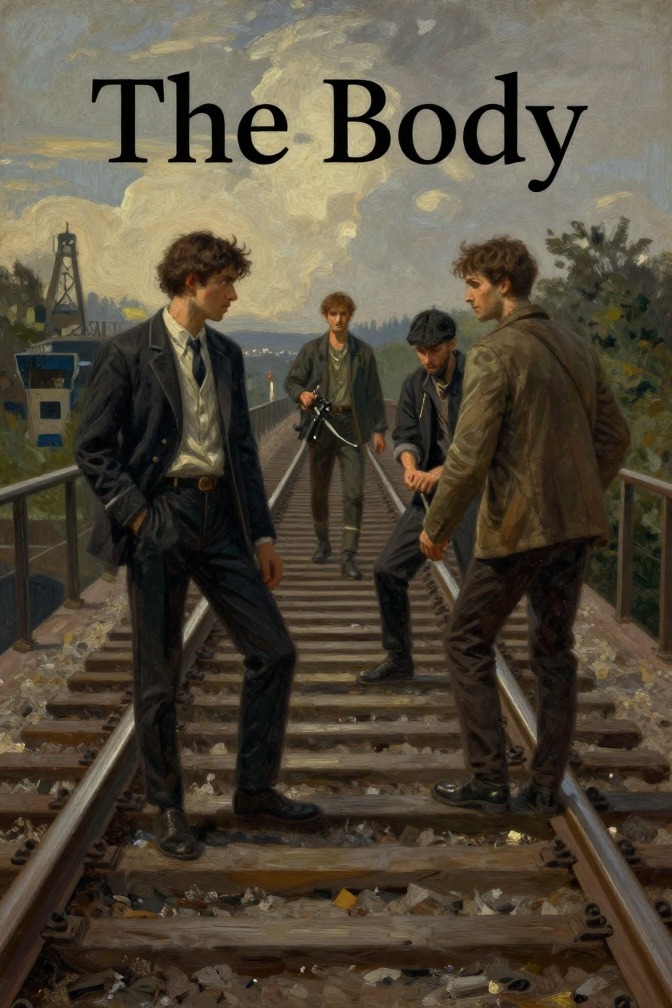
The crossing of the GS&WM railroad trestle over the Castle River is the central ordeal of the boys' journey to find Ray Brower's body, a life-threatening test of courage that forces each of them to confront their own mortality and the reality of the danger they have chosen. The trestle, a narrow wooden structure fifty feet above the shallow, polluted river, becomes a threshold between the known world of Castle Rock and the unknown wilderness of Harlow, and the boys' decision to cross it rather than take the longer road seals their commitment to the adventure. The event culminates in a desperate, near-fatal race against an oncoming freight train, revealing the raw terror and exhilaration that define the rite of passage.
In the treehouse on the hottest Friday of the driest summer since 1907, Vern Tessio bursts in after a two-mile run and announces that he knows where the missing boy Ray Brower's body is, setting off a chain of decisions that transforms a lazy afternoon of cards into a solemn, dangerous quest.
Section eight is the colloquial term for a psychiatric discharge from the U.S. military, used in the novel as a devastating label that defines Norman Duchamp's institutionalization and becomes a weapon wielded against his son Teddy, exposing the town's cruelty and the lasting stigma of mental illness.
Stud City is a short story written by Gordon Lachance, first published in the college literary magazine Greenspun Quarterly in 1970, and later included in the novel The Body. It is a first-person narrative about a teenage boy named Chico, who grapples with grief, guilt, and a fraught family life in a small Maine town. The story is notable for its raw, Hemingway-influenced style and its exploration of themes that resonate with the larger narrative of The Body, including the death of a brother, the weight of memory, and the struggle for masculine identity.
The darkness on the edge of town is a phrase from Bruce Springsteen's song that Gordon Lachance uses to articulate the existential dare at the heart of the boys' journey—the impulse to confront the unknown, the dangerous, and the mortal, not in spite of their fragile bodies but because of them.
The most important things are the hardest things to say is a recurring expression in Gordon Lachance's narration that encapsulates the novel's central theme: the difficulty of articulating profound emotional truths, the inadequacy of language to convey what matters most, and the pain of speaking without being understood.
Castle View is the affluent hillside neighborhood in Castle Rock, Maine, where the middle-class families live, standing in stark contrast to the lower-income areas inhabited by the story's main characters. It represents the social and economic divide that shapes the boys' lives and their sense of belonging.
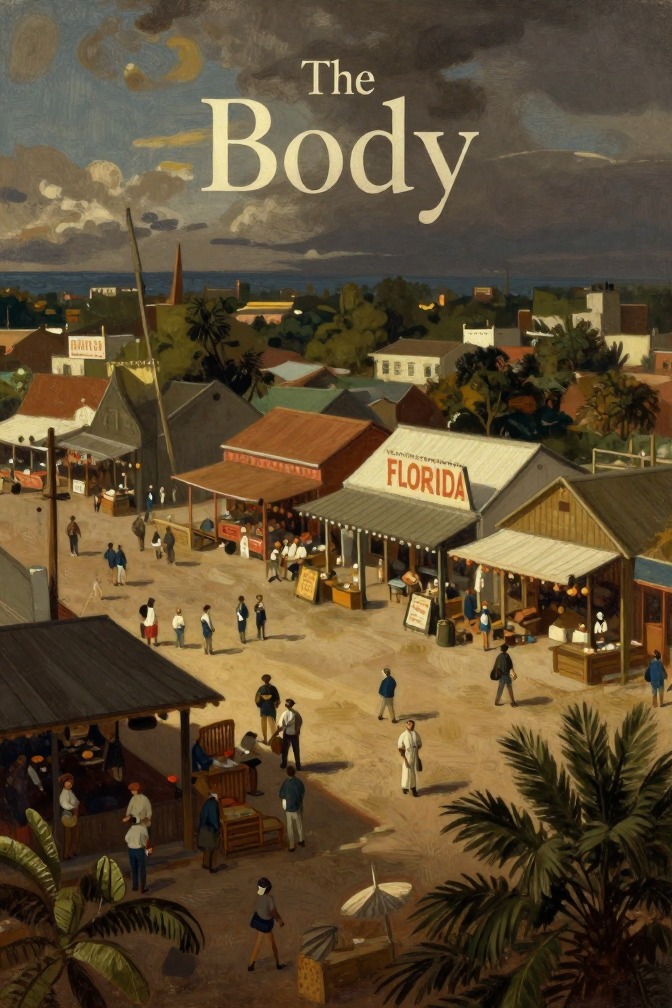
The Florida Market is a small grocery store in Castle Rock, Maine, where Gordon Lachance buys supplies for the boys' journey to find Ray Brower's body. It serves as a site of economic exploitation and class tension, as the owner George Dusset attempts to overcharge Gordon and cheat him on the hamburger weight, revealing the town's casual predation on children and the legacy of Gordon's dead brother Dennis.
Johnny's Dodge is a broken-down, up-on-blocks car that serves as the central symbol of loss, stalled ambition, and unresolved grief in the embedded story "Stud City" and in the memories of its narrator, Gordon Lachance. More than a vehicle, it is the material remnant of Johnny, the brother killed in a racing accident, and the object around which Chico's (and Gordon's) feelings of guilt, resentment, and the impossibility of escape coalesce.
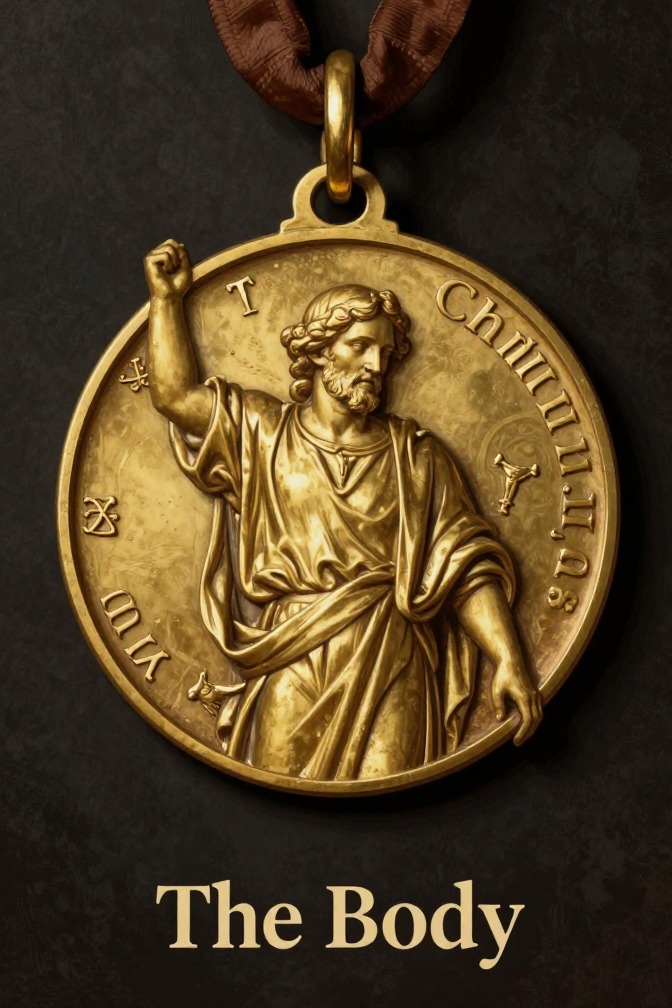
The St. Christopher medal is a small silver medallion worn by Chico (Edward May) in the embedded story "Stud City," a narrative that mirrors and refracts the novel's central themes of loss, guilt, and the search for protection. Though Chico is not Catholic and not Mexican, he wears the medal as a superstitious talisman, wondering if it might have saved his brother Johnny from a fatal accident. The medal functions as a charged object that condenses Chico's grief, his sense of helplessness, and his desperate, irrational hope that a charm could alter fate—a hope that the novel's larger frame, with its multiple deaths and the persistent ache of memory, repeatedly exposes as futile.
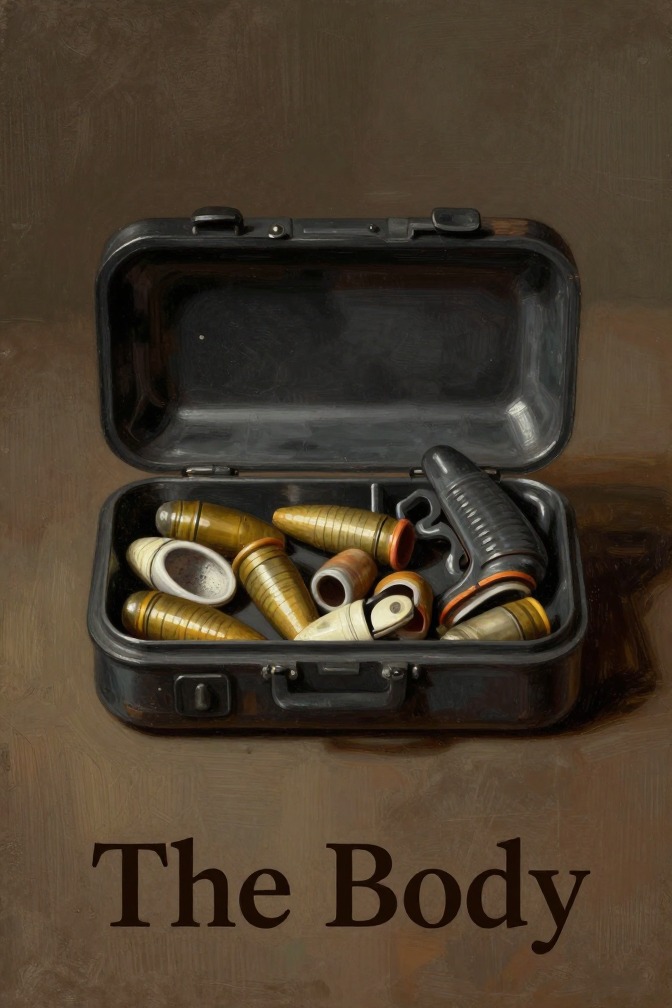
The .45 shell casings are the two spent brass casings ejected when Chris Chambers fires his father's pistol during the confrontation with Ace Merrill's gang over the body of Ray Brower. After the standoff, Gordon Lachance retrieves them from the boggy ground to eliminate evidence, and Chris pockets them, a small but decisive act that seals the boys' secret and marks the end of their claim on the dead boy.
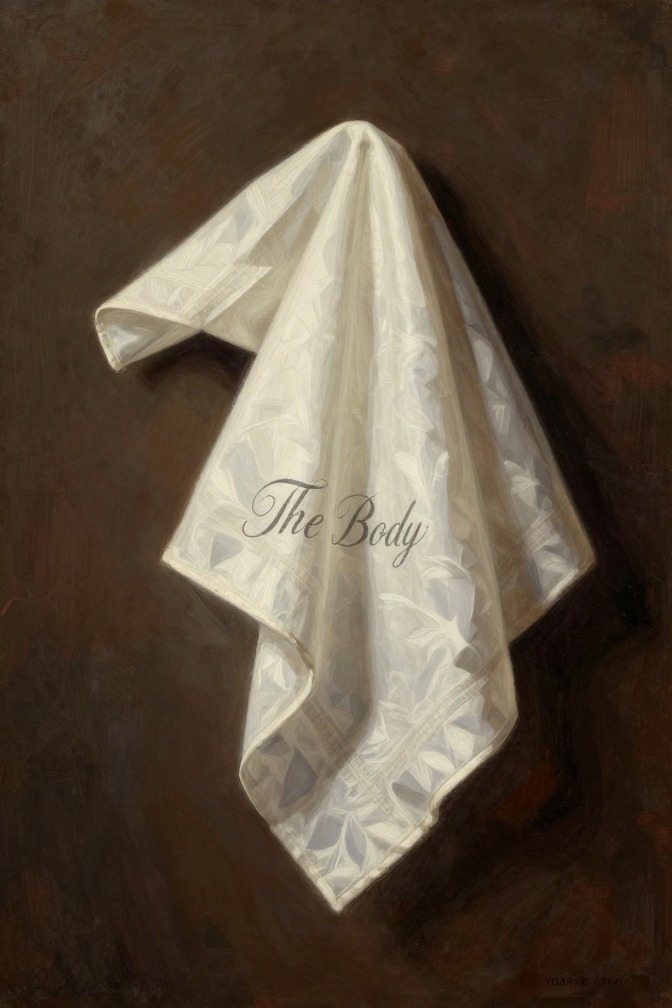
The handkerchief is a small but potent object in Gordon Lachance's story "Stud City," where it functions as a material trace of intimacy, a weapon in a domestic power struggle, and a symbol of the inescapable entanglement of sex, shame, and family secrets. Left behind by Jane after her first sexual encounter with Chico, the handkerchief is discovered by Chico's stepmother Virginia, who uses it to expose and humiliate him, triggering a violent confrontation that drives Chico from the house. The object thus becomes a concrete embodiment of the story's central tensions: the gap between private experience and public knowledge, the vulnerability of the body, and the way the most important things—as the frame narrator insists—are the hardest to say.
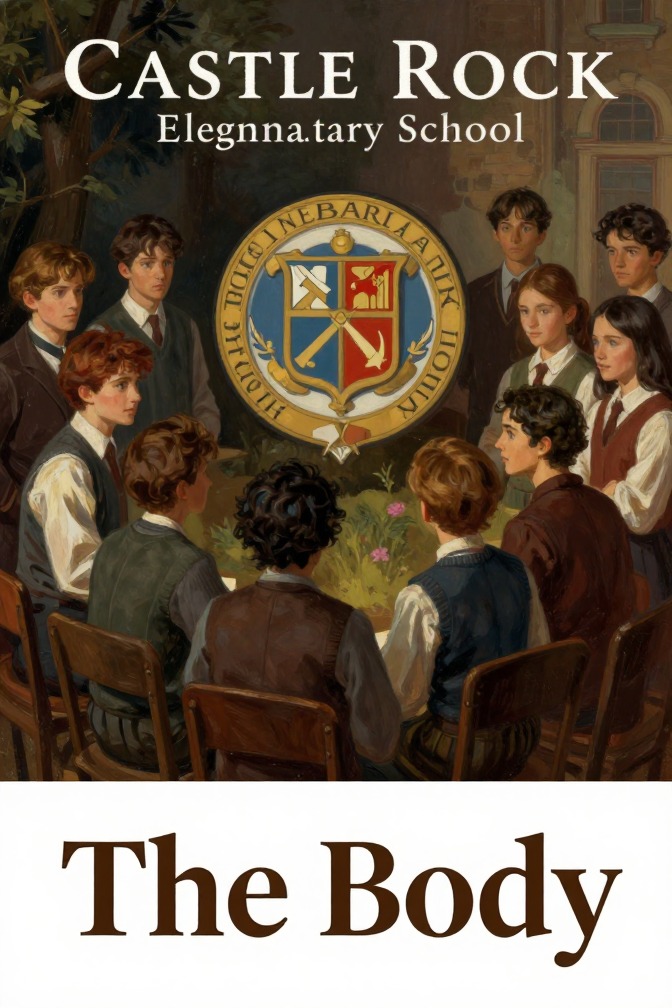
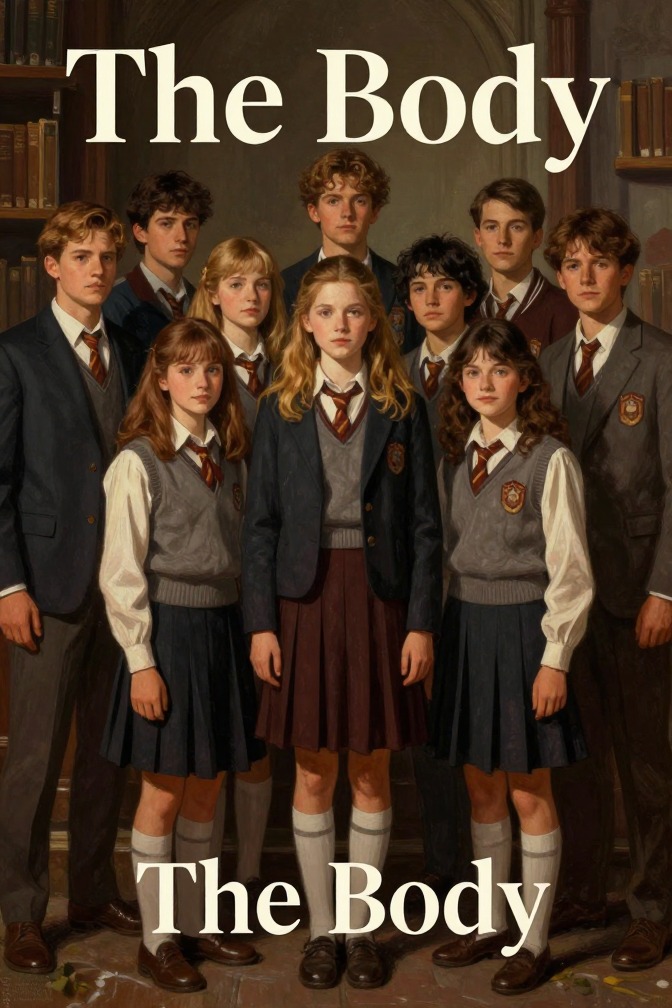
Castle Rock Elementary School is the public grammar school attended by Gordon Lachance and his friends in the fictional town of Castle Rock, Maine, during the late 1950s and early 1960s. It serves as a key setting that defines the social hierarchy and academic tracking that shapes the boys' futures, particularly the division between college-preparatory and shop courses that Chris Chambers bitterly anticipates.
Castle Rock High School is the local secondary school in Castle Rock, Maine, where Gordon Lachance and his friends attend. It serves as a key setting for the social divisions and academic tracking that shape the boys' futures, particularly the separation between college-preparatory and vocational courses that Chris Chambers sees as a trap for working-class kids like himself.
The Great Southern and Western Maine Railroad (GS&WM) is the railway line that runs between Castle Rock and Harlow, serving as the central physical and symbolic corridor for the boys' journey to find the body of Ray Brower. Its tracks, trestles, and abandoned stretches define the geography of the adventure and become a stage for the group's rites of passage, fears, and confrontations.
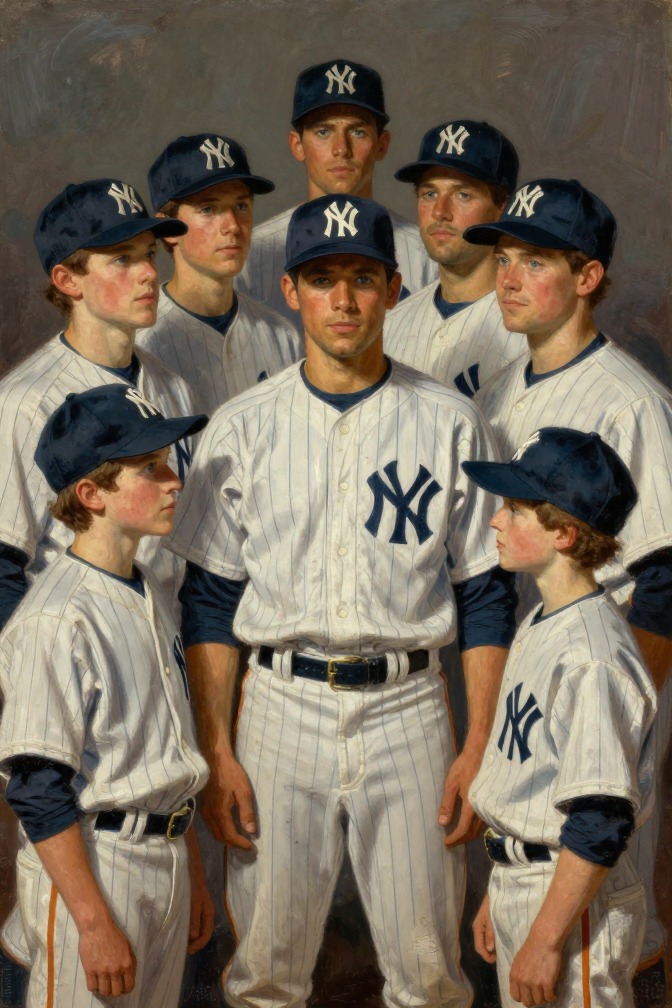
The New York Yankees appear in Gordon Lachance's childhood memories as the definitive baseball team of the 1960 summer, representing a shared cultural touchstone among the boys and a symbol of the era's sports landscape.
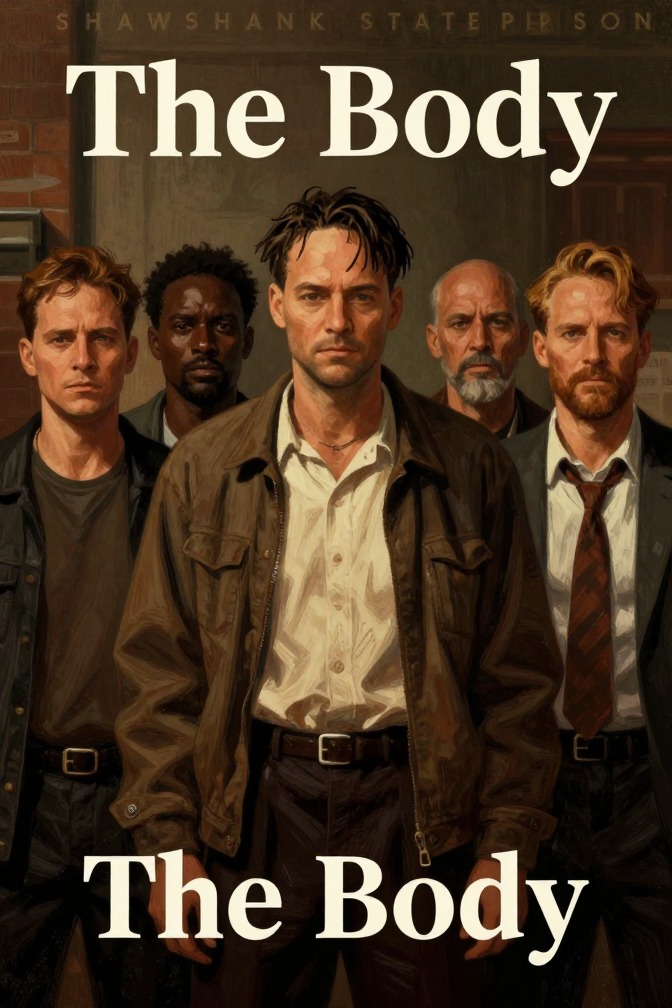
Shawshank State Prison is a Maine correctional facility that appears in the narrative as the place where Frank Chambers, Chris Chambers's older brother, served a long sentence for rape and criminal assault, and as the institution from which the man who stabbed Chris to death had been released only a week before the killing. The prison functions as a symbol of the inescapable, predetermined trajectory that the town of Castle Rock expects for its "bad" families, and its presence in the story underscores the themes of systemic failure, inherited fate, and the thin line between justice and tragedy.
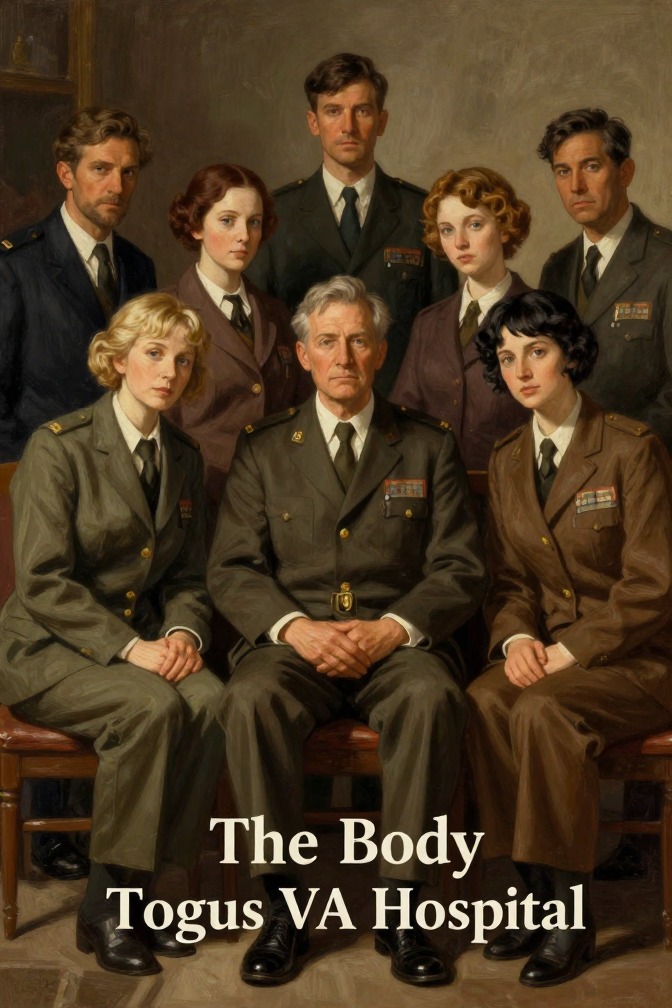
Togus VA Hospital is the Veterans Administration psychiatric facility where Norman Duchamp, Teddy Duchamp's father, is confined after burning his son's ears on a stove and being declared a section eight. The hospital becomes a recurring symbol of the town's judgment, Teddy's conflicted loyalty, and the institutional fate that awaits those broken by war and poverty.
The United States Army is a recurring institutional presence in the novel, serving as a source of pride, trauma, and aspiration for several characters, most notably Teddy Duchamp and his father Norman Duchamp, and as a backdrop for the death of Gordon Lachance's older brother Dennis.