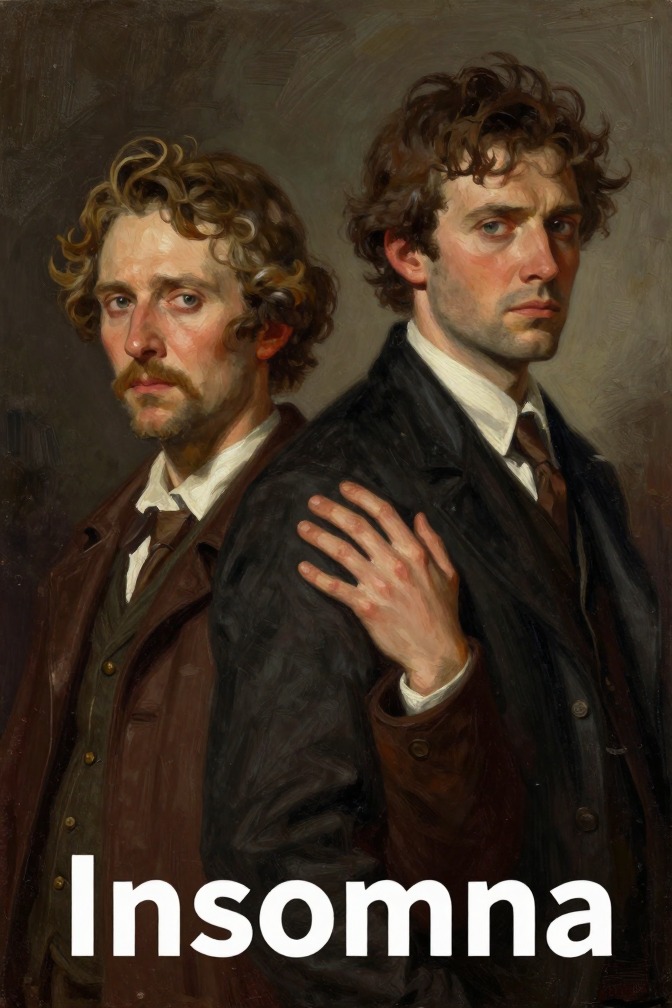
The Franciscan Order is a Catholic religious order that appears in Shusaku Endo's novel Silence as one of the missionary groups active in Japan during the 17th-century persecution, whose members are among those who suffer torture and martyrdom, and whose presence and methods are contrasted with those of the Jesuits, contributing to the novel's exploration of the failure of Western Christianity to take root in Japan.
The College at Macao was the administrative and training center for the Jesuit mission to Japan and China, founded by Alessandro Valignano ten years before the events of the novel. It served as the base from which Sebastian Rodrigues and Francisco Garrpe launched their secret mission to Japan, and it was the site of their final preparations, their encounter with Kichijiro, and their confrontation with Valignano's prudent opposition to their dangerous journey.
The relationship among Kichijiro, Mokichi, and Ichizo is a central moral and emotional triangle in the novel, contrasting the weak apostate with two steadfast martyrs and exposing the cruel lottery of persecution that separates the strong from the weak.
The Reward for Informing on Christians was a systematic financial incentive program established by the Tokugawa Shogunate to identify and eliminate hidden Christians, offering escalating payments for denunciations of priests, brothers, and lay believers, and thereby creating a pervasive atmosphere of suspicion and betrayal that fundamentally shaped the experience of persecution in seventeenth-century Japan.
The Sakoku (Seclusion Policy) was the Tokugawa Shogunate's systematic closure of Japan to most foreign contact and trade, enacted and intensified in the decades following the Shimabara Rebellion, and it forms the decisive political and historical framework within which the persecution of Christians in Shusaku Endo's *Silence* unfolds.
The Year of the Cock marks the final year of Sebastian Rodrigues' life, the year in which he died after more than three decades of confinement in the Christian Residence in Edo, having lived under the Japanese name Okada San'emon since his apostasy.
The Fourth Year of Enpo (1676) marks a period of intensified persecution and surveillance within the Christian Residence in Edo, as documented in the official diary of an officer. During this year, Kichijiro, the attendant of the apostate priest Okada San'emon (formerly Sebastian Rodrigues), was arrested for possessing a Christian image, leading to a chain of investigations, tortures, and the reinforcement of anti-Christian measures that reveal the regime's relentless effort to eradicate the faith.
The year 1549 marks the arrival of Francis Xavier in Japan, the foundational event of the Christian mission in the country, which later becomes the historical backdrop for the novel's central conflicts between faith, culture, and persecution.
The year 1579 marks the first visit of Alessandro Valignano to Japan, a pivotal moment in the Christian mission that shaped the country's religious landscape and set the stage for the conflicts depicted in Shusaku Endo's novel.
July 24, 1587, marks the moment when the Japanese regent Toyotomi Hideyoshi, in a sudden and violent rage, issued an expulsion decree against Christian missionaries, a pivotal act that initiated the systematic persecution of Christianity in Japan and set the stage for the century of suffering, apostasy, and cultural conflict depicted in Shusaku Endo's novel.
The year 1637 marks the pivotal moment when the three young Portuguese priests—Sebastian Rodrigues, Francisco Garrpe, and Juan de Santa Marta—finally receive permission from their Superiors to embark on a dangerous secret mission to Japan, driven by the need to investigate the rumored apostasy of their revered teacher Christovao Ferreira and to minister to the persecuted Christians there.
The Year of the Ram marks the period, approximately thirty years before the death of Okada San'emon (the former Sebastian Rodrigues), when he was first placed under the charge of Inoue, the Lord of Chikugo, after his apostasy and the beginning of his life in the Christian Residence in Edo.
May 6th marks the first major storm encountered by Rodrigues and Garrpe after departing Macao for Japan, a violent event that tests their endurance and foreshadows the greater trials ahead.
June 22 is the date of the water punishment and martyrdom of Mokichi and Ichizo, the two Christian peasants from Tomogi whose prolonged, agonizing death by drowning becomes the novel's most harrowing demonstration of the silence of God and the suffering of the weak.
August 13th is a date in the Japanese lunar calendar that marks the eve of the Urabon festival, a time for honoring the dead. In the novel, this date becomes a night of profound psychological crisis for the imprisoned Sebastian Rodrigues, as the festive sounds of Nagasaki contrast with his own spiritual desolation and the memory of the martyrs.
Lent is the Christian penitential season of forty days leading to Easter, observed by the crypto-Christians of Tomogi and other villages in Shusaku Endo's Silence as a period of fasting, prayer, and spiritual preparation, even in the absence of priests and under the threat of persecution.
The Feast of Saint James, July 25, marks the day in 1638 when the ship Santa Isabella, carrying Sebastian Rodrigues, Francisco Garrpe, and Juan de Santa Marta, rounded the Cape of Good Hope during their perilous voyage from Lisbon to Japan.
Atropos kills Bill McGovern, Ralph Roberts's downstairs neighbor and friend, by severing his life-cord (balloon-string) in the corridor of Derry Home Hospital shortly after Ralph and Lois Chasse witness McGovern's blackened aura and decaying balloon-string. The murder is a direct act of revenge against Ralph for interfering with Atropos's torment of the stray dog Rosalie, and it demonstrates the bald doctor's ability to strike at Ralph through those he cares about.
Clotho and Lachesis, the two little bald doctors who serve the Purpose, perform a ritual death on Jimmy Vandermeer in Room 315 of Derry Home Hospital, cutting his life-cord with scissors and kissing his forehead, an act that reveals them as physicians of last resort who release the dying with love and respect.
Ralph Roberts sacrifices his own life to save six-year-old Natalie Deepneau from being struck by a car, fulfilling a promise made to the supernatural beings Clotho and Lachesis years earlier.
Ed Deepneau is a research chemist at Hawking Laboratories whose descent into violent paranoia drives the central conflict of the novel. Once a kind, civil neighbor and friend to Ralph Roberts, Ed becomes a dangerous anti-abortion extremist after his life-cord is severed by the rogue entity Atropos, leaving him undesignated and vulnerable to the influence of the Crimson King. His escalating madness—from a road-rage incident in 1992 to beating his wife Helen, leading violent protests, and ultimately attempting a kamikaze attack on the Civic Center—transforms him from a sympathetic figure into a guided missile of destruction, forcing Ralph to confront him in a final, fatal confrontation.
Ralph Roberts, a seventy-year-old widower from Derry, Maine, is the protagonist of Stephen King's novel *Insomnia*. His journey from a grieving, sleep-deprived retiree to a sacrificial hero forms the core of the narrative. After his wife Carolyn's death, Ralph's severe insomnia grants him the ability to perceive auras and supernatural entities, drawing him into a cosmic conflict between the forces of Purpose and Random. His courage and moral clarity ultimately lead him to sacrifice his own life to save a young girl, Natalie Deepneau, from a vengeful entity.
Susan Day is a prominent feminist author, political activist, and co-founder of the organization Sisters in Arms, whose planned speech in Derry becomes the focal point of violent conflict between pro-choice and pro-life factions, ultimately drawing Ralph Roberts and Lois Chasse into a supernatural struggle to prevent a mass-casualty event.
Balloon-strings are the visible, cord-like extensions of a person's aura that rise from the head (or, in the case of animals, the muzzle) and serve as a vital link to life itself. In the hyper-real world of auras that Ralph Roberts and Lois Chasse come to perceive, these strings function as a kind of metaphysical umbilical cord, connecting a living being to its life force. The color, health, and integrity of the balloon-string are a direct indicator of a person's physical and spiritual well-being, and its severance—most often by the rogue entity Atropos—is a mortal act, equivalent to cutting the thread of life itself.
Ed Deepneau's Road Rage Incident is the pivotal early event in Stephen King's *Insomnia* that first reveals the radical, violent transformation of a mild-mannered research chemist into a paranoid fanatic, and it marks the moment Ralph Roberts is drawn into the supernatural conflict that will define his final years. Occurring in July 1992 on the Harris Avenue Extension near the Derry County Airport, the incident involves Deepneau's reckless driving, a collision with a pickup truck, and his subsequent, unprovoked verbal and physical assault on the truck's driver, John Tandy. Ralph's intervention prevents a potential murder, but the encounter exposes Deepneau's delusional belief system—centered on the 'Crimson King' and the murder of unborn children—and introduces the mysterious figure of Dorrance Marstellar, who issues a cryptic warning about 'long-time business.'
Back Pages is a used bookstore and newsstand on the corner of Witcham and Main in Derry, owned by Hamilton Davenport, where Ralph Roberts buys his daily newspapers and becomes drawn into the local controversy over Susan Day's planned visit.
Fresh Harbor is a coastal Maine town that serves as the location of Hawking Laboratories, the research facility where Ed Deepneau worked as a research chemist before his mental breakdown and eventual termination. The town also provides housing for lab employees, including the cottage where Ed stayed after his separation from Helen.
Hawking Laboratories is a research facility in Fresh Harbor, Maine, where Ed Deepneau worked as a research chemist until his termination in September 1993. The lab becomes a key locus of the novel's tension, as Ed's employment there provides him with both the scientific expertise and the institutional access that underpin his descent into violent paranoia. His work with fetal tissue at Hawking fuels his delusional belief that the facility is part of a vast conspiracy to harvest unborn children, and his eventual firing marks a critical turning point in his radicalization.
Ed Deepneau's wedding ring, engraved "HD – ED 5–8-87," is the central token of the novel's metaphysical conflict. Stolen by the rogue entity Atropos and hidden inside a deathbag in his underground lair, the ring becomes the anchor that binds Ed's undesignated life to the Crimson King's destructive plan. Ralph Roberts retrieves it, and its removal from Atropos's hoard is the crucial act that allows the future to be changed, ultimately enabling Ralph to sacrifice himself to save Natalie Deepneau.
The acquaintance between Ralph Roberts and Dorrance Marstellar is a peculiar, fate-driven connection that begins with Dorrance's cryptic intervention during Ed Deepneau's road rage incident in 1992 and deepens through a series of prophetic messages, culminating in Dorrance's role as a conduit for higher forces that guide Ralph toward his final sacrifice.