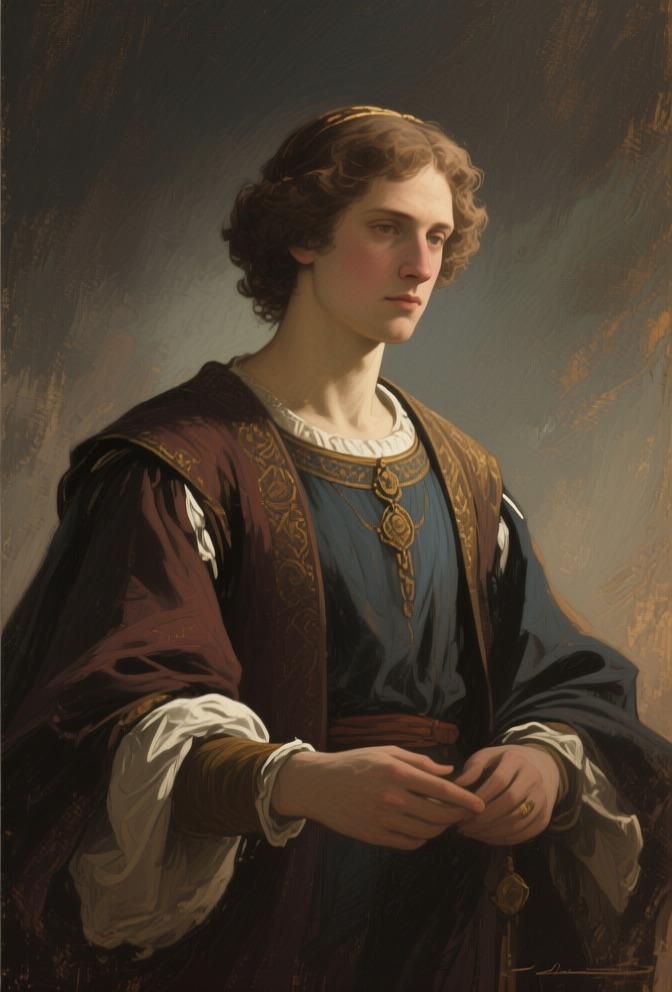
Captain Wentworth writes a letter to Anne Elliot during a concert evening, confessing his enduring love and proposing reconciliation, which becomes the decisive turning point of their relationship.
The walk to Winthrop and the nut speech is a pivotal scene in Persuasion where Captain Wentworth, overheard by Anne, articulates his philosophy of firmness of character to Louisa Musgrove, inadvertently revealing his lingering resentment toward Anne's past weakness and setting the stage for the novel's central romantic conflict.
Elliot pride is the overweening family vanity that defines Sir Walter Elliot and his eldest daughter Elizabeth, shaping their social judgments, financial decisions, and personal relationships throughout Persuasion. It manifests as an obsessive concern with rank, appearance, and lineage, a contempt for those deemed inferior, and a blindness to genuine worth—traits that Anne Elliot must overcome and that the novel ultimately critiques through the contrasting values of the navy and of personal merit.
The Navy in Persuasion is a dynamic social force and a moral counterweight to the landed gentry, embodying earned merit, domestic virtue, and professional honor against the inherited pride and financial decay of Sir Walter Elliot's world.
Louisa Musgrove's fall from the Cobb at Lyme is the novel's central crisis, a moment of physical catastrophe that precipitates a complete reconfiguration of the romantic landscape, freeing Captain Wentworth from a perceived obligation and ultimately enabling his reconciliation with Anne Elliot.
At the concert in Bath, Captain Frederick Wentworth, unable to bear the sight of Anne Elliot with Mr Elliot, writes her a passionate letter declaring his undying love and offering himself to her again, which becomes the decisive turning point that leads to their reconciliation.
Captain Frederick Wentworth's declaration 'I have loved none but you' is the climactic emotional revelation of Persuasion, the sentence that collapses eight and a half years of estrangement, resentment, and silent suffering into a single, unequivocal statement of lifelong constancy. Spoken not aloud but written in the letter he presses into Anne Elliot's hands at the White Hart, the phrase crystallizes the novel's central argument about the durability of true attachment and the possibility of a second chance after a long, painful separation.
Captain Wentworth's sardonic remark that it was 'the arrangement of Providence' that Anne Elliot and her cousin Mr Elliot should not be introduced at Lyme is a key expression in Persuasion, encapsulating the novel's ironic treatment of fate, chance, and human agency. The phrase, spoken in a moment of apparent coincidence, reflects Wentworth's lingering resentment toward Anne and the Elliot family, while also foreshadowing the eventual revelation of Mr Elliot's true, manipulative character. It underscores the novel's central tension between the belief in a benevolent, guiding Providence and the reality of human error, pride, and self-interest.
The phrase "the choicest gift of Heaven" appears in Persuasion as Anne Elliot's reflection on her friend Mrs. Smith's remarkable resilience, a quality that Anne identifies as a divine endowment enabling Mrs. Smith to counterbalance almost every other want through an elastic mind and a disposition to be comforted.
The comfort of cool air is a recurring motif in Persuasion, associated with Anne Elliot's moments of emotional release, physical relief, and solitary reflection, often in natural settings that contrast with the oppressive social environments she must navigate.
The dread of a future war is the final, quiet note of anxiety that shadows Anne Elliot's happiness as a sailor's wife, representing the personal cost of a profession that brings both glory and constant peril.
The phrase 'the elegance of mind and sweetness of character' is the narrator's description of Anne Elliot's intrinsic worth, which stands in stark contrast to the superficial values of her father and sister, and which Captain Wentworth ultimately recognizes as the ideal combination of qualities in a woman.
The happiness of a hazel nut is a metaphor Captain Frederick Wentworth uses during a walk near Winthrop to illustrate his ideal of firmness of character, contrasting the steadfast nut with the yielding, indecisive nature he criticizes in others.
The joy of the escape is a phrase that captures Anne Elliot's profound relief and gratitude when she realizes she will not have to face Captain Frederick Wentworth at a dinner party at Uppercross Great House, following the alarming injury of her nephew, Little Charles Musgrove.
The most extraordinary burst of mind is a phrase used by the narrator to describe Mrs. Musgrove's sudden, belated recollection that Captain Frederick Wentworth was the captain of her late son Richard Musgrove, a recollection that occurs years after the fact and without any apparent external trigger, and which serves as a narrative device to introduce Captain Wentworth's name and imminent arrival into the Uppercross circle, thereby re-igniting Anne Elliot's emotional turmoil.
The phrase 'the most perfect good understanding' appears in Persuasion as Anne Elliot's description of the harmonious mutual affection between Henrietta and Louisa Musgrove, a quality she envies because she has known so little of it with her own sisters. The expression encapsulates a central theme of the novel: the contrast between genuine, supportive family bonds and the cold, self-interested relationships that dominate Anne's life at home.
The precious name of Lady Elliot represents the pinnacle of social and familial aspiration in Persuasion, embodying the dignity, property, and continuity of the Elliot baronetcy. For Anne Elliot, the prospect of bearing this name is a deeply ambivalent temptation—a vision of restored belonging and maternal legacy that she must ultimately renounce because it is inseparable from a man she cannot love. For Sir Walter Elliot, the name is the central ornament of his vanity, the title he reads in the Baronetage with unflagging devotion. The phrase crystallizes the novel's tension between inherited rank and personal worth, between the allure of a fixed social identity and the claims of authentic feeling.
The phrase 'the revolution which one instant had made' captures the instantaneous, life-altering transformation that occurs when Anne Elliot receives Captain Frederick Wentworth's letter, a moment that reverses years of estrangement and silent suffering into a future of reconciled love.
The phrase 'the tax of quick alarm' appears in the final chapter of Persuasion, encapsulating the emotional cost Anne Elliot must pay for marrying a naval officer. It represents the perpetual anxiety and fear for a husband's safety that accompanies the glory of being a sailor's wife, a theme that resonates throughout the novel's exploration of love, duty, and the precariousness of life at sea.
The white glare of Bath is a recurring sensory image in Jane Austen's Persuasion that captures Anne Elliot's visceral aversion to the city, contrasting the harsh, artificial brightness of Bath with the natural, emotional landscapes of Kellynch and Uppercross, and symbolizing the broader themes of displacement, vanity, and the loss of authentic feeling.
Bath is the urban setting where the Elliot family relocates after financial distress forces them to let Kellynch Hall, and it becomes the stage for Anne Elliot's renewed encounters with Captain Wentworth, the revelation of Mr Elliot's true character, and the eventual reconciliation and marriage of the protagonists.
The East Indies is a distant maritime region referenced in Persuasion as a location of naval service, trade, and personal history, serving as a marker of the global reach of the Royal Navy and the experiences that shape the characters' lives and fortunes.
Kellynch Lodge is the residence of Lady Russell in the village of Kellynch, serving as a secondary home for Anne Elliot and a site of quiet reflection, strategic planning, and emotional refuge throughout the novel.
London is the distant metropolitan center that shapes the ambitions, movements, and social calculations of the Elliot family and their circle in Jane Austen's Persuasion, serving as a site of annual leisure, professional advancement, and the scene of Mr Elliot's early rejection of the family.
Plymouth is a port city in Devon that serves as a key naval and maritime hub in Persuasion, where Captain Frederick Wentworth's ship HMS Laconia docks and where he performs a crucial act of friendship by rushing to inform Captain Benwick of Fanny Harville's death.
Rivers Street is the location of Lady Russell's lodgings in Bath, serving as a key setting for Anne Elliot's private consultations with her trusted friend and godmother throughout the second half of the novel.
Shropshire is the English county where Captain Frederick Wentworth's brother Edward resides, serving as a place of retreat and reflection for Wentworth after Louisa Musgrove's accident and before his decisive return to Bath to win back Anne Elliot.
Taunton is the Somersetshire market town where Admiral Croft first encounters Mr. Shepherd and where the negotiations to let Kellynch Hall are conducted, serving as the practical hinge between Sir Walter Elliot's financial crisis and the arrival of the Crofts as tenants.
The Cobb, the ancient stone pier at Lyme, is the site of the novel's most dramatic physical event: Louisa Musgrove's near-fatal fall, which reshapes romantic attachments, tests character, and becomes the catalyst for the story's final reconciliation.
Uppercross Great House is the ancestral home of the Musgrove family, a substantial but unmodernized mansion that serves as the social and domestic center of the village of Uppercross, where Anne Elliot spends much of her time during her stay with her sister Mary, and where the renewed acquaintance between Anne and Captain Wentworth unfolds.