Morgenbladet is the newspaper whose old issues paper the walls of the narrator's attic room in Christiania, serving as a constant visual reminder of his poverty and isolation, and later becoming a key element in his false identity when he claims to be a journalist for the paper during a night in the guard-house.
New Earth is a novel by Knut Hamsun, published in 1893, which serves as a social study of Christiania's Bohemia and is characterized by its violent attacks on the men and women exercising the profession which Hamsun had just made his own.
Stiftsgaarden is the official residence of the civil governor of a diocese in Christiania, a symbol of authority and respectability that the narrator invokes to gain credibility and access during his desperate wanderings through the city.
Churchyard Closes at Eight is a recurring rule in Knut Hamsun's *Hunger* that governs the protagonist's access to the city's cemeteries as places of rest, writing, and refuge, and its enforcement marks key moments of his physical and psychological decline.
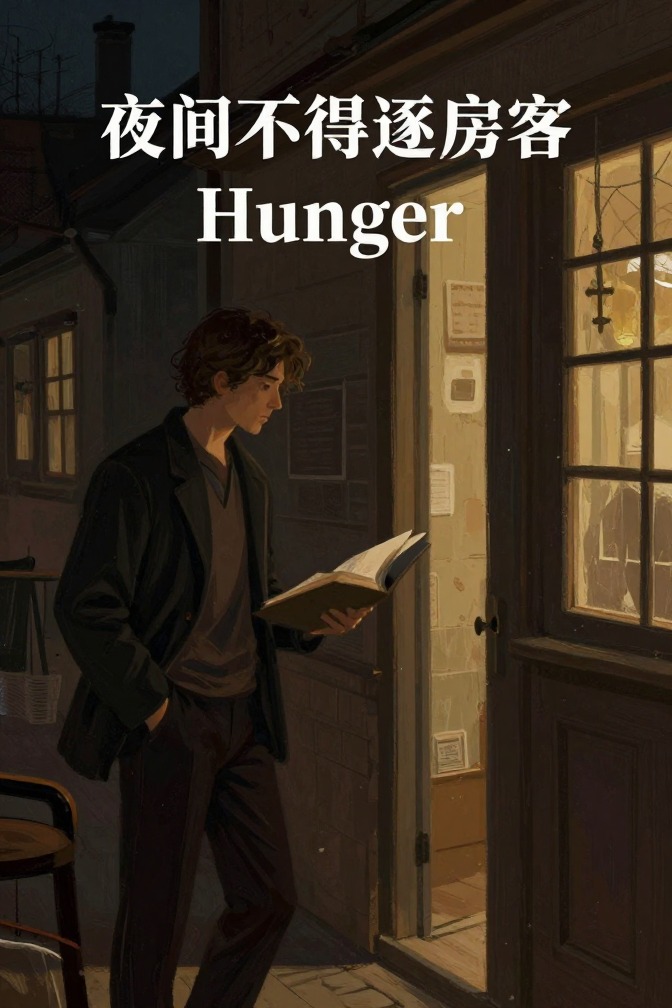
No Night Eviction is a legal principle that protects the protagonist from being thrown out into the street after dark, invoked by the landlord in the lodging house at Vaterland to overrule his wife's order to expel the penniless writer.
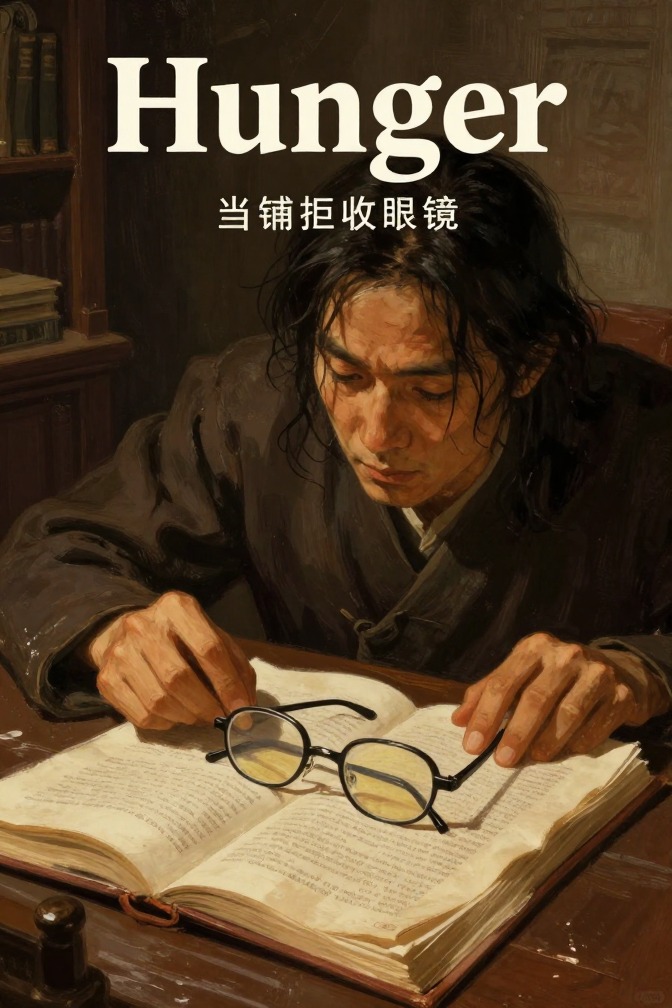
Pawnshop Rejects Glasses is a recurring institutional rule in Knut Hamsun's Hunger that systematically denies the protagonist access to credit based on the material value of his eyeglasses, functioning as a concrete mechanism of poverty's downward spiral. The pawnbroker, whom the narrator calls his "Uncle," repeatedly refuses to accept the steel-rimmed spectacles as collateral, enforcing a policy that transforms a vital aid into worthless junk and thereby closes off one of the few remaining avenues for survival.
Hunger is the central, all-consuming physical and psychological state that defines the protagonist's existence in Knut Hamsun's novel, functioning not merely as a lack of food but as a transformative force that reshapes his perception, behavior, and identity, driving him to the brink of madness and back.
John Coffey heals Melinda Moores, the warden's wife, from a terminal brain tumor in a secret nighttime visit orchestrated by Paul Edgecombe and his fellow guards, an event that confirms Coffey's supernatural healing power and deepens the moral crisis surrounding his impending execution.
William Wharton attacks Dean Stanton on his arrival at E Block, nearly strangling him with a wrist-chain before Brutus Howell knocks him unconscious. The assault reveals Wharton's cunning, his total disregard for consequences, and the dangerous complacency of the guards who underestimated him.
Arlen Bitterbuck, a Cherokee council elder known on E Block as "The Chief," was executed at Cold Mountain Penitentiary on July 17, 1932, for killing a man with a cement block during a drunken dispute over a pair of boots. His execution was the first Paul Edgecombe presided over after John Coffey arrived, and it was considered a model of how a condemned man could face death with dignity.
Beverly McCall, a Black woman condemned to death for murdering her unfaithful husband, was the only female prisoner ever held on E Block at Cold Mountain Penitentiary. Her brief stay is remembered for her request to die under her African spirit-name, Matuomi, and for the last-minute commutation that sent her to a women's prison instead of the electric chair. Decades later, Paul Edgecombe recognized her obituary as a beloved small-town librarian, a transformation that underscores the novel's meditation on the gap between a person's worst act and their full humanity.
Bobo Marchant is a local hound-dog handler from Trapingus County who leads the tracking dogs during the manhunt for the abductor of the Detterick twins, and his dogs' momentary confusion on the riverbank provides a crucial clue that John Coffey may not have been the killer.
Brad Dolan is an orderly at Georgia Pines, the nursing home where Paul Edgecombe lives in his old age. He is a cruel, sneaky, and dimwitted man who reminds Paul of Percy Wetmore, the sadistic guard from E Block. Dolan torments Paul by calling him "Paulie," physically hurting him, and obsessively trying to uncover the secret of Paul's early-morning walks into the woods.
Curtis Anderson is the assistant warden at Cold Mountain Penitentiary during the events of 1932, a bureaucratic figure who serves as Warden Hal Moores's stand-in during Moores's absence due to his wife's illness. He is characterized by his prissy, backslanting script, his informed guesses about execution dates, and his role as the official who signs the death warrant for John Coffey. Anderson is a competent but unremarkable administrator who is present at the botched execution of Eduard Delacroix and later helps manage the aftermath of Percy Wetmore's shooting of William Wharton, ultimately deferring to Moores when the warden returns.
Dean Stanton is a loyal, bespectacled guard on E Block at Cold Mountain Penitentiary, serving as Paul Edgecombe's third-in-command. Quiet, meticulous, and deeply committed to the humane treatment of condemned prisoners, he is nearly killed when William Wharton chokes him with a wrist-chain during Wharton's arrival. His near-death experience and his witness to John Coffey's miraculous healings make him a crucial participant in the risky night journey to save Melinda Moores, and his eventual death by stabbing in C Block underscores the novel's theme of fragile, unjust mortality.
Harry Terwilliger is a loyal, steady E Block guard at Cold Mountain Penitentiary during the 1932 events of The Green Mile. A skinny, nervous-seeming man who proves his courage in crises, he is a core member of Paul Edgecombe's team, participating in the night journey to save Melinda Moores and the cover-up of Percy Wetmore's crimes, and later dies of intestinal cancer in 1982.
Jack Van Hay is the prison electrician and switch-room operator at Cold Mountain Penitentiary who controls the generator and executes the electrical current during electrocutions. Though a minor figure in the narrative, his technical role is crucial: he operates the switch marked "MABEL'S HAIR DRIER," responds to the command "Roll on two," and his knowledge of the brine-soaked sponge becomes the instrument of Percy Wetmore's sabotage during Delacroix's execution.
Janice Edgecombe, the wife of Paul Edgecombe, is a steadfast, perceptive, and emotionally resilient woman whose quiet strength and moral clarity anchor her husband through the moral crises of his work on the Green Mile. She is the one who pushes Paul to confront the full implications of John Coffey's innocence and who, in the aftermath of the botched Delacroix execution, forces him to see that inaction is a form of complicity.
Marjorie Detterick is the mother of the nine-year-old twins Cora and Kathe Detterick, whose rape-murder by William Wharton is wrongly blamed on John Coffey. Her brief but searing appearances in the narrative—discovering the empty, blood-spattered porch on the morning of the abduction, and later screaming curses at Coffey during his execution—make her the living embodiment of a grief that has been misdirected by the legal system and by her own community's racial assumptions.
Percy Wetmore is the cruel, cowardly, and politically connected guard on E Block whose sadism and incompetence drive the worst catastrophes of the novel, including the botched execution of Eduard Delacroix and the murder of William Wharton.
Rob McGee is the Trapingus County deputy sheriff who led the posse that captured John Coffey after the murder of the Detterick twins, and who later, in a private conversation with Paul Edgecombe, came to doubt Coffey's guilt.
The death of Mr. Jingles, the remarkable mouse who was once healed by John Coffey and lived for over sixty years, occurs in the present-day frame narrative at Georgia Pines, when the orderly Brad Dolan startles Paul Edgecombe and Elaine Connelly in the shed where Paul has been keeping the mouse. Mr. Jingles, already ancient and frail, dies of shock or heart failure during the confrontation, and Paul and Elaine bury him together, marking the final end of a living link to the events of 1932.
The execution of John Coffey on November 20, 1932, is the climactic event of The Green Mile, in which the innocent, miracle-working giant is electrocuted for a crime he did not commit, while the guards who know the truth must carry out the sentence, and Paul Edgecombe is permanently changed by the experience.
The prayer 'Baby Jesus, meek and mild, pray for me, an orphan child' is a simple, childlike invocation spoken by John Coffey moments before his execution, revealing his innocence, vulnerability, and orphan-like isolation, and serving as a stark contrast to the institutional violence of the state.
Coffey on the Mile is the title of the sixth and final installment of Stephen King's serial novel The Green Mile, which recounts the execution of John Coffey. The phrase refers both to the physical walk Coffey takes from his cell to the electric chair and to the narrative climax of the story, where Paul Edgecombe and the other guards must carry out the death sentence on a man they have come to believe is innocent.
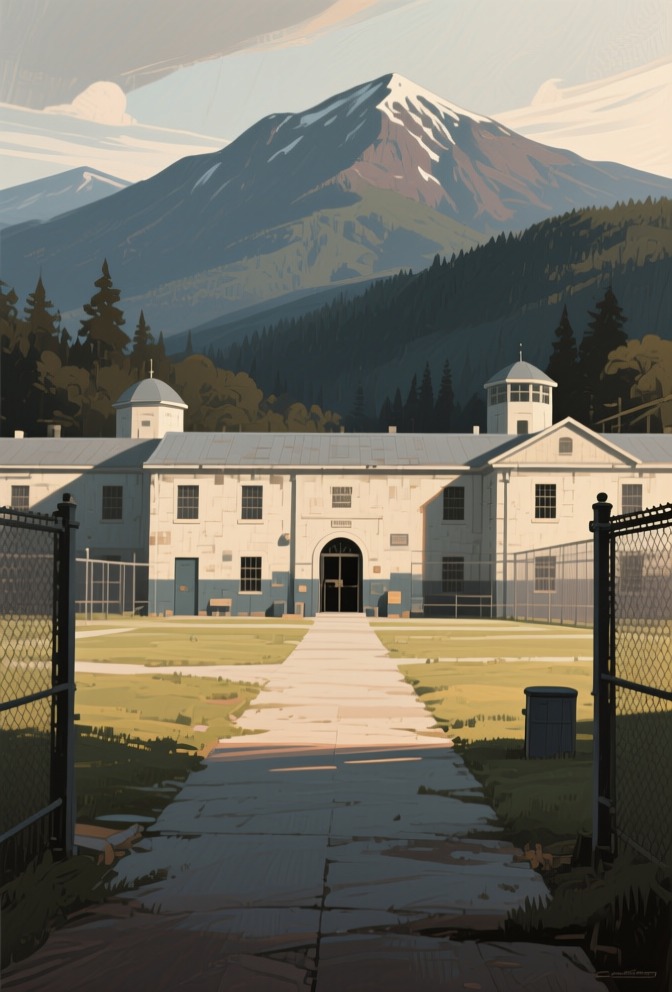
Cold Mountain Penitentiary is the Depression-era state prison in an unnamed Southern state where the novel's central events unfold, housing E Block—the death-row unit whose green-linoleum corridor gives the book its title. It is the site of all major executions, including those of John Coffey, Eduard Delacroix, and Arlen Bitterbuck, and the workplace of narrator Paul Edgecombe and his fellow guards. The prison's physical layout—the Green Mile, the restraint room, the storage shed containing the electric chair Old Sparky, and the tunnel beneath the highway—structures the narrative's geography of punishment and mercy.
E Block is the death row unit at Cold Mountain Penitentiary, a segregated brick block with six cells, a green linoleum corridor called the Green Mile, and a storage room housing the electric chair Old Sparky. It is the setting for the novel's central events, including the arrivals and executions of John Coffey, Eduard Delacroix, and William Wharton, and the site of both institutional routine and supernatural occurrences.
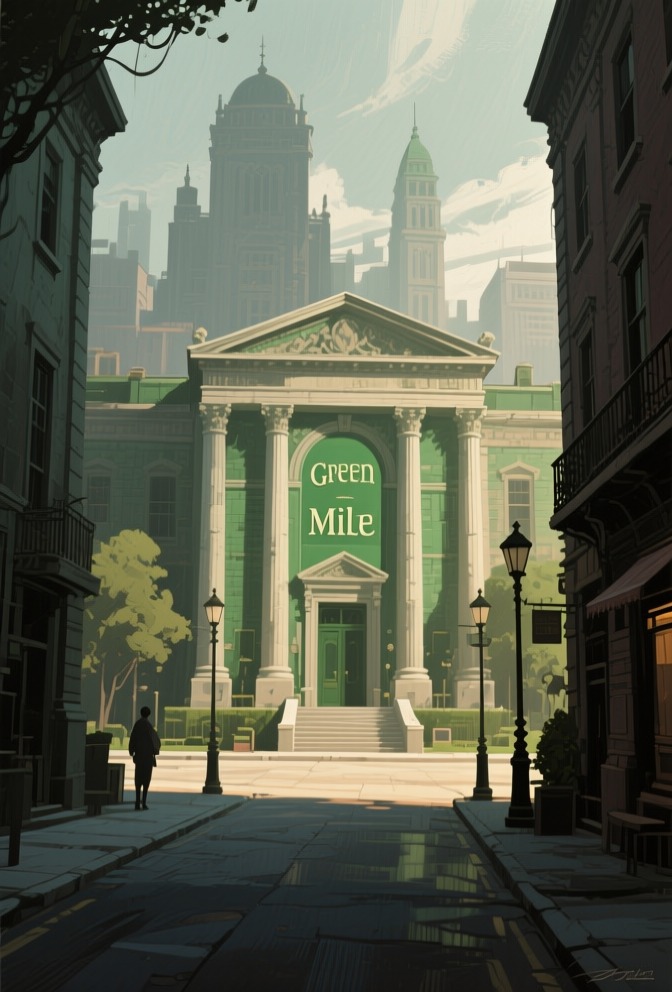
The Green Mile is the lime-colored linoleum corridor that runs the length of E Block at Cold Mountain Penitentiary, serving as the final walk for condemned men on their way to the electric chair, Old Sparky. It is the central symbolic and physical space of the novel, a place where the boundary between life and death is measured in sixty paces, and where the story's most profound encounters between guards and prisoners take place.
Indianola is the town in the state of the novel where the state hospital is located, serving as the site for medical treatment and diagnosis of characters including Melinda Moores and William Wharton, and as the destination for Percy Wetmore's transfer after his breakdown.
The croquet course is a grassy area at the Georgia Pines retirement home, where the elderly narrator Paul Edgecombe often walks and reflects on his past. It serves as a transitional space between the main building and the woods where he keeps a secret, and is also a site of minor confrontations with the orderly Brad Dolan.