Koenji is the Tokyo neighborhood where Yozo lives with Shizuko and her daughter Shigeko after fleeing Flatfish's guardianship, a period of domestic routine, comic-strip work, and deepening alcoholism that ends when Yozo steals from Shizuko and abandons the household.
The relationship between Yozo and Flatfish is a central, tragic dynamic in No Longer Human, defined by Flatfish's role as Yozo's reluctant guardian after the Kamakura suicide attempt. Flatfish's indirect, evasive communication and his failure to offer straightforward guidance directly contribute to Yozo's downward spiral, transforming a potentially salvageable situation into a path of alienation, addiction, and institutionalization.
Yozo's cohabitation with Shizuko, a journalist who takes him in after his suicide attempt and his flight from Flatfish's house, is a period of dependency, domestic routine, and artistic stagnation that deepens his sense of shame and isolation.
Fear of human beings is the central psychological state that defines Yozo's existence in No Longer Human, a pervasive dread that alienates him from all social interaction and drives his lifelong performance as a clown, his self-destructive addictions, and his repeated suicide attempts.
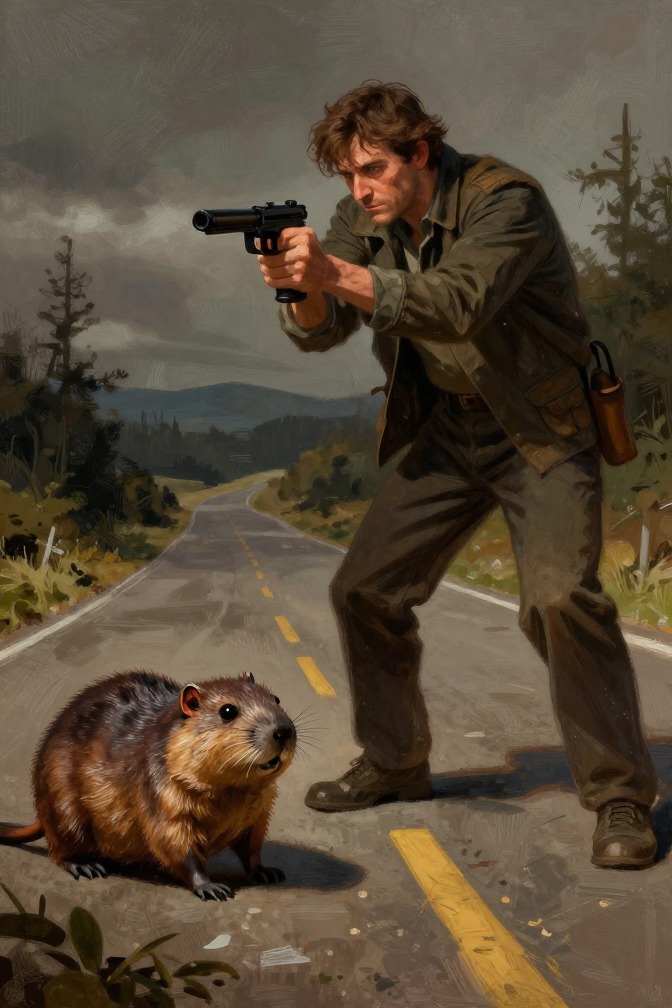
The man shoots and kills a roadagent who threatens the boy, a pivotal moment of violent protection that crystallizes the novel's moral stakes and the father's willingness to kill to preserve his son.
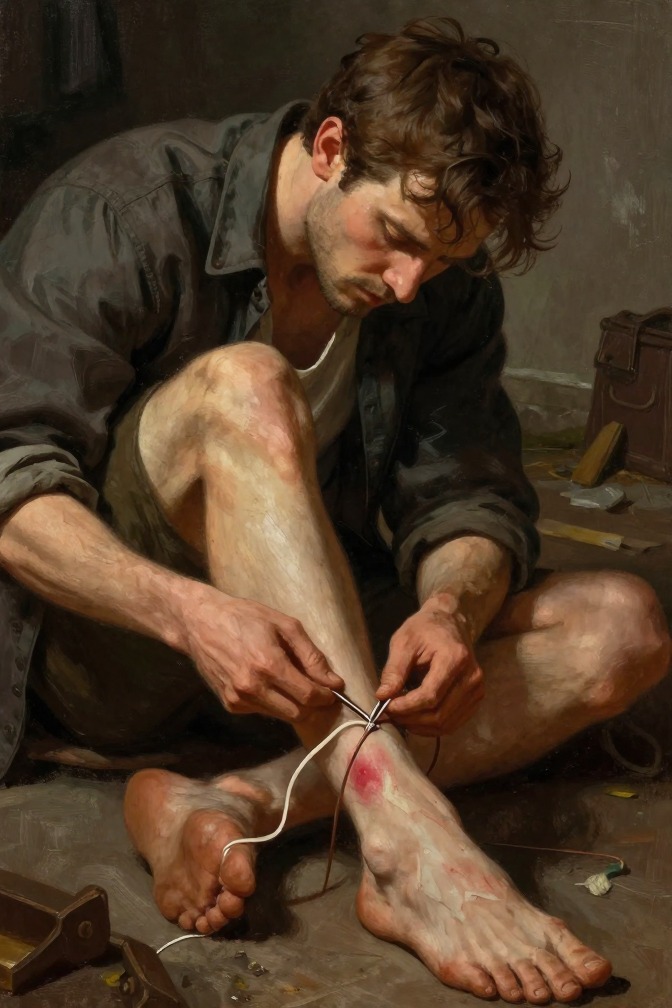
After being shot by an arrow during an ambush in a coastal town, the man sutures his own leg wound in a storeroom, an act of desperate self-surgery that underscores his role as the boy's sole protector and the physical toll of their journey.
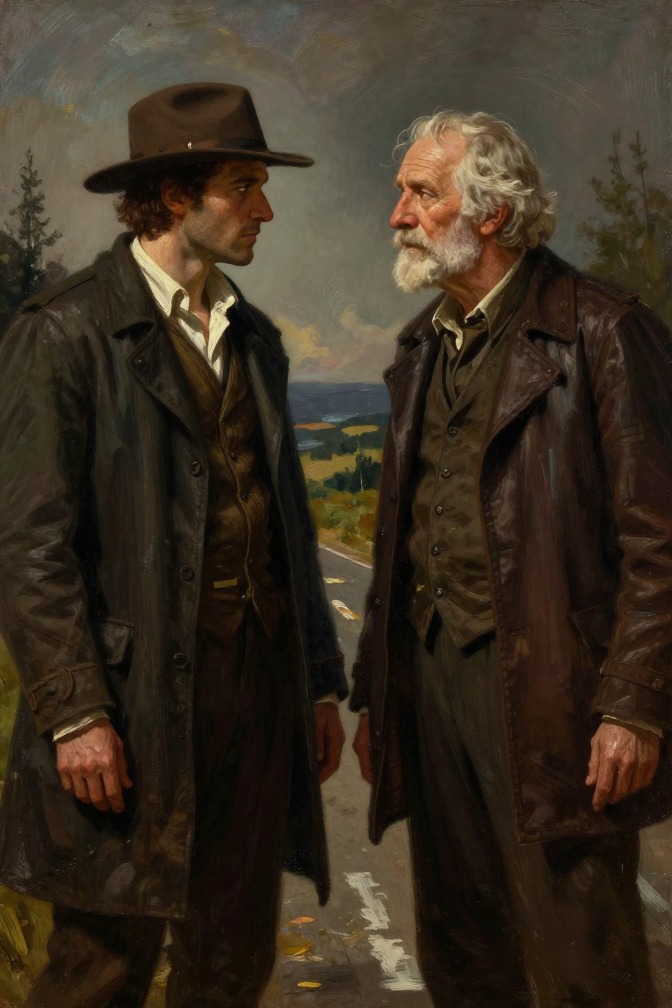
Ely is a mysterious, elderly wanderer whom the man and the boy encounter on the road. He is a figure of profound skepticism and survival, embodying the novel's themes of isolation, the loss of faith, and the ambiguous nature of goodness in a world stripped of all meaning.
The good man is the bearded, scarred stranger who appears at the end of the novel to offer the orphaned boy a new home, embodying the possibility of continued goodness and community in a world reduced to ash and predation.
The wife is the man's spouse and the boy's mother, a figure who appears primarily in memory and flashback. She represents the unbearable weight of the post-apocalyptic world and makes a decisive choice to abandon her family, choosing suicide over continued survival. Her departure is a defining trauma for the man and shapes the boy's understanding of loss and abandonment.
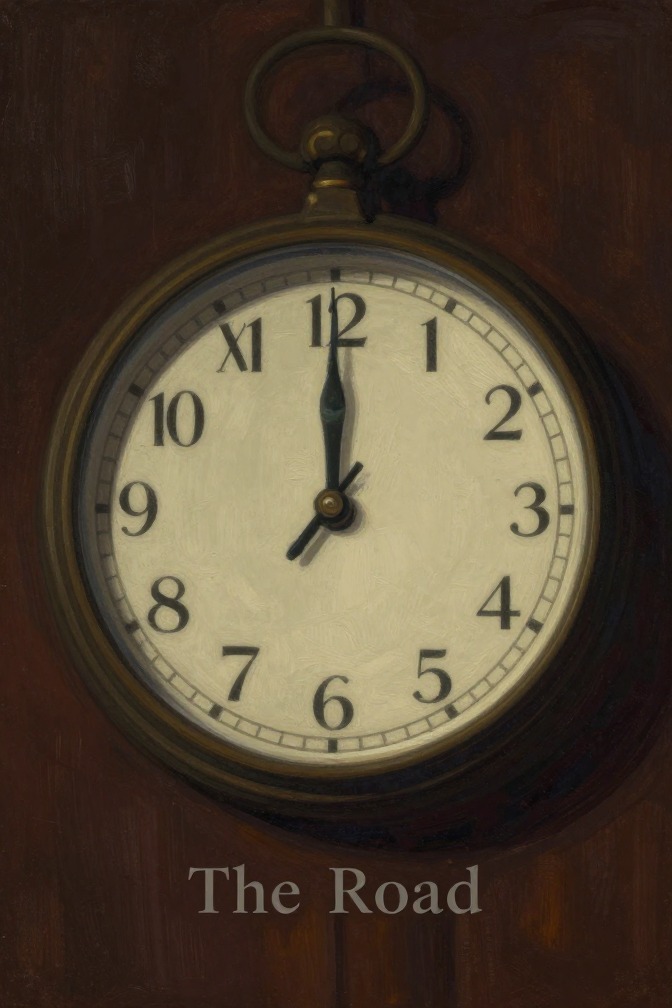
The clock stopped at 1:17 is the precise moment when the world ended, a temporal marker that the man remembers from the morning of the catastrophe, when a long shear of light and a series of low concussions signaled the irreversible collapse of civilization.
The last instance is a philosophical concept in Cormac McCarthy's The Road that describes how the final occurrence of a thing retroactively annihilates the entire category to which it belonged, collapsing the distinction between what once was and what never was.
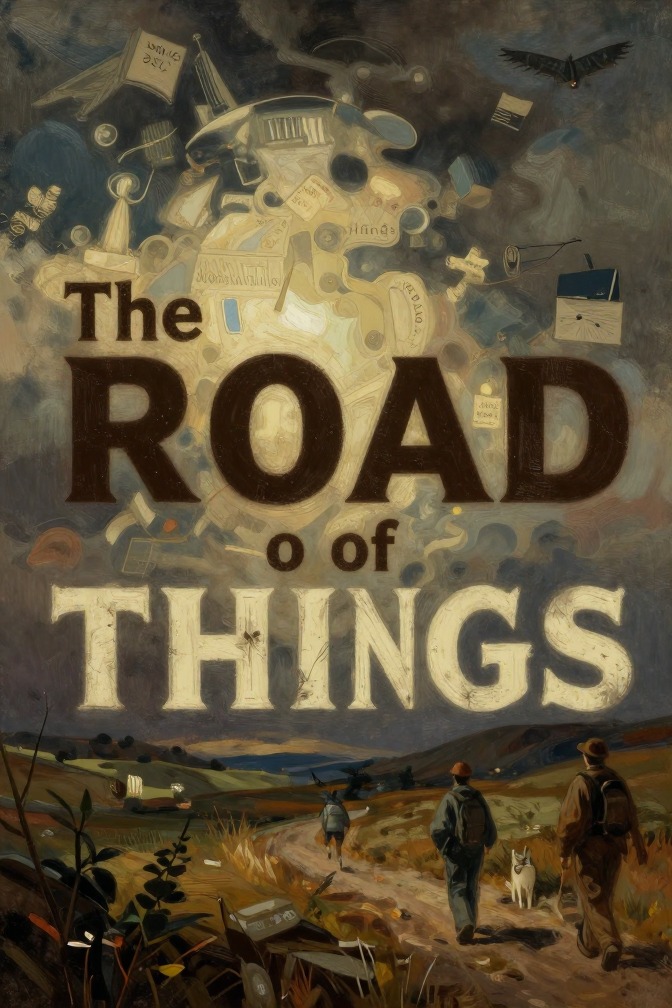
The names of things is a recurring motif in Cormac McCarthy's The Road, representing the gradual erosion of language and meaning in a post-apocalyptic world where objects, places, and concepts lose their referents and the sacred idiom of the past becomes shorn of its reality.
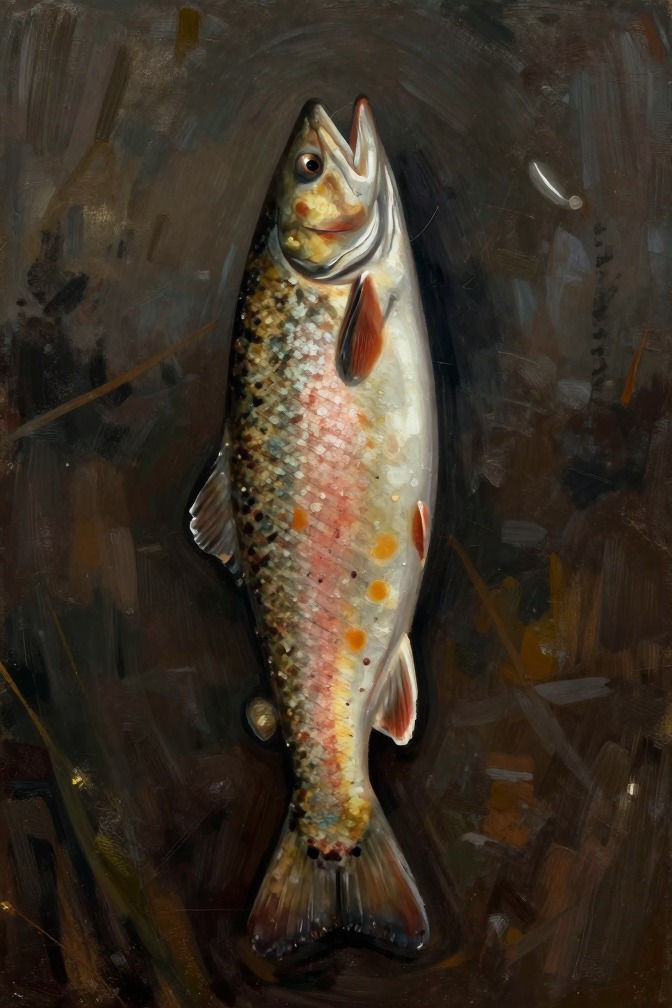
The brook trout, once abundant in the mountain streams of the lost world, appear in the man's memory as a symbol of a vanished natural order, beauty, and mystery. They represent the irrecoverable past, a world of intricate life and purity that has been destroyed, and their final appearance in the novel's closing passage serves as a poignant elegy for all that has been lost and cannot be made right again.
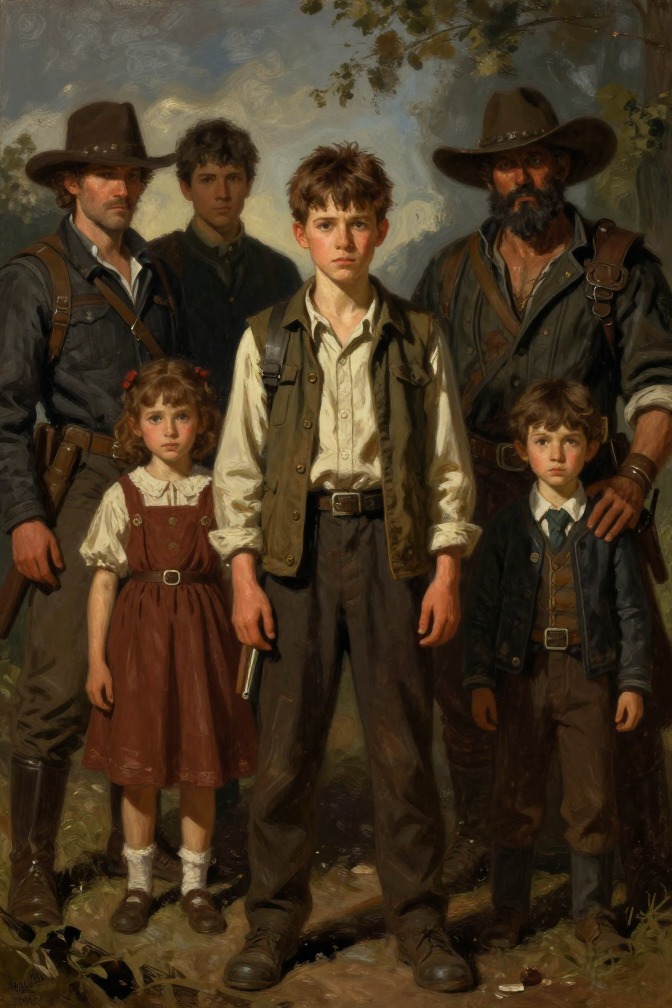
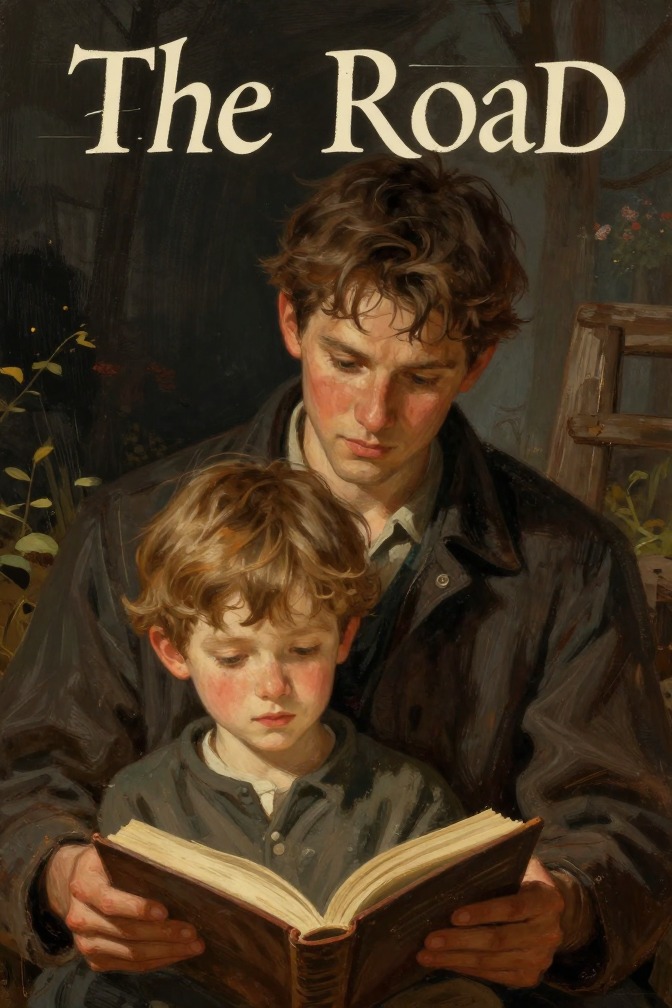
After the man dies, the boy, alone and grieving, encounters a man on the road who claims to be one of the good guys and offers to take him to a family with children, marking the boy's transition from a life of solitary survival with his father to a new community.
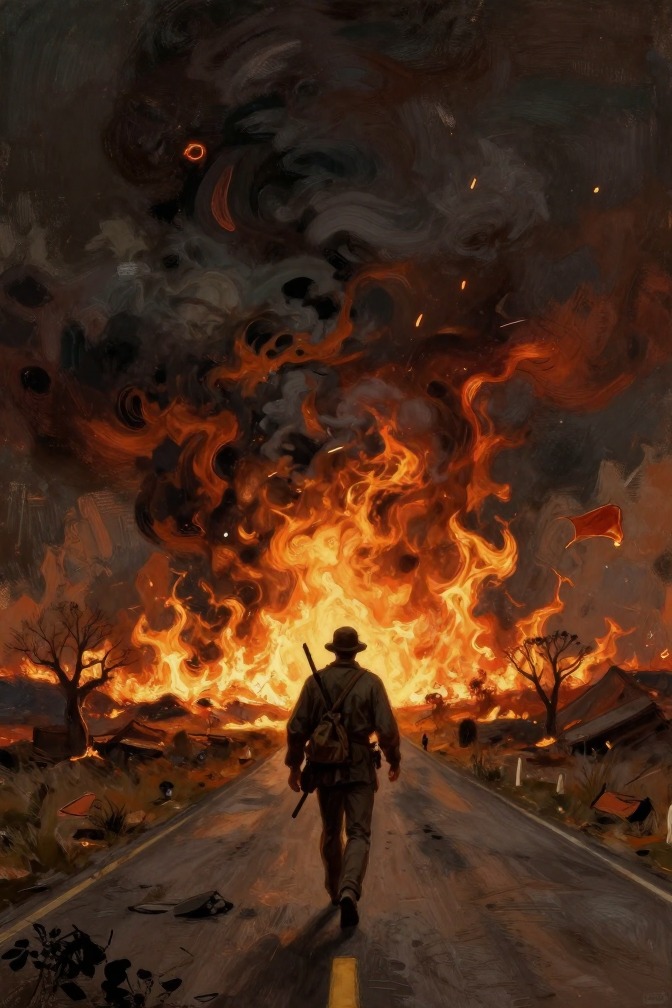
The crossing of the firestorm is a harrowing ordeal in which the man and the boy must wait for a burned road to cool, then traverse a landscape of melted asphalt, charred bodies, and lingering heat, testing their endurance and resolve.
The discovery of the bunker is a pivotal event in which the man and the boy, on the verge of starvation and death, find a hidden underground shelter stocked with abundant food, water, and supplies, offering them a temporary respite and a renewal of hope.
The encounter with the old man Ely is a pivotal episode in which the man and the boy meet a frail, blind, and deeply cynical wanderer on the road, leading to a night of conversation that exposes the philosophical chasm between the boy's innate compassion and the man's hardened pragmatism, and that forces the man to confront the possibility that the boy may be something more than human.
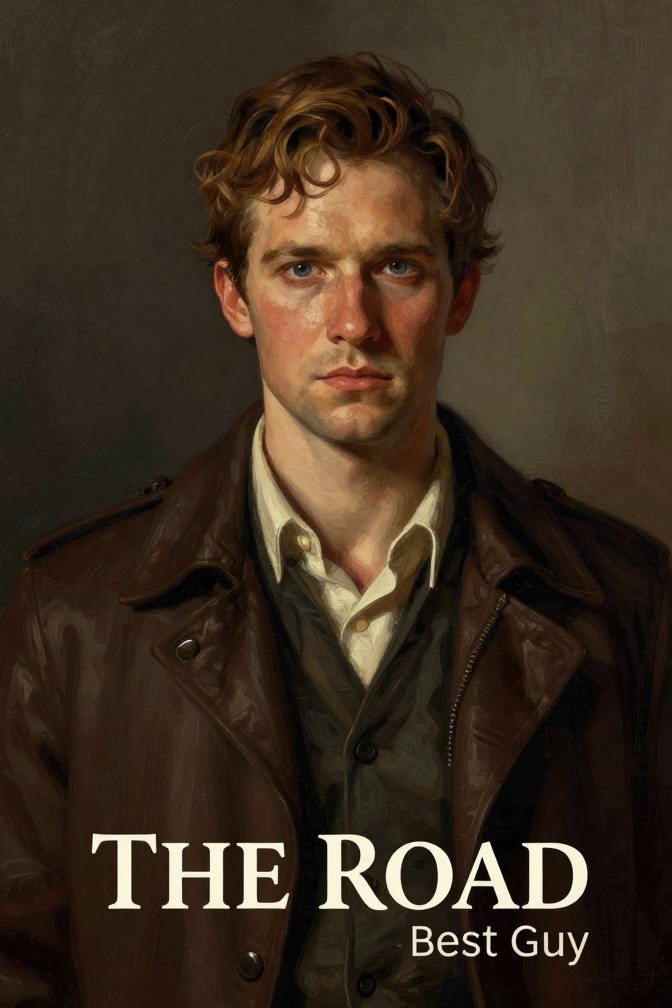
The phrase "the best guy" is the man's final, intimate declaration to his son, spoken as he lies dying. It condenses the entire moral and emotional architecture of the novel into a single, private epithet: the boy is not merely good but the best, the one who has carried the fire, kept faith, and forced his father to remain human. The words are the man's last gift, a benediction that names what the boy is and what he must continue to be.
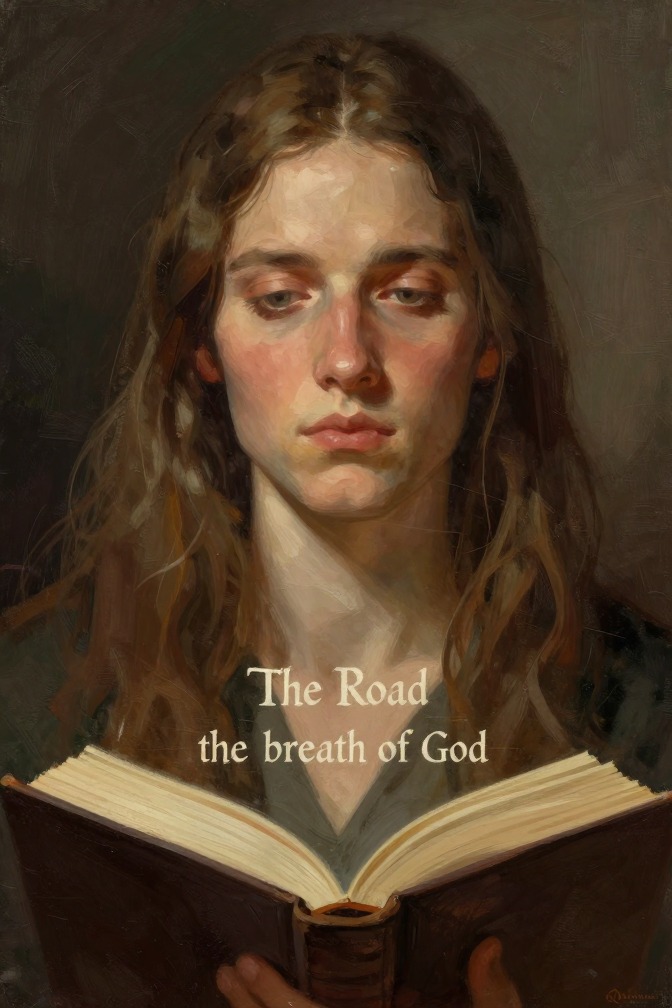
The breath of God is a phrase used by the woman who adopts the boy after his father's death, representing a theological and existential claim that divine presence persists through human connection even in a world stripped of all traditional religious structures.
The perfect day of his childhood is a memory recalled by the man, a single, wordless afternoon spent with his uncle on a lake gathering firewood, which he later holds as the foundational, shaping experience of his life, a touchstone of lost beauty and meaning against which the barren, post-apocalyptic present is measured.
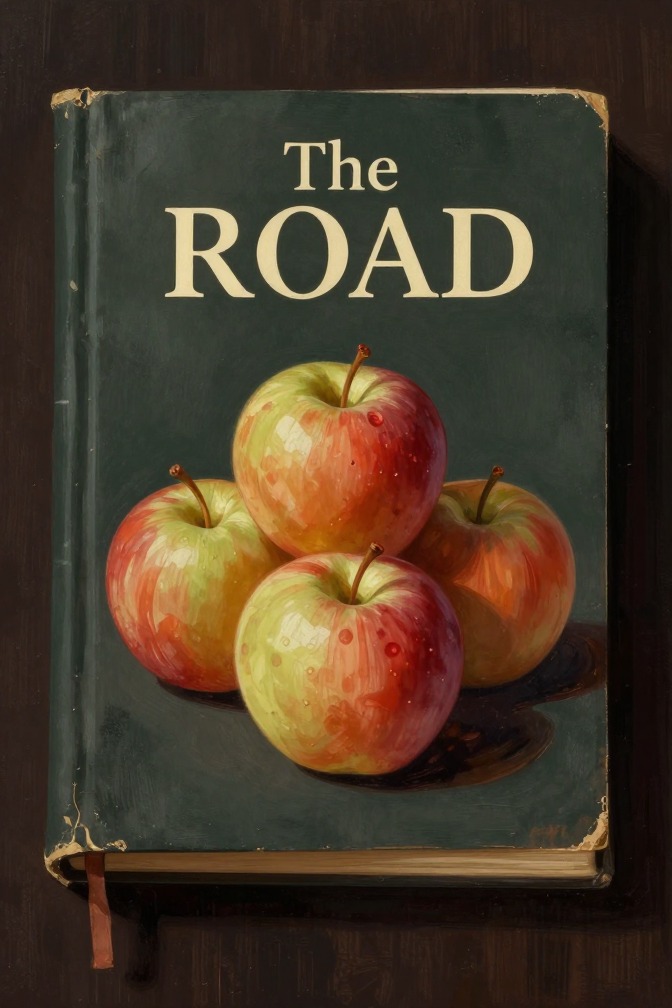
Apples are a rare and precious food source discovered by the man and the boy in an abandoned orchard, providing crucial sustenance during their journey south and symbolizing the dwindling remnants of the world's former abundance.
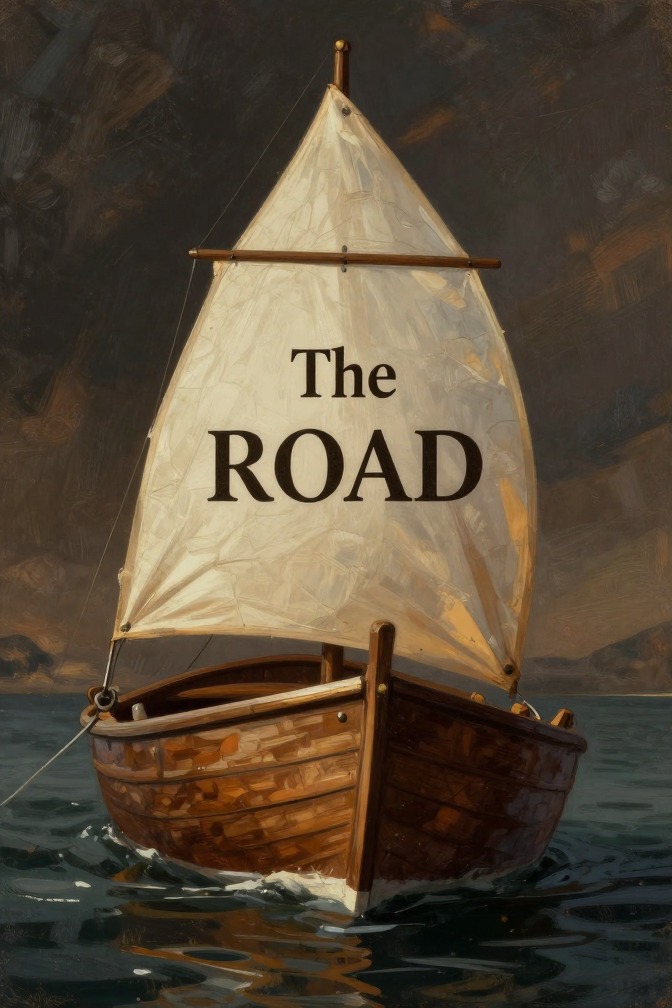
The boat, a twin-masted sailboat named Pájaro de Esperanza, is a wrecked vessel discovered by the man and the boy on the coast, which provides them with a crucial cache of supplies, tools, and a flare gun, but also deepens their sense of isolation and the finality of the world's end.
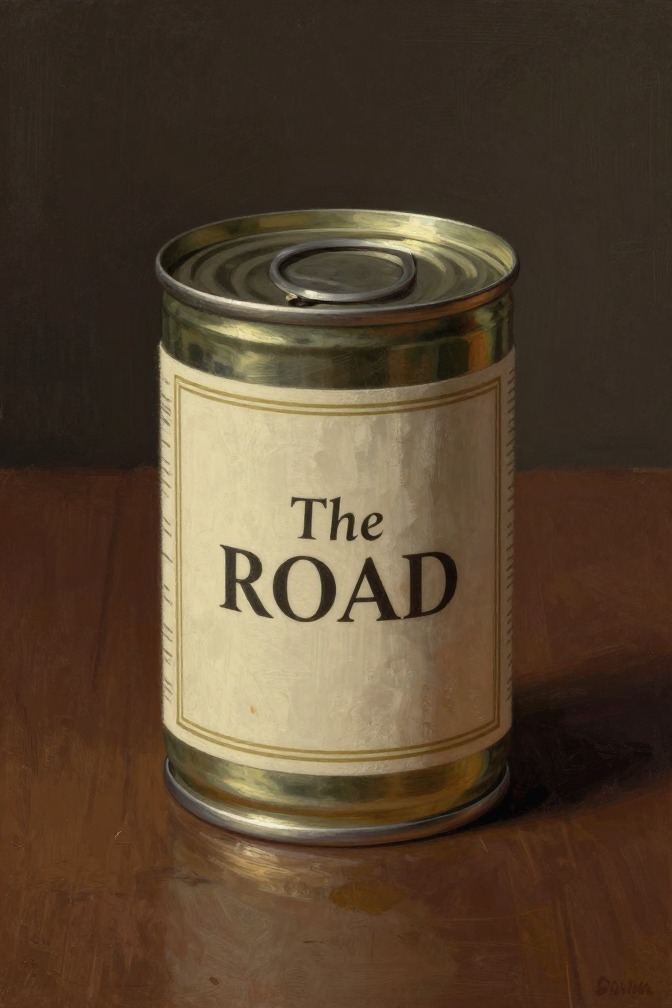
Canned goods are the most vital material resource in the post-apocalyptic world of *The Road*, representing survival, hope, and the last tangible link to a vanished civilization. Their discovery, rationing, and eventual depletion drive the narrative's central conflict between starvation and sustenance, while their presence in the bunker and elsewhere transforms the father and son's journey from a desperate march toward death into a fragile, temporary reprieve.
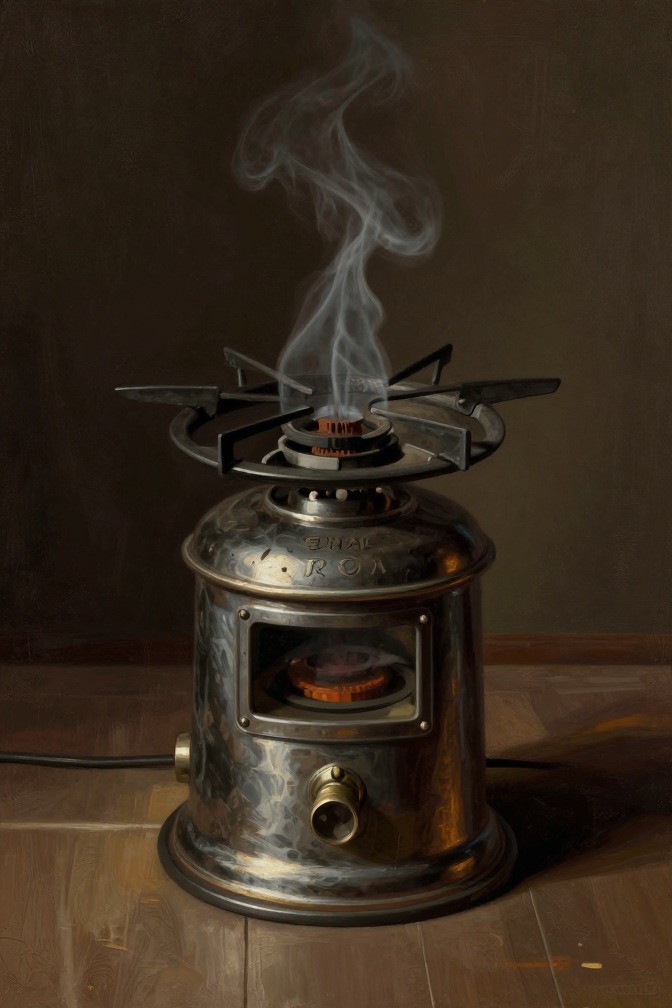
The gas stove is a small, portable two-burner appliance that the man and the boy salvage from the bunker and later from the wrecked sailboat, becoming a crucial tool for cooking hot meals and boiling water during their journey south. Its significance lies in how it transforms their survival from cold, raw subsistence to moments of warmth and nourishment, yet its fragility and eventual failure underscore the relentless scarcity and decay of their world.
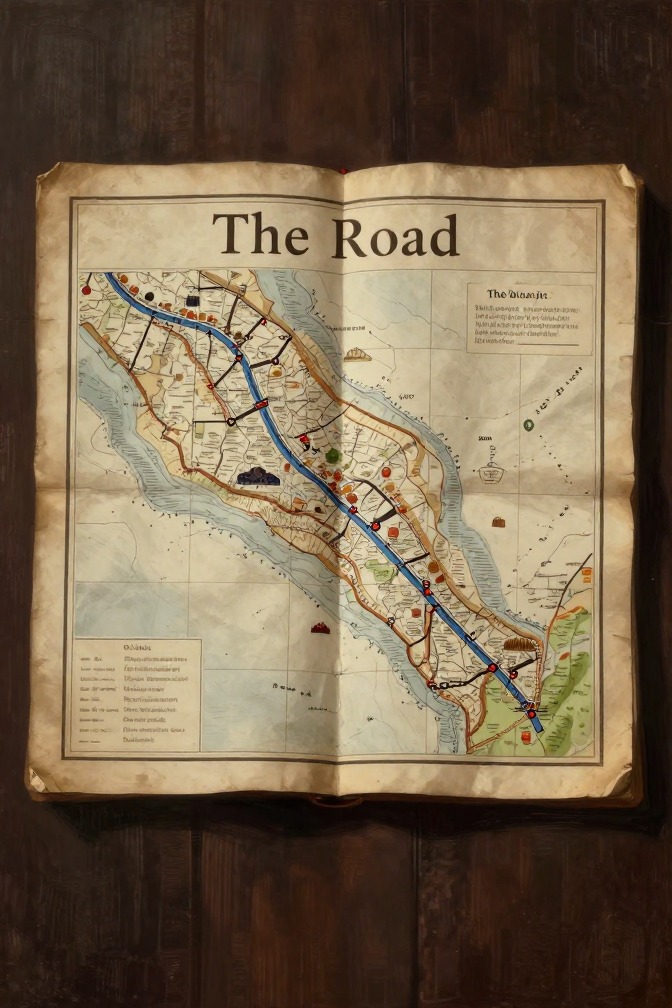
The map is a tattered oil-company roadmap that the man and the boy use to navigate the post-apocalyptic landscape, serving as both a practical tool for survival and a poignant symbol of the lost world. It is a fragile, decaying artifact that the man consults to chart their course southward, measure their progress, and maintain a semblance of direction in a world where the old geography has become meaningless.
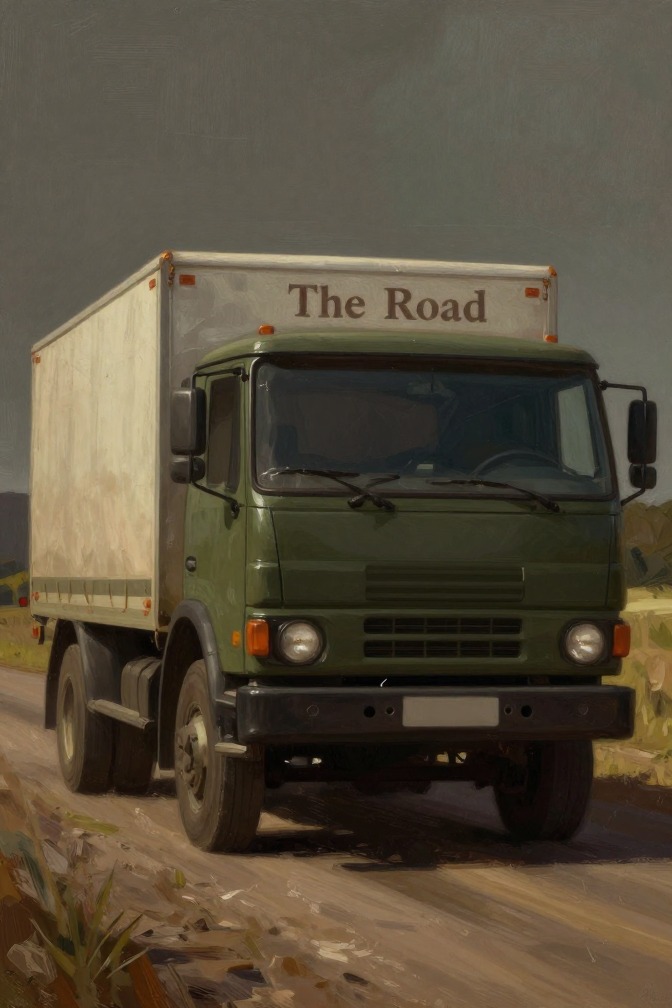
The truck is a diesel-powered stakebed vehicle encountered by the man and the boy during their journey south, serving as a mobile base for a group of armed marauders and representing the most direct and violent threat to their survival in the novel.
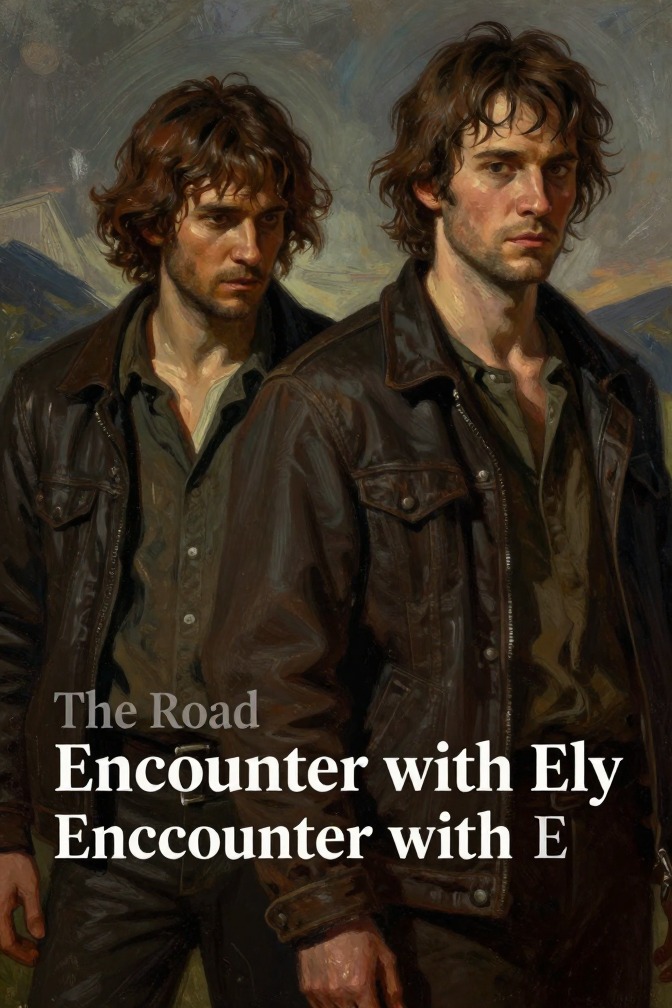
The encounter with Ely is a pivotal episode in which the man and the boy overtake a frail, nearly blind old man on the road, share a meal with him, and engage in a philosophical conversation that exposes the moral and existential stakes of their journey, ultimately forcing the boy to confront the limits of his compassion.
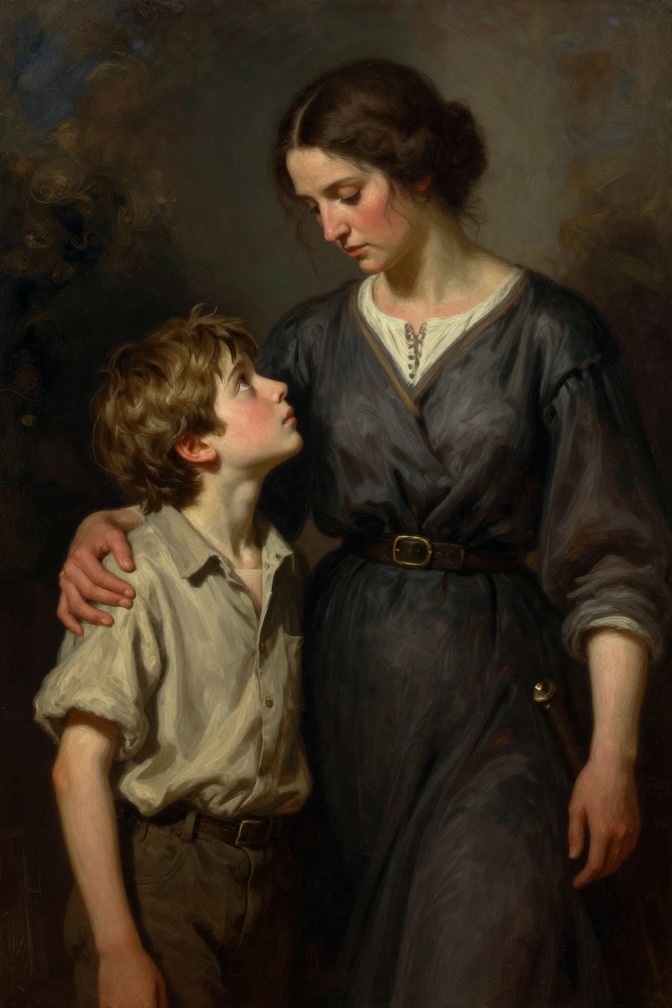
The mother-son relationship between the boy and his mother is defined by abandonment and absence, as she chooses suicide over survival shortly after the boy's birth, leaving him with only a memory of her departure and a void that shapes his deepest fears and his bond with his father.
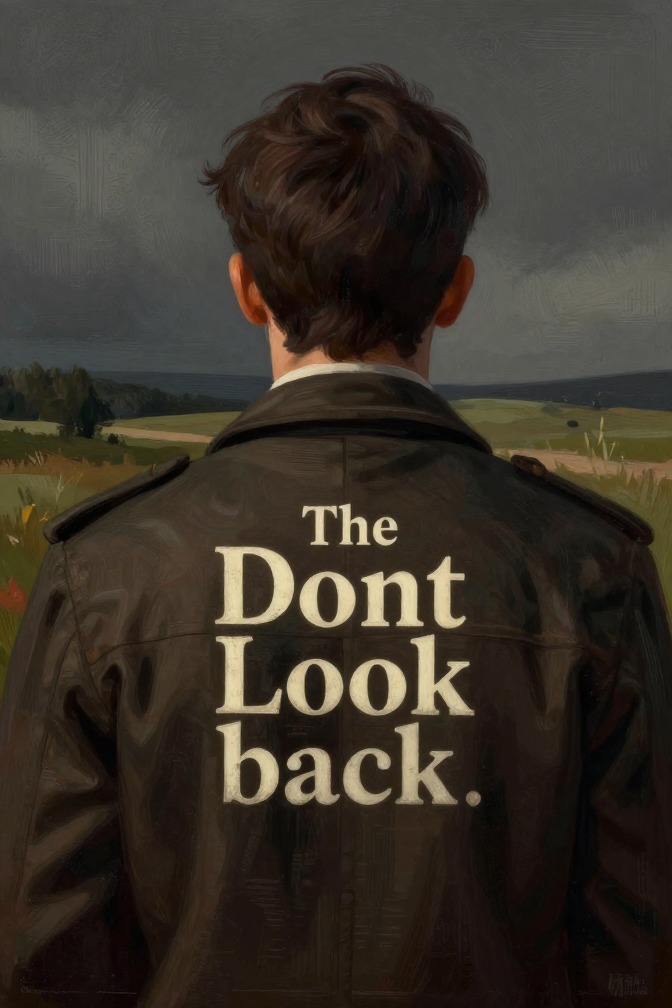
The rule "Dont look back" is a survival imperative that the man repeatedly enforces during their journey through the post-apocalyptic wasteland, representing the necessity of forward momentum and the psychological cost of dwelling on the horrors left behind.
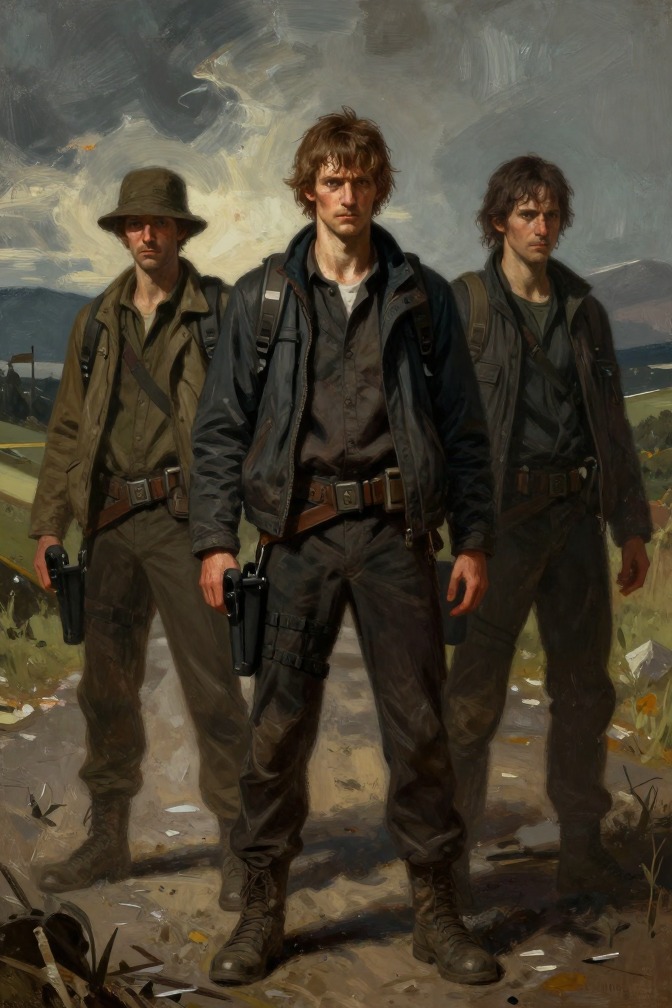
The bad guys are the marauding, cannibalistic survivors who populate the post-apocalyptic landscape of Cormac McCarthy's *The Road*, representing the moral antithesis of the man and the boy. They are defined by their organized violence, their consumption of human flesh, and their utter lack of the ethical code that the father and son struggle to uphold.