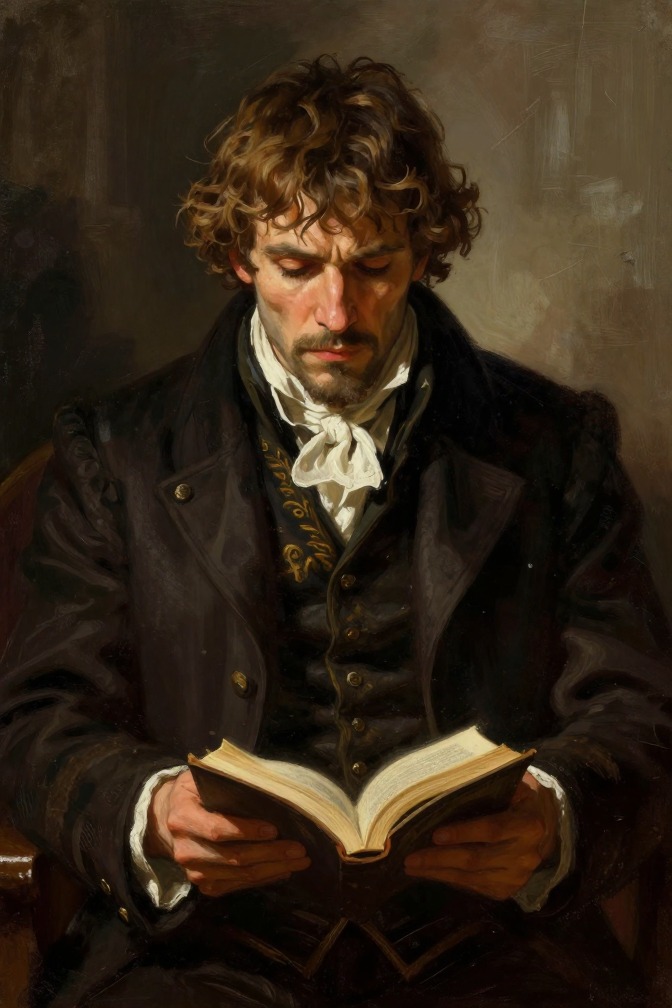
Eugene Onegin, the verse novel by Alexander Pushkin, serves as a recurring intellectual and emotional touchstone for Boris Pavlikovsky, whose obsessive reading of the book in Russian during his Las Vegas years becomes a symbol of his displaced, rootless intelligence and his search for meaning amid chaos.
The gun is a recurring object in the novel that first appears as a prop in Boris's hands during the Amsterdam heist, then becomes a weapon of self-defense and murder when Theo uses it to kill Martin in the parking garage, marking the irreversible point of no return in his life.
The iPod is a personal music device that accompanies Theodore Decker through his adolescence and young adulthood, serving as a portable archive of his mother's musical taste, a tool for emotional regulation, and a marker of his shifting identities across New York, Las Vegas, and his return to New York.
The suitcase is the canvas bag in which Theodore Decker carries the stolen Carel Fabritius painting The Goldfinch from the Metropolitan Museum of Art after the bombing, and later uses to hide and transport it across the country. It serves as the physical container for the novel's central secret, linking the trauma of the explosion to Theo's fugitive years in Las Vegas and his eventual return to New York.
The candy-striped umbrella is a small, collapsible umbrella that Audrey Decker carries on the morning of her death. It becomes a recurring symbol of the ordinary, fragile happiness that Theo loses when she dies, and its failure to protect them from the rain foreshadows the catastrophe at the museum.
The theft of Carel Fabritius's *The Goldfinch* from the Metropolitan Museum of Art during the 2003 bombing is the central crime and secret of the novel, a catastrophe that binds the protagonist Theodore Decker to a life of deception, loss, and eventual, costly redemption.
Kitsey Barbour's betrayal of Theo Decker with Tom Cable is a pivotal relational rupture in the novel, exposing the fragility of their engagement and the deep, unresolved attachments both characters carry from their pasts. The revelation, which Theo witnesses firsthand on the street outside Kitsey's apartment, shatters the carefully constructed facade of their relationship and forces a confrontation that reveals the transactional and emotionally hollow nature of their bond.
Courage in *The Goldfinch* is not a fixed virtue but a reactive, often involuntary force that emerges in extreme situations—most dramatically in the Amsterdam parking garage shootout, where Theodore Decker, a traumatized and drug-dependent antiques dealer, kills a man to save his friend Boris Pavlikovsky. The novel traces courage through multiple registers: the courage to endure grief, to confess fraud, to face death, and to choose life despite despair. Each act of courage is entangled with moral ambiguity, chance, and the characters' flawed, survival-driven natures.
Deception is a pervasive and multi-layered state in *The Goldfinch*, operating not only as a series of deliberate acts—Theo's lies, frauds, and omissions—but also as a structural principle of the narrative itself. Theo's first-person account is fundamentally unreliable, marked by self-justification, memory gaps, and a persistent gap between what he tells the reader and what the evidence of the story reveals. From the small lies of a traumatized child to the elaborate criminal schemes of an adult, deception shapes Theo's relationships, his identity, and his understanding of his own life, ultimately becoming a lens through which the novel examines the nature of truth, art, and the stories we tell ourselves to survive.
Despair is a pervasive and defining emotional state in *The Goldfinch*, experienced most intensely by the protagonist Theodore Decker. It is a profound, often immobilizing sense of hopelessness and meaninglessness that arises from catastrophic loss—the death of his mother, the abandonment by his father, and the subsequent unraveling of his life. This despair is not merely sadness but a corrosive, existential condition that colors his perception of the world, drives his self-destructive behaviors, and becomes the central emotional and philosophical problem he must confront throughout the novel.
Theo Decker's drug addiction is a pervasive and destructive force that shapes his adult life, evolving from self-medication for trauma into a full-blown dependency that fuels his fraudulent business practices and nearly destroys him.
Homelessness is a recurring state in Theodore Decker's life, beginning with his mother's death and culminating in his flight from Las Vegas to New York, each episode stripping him of stability and forcing him to rely on the charity of others while grappling with trauma and loss.
Trauma, specifically the catastrophic museum bombing that killed Theo Decker's mother when he was thirteen, is the foundational psychological wound of the novel, shaping his identity, relationships, and every major decision for the next fourteen years. It manifests as severe post-traumatic stress disorder—intrusive flashbacks, hypervigilance, nightmares, emotional numbing, and a profound sense of unreality—that drives his descent into drug addiction, compulsive hoarding of a stolen painting, and a lifelong struggle to find meaning in a world he experiences as fundamentally broken.
April 10th is the date of Audrey Decker's death in the Metropolitan Museum bombing, a day that becomes the permanent dividing mark in Theodore Decker's life, transforming an ordinary spring morning into a "rusty nail" on the calendar and the origin point of his lifelong trauma, guilt, and obsession with the painting The Goldfinch.
Villefort's confession and madness is the climactic collapse of the king's attorney, who, after being publicly exposed as the father of the criminal Benedetto during the assize trial, confesses his guilt, returns home to find his wife and son dead by poison, and finally loses his reason, digging frantically in his garden.
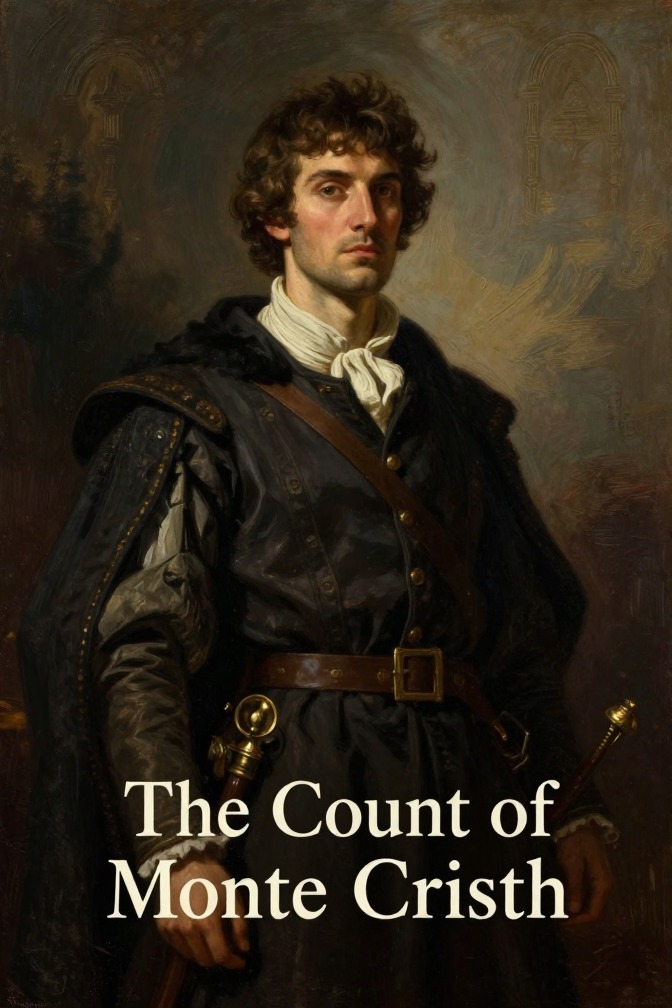
The Law of Retaliation is the central ethical principle that drives Edmond Dantes' transformation into the Count of Monte Cristo and governs his systematic campaign of vengeance against those who wronged him. It is the belief that a wrongdoer must suffer precisely the same harm he inflicted, an eye for an eye, a tooth for a tooth, and that this equivalence is not merely a personal desire but a form of divine justice executed through a human agent.
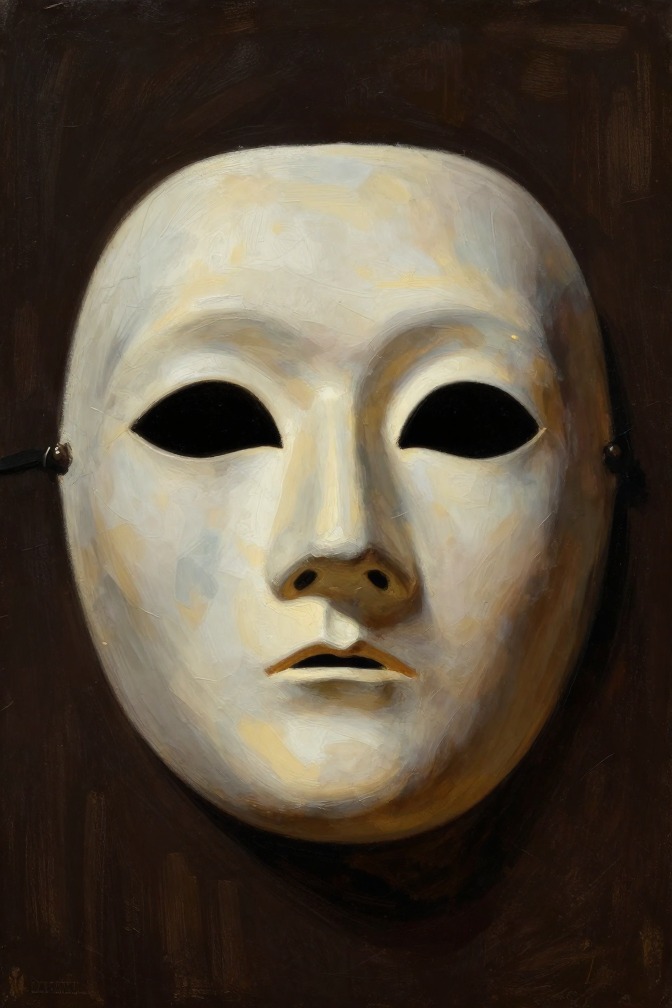
The Mask is a central concept in The Count of Monte Cristo, representing the deliberate concealment of identity, emotion, and intention that enables Edmond Dantes to execute his elaborate plan of vengeance and ultimately achieve a form of redemption.
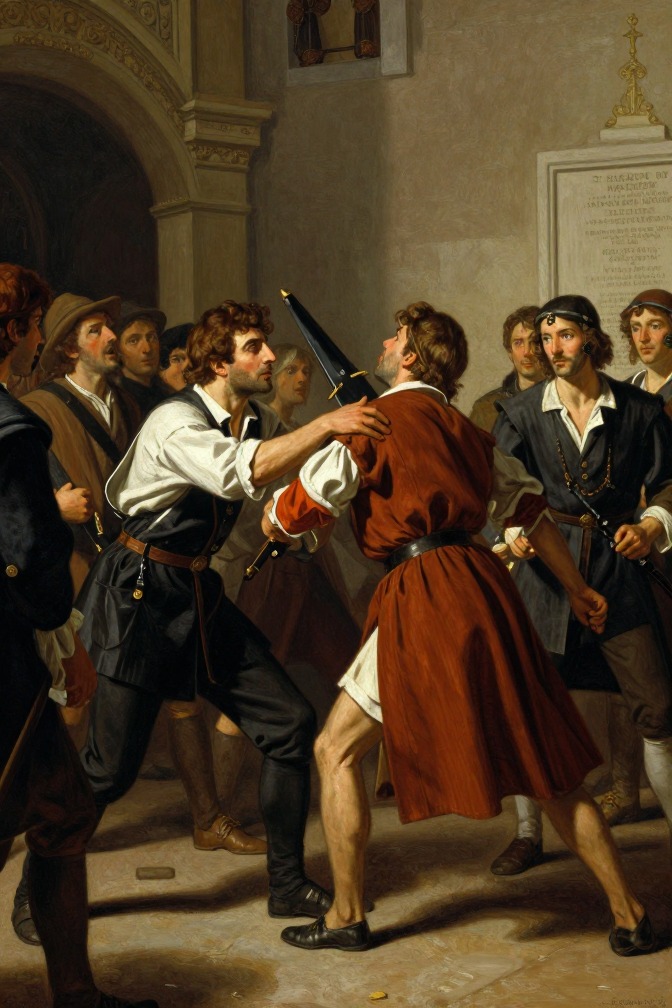
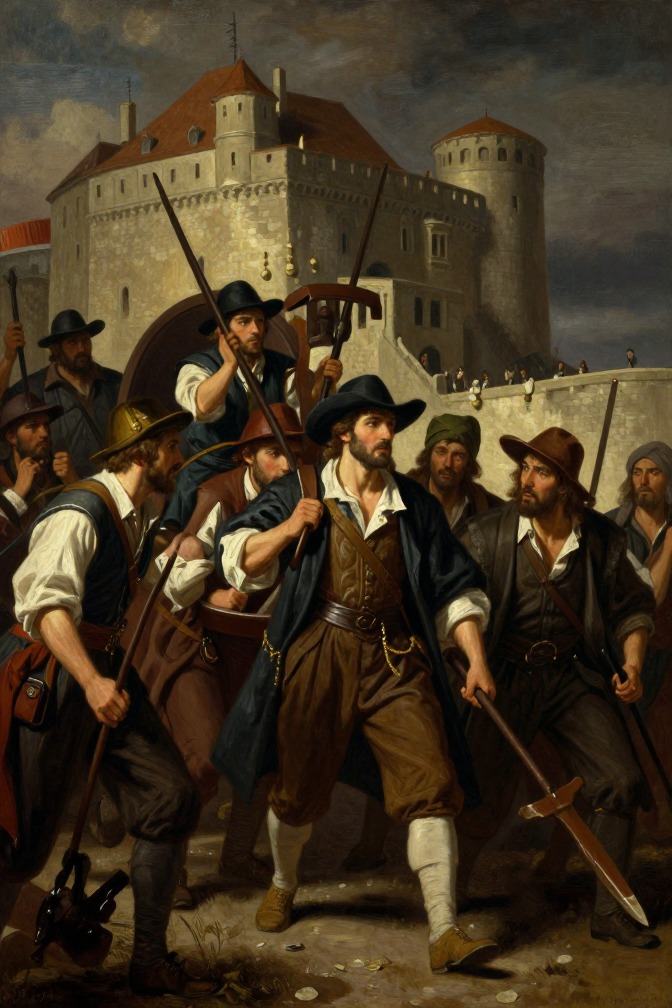
Dantes' Arrest is the pivotal event that sets the entire plot of The Count of Monte Cristo in motion. On the day of his betrothal feast, the young and promising sailor Edmond Dantes is seized by police officers acting on a warrant, accused of being a Bonapartist agent. The arrest, orchestrated by the jealous Danglars and Fernand Mondego and ruthlessly exploited by the ambitious magistrate Gerard de Villefort, abruptly shatters Dantes' happiness and condemns him to fourteen years of unjust imprisonment in the Chateau d'If, transforming him from a guileless sailor into the vengeful Count of Monte Cristo.
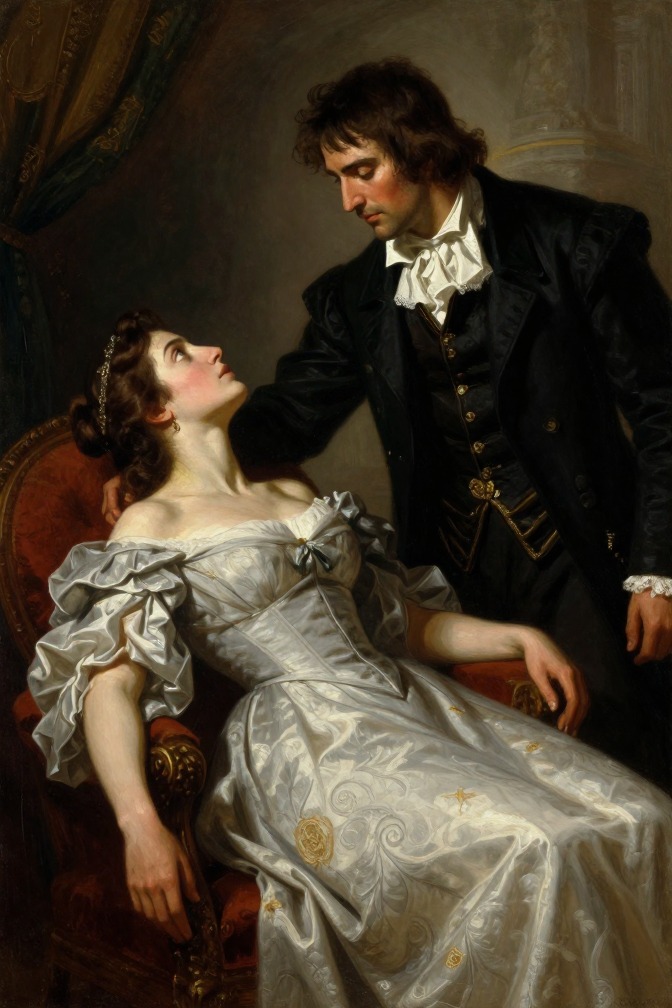
After Villefort's public confession at the trial, he returns home to confront his wife, Heloise, whom he has condemned to death for her poisonings. He finds she has already poisoned herself and their son, Edward, leaving a note declaring she could not depart without her child. The scene culminates in Villefort's madness and Monte Cristo's horrified recognition that his vengeance has exceeded all bounds.
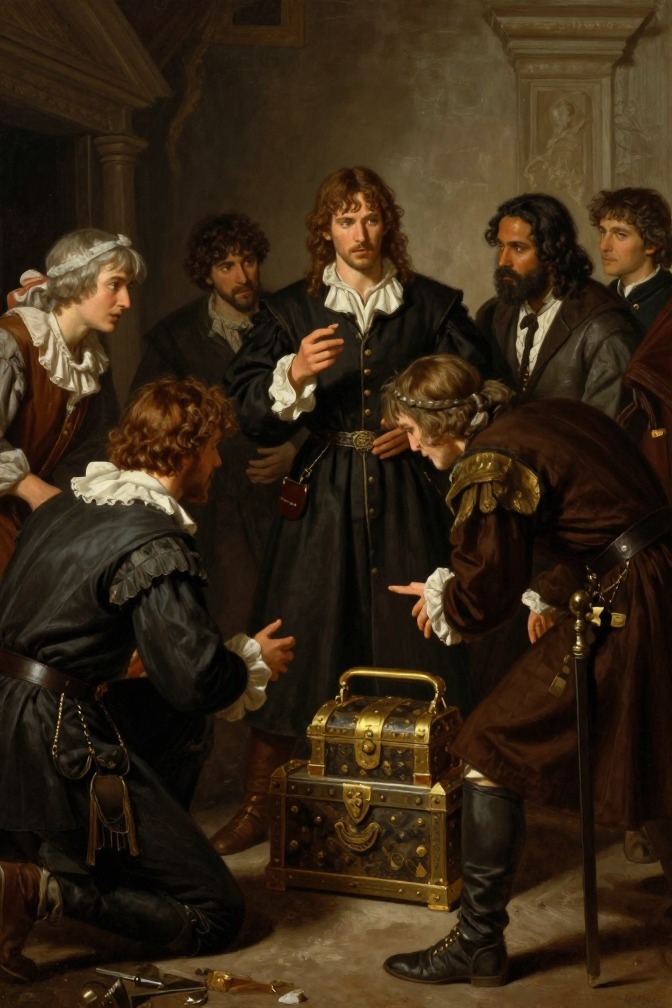
The discovery of the treasure on the Island of Monte Cristo transforms Edmond Dantes from a fugitive prisoner into the immensely wealthy and powerful Count of Monte Cristo, providing him with the material means to execute his elaborate plan of vengeance and reward.
The execution at the Piazza del Popolo, scheduled for the first day of the Carnival, is a public spectacle of state violence that the Count of Monte Cristo manipulates to demonstrate his power over life and death, revealing the cruelty of human nature and the limits of legal justice.
The Exposure of Fernand Mondego is the pivotal public unmasking of the Count of Morcerf as the traitor Fernand, who betrayed Ali Pasha of Yanina, sold his benefactor's wife and daughter into slavery, and built his fortune on treachery. The revelation, orchestrated by the Count of Monte Cristo and delivered by Haidee, Ali Pasha's daughter, before the Chamber of Peers, destroys Morcerf's honor, leads to his suicide, and completes one of the central arcs of Monte Cristo's vengeance.
The Final Departure of Monte Cristo is the concluding event of the novel, in which Edmond Dantes, having completed his cycle of vengeance and reconciliation, leaves the world he has transformed, bequeathing his fortune to Maximilian Morrel and Valentine de Villefort, and sailing away into the sunset with Haidee, embodying the novel's ultimate themes of forgiveness, hope, and the limits of human justice.
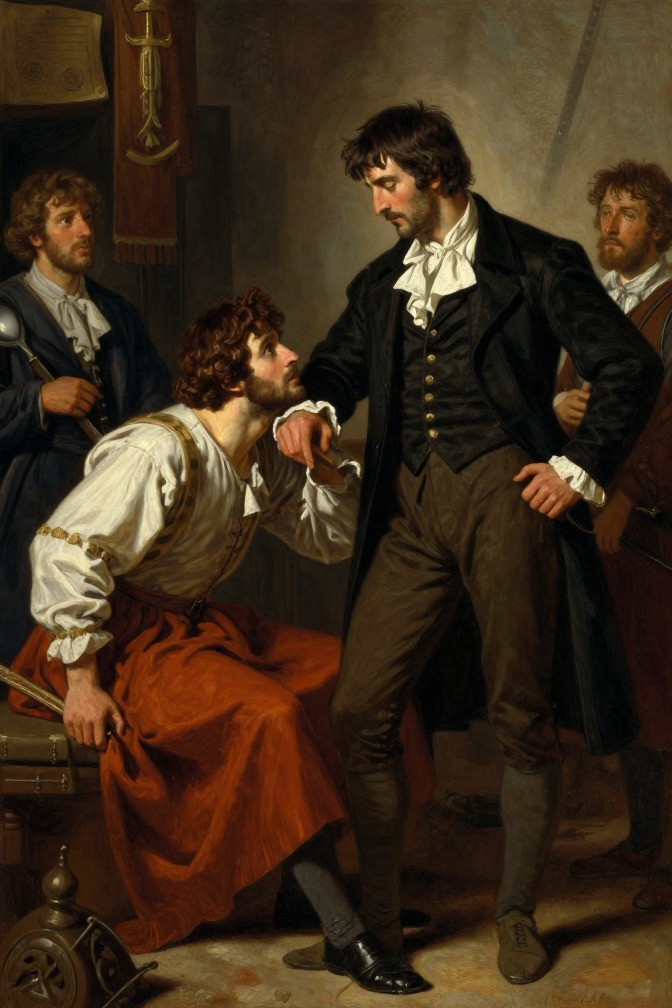
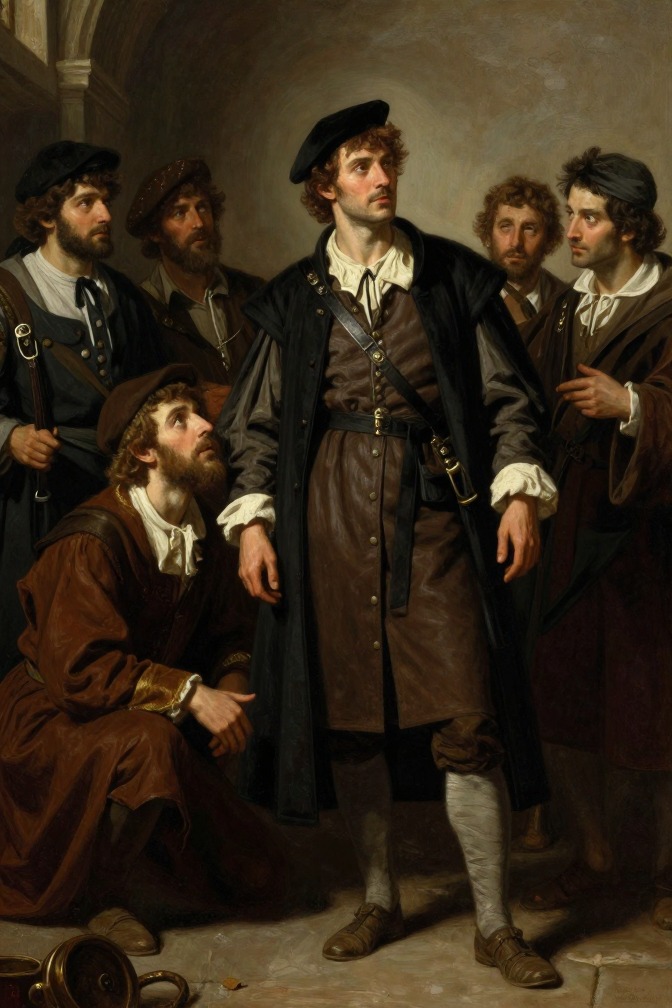
The Transport to Chateau d'If is the pivotal event in which Edmond Dantes, after being arrested at his wedding feast, is secretly conveyed from the Palais de Justice in Marseilles to the notorious island fortress, a journey that transforms a hopeful young sailor into a prisoner condemned to fourteen years of isolation and despair.
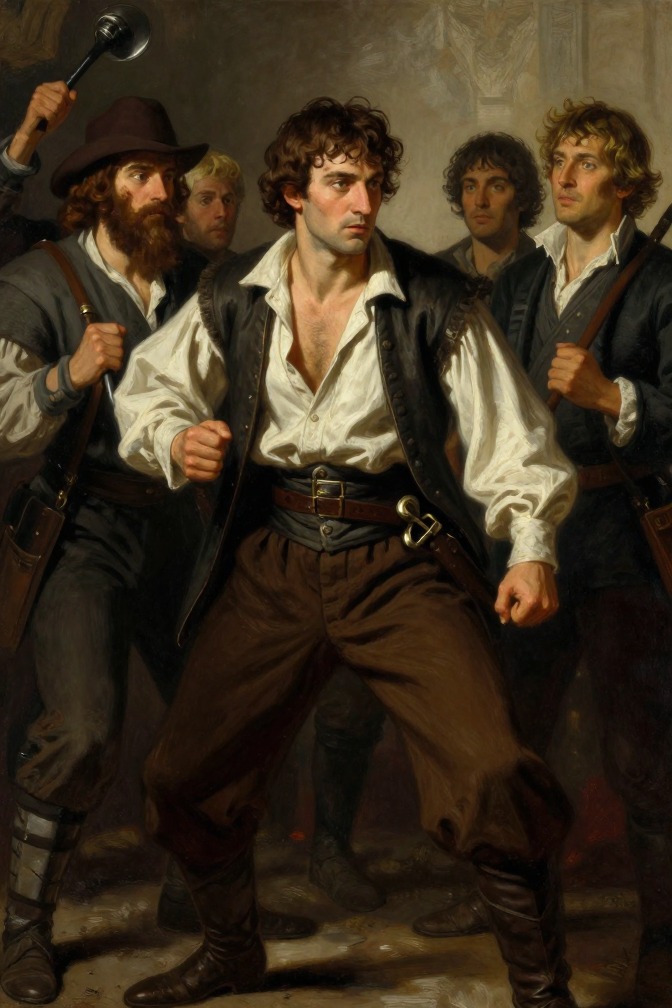
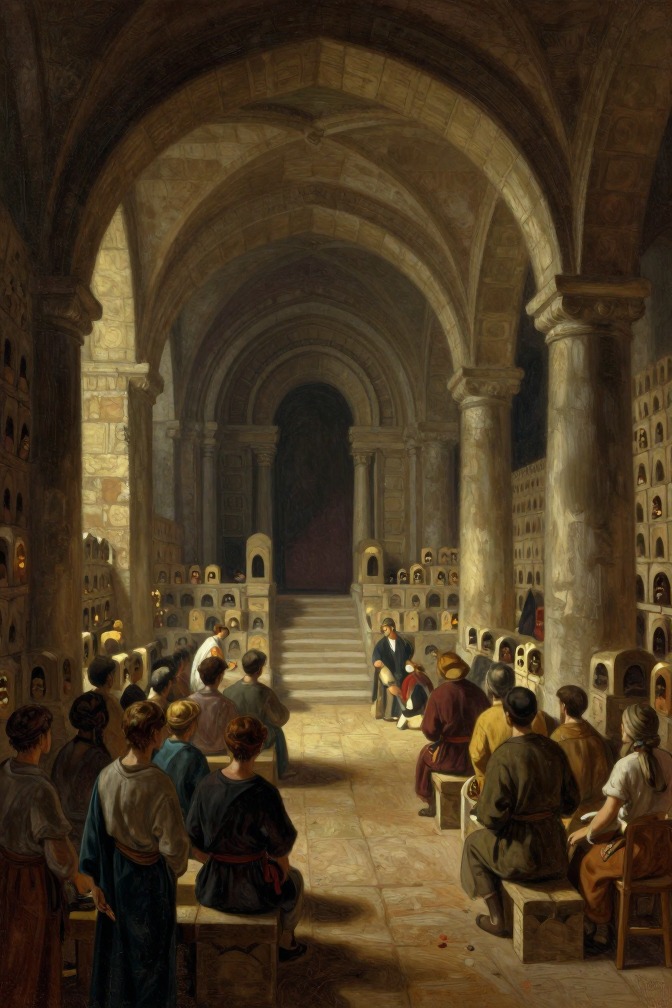
The Catacombs of Saint Sebastian are a subterranean burial complex on the outskirts of Rome that serve as the headquarters of the bandit chief Luigi Vampa and his gang. In the novel, they function as a liminal space between the civilized world and the lawless underworld, where the captured Albert de Morcerf is held for ransom and where the Count of Monte Cristo demonstrates his extraordinary influence over the criminal realm by securing Albert's release. The catacombs embody the hidden, subterranean dimension of Monte Cristo's power and the novel's exploration of justice, vengeance, and the porous boundary between society and its outcasts.
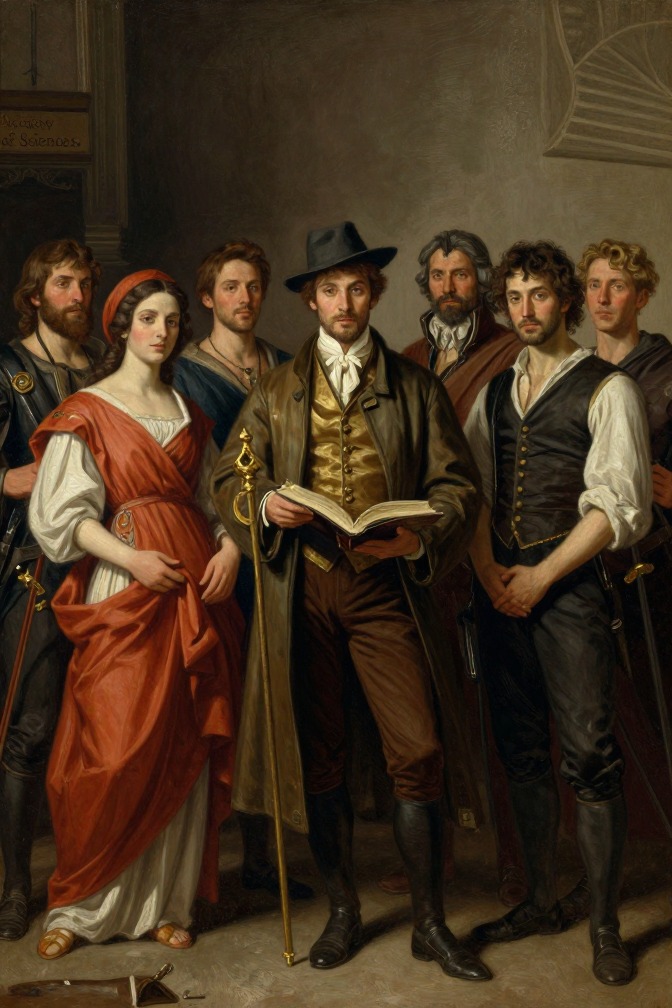
The Academy of Sciences is a prestigious French learned society that appears in The Count of Monte Cristo as a marker of social status and intellectual authority. Its mention in the novel serves to contrast the genuine scientific achievements of its members with the hollow pretensions of Parisian high society, and to underscore the Count of Monte Cristo's own vast, self-acquired knowledge that rivals or surpasses that of the Academy's members.
The Academy of the Arcadi is a learned society in Rome, mentioned in Alexandre Dumas's The Count of Monte Cristo as a prestigious institution whose membership is a mark of intellectual distinction. It is referenced in a conversation between Albert de Morcerf and Franz d'Epinay, where Albert jokingly aspires to join it after his romantic adventures in Rome, and later in a discussion about the academic credentials of a Parisian gentleman. The Academy serves as a symbol of cultural and intellectual achievement within the novel's social landscape.
The Bank of France (Banque de France) is the central bank of France, established in 1800. In *The Count of Monte Cristo*, it serves as the ultimate repository of financial trust and the stage for the climactic collapse of Baron Danglars' credit. When Danglars issues five sight drafts for a million francs each, drawn on his account at the Bank of France, the Count of Monte Cristo immediately presents them for payment, forcing the banker to honor them on the spot. This transaction, occurring just as the receiver-general of charities arrives to collect a five-million-franc deposit, precipitates Danglars' ruin and flight. The Bank thus functions as the concrete embodiment of the abstract power of money, the institution whose imprimatur alone can convert paper promises into gold, and whose refusal to honor a draft signals absolute financial death.
The British Navy is a recurring institutional presence in The Count of Monte Cristo, serving as a benchmark of military power, a source of historical context, and a point of comparison for the careers and reputations of several characters, particularly Fernand Mondego.
The Jesuits, or the Society of Jesus, appear in The Count of Monte Cristo as a religious order whose members are invoked in contexts of moral judgment, confession, and the tension between worldly power and spiritual authority. The novel references the Jesuits primarily through the voice of Caderousse, who declares his hatred of them, and through the broader thematic contrast between the institutional Church and the individual's direct relationship with God. The order functions as a symbol of religious hypocrisy and institutional corruption, against which the novel's more personal, providential morality is measured.