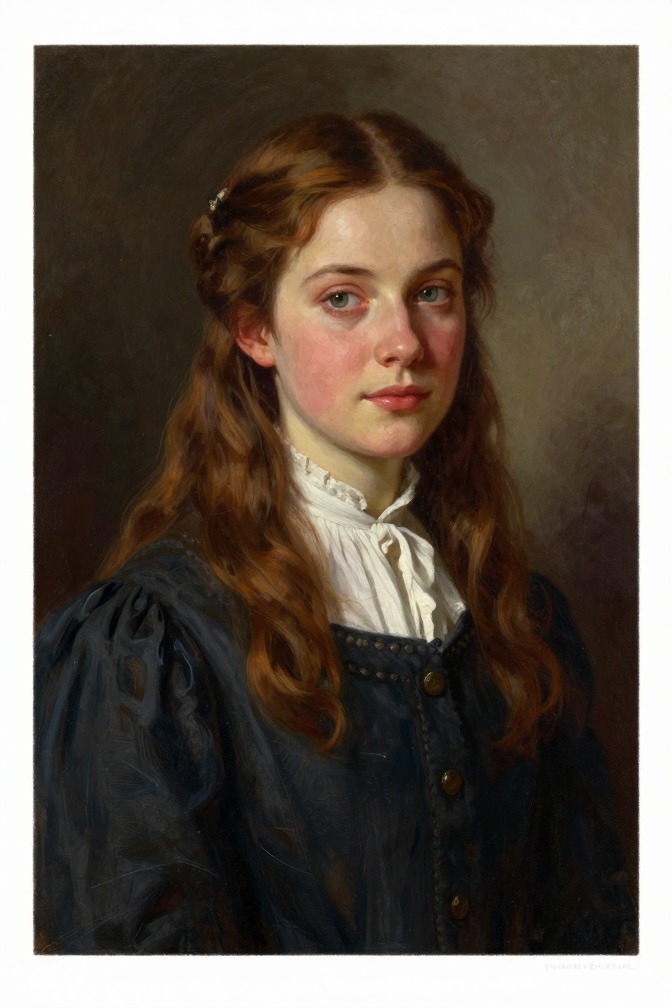
The Rosslyn reunion is the emotional climax of the novel, where Sophie Neveu discovers that her grandmother, Marie Chauvel, is alive and that her younger brother also survived the car accident that supposedly killed her entire family. This revelation transforms Sophie's understanding of her past, her family, and her own identity as a descendant of the Merovingian bloodline.
In the Temple Church, Leigh Teabing's servant Rémy Legaludec and the albino monk Silas corner Sophie Neveu and Robert Langdon to steal the keystone. When Langdon threatens to smash the cryptex, Rémy reveals himself and takes Teabing hostage, forcing Langdon to surrender the keystone. The event marks the moment the conspiracy's inner circle is exposed and the keystone changes hands.
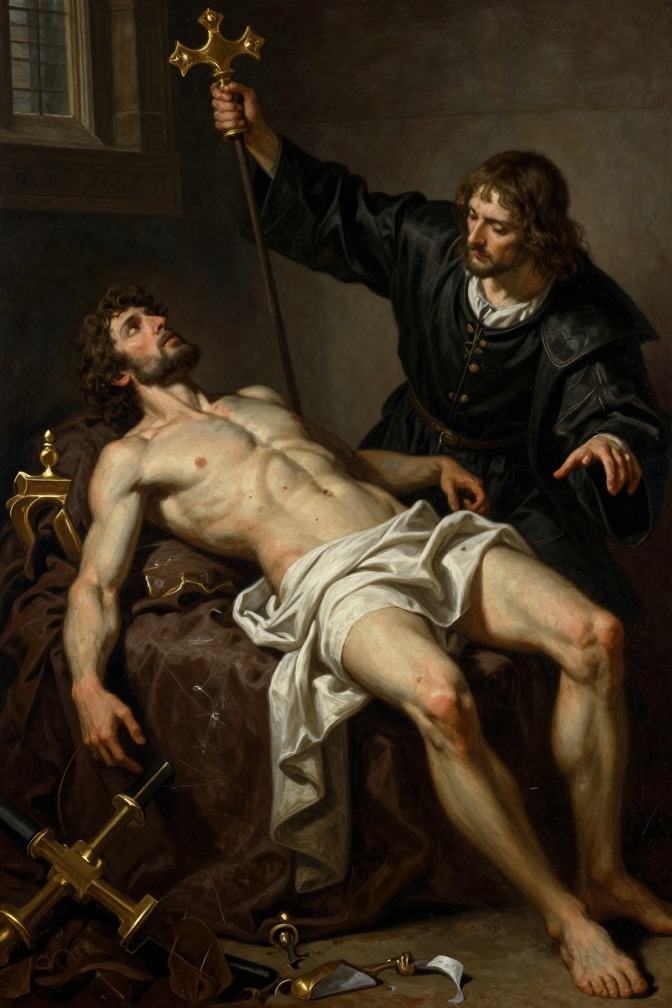
Jacques Saunière, the revered curator of the Louvre Museum and Grand Master of the Priory of Sion, is the central figure whose murder sets the entire plot of *The Da Vinci Code* in motion. His dying act—staging his own body as a replica of Leonardo da Vinci's *Vitruvian Man*, drawing a pentacle on his abdomen, and leaving a cryptic message in code—is a desperate, ingenious final communication designed to pass on the Priory's most guarded secret: the location of the keystone that leads to the Holy Grail. Saunière's death is not merely a crime but a calculated sacrifice that forces his estranged granddaughter, Sophie Neveu, and the symbologist Robert Langdon into a perilous quest, revealing his hidden role as the protector of a secret bloodline and the architect of a centuries-old conspiracy.
Lieutenant Jerome Collet is a senior officer of the French Judicial Police (DCPJ) who serves as Captain Bezu Fache's second-in-command during the investigation of Jacques Saunière's murder. He operates the surveillance equipment that tracks Robert Langdon through the Louvre, coordinates field agents, and ultimately becomes the officer who uncovers the listening post in Leigh Teabing's barn, revealing the scope of the conspiracy.
Robert Langdon is a Harvard professor of religious symbology who becomes the central protagonist of The Da Vinci Code. Summoned to the Louvre after the murder of curator Jacques Saunière, Langdon is framed for the crime and forced to flee with cryptologist Sophie Neveu. Over the course of a single night, he deciphers a series of codes and symbols that lead to the discovery of the Priory of Sion's keystone, the true nature of the Holy Grail, and the revelation that Sophie is a descendant of the Merovingian bloodline of Jesus Christ.
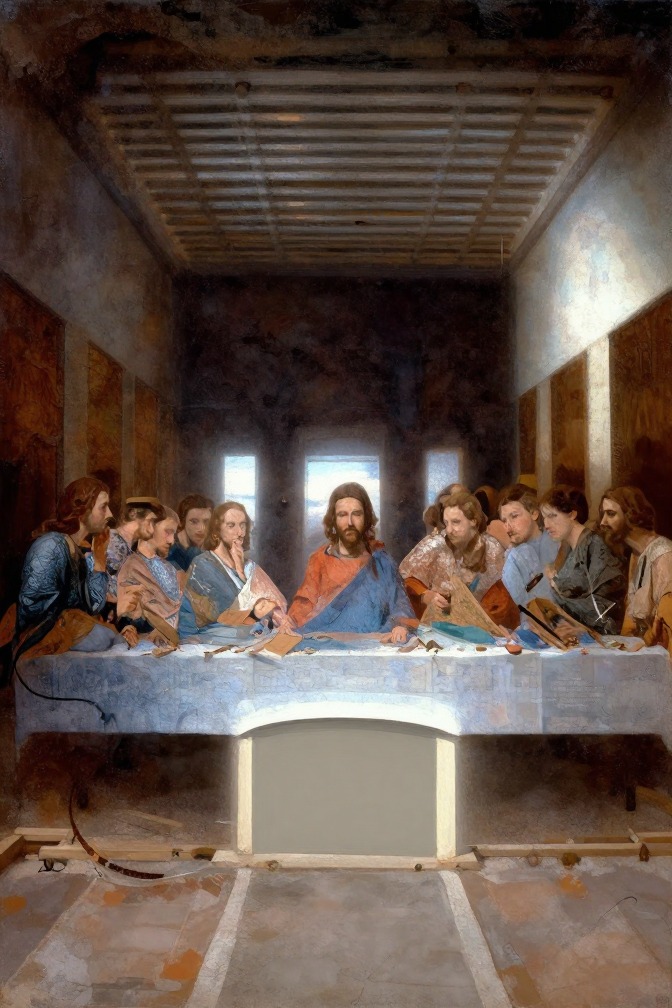
The Last Supper (hidden symbolism) is a central interpretive device in The Da Vinci Code, where the painting is revealed to contain a series of deliberate visual anomalies that, according to the novel's characters, encode the secret of the Holy Grail—specifically, the marriage of Jesus Christ to Mary Magdalene and her role as the bearer of his royal bloodline.
The Biggin Hill Deception is the sequence in which Sir Leigh Teabing, using his private jet and the complicity of his pilot and manservant, smuggles Robert Langdon, Sophie Neveu, and the bound Silas out of France and into England, evading the French police by having the plane land at his private hangar rather than the terminal, and then concealing the fugitives inside a stretch limousine.
In the Temple Church, Rémy Legaludec and Silas, acting on the Teacher's orders, confront Robert Langdon, Sophie Neveu, and Leigh Teabing, forcing Langdon to surrender the keystone under threat of violence, and then abduct Teabing as a hostage.
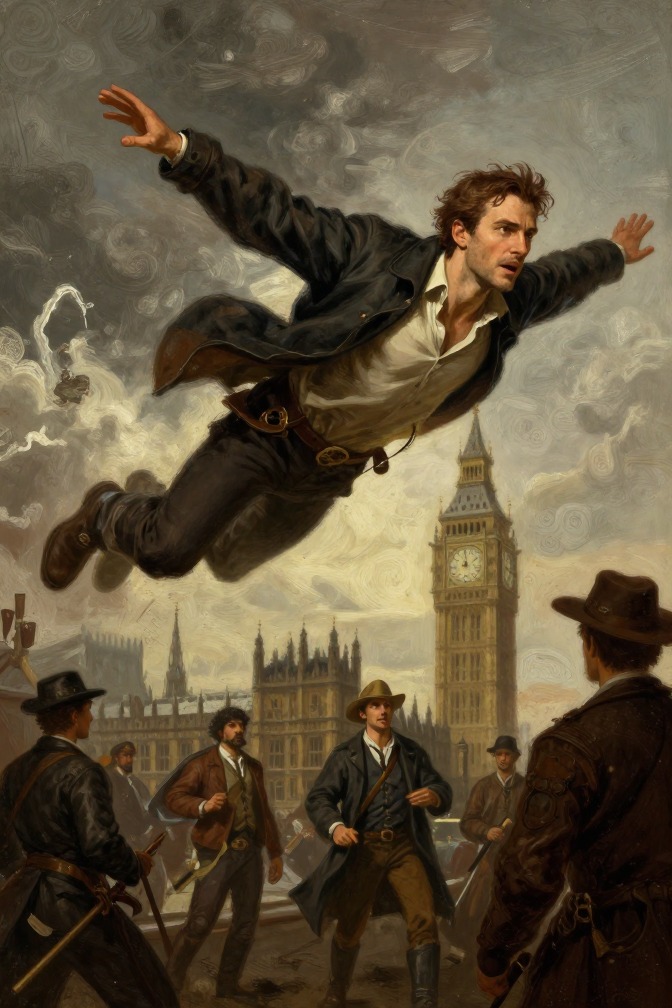
The Flight to England is a pivotal escape sequence in which Robert Langdon, Sophie Neveu, and Sir Leigh Teabing flee France aboard Teabing's private jet, crossing the English Channel to evade the French police and continue their quest for the Holy Grail. This event marks a decisive shift from the Parisian chase to a cross-border pursuit, deepening the conspiracy and forcing the trio into a fragile alliance that will soon unravel.
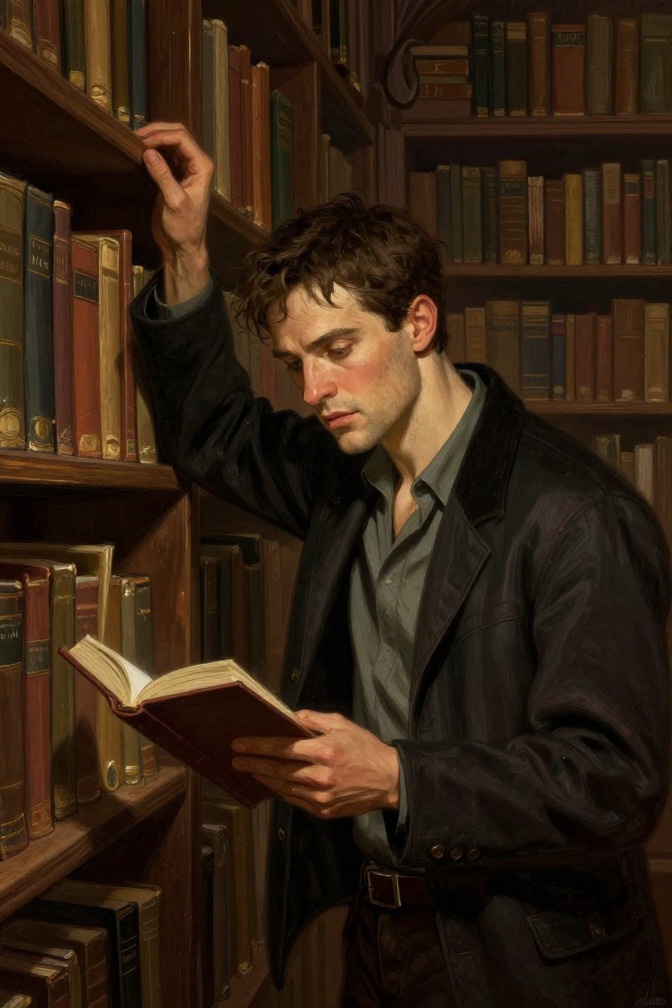
The Library Search is the event in which Robert Langdon and Sophie Neveu, having lost the keystone to Leigh Teabing and Silas, visit the King's College religious studies library to identify the knight's tomb referenced in Saunière's poem, using the electronic database to narrow down the search and ultimately deducing that the knight is Sir Isaac Newton.
The Discipline is a knotted rope used by Silas for the Opus Dei practice of corporal mortification, a ritual of self-flagellation that he performs to purify his soul after committing acts of violence in the name of God.
La Pyramide Inversée is a large inverted glass pyramid skylight that hangs from the ceiling of the Louvre's subterranean entresol, serving as the novel's final symbolic and physical resting place for the Holy Grail.
The Louvre Museum is the central setting of The Da Vinci Code, serving as the site of Jacques Saunière's murder, the initial crime scene investigation, and the ultimate resting place of the Holy Grail beneath its inverted pyramid.
Marseilles is the southern French port city where Silas spent his violent childhood and adolescence before his imprisonment in Andorra, shaping the trauma and rage that later defined his life as an Opus Dei numerary.
The Musée du Jeu de Paume is a Parisian art museum that appears in the novel as a landmark visible from the esplanade at the end of the Tuileries Gardens, forming part of the constellation of four major art museums that can be seen from that vantage point. Its presence in the narrative is brief but structurally significant, anchoring the geography of the Louvre's surroundings and reinforcing the novel's theme of the sacred feminine through its historical association with the Jeu de Paume's collection of Impressionist works.
Rue La Bruyère is the Parisian street where the Opus Dei residence hall is located, serving as Silas's base of operations during the events of the novel. It is the site of his corporal mortification rituals, his communications with the Teacher, and his eventual flight from the police.
The GPS Tracking Dot is a small, metallic, button-shaped disk that the French Judicial Police (DCPJ) secretly placed in Robert Langdon's jacket pocket to monitor his location continuously during the investigation of Jacques Saunière's murder. It becomes a crucial tool in the cat-and-mouse game between Langdon and Captain Bezu Fache, and its discovery by Sophie Neveu marks the turning point where Langdon realizes he is not a consultant but a suspect.
Jacques Saunière, the curator of the Louvre, was the Grand Master of the Priory of Sion, a secret society founded in 1099 to protect the secret of the Holy Grail. His murder sets the plot in motion, and his dying actions—arranging his body as the Vitruvian Man, drawing a pentacle, and leaving a coded message—are revealed to be a desperate attempt to pass the Priory's keystone to his granddaughter, Sophie Neveu, and to Robert Langdon.
Leigh Teabing is the Teacher, the secret mastermind behind the entire plot of The Da Vinci Code. He orchestrated the murders of Jacques Saunière and the three sénéchaux, manipulated Silas and Bishop Aringarosa, and sought the Priory keystone to find the Holy Grail and expose what he saw as the Church's centuries-old deception.
Silas is a devout member of Opus Dei, the Catholic prelature, whose fanatical faith and history of violence are channeled into a mission to recover the Priory of Sion's keystone, leading him to commit murder and corporal mortification in service of what he believes is God's work.
The cryptex self-destruction mechanism is a security feature designed by Leonardo da Vinci and built by Jacques Saunière, which destroys the papyrus scroll inside by dissolving it in vinegar if the device is forced open without the correct password.
The Decapitation of the Priory of Sion refers to the coordinated assassination of the brotherhood's four top-ranking members—the Grand Master Jacques Saunière and his three sénéchaux—in a single night, a catastrophic event that shatters the Priory's leadership, forces the desperate transfer of the keystone to outsiders, and sets the entire plot of The Da Vinci Code in motion.
The year 1447 marks the last recorded sighting of the Holy Grail before it vanished from historical accounts, a pivotal moment in the Sangreal legend that underscores the Priory of Sion's centuries-long guardianship of the secret.
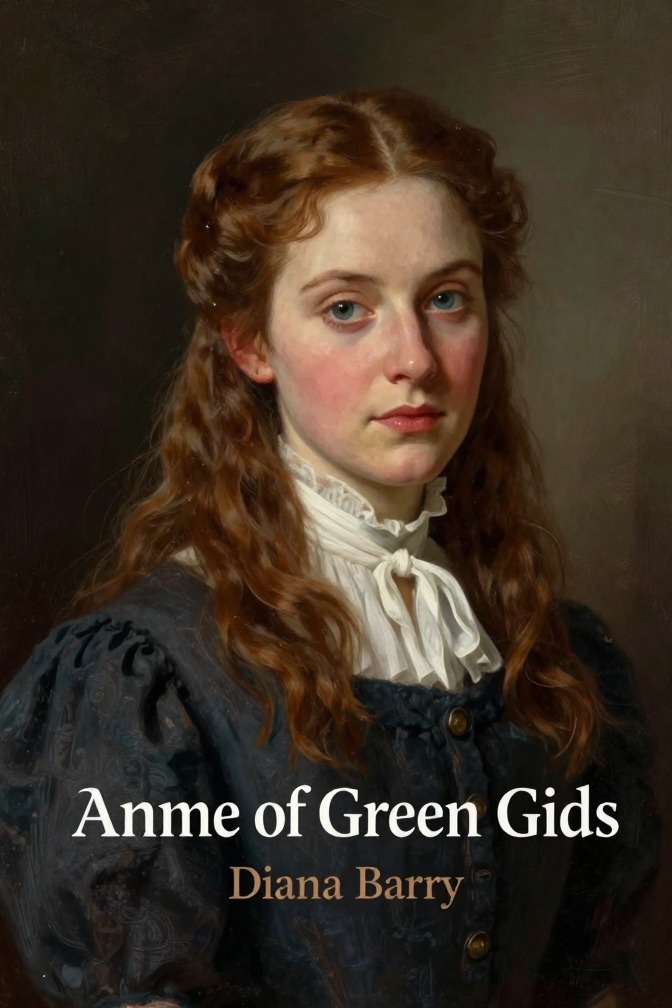
Diana Barry is Anne Shirley's first and dearest bosom friend at Avonlea, whose steadfast loyalty, shared imagination, and eventual reconciliation after a tragic misunderstanding define the emotional core of Anne's early years at Green Gables.
Matthew Cuthbert is the shy, gentle, and deeply kind brother of Marilla Cuthbert, who lives with her at Green Gables farm in Avonlea. Though he dreads strangers and women, his quiet, steadfast love for the orphan girl Anne Shirley transforms both her life and his own, making him the first person to truly believe in her and the one whose sudden death marks the novel's most profound loss.
Miss Stacy is the progressive, inspiring teacher who transforms Anne Shirley's education at Avonlea school, guiding her toward academic excellence and personal growth, and ultimately becoming a kindred spirit and lifelong influence.
Mr. Andrew Bell is a minor but recurring figure in Anne of Green Gables, a farmer and landowner whose properties—the spruce grove, the woods containing Violet Vale and the Birch Path, and the field where the Sunday-school picnic is held—serve as key settings for Anne Shirley's adventures and misadventures. His role is primarily that of a place-name, a landholder whose woods and fields become the stage for Anne's imaginative life, her social triumphs, and her most frightening encounter with her own imagination.
Mrs. Allan, the new minister's wife in Avonlea, becomes one of Anne Shirley's most important kindred spirits and moral guides, offering her a model of cheerful, practical Christianity and a warm, understanding friendship that helps shape Anne's adolescence.
Ruby Gillis is a minor but vividly drawn character in Anne of Green Gables, a pretty, sentimental, and conventionally-minded girl who serves as a foil to Anne Shirley's imaginative and intellectual depth. She is defined by her preoccupation with beaus, fashion, and romantic notions, and her presence in the story highlights the social norms and peer pressures of Avonlea girlhood.
Stella Maynard is a fellow student at Queen's Academy who becomes one of Anne Shirley's closest friends during her first year in Charlottetown. Known as the "rose-red" girl for her vivid, black-eyed beauty, Stella is part of the small circle of thoughtful, imaginative, and ambitious students that Anne draws around her, and she remains a dear friend even as Anne's plans shift toward staying at Green Gables.