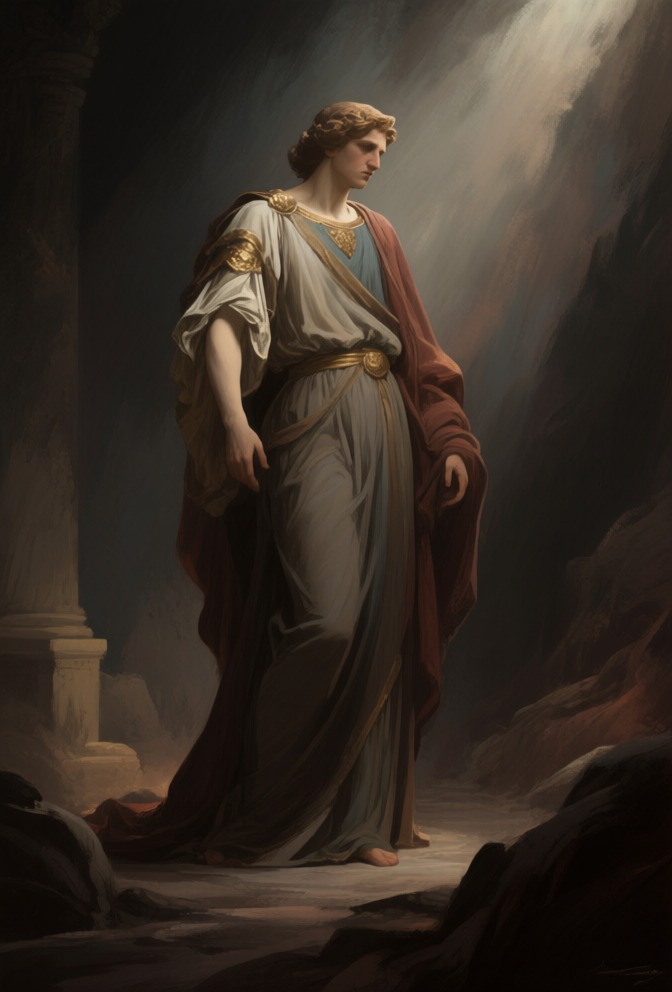
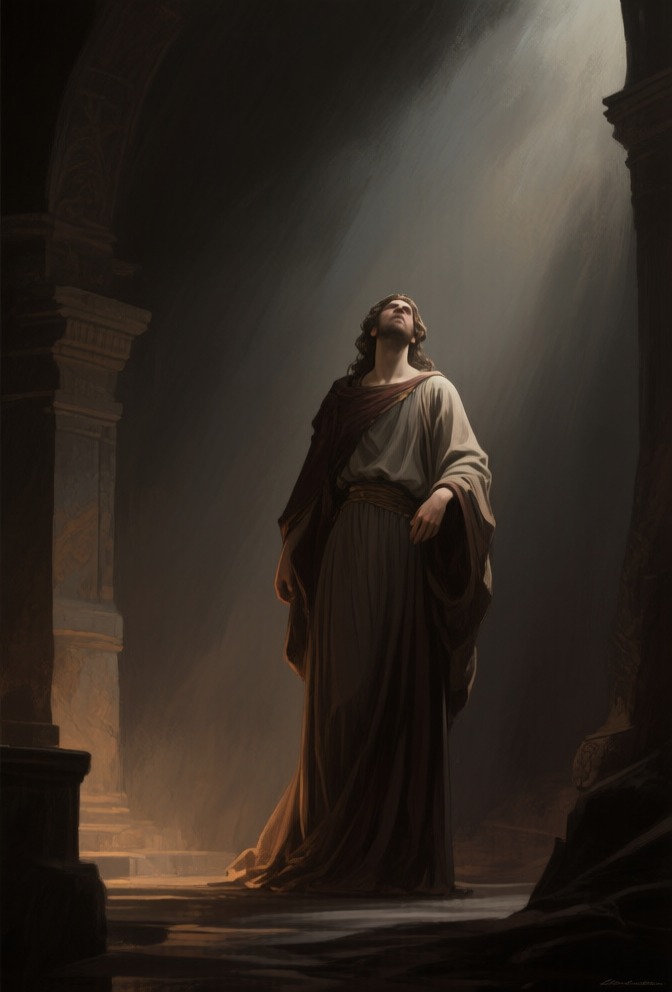
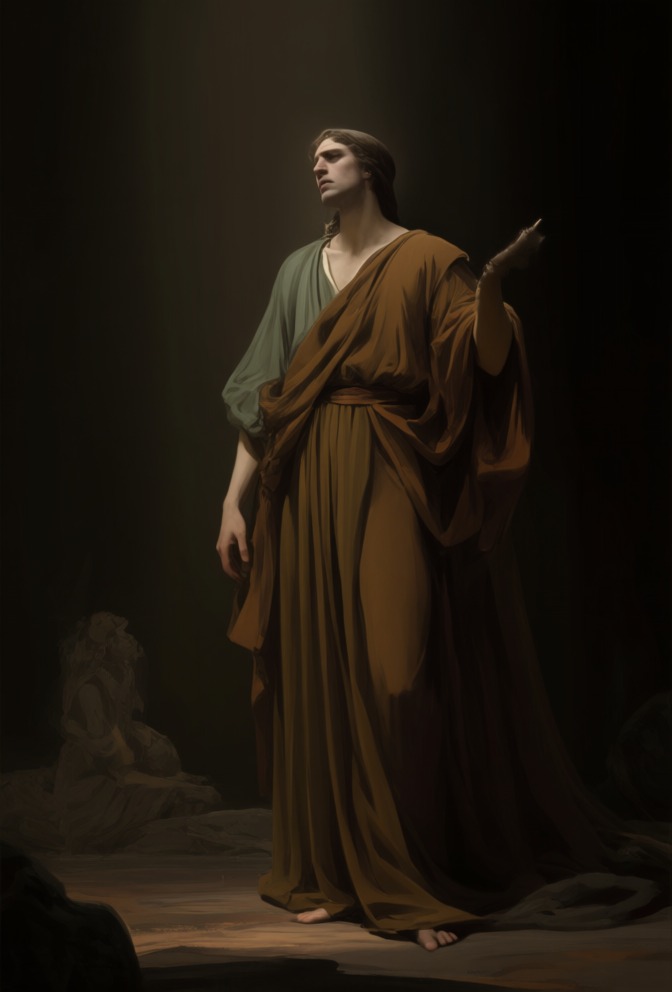
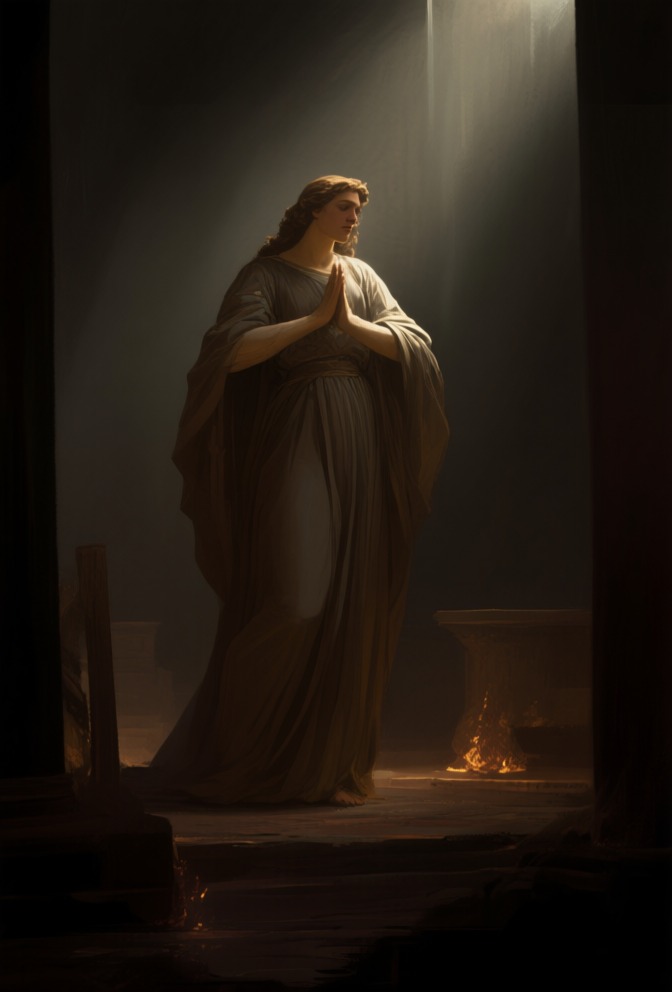
The City Watch of King's Landing, also known as the gold cloaks, is the urban police and garrison force of the capital. During the War of the Five Kings, its command becomes a political football, and its loyalty proves decisive in the city's defense and internal power struggles.
The Damphair is the religious title of Aeron Greyjoy, a priest of the Drowned God and the youngest brother of Balon Greyjoy. He is a fierce opponent of his brother Euron Crow's Eye, whom he considers godless and unfit to rule the Iron Islands.
The Day They Hanged Black Robin is a song referenced in George R. R. Martin's A Dance with Dragons, sung by the bard Abel during the tense wedding feast of Ramsay Bolton and the false Arya Stark at Winterfell. Its title and content serve as a grim foreshadowing of the violence and betrayal that permeate the Bolton-held castle, where executions and murders are routine.
The dosh khaleen are the widowed khaleesis of deceased Dothraki khals, who serve as the spiritual authority and council of wise women in the Dothraki capital of Vaes Dothrak. They are the keepers of Dothraki law and tradition, and their pronouncements carry immense weight among the horselords.
The Dragon Queen is a title held by Daenerys Targaryen, the last acknowledged Targaryen claimant to the Iron Throne, whose identity as a dragon-ruler and liberator of slaves defines her rule in Meereen and her contested legacy across Essos and Westeros.
The Dragonbinder is a twisted, six-foot-long horn of black Valyrian steel and red gold, inscribed with Valyrian glyphs that proclaim its name and warn that no mortal man shall sound it and live. It was discovered by Euron Greyjoy amidst the smoking ruins of Valyria and given to his brother Victarion as a poisoned gift, intended to bind dragons to the will of its master—but only at the cost of the blower's life.
The Driftwood Crown is the traditional crown of the Iron Islands, a simple circlet of driftwood worn by the King of the Iron Islands. It symbolizes the ironborn's ancient custom of choosing their own king through a kingsmoot, a tradition that is central to the power struggles following Balon Greyjoy's death.
The Evenstar is the title held by Selwyn Tarth, Lord of Tarth and father of Brienne of Tarth. Though he never appears directly in A Dance with Dragons, his name and title are invoked by other characters as a marker of noble lineage, political allegiance, and the weight of paternal expectation that shapes Brienne’s quest. The Evenstar’s authority is felt through his daughter’s actions and through the reports that reach King’s Landing and the riverlands, where his name carries the honor of an ancient house that has remained largely aloof from the wars consuming Westeros.
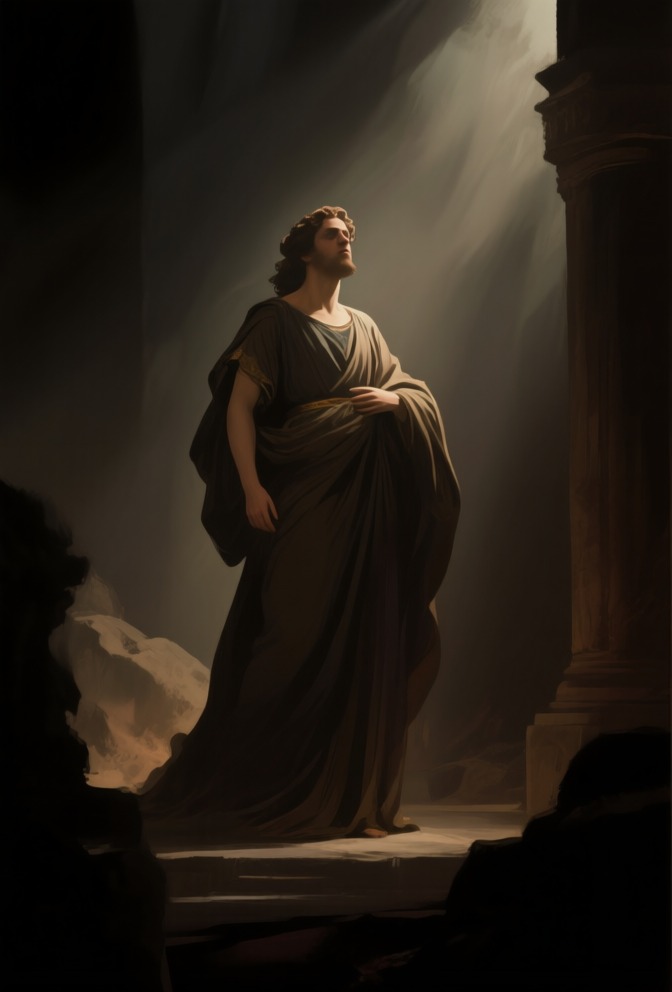
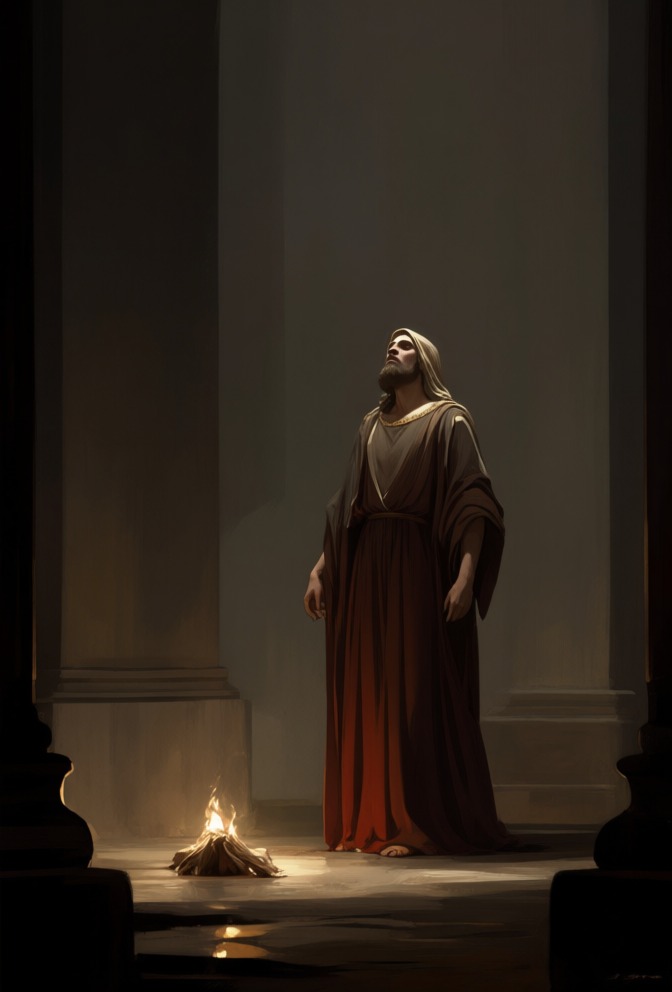
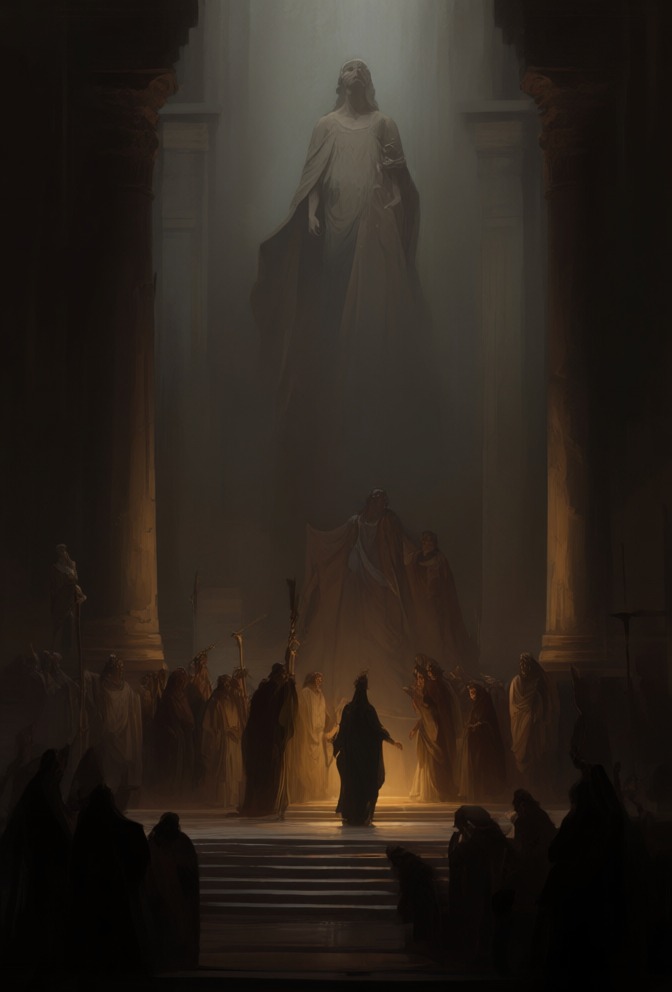
The Father is one of the seven gods of the Faith of the Seven, the dominant religion of the Seven Kingdoms of Westeros. He is depicted as a stern, bearded man who sits in judgment over the souls of the dead, weighing their deeds and determining their fate. The Father is the god of justice, law, and order, and his judgment seat is a central image in the Faith's teachings about the afterlife and moral accountability.
The Ghost of High Heart is a prophetic woods witch who appears in the riverlands during the War of the Five Kings, foretelling the deaths of kings and the rise of a new power from the sea. Her cryptic prophecies, delivered in a haunting, sing-song voice, shape the actions of key characters and underscore the novel's themes of fate, doom, and the inescapable cost of war.
The Great Grass Sea is the vast Dothraki grassland that serves as the homeland of the Dothraki people and a recurring symbolic landscape in Daenerys Targaryen's journey, representing both the freedom of her early life with Khal Drogo and the isolation she endures after fleeing Meereen on Drogon's back.
The grey death, also known as greyscale, is a progressive and often fatal disease in the world of A Song of Ice and Fire. It causes the afflicted flesh to stiffen, calcify, and crack, turning the skin grey and stone-like. While a milder form can leave children disfigured but alive, the mortal form is a slow, agonizing curse that spreads from the extremities inward, leading to madness and death. The disease is deeply feared, associated with the cursed ruins of the Sorrows, and carries a powerful symbolic weight, representing decay, moral corruption, and the inexorable approach of winter's cold.
The Grey Plague is the swift, lethal form of greyscale, a disease that calcifies and kills its victims within days, and its outbreak in the Yunkish siege camps outside Meereen—carried by refugees from fallen Astapor—becomes a decisive factor in the war, spreading terror and death faster than any army.
The Lightning Lord is the epithet of Beric Dondarrion, a stormlands knight who becomes an outlaw leader in the riverlands during the War of the Five Kings, repeatedly slain and resurrected by the red priest Thoros of Myr, and ultimately gives his life to resurrect Catelyn Stark.
The Lord Commander is the supreme elected office of the Night's Watch, the ancient sworn brotherhood that guards the Wall, the seven-hundred-foot fortification of ice that protects the Seven Kingdoms from the threats beyond. The title carries absolute authority over the Watch's military, administrative, and judicial affairs, but its holder is bound by the order's foundational vow of political neutrality—a vow that becomes increasingly untenable as the realm fractures into war and the supernatural enemy gathers in the North. Jon Snow, the nine-hundred-and-ninety-eighth Lord Commander, embodies this tension: he must navigate between the demands of Stannis Baratheon, the hostility of his own brothers, the influx of wildling refugees, and the looming war against the Others, all while the oath he swore forbids him from taking part in the quarrels of the Seven Kingdoms.
The Lord of the Dreadfort is the title held by the head of House Bolton, a noble house of the North known for its ancient enmity with the Starks and its brutal traditions of flaying its enemies. In A Dance with Dragons, the title is borne by Roose Bolton, the Warden of the North, a cold, calculating, and ruthlessly pragmatic lord who orchestrated the Red Wedding and now maneuvers to secure his family's power against the threats of Stannis Baratheon and his own unstable son, Ramsay.
The Lord of the Seven Kingdoms is the supreme sovereign title claimed by the Iron Throne's occupant, denoting dominion over the unified realm of Westeros. The title is central to the legitimacy conflicts of the War of the Five Kings, as multiple claimants—Joffrey, Tommen, Stannis, Renly, Robb Stark—each assert the right to rule all seven constituent kingdoms. The phrase appears in formal proclamations, royal correspondence, and the full style of the monarch, and its contested nature drives much of the political and military action in the narrative.
The Maids That Bloom in Spring is a song performed by the bard Abel during the tense feast at Winterfell following the wedding of Ramsay Bolton and the false Arya Stark, serving as a momentary musical interlude that contrasts with the underlying violence and conspiracy in the hall.
The Many-Faced God is the central deity of the Faceless Men, a guild of assassins based in the House of Black and White in Braavos. The god is understood as a single divine entity that manifests in many forms, corresponding to the myriad death-gods of different cultures; its servants believe that all deaths are offerings to this one god, and they administer the 'gift' of death to those who are marked and chosen, without personal judgment or preference.
The Master of Coin is a position on the Iron Throne's small council responsible for the crown's finances, taxation, and debts. In A Dance with Dragons, the office is held by Ser Harys Swyft, a timid and ineffectual figure who is bullied by his fellow councilors and sent on a dangerous mission to Braavos to negotiate with the Iron Bank, a task he openly dreads. The role's significance lies in its exposure of the Lannister regime's financial desperation: the crown has defaulted on its debts, the treasury is empty, and the Master of Coin's impotence mirrors the broader decay of King Tommen's rule.
The Night's King is a legendary figure from the Age of Heroes, the thirteenth Lord Commander of the Night's Watch who fell to darkness, declared himself a king, and ruled the Wall as a tyrant until he was overthrown by the King-Beyond-the-Wall and the King in the North. His story serves as a cautionary tale about the corruption of power and the seduction of forbidden love, and his legacy haunts the Night's Watch as a warning of the dangers that lurk within their own ranks.
The Night That Ended is a song performed by the bard Abel at the wedding feast of Ramsay Bolton and the false Arya Stark in Winterfell. Its title and performance serve as a darkly ironic counterpoint to the celebration, foreshadowing the violence and death that will soon engulf the castle.
The north remembers is a recurring expression in A Song of Ice and Fire, most famously uttered by Wyman Manderly in A Dance with Dragons. It encapsulates the enduring memory and desire for vengeance among northern houses for the Red Wedding and other betrayals, serving as a rallying cry against the Boltons and Freys.
The pale mare is the name given to the bloody flux, a virulent and often fatal disease that sweeps through the armies besieging Meereen and eventually enters the city itself, becoming a major agent of death and chaos.
The Prince That Was Promised is a messianic figure from the faith of R'hllor, the Lord of Light, prophesied to be reborn to deliver the world from darkness. In A Dance with Dragons, the prophecy is invoked by Melisandre to legitimize Stannis Baratheon's claim as Azor Ahai reborn, while Jon Snow's scholarly investigation of the legend reveals its ancient, blood-soaked origins and raises doubts about Stannis's authenticity.
The Protector of the Realm is the formal title borne by the king or queen of the Seven Kingdoms in the A Song of Ice and Fire series, signifying the monarch’s sworn duty to defend the realm from all threats. The title is used in official proclamations and royal correspondence, and its invocation often marks moments of political crisis or the assertion of contested legitimacy.
The Rains of Castamere is a song from the Seven Kingdoms that recounts the annihilation of House Reyne and House Tarbeck by Lord Tywin Lannister. It functions as a musical symbol of Lannister power, a warning to enemies, and a recurring motif of dread and vengeance throughout the narrative.
The Rat Cook is a legendary figure from the folklore of the Seven Kingdoms, a tale invoked by Wyman Manderly at the wedding feast of Ramsay Bolton and the false Arya Stark to signal his hidden intent to avenge the Red Wedding.
The Silver Queen is a title used throughout the eastern continent to refer to Daenerys Targaryen, the exiled Targaryen princess who hatched three dragons and conquered Slaver's Bay. The epithet emphasizes her Targaryen silver-gold hair and her royal status, and it is employed by both allies and enemies, often carrying connotations of beauty, power, and otherness. The title appears in contexts ranging from casual conversation among sellswords to formal diplomatic exchanges, and it is used by characters as diverse as the merchant prince Xaro Xhoan Daxos, the Braavosi banker Tycho Nestoris, and the Yunkish slavers who oppose her rule.
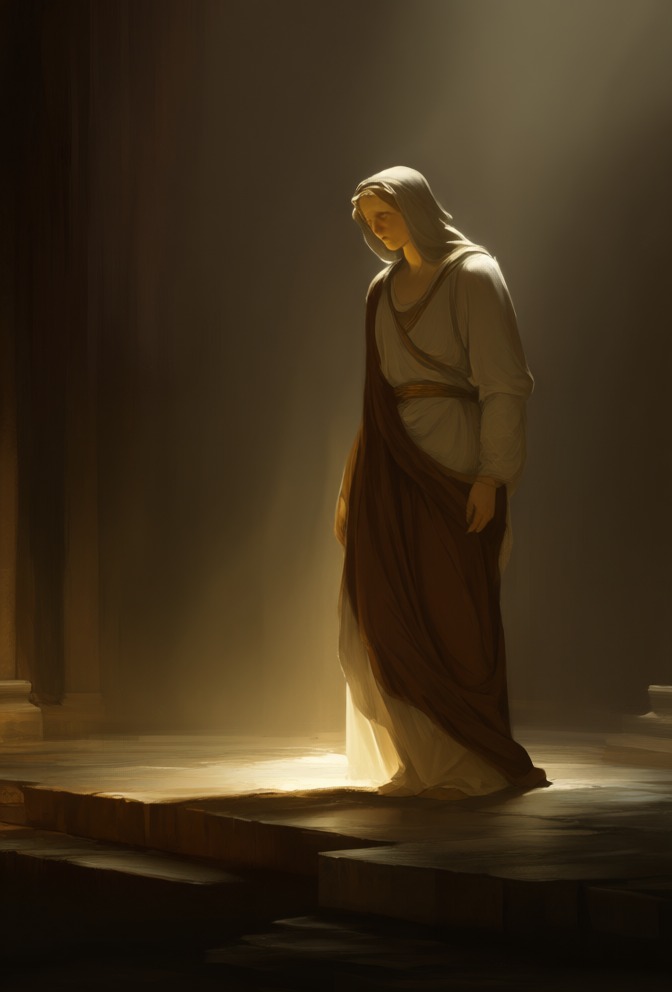
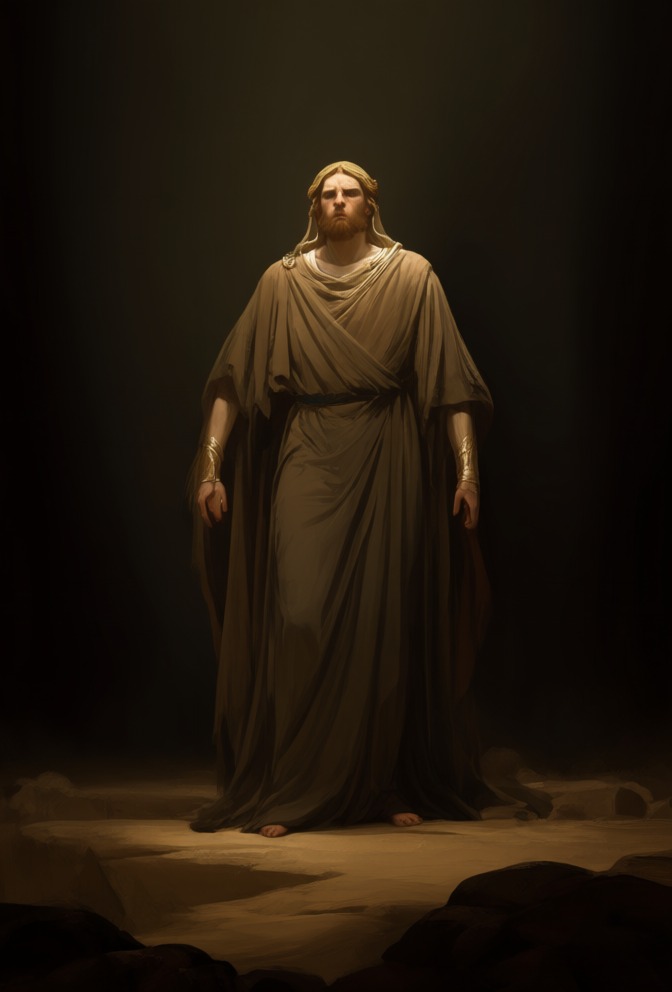
The Smith is one of the seven gods of the Faith of the Seven, the dominant religion in the Seven Kingdoms of Westeros. He is the god of craft, labor, and construction, and is often prayed to for strength in work, the mending of broken things, and the forging of weapons and armor. His role is both practical and symbolic, representing the virtue of honest toil and the creation of civilization itself.