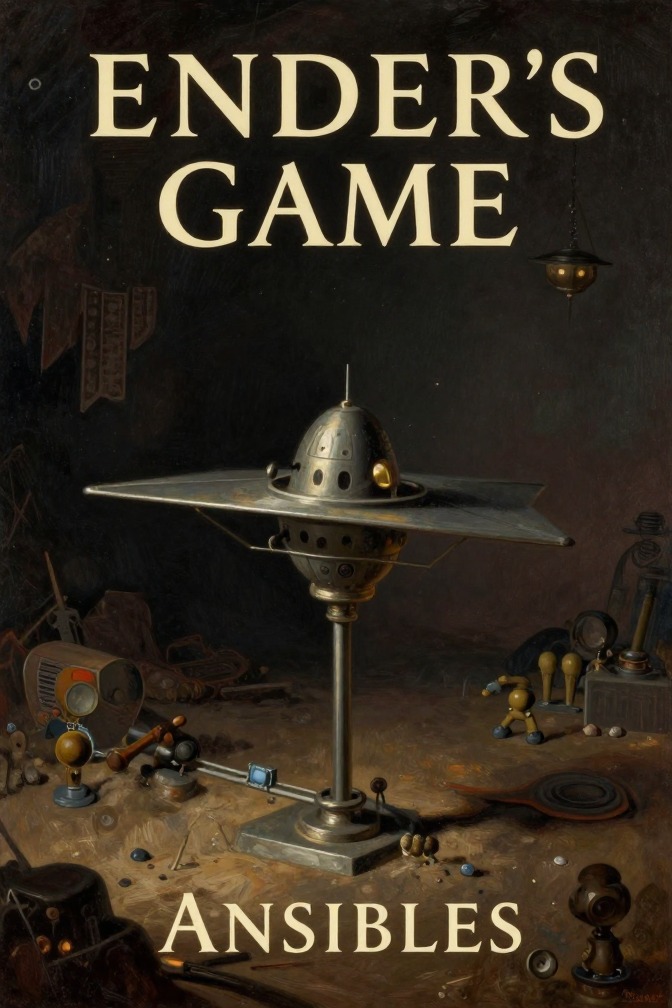
The ansible, officially the Philotic Parallax Instantaneous Communicator, is a fictional device in Orson Scott Card's Ender's Game that enables instantaneous communication across interstellar distances, a capability humanity reverse-engineered from the buggers' hive-mind. It is central to the plot, allowing the International Fleet to coordinate its invasion fleet and ultimately enabling Ender Wiggin to unknowingly command the real Third Invasion from the Command School on Eros.
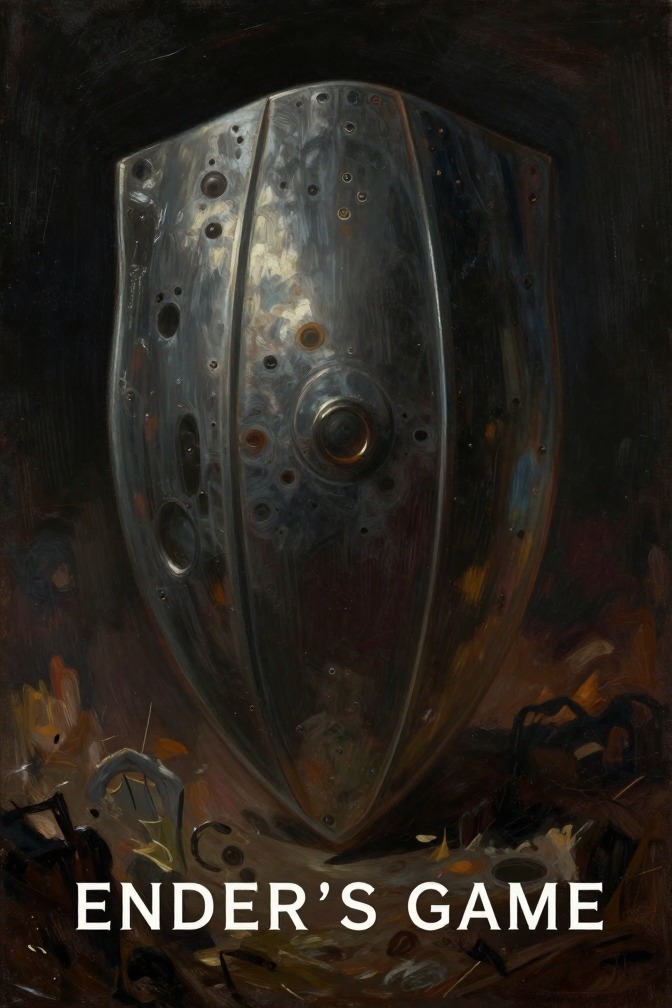
The Ecstatic Shield is a defensive technology used by the buggers in Orson Scott Card's Ender's Game, notable for its ability to block conventional weapons but not the human-made Dr. Device. Its strategic significance lies in how it forces human commanders to adapt, and its existence underscores the theme of technological and tactical evolution in warfare.
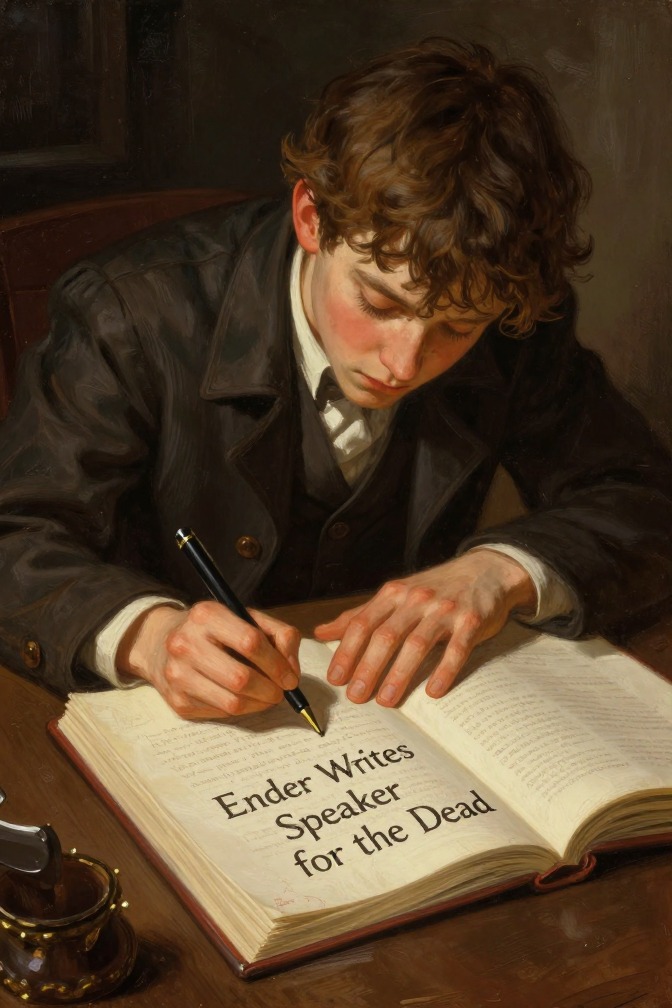
Ender Writes Speaker for the Dead is the culminating act of Orson Scott Card's novel, in which Ender Wiggin, having discovered the bugger queen's cocoon on the colony world, composes a book that gives voice to the hive-queen's story, transforming himself from a destroyer into a speaker for the dead. This act not only provides a form of redemption for Ender but also establishes a new religious and ethical practice across human colonies, as the book becomes holy writ and inspires the role of Speaker for the Dead.
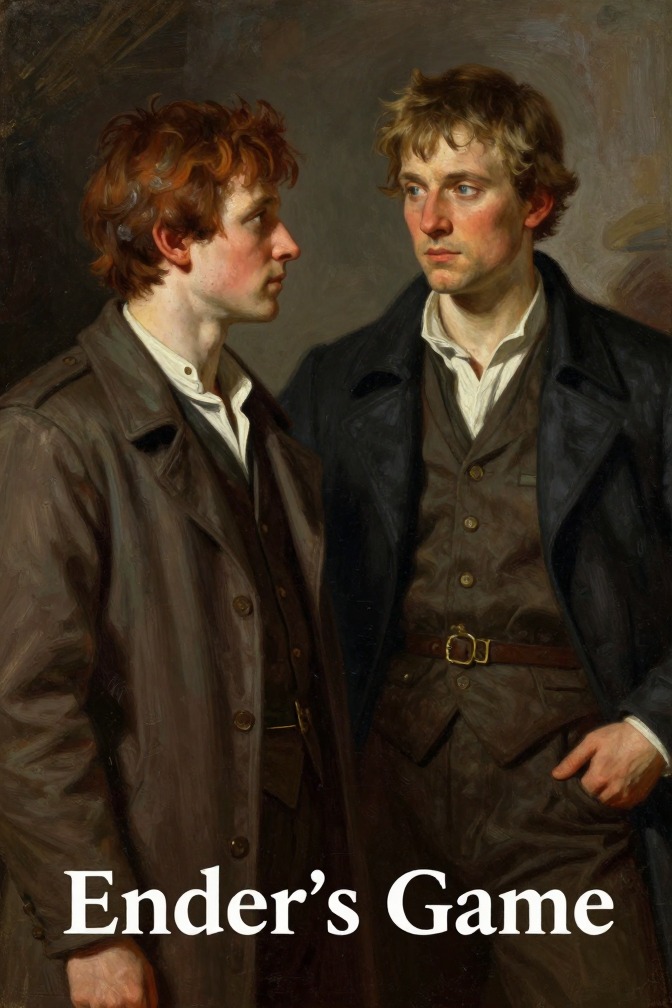
Ender and Mazer Rackham is the pivotal teacher-student relationship in Orson Scott Card's Ender's Game, transforming from a brutal physical confrontation into the mentorship that prepares Ender to command humanity's fleet in the Third Invasion. Mazer, the legendary hero of the Second Invasion, becomes Ender's final teacher, pushing him to the brink of physical and mental exhaustion while secretly orchestrating the real war against the buggers. Their relationship culminates in Ender's destruction of the bugger homeworld, after which Mazer reveals the truth: the battles were real, and Ender has committed genocide. This relationship embodies the novel's central themes of manipulation, the cost of genius, and the ethical ambiguity of survival.
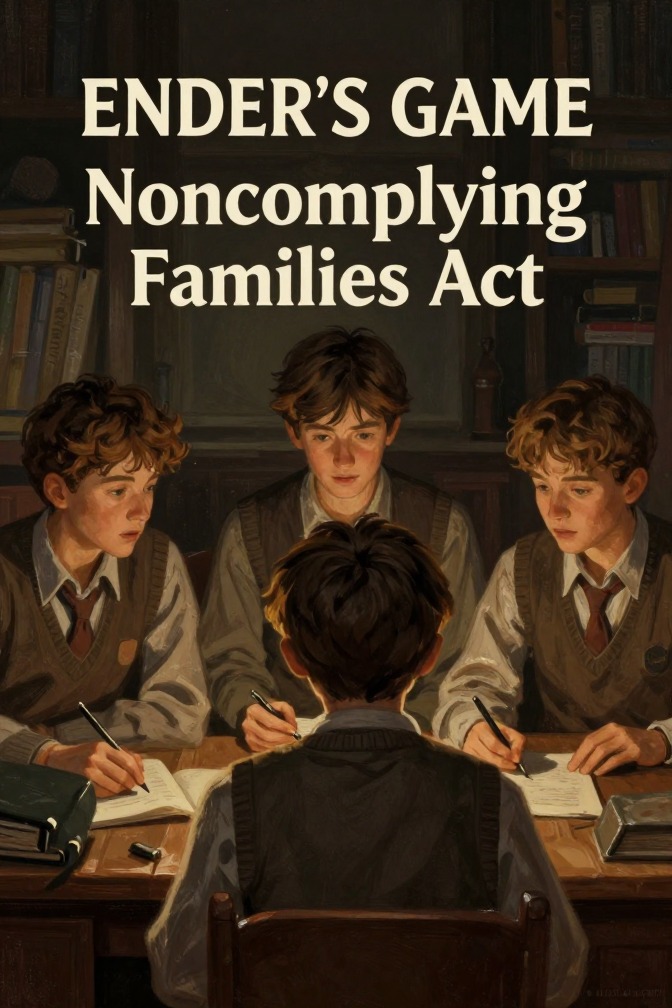
The Noncomplying Families Act is a punitive international law that restricts the rights and resources of families who have more than the legally permitted number of children, creating a system of social and economic sanctions that profoundly shapes the lives of the Wiggin family and the broader society in Ender's Game.
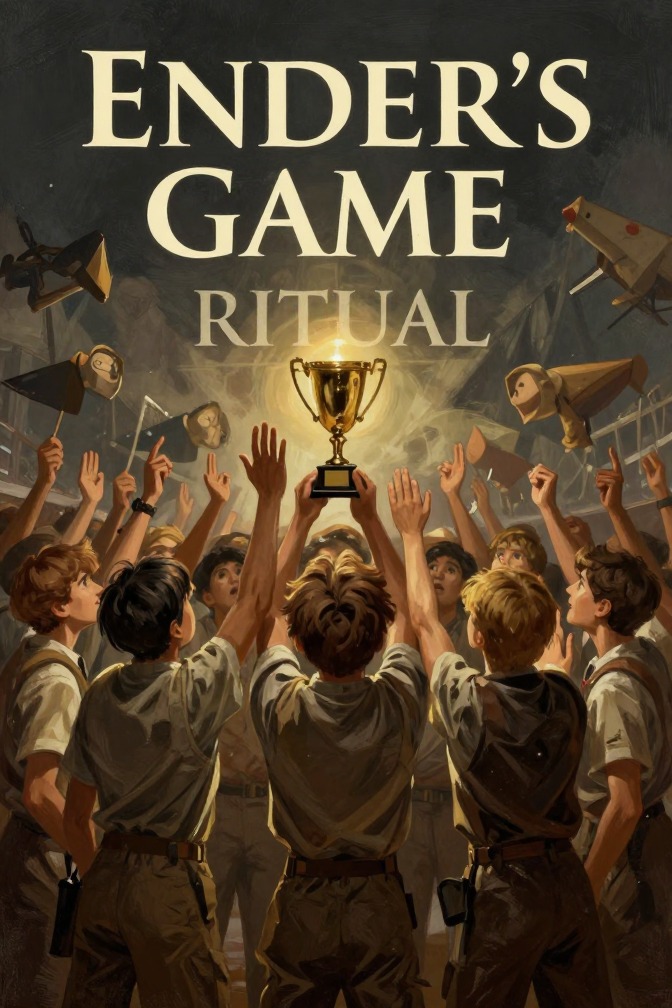
The Victory Ritual is the formal procedure that ends a Battle School game, requiring four unfrozen soldiers to touch the four corners of the enemy's gate while a fifth passes through the forcefield. It is the only recognized way to win a battle, and Ender Wiggin's mastery of it—culminating in his audacious use of the ritual to defeat two armies at once—becomes a symbol of his tactical genius and his willingness to break the rules of the game.
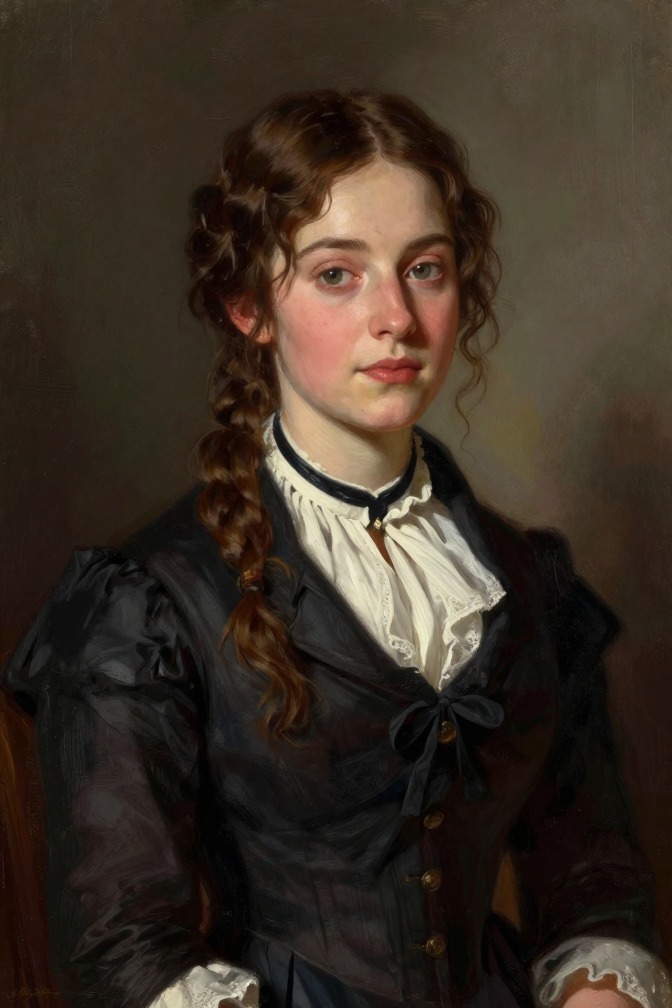
Harriet Smith is a pretty, good-natured, and uneducated young woman of unknown parentage who becomes the protégée of Emma Woodhouse, serving as a central figure in Emma's misguided matchmaking schemes and as a catalyst for Emma's eventual self-knowledge.
John Knightley, the husband of Emma Woodhouse's sister Isabella, is a clever, reserved, and sometimes sharp-tongued lawyer whose penetrating observations repeatedly expose the flaws in Emma's schemes and self-deceptions, serving as a foil to his brother George Knightley's more patient authority.
Mrs. Smallridge is a minor but consequential character in Emma, a wealthy acquaintance of Mrs. Elton who ultimately employs Jane Fairfax as a governess for her three young daughters, a position that precipitates the crisis leading to the revelation of Jane's secret engagement to Frank Churchill.
Robert Martin is a respectable young farmer of Abbey Mill Farm whose steady character, genuine affection, and persistent courtship ultimately win the hand of Harriet Smith, despite Emma Woodhouse's initial interference and Harriet's temporary infatuation with men of higher social standing.
Mrs. Weston gives birth to a daughter, an event that brings joy to her circle of friends and prompts reflections on child-rearing, the nature of spoiling, and the future shape of family life at Hartfield and Randalls.
Mrs. Elton's first visit to Hartfield marks the formal introduction of the newly married vicar's wife into Highbury society, an occasion that immediately reveals her vulgar pretension, her relentless self-promotion through comparisons to Maple Grove, and her profound incompatibility with the refined world of Emma Woodhouse.
After Mr. Knightley's stern rebuke at Box Hill, Emma Woodhouse undergoes a profound moral reckoning and resolves to apologize to Miss Bates, marking a crucial turning point in her character development from thoughtless pride to genuine contrition and self-awareness.
Mr. Elton's riddle incident is a pivotal event in which Emma Woodhouse misinterprets a charade left by Mr. Elton as a declaration of love for Harriet Smith, reinforcing her mistaken matchmaking scheme and setting the stage for a painful revelation of his true intentions toward Emma herself.
The opening description of Emma Woodhouse as "handsome, clever, and rich" establishes her as a privileged, self-assured young woman whose favorable circumstances and unchecked confidence set the stage for her central role in the novel's exploration of social rank, matchmaking, and personal growth.
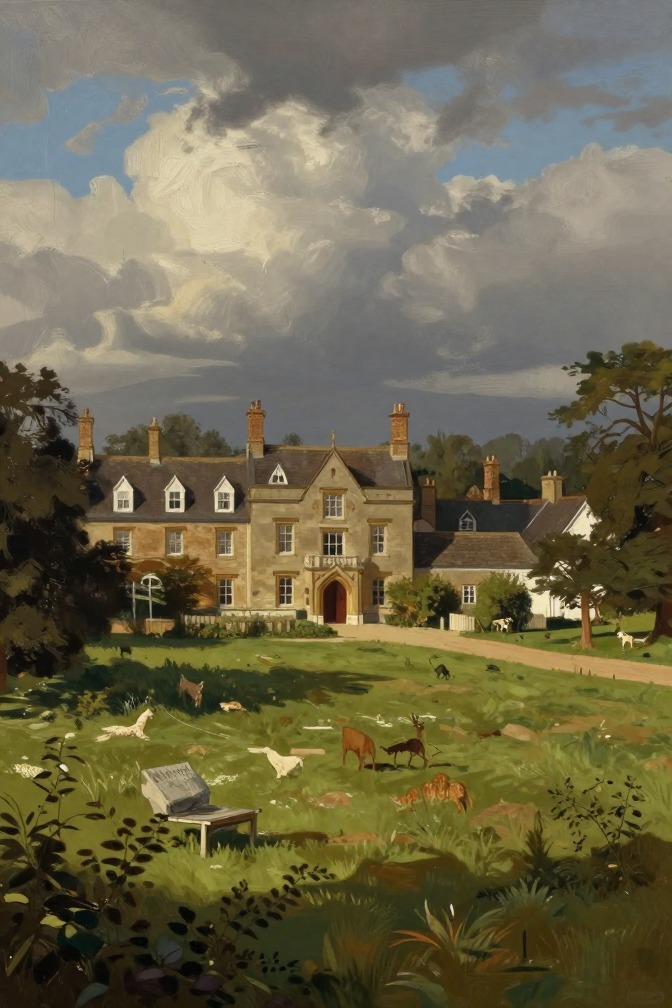
Highbury is the large, populous village, almost amounting to a town, that serves as the primary setting of Jane Austen's *Emma*. It is the social and geographical center of the novel, where the Woodhouses are the first in consequence, and its intricate web of relationships, social hierarchies, and daily life drives the plot and shapes the characters' fates.
Maple Grove is the country estate of Mr. Suckling, Mrs. Elton's brother-in-law, and serves throughout the novel as the standard of wealth, taste, and social pretension against which Mrs. Elton measures every other place and person in Highbury, becoming a recurring emblem of her vulgarity and self-importance.
Mr. Knightley's carriage is a material object in Emma that repeatedly appears at moments of social tension, practical kindness, and narrative revelation, functioning not merely as a vehicle but as a concrete index of character, class, and concealed motive. Its appearances—offering a ride to the Bates women, arriving simultaneously with Emma at the Coles' party, and being lent for Harriet's journey to London—consistently mark acts of unostentatious generosity or moments when the story's emotional and social undercurrents surface. The carriage thus becomes a quiet but persistent sign of Mr. Knightley's humane, unpretentious character and of the network of obligation and gratitude that binds Highbury together.
The pencil end is a small, broken-off piece of pencil without any lead that Harriet Smith treasures as a relic of Mr. Elton, preserving it as a sentimental keepsake long after he has married another woman, and eventually burns it in a symbolic act of renouncing her misplaced attachment.
Astley's is the London amphitheatre where Robert Martin, after a chance invitation from John Knightley, finally proposes to Harriet Smith and is accepted, resolving the novel's central romantic anxiety and confirming Harriet's true social station.
Mrs. Goddard's School is a modest, honest boarding school in Highbury where Harriet Smith boards as a parlour-boarder, serving as a key social setting that anchors Harriet's humble origins and provides a contrast to the refinement of Hartfield.
Emma Woodhouse and Frank Churchill share a flirtatious, mutually deceptive relationship that serves as a central romantic misdirection in the novel, ultimately revealing itself to be a friendship based on mistaken attraction and self-deception.
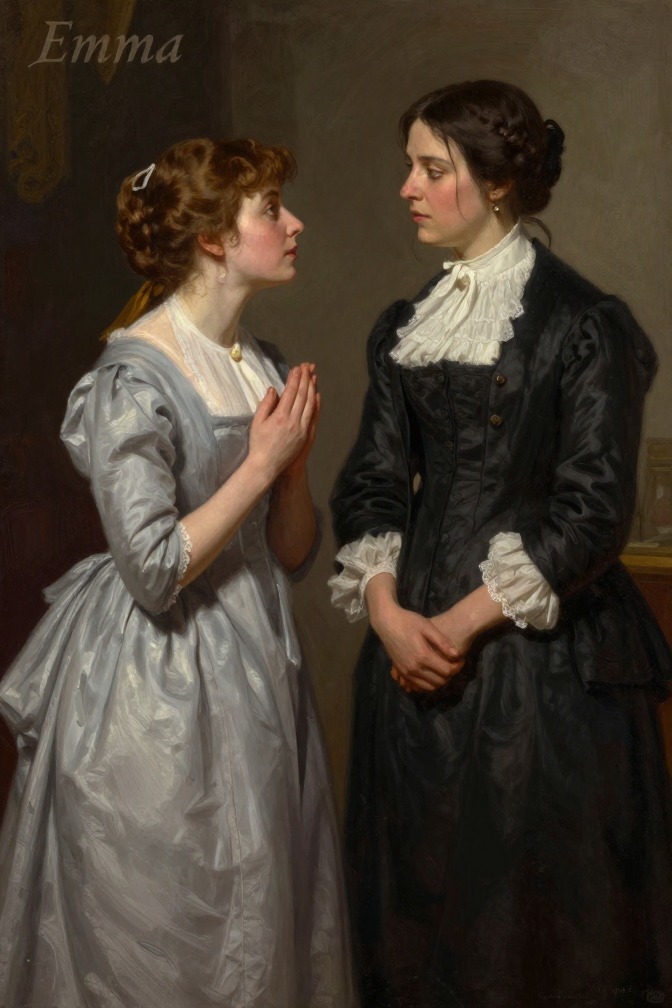
Emma Woodhouse and Mr. Knightley share a relationship that evolves from a dynamic of friendly criticism and mutual respect into a deep, transformative love, forming the central romantic arc of the novel. Their bond is defined by Mr. Knightley's unique role as the only person who openly points out Emma's faults, a corrective influence she initially resists but ultimately comes to value. This relationship charts Emma's journey from self-deception and misguided matchmaking to genuine self-knowledge and moral growth, culminating in a marriage that promises a union of equals, built on honesty, esteem, and a shared future at Hartfield.
Frank Churchill and Jane Fairfax maintain a secret engagement throughout much of the novel, a concealed relationship that shapes their behavior, causes significant misunderstanding, and ultimately redefines the romantic landscape of Highbury.
The relationship between Mr. Woodhouse and Emma Woodhouse is the foundational emotional bond of the novel, characterized by Emma's devoted care for her valetudinarian father and his absolute dependence on her, a dynamic that shapes her decisions, limits her social life, and ultimately determines the conditions of her marriage to Mr. Knightley.
Emma Woodhouse's spinsterhood is a central and evolving theme in Jane Austen's novel, representing her initial declaration of independence and self-sufficiency, which is gradually revealed as a form of self-deception that masks her true emotional development and eventual love for Mr. Knightley.
Mrs. Churchill's illness is a persistent, ambiguous, and strategically deployed condition that governs the movements and decisions of Frank Churchill, shapes the plot's central delays and revelations, and ultimately exposes the gap between performed frailty and genuine suffering in the novel's moral economy.
24 December, Christmas Eve, is the date of the dinner party at Randalls that marks a decisive turning point in Emma's understanding of Mr. Elton's true intentions, exposing the collapse of her matchmaking scheme and precipitating her painful self-reckoning.
28 September is the date on which Frank Churchill wrote his letter of congratulation to Mrs. Weston upon her marriage to Mr. Weston, a letter that circulates through Highbury as a proof of his good sense and amiable disposition, and that becomes a touchstone for the community's eager curiosity about him long before he ever appears in person.
Autumn in Emma is a season of social transition, personal reflection, and narrative anticipation, marking the period when the novel's central relationships are tested and reshaped.