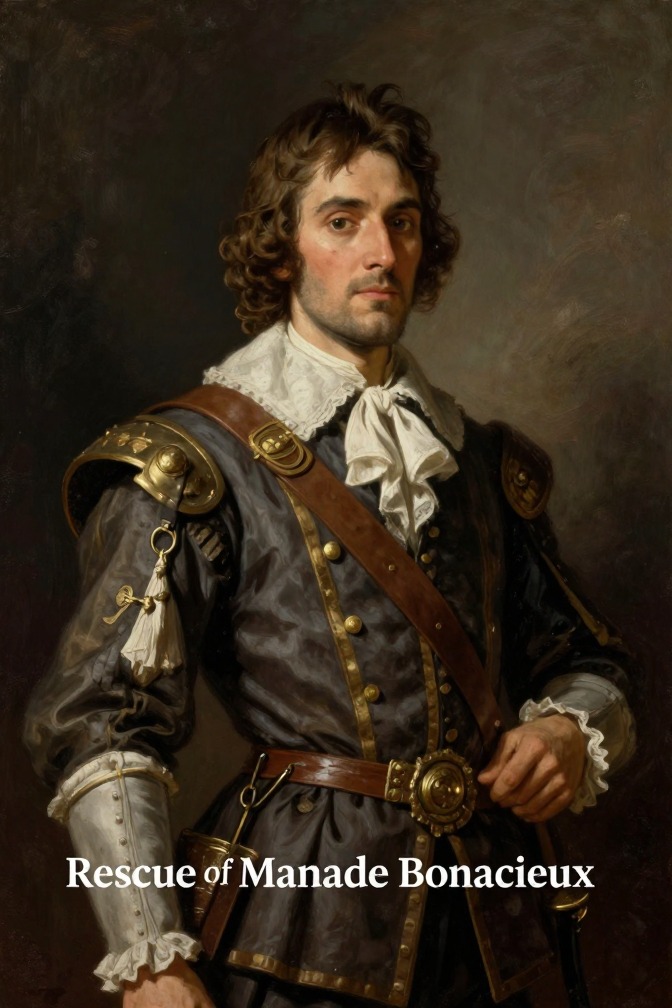
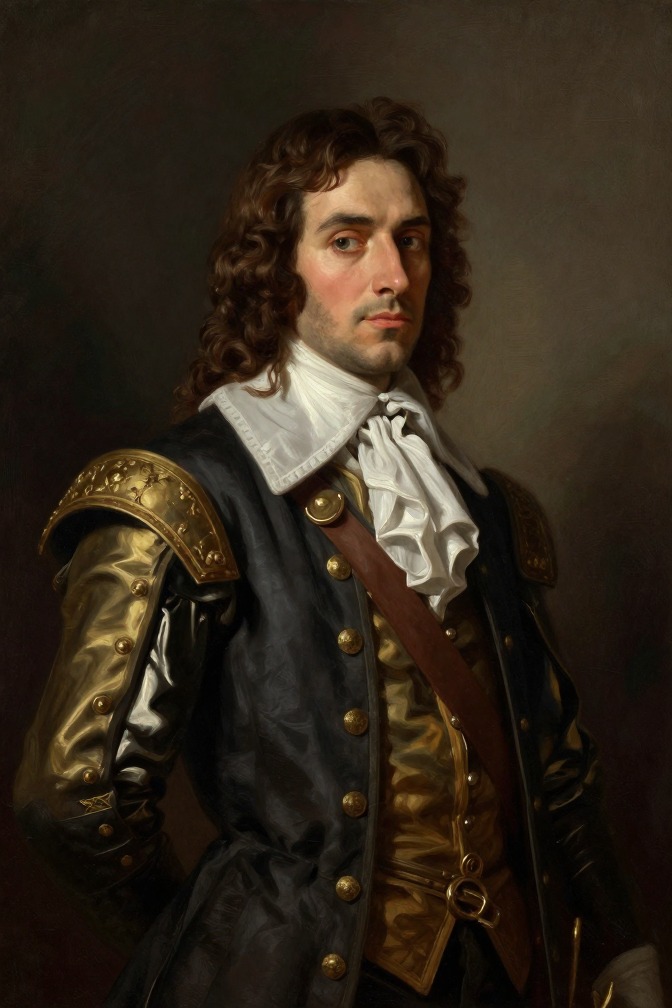
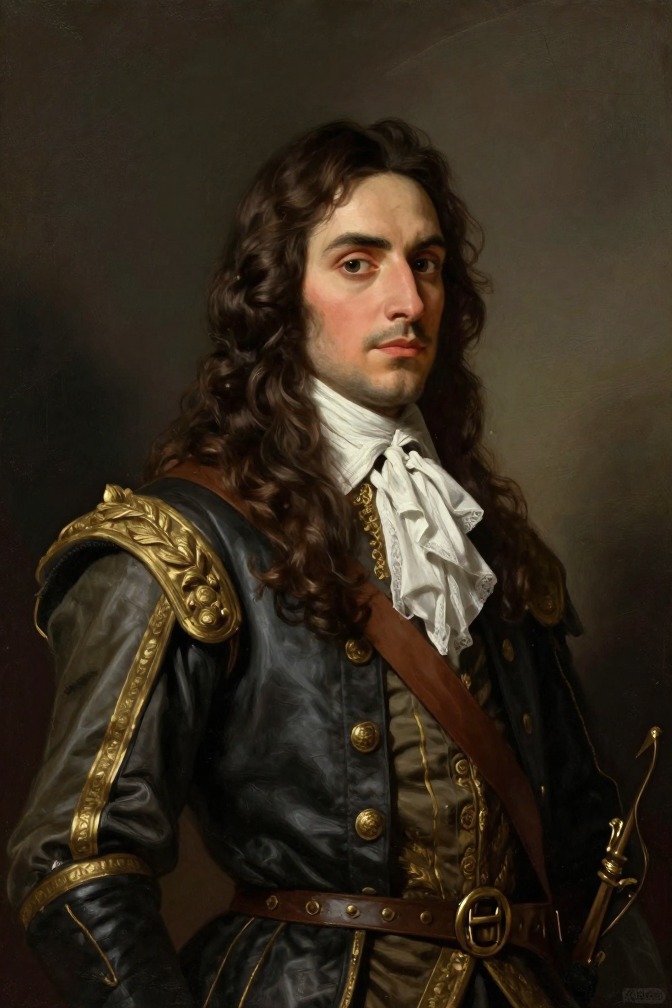
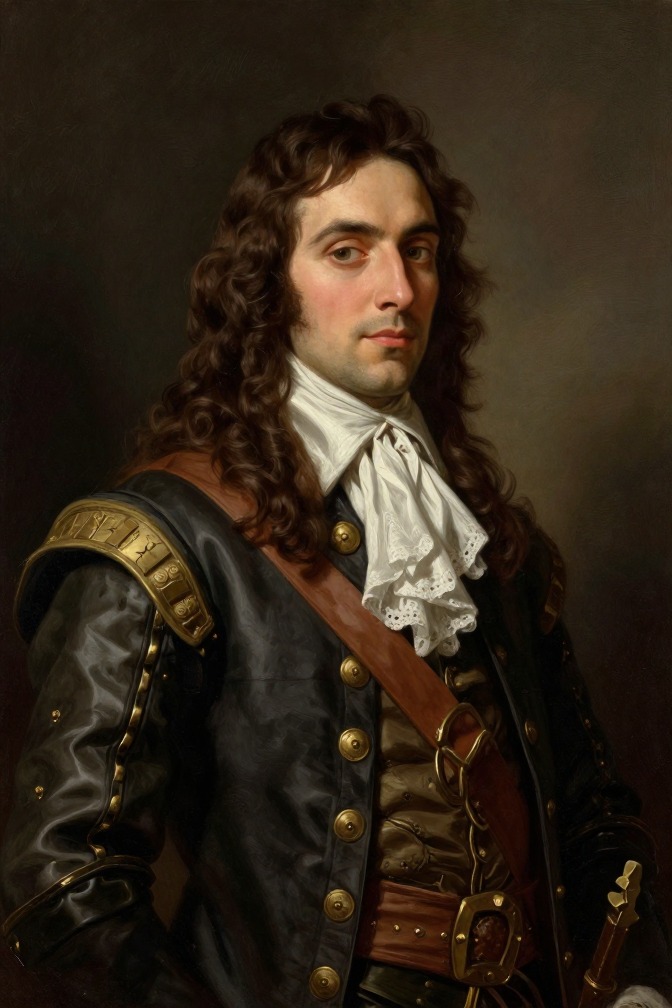
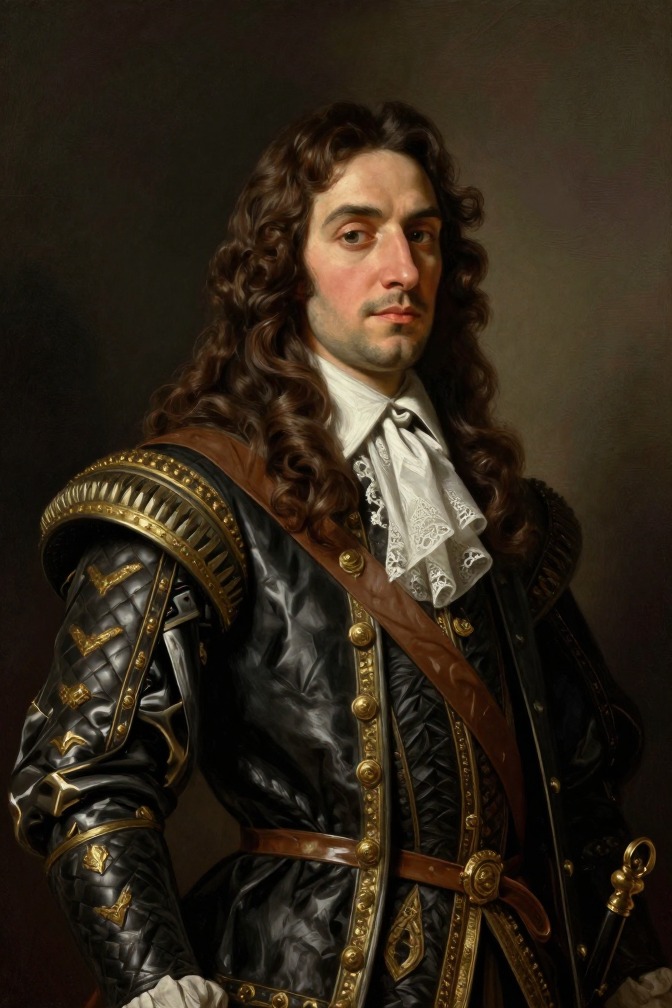
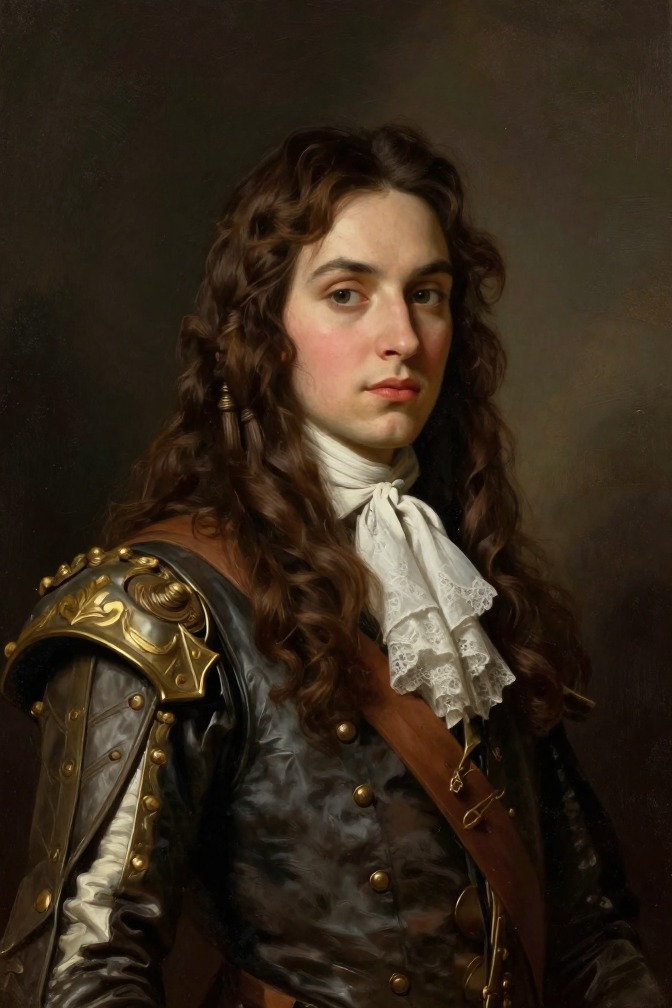
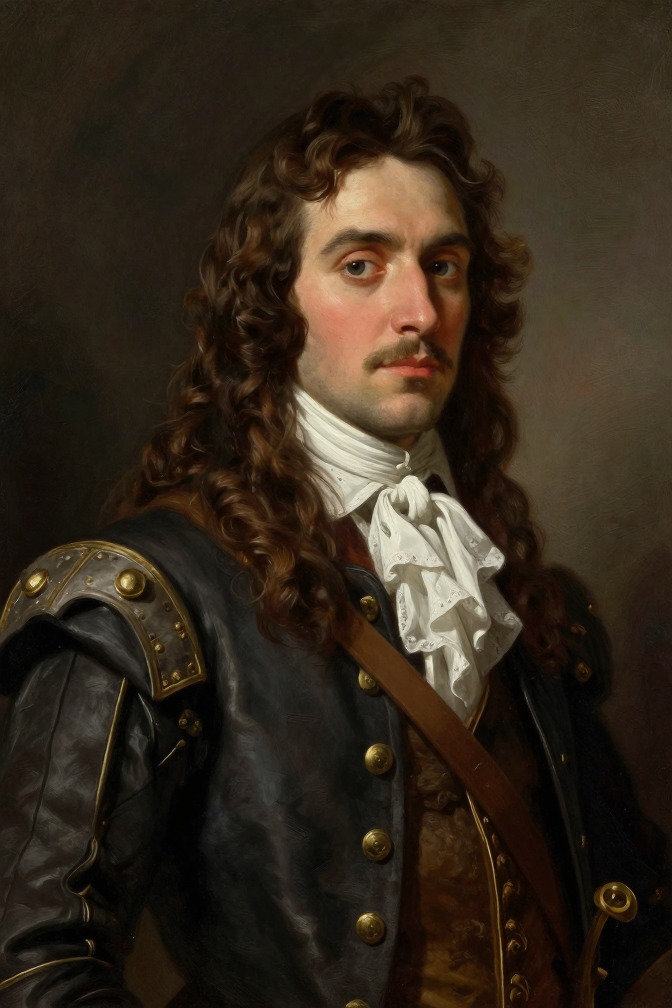
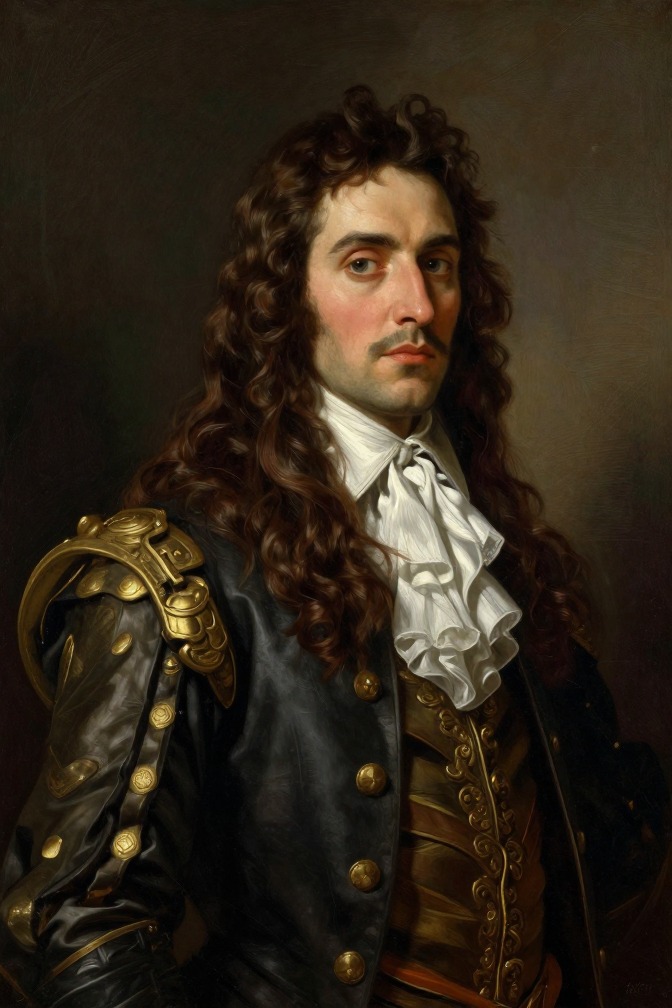
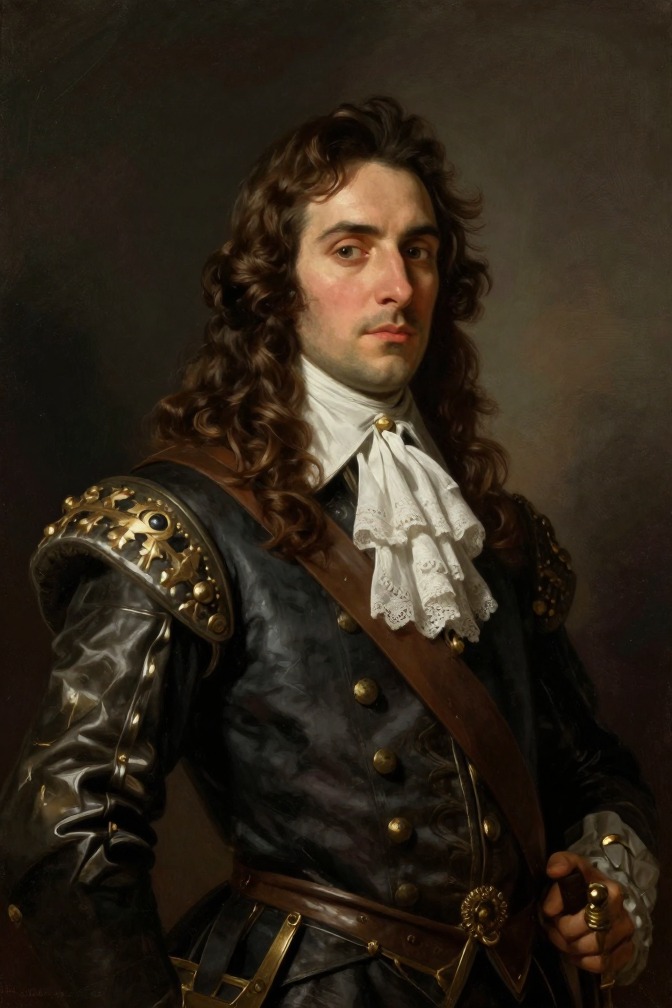
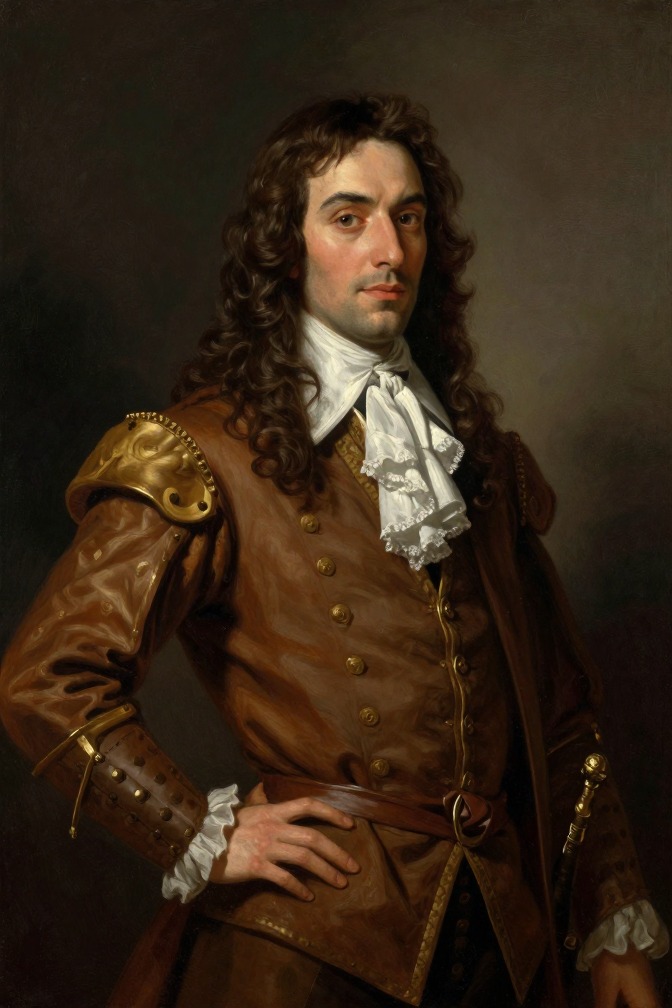
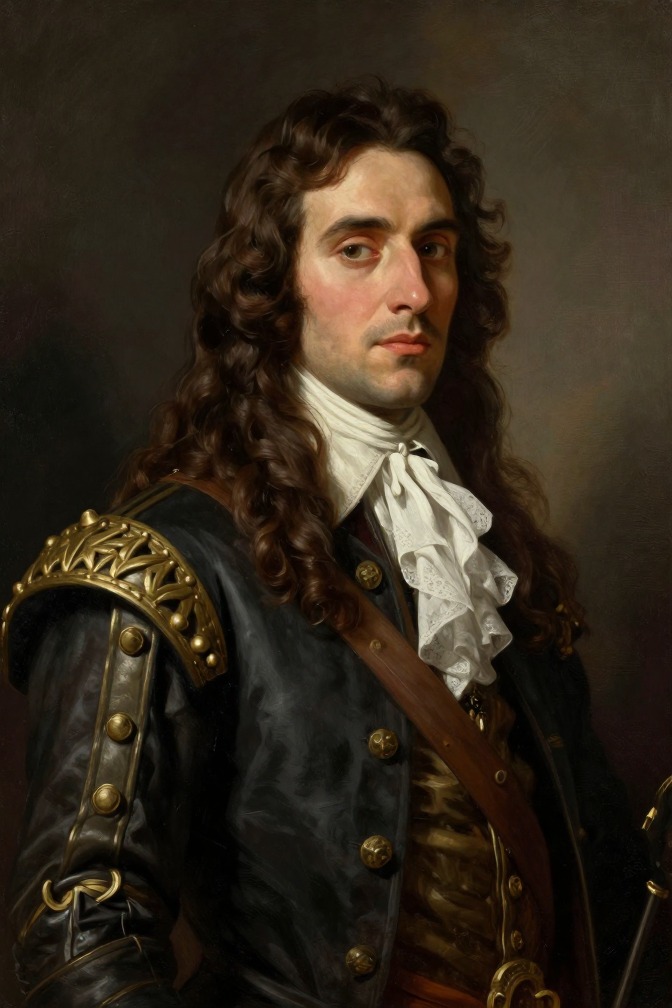
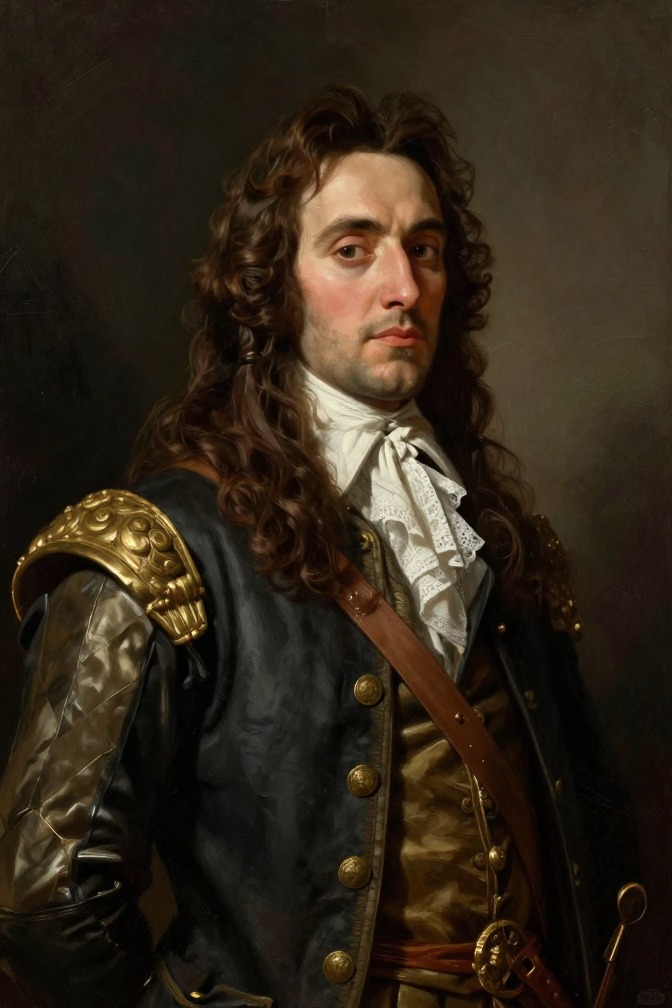
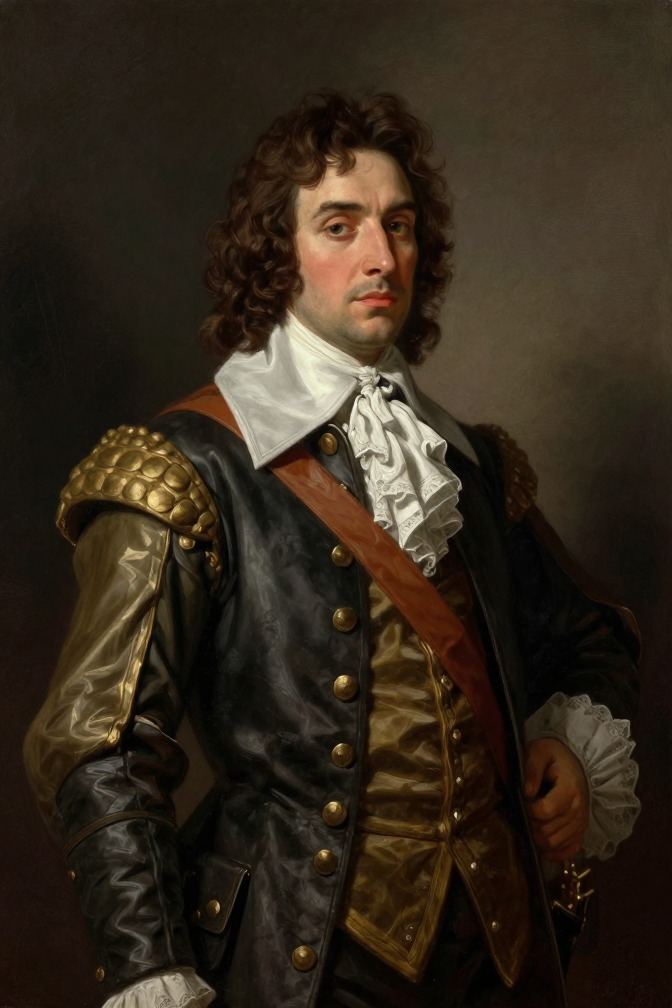
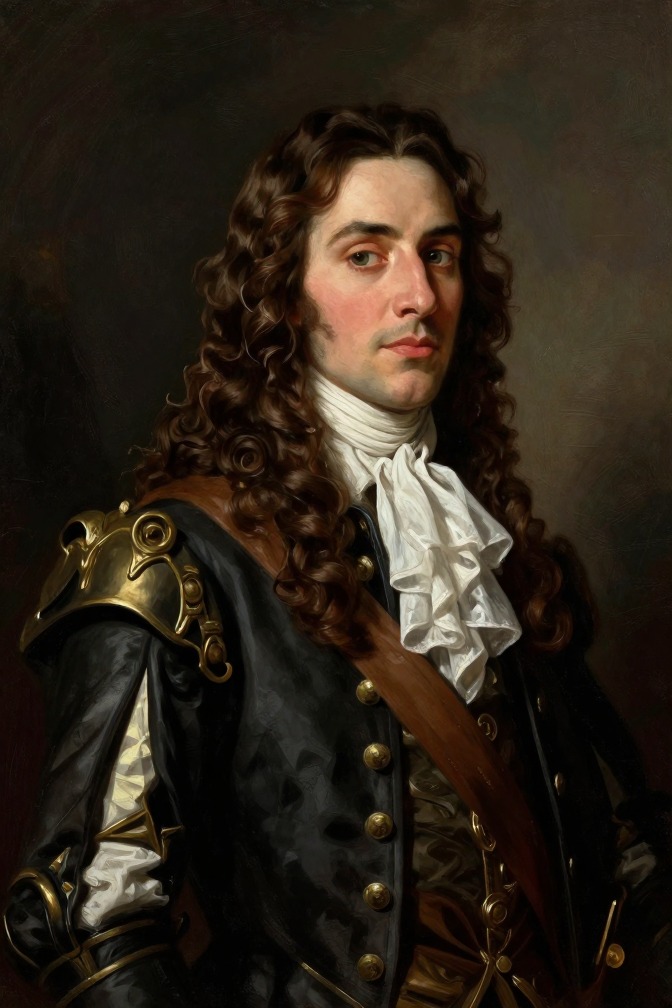
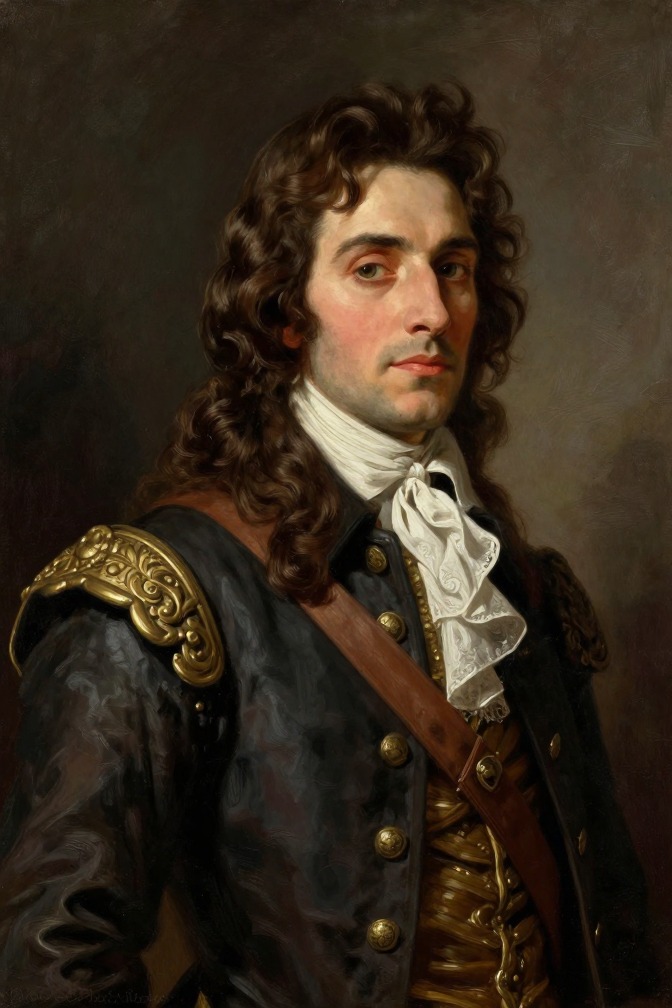
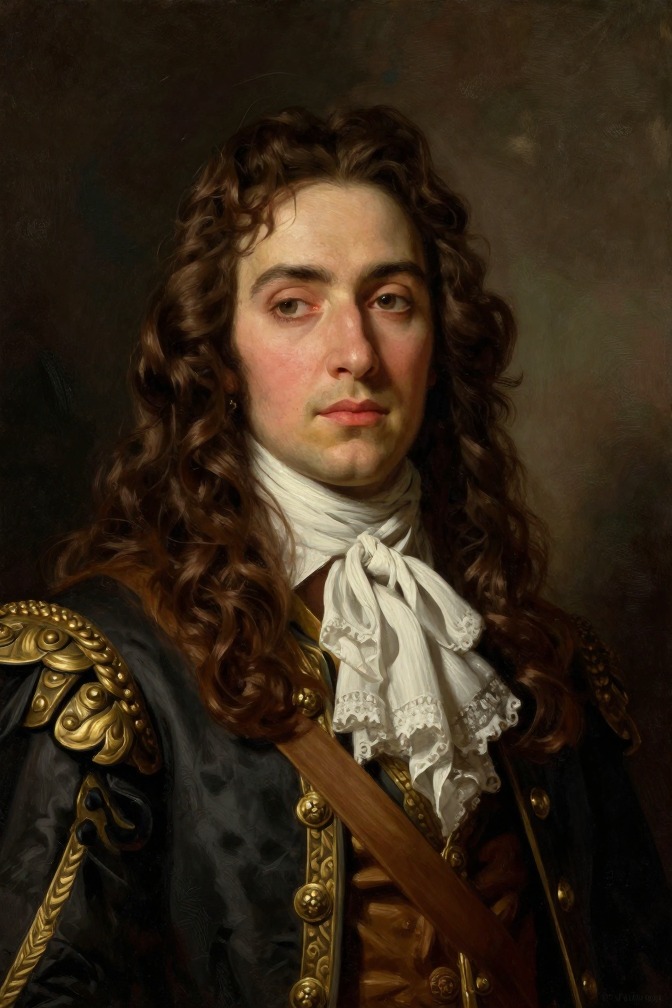
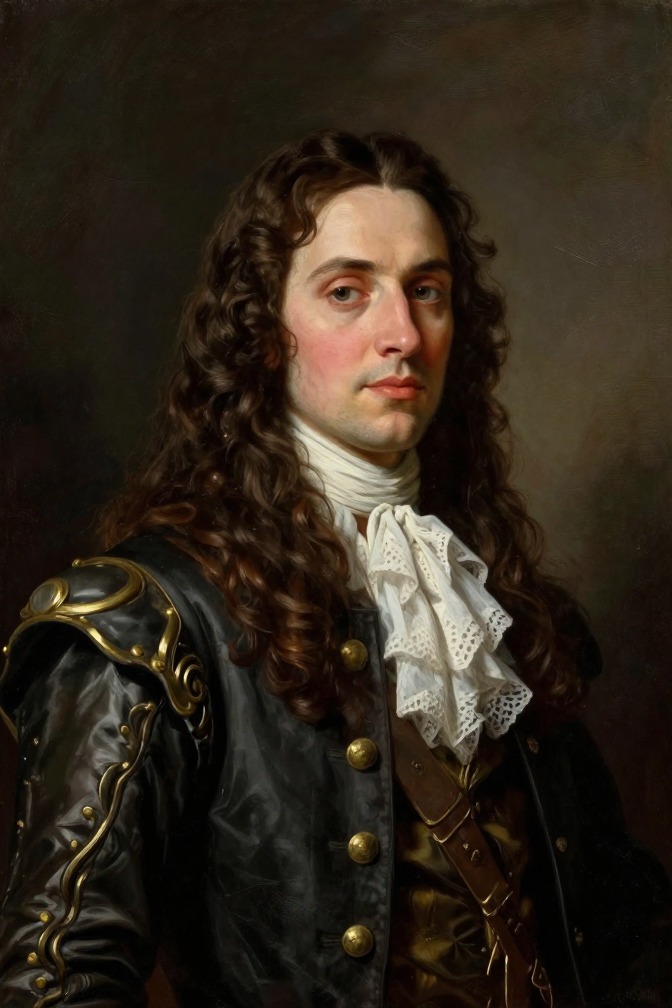
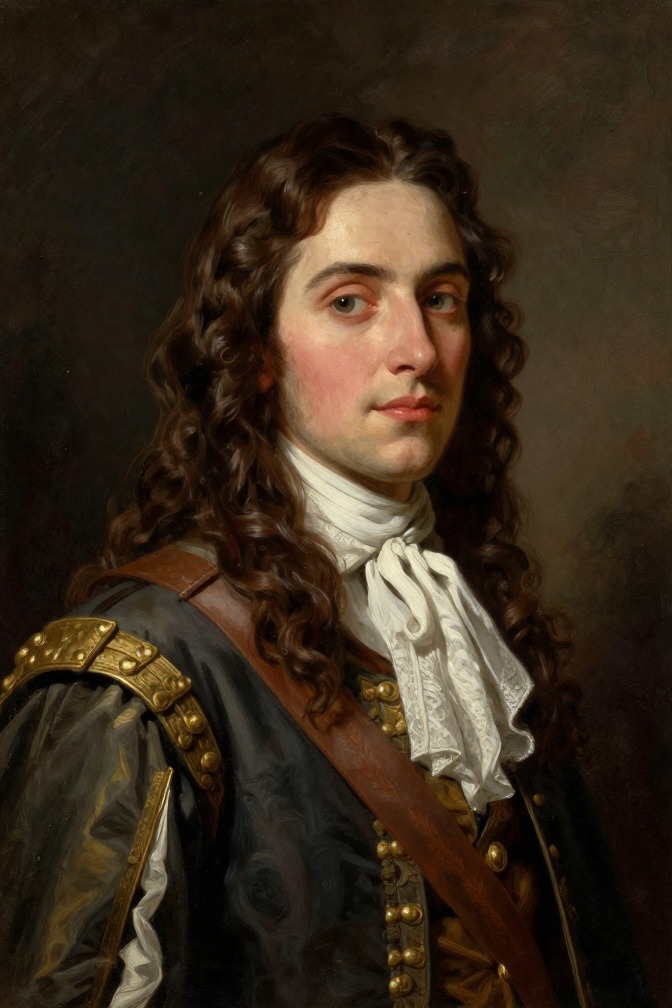
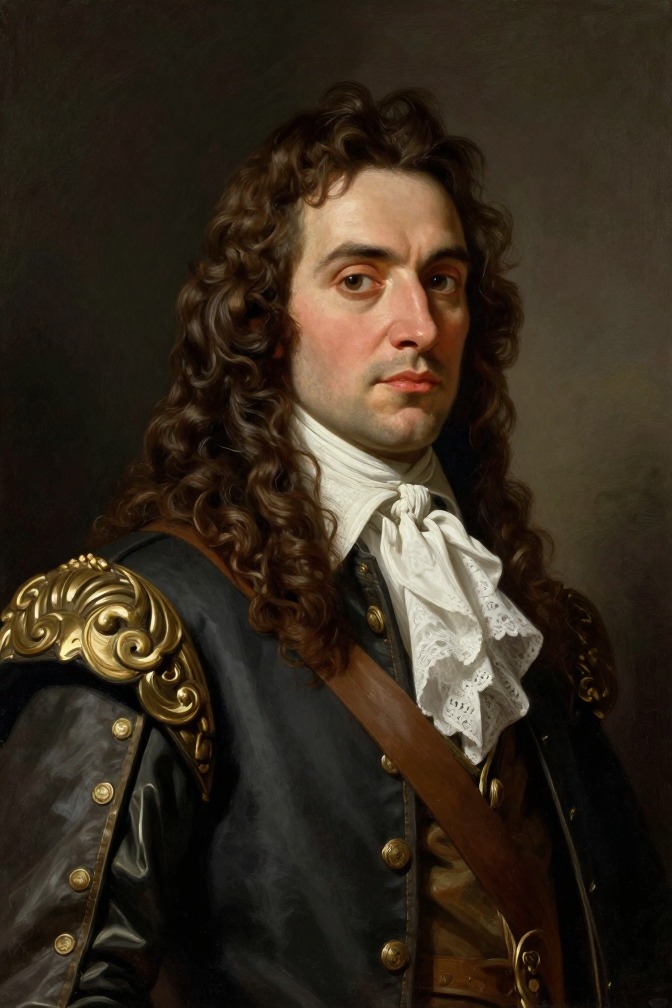
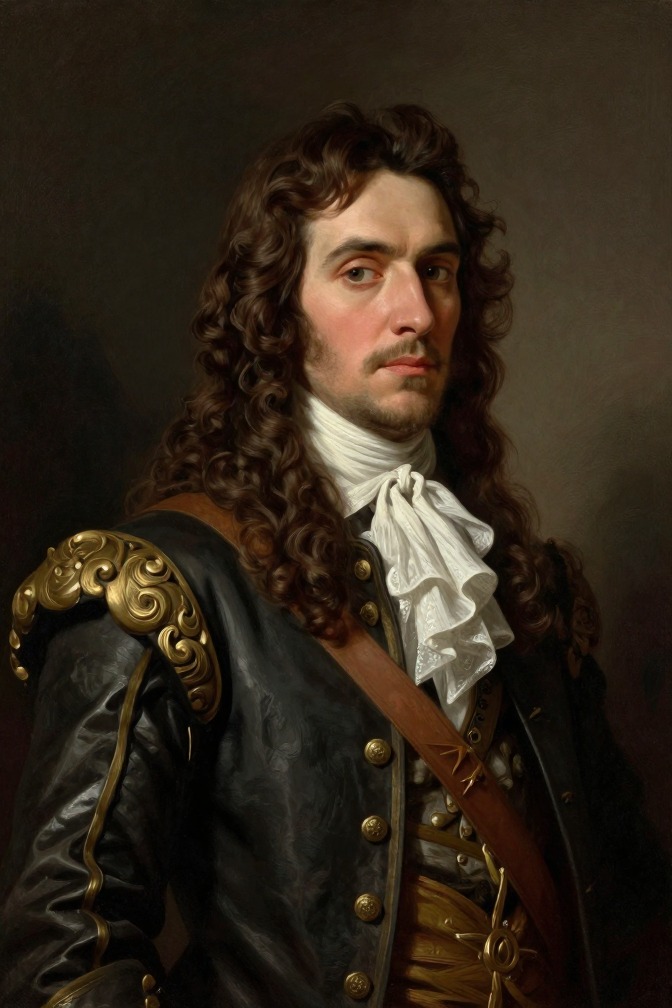
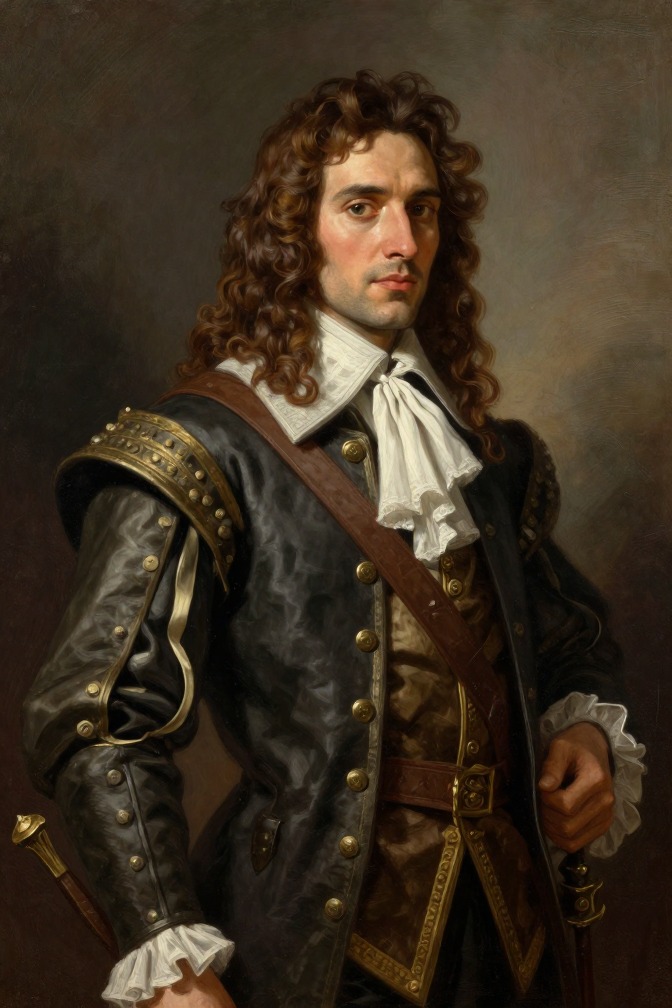
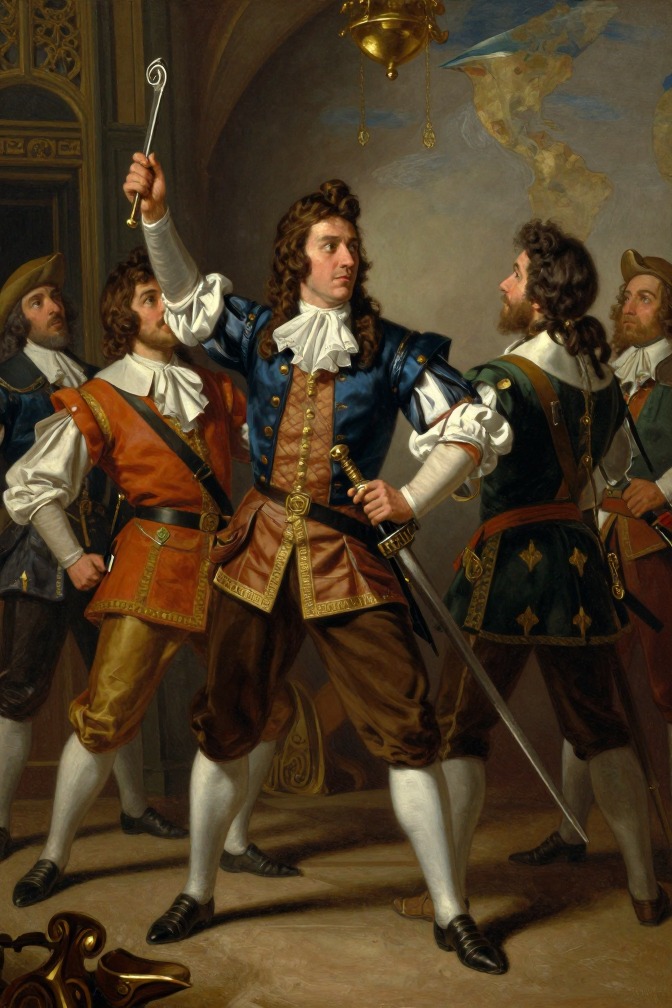
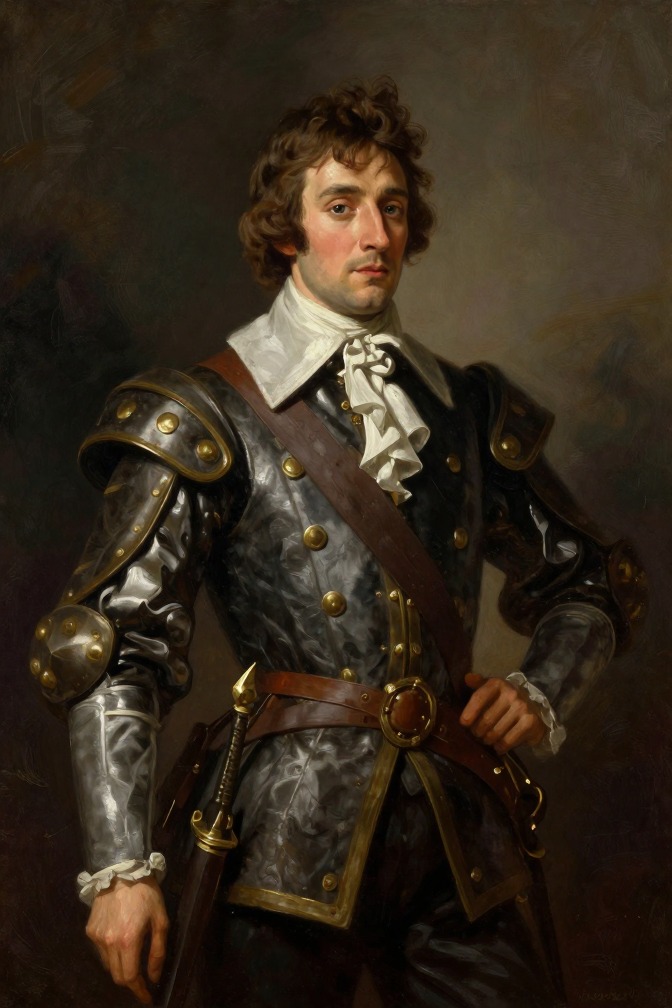
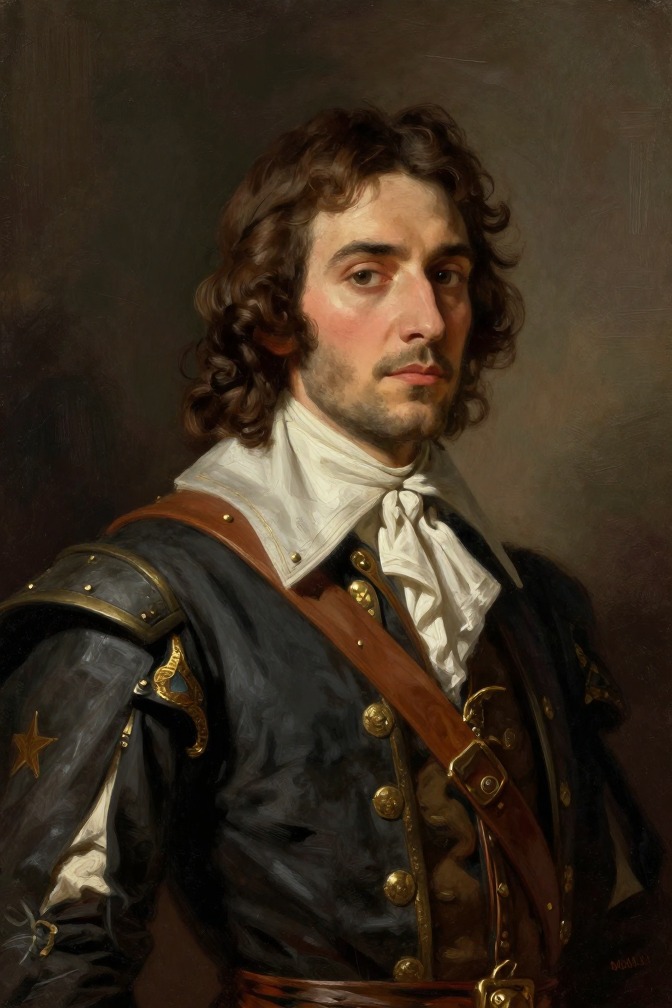
D'Artagnan, alerted by the sounds of a struggle in the apartment below, leaps from his window and rushes into the mousetrap set by the cardinal's agents, defeating four men and rescuing Constance Bonacieux, who had just escaped her captors and returned home.
Athos, the Comte de la Fere, is the eldest and most enigmatic of the four Musketeers, a nobleman of immense courage, profound melancholy, and a hidden past that shapes the novel's darkest conflicts. His secret marriage to the woman who becomes Milady de Winter, and his subsequent discovery of her branded shoulder, drives a personal vendetta that culminates in her trial and execution, making him the moral anchor and the most tragic figure among the friends.
Bazin is the devout, ambitious valet of Aramis, whose unwavering desire to serve a churchman defines his role throughout the novel. He is a Berrichon, mild, peaceable, and of unimpeachable fidelity, always dressed in black as befits the servant of a future cleric. His master's periodic flirtations with the Musketeer life cause him constant spiritual anguish, while his own aspirations—nourished by reading history and knowing that Sixtus V rose from swineherd to Pope—extend to seeing Aramis become a cardinal and himself a cardinal's attendant. Bazin's trajectory moves from frustrated piety through ecstatic hope to resigned disappointment, making him a comic yet poignant index of Aramis's irresolution.
Bernajoux is a minor but consequential antagonist in Alexandre Dumas's *The Three Musketeers*, a Guardsman of Cardinal Richelieu whose brief appearances trigger a cascade of duels, brawls, and political repercussions that deepen the enmity between the King's Musketeers and the Cardinal's Guards and accelerate d'Artagnan's rise.
Brisemont is a minor but pivotal character in *The Three Musketeers*, a soldier whose brief arc encapsulates the lethal reach of Milady de Winter's vengeance. Hired alongside an accomplice to assassinate d'Artagnan, he fails in the attempt, is captured, and is spared by the young Gascon. This act of mercy is repaid when Brisemont, now serving d'Artagnan, becomes the unwitting victim of a poisoned bottle of Anjou wine intended for his master. His agonizing death, and the false letter that lured the four friends to drink, reveal the cardinal's hand and Milady's implacable hatred, transforming Brisemont from a nameless assassin into a sacrificial figure whose fate deepens the novel's atmosphere of conspiracy and peril.
Cavois is a captain of the Cardinal's Guards who serves as a direct intermediary between Cardinal Richelieu and d'Artagnan, delivering a summons that places the young Gascon at a decisive crossroads between royal and ministerial allegiance.
The Duc de la Tremouille is a Protestant nobleman of courage and honor who, despite his political neutrality and distance from the court, becomes a key witness in the conflict between the King's Musketeers and the Cardinal's Guards, ultimately testifying truthfully before King Louis XIII and clearing Athos of false accusations.
King Louis XIII, the reigning monarch of France during the events of the novel, is a weak, capricious, and emotionally dependent ruler whose reign is overshadowed by the superior political genius of Cardinal Richelieu. His character is defined by a constant struggle between his affection for his Musketeers and his subservience to the cardinal, a dynamic that drives much of the courtly intrigue and shapes the fortunes of the novel's heroes.
Kitty is the personal maid and confidante of Milady de Winter, a young woman whose genuine affection for d'Artagnan places her at the center of the novel's intricate web of seduction, betrayal, and vengeance. Though a secondary character, Kitty's role is decisive: she becomes the unwitting instrument through which d'Artagnan discovers Milady's true, murderous nature and her plot against the Duke of Buckingham, and her own emotional journey—from devoted servant to betrayed lover to a woman seeking escape—mirrors the novel's themes of power, class, and the cost of loyalty.
Laporte is the queen's cloak bearer and confidential valet, a loyal servant who acts as a crucial intermediary between Queen Anne of Austria and her allies, including Constance Bonacieux and the Duke of Buckingham, and who ultimately delivers Buckingham's dying gift to the queen.
Lord de Winter, also known as Baron Sheffield, is the brother-in-law of Milady and a key antagonist in the second half of the novel. He transforms from a dueling opponent of d'Artagnan into a determined captor and judge of Milady, playing a decisive role in her final trial and execution.
Lubin is the lackey of the Comte de Wardes, a minor but recurring figure in d'Artagnan's adventures. He appears primarily as a witness to his master's defeat at Calais and later as a source of information for d'Artagnan, revealing the count's survival and the details of their encounter.
M. de Baradas is a minor courtier in the entourage of King Louis XIII, appearing only in the context of the grand ball at the Hotel de Ville, where he is listed among the nobles accompanying the king.
M. de Laigues is a minor court figure in Alexandre Dumas's *The Three Musketeers*, mentioned only in passing as a gentleman who was tricked by the cardinal's agent, the Comte de Rochefort, disguised as a Capuchin monk. His single appearance serves to illustrate the reach and cunning of Cardinal Richelieu's spy network and to provide a concrete example of the political intrigues that the Musketeers discuss among themselves.
M. de Patru is a minor character in The Three Musketeers, a celebrated French lawyer and orator whose name is invoked by the Jesuit during Aramis's theological disputation as a benchmark of worldly rhetorical success, thereby illustrating the tension between Aramis's clerical ambitions and his lingering attachment to secular literary fame.
M. de Putange is a minor but significant court figure in The Three Musketeers, known as the queen's equerry who facilitated the Duke of Buckingham's secret entry into the gardens at Amiens, an event that later becomes a key piece of evidence in Cardinal Richelieu's campaign against Queen Anne of Austria.
Madame de Lannoy is a tire-woman of Queen Anne of Austria who serves as a key informant for Cardinal Richelieu, reporting the queen's secret meeting with the Duke of Buckingham and the disappearance of the diamond studs, thereby triggering the cardinal's plot to expose the queen at the ball.
Mme. d'Artagnan is the mother of the protagonist d'Artagnan, a minor but symbolically significant figure whose actions—giving her son a miraculous healing balsam and secretly sewing ornamental braiding into his clothes—frame his departure from home and provide him with the practical and emotional resources that sustain him through his early adventures in Paris.
Mme. de Guemene is a minor court lady who appears in the queen's apartments during the tense scene when King Louis XIII and Chancellor Seguier confront Anne of Austria over her suspected correspondence with the Duke of Buckingham, serving as part of the queen's circle of attendants.
Mme. de Guitaut is a minor but significant court figure in the queen's household, whose loyalty to Cardinal Richelieu makes her a key informant in the political and romantic intrigues surrounding Queen Anne of Austria.
Mme. de Sable is a minor character in *The Three Musketeers*, appearing only as one of Queen Anne of Austria's ladies-in-waiting during the scene in which the king and the chancellor confront the queen about her correspondence.
Monsieur Bonacieux is a Parisian mercer whose cowardice, avarice, and political opportunism make him a pawn in the intrigues of Cardinal Richelieu, leading him to betray his wife Constance and ultimately disappear after being taken into the cardinal's custody.
Monsieur de Schomberg is a Marshal of France who commands the southern sector of the royal siege lines at La Rochelle, one of three senior commanders whose rivalries with the Duc d'Angouleme and Monsieur de Bassompierre complicate the cardinal's military strategy and delay the siege's progress.
Porthos is the largest, most boastful, and most physically imposing of the three Musketeers, a character defined by his vanity, love of fine clothes and food, and a series of amorous adventures that fund his extravagant lifestyle, ultimately leaving the service to marry a wealthy procurator's widow.
The Surrender of La Rochelle on October 28, 1628, ended a year-long siege that was the central military and political event of the novel, marking the triumph of Cardinal Richelieu's policy over the Huguenot rebellion and the English alliance, and providing the backdrop against which the fates of the four friends are finally resolved.
The expression "Proud as a Gascon" encapsulates the fierce, touchy, and audacious pride that defines d'Artagnan and his countrymen throughout The Three Musketeers, serving as a recurring motif that links personal honor, regional identity, and the novel's central conflicts.
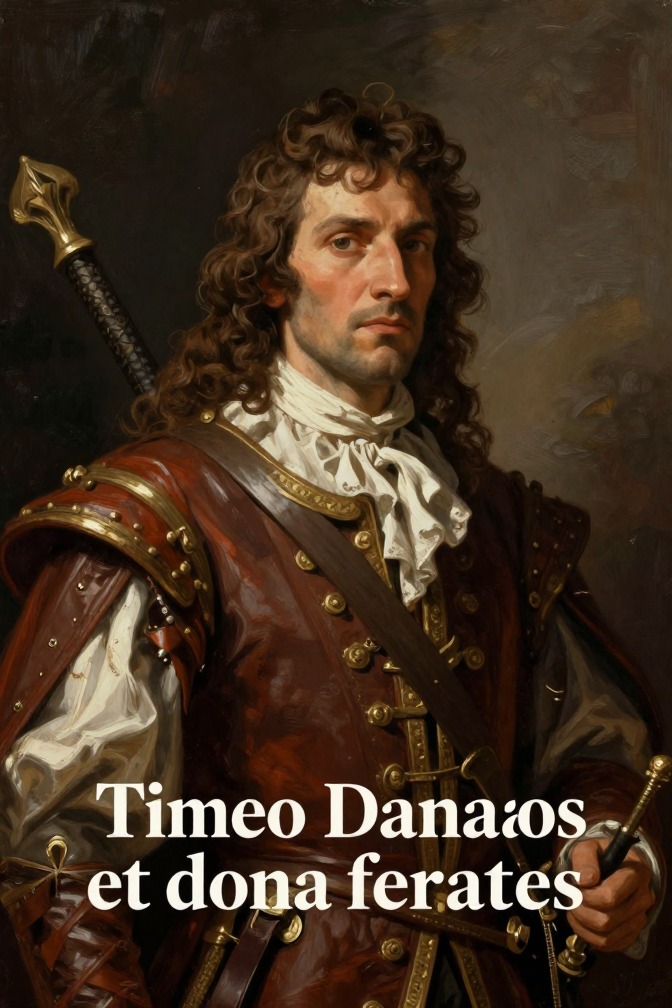
Timeo Danaos et dona ferentes is a Latin phrase quoted by Monsieur de Treville to d'Artagnan, meaning 'I fear the Greeks even when they bring gifts.' It serves as a warning about accepting presents from enemies, and its use in the novel underscores the theme of mistrust and the dangers of seemingly generous gifts from adversaries.
The Cardinal's Safe-Conduct is a signed document issued by Cardinal Richelieu that grants the bearer immunity for any actions taken under its authority, serving as a crucial plot device that shifts between characters and ultimately determines the fate of d'Artagnan.
The Lieutenant's Commission is the document that formalizes d'Artagnan's promotion from a Guardsman cadet to a lieutenant in the Musketeers of the Guard, marking the culmination of his journey from an obscure Gascon provincial to a recognized officer of the crown. It is the tangible reward for his courage, loyalty, and the successful execution of the queen's secret mission, and it represents the final step in his integration into the elite brotherhood of the Musketeers.
1 May is the date on which the French royal army was scheduled to open its campaign against the Huguenot stronghold of La Rochelle in 1628, a deadline that forced the four friends to urgently procure their military equipment and set in motion the final, tragic phase of their adventures.