The expression "Asking yourself a question, that's how resistance begins" serves as the epigraph to Part Five of the novel, encapsulating the novel's central theme that moral and political resistance originates in an individual's internal act of questioning. It frames the entire second half of the story, particularly Isabelle's journey from impulsive rebellion to deliberate, organized defiance, and marks the moment when passive endurance transforms into active, conscious choice.
This aphorism, stated by the elderly Vianne Mauriac in the novel's opening pages, establishes the central thematic dichotomy of The Nightingale. It posits that love reveals aspiration and ideal selfhood, while war strips away pretense to expose a person's fundamental character. The sentence functions as a philosophical frame for the entire narrative, which follows two sisters whose divergent responses to the German occupation of France—Vianne's protective, compromising endurance and Isabelle's reckless, principled resistance—test and define them in ways peacetime love could not.
The Nightingale has sung is the coded message that signals the successful completion of an escape mission across the Pyrenees into Spain, serving as the operational signature of Isabelle Rossignol's resistance network and the formal confirmation that downed Allied airmen have reached safety.
The note "You are not ready" is a brief, devastating message left by Gaëtan Dubois for Isabelle Rossignol after their first kiss, which crystallizes her lifelong pattern of being deemed insufficient by those she loves and becomes a wound that shapes her subsequent actions in the Resistance.
The curfew imposed by the Nazi occupation of Carriveau was a foundational instrument of control, enforced from the first day of occupation and carrying the threat of immediate violence or death for violators. It transformed the daily rhythms of the town, criminalizing movement after dusk and forcing the entire population into a state of constant, fearful compliance. The rule was announced by Sturmbannführer Weldt of the Gestapo during the initial assembly in the town hall, where he declared a nine P.M. curfew instantly in effect, along with the requirement that no lights be on after dusk. This decree was not a suggestion but a lethal boundary: any act of sabotage, espionage, or resistance would be punished by death, and the curfew itself became the most intimate and inescapable expression of that threat. For characters like Isabelle Rossignol, the curfew was a direct challenge to her defiance, a line she repeatedly crossed in her work for the Resistance, while for Vianne Mauriac, it was a cage that defined the limits of her world and the safety of her daughter.
The Punishment for hiding Jews was a Nazi decree in occupied France that made sheltering Jewish people a capital offense, punishable by death or deportation to concentration camps. It transformed ordinary acts of compassion into life-threatening crimes, forcing French citizens to choose between moral duty and survival.
The Resistance silence for two days rule was an internal protocol adopted by the French Resistance network in which captured operatives were expected to withstand interrogation for forty-eight hours without revealing names, giving their comrades time to disappear. The rule was a grim acknowledgment that torture would eventually break most prisoners, and that the only realistic goal was delay, not permanent silence.
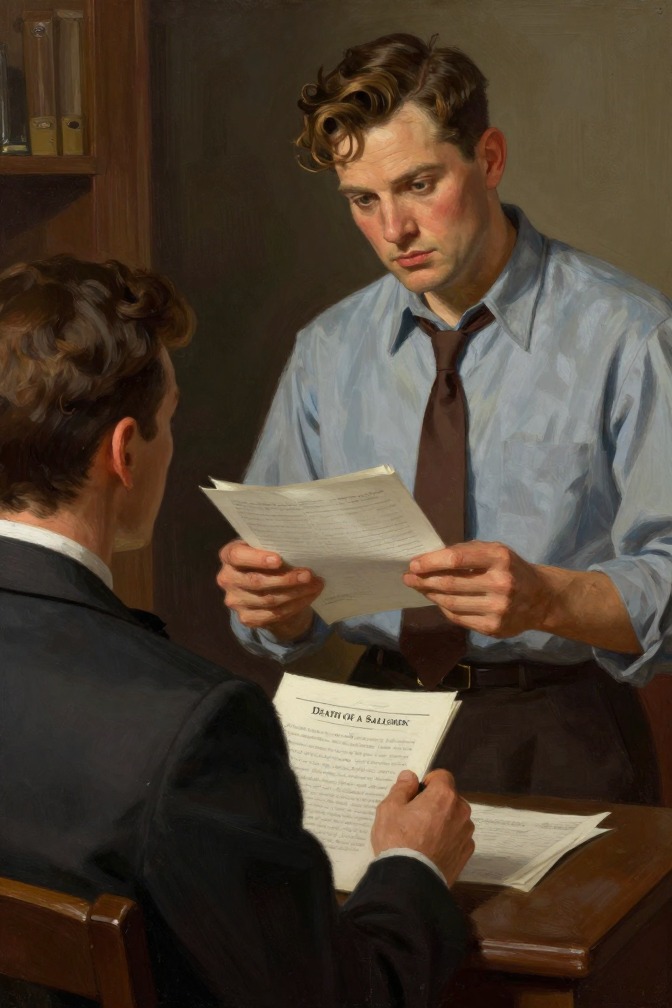
Biff Loman's attempt to secure a loan from his former employer Bill Oliver is the decisive action that shatters the family's last shared illusion and forces a final confrontation between father and son. The meeting, which Biff has built up as the means to buy a ranch and redeem himself in Willy's eyes, ends in humiliation and a compulsive theft that reveals the depth of his self-deception.
Biff Loman is the elder son of Willy and Linda Loman, a thirty-four-year-old man whose life has been shaped and crippled by his father's version of the American Dream. Once a high school football star with scholarships to three universities, Biff has spent more than a decade drifting through the West, working as a farmhand and shipping clerk, unable to settle into the success his father demands. His return home triggers the play's central crisis, forcing a confrontation not only with Willy's illusions but with his own complicity in them, and he emerges as the only Loman who finally sees clearly enough to break free.
Jenny is Charley's secretary, a minor character in Arthur Miller's Death of a Salesman, who appears briefly in Act Two to report Willy Loman's disruptive presence in the office and to express her own distress at having to deal with him.
In Arthur Miller's Death of a Salesman, the concept of "Contacts" represents Willy Loman's deeply held belief that personal connections, being well-liked, and a charismatic personality are the true currency of success, a faith that ultimately proves to be a fragile and inadequate foundation in a changing business world.
The jungle is a central metaphor in Arthur Miller's Death of a Salesman, representing a ruthless, amoral arena where success is seized through aggression and cunning rather than fairness or human connection. It is the symbolic landscape of the American Dream stripped of its idealism, embodied by the character of Uncle Ben, who claims to have walked into the jungle at seventeen and walked out rich at twenty-one. The metaphor recurs throughout the play, serving as both an aspirational model for Willy Loman and a corrosive force that justifies betrayal, competition, and ultimately self-destruction.
The West is a recurring geographical and symbolic concept in Arthur Miller's Death of a Salesman, representing an alternative to the urban, commercial world of New York and embodying Biff Loman's desire for a life of physical labor, open space, and personal authenticity.
The Standish Arms is the Boston hotel where Willy Loman stays during his sales trips and where his son Biff discovers his father's extramarital affair, a revelation that shatters Biff's faith in Willy and permanently alters the course of both their lives.
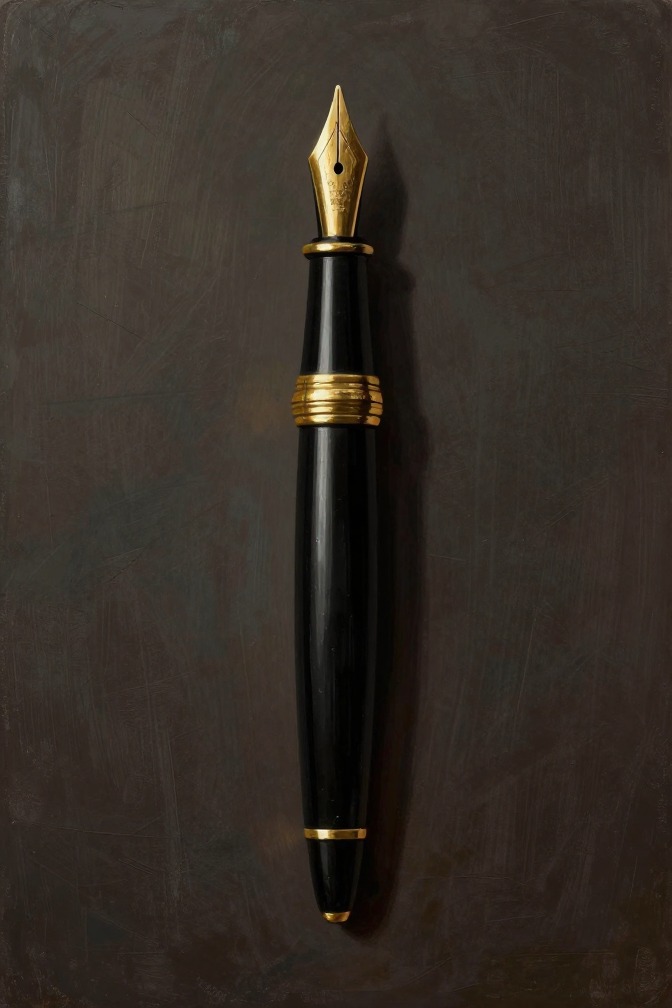
Bill Oliver's fountain pen is the object Biff Loman impulsively steals from his former employer's office during a failed attempt to secure a loan, an act that crystallizes his lifelong pattern of theft and self-sabotage and forces the final confrontation between Biff and his father, Willy Loman.
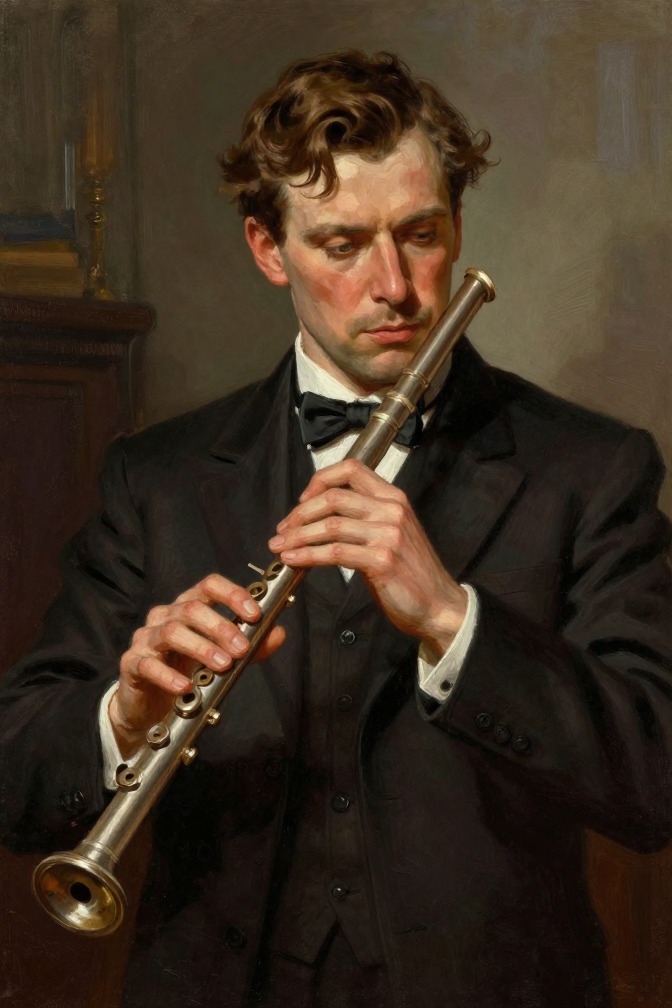
The flute is a recurring musical motif in Arthur Miller's Death of a Salesman, serving as a sonic emblem of Willy Loman's lost past, his father's abandonment, and the unattainable promise of the American frontier. It opens and closes the play, weaving through memory and reality to mark the gap between the natural world Willy yearns for and the urban confinement that crushes him.
The seed packets that Willy Loman buys and attempts to plant in his backyard late at night, in the final hours before his suicide, are a concentrated symbol of his desperate, last-ditch faith in renewal, growth, and a legacy he can no longer achieve. They represent his longing to create something tangible and lasting, a final, futile gesture of hope and productivity in the face of total personal and professional collapse.
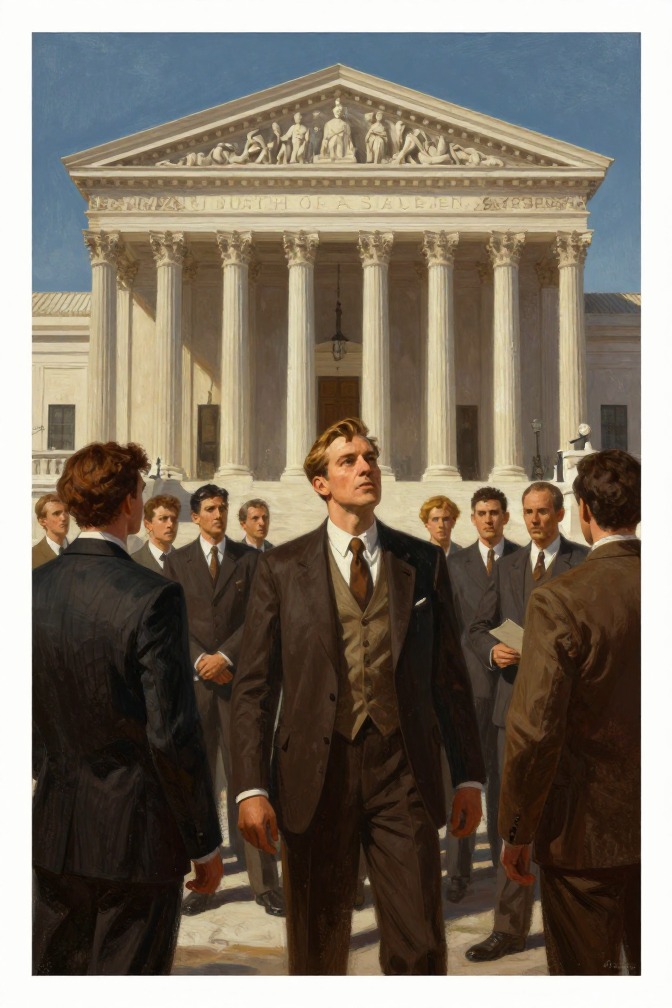
The Supreme Court is mentioned in Arthur Miller's Death of a Salesman as the ultimate professional destination of Bernard, Charley's son, whose quiet success stands in stark contrast to the Loman family's failed pursuit of the American Dream. Bernard's argument before the Supreme Court represents the culmination of a path based on hard work, education, and genuine merit, a path Willy Loman dismisses yet secretly envies.
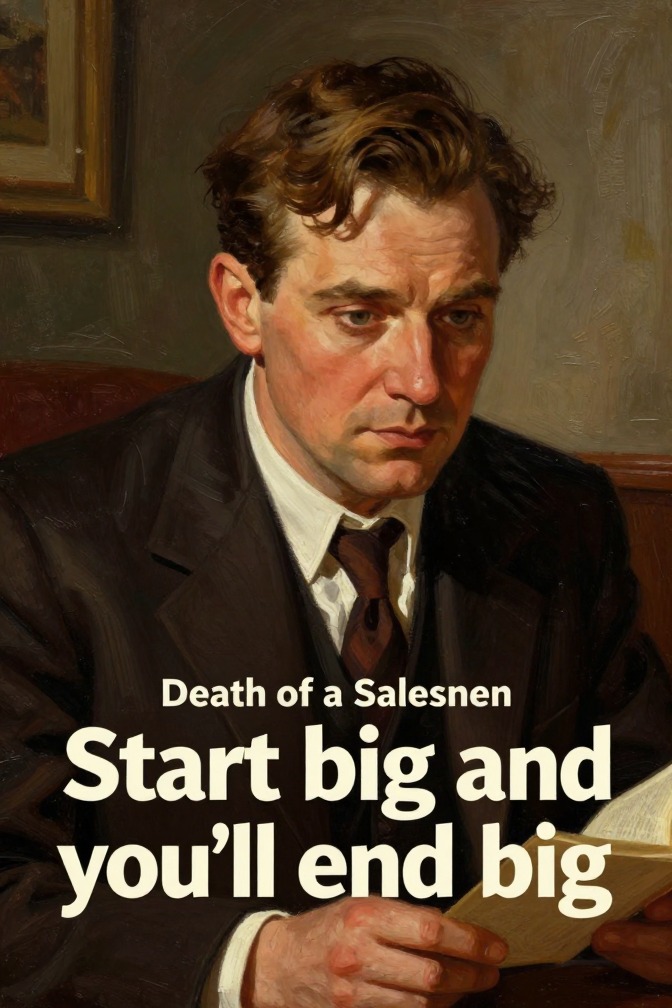
Start big and you'll end big is a maxim Willy Loman imparts to his son Biff as a practical rule for negotiating a business loan, reflecting Willy's belief that bold self-presentation and high initial demands are the keys to success in the American marketplace.
The year 1928 represents the peak of Willy Loman's career as a salesman, a time when he earned a substantial income and felt valued by his employer, Frank Wagner. It stands in stark contrast to his present failure and serves as a benchmark of lost promise and the erosion of the American Dream.
Carn Carby is a minor but significant character in Orson Scott Card's Ender's Game, serving as the commander of Rabbit Army and later as a foil to Ender Wiggin. His brief appearances highlight themes of honor, sportsmanship, and the moral complexities of the Battle School's competitive environment. Carby's graciousness in defeat and his recognition of Ender's genius underscore the contrast between the ideal of fair play and the ruthless pragmatism of the military establishment.
Shen is a minor but recurring character in Ender's Game, a Launchy in Ender Wiggin's original launch group who becomes one of his earliest friends and a loyal participant in his unofficial practice sessions. Though not a leader, Shen's loyalty and humor help Ender build a support network during his early days at Battle School, and he later serves as a squadron leader under Ender's command in the final battles against the buggers.
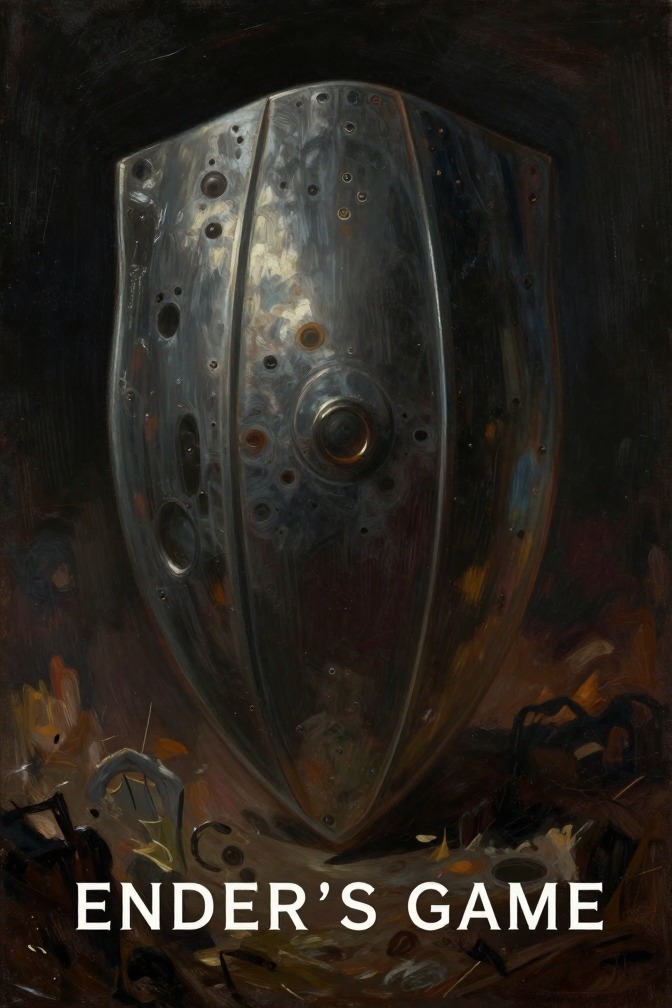
The Ecstatic Shield is a defensive technology used by the buggers in Orson Scott Card's Ender's Game, notable for its ability to block conventional weapons but not the human-made Dr. Device. Its strategic significance lies in how it forces human commanders to adapt, and its existence underscores the theme of technological and tactical evolution in warfare.
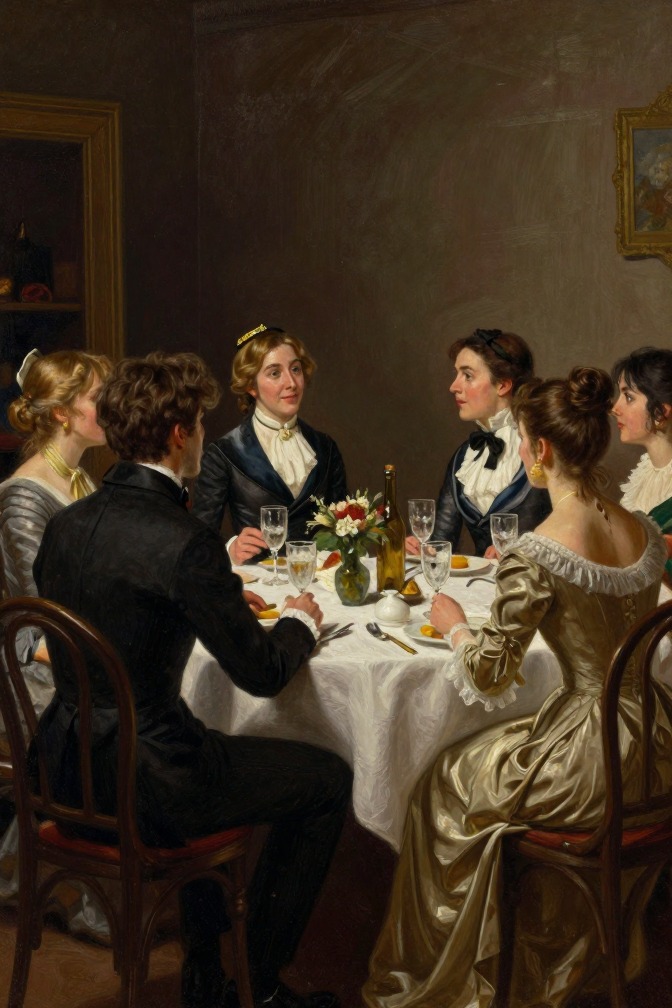
The Hartfield dinner party is a pivotal social event in Emma, orchestrated by Emma Woodhouse to fulfill social obligations toward the newly married Mr. and Mrs. Elton, but which instead exposes the tensions and misunderstandings that define the novel's central conflicts.
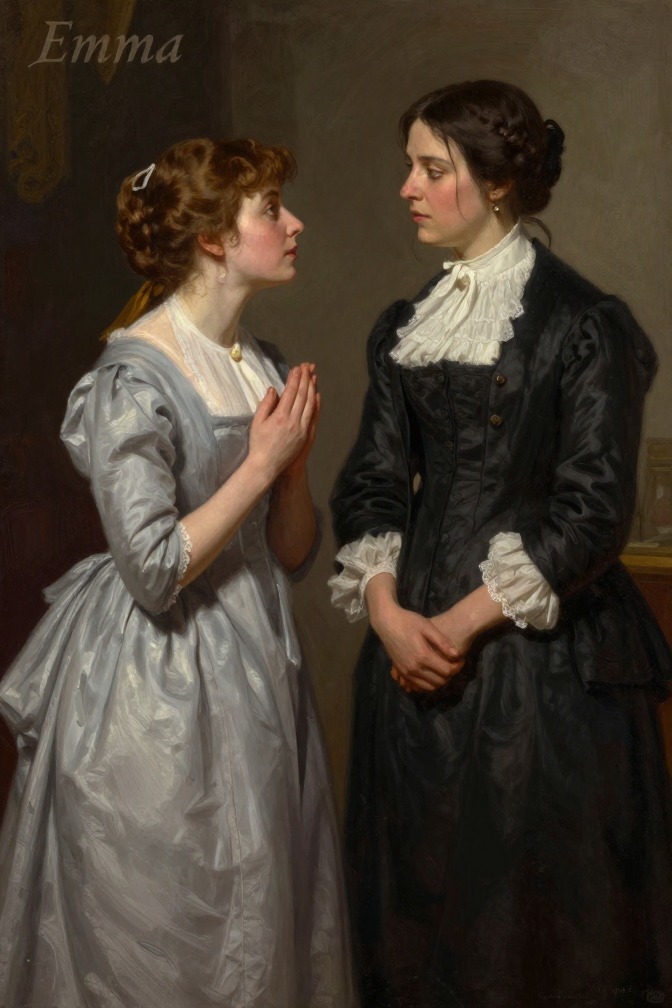
After Mr. Knightley's stern rebuke at Box Hill, Emma Woodhouse undergoes a profound moral reckoning and resolves to apologize to Miss Bates, marking a crucial turning point in her character development from thoughtless pride to genuine contrition and self-awareness.
The opening description of Emma Woodhouse as "handsome, clever, and rich" establishes her as a privileged, self-assured young woman whose favorable circumstances and unchecked confidence set the stage for her central role in the novel's exploration of social rank, matchmaking, and personal growth.
Box Hill is the site of a disastrous picnic in Jane Austen's *Emma*, where the protagonist's thoughtless mockery of Miss Bates provokes a stern rebuke from Mr. Knightley, precipitating Emma's moral awakening and the novel's decisive turn toward self-knowledge.
The alphabet box is a small wooden box of letters used by Emma Woodhouse and Frank Churchill during a quiet evening at Hartfield, which becomes the vehicle for a covert flirtation and a pointed reference to Mr. Dixon, exposing the secret understanding between Frank Churchill and Jane Fairfax.
The apples from Mr. Knightley's Donwell Abbey orchard are a recurring object in Emma, symbolizing his generous, unostentatious kindness and the quiet, dependable abundance of his estate. They appear most prominently in a comic and touching episode where Mr. Knightley, learning that the Bates family has nearly exhausted his annual gift of apples, sends a bushel of his entire remaining store, an act that deeply moves Miss Bates and reveals the depth of his thoughtful, unassuming benevolence.
Frank Churchill's letter to Mrs. Weston, written from Windsor in July, is a long, self-exculpatory epistle that confesses his secret engagement to Jane Fairfax, explains his deceptive behavior at Highbury, and seeks forgiveness from those he has misled.