1974 is the year Mariam turns fifteen, marking a decisive turning point in her life: her failed attempt to join Jalil in Herat, Nana's suicide, and her forced marriage to Rasheed, which uproots her from the kolba and sets her on a path of endurance and loss.
April 17, 1978, marks the assassination of Mir Akbar Khyber, a prominent communist figure in Kabul, an event that ignited mass demonstrations and directly precipitated the Saur Revolution ten days later, fundamentally altering Afghanistan's political trajectory and the lives of the novel's characters.
1987 is a pivotal year in the novel, marked by the convergence of personal loss, political change, and the first stirrings of a new generation. It is the year of Mariam's final, devastating encounter with her father Jalil, the year of Laila's first real awareness of the war through her brothers' departure, and the year of the trip to Bamiyan that crystallizes her bond with Tariq and her father Hakim. The year also sees the arrival of a mysterious blue Benz in Deh-Mazang, foreshadowing the past's return.
1996 was the year the Taliban seized Kabul, ending the Mujahideen civil war and imposing a draconian Islamic regime that radically curtailed women's rights, a transformation that directly shaped the lives of Mariam and Laila.
Adso of Melk, a young Benedictine novice, has his first and only sexual encounter with a peasant girl in the abbey kitchen, an event that plunges him into a profound crisis of desire, guilt, and theological confusion, and which later becomes entangled with the abbey's darker secrets.
Benno of Uppsala, a young monk consumed by intellectual curiosity, betrays his earlier ideals of open knowledge when he is appointed assistant librarian. After secretly recovering the forbidden Greek manuscript from Severinus's laboratory, he hands it over to Malachi in exchange for the position, thereby aligning himself with the very secrecy he had once opposed.
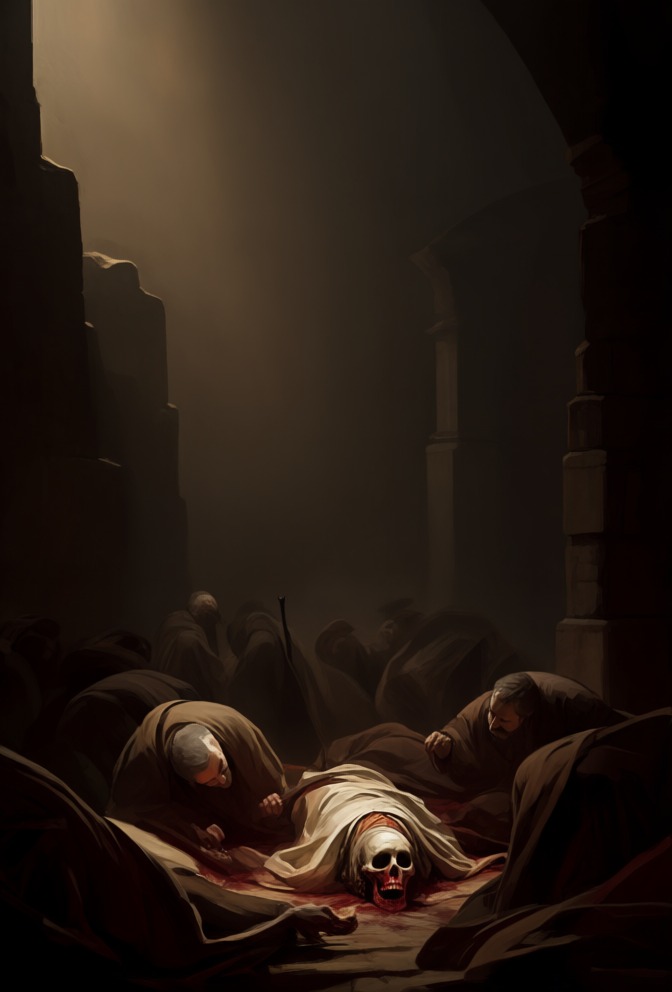
The murder of Severinus of Sankt Wendel, the abbey's herbalist, occurs on the fifth day when Malachi of Hildesheim, acting on Jorge of Burgos's instigation, bludgeons him to death with an armillary sphere in the infirmary. The crime is a direct consequence of Severinus's discovery of the forbidden book—Aristotle's lost second book of the Poetics—which Berengar of Arundel had stolen from the finis Africae and left in the infirmary. Malachi kills Severinus to recover the book, then ransacks the laboratory in a frantic search, but is interrupted by the arrival of Remigio of Varagine, who is himself seeking incriminating Dolcino letters. The murder is immediately blamed on Remigio, who is arrested by Bernard Gui, and the book is subsequently retrieved by Malachi, who later dies from its poisoned pages.
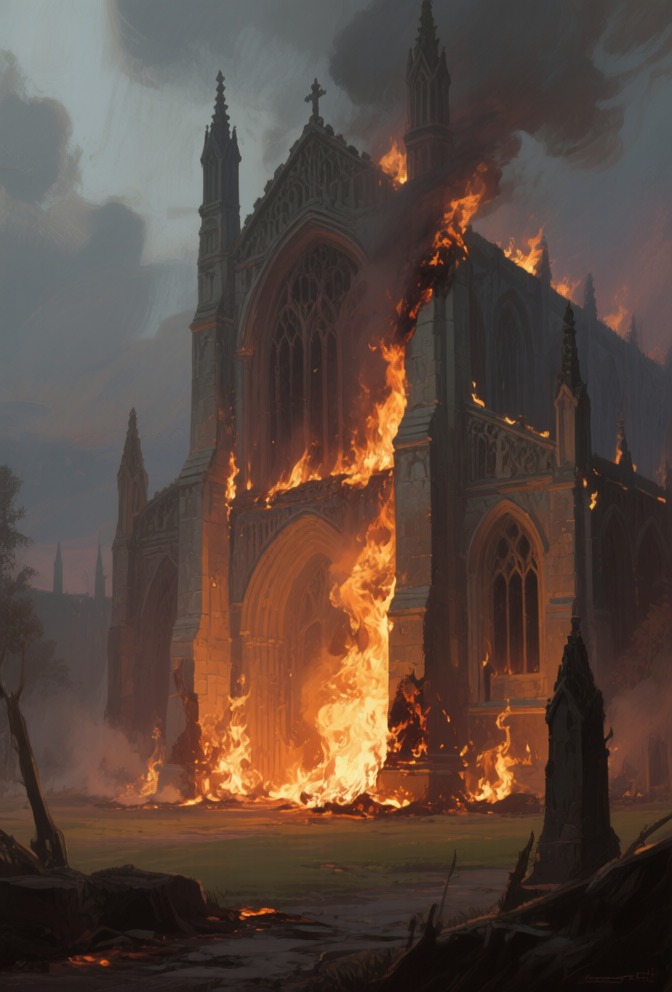
The destruction of the abbey by fire is the catastrophic climax of the novel, in which the blind librarian Jorge of Burgos, having been confronted by William of Baskerville, devours the forbidden second book of Aristotle's Poetics and then deliberately starts a conflagration that consumes the entire library and most of the abbey's buildings, fulfilling his own apocalyptic prophecies and ensuring that the dangerous knowledge he sought to suppress is lost forever.
Ubertino's escape is the flight of the Spiritual Franciscan leader from the abbey on the evening of the fifth day, orchestrated by William of Baskerville to save him from the imminent threat of arrest and execution by the inquisitor Bernard Gui.
The Poverty of Christ is the central theological and political doctrine at the heart of the conflict in Umberto Eco's The Name of the Rose. It refers to the belief, championed by the Spiritual Franciscans and later the chapter of Perugia, that Christ and the apostles owned no property, either individually or in common. This seemingly esoteric theological point becomes a flashpoint for the power struggle between Pope John XXII and Emperor Louis the Bavarian, and it is the ideological battleground on which the novel's climactic debate is fought. The doctrine is not merely a historical backdrop; it is the catalyst for the novel's exploration of heresy, authority, and the dangerous intersection of faith and politics, ultimately serving as the pretext for the Inquisition's intervention in the abbey's affairs.
The Second Book of Aristotle's Poetics is the lost, legendary treatise on comedy that forms the central object of desire and destruction in Umberto Eco's novel. Hidden for decades in the abbey's secret chamber, the Finis Africae, this single surviving Greek manuscript on linen paper is the book for which monks kill and die, and which the blind librarian Jorge of Burgos finally devours and consigns to fire, believing that its doctrine of laughter would destroy Christian civilization.
The Cynocephali are a legendary race of dog-headed humanoids, appearing in the novel as part of the monstrous bestiary carved on the abbey church's doorway and as a symbol of the unknown, monstrous peoples at the edges of the Christian world, representing the library's collection of pagan and heretical knowledge.
The Harpy is a mythological creature from Greek and Roman tradition, depicted in the novel's sculptural program on the abbey church doorway as part of a bestiary of damned and monstrous beings. In the context of *The Name of the Rose*, the Harpy appears among the grotesque figures carved on the church portal, serving as a visual emblem of the infernal and the disordered world that the doorway's tympanum both condemns and incorporates into the divine plan.
The Incubus is a demonic figure from medieval folklore, referenced in Umberto Eco's *The Name of the Rose* as a symbol of carnal temptation and the noonday devil that torments monks. It appears in the novel's descriptions of the monstrous sculptures on the abbey church's portal, in the context of Berengar's illicit passions, and in the temptations faced by the monks, embodying the dangerous intersection of spiritual longing and physical desire that pervades the abbey's atmosphere of sin and secrecy.
Adelmo of Otranto, a young and gifted illuminator, is found dead at the foot of the cliff below the Aedificium on the morning after a snowstorm, an event that triggers William of Baskerville's investigation into the abbey's secrets and sets in motion a chain of murders linked to a forbidden book.
In the climactic confrontation of the novel, William of Baskerville and Adso of Melk penetrate the secret room of the library, the finis Africae, where they find the blind librarian Jorge of Burgos waiting. Jorge reveals that he has been the hidden master of the abbey for decades, manipulating events to protect the only surviving copy of Aristotle's lost second book of the Poetics—a treatise on comedy and laughter that he considers the most dangerous work ever written. In a final act of defiance, Jorge tears the book apart, eats its poisoned pages, and triggers a fire that destroys the entire library, bringing the abbey's world of learning to an apocalyptic end.
The phrase 'primum et septimum de quatuor' (the first and seventh of the four) is the cryptic key that William of Baskerville deciphers from Venantius of Salvemec's zodiacal code, enabling him to unlock the secret entrance to the finis Africae, the most forbidden chamber of the abbey's library. This riddle, inscribed in the apocalyptic verse 'Super thronos viginti quatuor' above a distorting mirror, directs the user to press the first and seventh letters of the Latin word 'quatuor'—the 'q' and the 'r'—to open the hidden door. Its solution marks the climax of William's investigation, leading directly to the confrontation with Jorge of Burgos and the revelation of the lost second book of Aristotle's Poetics.
The phrase "the power of a thousand scorpions" is a warning uttered by Jorge of Burgos to Malachi of Hildesheim, describing the lethal danger of the forbidden book—Aristotle's lost second book of the Poetics—which Jorge had poisoned to protect its secrets. The phrase encapsulates the book's deadly nature and the apocalyptic fear Jorge attached to it, linking the physical poison on its pages to the spiritual threat he believed the book posed to Christian doctrine.
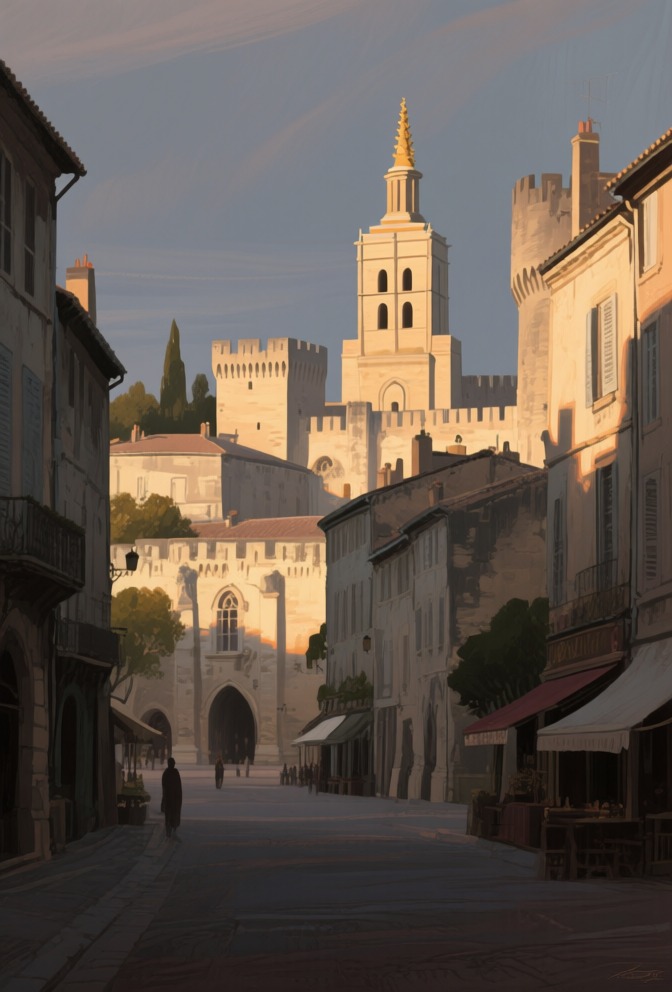
Avignon, the papal seat relocated from Rome by Pope Clement V in 1309, serves as the political and spiritual center of the papacy during the events of 1327. Under Pope John XXII, it becomes a symbol of ecclesiastical wealth, political intrigue, and doctrinal rigidity, standing in direct opposition to Emperor Louis the Bavarian and the Franciscan Spirituals who champion evangelical poverty. The city is the source of the papal legation that arrives at the abbey, and its corrupt, mercantile atmosphere—where indulgences are sold and crucifixes depict Christ touching a purse—frames the novel's central conflict between temporal power, spiritual authority, and the pursuit of truth.
Casale is a town in northern Italy that serves as a pivotal location in the novel, functioning as a refuge and transit point for former heretics and Spiritual Franciscans, including the cellarer Remigio of Varagine and Salvatore, who sought to escape persecution by joining the Benedictine order.
The Finis Africae is the most secret and forbidden room within the abbey's labyrinthine library, a hidden chamber that contains the only known copy of Aristotle's lost second book of the Poetics, a work on comedy and laughter that the blind librarian Jorge of Burgos has guarded for decades through murder and deception.
Gattinara is a town in the Novara region of northern Italy that became a focal point of Fra Dolcino's heretical rebellion in the early fourteenth century, when the local populace, having driven out the Bishop of Vercelli's vassals, welcomed Dolcino's outlaws as allies, embedding the town in the violent intersection of heresy, feudal conflict, and popular revolt that forms a crucial background to the murders at the abbey.
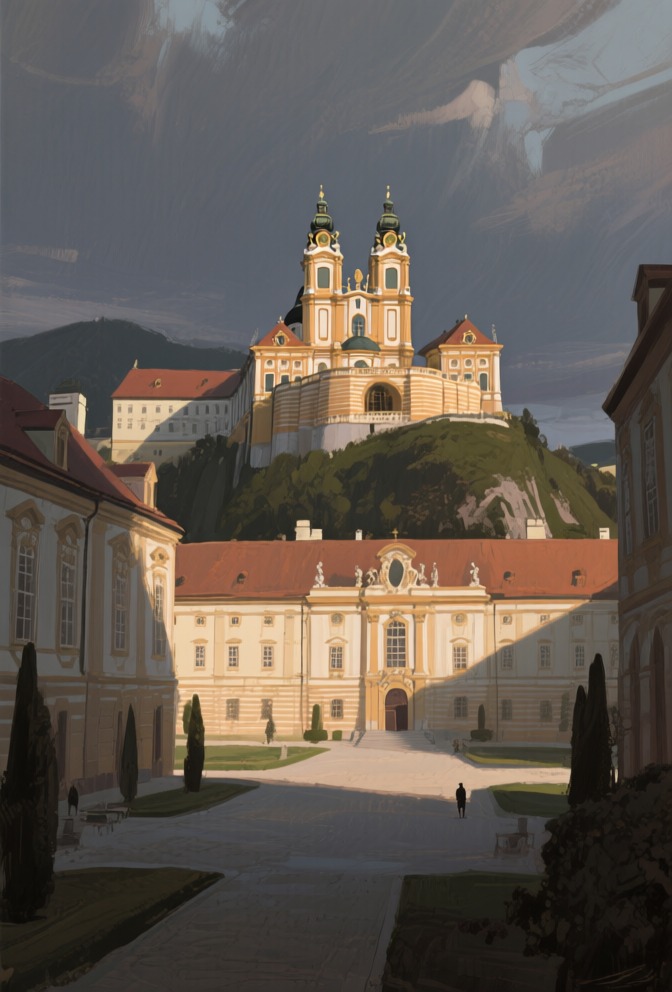
Melk is the Benedictine monastery in Austria where the elderly Adso of Melk writes his manuscript, serving as the framing location for the entire narrative and the site of his final reflections on the events of 1327.
Montpellier is a city in southern France where Pope John XXII studied medicine and law, and where he cultivated the friendships and political acumen that later enabled his rise to the papacy. The city is mentioned in the novel as part of the background of John XXII, the Avignon pope whose conflict with Emperor Louis the Bavarian and the Franciscan order over the issue of evangelical poverty forms the historical and political backdrop of the story.
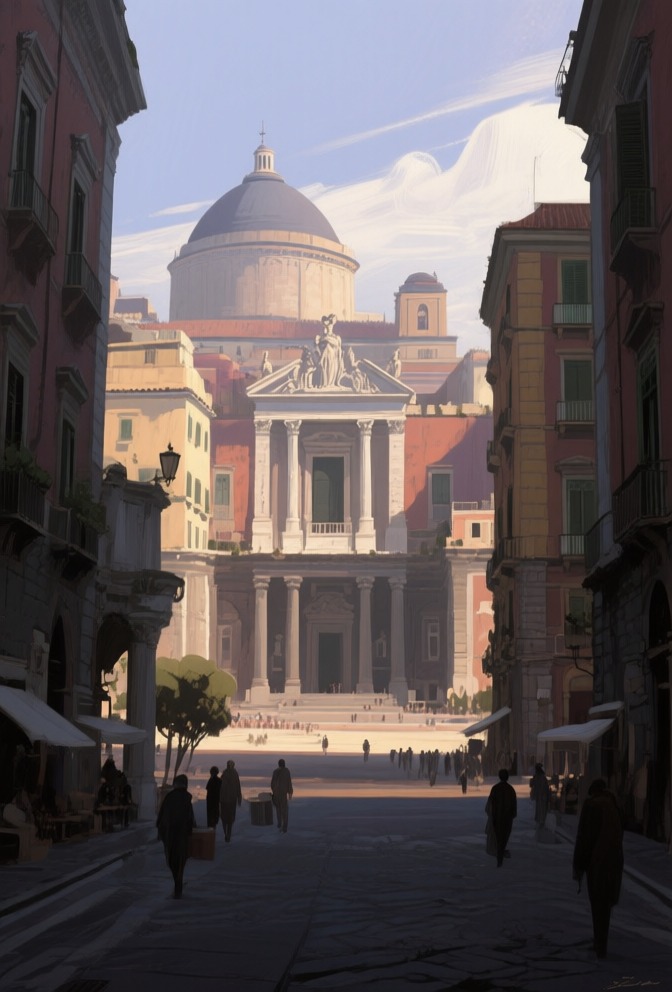
Naples is a major Italian city that serves as a key political and cultural reference point in the novel's background, particularly as the seat of Robert the Wise, a powerful monarch whose court was a center of learning and a source of influence for figures like Pope John XXII.
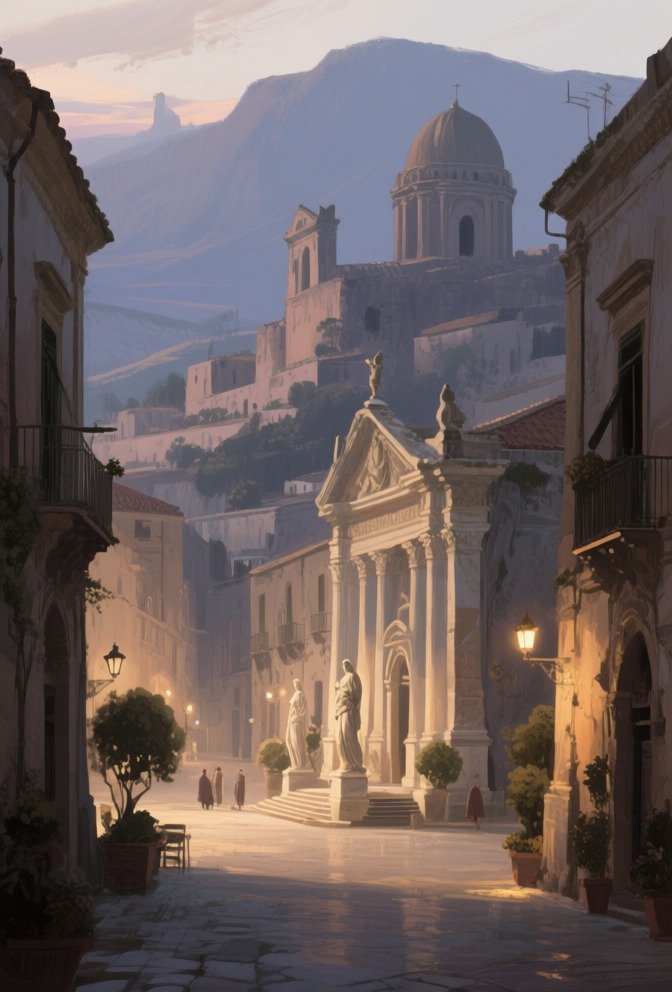
Sicily, an island kingdom in the Mediterranean, serves in *The Name of the Rose* as a political and symbolic counterweight to the papal court in Avignon and the imperial ambitions of Louis the Bavarian. It is the realm of Frederick of Sicily, whom the heretical leader Fra Dolcino prophesied would be the emperor to exterminate the corrupt clergy, and it is also a place of refuge for Spiritual Franciscans expelled from Umbria. The island thus embodies the intersection of political rebellion, apocalyptic expectation, and the struggle over evangelical poverty that drives the novel's historical background.
Silos is a monastery in Castile, Spain, that plays a crucial role in the backstory of *The Name of the Rose* as the place where Jorge of Burgos, during a mission to acquire manuscripts, discovered and stole the only known copy of Aristotle's *Poetics II*, the forbidden book that becomes the catalyst for the abbey's murders.
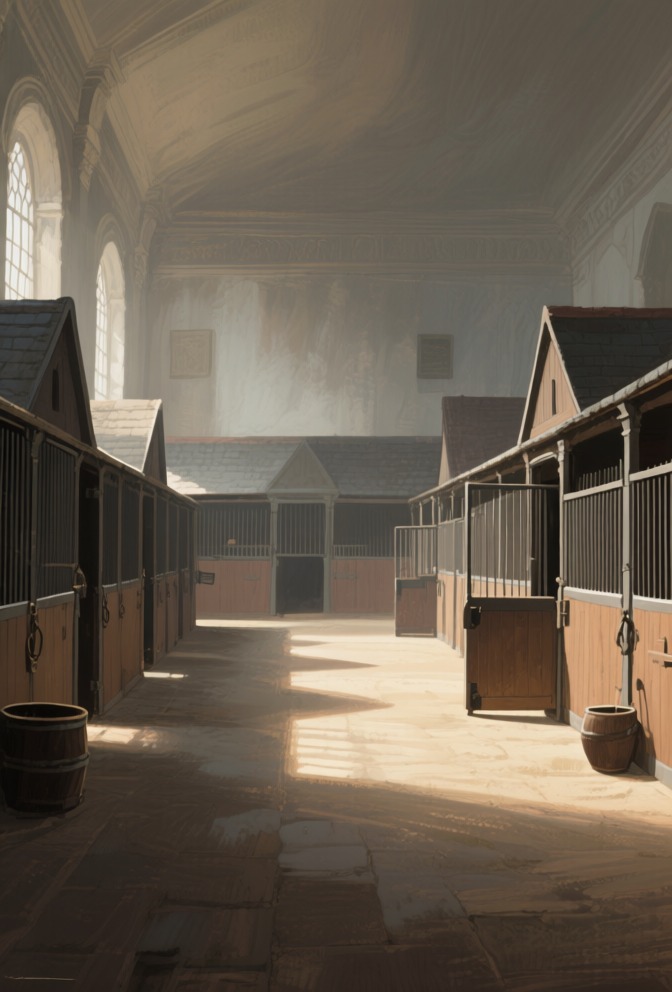
The Stables are a functional building within the abbey compound, housing the horses and other livestock. They are located behind the choir of the church, near the east tower of the Aedificium and the outer wall. The stables serve as a site of practical labor and, crucially, as the setting for a key moment of linguistic deduction that allows William to solve the riddle of the library's secret entrance.
William's glasses, a forked instrument with two glass lenses, serve as a crucial tool for reading and investigation throughout the novel. They are first introduced as a device that allows William to read fine manuscripts despite his aging eyes, and later become a target of theft, a symbol of his intellectual method, and a key to deciphering the hidden messages that lead to the truth.
The vision-inducing herbs and lamp are a set of devices used by the librarian to guard the library at night, creating terrifying hallucinations that convince intruders the labyrinth is haunted by diabolical presences. The lamp, a thurible-like vessel, burns a substance—likely an Arab preparation similar to that used by the Old Man of the Mountain—whose fumes provoke vivid, terrifying visions. The herbs, supplied by Severinus the herbalist, are part of a systematic defense of the library's secrets, complementing mirrors and ventilation slits to disorient and frighten anyone who ventures into the forbidden upper floor after dark.